Posted on

Make Your Shoe Design Factory Ready: Shoe Maker’s Pre-Flight Checklist

Make Your Shoe Design Factory Ready: Shoe Maker's 10 Point Pre-Flight Checklist

Making a beautiful design drawing of your new shoe idea is a great first step; now, it’s time to finish your design. The design drawing is just one piece of information you need to communicate your design to the shoe factory. To ensure your sample shoe looks and functions just as you imagined, you’ll need to detail every aspect of your design. 

Shoe Designers Pre-Flight Checklist. 

Shoe Design Check list You need a shoe Last.

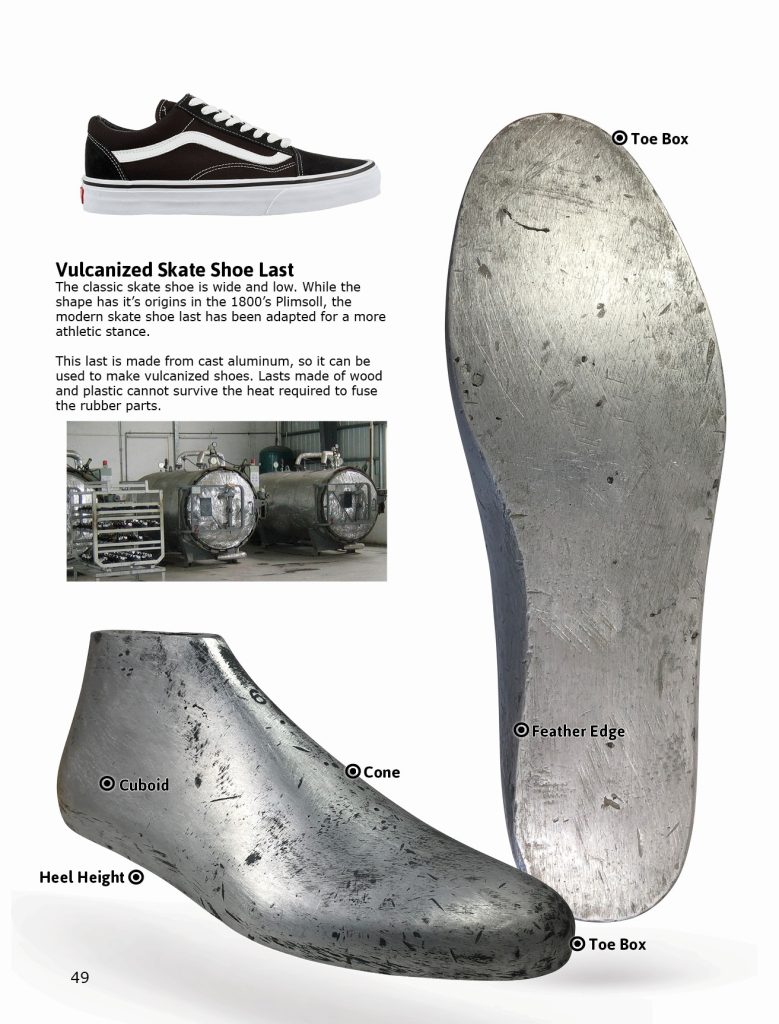
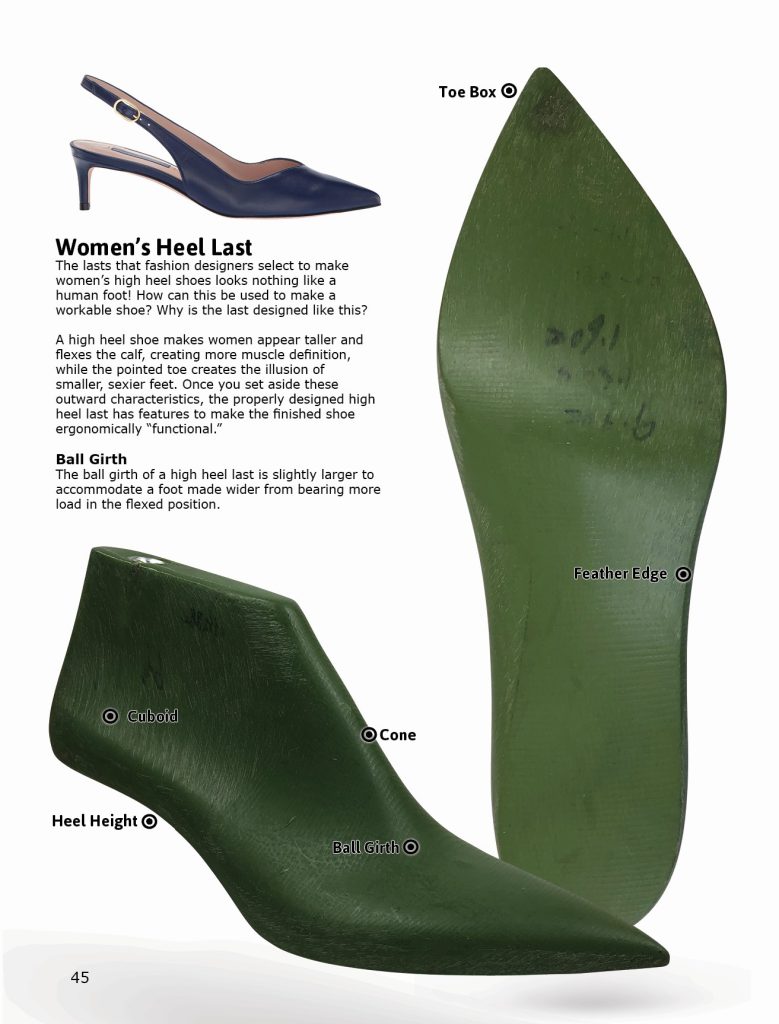
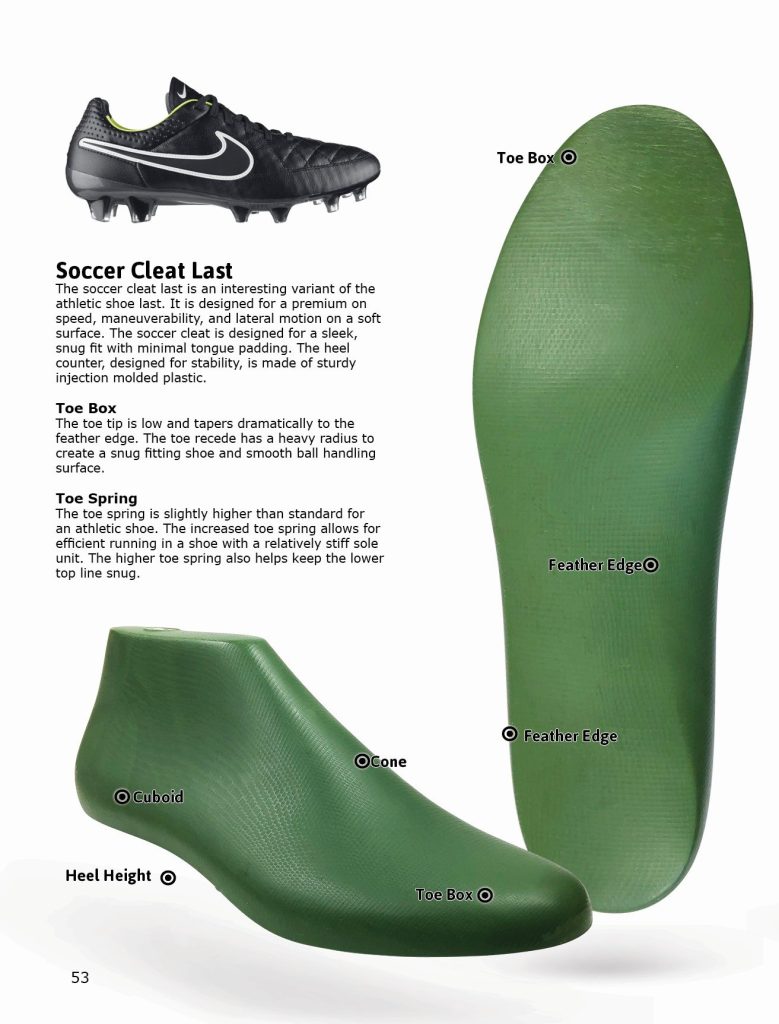
Before the factory can create the initial samples for your shoe design, you will need to supply a last. Your factory may have a suitable last in their stock, or the factory can have a matching last made to order from a sample shoe. It’s best to make your design drawings with the last in hand, but you can duplicate the silhouette before you have the physical last in your hands if you are following a competitor’s sample. If you are designing for an established shoe brand, the brand may be able to give you the correct last before you start your project. 

Shoe Design Check list Shoe design drawings

You will need a complete set of shoe design drawings. With your design idea and last silhouette, you can create a complete set of drawings for your footwear specifications. The factory needs drawings with every design line clearly detailed. Your set of drawings should include:
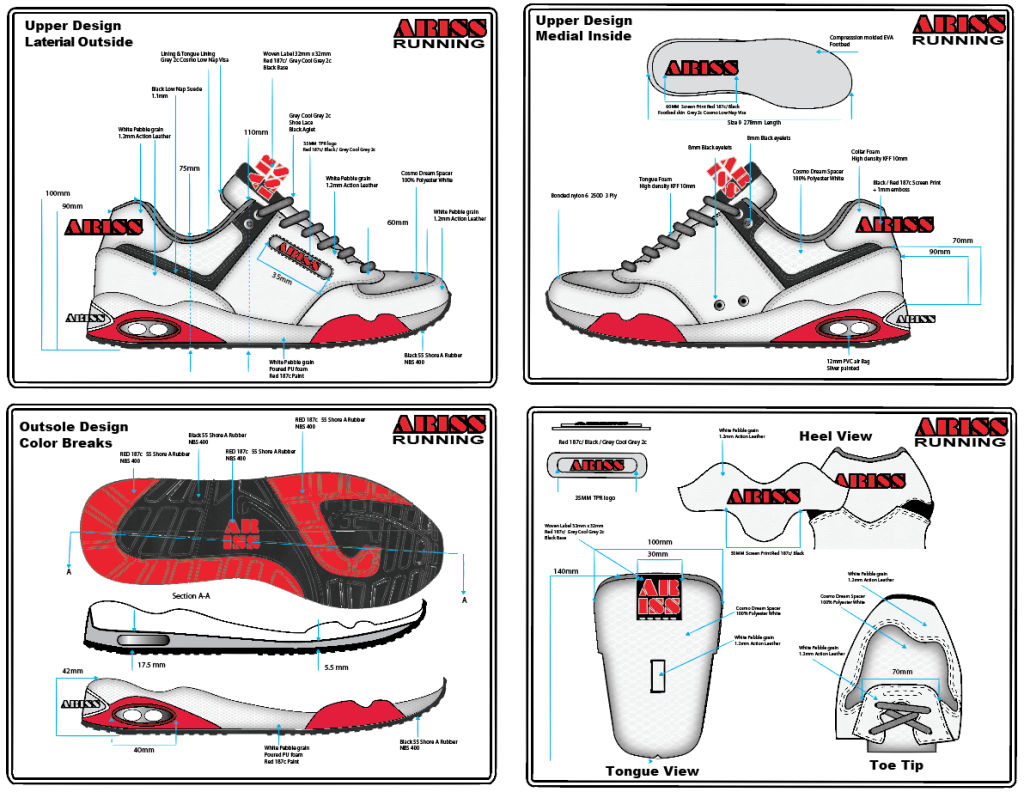
shoe design tech pack

Lateral View (outside of the shoe) 
Medial View (inside of the shoe)
Heel View (view from the back) 
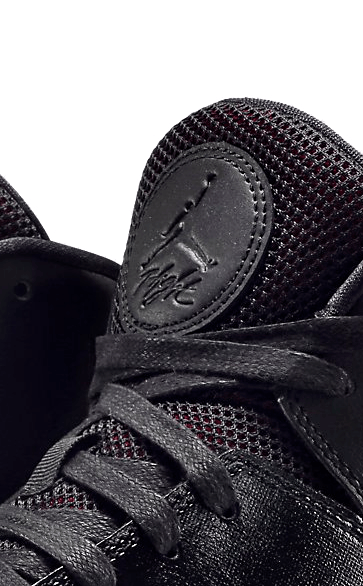
Tongue View (showing any logo art) 
Vamp View (looking down on the toe) 
Detailed views of any small plastic parts

The Ultimate Shoe Material Textbook

Start with an in-depth study of material types available for modern shoemaking. Learn the technical details of material specifications. 195 pages and 300 color photos. Buy Now on sale $39.99
Shoe Design Check list Outsole design drawings

You will need a complete set of outsole design drawings. Outsole blueprints are difficult and time-consuming to make. As a designer, your responsibility is to detail the outsole unit’s style lines and character details. The exact shape and size of the outsole is the responsibility of the outsole design engineer. The design engineer will take your shoe sole design and measurements from the lasted upper and create detailed technical drawings. You will need to supply the design engineer with the following drawings:

how to draw shoe outsoles

Outsole side profile
OutsoleTop view to show technical details
Outsole bottom view to show the tread pattern
Detail views of injection parts
Cross-section views of length and width

Shoe Design Check list Stitching design and seam details

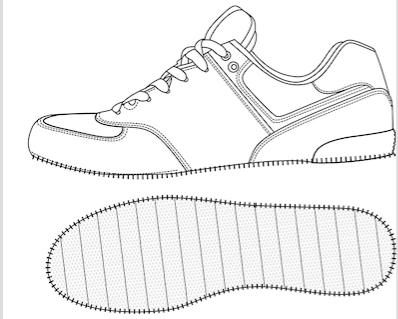
If your shoe is sewn together, you need to add the stitching details to your drawings. The stitching detail lines will show which pattern parts are overlays and underlays. You should also communicate if the stitches are single line, double line, zig-zag, thin thread, or heavy thread. If your design entails rolled edges, binding edges, Frenched edges, butt seams, or overlays, you need to communicate these details in your drawings.

Shoe Design Check list Shoe upper material map

The material map is a drawing that clearly shows the materials you have in mind for each part. The factory uses this information to make the appropriate pattern for the parts. A die-cut leather part will have a different pattern from a fabric part of the same shape made with rolled edges.
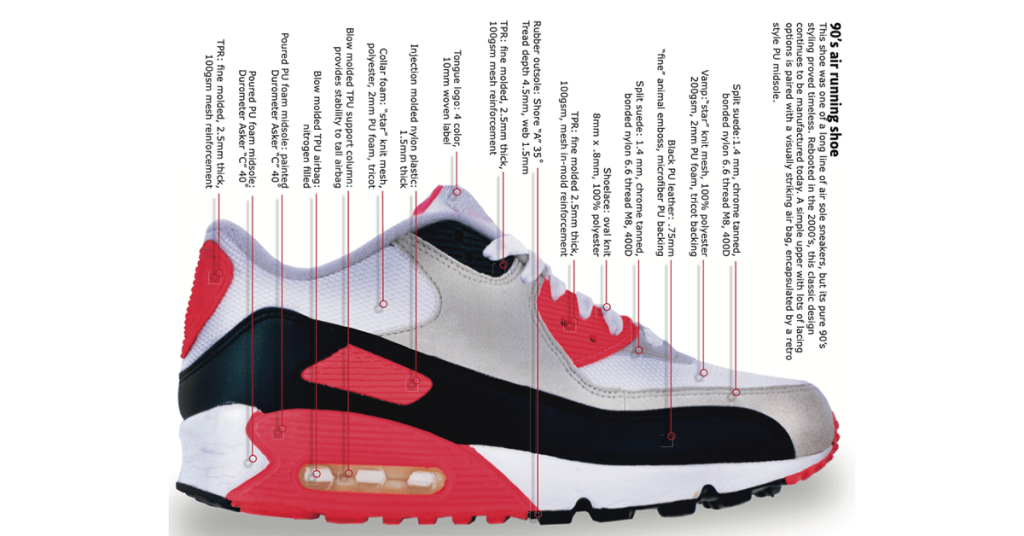
What materials are Nike shoes made of?
Shoe Design Check list Color map


Color map of the first sample colorway. A color map diagram of upper and outsole parts shows the factory where to add color dams or pattern breaks.    
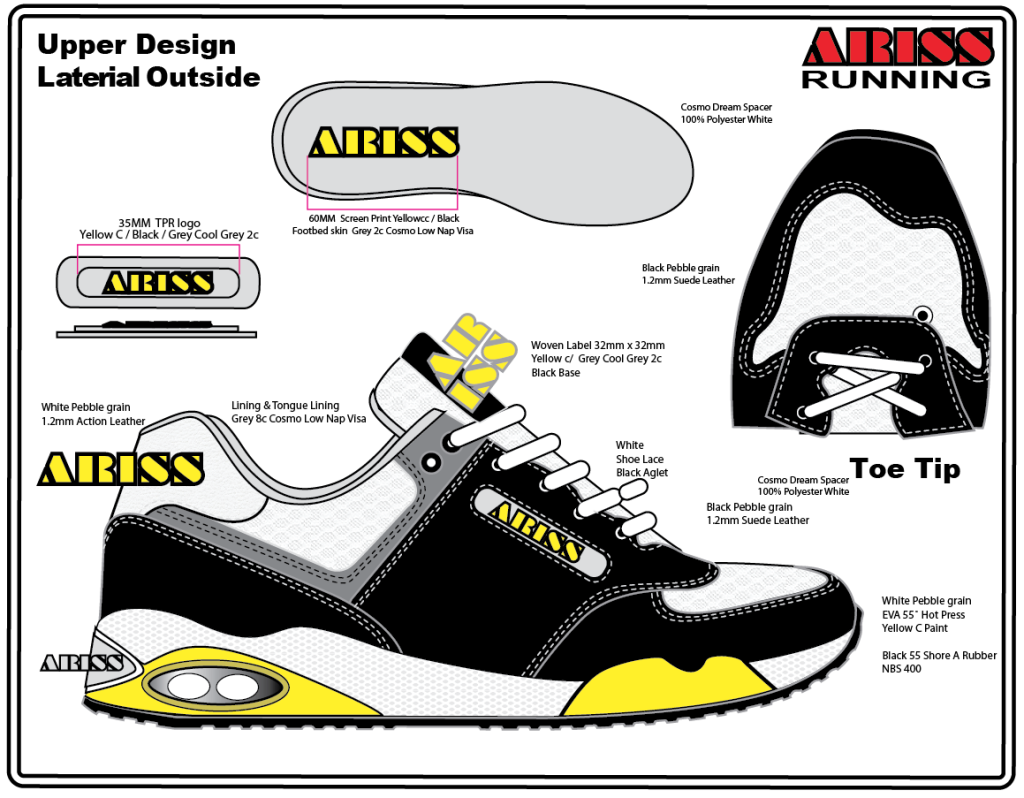
Color map showing future plans for color breaks
Shoe Design Check list Texture map

Texture map showing the surface details of every part. The surface texture is an important part of your shoe design. Texture specifications will add an extra dimension to your shoe designs. 

Shoe Design Check list Logo Designs

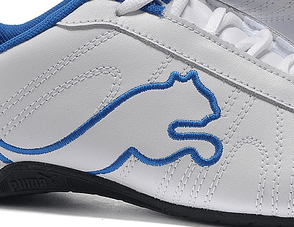
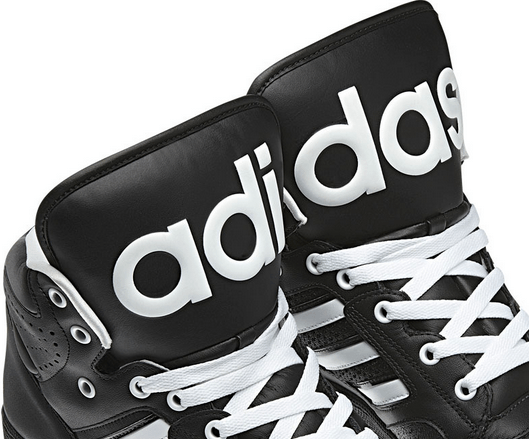
Logo designs: Take extra care to draw your logos in the exact scale they will appear on your shoe design. This step will ensure the logos are legible and will help you decide how to execute your color. For example, a 3D mold or laser can create tiny letters 2mm tall, while an embroidery machine requires lettering to be a minimum of 5mm tall to be readable.    

Shoemaking Material Kit

All the hard find parts for your DIY shoemaking project are here in one place. Lasting board, strobel material, lining mesh B&W, collar foam and all the reinforcing parts you need for one pair. Learn more On sale $39.99

Shoe Design Check list Foam padding specs

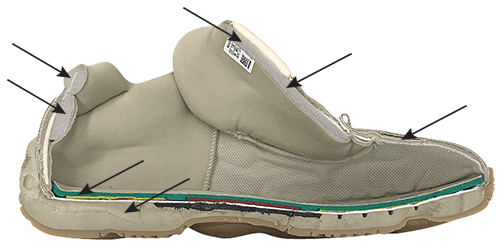
Foam padding specs: The foam padding specifications for the shoe tongue, collar, and upper padding are critical when defining your shoe’s silhouette. Is your shoe designed as sleek or puffy? Detail these parts carefully to get the look you desire.   
Shoe Design Check list Reinforcement & construction notes

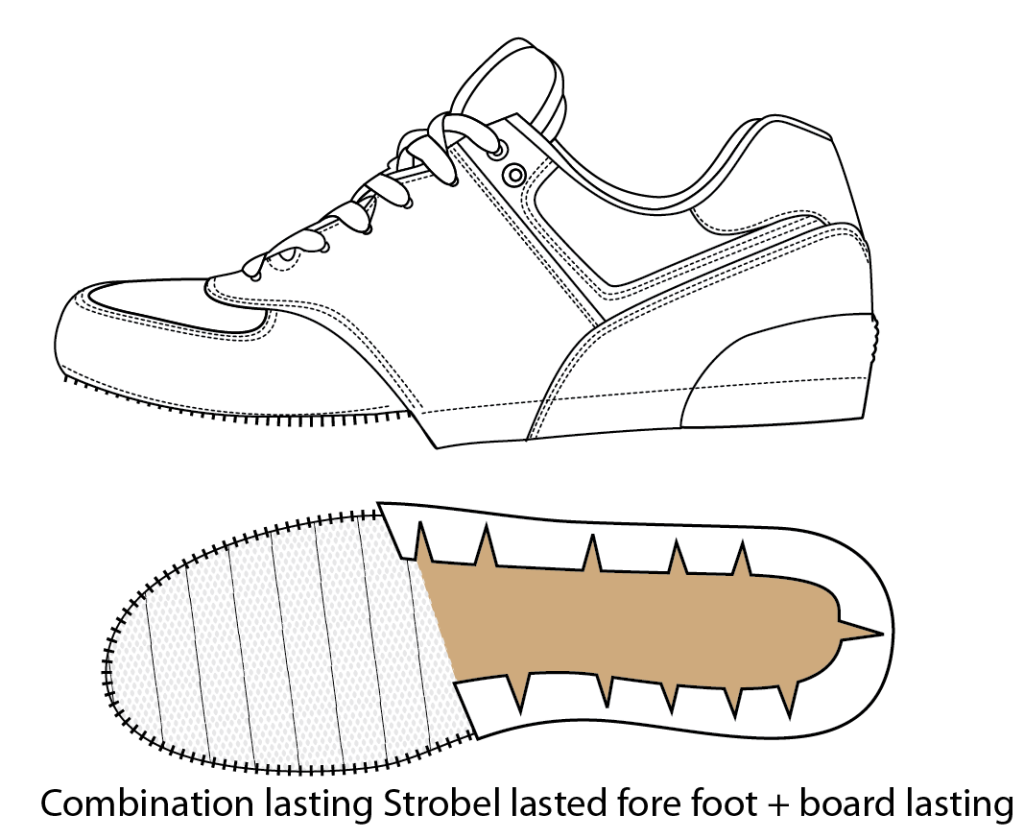
Reinforcement specs and construction notes: Tell the factory exactly how you want your shoe made. Is your shoe a soft Stobel bottomed casual shoe or a sturdy board-lasted walking shoe? It’s best if you can detail the construction you require. If you are unsure how to make the shoe, do your best to explain the functionality necessary and ask your factory developer to help you specify the best construction process.  

New Online Course
How to Select Shoe Materials

14 Shoe Material lessons. Over 4 hours of video instruction. In-depth study of leather, textiles, synthetics, and plastics for footwear. Material Design Guide Textbook included. Course Details enroll now $399
Posted on

How to Pick Sneaker Materials

How to pick Sneaker materials

The footwear materials you select for your sneaker are what make your kicks come to life! You will find the design pattern is not the critical or special feature; the sneaker materials are. Learning how to specify sneaker materials is critical when you want to make shoes. If you want to learn how to become a sneaker designer, you must know how to specify footwear materials. You have an infinite menu of material choices and colors to create your sneaker masterpiece.  Rich leathers, silky mesh, or high-tech synthetics, take your pick.

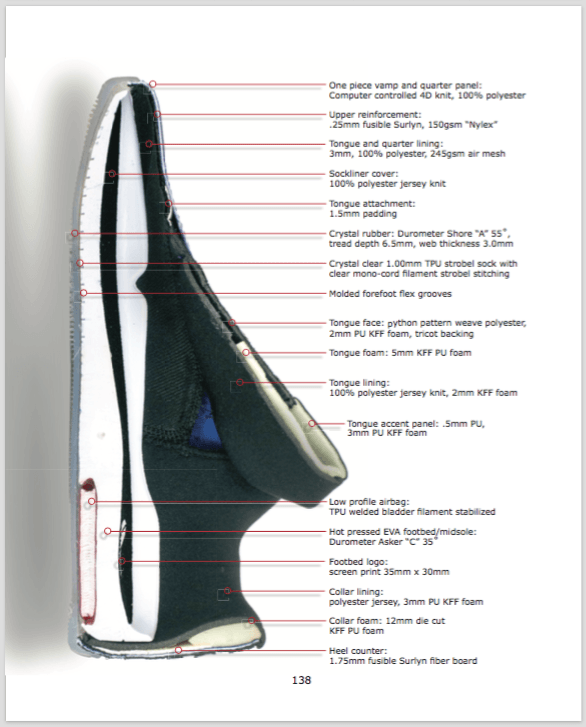
see inside the Nike Kobe Elite XI, How are shoes constructed? Types of shoe construction

The sneaker designer must take great care to pick the right materials that can stand up to the demands of production. The demands for sneaker performance and manufacturing must be met. A beautiful material that rips during the lasting operation or fades in sunlight can’t be used.  So, let’s learn how to select the right materials for your sneaker design.

Factors for Sneaker Design Materials:

When you select sneaker materials for your design project, the design brief should help guide your choices. The design brief defines the type of sneaker you are making. Kicks for basketball, trainers for chilling? Are these going to be inexpensive or premium sneakers? With your design brief in hand and some background knowledge, you can select the right materials suitable for your sneaker.
The most common materials for modern sneakers are leathers, textiles, synthetics, rubber, foam, and plastic. Each has its specific uses in footwear. Depending on your design, each material will have a place in your sneaker.  Material selection is one of the fundamentals of shoe design. Let’s take a quick tour of these common materials.

Leather for sneakers

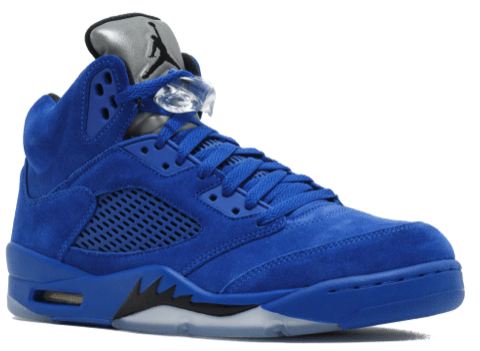
Air Jordan 5 Suede


Air Jordan 5 with drum dyed blue suede

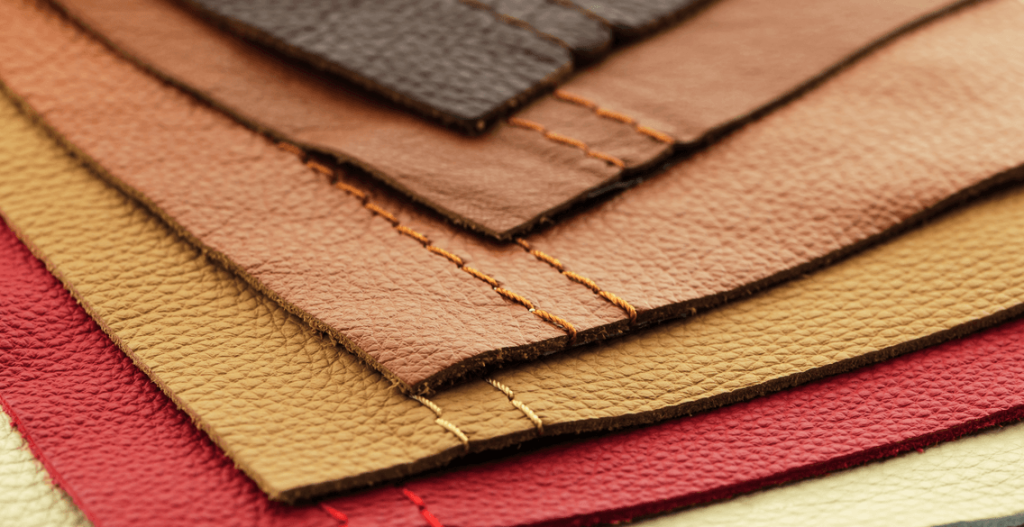
Cow leather is the most common material used for making sneakers. It is durable, flexible, stretchable, and is available in many styles, colors, and price points. It is a great material choice, and with cow hide leather, you can make beautiful, functional, and fashionable sneakers.

Real leather is alive! Not really, but the character of leather changes as it wears. A fine leather sneaker breathes and conforms like no other shoe. But, leather does have some drawbacks. It can be heavy, hot, and susceptible to water absorption and damage if not treated. Water-resistant and water-proof treatments add cost. Leather is a relatively expensive material when

Leather Duty Men's shoe 8.5% What is the Duty on a leather shoe

compared to fabric or other human-made materials and must be treated with care during shoe manufacturing.
Because leather hides are from individual animals, each is a different size, and each will have scars, imperfections, even brands that must be avoided when cutting. This uncut and unusable material is called cutting loss. For leather, the cutting loss is at best 5% of a hide. When making the highest quality shoes, shoe leather cutting loss can be 15%. That’s 15% of the material cost being thrown away.

The smooth white leather on many basketball shoes is actually suede that has been coated with a thin layer of PU plastic. This leather is called Action Leather. It is inexpensive, durable, easy to clean, and looks just like “real” full-grain leather.

The Ultimate Shoe Material Textbook

Start with an in-depth study of material types available for modern shoemaking. Learn the technical details of material specifications. 195 pages and 300 color photos.

Buy Now

on sale $39.99

Textiles for sneakers

Textiles for shoes come in a huge variety of colors, weaves, knits, fibers, and deniers. Denier is how thread weight is measured. 1 denier = 1 gram per 9000 meters of thread. Typical denier is 110D for very lightweight fabric, 420D and 600D are common thread weights for shoe fabrics. Footwear textiles come in many fiber types including cotton, wool, nylon, polyester, polypropylene, rayon, lycra, and more. Each has its own look and physical properties.

Authentic Vans sk8 quality inspection

What are athletic shoes made of?

Textiles are a miracle material for shoes. With an infinite variety of weaves, colors, patterns, and unique features, textiles have a special place in footwear design. You will find textiles inside, outside, and even on the bottoms of some sneakers. Human-made polymer fibers such as nylon and polyester are lightweight and durable. Lycra is stretchable, and cotton canvas, with a look all its own, is a must for vulcanized construction.

Depending on the import rules for your country, textiles often come with a high duty rate. Shoes made with 51% textile surface area often fall into a 20% duty rate.  A textile shoe that costs less than $12.50 may be categorized as 20% +.90 duty! (Depending on the country of origin.) However, there is a trick; by molding textiles on the sole of the shoe, you can avoid the high duty rates!  Textiles will be reviewed in-depth in their own article.

Synthetics for sneakers

best sneaker materials

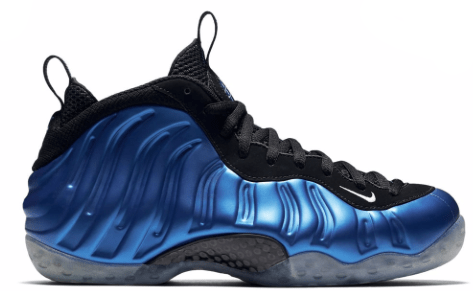
Nike Air Foamposite is molded synthetic leather with foam backing

Whatever you call it, synthetic, synthetic leather, PU leather, or just PU, this material is another must-have for modern sports shoes. This class of material offers the shoe designer a huge variety of colors, textures, and features at a wide range of prices. PU leather was once considered cheap junk and not suitable for high-quality shoes, times have changed! These human-made materials are often a composite made of two layers. A backing layer, made of woven or non-woven polyester fibers. Combined with an external surface layer by “dry” lamination process or by liquid “wet” processes. Many of the least expensive synthetics have a fibrous woven backing with PVC skin made by a wet process. The surface on these may not be 100% smooth, and the shoe will show wrinkles and creases. This material is the cheap stuff found on inexpensive shoes.

High-end leather for sneakers

High-end leather starts with a water-resistant microfiber PU backing. This backing has a smooth surface, cuts cleanly, and can be dyed to match the surface materials. A microfiber style backing can be ordered in .5 to 2.00mm thicknesses, has some stretch, and can have a water-resistant treatment. On top of this backing, the skin can be applied.

Polyurethane plastic film .2 to .5mm thick is made in a separate operation, and the two layers are then rolled together with heat and pressure. PU outer skin is then printed, embossed, scuffed, or polished to create one of the millions of surface options. The largest PU maker has hundreds of different embossing patterns that can be applied to hundreds of different surfaces. If you can meet the order volume required, you can pick any color you want! Synthetics will be reviewed in-depth in their own article.

New Online Course
How to Select Shoe Materials

14 Shoe Material lessons. Over 4 hours of video instruction. In-depth study of leather, textiles, synthetics, and plastics for footwear. Material Design Guide Textbook included.
Course Details
enroll now $399

Foam for sneakers

There are many types of foam used to make shoes, here we are going to review the types of foam found in the uppers of shoes. Generally, foam is divided into two types, “Open Cell” and “Closed Cell” foam. Open cell is exactly what it sounds like; the plastic compound that makes up the foam cells is open. Air and water are free to enter and exit the foam, just like a dishwashing sponge. Closed-cell foam is exactly that; individual cells are closed or sealed, not allowing the foam’s internal gas to escape.

Shoe Material Design Guide

Open-cell foam for sneaker uppers

Open-cell foam is generally softer; these foams are made of Polyurethane plastic. This type of foam is commonly known as “KF or KFF” foam. Open-cell foam is available in different densities and in almost any thickness and color. Open-cell foam is used in the tongues and collars of shoes. Thin sheets of PU foam are used to back fabric in most shoe uppers. PU foam allows the stitches to sink in and gives mesh some extra support while reducing wrinkles.

Reticulated foam is the most open style of foam. This type is often used for ventilation features.

Closed-cell foam for sneaker midsoles

Closed-cell foam is generally denser. Midsoles of shoes are all made from closed cell foam. Midsole foam is covered in the article Outsole Design. Common closed-cell foams include EVA (ethyl vinyl acetate), PE (Polyethylene), SBR (Styrene-butadiene rubber), PU (Polyurethane), Latex, and Neoprene. Each has its own properties. EVA foam is used for backing mesh materials, and 2mm sheet EVA will make fabric waterproof. Neoprene and SBR are used when elastic properties are required. Latex is common for collar linings. PE foam is very light but not too durable, so its use is limited.

When working with foam, it is important to know which foam is appropriate for the shoe upper and which is appropriate for cushioning the shoe outsole. Learn more here.

What is the best material for sneakers?

There is no one best material for shoes. What is best for Air Jordan 5 is not the best for the Nike Foamposite. The sneaker designer, footwear developer, and product manager must work together to pick materials based on the price, performance, durability, duty rates, comfort, and styling. Every shoe will have a different material requirement.

New Online Course!
Shoemaking for Designers & Brand Builders

Created for footwear newcomers and professionals alike, this course delivers the basic shoemaking knowledge you need to get your career and brand started.
Course Details
Enroll Now $99