Posted on

The Designer’s Guide to Shoe Leather

Shoe Designers Guide to Stitching Thread

What is the best shoe leather?

There are many different types of shoe leather. Entire books have been written on the subject of leather and how it’s made but we are just going to cover the basics you should know for sports and casual footwear design and manufacturing.
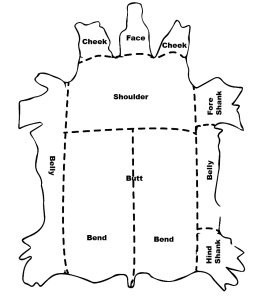
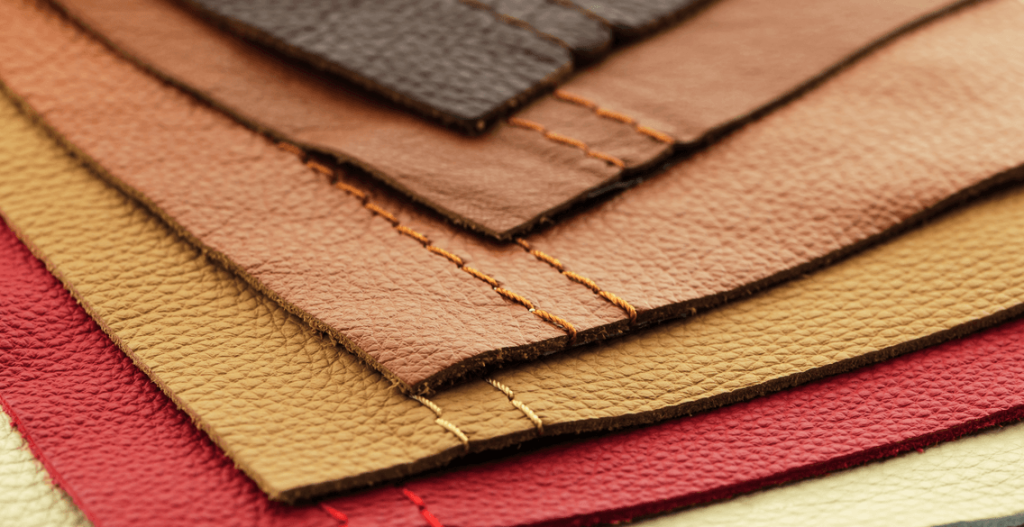
Parts of a leather hideWe are going to talk about real leather from animals!  The most common are cow and calf leather, followed by pig, goat, sheep, kangaroo (for soccer cleats – if you believe that) alligator, ostrich etc. etc.  We are going to focus on cow as it is by far the most common leather found in footwear and cow leather comes in many different styles, grades and prices.
Shoe leather starts as Leather tanneryanimal hide. During processing the hair is removed from the top or outer surface, and any remaining flesh and fat is removed from the inside of the hide. Following this operation, the hide is “tanned”  (or you could say “pickled”) to preserve the fibers. New oils, preservatives and coloring are added. There are many ways to tan shoe leather. Tanning a hide into shoe leather involves a process which permanently alters the protein structure of skin making it stronger and resistant to decomposition. This can be a very wet and messy operation as the hides are tumbled in giant drums full of water, dyes and chemicals. This operation can take 10 or more hours. Tanning can be performed with either vegetable or mineral methods. We will not go into that here, but you should know you will have options. Other processes introduce fat to the leather to make it soft and pliable.
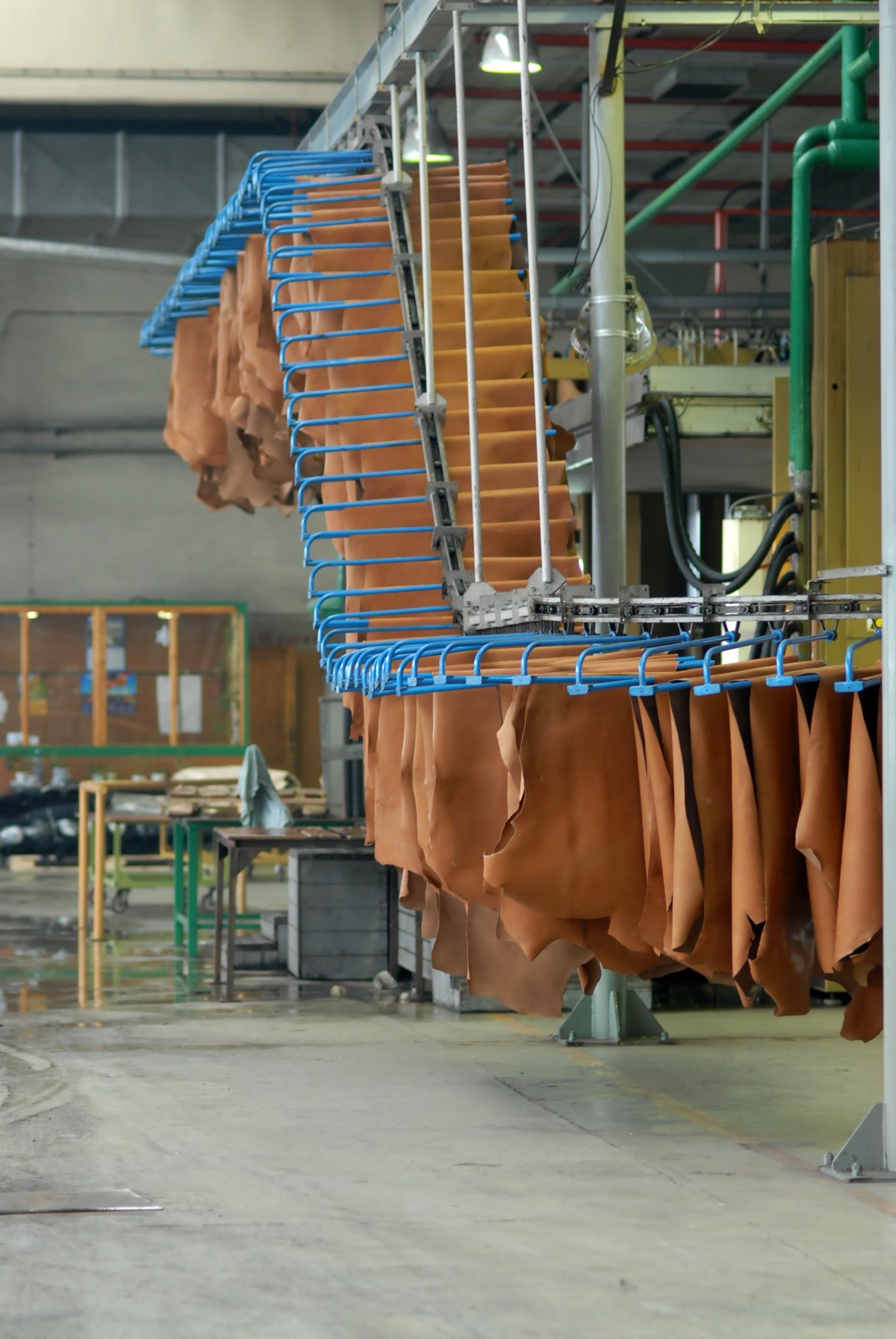
What is important to know is that the cow hide is thick and has two parts.  First comes the top surface or “grain” part of the leather. This is the outside skin of the animal. The grain is the most valuable part of the hide. The leather fibers are dense, tight, and firm. The grain surface is also smooth. Second, as the depth increases into the animal hide, the leather fibers are looser and softer. These layers are called the “split,” “split leather,” “suede,”  or “split suede.”  It’s called split because a huge metal blade is used to “split” off the top grain, leaving behind the suede surface.
Grain leather or full grain is the most expensive. There are many ways to process this type of leather depending on its quality. Full grain leather can be processed to flatten the natural grain, treated to raise the grain, or embossed to have a completely different grain pattern. The grain surface can also be waxed, oiled, sprayed, painted, dyed, and polished to create different looks.

The Ultimate Shoe Material Textbook

Start with an in-depth study of material types available for modern shoemaking. Learn the technical details of material specifications. 195 pages and 300 color photos.

Buy Now

on sale $39.99
Common Types of Grain leather or Full Grain Leather:
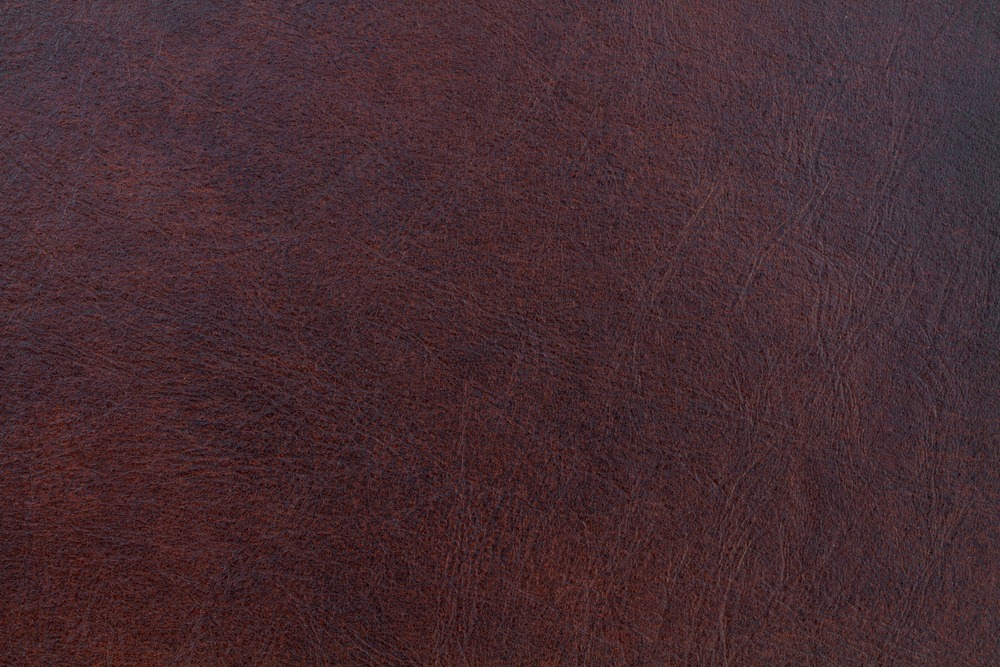
shutterstock_197004425Full Grain Aniline:  A leather which has kept its full grain, has a naturally textured full pored surface. The deep aniline coloring is achieved with dyes. It may or may not have a thin transparent finishing coat. This leather is of the highest quality and is the most expensive. Only flawless skins undergo such a treatment. Not well protected, these leathers darken well with age.
shutterstock_98859974
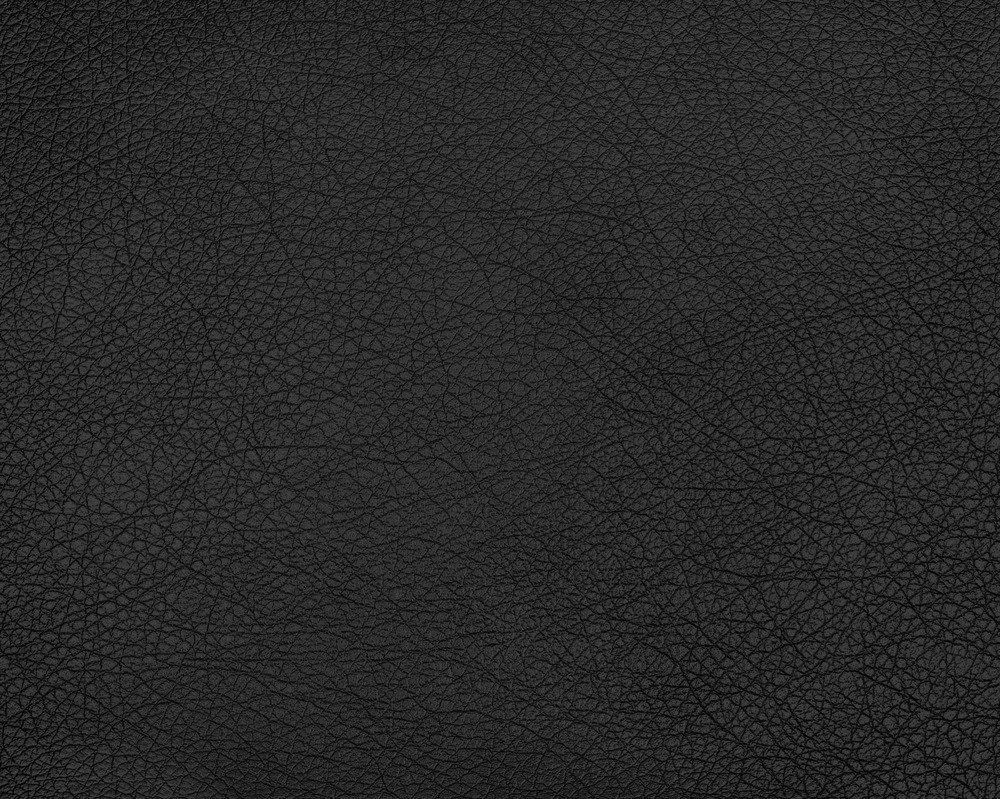
Full Grain Pigmented (also called Top Grain): This shoe leather has also retained intact its full grain but has received a penetrating dye: a colored opaque finishing which gives a unified appearance, hides small defects, and protects the leather. Only high quality raw-hides are used. This treatment makes leather pleasing to look at and to touch, and makes it resistant. It’s the best compromise between esthetics and resistance.
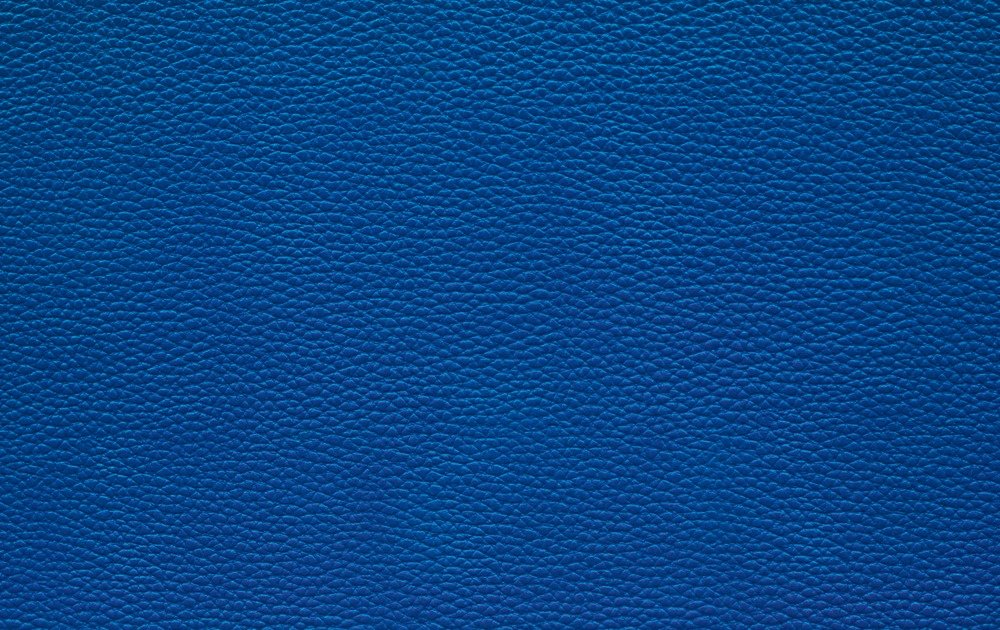
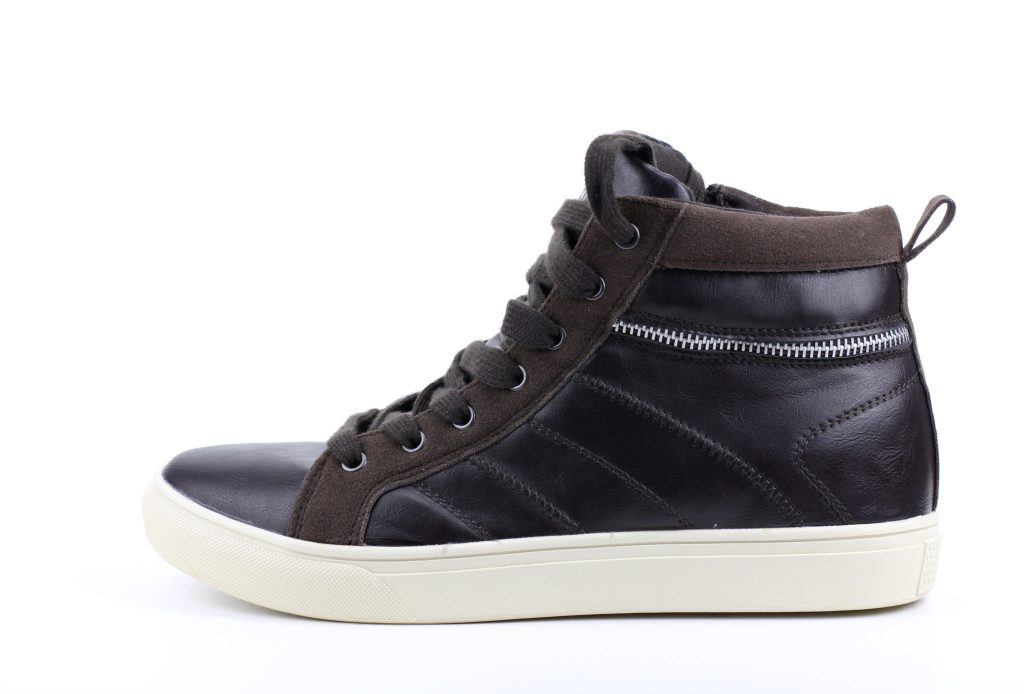
shutterstock_230987284Corrected and Pigmented Grain:  To smooth out the leather surface and to hide its imperfections, wrinkles, scratches… the skin is slightly embossed and a tinted grain film is applied to its surface.  These leathers are not of the highest quality and they have a slightly artificial appearance. The surface coating however, is quite resistant to heavy wear. This type of shoe leather is often used in service style boots. The leather will be water proofed or even blood proofed depending on the requirements. You will find this leather used to make steel toe boots for soldiers, police, and medics.
shutterstock_94238905Nubuck:  The velvety appearance of this leather is obtained by a light pouncing (or buffing) of the skin, thus highlighting the grain and the pores of the leather. To obtain a good looking nubuck, a quality skin is generally used. It’s a pleasant material, soft to the touch with velvety colors. However, nubuck is fragile and requires careful maintenance. A waterproofing treatment is mandatory. It remains a costly material. Nubuck and be oiled or post treated.  Thickness ranges from 1.8 to 2.2mm. Price ranges from $2.00 to 3.00 depending on color and quality.  Lighter colors require higher quality raw materials.
shutterstock_232410652
Crazy Horse:  To make this style of leather, a lower quality full grain hide may be brushed to remove just the top surface. The leather is then treated with a heavy, waxy, and oily compound that will darken the leather. This is the rough and rugged style of leather – you may see scratches, bug bites, scars and fat wrinkles in the surface but that’s okay, it’s crazy horse. This leather will show color changes when flexed.
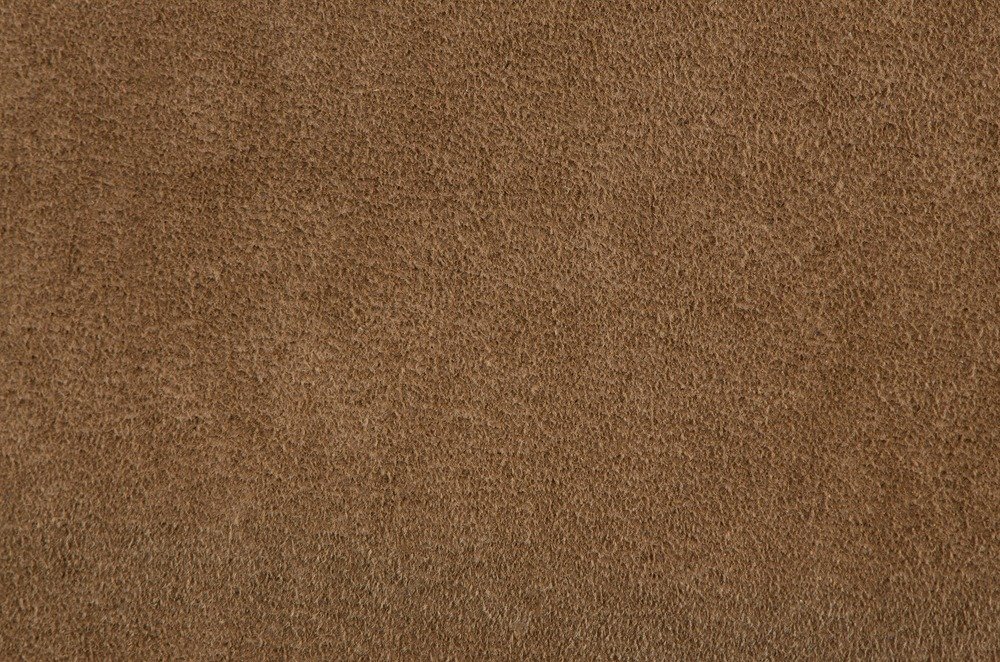
shutterstock_109910243Split or Suede:  The leather surface remaining after the top grain is removed. Suede is a very common shoe material. High quality short nap suede can almost have the appearance of nubuck leather.  Lower quality suede may be a hairy, cardboard like, dusty off-color mess.  Available in a rainbow of colors, quality suede is a stable material for casual, skate, and vulcanized shoes.  Available in thicknesses between 1.2mm  and 1.8mm.  The most common suede is 1.4 to 1.6mm. Prices range from $1.05 to $1.45 USD per foot.
shutterstock_124520731
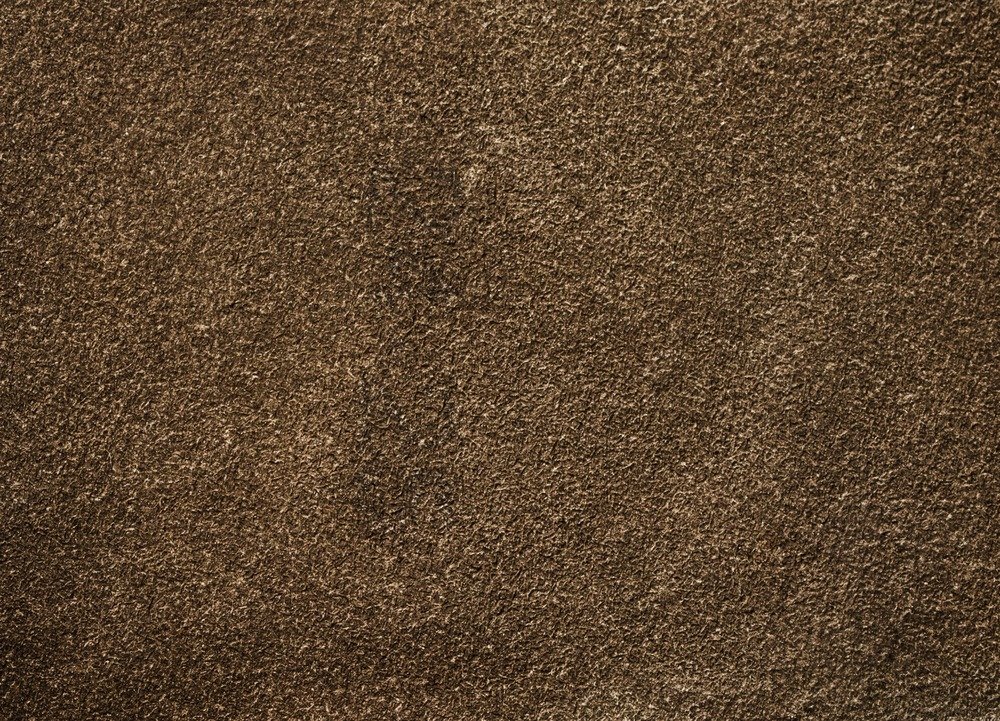
Pressed Suede:  Starting with split leather the surface is treated with an oily plastic based resin. The leather hide is then pressed flat with an embossing plate. The surface will have a fine texture and may have a slightly glossy appearance. This is an inexpensive material, starting with lower quality hides. After some use the surface will crack and the suede fibers may show. This is not for fine shoes.

Shoemaking Material Kit

All the hard find parts for your DIY shoemaking project are here in one place. Lasting board, strobel material, lining mesh B&W, collar foam and all the reinforcing parts you need for one pair.
Learn more
On sale $39.99
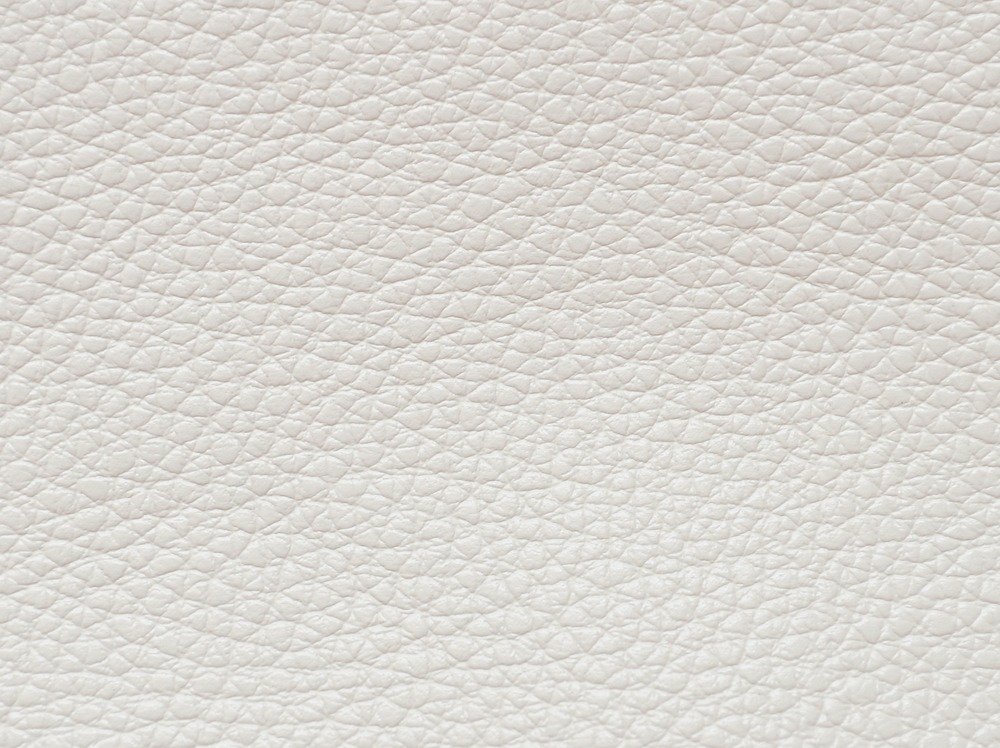
shutterstock_111108827Action or Coated Leather:  This leather product starts out as medium to low quality split leather. The surface may be pressed or rolled smooth. The hide is then laminated to a thin film of flexible stretchable PU or PVC. This synthetic surface is made by colored resin, white and black are the most common colors. The surface will be embossed which is done by pouring the plastic compound onto a sheet of textured paper. Once the fIlm and leather are bonded, the split has a very smooth full grain like surface. In fact, all the smooth white leather you see on sport shoes is this style of “action leather.”
This material is durable, the skin is waterproof, cuts clean and behaves just like full grain leather in shoe making operations. Action leather is less expensive than suede. Around $1.00 USD or a little less. This material is also easy for the factory to cut, there are typically very few scratches or scars showing that must be avoided. A very popular material for shoes, action leather is cheap, durable, looks good and comes in many colors and finishes. Action leather can look like full grain, nubuck and glossy patent leather. Finally, despite its plastic coating, action leather is still considered leather for duty classifications.
You can see there are a variety of leather types, prices, and features available. From fashion shoes made with white nubuck, to black blood-proof combat boots, leather is an amazing material for shoes.

New Online Course
How to Select Shoe Materials

14 Shoe Material lessons. Over 4 hours of video instruction. In-depth study of leather, textiles, synthetics, and plastics for footwear. Material Design Guide Textbook included.
Course Details
enroll now $399

Posted on

What’s Inside the Nike Air VaporMax?

What’s inside the Nike Air Vapormax?

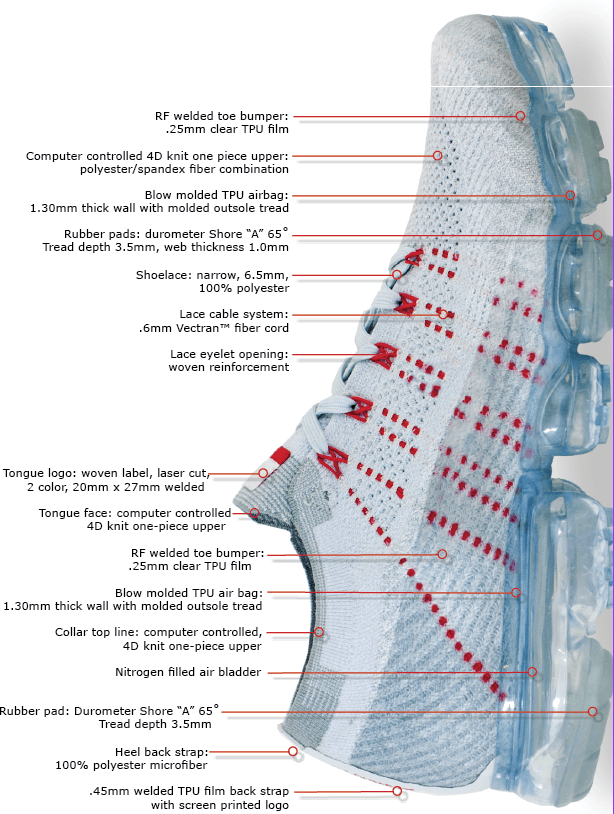
Do you want to know what’s inside the Nike Air Vapormax? So do we! Here at the Sneaker Factory workshop we love to see what’s inside the newest Nike shoes. Rather than murder our fresh pair of Nike VaporMax with a table saw, we took the time to carefully cut a sectional view so you can see inside. But before we get to the sneaker chop, let’s have a look at the outside.

The Nike Air VaporMax Shoe Specification

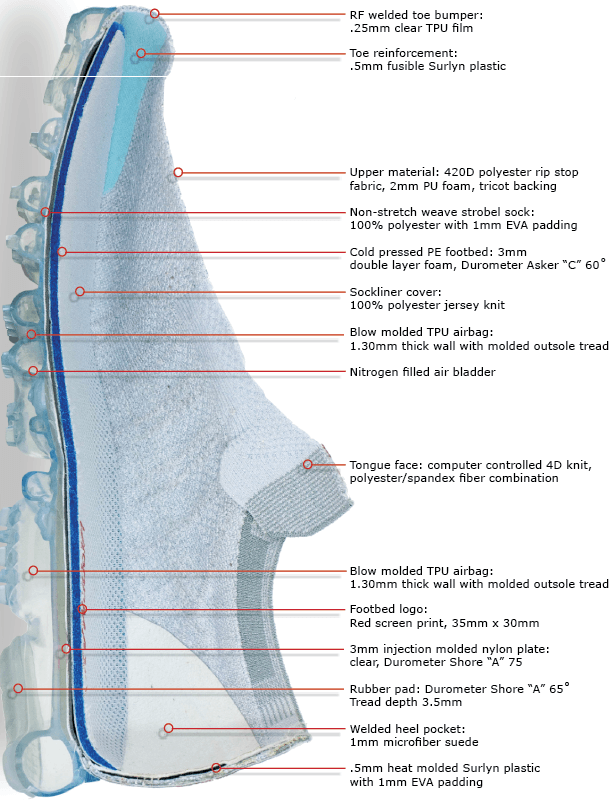
Before we cut into our Nike Air VaporMax we detailed the shoe material specifications:What’s inside the Nike Air Vapormax?

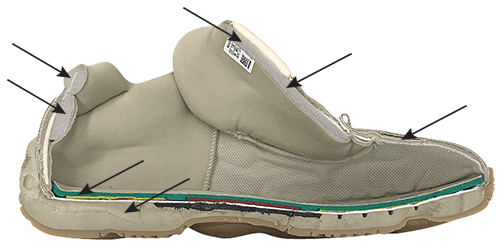
Inside the Nike Air VaporMax

Yes! we are doing the sneaker chop on the Nike Air VaporMax.  Now we can truly see the minimalist design first hand.

What’s inside the Nike Air Vapormax?


RF welded toe bumper: .25mm clear TPU film
Toe reinforcement: .5mm fusible Surlyn plastic
Upper material: 420D polyester ripstop fabric, 2mm PU foam, tricot backing
Non-stretch weave Strobel sock: 100% polyester with 1mm EVA padding
Cold pressed PE footbed: 3mm double layer foam, Durometer Asker “C” 60˚
Sockliner cover: 100% polyester jersey knit
Blow molded TPU airbag: 1.30mm thick wall with molded outsole tread nitrogen filled air bladder
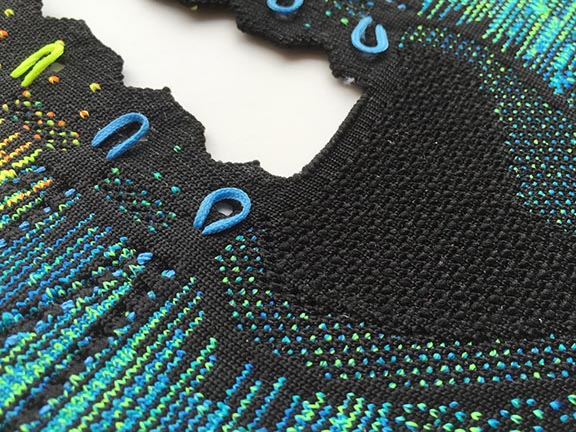
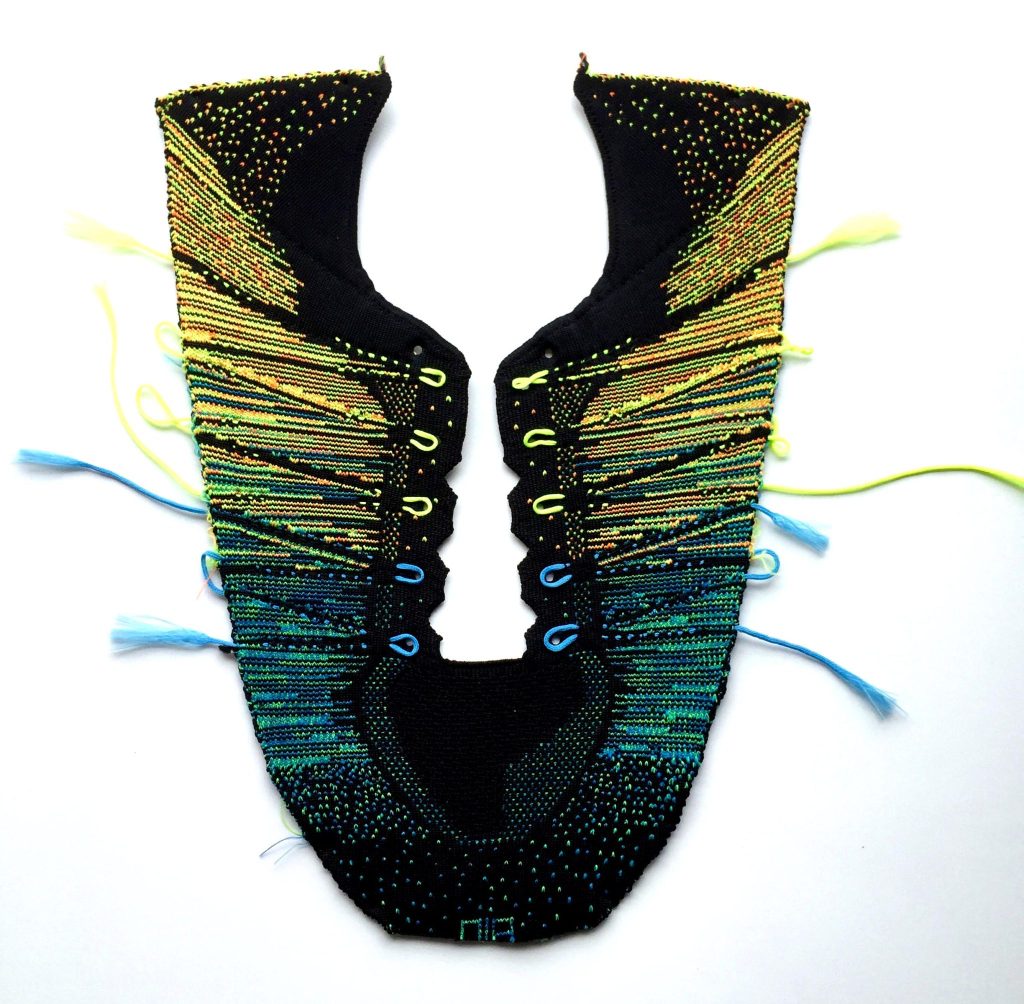
Tongue face: computer controlled 4D knit, polyester/spandex fiber combination
Blow molded TPU airbag: 1.30mm thick wall with molded outsole tread
Footbed logo: Red screen print, 35mm x 30mm
3mm injection molded nylon plate: clear, Durometer Shore “A” 75
Rubber pad: Durometer Shore “A” 65˚ Tread depth 3.5mm
Welded heel pocket: 1mm microfiber suede .5mm heat molded Surlyn plastic with 1mm EVA padding
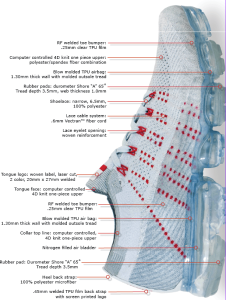
RF welded toe bumper: .25mm clear TPU film
Computer controlled 4D knit one-piece upper: polyester/spandex fiber combination
Blow molded TPU airbag: 1.30mm thick wall with molded outsole tread
Rubber pads: durometer Shore “A” 65˚ Tread depth 3.5mm, web thickness 1.0mm
Shoelace: narrow, 6.5mm, 100% polyester
Lace cable system: .6mm Vectran™ fiber cord Lace eyelet opening: woven reinforcement
Tongue logo: woven label, laser cut, 2 colors, 20mm x 27mm welded
Tongue face: computer controlled 4D knit one-piece upper
RF welded toe bumper: 25mm clear TPU film
Blow molded TPU airbag: 1.30mm thick wall with molded outsole tread
Collar top line: computer controlled, 4D knit one-piece upper
Nitrogen filled air bladder rubber pad: Durometer Shore “A” 65˚Tread depth 3.5mm
Heel back strap: 100% polyester microfiber .45mm welded TPU film back strap with screen printed logo.

Do you want to see inside more Nike shoes?

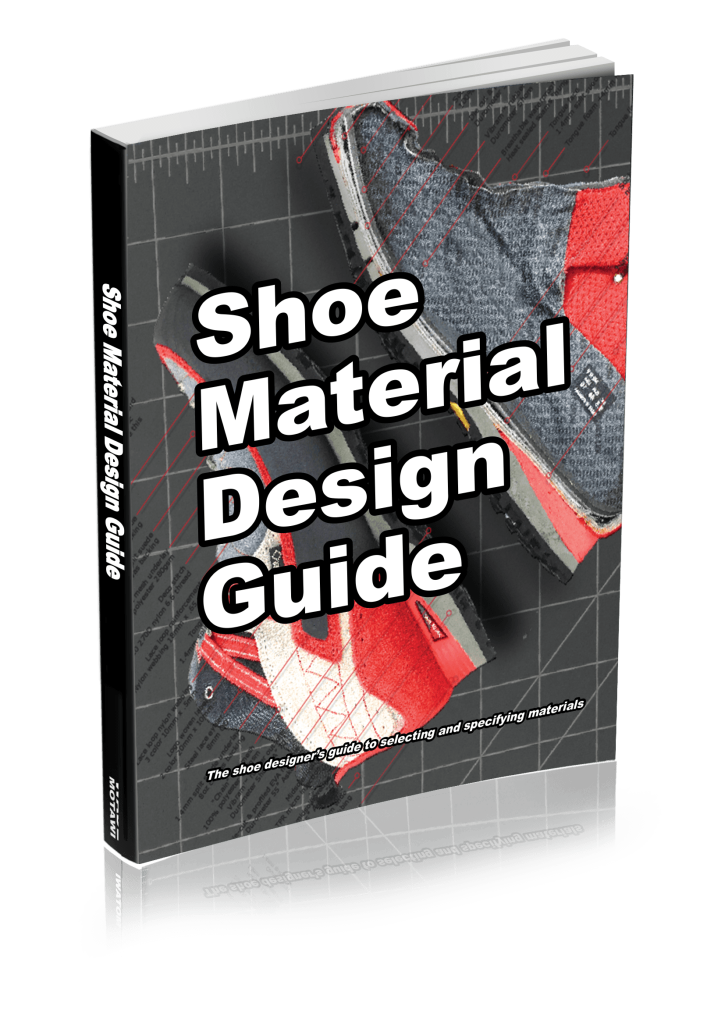
What’s inside the Nike Air Vapormax?Our book, the Shoe Material Design Guide, details all the shoe materials you will need to make modern athletic, classic casual, and high fashion footwear.
Each chapter covers a specific shoe material type. You will learn how each material is made, the options available, and how to specify the material correctly. We have chapters on shoe leather, textiles, synthetics, shoelaces, glue, reinforcements, hardware, logos, midsoles, outsoles, and more! We have included annotated cross sections of over 30 different shoe types.
You can see exactly how each material is used inside real production shoes. See inside basketball shoes, running shoes, track spikes, hiking boots, work boots, high heels, cowboy boots, and many more!


You will also find information on topics such as material testing, sustainable production, exotic materials, and more. Written as a companion to our best selling How Shoes Are Made, the Shoe Material Design Guide digs deeper into the world of footwear materials and design. Softcover, 330 color photos,  28 chapters, 195 pages.

Available as an instant download or softcover. Order from us here at ShoemakersAcademy.com or around the world on Amazon. Start reading today!


New Online Course
How to Select Shoe Materials

14 Shoe Material lessons. Over 4 hours of video instruction. In-depth study of leather, textiles, synthetics, and plastics for footwear. Material Design Guide Textbook included.
Course Details
enroll now $399
Posted on

How to Select Footwear Materials

Shoe Factory Equipment : How to make custom shoes?


See inside Nike shoes

The footwear materials you select for your shoe design are what make your shoemaking ideas come to life! You will find the shoe pattern is not the critical or special feature, the footwear materials are! Learning how to specify footwear materials is critical when you are learning how to make shoes! If you want to learn how to become a shoe designer, you must know how to spec footwear materials. You have an infinite menu of material choices and colors to create your footwear masterpiece. Rich leathers, silky mesh, or high-tech synthetics, take your pick.

The shoe designer must take great care to pick the right materials that can stand up to the demands of shoemaking. The demands for footwear performance and manufacturing must be met. A beautiful material that rips during the lasting operation or fades in sunlight can’t be used! So let’s learn how to select footwear materials.

Factors for Shoe Design Materials:

what is the inside of a shoe called

When you select footwear materials for your projects, the shoe design brief should help guide your choices. The design brief defines the type of shoe you are making: a ballet slipper for a dancer, or work boots for lumberjacks? What is the best sneaker material? What are the best running shoe materials? Are these going to be inexpensive or premium shoes? With your design brief in hand and some background knowledge, you can select the right materials suitable for your shoe design.
The most common materials for shoes are leathers, textiles, synthetics, rubber, foam, and plastic. Each has its specific uses in footwear. Depending on your design, each material will have a place in your shoe. Material selection is one of the fundamentals of shoe design. Let’s take a quick tour of these common materials.

Picking Leather for Shoes

Leather for shoes

Cow leather is the most common material used for making shoes. It is durable, flexible, stretchable, and is available in many styles, colors, and prices. It is truly a great material to use, and you can make beautiful functional and fashionable shoes out of leather. Real Leather is alive! Not really, but the character of leather changes as it wears. A fine leather shoe breathes and conforms like no other shoe.

A handmade leather shoe can be a masterpiece of a shoemakers craft. But, leather does have some drawbacks. It can be heavy, hot, and susceptible to water absorption and damage if not treated. Water-resistant and water-proof treatments add cost. Leather is a relatively expensive material when

Leather Duty Men's shoe 8.5% What is the Duty on a leather shoe

compared to fabric or other man-made materials and must be treated with care during shoe manufacturing. Because leather hides are from individual animals, each is a different size and each will have scars, imperfections, and even brands that must be avoided when cutting. This uncut material is called cutting loss. For leather, cutting loss is at best 5% of a hide, for the highest quality shoes, shoe leather cutting loss can be 15%. That’s 15% of the material cost being thrown away.

How to Select Footwear Materials

Depending on the import rules for your country, leather is often a lower duty rate. Shoes made with 51% leather surface area are around 9% import duty. A textile shoe can be 20% of the FOB price + .90, that’s a high duty rate! (depending on the country of origin).
Definitely visit a tannery to see how leather is made.  To learn more about leather read this article – Designer’s Guide to Shoe Leather.

The Ultimate Shoe Material Textbook

Start with an in-depth study of material types available for modern shoemaking. Learn the technical details of material specifications. 195 pages and 300 color photos. Buy Now on sale $39.99

Picking Textiles for Shoes

nike flyknit shoe materials

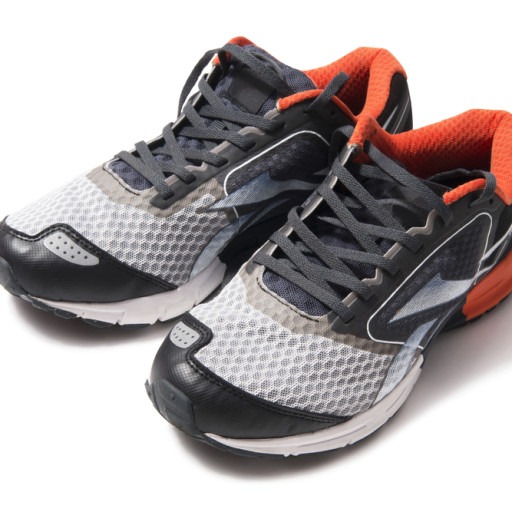
Textiles for shoes come in a huge variety of colors, weaves, knits, fibers, and deniers. Denier is how thread weight is measured.  1 denier = 1 gram per 9000 meters of thread.  Typical denier is 110D for very lightweight fabric, 420D and 600D are common in shoe fabrics. Footwear textiles come in many fiber types including cotton, wool, nylon, polyester, polypropylene, rayon, lycra, and many others. Each has its own look and physical properties.

materials for running shoes

Textiles are a miracle material for shoes! With an infinite variety of weaves, colors, patterns, and special features, textiles have a special place in footwear design. You will find textiles inside and out on footwear and even on the bottoms. Man-made polymer fibers such as nylon and polyester are lightweight and durable. Lycra is stretchable and cotton canvas is a must for vulcanized construction and has a look all its own.

how to make nike flyknit

Depending on the import rules for your country, textiles are often a higher duty rate. Shoes made with 51% textile surface area are sometimes 20%. A textile shoe costing less than $12.50 USD will be 20% +.90 duty! (depending on the country of origin). However, there is a trick, by molding textile on the sole of the shoe you can avoid the high duty rates!   Textiles will be reviewed in-depth in their own article.

Synthetics for shoes

Picking PU synthetic leather for shoes

Whatever you call it,  synthetic, synthetic leather, PU leather, or just PU, this material is another must-have for modern sports shoes. This class of material offers the shoe designer a huge variety of colors, textures, and features at a wide range of prices. It was once considered to be cheap junk not suitable for high-quality shoes, but times have changed! These man-made materials are often a composite made of two layers, being a backing layer made of woven or non-woven polyester fibers, combined with an external surface by “dry” lamination process or by liquid “wet” processes.  Many of the least expensive synthetics have a fibrous woven backing with PVC skin made by a wet process. The surface on these may not be 100% smooth and the shoe will show wrinkles and creases. This material is the cheap stuff found on inexpensive shoes.

High-end synthetic leather starts with a water-resistant microfiber PU backing. This backing has a smooth surface, cuts cleanly, and can be dyed to match the surface materials. A microfiber style backing can be ordered in .5 to 2.00mm thicknesses, has some stretch, and can have a water-resistant treatment. On top of this backing, the skin can be applied.

Polyurethane plastic film .2 to .5mm thick is made in a separate operation and the two layers are then rolled together with heat and pressure. PU outer skin is then printed, embossed, scuffed, or polished to create one of the millions of surface options. The largest PU maker has hundreds of different embossing patterns that can be applied to hundreds of different surfaces. If you can meet the order volume required, you can pick any color you want!  Synthetics will be reviewed in-depth in their own article.

Selecting Foam for Shoes

There are many types of foam used to make shoes, here we are going to review the types of foam found in the uppers of shoes. Generally, foam is divided into two types, “Open Cell” and “Closed Cell” foam. Open cell is exactly what it sounds like, the plastic compound that makes up the foam cells is open, letting air and water free to enter and exit the foam just like a dishwashing sponge. Closed-cell foam is exactly the opposite, individual cells are closed or sealed not allowing the foams internal gas to escape.

Open Cell Foam

Open-cell foam is generally softer, these foams are made of Polyurethane plastic. One common type of this foam that is commonly used and referenced is “KF or KFF” foam. Open-cell foam is available in different densities and in almost any thickness and color. Open-cell foam is used in the tongues and collars of shoes and thin sheets of PU foam are used to back fabric in most shoe uppers. PU foam allows the stitches to sink in and gives mesh some extra support while reducing wrinkles.

Foam iside thoes
Open Cell Foam in the tongue and collar. Closed cell foam in the midsole

Reticulated foam is the most open style of foam. This type is often used for ventilation features.

Closed-cell foam

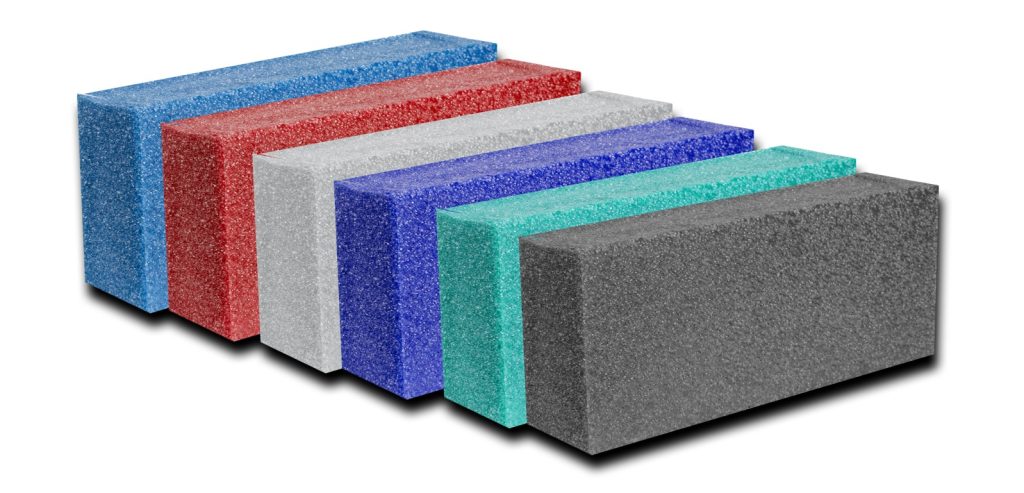
Closed-cell foam is generally denser. Midsoles of shoes are all made from closed cell foam. Midsole foam is covered the article Outsole Design. Common Closed cell foams include EVA (ethyl vinyl acetate), PE (Polyethylene), SBR Styrene butadiene rubber), PU (Polyurethane), Latex, and Neoprene, each with their own properties. EVA foam is used for backing mesh materials, and 2mm sheet EVA will make the fabric waterproof. Neoprene and SBR are used when elastic properties required, while Latex is common for collar linings. PE foam is very light but not so durable, making its use more limited.

When working with foam it is important to know what foam is appropriate for the shoe upper and what is appropriate for cushioning the shoe outsole. Learn more here.

Shoemaking Material Kit

All the hard to find parts for your DIY shoemaking projects are here in one place. Lasting board, Strobel material, lining mesh, collar foam, and all the reinforcing parts you need to make shoes. Buy Now On sale $39.99

New Online Course
How to Select Shoe Materials

14 Shoe Material lessons. Over 4 hours of video instruction. In-depth study of leather, textiles, synthetics, and plastics for footwear. Material Design Guide Textbook included. Course Details enroll now $399
What is the best material for shoes?

There is no best material for shoes. What is best for a running shoe is not the best material for a work boot. The shoe designer, footwear developer, and product manager must work together to pick materials based on the price, performance, durability, duty rates, comfort, and styling. Every shoe will have a different material requirement.


What materials are Nike shoes made of?

Most Nike shoes use a mix of leather, fabric, foam, and rubber. The Nike classics and deluxe model basketball shoes will have real leather parts. Nike running shoes and modern performance baseball shoes are generally made with lightweight fabric uppers in place of heavier leather.

By weight, rubber is the main component; by volume, foam is the main component.
Does Nike use special shoe materials?

Start Building Your Brand. Get the Start-Up Pro Pack.

A must-have for anyone serious about launching a footwear company. 4 textbooks, shoe business documents, and downloadable content not available anywhere else! The Shoe Company Start-Up Pro Pack is all you need to get your shoe business off the ground. Buy Now Download Today
Posted on

ADIDAS Commits to Only Using Recycled Plastic

Ocean Recycled Plastic in Sportwear and Shoes

The largest sportswear manufacturer in Europe and second only to Nike worldwide, ADIDAS, has recently pledged to reduce plastic use.  By 2024, ADIDAS will use only recycled plastic in all its shoes and sportswear along with its offices, distribution centers, warehouses, and retail outlets.

Find all the information here in this CNN Money article

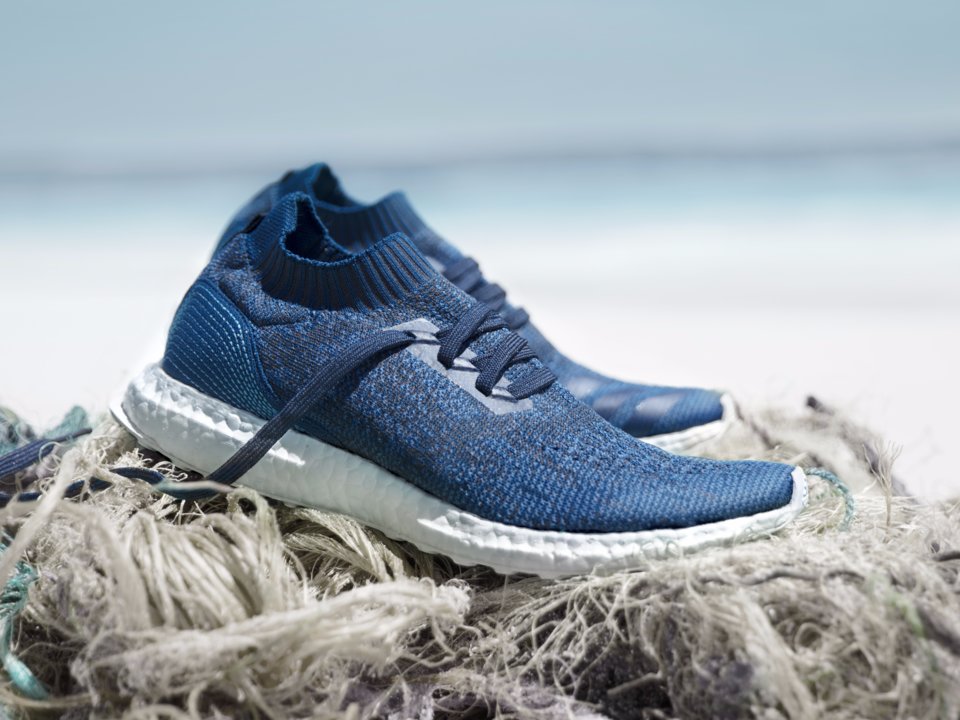
The German company is also expecting a sharp increase in sales of its Parley shoes. Introduced in 2017, in partnership with Parley A.I.R Strategy, this collection of Ultraboost shoes turns ocean plastic waste into thread that is woven into running shoe laces, heel webbing, heel lining, and sock liner covers.  Adidas expects purchases to jump to 5 million pairs this year compared to 1 million in 2017.

Parley Ocean Recycled Plastics

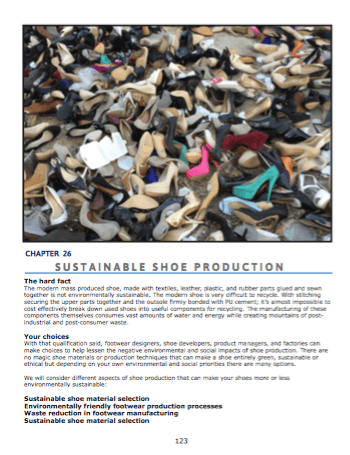
If you want to learn more about sustainable shoes, material selection, sustainable footwear design, and sustainable production, check out this article on sustainable footwear design & production and Chapter 26 in the book  The Shoe Material Design Guide.

Posted on

Nike Supreme Air Force 1 Mid ​: Real vs. Fake

How To Tell If Your Nike Air Force 1 Mid x Supreme NBA is Real Or Fake

How To Tell If Your Nike Air Force 1 Supreme NBA is a Fake, The official Sneaker Factory legit check.


Nike Air Force 1: Real or Fake?

How to Spot Fake Nike Air Force 1’s

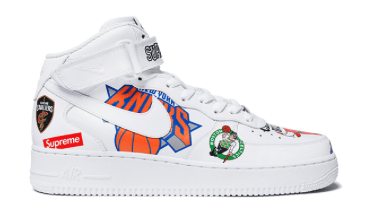
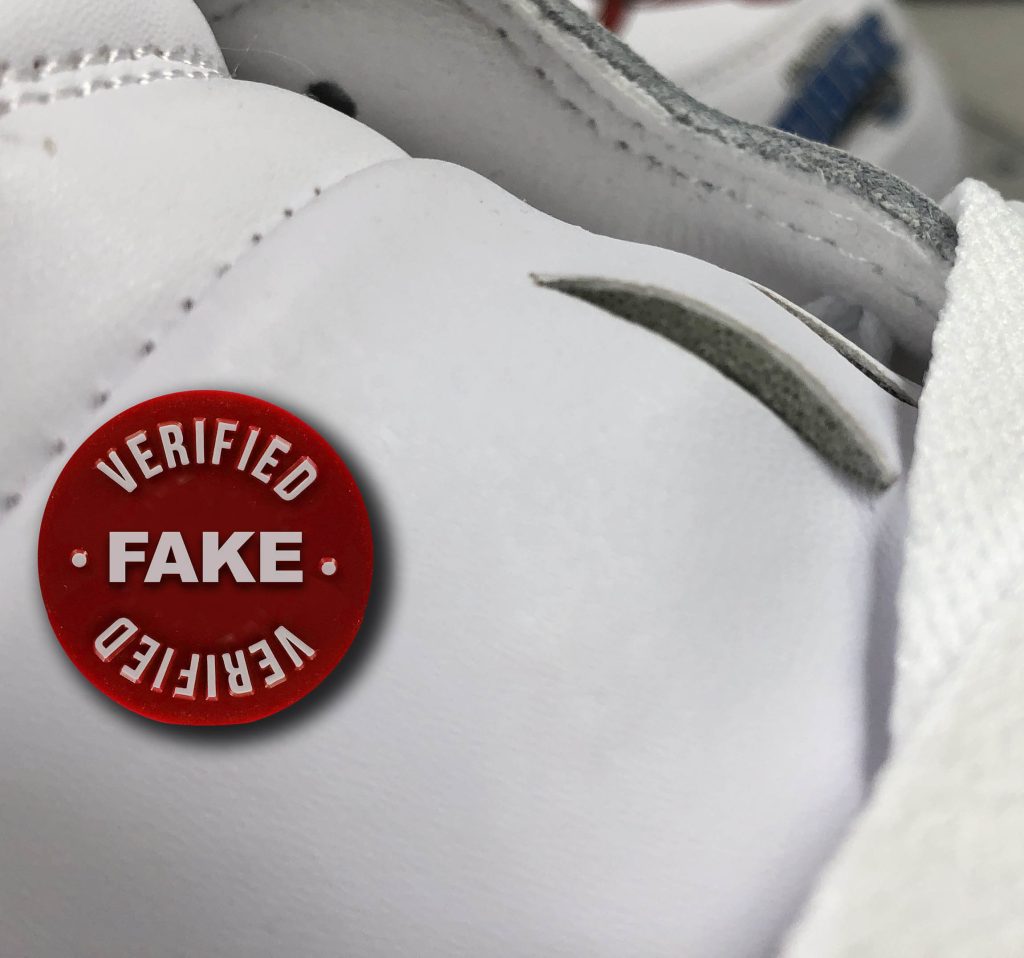
Today we have two new pairs of the Nike Air Force 1 Mid Supreme NBA White. One pair is a real Nike 100% authentic purchased from StockX. The other pair of Supreme NBA White was recently purchased in China. The real Nike Air Force 1 Mid from StockX set us back US$343.95. The fake Nike Air Force 1 Mid Supreme NBA cost RMB $300, or about US$45. Now it’s time to see which Nike is counterfeit and which one is real.

Real vs. Fake : What to look at first?

Can I buy real shoes at fake prices? 
Simply put, NO.  If the price seems too good to be true- the shoes are fake.

What if the footwear packaging is missing?
If the sneakers do NOT have the packaging included…watch out!

What about shoe production quality? 
Real Nike shoes can have some quality issues. Look closely for small flaws.
A real Nike may have some flaws but more than one or two issues is a danger sign for fake shoes.

StockX to the rescue

The StockX sneaker marketplace saves you the worry and trouble of authenticating shoes. When you purchase shoes from StockX you receive a guarantee that their staff has carefully checked them over to confirm the shoes are real. The Stockx team are real pros, They know how to make a sneaker legit check. When your shoes arrive they will have a StockX badge and sales slip. Hang on to these! When you are ready to sell, these will be very valuable. Visit their online shop: https://stockx.com

How to spot a fake Supreme Sneaker?

We have two pairs of the Nike Air Force 1 Mid x Supreme NBA in white. Before we cut them open we are going to make a few quick observations.


How to Tell Real Shoes Like Airforce Ones From Fakes. Can you see the fake Nike Supreme?

Color Matching

Nike Supreme Air Force 1 Mid

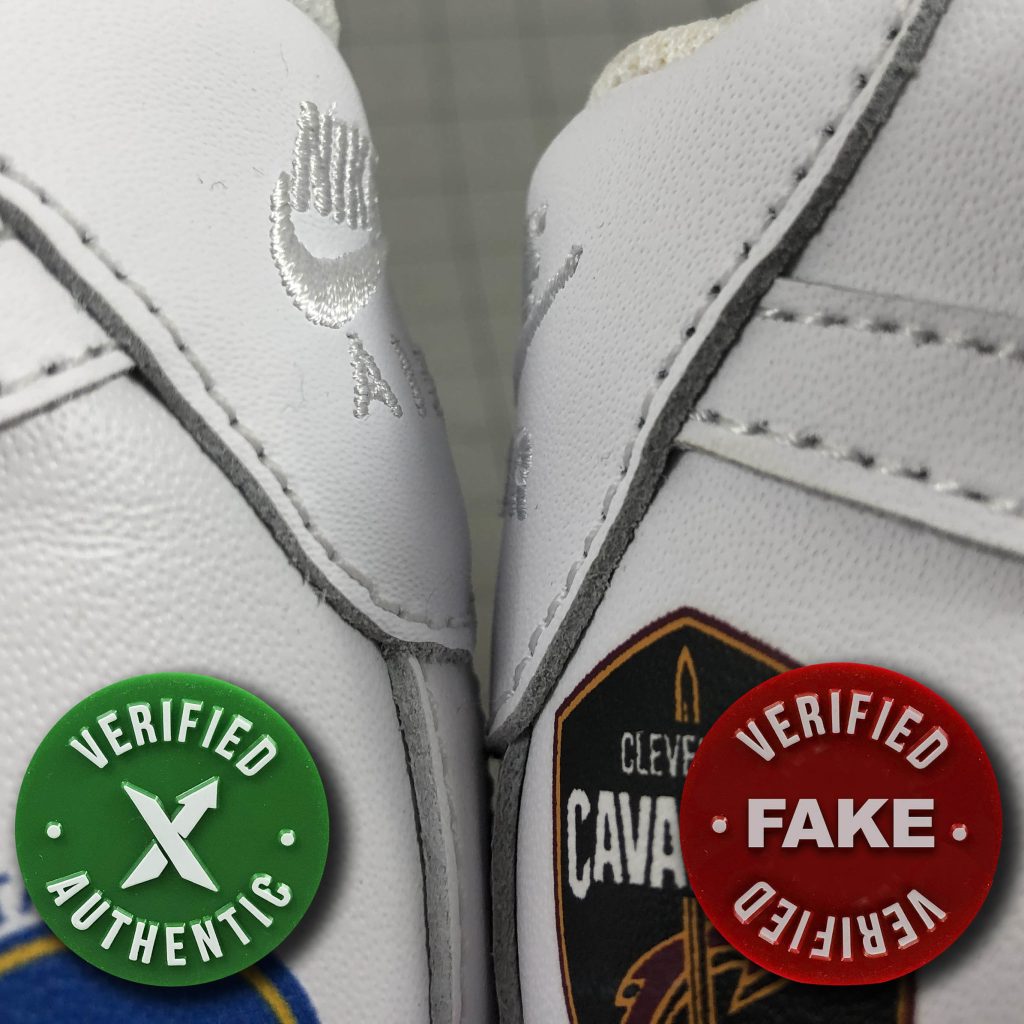
How to Spot Fake Nike Air Force One Sneakers? Look at the colors! Right off the top, we see the fake Nike Air Force 1 Mid’s have a major problem with color matching. Check out the collar lining. The real Nike collar lining is white with a smooth, turned out seam. The fake Supreme NBA is yellowish (off white) with a lumpy seam.

Fake shoes are usually made with local market materials, meaning quality and color matching may be poor. Authentic Nike shoes will only be made with high-quality materials and the material color matching will be perfect.


Have a look at the heel view of the top collar. The real shoe has a smooth, round curve. The fake Nike is a completely different shape.


Counterfeit Nike Logos and Labels

Logo and labels are often a weak point in counterfeit Nike sneakers. When you make a Nike sneaker legit check you must study the logos carefully. Our pair of knock-off Nike Supremes has all the common faults. The Chicago Bulls logo on the vamp has some problems. The nostril holes on the fake are mis-shapen. Also, on the fake shoe, you can see an air vent hole has been filled in with ink.

The Supreme embroidery logo on the top strap of the fake sneaker actually looks okay, but the edge stitching around the strap is a bit rough. The Nike swoosh logo on the strap ends have very different stitching patterns. The fake has perimeter stitching, while the authentic Nike has solid cross stitching. Note the rough stitching on the strap perimeter.

Lorem ipsum dolor sit amet, consectetur adipiscing elit. Ut elit tellus, luctus nec ullamcorper mattis, pulvinar dapibus leo.The tongue logo label on the fake is close, but not perfect. The bottom leg of the Nike ”E” is buried in the tail of the swoosh. The ”Supreme” logo is a little thin when compared to the real logo.

Look closely at the Boston Celtics logo on the lateral side mudguard. The ink color on the leprechaun’s vest is not correct and on the fake Nike, you don’t see any clovers. Now take a closer look at the basketball. The printing design on the ball is incomplete. Look above the basketball, you can see the stitching on the eyestay is rough and does not follow the pattern edge.

Construction Quality

Notice the centering mark on the tip of the toe cap. The real Nike shoe does not have the centering mark. When comparing the strap ends you will see that they are different. The fake Supreme Air Force 1 has a mismatched end cap, you can see the plastic is not fitting correctly. The real strap end has smooth, even stitching, while the fake has rough stitching.  You can see rough stitching all over the fake shoe.

The Fake Nike has thicker leather.

Fake vs real Sneakers Leather Quality 

Both the real shoes and fake shoes are made with plastic coated “Action” leather. The fake shoe actually has thicker leather. You can see the blue chrome tanned leather edge on both shoes. The edge of the fake’s leather is much darker.    

Inspect Shoes
Like a Pro

Learn how to inspect and authenticate shoes like a professional. We give the Nike Air Jordan 1, Vans old SKool and Yezzy a complete quality control shake down. Piece by piece we will study every part. Don’t get burned! Learn more On Sale $39.99

Nike Air Force 1 outsole tooling

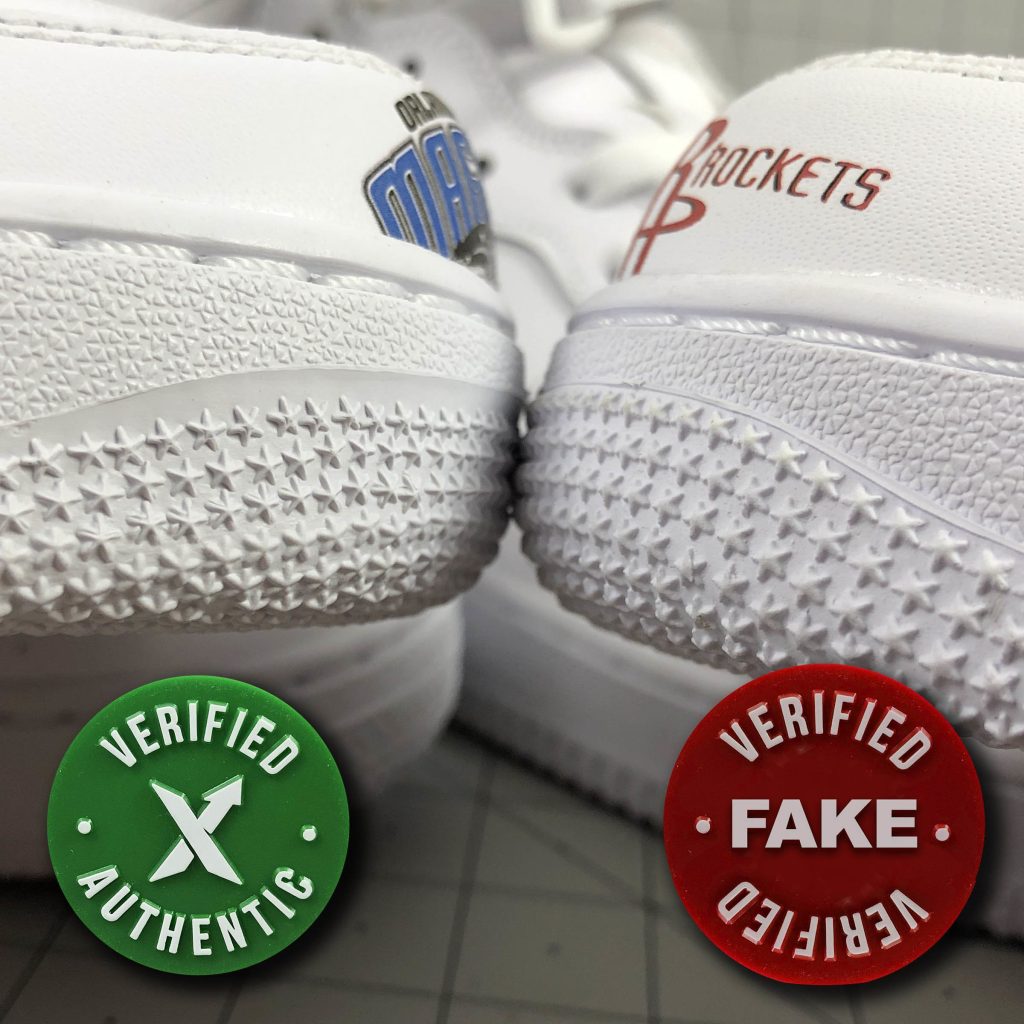
The Nike Air Force 1 outsole is a classic design but the tooling is modern. Nike manufactures shoes in China and Vietnam. Rather than move outsoles and tooling from country to country, Nike will own several sets of tooling. The Nike Air Force 1 outsole has a distinctive star pattern. What I find interesting is the fake outsole unit has a cleaner, more organized, texture pattern. If you zoom in on the fake you can see a cleaner mold parting line and a slightly sandblasted texture. The real Nike sole unit lacks the sandblasted texture and has a uniquely chaotic star pattern. The heel logo on the counterfeit Nike is close to the original but has some problems. The fake “Air” logo is further from the parting line. The design line has a wider gap between the “R” and the end. You can also see the “I” on the fake Nike is a bit narrow compared to the real logo.

Fake Nike Footbeds

The two footbeds are interesting to compare side by side. The real Nike footbed has a size sticker. You can also see a portion of the Supreme logo’s red box which is in stark contrast with the footbed fabric. 
The footbed of the fake Nike is actually thicker, and when comparing the cut edges, the copy footbed has a cleaner, trimmed edge. Lastly, the bottom design. The last notation and size mark are clearly different. On the underside of the footbeds you can see the pattern made by the gluing machine. The real and fake footbeds have different stripe or gluing patterns. The Glue pattern is great fake “tell”.  

New Course
Sneaker Authentication

13 Authentication lessons.
3 hours of video instruction.
In-depth study of footwear inspection techniques.
Authentication Text Book included.
Learn more On Sale $199

How do I rate this fake Nike?

Overall, this shoe is an okay fake. Not a great fake and not the worst we have seen. The material quality is okay, the outsole assembly is pretty good, and the assembly stitching quality is poor. The fake Nike shoes have visible over-gluing and paint touch-ups. The embroidery logos and woven labels are of high quality but the screen printed logo coloring and artwork are substandard.

Does this fake have a “tell”?

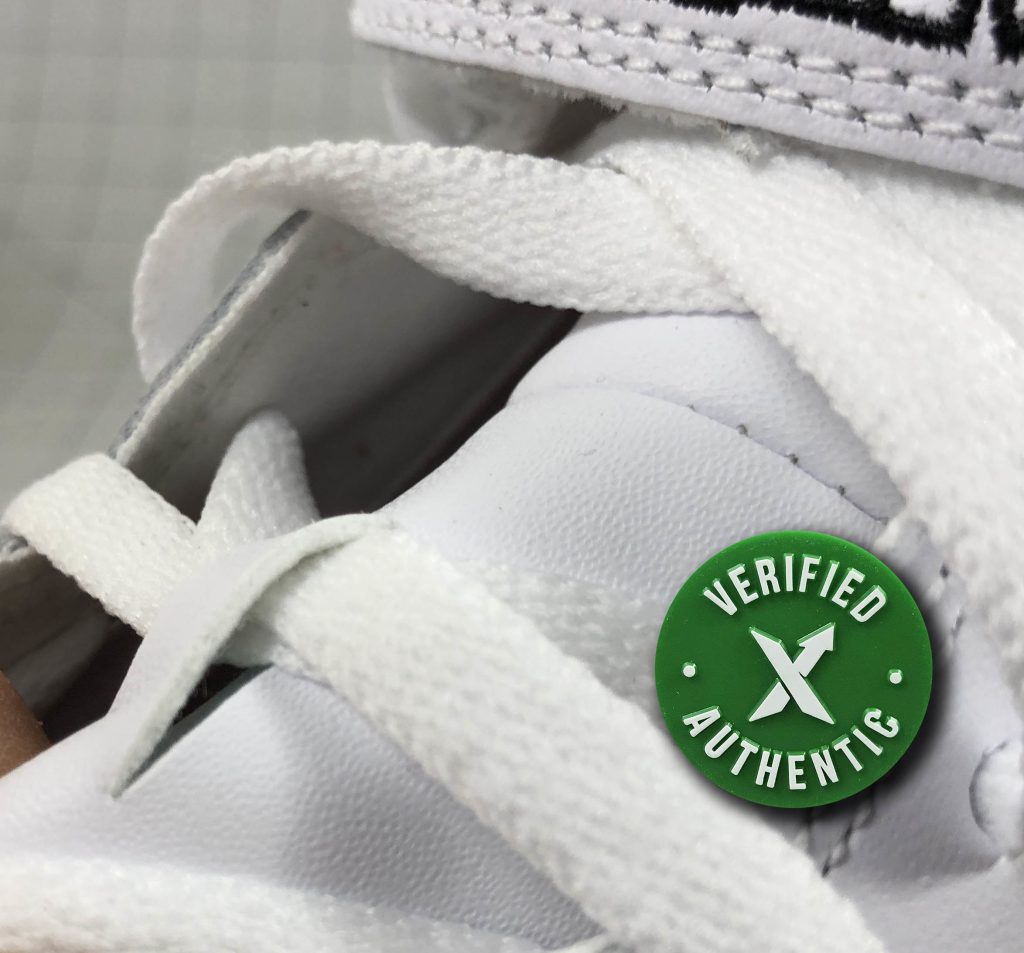
After a few minutes of study, we did find a tell. This is a tiny detail but if you are looking closely it’s a dead give away. Look carefully at the cut lace keeper on the PU tongue face. On the real Nike Supreme Air Force 1 you can see the lace keeper is a single layer of PU with white backing.  Look carefully at the fake Nike, in this case, you can see a layer of blue-tinted PU foam glued to the back of the lace keeper!    

Read More: How to Spot Fake Air Jordans

Read More: Nike Air Max 90: Counterfeit vs. Real

Are these Vans Real?

Learn how to authenticate shoes. We give the Vans Old Skool a complete shake down. Piece by piece we will study every part. Don’t get burned! Learn more On Sale $199
Posted on

NOT A SHOE EXPLOSION! Zion Williamson and the broken Nike PG 2.5

NOT A SHOE EXPLOSION! Zion Williamson and the broken Nike PG 2.5

NOT A SHOE EXPLOSION! Zion Williamson and the broken Nike PG 2.5

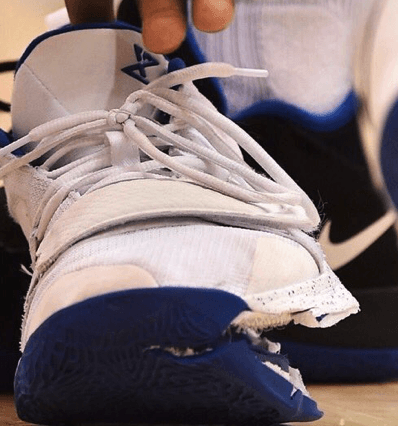
Very rarely do we get to see first hand the failure of an athletic shoe on national television. Last night, basketball superstar Zion Williams, the 6 ft 7 in 285 pound Duke player, was injured in a fall as his Nike PG 2.5 shoe failed. As a footwear professional, I hate the popular headline “Nike sneaker explosion injures Duke star Zion Williams.”

injured Duke star Zion Williamson

This shoe failure is not an “explosion.” There is nothing in a modern sports shoe that can “explode.”

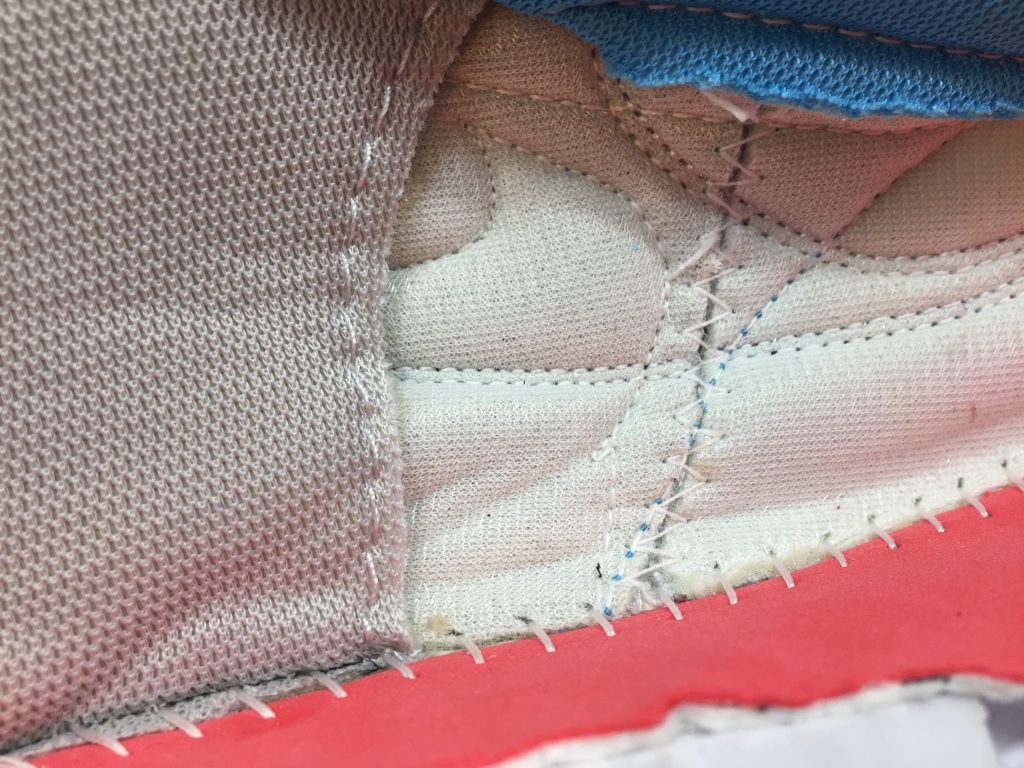
What I  see from the photos is that Zion Williams applied enough pressure on the on the side wall of the Nike 2.5 to break the Strobel stitching. In photos, you can clearly see the shoe separated at the Strobel seam. The outsole rubber is also torn and the side wall of the EVA midsole has ripped.

I would not look at the EVA and rubber parts as a cause of the failure. The side wall of the midsole can provide some strength, but EVA is a cushioning material. The Nike PG 2.5 failed because of tension as Williamson’s foot pushed through the Strobel seam.

NOT A SHOE EXPLOSION! Zion Williamson and the broken Nike PG 2.5

Looking at the photos of the broken Nike PG 2.5, it’s hard to tell what part of the Strobel seam failed. The Strobel seam has three parts to consider:

1. The Strobel sock or Strobel board
2. The upper material
3. The stitching thread

Broken Seams

When looking at any failed footwear seam you must consider several factors:

  1. Is the shoe material subject to the “perforation effect?”
    Too many stitches and stitches too close together can weaken the material.
  2. Was the seam allowance wide enough?
    Similar to the perforation effect, if the stitching is too close to the edge of the shoe the material can fail?
  3. Is the thread strong enough?
  4. Are there enough stitches per inch ?
Strobel Stitching inside a Nike PG 2.5 shoe
Strobel Stitching inside a Nike shoe

I do have one final thought in this case. I would like to know if the footbed was glued in to stop it from sliding inside the shoe and also if Williamson’s socks and the top surface of the footbed have enough friction to hold his foot in place? If the shoe was poorly fit to his foot, and his foot was allowed to slide inside, this may have been a contributing factor.

As this story develops I look forward to hearing more about what happened. Of course, we all wish Zion Williamson a speedy recovery.

Posted on

Outsole design for shoes

Outsoles for DIY shoemaking


How to Design Shoe Outsoles

The outsole design for a shoe plays a major factor in shoe performance. The outsoles for running shoes, biker boots, and football cleats all have very different performance requirements and manufacturing methods. The shoe outsole is also one of the most expensive parts of the shoe. For low-cost shoes, the cost of an outsole for a shoe can be 10% of the total cost, second only to the leather cost. For high-end basketball, running, or soccer shoes the outsole can be 25% to 35% of the shoe’s factory price. A simple cupsole may cost $2.00, while a multi-part running sole with carbon shank could cost $8.00 to $10.00.

How are the soles of shoes made?

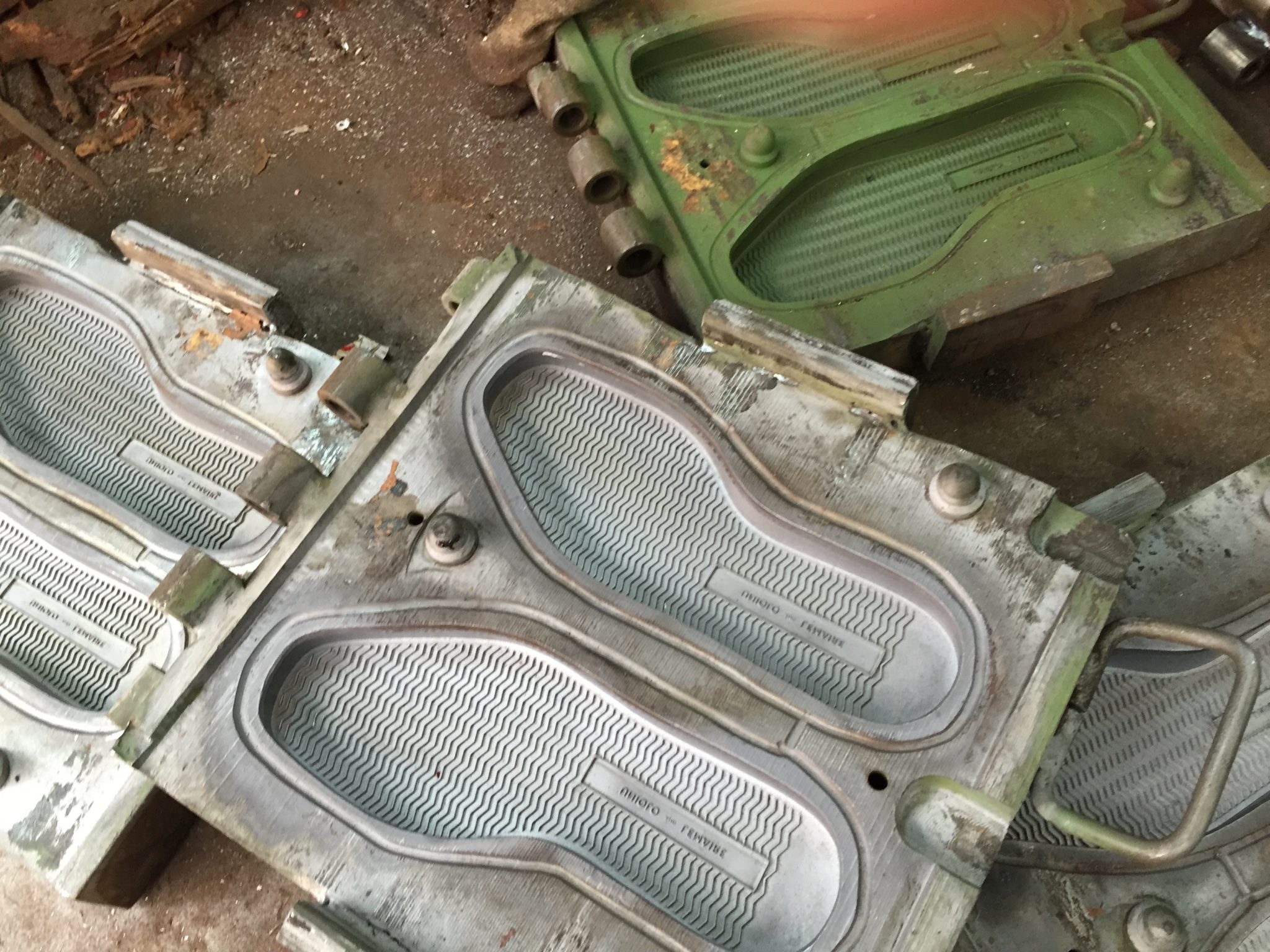
A set of outsole tooling is by far the most expensive equipment needed to produce a shoe. While the cutting dies required to produce a shoe upper may cost $1,000 for a complete size run, a single size of outsole tooling is a minimum of $1,400. Now, multiply that by 14 sizes, and you get $19,600! This is the cost for a simple rubber cupsole.


Here is a hot press rubber outsole mold before and after Teflon coating

Shoe Sole Tooling Costs

The cost for a complicated multi-part outsole with a rubber bottom, EVA midsole, and plastic shank plate may cost $100,000! Shoe companies must take great care in designing and developing new outsole tooling. Many shoe companies will only make one size for testing and sales samples. Only after their salesmen collect orders for the new model will the balance of the tooling be made. 

I have seen designers and developers work for months to create a new design only to see production canceled before it even begins. When a weak sales report arrives, product managers have difficult choices to make.

Can you risk $100,000 in tooling for a model with just a hope that it will “catch on”? Small shoe companies may be forced to use old tooling on new models until they can afford the cost of new equipment. Outsole design is critically important! The design should know the outsole mold price when thinking about a new outsole design.

The Ultimate Shoe Material Textbook

Start with an in-depth study of material types available for modern shoemaking. Learn the technical details of material specifications. 195 pages and 300 color photos. Buy Now on sale $39.99

Outsole Design Performance factors

Performance factors for footwear outsole design includes traction, support, flexibility, weight, slip resistance, and durability. These features are a function of the design geometry and materials.

Shoe Traction

Rubber shoe outsole


Sole Traction

Outsole traction is an important feature of any shoe outsole. The design of the outsole pattern and selection of materials controls the amount
of traction. The traction requirements for hiking boots, of office shoes, boat, and bowling shoes are all radically different.
When designing an outsole, it is important to understand the environment and surfaces the outsole will encounter. Traction is also directional. A mountaineering boot will require lateral traction on rough terrain, while a basketball sole needs to support quick stops on a smooth wood surface and allow spins with the foot planted.

Foot Support

An outsole design must have some supportive feature to ensure users can walk or run safely. Support can come from wider bases or added components such as molded plastic counters or rubber cup soles. A fast, lightweight running shoe designed for speed may have little support, while a mountaineering boot will have a metal shank to carry the weight of a heavy pack in rough terrain.

Outsole Flexibility

Depending on the intended purpose of the shoe, the midsole will require more or less flexibility. A tennis shoe or running shoe must be flexible, while a cowboy boot will have a steel shank to spread the load of the stirrups without bending at all. While more flexibility is usually a good thing, too much flexibility can cause instability and lead to foot fatigue. The general rule is, the heavier the load and the rougher the terrain, the stiffer the outsole.

Outsole Weight

Again, depending on the intended purpose of the shoe, the weight of the outsole may be a key feature. For a long distance racing shoe or track spike, every gram is critical. For a driving shoe or biker boot, a heavy outsole is not a problem.

Sole Durability

The durability requirements of an outsole will depend on the environment and tasks selected for the particular shoe. The fine leather soles of women’s dress shoes and men’s office shoes are perfect for smooth stone hallways and carpeted of offices, but would last only a few steps on a rainy construction site or mountain trail. Durability can be a selling feature for a shoe but may come at the expense of added weight or reduced flexibility.

Outsole Slip-resistance

Slip resistance is a key feature for many service shoes. Restaurant, hospital, maintenance, and warehouse staff members are required to wear shoes with certified slip-resistant rubber compounds and tread patterns. Oil resistant rubber compounds may also be a requirement for industrial footwear.

Shoemaking Material Kit

All the hard find parts for your DIY shoemaking project are here in one place. Lasting board, strobel material, lining mesh B&W, collar foam and all the reinforcing parts you need for one pair.
Learn more
On sale $39.99

What are shoe soles made of?

Rubber cupsole


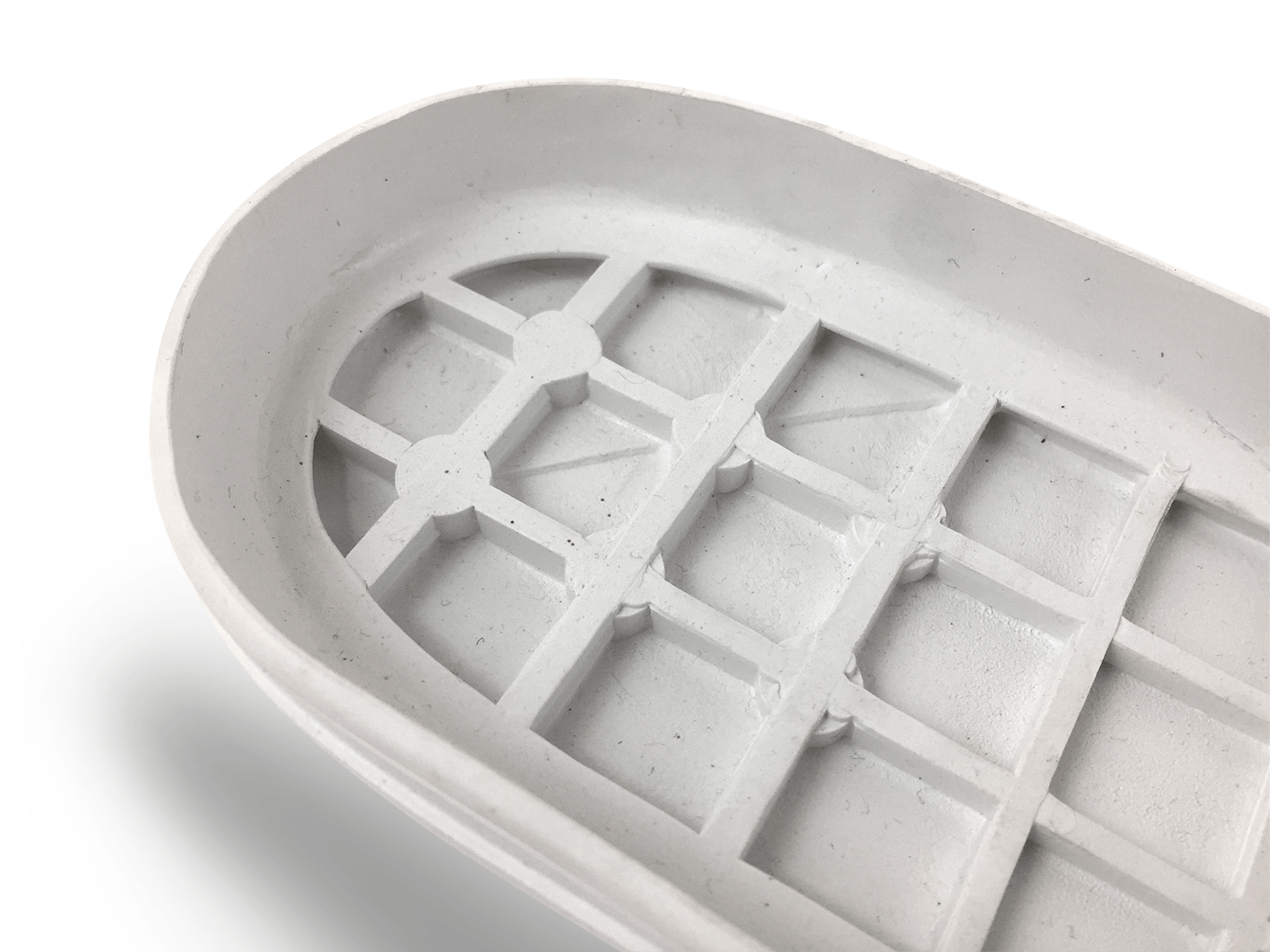
Egg crate inside a cupsole

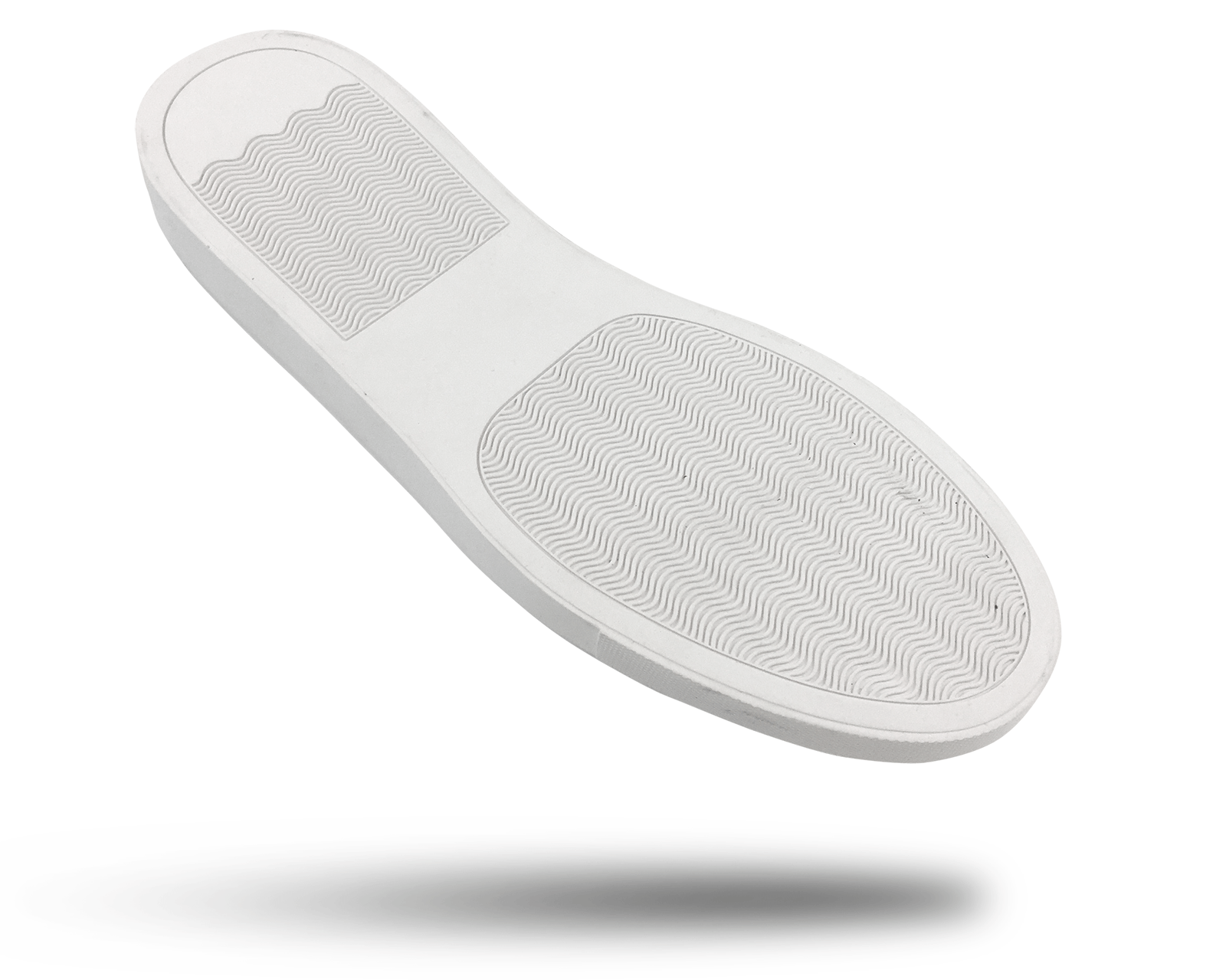
The rubber cupsole is the standard for inexpensive and durable footwear. This style is called a “cup” sole because it “cups” the upper of the shoe. The cupsole is very common and can be found in many styles of footwear. Hiking boots, casual shoes, army boots, skate shoes, court shoes, and sometimes a stylized cupsole can be found on inexpensive running shoes. A cupsole may have a “drop-in” midsole made of EVA blocks or an “egg crate” midsole molded inside the outsole. A cupsole is made by compression molding uncured rubber into a mold, much like making waffles. Cupsole tooling can cost from $1,500 to $2,500 per size.

Compression molded EVA sole

How running shoes are made


EVA midsoles ready for assembly

This running shoe uses a dual density compression molded EVA midsole with rubber inserts and a carbon fiber shank. This is an expensive outsole to make as it requires molds for the EVA, rubber, and shank parts. The EVA midsole is made by first bonding two EVA preforms with the molded shank
in between. The final shape is made by compression molding. The compression molded rubber parts are glued on in a separate operation. The tooling to make
sole unit will cost approximately $6,000
size.

Injection molded outsole

This baseball cleat outsole is made by the injection molding process. Cleated shoes for soccer, football, and baseball require stiff supportive bottoms. This outsole requires a plastic injection mold. Complicated designs with several over molded colors require an expensive mold. Simple designs require
a less expensive mold. Cleats with metal spikes or inserts require over molding or insert molding processes. This type of plastic injection requires a specialized molding machine and is done outside of the shoe factory by a subcontractor. Tooling cost can be $3,500 to $5,500 per size.

New Online Course
How to Select Shoe Materials

14 Shoe Material lessons. Over 4 hours of video instruction. In-depth study of leather, textiles, synthetics, and plastics for footwear. Material Design Guide Textbook included. Course Details enroll now $399
Posted on

RF Welding and Compression Molding for Shoes

NIKE Air Zoom Pegasus ’92

RF Welding and Compression Molding for Shoes

Radio frequency welding (RF welding) and compression molding are widely used to make modern athletic shoes. Both processes are used to create logos, design details, and even the shoe structure. In this article, we will review how Nike™ and Adidas™ are using these techniques.

Compression molding and RF welding both use heat and pressure to remold shoe materials. Welding can create unique design effects and save labor costs.


Welding Materials:

Man-made and natural materials can both be used but they require different tooling and RF welding techniques. Man-made materials such as mesh, PU, and foam can melt, mold, fuse, and stretch. Natural materials, such as leather and canvas, have some stretchability but will not remelt or fuse without the use of a synthetic backing material.

The factory will use EVA, PU, PE, and PVC foams to make the backing layers. These foams all accept the compression and with the right head and pressure, they will not rebound after RF welding.


RF Welding Tooling:

Logo welding equipment is usually Computer Numerical Control (CNC) cut from a soft, conductive, and rust free metal. Usually brass. Larger pressing tools can be CNC cut from flat aluminum sheets. Pressing tools that require a flat surface to press against can be made one-sided. The one-sided welding tool is limited in the dimensions it can create. A two-sided or “matched welding tool” can create 3D pockets and larger features. After molding, these pockets can be filled with foam or silicon.

Welding equipment:

Two classes of equipment are used to weld and emboss. The radio frequency or RF welder uses focused energy to locally heat the shoe materials and the machine comes in many sizes. A small, tabletop unit is great for logos, while a square meter sized machine is best for clothing and entire shoes.

Let’s look at some popular shoes and discuss how they are made.

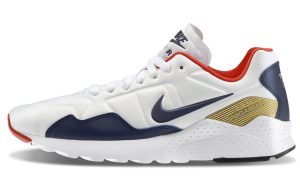
Nike Air Zoom Pegasus ’92

NIKE Air Zoom Pegasus ’92This sneaker uses a combination of RF welding and compression molding to create a unique upper design. Nike has laminated a thin layer of soft, 4mm PU foam between a semi-elastic lining and a jersey knit polyester outer shell. The upper is a single u-shaped piece of material. A ribbed embossing tool is used to crush the PU, creating the design. The factory makes the Swoosh and Air Pegasus logo in a separate molding operation.

The factory die-cuts the swoosh logo from flat TPU stock. A small RF welding machine is used to mold the logo’s 3D shape while simultaneously melting and bonding it to the fabric surface. The Air Pegasus logo is made by a similar process with higher heat to create the details. The Air Pegasus logo is made from metallic TPU film.

The tongue is completed by screen printing the logos and then welding the edge design. The tooling required to build this shoe is not expensive when compared to the outsole cost but must be CNC cut from brass.


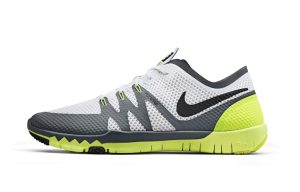
Nike Flywire 3.0

NIKE FLYWIRE 3.0The Nike Flywire shoe is made by welding die-cut TPU parts directly to knit mesh. To make this style, the flat, die-cut parts are loaded onto a flat plate. A second flat plate is loaded on top and pressed with high heat and tons of force. The TPU melts into the fabric surface for a permanent bond.

TPU parts can be die-cut or laser cut for more complicated shapes.


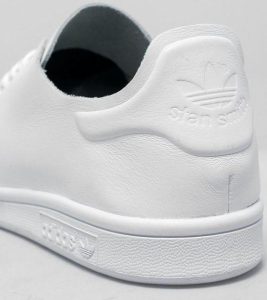
Adidas Stan Smith Premium Leather

Adidas Stan Smith Premium Leather

I really like what Adidas has done with this version of the classic Stan Smith. The Adidas designers have taken advantage of the Stan Smith’s toe cap pattern design to make a molded, one-piece heel, without any breaks. In this shoe design, Adidas shows the mold-ability of PU coated action leather. The heel logo detail is made by compressing the leather panel with a matched mold. When using a matched mold, the inner surface follows the outer surface to stretch the leather. After molding, the factory will fill the empty space with silicone gel or foam padding.


Shoe Material Design Guide

Footwear material selection.

Do you want to be a professional shoe designer? You must learn how to select and specify footwear materials correctly. The Shoe Material Design Guide details all the shoe materials you will need to make modern athletic, classic casuals and high fashion footwear.

Each chapter covers a specific shoe material type. You will learn how each material is made, the options available to you, and how to specify the material correctly. Inside you will find chapters on leather, textiles, synthetics, laces, glue, reinforcements, hardware, logos, midsoles, outsoles, and more!


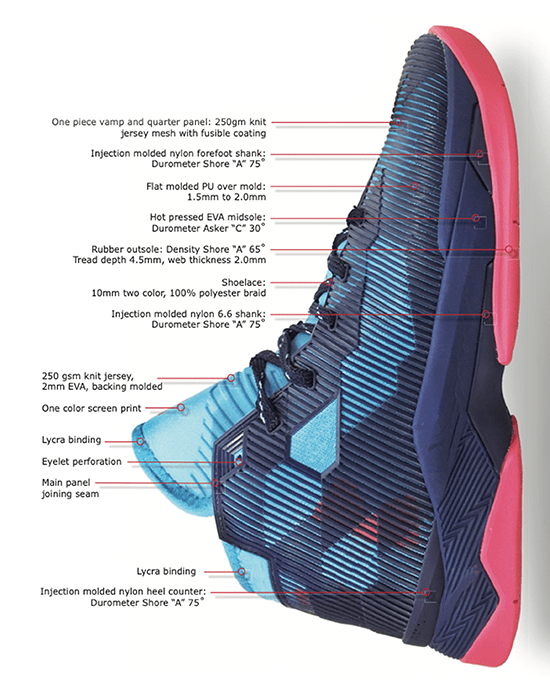
Shoe Material Design GuideSee exactly how each material is used inside real production shoes.  We have included annotated cross sections of over 30 different shoe types. Look inside basketball shoes, running shoes, track spikes, hiking boots, work boots, high heels, cowboy boots and many more!

You will also find information on topics such as material testing, sustainable production, exotic materials and more. Written as a companion to our best selling How Shoes Are Made, The Shoe Material Design Guide digs deeper into the world of footwear materials and design. Softcover, 330 color photos,  28 chapters, 195 pages.
Posted on

Shoe Materials: EVA Midsoles

EVA running shoe Midsole

Shoe Materials: EVA Midsoles

EVA misdole machine EVA midsoles are the most common cushioning materials in modern sports shoes. Used to make running shoes, basketball shoes, and almost any other sports shoe, EVA is lightweight, resists compression set, forms easily, and is available in nearly every color.  EVA is now the most widely used midsole material for shoes. Die-cut EVA can be found inside the cheapest discount sneaker, while molded EVA can be found in $200.00 high-end basketball shoes.
How is EVA foam made

EVA (Ethylene-vinyl acetate) also known as PEVA (poly-ethylene-vinyl acetate), is the copolymer of ethylene and vinyl acetate. When two plastic types join in the same polymer chain, the polymer is called a copolymer.
The weight percent of vinyl acetate plastic usually varies from 10% to 40%, with the remainder being ethylene plastic. The amount of vinyl acetate greatly affects the character of the material. Higher quality EVA will have a higher percentage of vinyl acetate while EVA with very little vinyl acetate can be hard, brittle, and feel like cardboard. Ethylene-vinyl acetate is simply a soft plastic, it’s the foaming process or “blowing” of EVA that makes it perfect for a shoe midsole.
EVA foaming and “blowing” is the introduction of air bubbles into plastic. In the mixing process, a blowing agent is added to the EVA mixture. Azodicarbonamide is the most common blowing agent in EVA production. When heated, the solid azodicarbonamide breaks down or decomposes into a gas. When trapped inside a semi-liquid plastic EVA compound, the gas expands to create tiny bubbles. The plastic is now foam.

Expansion Press or Injection Machine

EVA midsole expansion press The classic way to foam EVA is to use an expansion press. The EVA compound is mixed into a putty-like consistency then rolled into flat sheets. These sheets are then loaded into square molds about two meters square and 10 cm deep. These molds are stacked in a huge press then heated under pressure. As the EVA heats, it gradually expands to fill the mold. If more raw material is placed into the mold the EVA will be harder, less EVA and more blowing agent will make softer EVA. Once the EVA is cooled the molds are opened, and huge sheets of EVA are released.
How to Pick Shoe Materials

Start with In-depth reviews of material types available in modern shoemaking. Learn the Technical details of shoe material specification. 195 pages or 300 color photos.

Learn more

on sale $39.99
EVA midsole Injection Machine The more modern way to expand EVA is by using an injection machine. Instead of making a large block, this process will make individual sheets. The EVA injection machine is very special. The EVA material is heated inside then pushed under pressure into a mold.  This mold is about 50% of the finished part size. The mold is cooled just enough for the EVA skin to solidify. The mold opens by high-speed hydraulic ram in less than 1/4 of a second. With the pressure released, the EVA parts expand like popcorn. POP! This process is very efficient with little waste. When parts pop out of the mold, their sizes will vary. This is how EVA sandals like Crocs™ are made.
how Eva Shoe midsoles are made Pellet Expansion

Another way to expand EVA is by pellet expansion. In this process, raw EVA compound in a dry pellet form with azodicarbonamide is loaded into a mold. Like the injection mold process, this mold is also about 50% of the finished size. The mold is mounted on a high-speed press. The mold closes, and the pellets expand inside the cavity. The EVA is held in this critical state for a few minutes as the mold cools. Next, the hydraulic ram opens the mold at high speed and the part “Pops!” into full size. The EVA part is not yet ready to use inside a shoe.  It must be reheated and formed into the exact shape.
Once the EVA is expanded into foam,  midsoles for shoes and other shoe parts can be formed in one of several ways.

Cold Forming EVA Processing :

Die-cutting:  The EVA sheets are cut into shapes and put inside shoes. The solid rubber cupsole for skate shoes will often have pieces of die-cut EVA inside.
Cut and Buff:  The classic jogger midsole is made by cutting sheets of EVA then buffing edge contours.
How footbed are madeCold Pressing:  This is a funny name for this process because the EVA is actually placed into an oven!
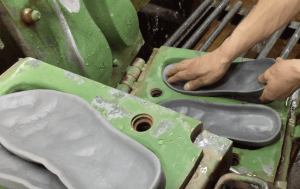
In the cold-press process, sheets of die-cut EVA are placed into an oven and heated until it’s soft and pliable.  Then, the hot EVA sheet is placed into a pressing mold that is water-cooled. The cold mold sets the EVA shape. Almost all sport shoe footbeds are made using EVA cold pressing operations. One advantage of cold pressing is the EVA parts can have fabric bonded to the surface, perfect for footbeds.

Shoemaking Material Kit

All the hard find parts for your DIY shoemaking project are here in one place. Lasting board, strobel material, lining mesh B&W, collar foam and all the reinforcing parts you need for one pair.
Learn more
On sale $39.99

Hot Forming EVA Processing:

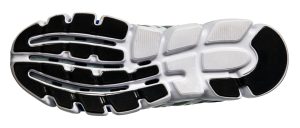
CMEVA compression Modled EVACompression molding:  CMEVA or Pylon™ is the most common process to create sport shoe midsoles. Almost all high end running shoes and basketball shoes have compression-molded EVA midsoles. This process begins with a piece of EVA that has already been expanded. This piece can be cut from an expanded foam sheet made by the expansion press method or EVA expanded by the pelleting process, either method is fine. The EVA is placed into a 100% size mold with all the design details and texture added. The mold is closed and loaded into a heated press. Inside the mold, the EVA melts allowing the air bubbles to expand, causing the EVA to fill the mold. The mold is moved to a cooling press, and then the EVA parts can be removed from the mold. These parts only need to have any mold release washed off before they can be used.
EVA Specifications :

shutterstock_299527616EVA hardness can range from  5˚ to 70˚
The suitable density for an EVA midsole is between 40˚and 65˚.   Softer than 40˚will not be stable and will be susceptible to compression set. Higher than 65˚ will not be very comfortable. The standard EVA density for running, basketball, and casual shoes is around 55˚.
EVA density is measured with a durometer tester.

EVA in shoe production:

How EVA shoes are madeThe EVA midsole is combined with the shoe outsole away from the main shoe assembly line. In a process called stock fitting, the outsole sub-assemblies are completed. Before stocking fitting, EVA parts may be washed to remove mold release and bonding surfaces may be buffed to cement adhesion.
EVA midsoles may be painted, plastic shanks fitted, rubber parts bonded, and logos added during stock fitting. The stock fitting line will have heat tunnels for drying primer and cement. This line will be very short, maybe 1/3rd the size of the main assembly line, but will have presses to ensure strong bonding of the sole parts.

New Course!
Shoemaking for Designers & Brand Builders

Created for footwear beginners and career changers alike, this course delivers the basic shoemaking knowledge you need to get you career in the shoe trades started.
Learn more
On sale $99

Posted on

Shoe Material Design Guide Book Trailer

Shoe Material Design Guide
https://videopress.com/v/mBqT58EG?resizeToParent=true&cover=true&preloadContent=metadata&useAverageColor=true

Shoemaking
TextbooksBuy Now
Shoemaking
SuppliesBuy Now
Shoemaking
CoursesCourse Details

Previous
Next