
 Shoe Designer Interview: Franck Boistel
Do you want to hear how a top gun professional shoe designer got his start? I sat down with my good friend Franck Boistel to talk about his work and to get his advice for young shoe designers looking to get started.
The shoe dog: Hey Franck, thanks for having me over! Can you give us a short bio?
Franck: I come from a family of 3 brothers, my Dad was in the French army and my mom was an opera singer.
The shoe dog: Where were you born?
Franck: I was born in Nantes, on the west coast of France. I lived there until 1997 then moved to the USA.
The shoe dog: Did you go to school to be a shoe designer? Where did you go to school?
Franck: I went to graphic design school for 3 years. I was about 19 and once I finished school I started in advertising in Nantes.
The shoe dog: What was your first shoe design job and how did you get it?
Franck: During my 3 years at school we were asked to do internships and I did mine in an advertising agency in Nantes called at Luour Med. It was a very good agency at the time.
After school they took me in for a few months but then they told me that someone 60k away in a town called Chalet was looking for a graphic designer, so I applied for the job, met the owner, and I started my first job ever there. Chalet is still known today at the fashion capital of France for clothing, footwear, everything! All the clients were fashion companies.
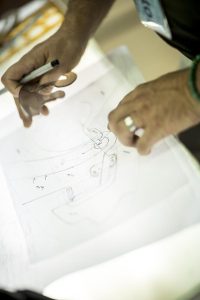
In 1997, I was visiting California and I met the founder of Etnies, Pierre Andre. He was looking at my marketing stuff and asked me if I could design shoes. I said I would try it! I went to the store and bought some papers and pencils, then went back to my hotel. I was feeling sick at the time, so I sat in the hotel, ate a bag of oranges, and drew shoes over the weekend. When I went back to Etnies on Monday and showed my designs they asked me to start. I was a shoe designer. Just like that!
The shoe dog: At Etnies, where you and I worked together, we would get the shoe design and the directive that the shoe needs to be on the market for $75. We would take the drawing and figure out materials, specifications, how to match the target price, do the pricing and the import duty… things that are not that much fun but important to running the business.
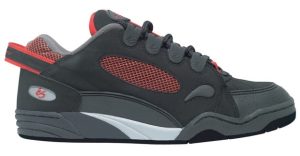 Franck: Yes! shoe design is not a one-man show, it is teamwork. It takes many people working on a design and you can’t really claim it as yours. It’s important to know that as a designer you work with product managers, product developers, pro-riders, marketing, salespeople. They are all giving you what needs to be done and you are a little magician to put all those pieces together and come up with something, but you are not alone, you have a team of people around you.
 The shoe dog: Tell us about your shoe design accomplishments?
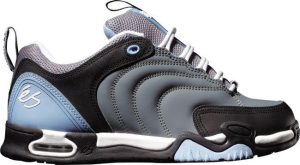
Franck: I’m really proud of all the designs I worked on with Es footwear: Varial, Tribo, Scheme. There was an era, 1999/2000, where we were blessed with favorable economics, we were exploding the market, we were researching the ideal skateboard shoe and those times were blessed with opportunities, explorations and that’s probably where I did my best work as far as going totally out of the box. So, I’m proud of all the things I designed for Es but also for Etnies, Emerica and 32 snowboard boots. With 32 we launched the whole lightweight process and product and look where 32 is now…they continued that lightweight process and 32 boots are amazing, probably the best on the market, so I’m pretty proud of that. The best sellers.
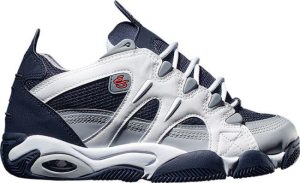 I designed skateboarding footwear for all the pro riders there: Marc Johnson, Ed Templeton, Erik Ellington, Bob Burnquist…I worked on the Koston 2 for Eric Kosten. Eric was a designer and he used to come up with 80% of the design on his own. We helped him to make up his vision. The Koston 2, 3, 4 are really my collaboration with Eric. Some of the riders need more help with their designs, like Arto Saari. I had a bunch of designs to put on the line and Arto picked one and that became a huge hit. It’s surprising. Some guys come to us with half a vision so we need to read their mind and understand what they need and what they want. On the technical side it’s easy but as far as styling it’s another ballgame so we have to pull all the information together and come up with something they are going to like. That’s the design part of it and when the shoe comes back they have to test it and sometimes they may not like the aesthetic but they like how the shoe performs and vice versa.
The shoe dog: I would tell the listeners to go look at the history of Es. The shoes from the mid-2000’s are amazing and there is nothing like that available now. It’s a very different time. For shoe designers, it’s a worthwhile study.
The shoe dog: Do you have any shoe design fails?
Franck: During the blessed times that we were designing freely without any restraints, just exploring, there were also some pretty bad messed up things. We were so free that we came up with really bad stuff but surprisingly those shoes that I don’t like, today I recognize as classics and I don’t know what to think. There was some commercial failure because the shoes we put on the market were too ahead of the times and it didn’t work, or the salespeople didn’t put the effort in to sell it because they didn’t believe in it, but it doesn’t mean the shoes were bad. In 2002/3 we started to realize that we needed to tune it down a little bit and make shoes at a more affordable price. We were starting to design more simple shoes and the salespeople were coming to us and saying, “No, no, what are you doing?” “We need another product like the Scheme.” They live in the moment and we (designers) live 2 years ahead, they didn’t see what was coming and it came. The trends went back to simple and price-conscious footwear and we saw that and we tried to put it in the line but it didn’t work at the moment we needed it to. It’s a group failure which happens all the time.
 The shoe dog: Do you have any advice for students?
Franck: I think when you start designing shoes for a company you have to get rid of the ego because the ego is not going to help you. Footwear design is teamwork and that’s very important to understand. When you approach a company and when you start designing a product that works and makes money, don’t get a big head – that will lead you nowhere. Keep your head low, keep cranking, do your best work and best designs. I have met designers and I have been confronted with my ego and that doesn’t work at all. Design is teamwork, you work with several teams.
The shoe dog: Do you have any advice for designers on the job?
Franck: Students, don’t focus too much on the sketching…it’s good, you need to know how to sketch but you need to “think design” and think about your product before you get into sketching and that’s something that I learned through the years. I don’t make tons and tons of sketches before I get something. I think about my design for a couple of weeks, it builds in my head, and I can basically see my design before I sketch it and when I sketch it’s because it’s pretty much ready. When you think about the design, don’t just think about the aesthetic, think about the function and all aspects of the product you have to design and the sketching is just a tool for you to formalize what you’ve seen in your head. Sketching is just the communication part of it. Don’t base your design just on sketching. I’ve seen so many beautiful sketches but there’s nothing original in the sketches, they don’t bring anything new to the table. I’m telling you – lots of students with beautiful sketchbooks with spiders and tons of sketches but just nothing new because they keep sketching but they don’t “see it.”
The shoe dog: New designs you like? Anything? Shoes?
Franck: I’ve been wearing Clae footwear and I really like them. The leather is amazing, the comfort is amazing, the style is pure and simplified and there are some really good lines. Everything on the shoe is great – like the footbed is comfy, it’s like buttery footwear. I like Clae footwear. Recently I’ve been wearing the NMD’s from Adidas and Ultra Boost, they are fricken amazing and I’m amazed by the amount of technology. I was fortunate to work at the Adidas factory in China and I’ve seen how the product is made and how the Yeezy’s are made and it’s just mindblowing how much thinking goes into the product. I’ve been wearing it to try it and it’s just mindblowing, the comfort is amazing, the styling is questionable, you may like it or don’t like it. I like those a lot and Adidas has been introducing a new generation of designs and forcing us to go into a new direction. Next, I like the Nike Huarache sandal that they did, very nice. I like Alexander Wang from Adidas.
 The shoe dog: New designs you hate? Anything? Shoes?
Franck: There’s a shoe that just launched a couple of days ago, the Nike Vapor Max, it has a crazy airbag midsole and the upper is very simple and I just don’t think it is aesthetically very pleasing. I don’t like the overall look and don’t think it’s the right direction. For example, the NMD’s and Ultra Boost by Adidas are sexy looking.
The shoe dog: It reminds me of the Reebok DMX from back in the day.
Franck: It’s very predictable but not in a good way. I think it’s a step back. It may feel good but it’s unappealing to me.
The shoe dog: I’m not sure I like that one either.
The shoe dog: Best Air Jordan ever, #1 or #3?
Franck: #1, I’ll tell you why. The #1 you can wear for centuries, it will never go out of style and you can wear it all the time. Beautiful design. It’s timeless.
The shoe dog: Worst shoe ever, Air Jordan 13 or The Kobe Two?
Franck: Kobe Two! I kinda like the Air Jordan 13 but the Kobe Two, no. I understand the concept behind it but it should have stayed a concept.
The shoe dog: A lot of big shoemaking mistakes never see the light of day but that one did. Should have stayed on paper.
 The shoe dog: What shoe design projects are you working on now?
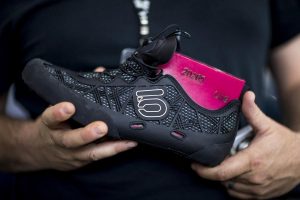
Franck: I’m working for Five Ten. A climbing shoe company that was established 30 years ago. Adidas bought them in 2011. They have been doing climbing shoes, outdoor shoes, and mountain biking shoes. I am the lead footwear designer for this company and I manage a team of two designers and we have been working on really interesting technical stuff like a canyoneering shoe.
A canyoneering shoe has to have the features of a climbing shoe as far as the grip on the outsole, gripping rocks a certain way, and the outsole has to let water flow in and out without any sand entering. When you go canyoneering you have that ultra-fine sand that gets in your shoe and builds up inside so we needed to find a way for the water to come in and the sand to stay out. So, a combination of materials and layers that work towards that. The shoe looks really nice and works well. It has been tested recently in Zion Canyon and the response has been amazing.
I’m working on an outdoor hiking and climbing shoe. A pure hiking shoe but with features so you can climb and boulder in that shoe if you need to. I’ve also been working on mountain biking cleatless shoes. That’s something I never did before and I had to fix the previous work of a designer and I had to really put my head down on that and actually successfully design a clipless shoe.
Mountain biking, outdoor, and I also am trying climbing shoes but this is another ballgame, it’s a completely different approach and technology from what I’m used to. The ergonomics are crazy, the materials are crazy, the requirements are crazy! You need to be a climber. It’s a completely separate thing. Of course, anyone can do pretty designs of a climbing shoe but to actually make it work – I’m not there yet. And that’s great because as a designer we keep learning and year to year you tackle challenges and go over obstacles and you make something that you wouldn’t think you could have designed 2 years before.
The shoe dog: Give us a shoe design web link to follow?
Franck: There’s one I check every day, www.highsnobiety.com. They have the best looking shoes coming to the market every day. They post new footwear every day, they are aware in advance of everything that’s going to come out. It’s really cool.
The shoe dog: What shoes are you wearing now?
Franck: I’m always barefoot on weekends. When I work I put on my best shoes, but weekends I’m always barefoot and that’s the best feeling ever.
The shoe dog: Any parting shots?
Franck: Be humble, be great at what you do, keep learning, be curious. That’s the main thing, to be curious and try to travel as much as you can. It refreshes the spirit and the mind and helps you tackle problems differently when you travel. Even short travel. You will come back refreshed and this is key for a designer. Stay open to the world and learn new stuff.
The shoe dog: If you want to see more of Francks shoe design work check out:
FB design Shoe design portfolio
Chomp on Kicks Shoe designer Interview
Ripped Laces – Ripped Laces Speaks to One of the Most Iconic Shoe Designers in Skateboarding
You can contact Franck on LinkedIn




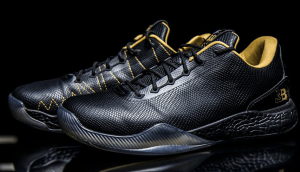
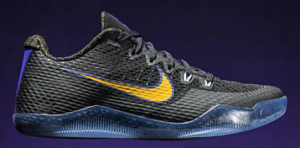
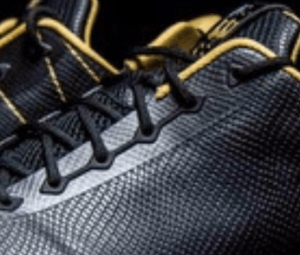 Let’s look at the design of these two shoes. Is there really is a justification for the price difference? The material specification for the Z02 Prime is listed as microfiber with Python emboss. This type of PU synthetic material ranges in price from $8.00 USD to $15.00 USD per yard. The amount required to make a low cut shoe will cost between $2.00 to $4.00 USD. This PU material is not particularly exotic. The Nike shoes’ 4D flyknit upper with TPU welds will cost about the same if not a little more. Both shoes have welded eye stays, but the Nike has more welding on the upper.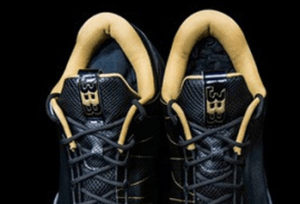
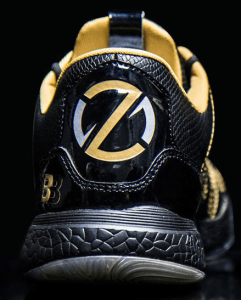 The rubber outsole designs are VERY similar. Single color crystal rubber with no logo embellishments. Thus, neither is exotic or expensive to make.
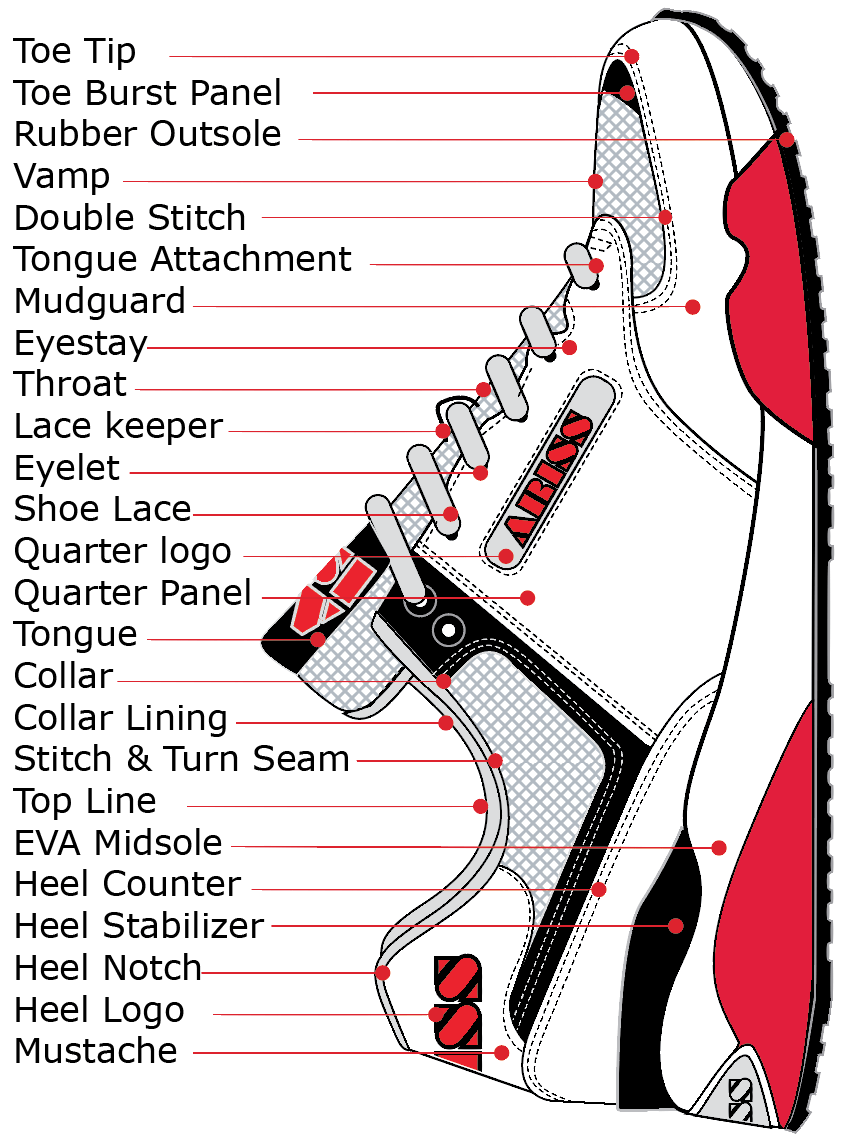 In the cold cement process, the shoe upper can be prepared with the strobel bottom. For this classic jogger style, the outsole covers the edge upper so a strobel bottom can be used to make the shoe lighter and more flexible.
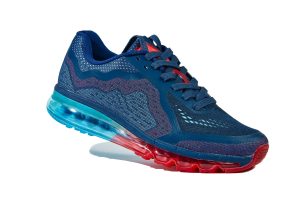 The new sneaker is ready for a final QC inspection, a quick check for any loose threads, cleaning, and packing.




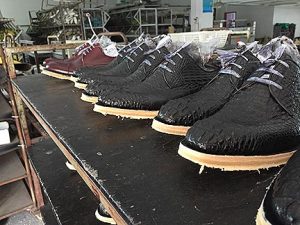 Italian High Quality Shoes
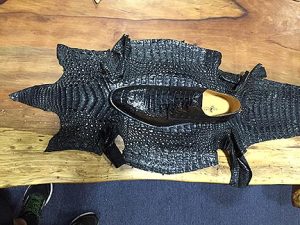 The typical shoe factory in China will have hundreds, even thousands of workers, but there is a new class of small factories now producing the highest quality custom and semi-custom shoes. On a recent visit to China, I toured the show room of the custom shoe maker Top Owen. Owen, the founder of the brand, learned his trade in mass production of athletic footwear, but then changed course.
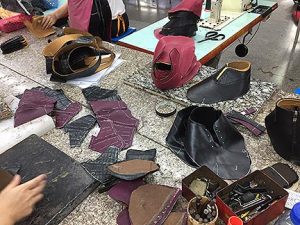 With a desire to create european craftsmanship in China, Owen left his job at a huge shoe factory to build his own micro factory. Owen hired on a staff of 25 expert shoe makers to operate his new custom shoe factory. After careful study of the highest quality European hand crafted shoes, Owen and his team now offer custom hand crafted footwear for shoe connoisseurs lucky enough to find him.
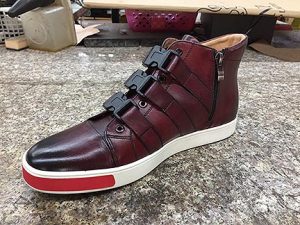 Are you looking for some custom made kicks? Owen has a section of mock vulc stitch down soles, classic trainer wedge, and classic basketball sole units available. For around $400 USD you can get your own pattern custom made in full grain leather. For an extra $125 USD you can have a test pattern sent to you for fitting.
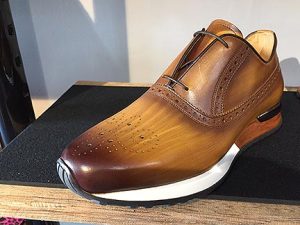 Send Owen a design for dress shoes and his team will create exactly what you want. You pick the design, last shape, leathers and any extra styling work you desire. Prices start around $400 USD – depending on your material and design requirements. For an extra $125 USD you can have a test pattern sent to you for fitting.
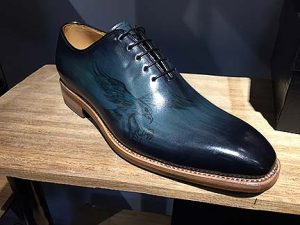 Are you looking for a full custom fit? For a 100% hand made last fit just for you? The full custom program brings the high end European custom made service to you at a fraction of the European price. Send Owen and his team photographs of your foot and record the critical measurements. Then, send Owen your design for the dress shoes and his team will create them to your specifications. Once again, you pick the design, last shape, leathers and any extra styling work you desire.
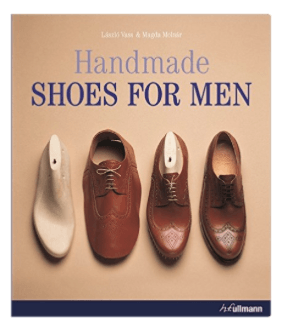


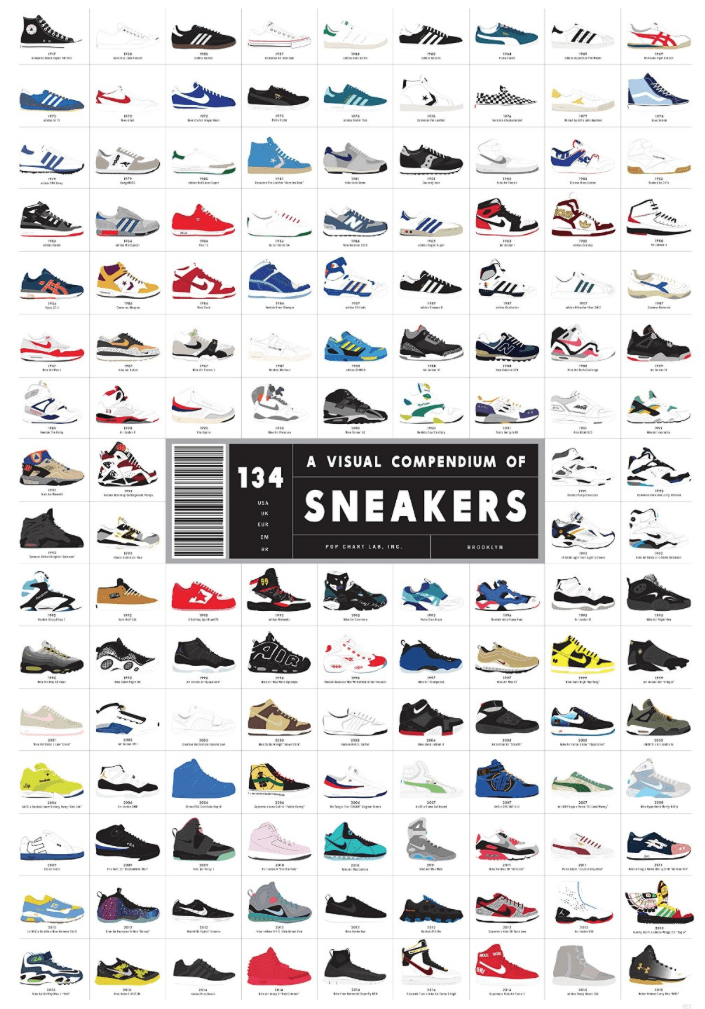

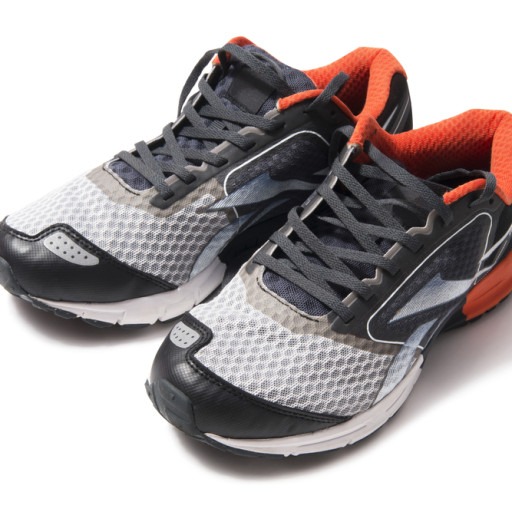 All running shoes are made by the cold cement construction process. If you want to learn how to design shoes you need to know this basic shoe making process. Cold cement is the modern updated style of shoe construction. Due to the low temperatures required for bonding the upper to the shoe sole, it allows the use of modern lightweight plastic, foam and mesh materials. Every modern high performance running shoe is made by this cold cement process.
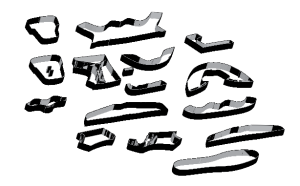 What are the best materials for running shoes? Most running shoes are constructed with breathable knit Polyester or Nylon mesh. Knit fabric allow the material to smoothly follow the last curves. Running shoe uppers often with PU leather reinforcements. Pu or synthetic leathers are great for running shoes as they have some stretch and are damaged by water. The classic running shoe is made from suede with some mesh inserts. While suede is comfortable and conforming, it’s not weather resistant and it’s very heavy when wet.
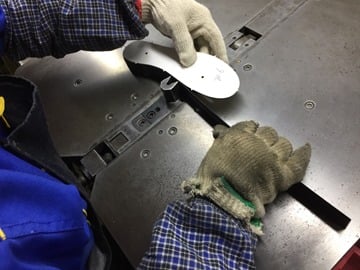
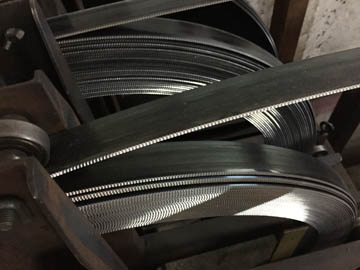
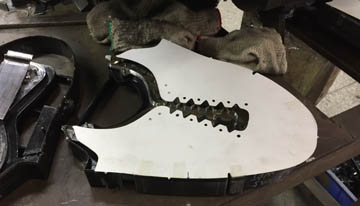
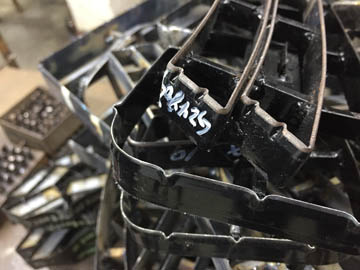
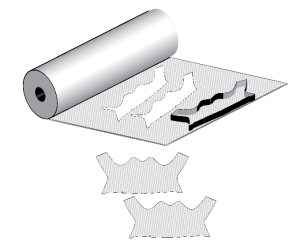 The pattern parts for the shoe are made into steel cutting dies. A cutting die is required for every part and every size. Each shoe part is cut from rolls of fabric or from leather hides. Fabric parts may be layered so many can be cut at the same time. Leather parts must be cut one by one to avoid having scars or other imperfections in the leather show on the final product.


