Posted on

Carbon Reduction Strategies in Shoe Production

AllBirds Zero Carbon Moonshot

In today’s environmentally conscious world, reducing carbon emissions is a pressing priority for industries across the board. The footwear industry, in particular, has a significant impact on earth’s carbon footprint due to its manufacturing processes and global supply chains. Today, we will explore some innovative strategies and initiatives that can help reduce carbon emissions in shoe production, paving the way toward a more sustainable future.

adidas has committed to achieving climate neutrality

Adidas has committed to:

2025, achieving climate neutrality (CO2e)
2030, reducing absolute greenhouse gas (GHG) emissions by 30%
2050, achieving climate neutrality (CO2e)

AllBirds Zero Carbon Moonshot

The Allbirds Flight Plan is a  commitment to cutting their carbon footprint in half by the end of 2025, then reducing it to near zero by 2030.

Sustainable Material Selection 

One of the key ways to reduce carbon emissions in shoe production is through sustainable material selection. Brands can opt for eco-friendly alternatives such as recycled materials, organic cotton, hemp, or innovative fibers like bamboo or cork. These materials often have lower carbon footprints compared to traditional options like leather or synthetic fabrics. You can learn more about these materials in our Online Course Sustainability Strategies for Footwear.

By prioritizing sustainable sourcing, shoe manufacturers can minimize the environmental impact associated with resource extraction and processing.

Energy Efficiency 

Improving energy efficiency in manufacturing processes is another vital step towards carbon reduction. Upgrading equipment and machinery to energy-efficient models, implementing energy management systems, and utilizing renewable energy sources like solar or wind power can significantly reduce carbon emissions. Additionally, adopting lean manufacturing principles and optimizing production layouts can help eliminate wasteful energy consumption. By investing in energy-efficient technologies, shoe producers can simultaneously reduce their environmental impact and operational costs.

Supply Chain Optimization 

Streamlining the supply chain is crucial for minimizing carbon emissions in shoe production. By optimizing logistics, manufacturers can reduce transportation-related emissions. This can be achieved by sourcing materials and components locally, minimizing the distance traveled. Collaborating with suppliers to adopt eco-friendly practices and selecting shipping methods with lower carbon footprints are other effective strategies. Implementing technologies like real-time tracking and data analytics can further optimize supply chain operations, leading to reduced emissions and improved overall efficiency.

Waste Reduction and Recycling

Implementing waste reduction strategies is an essential aspect of sustainable shoe production. Manufacturers can optimize cutting patterns and production planning to minimize material waste. Additionally, establishing recycling programs and incorporating circular economy principles can help repurpose or reuse waste materials, reducing the need for new production and lowering carbon emissions. By focusing on waste reduction and recycling, the industry can move towards a more sustainable and resource-efficient model.

Design for Durability and Longevity

Emphasizing durability in shoe design can significantly contribute to carbon reduction efforts. By prioritizing quality construction and materials, manufacturers can create long-lasting footwear that minimizes the need for frequent replacements. This extends the product’s lifespan and reduces overall carbon emissions associated with manufacturing, transportation, and disposal. Additionally, incorporating repair and refurbishment programs can further extend the life cycle of shoes, ensuring that they stay in use for as long as possible.

Reducing carbon emissions in shoe production is essential for building a more sustainable and environmentally conscious industry. By embracing sustainable material choices, improving energy efficiency, optimizing supply chains, reducing waste, and designing for durability, the footwear industry can significantly reduce its carbon footprint. These strategies, combined with consumer awareness and support, will pave the way towards a greener and more sustainable future for the shoe manufacturing sector.

Footwear Sustainability Strategies Online Course

Online Course! Footwear Sustainability Strategies dives into eco-friendly material choices, options to design for durability, methods to reduce waste, recycle, and implement more energy-efficient manufacturing processes and more to reduce your brand’s carbon footprint.

Posted on

What Makes a Shoe Sustainable?

sustainable footwear materials

A sustainable shoe brand considers its social and environmental footprint throughout a shoe’s life. Simply put, sustainable shoes usually have lower carbon footprints, are made of sustainable, eco-conscious materials, and are created in ethical factories.

There are many ways to incorporate sustainability into footwear design and manufacturing. Here are a few ideas:

Use Sustainable Shoe Materials:

One of the best ways to make footwear more sustainable is to use eco-friendly materials. Materials like organic cotton, recycled polyester, hemp, and bamboo are renewable and sustainable. Additionally, using materials that are biodegradable or compostable can reduce the amount of waste generated by the footwear industry.

Reduce Waste:

Footwear manufacturers can reduce waste by reusing or recycling materials. For example, they can use recycled rubber for the soles of shoes or repurpose leather scraps into new products. They can also implement more efficient cutting methods to minimize the amount of waste generated during production.

Design for Durability:

By designing shoes to last longer, manufacturers can reduce the amount of waste generated by the industry. This can be achieved through the use of high-quality materials, sturdy construction methods, and repairable designs.

The Ultimate Shoe Material Textbook

Start with an in-depth study of material types available for modern shoemaking. Learn the technical details of material specifications. 195 pages and 300 color photos.

Buy Now

on sale $39.99

Use Water-Based Adhesives:

Many adhesives used in footwear manufacturing contain harmful chemicals that can be harmful to the environment. Using water-based adhesives can reduce the amount of toxic chemicals released during the manufacturing process.
Consider the End of Life:

When designing footwear, it’s important to consider the end of the product’s life cycle. By designing shoes that are easy to recycle or biodegrade, manufacturers can reduce the amount of waste generated by the industry. They can also implement take-back programs to encourage customers to return their old shoes for recycling or repurposing.

Reduce Carbon Footprint:

Footwear manufacturers can reduce their carbon footprint by using renewable energy sources, optimizing transportation routes, and reducing energy consumption during the manufacturing process. This can help to reduce greenhouse gas emissions and mitigate the effects of climate change.

New Online Course
How to Select Shoe Materials

14 Shoe Material lessons. Over 4 hours of video instruction. In-depth study of leather, textiles, synthetics, and plastics for footwear. Material Design Guide Textbook included.
Course Details
enroll now $399

Finding Sustainable Shoe Manufacturers:

It’s not so hard to find shoe manufacturers that engage in sustainable practices. Sustainability and efficiency go hand in hand. Making shoes more sustainable is good for business and profits. Yes, some sustainable production methods may cost more, but many are cost neutral or can save you money. Your goal should be transform all of your shoe factory partners into more sustainable factories. You can do your part by selecting better materials and demanding earth-friendly processes. 

Support Ethical Manufacturing Practices:

Finally, supporting ethical Footwear manufacturing practices can help to ensure that workers are treated fairly and that their rights are protected. This can include paying fair wages, providing safe working conditions, and minimizing the environmental impact of production.

 
Shoemaking
TextbooksBuy Now
Shoemaking
SuppliesBuy Now
Shoemaking
CoursesCourse Details

Previous
Next

Posted on 3 Comments

What is the Shoemakers Academy?

Online shoemaking courses for beginners

The #1 Online Shoemaking Resource

https://vimeo.com/838401870

“The Shoe Dog” would like to blow your mind with incredible shoemaking information. 

Hello Future Shoemaker!

I’m so glad you have found us. Our products are 100% designed to help folks like YOU get started in the world of shoemaking. Did I say, “get started?” I mean, TOTALLY CRUSH IT in the world of footwear!

The Shoemakers Academy online curriculum of footwear training courses was originally developed to train the development staff of an $11 Billion Dollar retail giant! Yes, that is billion with a “B,” and they have a huge office in New York City!

They needed to level up the skills of their team (fast!), so they called us for help. This same program has been updated, improved, and expanded and is now available to you! Do you think I’m joking? No, it’s for real! And that’s why our students call this the $11 Billion Dollar shoemaking course!

These courses are awesome, but you don’t need to take my word for it. The textbooks we include are also used by the University of Oregon’s School of Business Sports Product Management Master’s degree program. Say that three times fast! And yeah, we think that’s pretty cool.
And do you know what else is pretty cool? The Shoemakers Academy textbooks have been translated into Spanish, Chinese, and Vietnamese. Shoemakers around the world use them to build their skills. We are proud of that fact!

Okay! You may be asking yourself, “Will this program help me get hired into the shoe business?” You bet it will! In fact, if you go to work for a certain gigantic global shoe brand, the books “How Shoes are Made” and the “Shoe Material Design Guide” are part of their new staff training program. And yes, they buy in bulk!

So….what are you waiting for? A special invitation? Okay then. I’m inviting you to take your first step on the road to shoemaking glory!

Today is the day to start your journey!

I completely forgot to share the most exciting aspect of the $11 Billion Dollar shoemaking course…

Here’s the best part – you have the flexibility to study whenever and wherever you want! Whether you’re using a computer, tablet, or phone, you’ll enjoy 24/7 access to courses and materials. Study comfortably at home, at school, or even during work breaks (just not while driving, of course).

But wait, there is more to our story!

The next best part is this – If you don’t find the roadblocks to your shoemaking future blasted into tiny fragments, or if you don’t acquire incredible new insights into the shoe business, simply let me know, and I’ll gladly issue a full refund.

It’s a risk-free offer with no strings attached. That’s it! No risk, nada, zip, zero. You can think of it as the $11Billion Dollar refund policy.

(Just your purchase price, not $11 Billion Dollars, that would be crazy.)

You get to keep the digital downloads too! Now, that IS pretty crazy, isn’t it?

And one last thing, I promise – we’ve only had one student who requested a refund. He expressed his sincere regret and still keeps in touch with me. Yeah, I don’t know why, either.

If you have any questions about the textbooks, the $11 Billion Dollar course, or anything related to shoemaking, I demand that you call me! 

Use this link to schedule a Zoom call with me.
https://calendly.com/ask_a_shoe_dog/.

Cheers,
Wade “The Shoe Dog”

Start Your Shoemaking Career

Expand your skills and knowledge in modern shoe design, manufacturing, and sourcing with our online masterclass. We offer over 125 footwear lessons for all levels, taught by experienced professionals. Access 24 hours of on-demand video instruction and bonus materials including five shoemaking textbooks.
See Course Details
ALL ACCESS PASS

Posted on

Sneak Peek into Footwear Courses

How to Design Shoes Online Course

Level up your footwear design and development skills!

Welcome to the Shoemakers Academy Online Footwear Courses!

“The Shoe Dog” takes you on a 90-second sneak peek into Shoemakers Academy online video footwear courses.

What do the courses look like?
Which courses should I start with?
What comes with the course?
Once I enroll, where do I find my course materials?
How long are the courses?
Can I skip around the lessons and replay them?
Can I watch the course videos on my phone and my laptop?

See the full curriculum of courses here.

More questions? Email TheShoeDog or visit our FAQ page.

The Fast Track
Footwear Curriculum.

Kick start your footwear career today! 100 lessons, over 24 hours of on-demand video instruction for shoe designers, developers, and footwear brand builders. Bonus Content: Textbook Bundle
All 5 shoemaking eBooks
Course Details
Instant Access

Posted on

Sign up for Online Shoemaking Courses

DIY Shoemaking for Beginners course Footwear class

Start Your Shoemaking Career Today!

Welcome to the Shoemakers Academy!

This short video is an introduction to the Shoemakers Academy website. This video shows you the great educational resources available to shoemakers, shoe designers, and footwear developers.
Where do I find the online shoemaking course I want?
How do I sign up for the shoemaking course?
Where can I buy the shoemaking course textbooks?
How do I enroll and purchase a course?
After I sign up, how do I find the course and begin watching the lessons?

Shoemaking
TextbooksBuy Now
Shoemaking
SuppliesBuy Now
Shoemaking
CoursesCourse Details

Previous
Next

Posted on

How Can I Find a Shoe Manufacturer?

high heels shoe factory how to start a shoe line with no money

Congratulations!

You have developed a new shoe design, or your brand is growing, and you are ready to source a new shoe factory to manufacture your brand in China .

So, how do you find and vet a shoe factory across the ocean from your home office? Here’s how to get started.

How to find a shoe factory?

Whether your initial introduction came from a friend, Alibaba, or various search methods (all valid places to start), there are some telling questions to start with when vetting a factory. I recommend getting off WeChat and onto email, where it’s easier to search and organize your conversations and start with the following:

Top 10 questions to ask a prospective shoe factory

  1. What is your Minimum Order Quantity per style and color?
  2. What is your current lead time for production?
  3. Do you own the factory, or are you a trading company?
  4. Do you work with any outside inspection companies? Which ones?
  5. Can we send a local developer for a factory visit? When can they come? 
  6. Do you have experience manufacturing the type of shoe we are developing?
  7. How long have you been in operation?
  8. Please provide a reference from a current customer.
  9. How many assembly lines are in your factory?
  10. What other shoe brands do you produce?

Is this a good shoe factory?

From their email reply, you can glean lots of information. For example, how fast did they reply? What is the quality of their English communications? Do you have the money and product demand to reach their order minimums? How long is the lead time? Is it much faster/slower than other factories you have interviewed, and does it seem realistic? Remember, if something seems too good to be true, be wary; there’s a good chance it’s not true.

Shoe Factory or a Footwear Trading Company?

Are you looking for a factory to work with or a Trading Company? (Not sure what the difference is? Check out this article on What is a Trading Company.) If you work directly with the factory, you will have more control over your product, and that’s important if you have a unique design. Question 4, regarding outside inspection, will give you an idea of how open they are to having outside inspectors come to their factory. An outside inspector will perform a professional inspection on all goods and give you the report before you pay the factory for the goods. I always send in an inspection company of my choice and will not work with a factory that doesn’t allow this. Lastly, today’s pandemic climate does not allow foreigners to travel in and out of China. However, if you have someone you know on the ground in China, it is optimal for them to go and check out the operation.

Step by Step Guide
Footwear Brand Building

Learn more about the cost to make a sneaker and the rules for importing shoes by checkout How To Start Your Own Shoe Company. 195 pages, 330 color photos. Buy Now On Sale $39.99

Do I need a backup shoe factory?

Try to keep your selected vendors to a minimum. Two or three at a time, max. Send them your sample shoe and product specifications and allow them time to ask questions as they make a sample. It could take as long as 60 days for sample production and costing information to arrive back at your office.

If the samples don’t look good, you should be very wary of the attention to quality and detail that the factory will apply to your production.

It’s always a good idea to have a backup plan. Once your brand becomes established and proven to have some success in sales and reorders, it’s time to branch out. If you grow your supply chain properly, you won’t get stuck placing orders with manufacturing partners not meeting your needs.

Shoe production MOQ

A small start-up brand that can barely place orders at minimum quantity does not have much leverage or bargaining power with a manufacturing facility. Established factories are busy, and they want big orders. Starting from scratch with a new brand takes lots of extra work on the factory’s end, and they are not always willing to take on ‘the little guy.’ As a result, your orders may fall to the back of the production schedule and get delayed when a bigger, more established brand needs a rush order. Finding a factory to believe in you, your product, and see the value your business will bring them in the future is not easy.

Do I need a big shoe factory?

Why ask how many assembly lines? The “assembly line” is the standard unit of measurement for a factory. A one-line or two-line factory is a “micro” factory. They can make 2000 pairs per day. You can get good service from a small factory. Is this small factory financially sound?

Does the factory have 20 lines or 50 assembly lines? The “mega” factory may be looking for “space filler” customers. You may find yourself in a huge factory with excellent equipment, but your brand’s support staff may be junior employees in training. It can be a challenge to find a factory that is the right size for your project.

New Online Courses
for Brand Builders

#1 Shoemaking Basics for Designers & Brand builders
#2 How to Select Shoe Materials
#3 Creating Footwear Specifications
Course Details Enroll now

Local or export factories?

Why do you care if they are making other brands? If you visit a large factory and you see they are making for Nike or Adidas, you can be confident they will have a strict QC process. If, on the other hand, you visit a tiny factory in western China that is making Nike shoes, you can assume you are seeing a counterfeiting operation. You want to be in a factory with quality brands rather than discount brands. The quality requirements of “local” brands and export brands are very different, you are looking for an “export” grade factory.

Professional Footwear Inspections

Do you need more sourcing tips and professional inspection techniques? Check out the book How To Spot Fake Sneakers. It is a step-by-step guide to quality control and professional sneaker inspection. Textbook includes the 50-Point Essential Check List for Professional Footwear Inspection not offered anywhere else.


Can I trust a factory I found on Alibaba?

The answer is maybe.
You must be careful. Be on the lookout for danger signs. Here are a few of them:
Will the factory send you the paper pattern for your design? If not, run.
Will the factory send you the 3D CAD file for your outsole design? If not, run.
Will the factory let you know the name of the outsole mold factory or the contact information for the material supply factory? If not, run.

Factory sourcing help

“The Shoe Dog” can help! At the SneakerFactory we have years of experience placing brands with quality factories that are reputable and won’t rip you off. Let us work as your “shoemaking coach” or consultant to help you reach your product sourcing and development goals faster.

New Online Course
Shoemaking for Designers
& Brand Builders

Created for footwear beginners and career changers alike, this course delivers the basic shoemaking knowledge you need to get you career in the shoe trades started. Course Details enroll now $99
Posted on

How Does a Factory Make Shoes?

Learn more about to make shoes in the new book

When you walk into a modern shoe factory anywhere in the world, you will see the same footwear manufacturing processes. In China, America, Brazil, and Italy the art of shoemaking is the same. You will see that the giant 20,000 shoe city in China and the high-end London handmade shoe shop actually have a lot in common.

All the major shoe companies use the same basic techniques for making modern athletic, fashion, hiking, hunting, or casual shoes. For example, Nike, Adidas, and Reebok all use the same techniques and, in many cases, the same factories.

How many processes does it take to make a shoe?

The answer is hundreds if not thousands! Here are the basic operations:
1. Design the shoe.
2. Develop the shoe. (Make the design into a functional shoe.)
3. Order the shoe materials.
4. Prepare the shoe materials by cutting, printing, and laminating.
5. Sew the materials together.
6. Last the uppers.
7. Assemble the outsoles.
8. Pack the shoes.

Eight easy shoemaking steps! Steps one and two can take over a year. Steps six through eight can take 10 minutes. Let’s learn more.

The #1 Textbook For Shoe Designers

Aspiring shoe designers start here! How Shoes are Made is your entry into the world of modern shoe making. Tour a real shoe factory and learn the process from design to manufacturing. Buy Now Download $19.99

How to make shoes

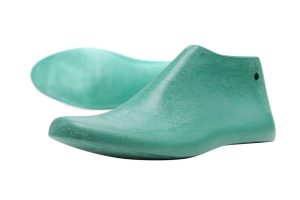
The first thing you need to make a shoe is called the LAST. The shoe last is a wood, plastic, or metal form that gives the shoe its shape. You would think the last would follow the shape of the human foot…

shoe lasts

and it does…sort of. Each shoe style requires its own last to set its shape and size. In addition, every shoe size requires a left last and a right last. So, to make a standard 14 size size-run, you will need at least 28 lasts. If you want to use a modern, high-speed assembly line and make 2,000 pairs of shoes a day, you will need about 700 pairs of lasts!

The shell pattern

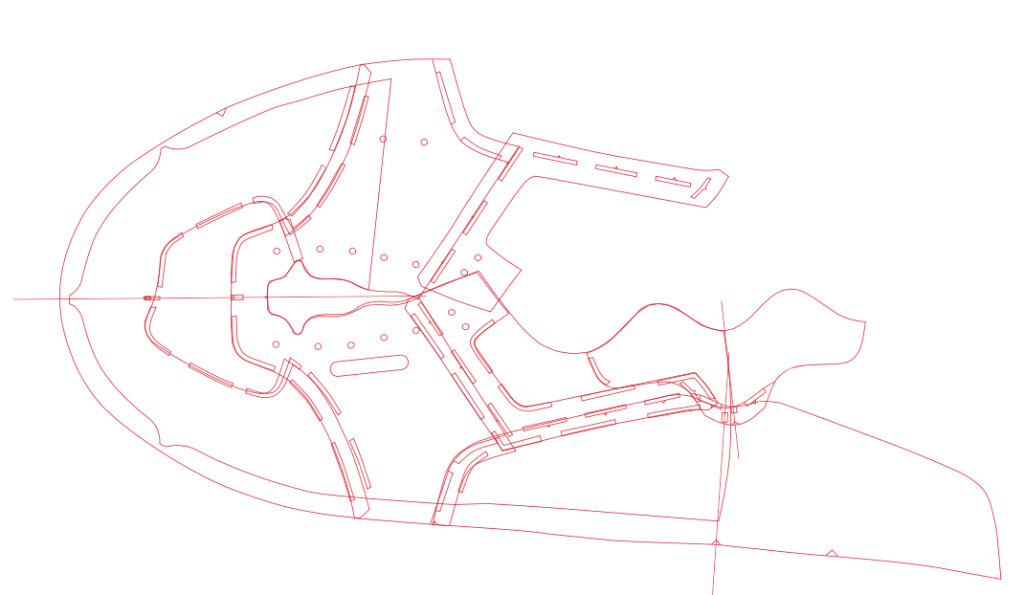
Once you select the last for the specific style of shoe you are making, you will need to make a SHELL PATTERN to follow this last. The shell pattern is simply the flat shape that can be stretched over the last into a 3-dimensional shape. This is the shoemaker or patternmaker’s art. 

The technical term is “SPRINGING the pattern.” With the shell pattern complete, the designer and pattern master can make the design for the shoe parts.

Flat Pattern for running shoe


(image: Shoe Design Pattern and Outsole Blueprint, and downloadable 3D Print File for a Shoe Last )

This is how a factory makes shoes

Once the shoe pattern is designed, the factory will cut the pattern parts for the shoe upper. This is the job of the shoe factory’s cutting department. The factory will use giant cookie cutters, computer-controlled knives, laser, water, or hand cutting to make all the parts. Again, the cutting department must cut each part of the shoe, inside and out, padding, and reinforcements. If a shoe has 20 parts, the factory will need 20 cutting dies x 14 sizes. It is not unusual to have thousands and thousands of cutting dies.

New Online Courses
for Brand Builders

#1 Shoemaking Basics for Designers and Brand Builders
#2 How to Select Shoe Materials
#3 Creating Footwear Specifications Course Details Enroll now

The footwear stitching department


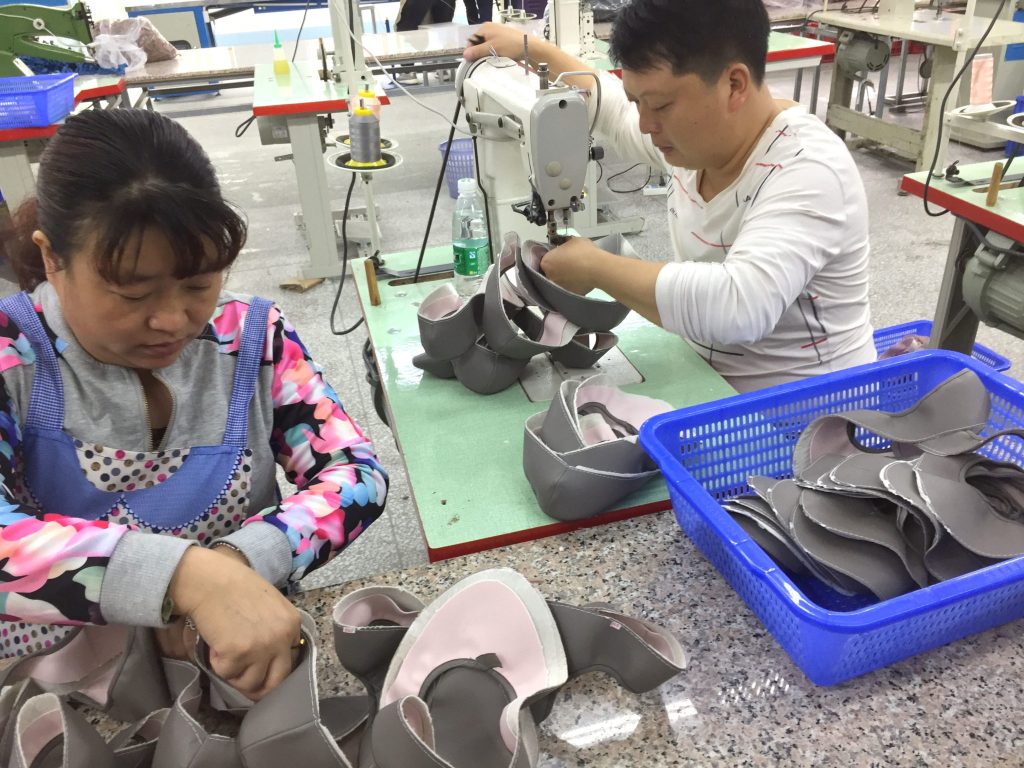
These workers stitch and assemble the upper parts

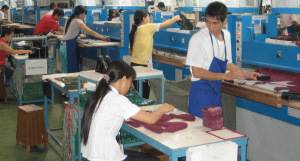
Once all the parts are cut and organized into kits, the stitchers can go to work. This part of the factory is called the stitching department or stitching line. A single stitching line may have 50 to 100 workers depending on the complexity of the shoe. Generally, two stitching lines can support one assembly line. First, the stitchers put together the shoe’s outer shell, inside lining, and tongue parts. The stitchers will also add reinforcements, hardware, lace loops, collar foam, and heel counters. Next, the stitching department will handle the heel and toe forming operations. The final stitching operation is to attach the pattern part that closes the bottom of the finished upper. This is called the Strobel sock. The Strobel stitch is the caterpillar-like stitching that runs along the bottom edge when you look inside a sports shoe.

With the stitching complete, it is time for FINAL ASSEMBLY. This is done on the ASSEMBLY LINE. Not to be confused with the stitching or stock fitting lines. Final assembly is when the shoe upper is joined with the outsole.

Shoe lasting operations

Hand lasting

This first step is called lasting. At this point, this shoe is loose and floppy and is not shaped like a shoe or a human foot. Shoe lasting is the process when you pull this upper over a form (the last) that allows it to stretch and take the shape of a real shoe. The last can be made of wood, plastic, or metal, depending on the kind of shoe you are making and the cementing process. In addition, the upper may be steam heated to aid the lasting process. There are many different ways to last a shoe.  (See the articles: Shoe Lasting and Shoe Lasts to learn more.)

Add the shoe outsole

Once you have the upper lasted, it’s time to apply the bottom. This can be done in several ways: contact cement, vulcanizing, nailing, or sewing operations.  (See the article: Cold Cement vs. Vulcanized Shoe Construction) In the case of cementing, the lasted upper (with the last still inside) and the outsole units are primed and cemented together. A pressing operation ensures a good bond. Once the last is removed, the shoe is laced up, cleaned, and checked by quality control operators before packing.

Start Building Your Shoe Business

A must-have for anyone serious about launching a footwear company. 4 text books, shoe business documents and downloadable content not available anywhere else! The Shoe Company Start-Up Pro Pack is all you need to get your shoe business off the ground. Learn more Download Today
Posted on

What is a fitting trial for shoes? 

Do I need to run a fitting trial for my new shoes? 

A shoe fitting trial or fit trial is a footwear brand’s process to confirm a new shoe fits correctly and feels good on the user’s feet. The goal of a fitting trial is to evaluate the entire size run and determine if a shoe fits correctly and is true to its size. 

A fit trial is complementary to a wear test. In wear testing, the shoe brand will focus on the function and durability of a shoe.
(Learn more about fit testing, wear testing, and other pre-production procedures in our books
How to Start Your Own Shoe Company 
How Shoes Are Made books and ebooks.)

Big brands like Nike, Adidas, and Jordan have entire departments responsible for running fitting trials. For example, every new Nike shoe must pass a fit trial before being approved for mass production.

Proper fitting shoes will keep your return rate down and your profit margin up.

The average return rate for mail-order shoes with poor fitting is 30%! 

Yes! You need a fit trial.

A shoe fit trial must be part of your production quality assurance program. A great-looking shoe that does not fit the size mark or does not fit proportionally is not high-quality. A new last, a new outsole, or a new upper design will require a fitting trial. A proper fitting trial during the pre-production process allows the brand time to adjust the size and fit of the shoe before wear testing, size grading, marketing, and selling.

(For more information on pre-production testing and quality assurance processes check out How to Start Your Own Shoe Company and How Shoes Are Made books and ebooks.)

Setting up your shoe fit trial

When developing your shoe, the first size made is called the “model” size. The model size is usually USA 9 for men’s and USA 7 for women’s shoes. The shoe brand or the shoe manufacturing factory will have someone on staff who is the fit model. The fit model’s feet measure close to the ideal standards for an M9 or W7. You need to complete the fitting work on the sample size before the size grading and the full-size run fitting trial can begin.

Before the fitting trial: Inspect your samples.

Do you see any loose spots or wrinkles on the upper? First, remove any shoe stuffing and check that your samples are not crushed or twisted from shipping. Next, run your hand inside the shoe to feel for any rough stitching or wrinkles in the footbed. Finally, properly lace each shoe and then take the time to loosen the laces, so it’s easy for your test subjects to get their foot in the shoe and adjust it.

Running a proper fitting trial? Needs:

1. A full-size run of the test shoes.

2. A measuring tape.

3. A Brannock™ device for measuring feet.

(Learn more about the Brannock™ device and other shoe tools in How Shoes Are Made.)

4. A questionnaire to record the stated foot size, measured foot size, 

sample shoe size preference, and any footwear fitting comments. 

5. As many people as you can get to try on your shoes!

6. It is a good idea to have socks available in a standard thickness for your test subjects.

How to run a fitting trial 

Find a place and time to gather your shoes and test subjects together. Ideally, you will test one person at a time without the other test subjects listening in on the test. When your test subject arrives, record the size of the shoes they are wearing. It’s a good idea also to record the brand of shoe they are wearing as some brands are known to fit larger or smaller.

Next, measure your test subject’s feet yourself with a Brannock™ device. Make sure to note the length and width. Also, try to record the ball girth of their feet. You will need this information to help you qualify the subjective feedback when fitting the shoe. You will also need to screen your test subjects for abnormal foot shape or physical issues affecting the fitting.

Finally, select a shoe for your subject to try. Once the tester has the shoe on, ask them to stand up and give their first reaction before flexing or walking in the shoe. 

If you have a soft shoe, you can press on the toe box to feel if the subject’s toes are touching the end of the shoe. When standing, the toe tips should not be touching the inside end of the shoe.

If the shoe feels good, instruct the subject to walk and get a feel for the shoes as they flex in motion. Your test subjects may run if you are fitting a sports shoe. 

You can ask the test subject to record their feedback on a questionnaire or interview the subject. Your goal is to understand if the length, width, and volume feel right. During a fitting trial, you should be studying the shoe as the test subject flexes. Look for the following:

1. Does the shoe gap open or pinch?

2. Do you see loose spots or wrinkles?

3. Does the test subject’s heel lift out of the shoe?

4. Does the subject feel the pressure points or stitching inside the shoe.  

5. Make any comments on the length, width, and height.

6. Does the top line feel comfortable around the ankle bones and Achilles tendon?

The result of your fitting trail  

If the shoes fit great and look great for every test subject, fantastic! If you see any issues, now is the time to record the faults and work with the factory technicians and pattern makers to correct them. In the end, a properly run fitting trial will give you the confidence to move ahead in your shoe production or give you the information needed to make adjustments. 

My sample size fit test is complete. Now what?

For the next steps in the pre-production process, including size grading, wear testing, and quality control procedures check out these shoemaking books.
Start Your Own Shoe Company 
How Shoes Are Made 
Footwear Pattern Making and Last Design

Shoemaking
TextbooksBuy Now
Shoemaking
SuppliesBuy Now
Shoemaking
CoursesCourse Details
Previous Next
Posted on

How To Make Your Shoe Design a SLAM Dunk.

Shoe Design : How to make your shoe design a SLAM dunk.

Sneaker Design – 4 elements of great shoe design: S.L.A.M.
#1 Silhouettes
#2 Logos
#3 Accessories
#4 Materials

Shoe Design : How to make your shoe design a SLAM dunk.

Silhouette [ sil-oo-et ]:
The outline or general shape of something:

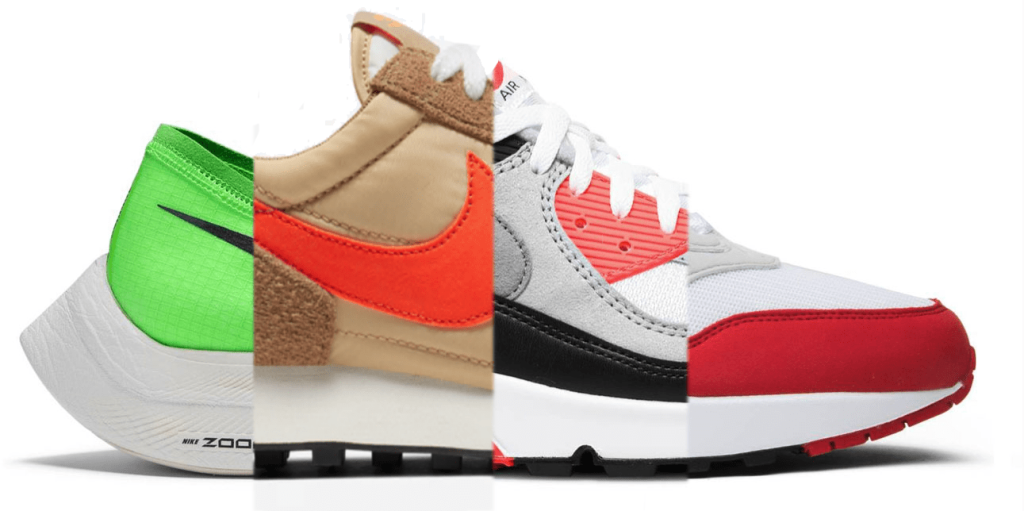
Sneakers come in all shapes, from super sleek to ultra puffy, it is the designer’s choice.The silhouette of a sneaker is determined by the shoe last, the shape of the pattern parts, and the padding. Fashion trends, manufacturing techniques, and footwear technology are all at work. With your mind and eyes open, you can see classic shoes with iconic silhouettes and new shoes with dynamic unmistakable shapes.

Shoes built for the same function can have radically different silhouettes.
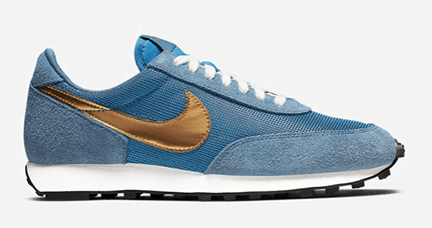
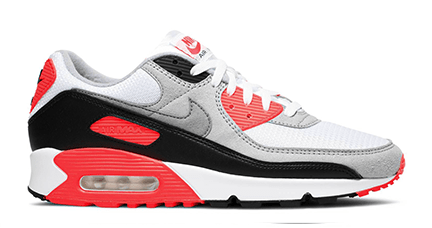
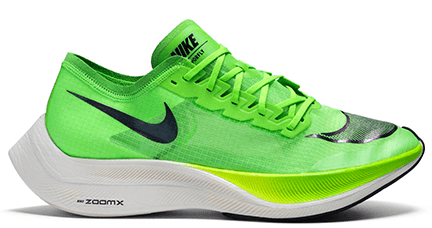
Let us take, for example, three running shoes produced by Nike in 1980, 1990, and 2020. Of course, we see vastly different manufacturing techniques and material combinations, yet we also see that all three have unique silhouettes. The shoe silhouette is delivered by the shoe last, outsole geometry, and most importantly, the pattern.

The shoe pattern is how you deliver the silhouette. What is the pattern? The pattern of a shoe is the shape of all the shoe’s individual upper parts. The shoe factory will use the pattern information to cut the parts and build the shoe.

A simple pattern makes a clean silhouette, a complicated pattern makes a wild silhouette.

Logos:
Design a logo strategy

The logo may be the most important part of your shoe. It may be the only reason a customer looks at your shoe design. Sometimes, the only reason a shoe exists is to carry the logo. If a new shoe design is uniquely radical or special in some way, the logo may just be along for the ride. In some cases, the logo may barely present itself, think of Yeezy or Prada.

Logos on shoes will have specific functions. The logo lets the customer know the brand that made the shoe and the athlete that endorses the shoe. Logos are used to communicate a technology, a special feature, or a partnership with another company, brand, or personality. The design of your logos may help you communicate a theme or principle, like sustainability, for example.

Every shoe design needs a logo design strategy. The design brief may give specific instructions, or the shoe brand may have a specific policy established as part of the overall corporate design strategy.

Accessories:
Transform your design into a shoe

The accessories of your design are key elements that make your shoe design into a real working shoe. The main accessory of your shoe design is the outsole componentry. The outsole of your shoe is usually the single most expensive part to design, develop and manufacture.

The outsole determines the price and performance of your shoe. The casual solid rubber cup sole unit may cost only $2.00, while the 4-part running sole with airbag may cost Nike $15.

Accessories can also be lacing systems, running computers, or injection molded upper components. Anything that delivers your technology or the theme of your shoe design.

Materials:
What is your shoe made of?

The material selections for your sneaker design will determine the construction, price, performance, weight, and import duty. There are thousands, if not millions, of material options for a shoe designer. Your shoes’ functional requirements and design theme will help you make your selections. The performance requirements and price targets of your shoe design will help you narrow the selection.

Some important points to detail in specifying materials are the color, texture, thickness, backing type, backing color, price, and MOQ. (Minimum Order Quantity). We have written an entire book on the subject of footwear materials.
See the Shoe Material Design Guide

Next time you design a new shoe…
Make sure to S.L.A.M. it!

Shoemaking
TextbooksBuy Now
Shoemaking
SuppliesBuy Now
Shoemaking
CoursesCourse Details
Previous Next
Posted on

How to Spot a Fake Yeezy

How To Tell If Your adidas Yeezys are Real or Fake
How to spot a Fake Yeezy


Legit Check The Adidas Yeezy 500

You will find fake Adidas shoes in stores all around the world. Our goal is to help you spot these fake counterfeit shoes and teach you some shoemaking tips.

How can I tell if my Yeezys are fake?

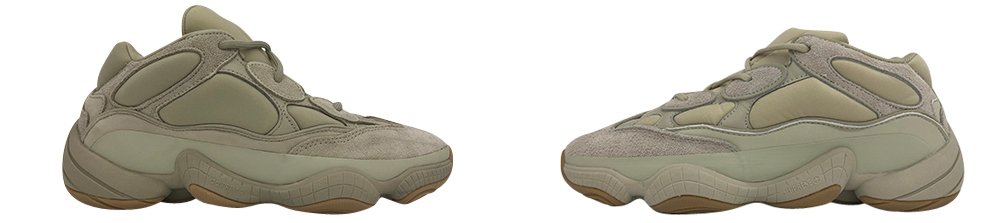
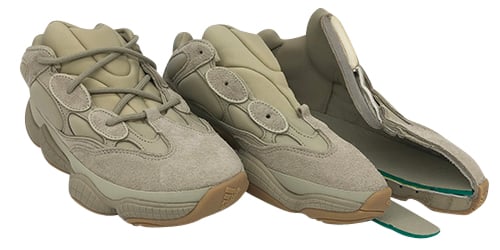
Today we have two pairs of the Yeezy 500, and we will have a good look at the small details that tell the big story of counterfeit sneakers. We will study the Yeezy 500 purchased directly from Stock X and the counterfeit shoe imported from South China. You will learn how to tell if an Adidas shoe is real or fake. The secret to making a ‘sneaker legit check’ is understanding the signs of quality shoemaking.

The price is right?

When shopping for real Yeezy sneakers you should expect to pay real Yeezy prices. If you find a rare Yeezy 350 Boost or a unique color at a price that is too good to be true… then it IS too good to be true. Low prices and beat-up boxes are your first clue that you have a fake, counterfeit or illegally smuggled-in B-grade shoe.

You should make any mail-order or E-Bay purchases with only trusted retailers. Remember, slightly used does not mean the shoes were real Yeezys to start with.

Inspecting the Yeezy 500

The first thing I look at when comparing the fake and the real Yeezy 500s is the materials and workmanship. When reviewing the materials of the Yeezy 500, you don’t need to have an authentic shoe in your hands. If you know what to look for, a few high-quality photos of the real shoe is all you will need to check the materials.

While looking at the Yeezy materials, also study the build. Adidas’s real Yeezy does not have perfect build quality, but the counterfeit Yeezy is clearly not made to the same quality standards.

What is a ‘real’ Yeezy 500 made of?

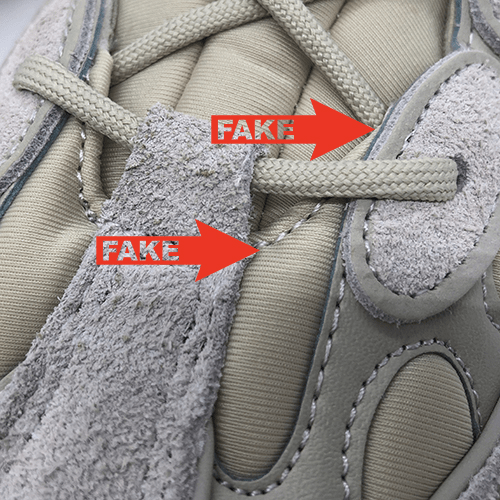
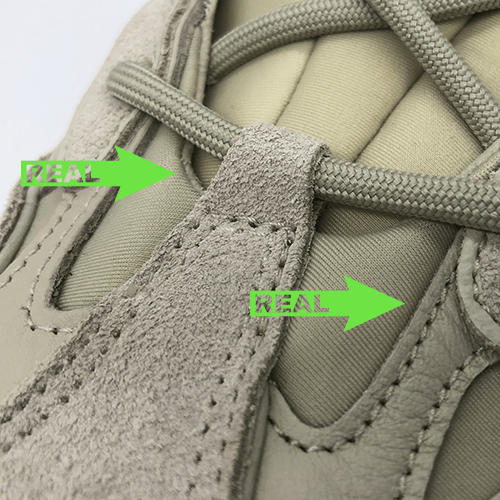
The real Kanye West designed Yeezy 500 is made with a mix of genuine suede, Nu-buck, and pigmented full-grain leather. The suede is medium nap so it is a bit hairy. To clean up the hairy edges, Adidas has color embossed the edges. You can see this on the eye stay parts and the ankle strap. The eye-stay underlay is a pigmented full-grain leather. The surface is uniform in color with a slight texture emboss. You can see it’s genuine leather by the texture of the cut edge.

The rubber foxing overlays a panel of bushed nu-buck leather. This high-quality nubuck leather has a smooth, uniform, and velvety surface.

Our fake Yeezy 500 is constructed with low-quality, high-nap, belly suede. The surface is rough and hairy. You can also feel the leather’s substance is soft and spongy, not the firm high-quality suede of the real Adidas-made Yeezy. The eyestay underlay is synthetic PU with a leather-like embossed surface.

If you look at the edges, you see the synthetic backing fiber is grey-blue. This is not leather as the original Yeezy 500. The fake Yeezy has swapped PU Nu-buck for the genuine Nu-buck leather on the real rubber underlay panel. The plastic-looking surface and white backing edge is a dead giveaway that this shoe is fake!

The Yeezy 500 Tongue

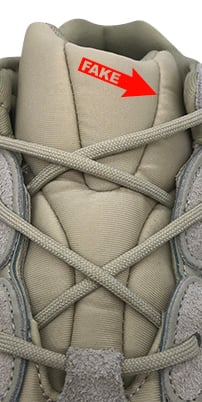
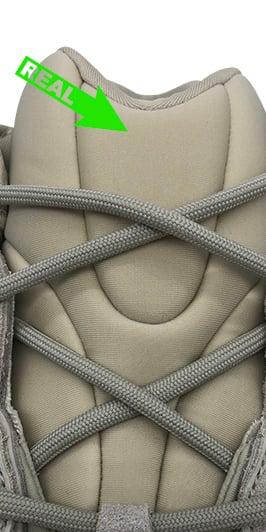
Looking at the tongue face of our two Yeezys, you can see dramatic differences in material quality and workmanship. The real Yeezy 500 tongue has smooth contours made with a firm foam wrinkle-free fabric—the fake tongue shows open seams, wrinkled fabric, and soft creased-foam backing.

Also, look at the base of the tongue. The real Yeezy 500 has a smooth rolled edge with a reversed seam. The fake has a rolled edge but with extra stitching to hold the material flat.    

The Yeezy 500 sidewall foxing

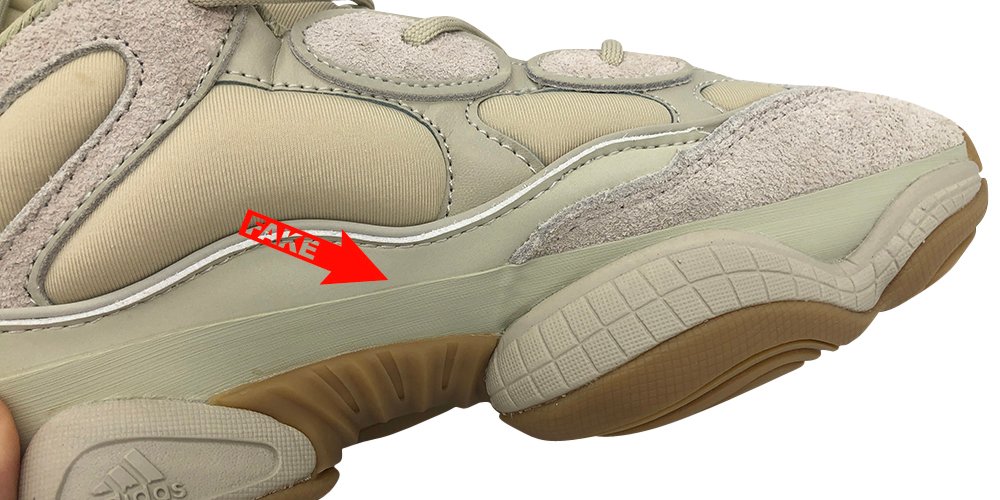
The cemented rubber foxing or rand is a distinctive feature of the Yeezy 500. The real Yeezy shoe has a uniform texture with verticle striation lines.

The rubber foxing on the fake shoe has horizontal grooves and about half the thickness of the foxing on the real shoe. The fake Yeezy 500 clearly shows the x-ray of the underlying seams. 

The Yeezy pattern and silhouette 

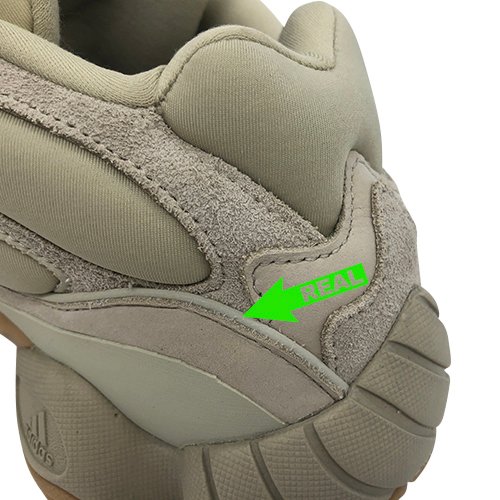
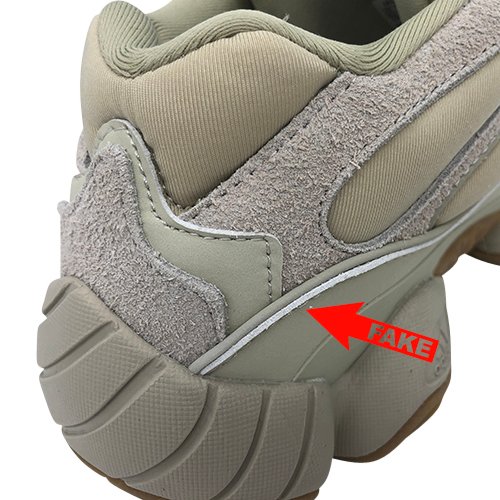
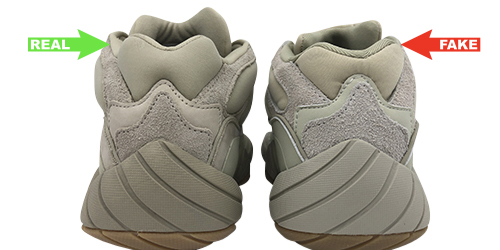
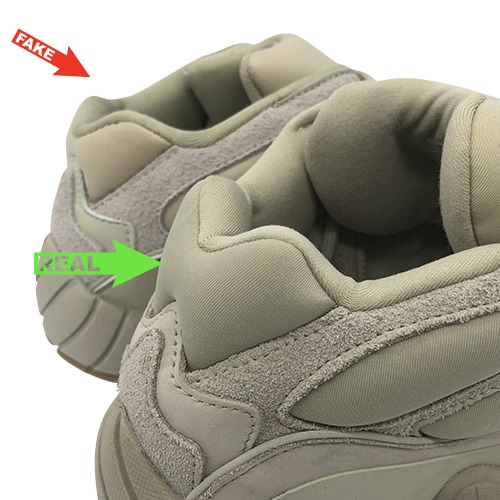
Kanye West’s Yeezy 500 pattern is a complicated collection of curves, overlays, and contrasting material underlays. It is a challenging shoe to make and very difficult to copy. Side-by-side, you can see the crisp silhouette lines on the real shoe vs. the copy. Notice how the instep contour and collar top line of the original are well defined.

On the heel view, you can clearly see the fake pattern has missed the mark. 

Adidas Yeezy 500 top line

Authentication Guide
Legit Check Like a Pro

Learn how to inspect and authenticate shoes like a professional. We give the Nike Air Jordan 1, Vans old SKool and Yeezy a complete quality control shake down. Piece by piece we will study every part. Don’t get burned!
Learn more
On Sale $39.99

The Yeezy 500 outsole unit

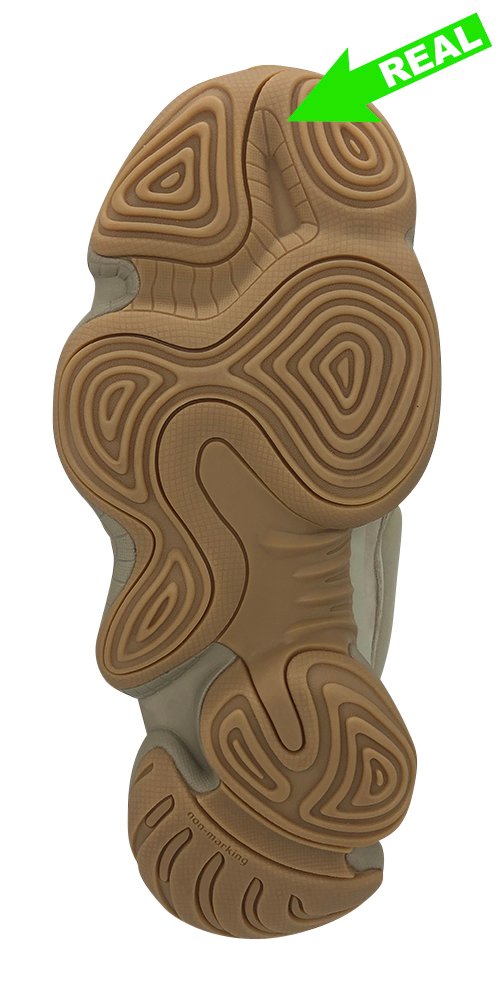
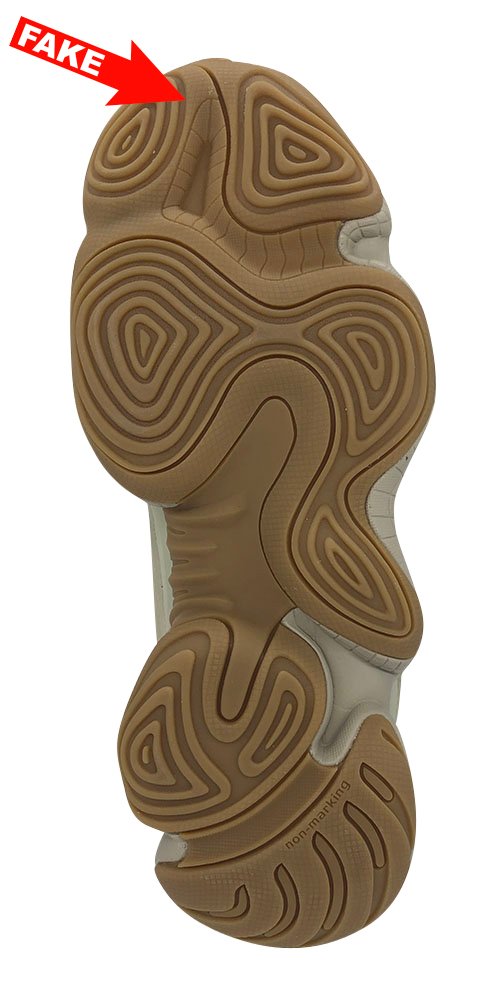
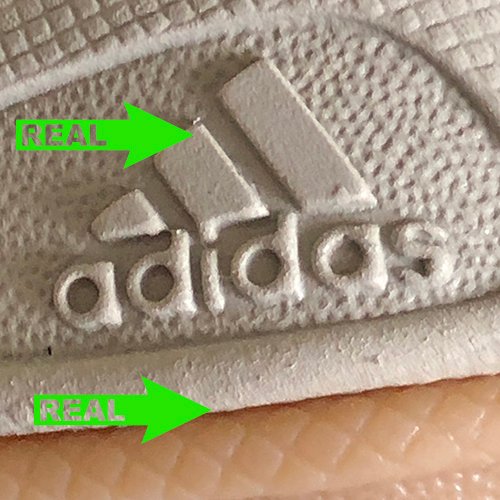
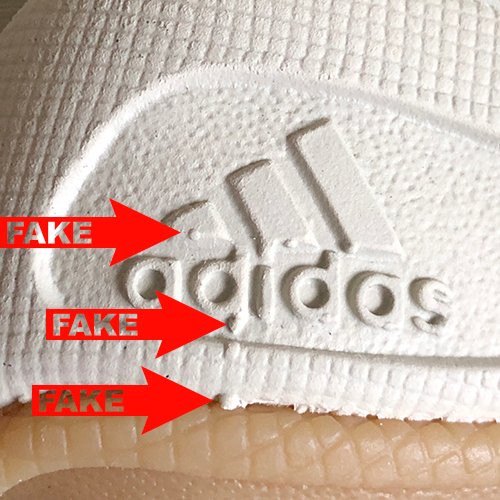
Adidas has dusted off the 90’s vintage “feet you wear” technology for the Yeezy 500 outsole design. The 500 is a unique and patented pattern of foot pods and midsole structures. The fake outsole unit is nearly identical. The tooling design for the rubber compression outsole is well duplicated. The color of the rubber is not correct, and the compound is slightly softer than the authentic.

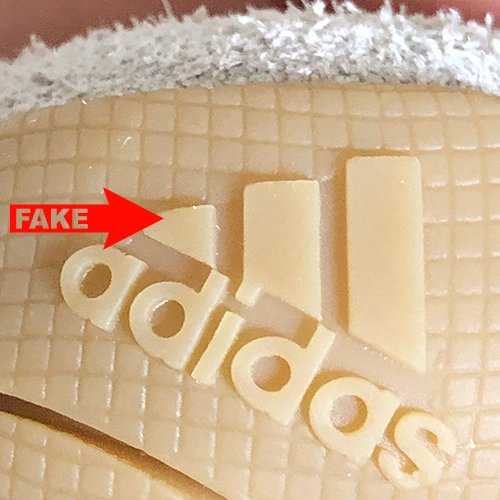
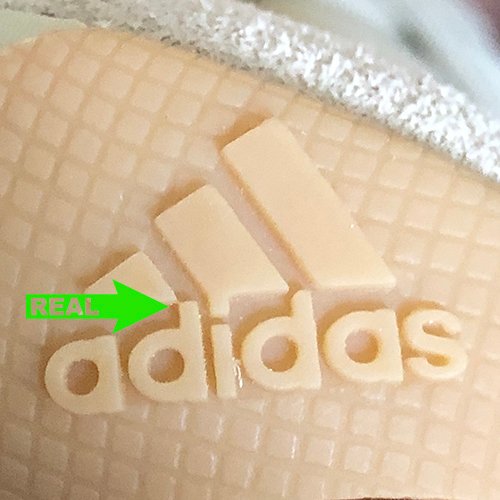
We zoomed in on the toe tip to get a good look at the Adidas “mountain” logo. The fake Adidas logo is well made in this case.

The EVA midsole of the counterfeit Yeezy 500 is close but just not made to the same quality standard. The fake midsole has some pigment issues and some extra air vents you don’t see on the authentic Adidas sneaker. We zoomed in on the side logo here, and you can see extra air vents on the logo and venting on the midsole edge.

Inside the chopped Yeezy 500

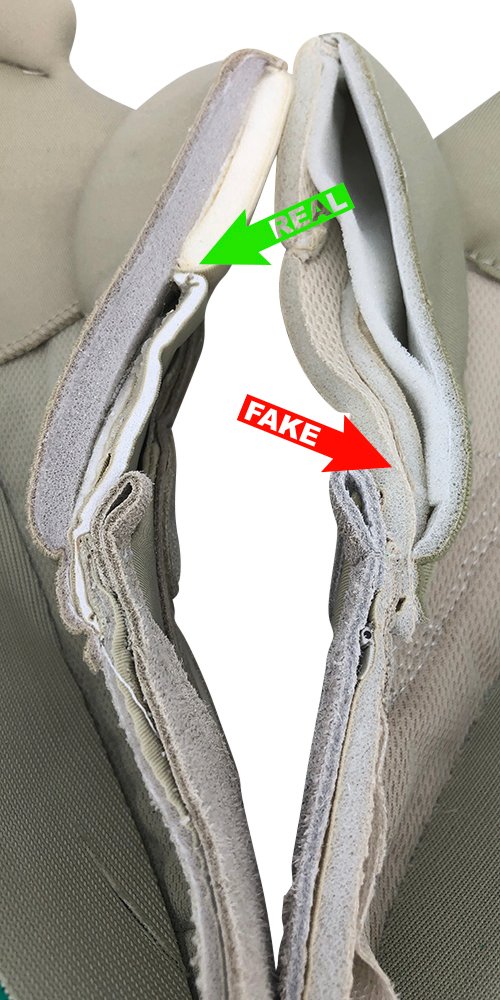
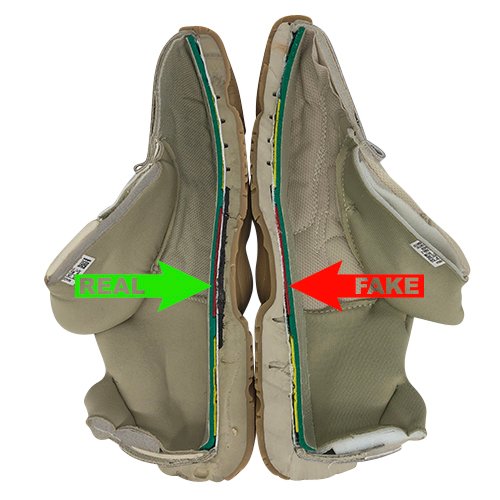
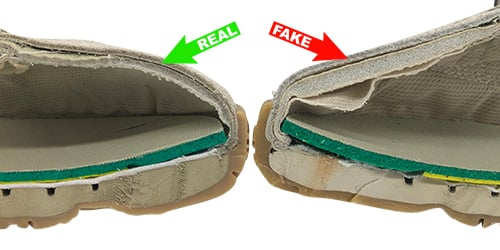
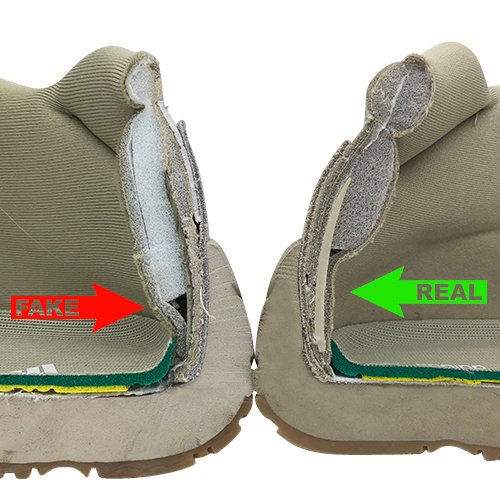
Yes! We cut-up a pair of Yeezy 500s so you can see inside a real pair and a fake pair. 

First off, you can see the fake Yeezy 500 is missing the injection-molded shank. You don’t have to cut your shoes to check this feature; you can remove the footbed and press on the Strobel bottom with your fingers- you can feel the end of the shank.

The Yeezy 500 internal construction

The cross-section of the heel shows you just how poorly the fake shoe was made. You can see the heel counter of the fake is paper-thin, and the foam parts are misshapen. 

The toe section of the real Yeezy has a nice smooth curve. The fake Yeezy is missing the toe counter and has a flat contour that is too soft and already collapsing. Also, notice the fake shoe has a much thicker foam lining. 

The tongue section clearly shows how the real Yeezy internals are neatly assembled. The fake Yeezy tongue is a mess of layers and bunched-up foam parts.  

New Online Course
Sneaker Authentication

13 Authentication lessons.
3 hours of video instruction.
In-depth study of footwear inspection techniques.
Authentication textbook included.
Course Details
enroll now $199

The Yeezy footbed

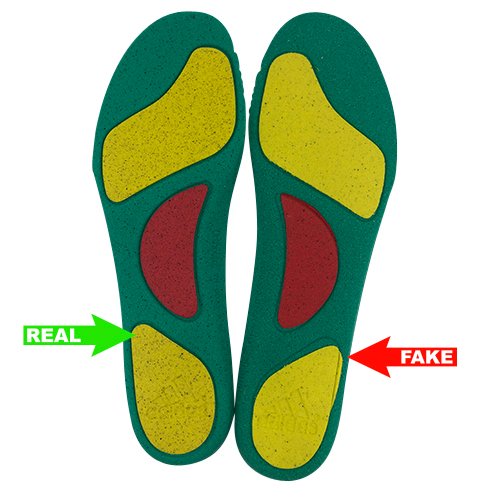
Interestingly the counterfeit Yeezy has a softer footbed; you would normally expect the fake to be very stiff with cardboard-like foam. Both the authentic and counterfeit are marked with the Orotholite trademark, but you can see the color inserts are not correctly placed on the fake Yeezy footbed.

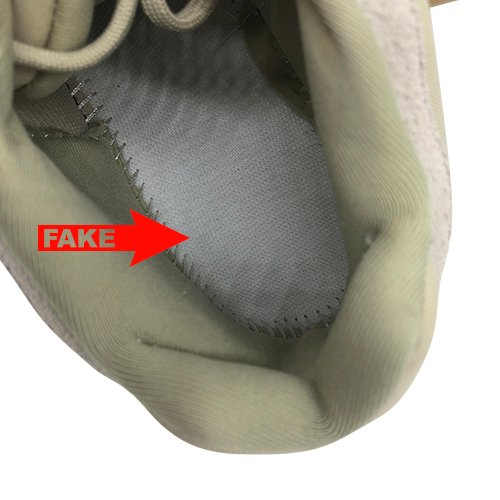
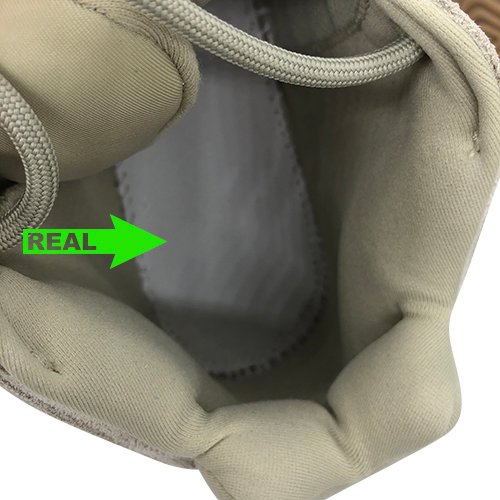
Inside, the real Yeezy has a solid, smooth, white Strobal board with a thin foam layer. The fake Yeezy Strobel sock has a glossy textile surface.

The Verdict:
Not a convincing Yeezy 500 fake.

After looking at the upper materials, outsole parts, and internal construction, we can see this is an obviously counterfeit Adidas Yeezy 500. This fake shoe suffers from the common faults: poor shoemaking and low spec material substitutions. Does the fake look like a Yeezy 500? Mostly. Will the fake Yeezy be comfortable to wear and long-lasting? No. This fake is a poorly made pile of junk.

New Online Course Sneaker Authentication

Learn how to authenticate shoes. We give the Vans Old Skool a complete shake down. Piece by piece we will study every part. Don’t get burned buying fakes ever again!
Course Details
Enroll now $199