Posted on

How to Start Your Own Shoe Company

How to Start Your Own Shoe Company

How to Start Your Own Shoe Company:

If you want to start your own shoe brand and design and sell your own shoes, you need to think about many important details. I have listed some key points for you to consider when getting your footwear brands started.

Target Market:

What is the target market for your new shoe company?  You will need to decide where your shoes will be sold; specialty shoe stores, discount shoe retailers, or will you sell directly to your end-user?  The answer to this will help you decide how many shoes you will need to make to get started.

Target Customer:

Figure out who the end-user is for your shoes? Business executives? Punk rockers with tattoos? High school kids?   Knowing your customer will help you set the price, look, and materials for your new shoe. What kind of shoe do you want to make? Casual, performance, fashion, or do you have a totally new idea?

Name Your Shoe Brand:

Based on your target customer it is time to select a name for your footwear brand and to legally set-up your shoe company. Contact your local city hall to register a Doing Business As (“DBA”) or Fictitious Name statement. Register your shoe company, get a vendor’s license, and a tax identification number. Don’t forget to check the names online for availability before you register them with the state. If you can’t get a website domain name that is close to your new shoes company’s name your customer may have a hard time finding you on the web!

Research and More Research:

Visit your target retailers and search online for the types of shoes your future competitors are selling and the prices they charge. Study the designs, logos, materials, and any other features these shoes have.  Ask yourself,  “What will make my shoe brand unique.”  If you can’t answer this question, STOP.  There are already thousands of shoe companies and the world does not need another “Me Too” brand!

Design your shoes:

Find a designer or design the shoes yourself. To design AND sell your own shoes is a big job, it’s okay to get help.  Get your research and brand image down on paper. You will need clean shoe renderings that communicate your ideas. Don’t be afraid to hire this out. The world has many hired guns that can bring your ideas to life. Without great designs your new shoe company is going nowhere. Now, stand back, do these drawings say, “This what my new shoe company is about?”

Find a footwear sourcing agent or Shoe Factory:
This may be difficult!  Search the web  or ask me. There are many firms that can help you get started. Visit the major shoe trade shows where there is always an area set-up with factories looking for new customers. Also, the website http://www.alibaba.com/ is a gold mine for finding factories!

How To Start Your Own Shoe Company PDFYour next steps:

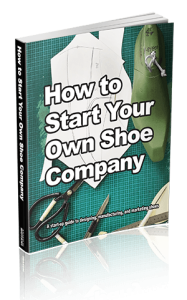
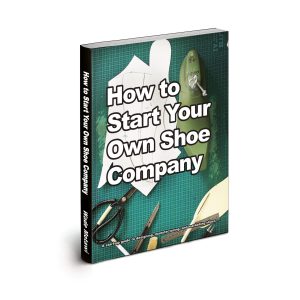
Check out our new book:  How to Start Your Own Shoe Company
Read these articles:  Can I start a shoe company  and Finding a Shoe Sourcing Agent. 
Please visit our: Online Shoe School. 

Posted on

Starting a New Shoe Company : FAQ

How to start your own shoe company
What does it take to really start a shoe company?
How to start a shoe business?

Shoe Company FAQ’s

At the Sneaker Factory, we are often asked for advice on how to start a new shoe company.  Here we will answer the most common questions from people around the world.

How to start a shoe business with no money?

Well, this is a tough one. The answer is – you can’t.  Just about everything you need to get started is going to cost some money.  Selling permits, trademark registration, shoe designs, and samples all cost money. Maybe a better question would be – How much money do I need to put into my shoe company to attract investors or launch a Kickstarter™ campaign? You can try to launch a Kickstarter campaign without any actual sample shoes but this will make funding very difficult.

So, how much will it cost to get samples made for a Kickstarter campaign?  If you have your own designs and are using an existing outsole from the factory, $1,000 to $2,500.  If you need an outsole tool made you can add $2,000 to $4,000 depending on the complexity of the molds required. Add another $2,000 to $3,000 if you need professional designs.

(This process and more detailed cost information are covered in full detail in chapter six of our book How to Start Your Own Shoe Company.)

How much does it cost to start a shoe company?

The cost depends on the complexity of your product line. The minimum cost can be only $1,000 to $2,000 if you buy “off the shelf” shoe designs and use stock outsoles and materials. In this case, the start-up costs will include the cost of buying the shoes from the factory and importing them.  Also, you can assume the factory will require a minimum order of 500 pairs.

(This is covered in more detail in chapter six of our book, How to Start Your Own Shoe Company. )

Can I start a shoe business online?

Many people ask me if it is possible to have a factory in China make custom shoes, one-by-one, and have the shoes shipped directly to the customers. Yes, this is possible but very difficult. Factories charge close to double the price for a “one-off shoe”, then there’s the extra expense for air shipping one pair of shoes from China to the USA or Europe which makes the shoes very expensive.  Also, a customer color picker internet interface will be fairly expensive to develop.

What about buying shoes in bulk and selling them online? Yes, this is a fine idea. If you can get paying customers to your website it is possible to make good profit margins this way.

(In the book How to Start Your Own Shoe Company we discuss in detail the costing models and distribution models for internet shoe businesses.)

Can you help me make my shoe business plan?

You will need a detailed business plan and Sneaker Factory is here to assist.  Without a solid plan, your shoe company dream will become a nightmare! Your master plan needs many smaller plans. It is easier to make a comprehensive plan by breaking it down into many smaller parts. Your plan needs to include your brand identity, product plan, financial calculations, sourcing supply chain, sales plan, distribution plan, and marketing plans.

(Shoe company business plans are discussed in chapter 1 of How to Start Your Own Shoe Company and the entire book is your guide to making a complete plan.)

How to start a shoe line from scratch

While this relates to the question “How to start a shoe business without any money?”  The most important idea is to make a shoe LINE.  The work required to make your shoe company is wasted if you only make one shoe design and it fails to sell. You should start with a small product line, 2 or 3 styles in a few colors.  Making more shoes will increase your startup expenses but it will also increase your chance for success. In the trade, we call this small line a merchandise assortment.

(In the book How to Start Your Own Shoe Company we discuss designing your product line in chapter 3.)

How to start a shoe business from home?

Yes! You can run your small shoe brand entirely from your home. You can have a business selling thousands of shoes without renting office space. This is a fully “virtual” operations plan. Hire out all the services your company requires: design, marketing, warehousing, etc. These can all be done by someone else, someplace else.

(Operational models from traditional to hybrid to virtual are all reviewed in chapter 9 of the book How to Start Your Own Shoe Company.)

How to start a shoe manufacturing company

Many people think Nike™ makes millions of pairs of shoes. The truth is that Nike itself does not make the shoes. Nike, along with the majority of other mega brands, does not own the shoe factories they use. The shoes are developed by Nike in partnership with the factory and Nike lets the factory manufacture the shoes. Nike sets the standards and has an army of inspectors and technicians, but Nike employees do not actually MAKE the shoes.

Starting a shoe manufacturing factory is a totally different question. A new factory requires space, equipment, and workers. Space and equipment are easy to find and buy. Staffing a factory with experienced pattern makers, developers, technicians, and stitchers is a huge challenge.

How much money do I need to start my own shoe brand?

This one is easy. ZERO. Get your brand started with just a pencil and a pad of paper. Write down your ideas, draw your shoes, and sketch your logos. Solve a footwear problem that no one else has solved. Create a design that no one has ever seen.  Build a sneaker which will increase performance on the field, court, or workplace. Your new shoe brand starts in your mind and once you put your ideas down on paper you can begin to build and share them with others.

How To Start Your Own Shoe Company PDFLearn how to start a shoe business: Your next step

Check out our book:  How to Start Your Own Shoe Company
Read these articles:  Can I start a shoe company and Finding a Shoe Sourcing Agent. 
Please visit our: Online School School. 

Posted on

Marbury Makes A Sneaker As Cheap As Possible, Will It Sell? The Starbury

Stephon Marbury

The Starbury Basketball Shoe

Stephon MarburySneaker Factory came across this interesting podcast to share from NPR’s Planet Money, Episode 785: The Starbury.

Stephon Marbury Makes a $15 Sneaker

Back in 2006, New York Knicks player, Stephon Marbury, had an opportunity to license and sell his own basketball shoe, The Starbury, as cheap as possible. It sold for $15. Did people buy it? Did it perform? Planet Money reviews the details of this sneaker experiment, including an analysis from cutting a Starbury basketball shoe in half to compare it to the materials used to make a $100 Nike Air Jordan.

Download or listen to the entire story here:

http://www.npr.org/sections/money/2017/07/21/538621509/episode-785-the-starbury

When Stephon Marbury was eight years old, the Nike Air Jordan sneakers came out. Kids everywhere wanted to fly

NBA Stephon Marbury Cheap As Possible Starbury Basketball Sneaker Review
NBA Player Marbury wearing his Starbury Sneakers

like Michael Jordan on the basketball court, and they wanted to wear the sneakers with his name on them too. But they were pricey. Stephon couldn’t afford them. Lots of kids couldn’t. For years, he wondered if there was a different way.

Two decades later, he had a chance to try a different way himself. When he was an NBA star, Marbury got approached by clothing company Steve & Barry’s. They had a crazy idea for a sneaker, and they thought Marbury might be just the celebrity to get behind it.

Today on the show: The story of what happened when an athlete used his name not to make a shoe more expensive than it needed to be but to make it as cheap as humanly possible.

We look at this experiment and the strange problems that arise when you make a shoe that’s so much cheaper than the competition. We also find out what Stephon Marbury is doing right now, on the other side of the world, with another big plan to try a different way of doing things.

Story from NPR Planet Money Episode 785: The Starbury, July 21, 2017, By Kenny Malone/NPR


http://www.npr.org/sections/money/2017/07/21/538621509/episode-785-the-starbury

Continue reading Marbury Makes A Sneaker As Cheap As Possible, Will It Sell? The Starbury

Posted on

How to Start a Shoe Business Without Money

running shoe last, dress shoe last
Can I start a company with no money?

It is not an easy task to start a shoe business. You will need lots of determination and energy. Will you need lots of money? Not necessarily.

Start a shoe business

You can start a shoe company without much money. A successful brand will need a unique feature or market niche to stand out and compete with the big dogs. You will also need a unique name for your brand, a clear brand statement, and a distinctive logo. These key starting points are all accessible to you at no cost. Work on them on your own or solicit the help of a friend with some design skills. If you can nail the brand name, statement, and visual identity correctly you will be well on your way to success. Make sure to invest plenty of time in perfecting them. Your product needs to appeal to a large number of people.


Get The Word Out There

You need to get the word out there and analyze the public response to your shoe brand. The fastest way to do this without any money is thru social media. Facebook, Instagram, or whatever platform your friends and target customers will look at and tell their friends to look at. A Facebook page with great photos and some text which clearly communicates your shoe brands’ unique identity should do the trick. If you publish the photos and pages and the response is low you will need to reevaluate and possibly start over. Don’t rush the idea, proceed with confidence in your brand and you will be able to lock in some seed money to get your footwear product produced.

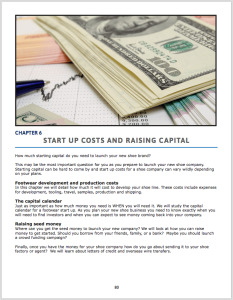
How to Start Your Own Shoe CompanyYou will need to raise some seed money to cover the product development, materials, and production costs for your new shoe company. There is no way to acquire product without paying for it. You can expect to pay at least 50% of the total purchase price of the shoes when you place your production order. Should you borrow from your friends, family or a bank? Maybe you should launch a crowd-funding campaign? Crowdfunding is a great way to reach out to customers, gain exposure, refine your sales pitch and secure backing for your new shoe company. Look into Crowdfunder™, Kickstarter™, and Peerbackers™. Learn more about the successes and pitfalls of these online services plus more information on raising capital and start-up costs in Chapter 6 of How To Start Your Own Shoe Company.

The Cost Involved in Selling Your Shoes

There is also a cost involved in selling your shoes. Luckily, you don’t have to spend big to have a decent online selling platform. Instead of hiring a web designer to build a specialized website you can take advantage of a low cost and easy DIY online store platforms such as WordPress, Shopify, or eBay which can process payments through PayPal. Once you have made a few sales and have a growing customer base you can feel proud that your brand has successfully joined the ranks to become a scaleable business!

To learn more about How To Start Your Own Shoe Company and How Shoes Are Made check out our bookstore. Books now available in softcover or PDF Download.

Step by Step Guide
Footwear Brand Building

Learn in-depth about the costs to make a shoe and the rules for importing footwear. Check out How To Start Your Own Shoe Company. 195 pages, 330 color photos.
Buy Now
On Sale $39.99

Posted on

How to Start Your Own Shoe Company in Print!

How to Start your Own Shoe Company Book

how to start your own shoe company starting your own footwear businessDo you dream about creating a shoe brand and starting a company? How to Start Your Own Shoe Company was written for you! You will follow the complete design, development, delivery, and retail marketing of two very different start-up shoe companies. Each company has its own style of shoes and business plan. Every  chapter will introduce a new business requirement or manufacturing process and then explain how each of our two start-up shoe brands will tackle this challenge for their growing business.
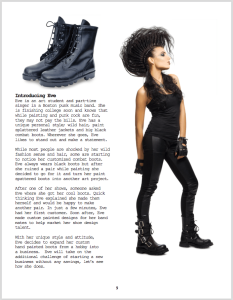
How to Start Your Own Shoe Company will guide you through creating your shoe brand identity, legally setting up your shoe company, and how to register your trademarks. You will learn how to get your shoes designed, how to find a factory to produce your shoes, and how to best go about selling your shoes. You will also find information on topics such as; calculating profit margins, importing your shoes, paying overseas vendors, working with international distributors, and capital requirements.

How To Start Your Own Show Company is arranged in chronological order following the complete start-up process from design, development, production, sales, on through web and retail marketing and distribution. The Book contains a sample shoe manufacturing business plan template. This book will help you understand all these challenges and be your guide as you build your own shoe company and watch it come to life!

12 chapters, 170 pages, 115 full color photos, charts, and infographics.


How to Start Your Own Shoe Company

Part 1: DESIGN – DEVELOPMENT – PRODUCTION

How to start a shoe brand Shoe business ideasChapter 1 : Your Shoes and Your Brand
Starting your own footwear business
Does the world need another shoe company?
Create your own shoe brand.
Create your business plan.
Footwear brand identity development.
Footwear target markets.
Shoe business ideas.


How to start a shoe business from home How to start a small shoe businessChapter 2 : Creating Your Shoe Company
When do you need to create your shoe company?
What kind of company best fits your needs?  What is an LLC?
Creating and protecting your trademarks.
Finding and buying web domains.
Permits for a new shoe business.


designing-your-product-line How to Make Your Own Shoe Line?Chapter 3 : Designing Your Product Line
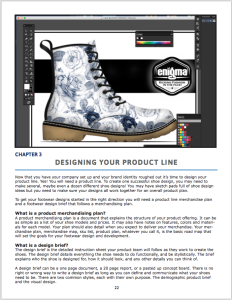
Two kinds of shoe design briefs.
Footwear merchandise plans.
How to hire a shoe designer.
Do you need a footwear patent? Design vs utility patents.
Designing your own custom shoes.
How to find a shoe designer.


planning-your-shoe-business Shoe Pricing – From Cost of Production to Retail PriceChapter 4 : Planning Your Shoe Business
When and how to launch your shoes into the market.
Footwear delivery seasons.
Financial modeling for your shoe business.
Calculating profit margins for footwear sales.
Shoe Pricing:  the cost of production and retail market pricing.
How to start a small shoe business.


manufacturing-and-importing-your-shoes How to start a shoe line from scratchChapter 5 : Manufacturing and importing Your Shoes
Finding a factory to make your shoes.
Footwear agents and trading companies.
The shoe development process.
Import duty and shipping rates for shoes.
Shoe manufacturing business plan.


start-up-costs-and-raising-capitalChapter 6 : Start-Up Costs and Raising Capital
Footwear development expenses.
The capital calendar for shoe start-ups.
Raising money for your shoe company.
Letter of credit and wire transfers.
How much money do I need to start my own shoe brand ?
How to start a shoe business with no money?


Part 2:  Marketing – Sales – Distribution

brand-promotion-and-footwear-marketingChapter 7 : Brand Promotion and Footwear Marketing
What is marketing? Traditional, guerrilla and social.
Footwear marketing strategies.
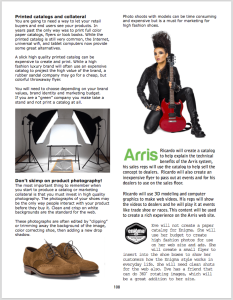
Making your shoe company catalog.
Print and digital media.
Shoe trade shows and alternatives.


Wholesale distributors of shoesChapter 8 : Footwear Sales and Distribution
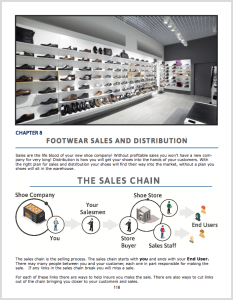
The footwear sales chain.
The language of footwear sales.
Footwear buyers.
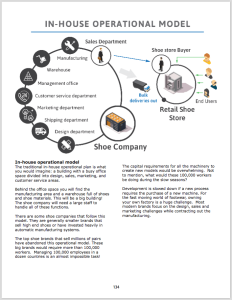
Sales and distribution models for shoes.
Wholesale distributors of shoes.
Web direct internet shoe sales.
How to start a shoe business online.
Sell shoes online for cash.


shoe-company-operations How to Start a Shoe Manufacturing CompanyChapter 9 : Shoe Company Operations
Serving your consumers and shoe dealers.
Operational models for shoe companies.
E-commerce platforms.
Third party logistics service providers.


whats-next-for-your-brandChapter 10: What’s Next for Your Shoe Brand?
Strategies for growing your footwear brand.
Selling shoes into new markets.
Diversifying your product offering.
Vertical integration.


going-internationalChapter 11: Going international
Defending your trademarks overseas.
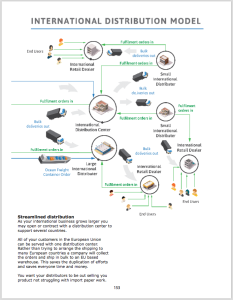
Distribution models for shoes.
Finding the right footwear distributors.
Purchase terms for shoe distributors.


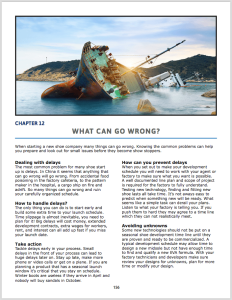
what-can-go-wrongChapter 12 : What Can Go Wrong?
Dealing with footwear manufacturing delays.
Shoe quality issues.
Lost trademarks.
Damaged shoemaking equipment.


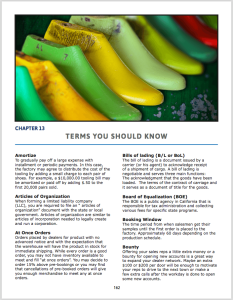
terms-your-should-knowChapter 13 : Shoe Making Terms You Should Know
Strengths, Weaknesses, Opportunities, and Threats
Stock keeping units (SKU)
Sales representatives and sub reps
Minimum advertised price (MAP)
Limited liability company (LLC)


sample-documentsChapter 14 : Sample Documents
Non disclosure agreement
U.S. tax form
DBA forms


Shoemaking
TextbooksBuy Now
Shoemaking
SuppliesBuy Now
Shoemaking
CoursesCourse Details

Previous
Next

Posted on

Financial Modeling for Your New Shoe Company

Shoe are imported from China in huge Container ships

Financial Modeling and Cost Accounting for ShoesFinancial Modeling For your Shoe Company:
Before you send any orders to the shoe factory you need to build your financial models. Financial modeling and cost accounting are important calculations to show if you will make any money! This may sound complicated, but once you have a basic understanding it’s easy. First, you will need to calculate how much it will cost to buy your shoes and import them into your selling market. This is called landing.

FOB or Ex-works Purchase Terms for Shoes :

To build your shoe companies complete financial model, you are going to need to figure out your real product costs. When you negotiate your shoe purchase price, you need to set the purchase terms with the factory. Usually, your price will be quoted as FOB. The FOB price includes the cost to build, package, deliver the shoes by container truck to the container harbor and load the merchandise on the vessel. FOB means you will work with the international shipping lines to move your container and not with a local trucking company. Leave the local trucking price negotiations to the factory.

Another common shoe purchase term is “ex-works.”  This means that either you or your freight forwarder are responsible for picking up the shoes from the factory. You may choose to buy your shoes ex-works if you are loading a container with other products.

Landing Costs For Shoes:

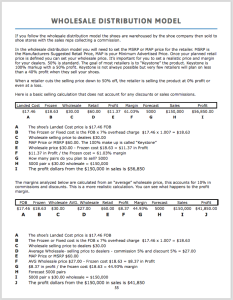
Landing includes all the costs related to moving your shoes from the factory to your warehouse. You need to add in the cost of ocean freight, inland trucking, harbor fees, insurance fees, import duties, document fees, taxes etc. It’s critical to understand these costs, as this will help you work backward from your shoes’ selling price to your factory target price. A shoe which costs $15 FOB will cost closer to $17.46 to buy, ship and import into the USA. The additional inland freight inside your home country could be $.10 to $.50 per pair. This cost will depend on your distribution center’s proximity to the landing port.

If you are using an agent, you may be required to pay duty on the agent’s fees. It’s best to consult your home country’s import regulations. USA regulations require import duty to be paid on any molds or equipment used to make the shoes.

This is a basic calculation of the landed cost. Once you get started, your freight forwarder can help detail other small fees. Some of the costs of the components are under your control, and some are not.

Once you determine the cost to land your shoes, select your sales and distribution business model. You will find footwear sales and distribution models detailed in chapter 8 of How to Start Your Own Shoe CompanyImport duty for shoes is reviewed in chapter 5.

Posted on

Planning Your Shoe Manufacturing Business

Business plan for selling shoes
The container yard
A massive container yard of product awaiting shipment or delivery.

When to launch your shoes into the market

All your work getting your shoes designed and built is at risk if your market timing is wrong. You need to make sure your winter boots arrive in time for the winter selling season. Make sure to carefully calculate your margins to ensure you can deliver your shoes profitably.

Planning your shoe manufacturing business

The shoe market has buying and selling cycles or seasons. To ensure your shoes are available in stores for these delivery windows you will need to work the schedule backward many months.

Footwear Delivery seasons:

Fall

Can also be called “back to school.” This is a large delivery window for many different types of shoes. The fall delivery is critical for football cleats, cross country running shoes, basketball shoes and any other shoe needed by students going back to school or college.
Fall product must be available to your stores starting in late June so they will be fully stocked for the shopping rush. Your shoe dealers will be switching off the summer product set-up in mid to late July. Fall orders must be placed to the shoe factory February 1st, in order to exit the factory May 1st and be available for retailers to order in late June.

Holiday

The Christmas shopping season can account for 25% to 45% of yearly sales of a shoe store. It is important to have fresh product for your footwear dealers.
Holiday orders must be placed to the shoe factory June 1st. You can expect to pay extra for ocean shipping during the holiday run-up as merchandise floods in from around the world.

Spring

Spring is also a major delivery window for summer sports shoes and items needed for winter vacation travel.  The shoes arrive in the stores in January as the merchandise is reset after the Christmas selling season.

Summer or April

This delivery is usually the smallest. Retailers will use this April product offering to top up their inventory for the summer selling season. Summer is a chance for shoe companies to offer new colors of top selling models.

In Chapter 4 of How to Start Your Own Shoe Company, we will review all the steps of the footwear development process and explain the required timelines in further detail.

Posted on

Creating Your Shoe Company

Creating Your Footwear Company

Creating Your Footwear Company

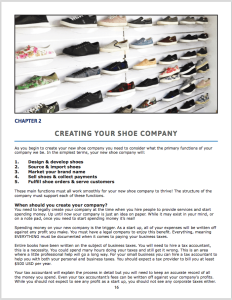
When should you legally create your company?

You need to be legally creating your shoe company at the time when you hire people to provide services and start spending money. Up until this point your shoe brand is just an idea on paper. While it may exist in your mind, or on a note pad, once you need to start spending money, it’s real!

Your shoe company needs a name

Your shoe company name does not need to be the same as the brand name you put on your shoes. It can be, but it’s not required. If you think you may have more brands in the future, then pick something different. People often confuse the “company” name with the “brand” name. They are not the same. Think of a huge company like Proctor & Gamble TM. This company owns hundreds of different brand names, like Tide™, Pampers™, Cascade™, Braun™, Dawn™ and dozens of others. You can call your company almost anything you want, except a name that has already been taken. Often, a company with several brands will change its name to be the name of its most popular product.

What type of company?

Your new shoe company will need to be a legal business and be registered with the government. In the USA there are several options. The sole proprietorship and the limited liability company (LLC) are the most common for start-ups.

Sole Proprietorship for footwear

The sole proprietorship is the easiest company to set up. YOU are a sole proprietorship. You don’t need to file any tax paperwork. Although you still need to get local permits and licenses to legally do business. The sole proprietorship is simple as it is just YOU. Your personal finances are the company’s finances. Should something bad happen to your footwear company, it’s actually happening to YOU.

Learn more about starting a footwear Sole Proprietorship and the following topics in the book, How to Start Your Own Shoe Company.

Limited Liability Company (LLC) advantages for your shoe business

Product liability insurance for Footwear Manufacturers

Local government permits for shoe companies

Doing Business As (DBA) – Fictitious Names for your footwear brand

Seller’s permits for shoe businesses

Creating and protecting footwear trademarks

Web domains for your shoe brand

New Online Course
Shoemaking for Designers
& Brand Builders

Created for footwear beginners and career changers alike, this course delivers the basic shoemaking knowledge you need to get your career in the shoe trades started.
Course Details
enroll now $99

Posted on

What Shoe Factory Equipment do I need to make custom Sneakers?

Shoe Factory Equipment : How to make custom shoes?

Shoe Factory Equipment : What do I need to make custom Sneakers?

mini Shoe Factory equipment how to start a small shoe factory

There is a small but growing group of young shoe makers that are making high end custom shoes.  These shoe makers started repairing and replicating  Nike™ classic kicks but some have moved onto the creation of unique custom one-off shoes.
Wired™ magazine  recently ran a story on custom shoe maker Jacob Ferrato.   The article “Go Inside the Workshop of the Custom-Sneaker King” appears in the June 2016 Issue.   Read it Here!
See the Video here: JB Customs: Interview with Jacob Ferrato.

What equipment do you need to make a mini shoe factory?

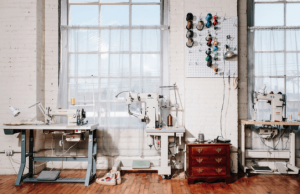
What we are interested in is what shoe making equipment do you need to run a mini custom sneaker factory.  You can see in the article and videos a few different machines. These are real industrial machines you will find in any sample room of a large shoe factory.  These shoe sewing machines may be a little hard to find but they are all available in the USA, Europe and Asia.  If you want to start a small shoe factory these are the machines you will need.

Pattern Cutting in a mini shoe factory:

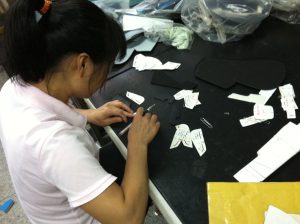
Cutting a custom shoe pattern For the custom shoe making process you can hand cut every piece with scissors or a sharp blade. Most shoe factories don’t actually buy cutting blades, they sharpen a small piece of steel in a few different shapes to suit what they are cutting.  In the video you can see a paper pattern template is used to trace the design onto the shoe materials.  The materials are then cut by hand. This process is used on all the leather and mesh parts.

Factory sample rooms have been looking at ways to speed up this process.  A large shoe factory will use a computer driven plotter cutter, water jet cutter, or even lasers to cut materials.  For a hand made shoe made without the use of a computer generated pattern, a machine like the new $2,300.00USD Glowforge machine may be the answer.  This laser will cut any design you draw on the materials.  This has the potential to revolutionize the custom shoe market. Check it out!

Custom shoe factory equipment Once the parts are cut you can see the edges are being skived.  In the video this is done by hand.  This is a time consuming process and it’s very easy to damage the cut shoe parts.  A shoe factory sample room will have a small electric skiver like this one, they don’t cost very much and will save time in our mini shoe factory.
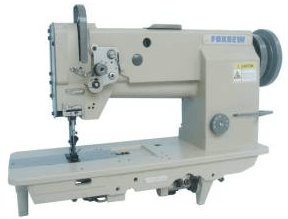
Sewing Machines for a custom shoe factory

Flat bed sewing machines for a custom shoe factory In the Wired™ article you can see some of these the machines lined up.  The flat bed machine is the standard most recognizable type of machine. The machine is built into a table and run by an electric motor and has a foot control to advance the stitches automatically or one stitch at a time.  This is the most common machine for assembling the flat pattern parts of the shoe.
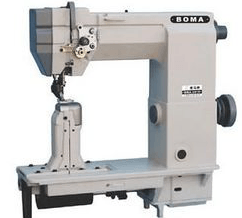
Once the upPost sewing machine per of the shoe has been stitched together, it needs to be “closed”. This closing operation creates an upper that cannot fit under the standard flat bed machine.  The second most common sewing machine you will see in a shoe factory is the “Post” style. Bulky items can fit under the machine for easy assembly.  This type of post sewing machine will be used to attach the tongue to the shoe or to secure the lining inside the shoe once it has been assembled into the final 3D shape.
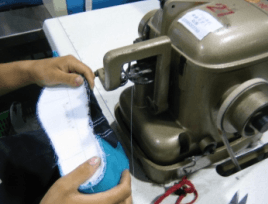
small Custom Shoe Factory With the upper almost complete we will need a special sewing machine to finish it.  This machine is used to sew the bottom fabric onto the upper. This closes the upper. Now the upper is ready for lasting and assembly.
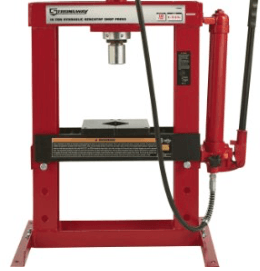
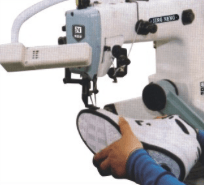
Now it’s time to assemble the sole onto the custom shoe.  There are two more pieces of shoe making equipment our mini footwear factory will need.  A sole press and a channel stitching machine.
sole press for a small shoe factory

Assembly of Custom Shoes

After the glue is applied to the upper and sole of the shoe it’s best to use a small press to make sure the bond is very strong.  A bench top shop press is not expensive and can generate enough force to press the parts together.

The final must have piece of equipment for a small custom shoe factory may be the most expensive.  This is a heavy duty channel stitching machine used to secure the upper to the shoe sole.  This machine to attach the shoe bottom to the uppersmachine is very powerful and can easily drive the needle and thread through the leather and rubber.

Because sole bonding with shoe cement is difficult for a mini factory, this machine insures the shoe bottom does not separate from the upper.   This machine has a long arm that can reach inside the shoe allowing the stitches to secure the rubber and upper together.

Shoemaking
TextbooksLearn More
Shoemaking
SuppliesClick Here
Shoemaking
CoursesLearn More

Previous
Next

Posted on

Finding Shoe Agents & Shoe Development Contracts

Footwear Sourcing agent

Shoe Agents: What to expect in a shoe development contract

Question:  Do I really need a shoe sourcing agent to start my own shoe business?   If you are new to the shoe trades you are going to need some help!  The answer is YES!

Question: What will it really cost to develop my shoe ideas and get them into production?
Read on!  This is the question we will be answering.

A trusted Shoe Agent will be your partner:

Have you heard horror stories of a factory in China shipping a load of rocks instead of shoes?
YES, so have we, but we have friends on the ground in China so that can’t happen to us!!

If you are ready to start a shoe company but don’t have shoe design, development, or manufacturing experience, you are going to need a footwear sourcing agent. The shoe manufacturing agent can help you make contact with a shoe factory suitable for your project and help you manage your shoe development projects. Footwear buying agents will have relationships with several shoe factories, sample rooms, and outsole mold suppliers.  A qualified shoe sourcing agent will have technicians that help develop your design and make your ideas into a real shoe.

Finding a shoe manufacturer is very hard but you are lucky! Having been in the shoe trade for many years, I have worked with many fine people inside the major shoe brands. Some of my friends now have their own shoe sourcing businesses in China. I’m happy to make introductions. But only if you are ready.

Footwear Development contracts:

Here are the terms of a typical footwear development agreement or contract. You need to remember, footwear production setup charges are high and MOQ (minimum order quantities) will be required by the factories. These charges are:

Outsole Molds

Shoe Outsole Molds, 1 set (per size) $1500-2000 for rubber, $2000-2500 for EVA compression molds.  You will need a minimum of 10 molds to cover the standard shoe sizes. During development, a samples mold will be needed to confirm the design before the set of production molds is opened. Prototype parts may be made from cast rubber or foam before a steel mold is made.
Factories may offer “open” molds but please note there are very few suitable for quality shoes. To ensure your shoes fit and function correctly we will not work with these “open” molds.

Footwear Sample Development

Sample development charges paid to the factory:  To make your design come to life, plan on 3 samples stages, 45 pairs of samples, the total cost of $5000. This includes factory time and the shoemaking sample materials.  The shoemaking expertise of pattern makers and mold technicians does not come for free.

Project Management Fees

Product Management time will be around $2000 per month for the project. This covers the agent’s development team following up with the shoe factory, last factories, material vendors, and outsole suppliers. This puts your representative in the factories working for you. A standard development project is expected to be around 6 months.  This is enough time to make the pullover, samples, and tooling.  Very complicated projects may require more time.

Basic terms you need to expect:

Confidentiality agreements will be signed. Your agent will protect your project from the eyes of competitors.

Sample delivery charges will be your responsibility.  Fed-ex and UPS bills are not cheap for shoes shipping from Asia to the USA or Europe. Plan accordingly.

Costs for shoe outsole or upper molds must be paid in advance of tool cutting.

Costs for samples paid before each shipment.

Product Management Fees will be paid at the beginning of the month of development

Once you place your Production Orders a 9-month retainer fee of US$5,000 will apply.

This will see your shoes through pre-production and provide you QC and logistics support once your shoe production order is complete.  The Project management time fee of US$2,000 will be waved for development from this time.

Production, MOQ 6000 per style, 1200 pairs per colorway.
Production lead time, 120 days. Then add time for shipping.

For any new customer, the shoes must be paid for in-full before shipping.
You will need a Letter of Credit or a Wire transfer.

So are you ready?

If you have made it this far you are one step closer to starting your own shoe company!  Before I introduce you to an agent, we need to make one more cost calculation.

What is the purchase price of 6000 pairs of shoes?

HTS Importing shoesThis is the hard part!  You are going to need some capital to bring your shoes home from the factory.  Friends, family, kick starter- you are going to need some money. The shoe factory and agent will not give you delayed terms. You will need to pay the entire amount to get your shoes shipping. Roughly, your shoes will cost about 25% of the selling price to import from Asia.  So, if your shoes will cost $100 in the store, plan on $25 for the shoe with shipping and import duty included.  So….$25.00 X 6000 pairs = $150,000!!!!!
We have detailed the cost of a shoe in the article: How much does it cost to make shoes?

How To Start Your Own Shoe Company PDFYour next steps:

Check out our book:  How to Start Your Own Shoe Company
Read these articles:  Can I start a shoe company?  and Finding a Shoe Sourcing Agent. 
Please visit our: Online Shoe School.