Posted on

How to Make a Shoe Pattern

how to make your own shoe pattern

How to Make a Shoe Pattern: Step-by-Step 
shoe making patterns


Making a shoe pattern or cutting a shoe pattern is not a difficult shoemaking skill. If you have the time and patience, you can produce shoemaking patterns with just a few common tools. The shoe pattern making process is not complicated. The basic techniques for drawing on a shoe last are simple, and the process is easy, but the skills required to make a beautiful, well proportioned, mechanically sound, shoe pattern may take years for a shoemaker to perfect! This is the true art of the shoemaker that a computer cannot replace. A skilled pattern cutter is the heart of a shoe factory’s development group. Here we will show you how you can cut your own pattern.


Here is a list of the shoemaking tools you will need to make a shoe pattern:

1.    A shoe last. If you don’t have a shoe last you can tape over a shoe or 3D print a last.
2.    A roll of 1/2 inch wide masking tape. This will be used to cover the shoe last.  (3/4 inch will do too.)
3.    A sharp X-Acto knife or other hobby knives.
4.    Pens and pencils.
5.    A small flexible steel ruler.
6.    Bristol paper (any stiff paper will do, like a manila folder)
Here is a list of some other shoemaking tools you may need,

How to make your own shoe pattern

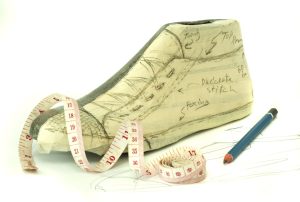
First step: tape up the shoe last
The first step is to tape up the shoe lastTo make a new shoe pattern step-by-step you will first need to “tape” the last so you can “pull the shell” off the shoe pattern. The tape should be layered in two different directions so the pattern stays together when you are ready to peel it off the last. You will start on the lateral or outside of the shoe last. First, starting at the top, lay the tape lengthwise down the lateral side of the last. Next, run a strip of tape down the center of the last from the top of the instep down to the toe. Do the same on the heel of the last. Finally, run layers across the last from the bottom edge up the side of the last. Make this extra smooth, this will be your drawing surface when you start marking your shoe pattern.

Make sure the tape wraps around the bottom edge of the last. You will need this edge, as it will become the bottom edge of your shoe pattern. If your shoe design is symmetrical then half the last is okay. If the medial and lateral side of your shoe design is different you will need to tape the entire last. The process is the same for both sides.

DIY Shoemakers
Start Here

Step by step pattern making and shoe last design. Pattern making explained simply. Everything you need to know about making a shoe pattern yourself. Learn more On Sale $39.99

How to mark the shoe pattern on the last:
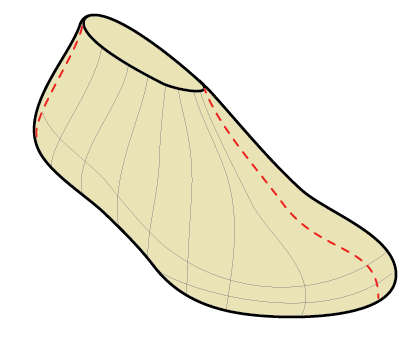
Shoe pattern making processOnce the shoe last is covered with tape, it is time to start marking the shoe pattern. With the steel ruler, mark the centerline of the last from the instep to the toe tip and down the heel. For a list of last terms you can read this post about shoe lasts and how lasts are made.
With the centerlines marked it is time to start drawing the pattern on the last.

Drawing the shoe pattern:
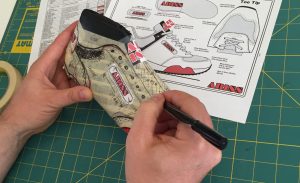
shoe last drawings shoe pattern making processIt’s fun to add a little color or paste on a logo. You can start to get a feel for what the design will look like in 3D. Go ahead and iterate upon your design, this is your time to be creative. If you don’t like your line, grab some tape, cover it up, and try again.


drawing on a shoe last
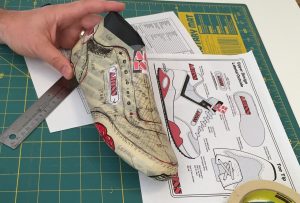
Make a quick check of the top line, collar, and heel notch heights. For a size 9 shoe, (measure from inside to the Strobel sock,) the collar line is 55mm, the heel notch is 80-85mm to top eyelet, 90mm measured from the Strobel’s bottom.
   How to draw on a shoe last
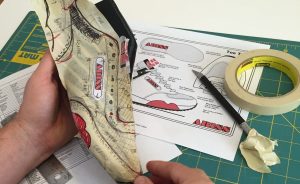
The design does not have to be perfect now but keep an eye out for any major flaws. This is a good time to show it to your developer. Are the pattern parts wasting material? Are there any overlapping issues? Too many layers overlapping in the flex zone will cause problems.  

Shoemaking Material
DIY Super Kit

All the hard find parts for your DIY shoemaking project are here in one place. Lasts, soles, materials, tools and pattern making text book included. Your shoe size is in stock. Learn more On sale $200

Flatten the shoe pattern:
what is a lift sheet in shoemaking
After you have your shoe design down on the tape it is time to peel off the tape. Using a sharp blade, cut the tape down the center lines of the toe and heel. Next, cut the tape along the bottom edge of the last. Now, start peeling off the tape. If the tape was laid down correctly in overlapping layers the pattern will pull off.  
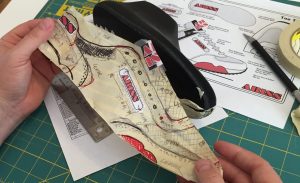
Pattern_making_7Here is the pattern free of the last. You may find that it does not lay flat, don’t worry.
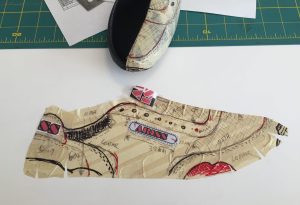
   

DIY make a shoe pattern
Now, carefully lay the tape on a sheet of stiff paperboard and press your new shoe pattern flat. Starting at the top eyelet position and collar line, work your way down the middle then out to each end. As you move to the heel and toe, the 3D pattern will need some relief cuts to “spring” the pattern. Add a few cuts and the pattern will flatten.

Cut the shoe pattern:
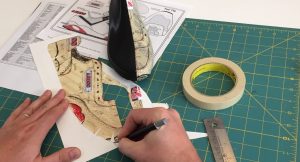
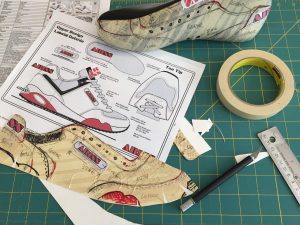
Pattern_making_4 how to cut your own shoe pattern Once the tape is peeled from the last and flattened you have the shoe pattern! The pattern with all the parts together is called the “shell” pattern. With the pattern attached to some paper, it’s time to “trim out” the pattern. Now the shoe pattern can be redrawn in a computer and cut out of heavy paper. The Pattern Cutter will add the overlaps and alignment marks.
 

DIY make your own shoe pattern
As a shoe designer, you should always ask for the flat pattern of a new shoe design. When you make corrections for the pattern maker, it’s easier to draw on the flat pattern than to draw on the sample. It is also much faster to scan the corrections and email them to the factory rather than Fed-Ex the shoe back to China.
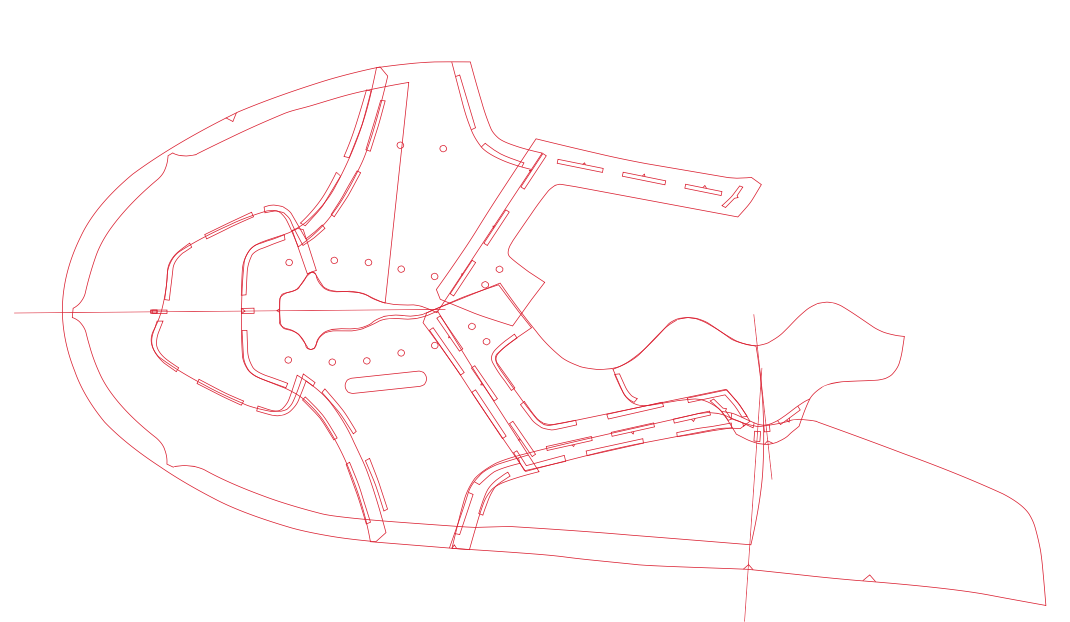
 

footwear pattern cutting how to make your own shoe pattern
Here is the finished flat pattern. Scanned and with overlaps added, this pattern is ready for the sample room. Buy the pattern here.

New Course!
Shoemaking for Designers & Brand Builders

Created for footwear beginners and career changers alike, this course delivers the basic shoemaking knowledge you need to get you career in the shoe trades started. Learn more On sale $99
Posted on

Shoe Patterns

Shoes pattern

Making a Sneaker Pattern

Shoes pattern

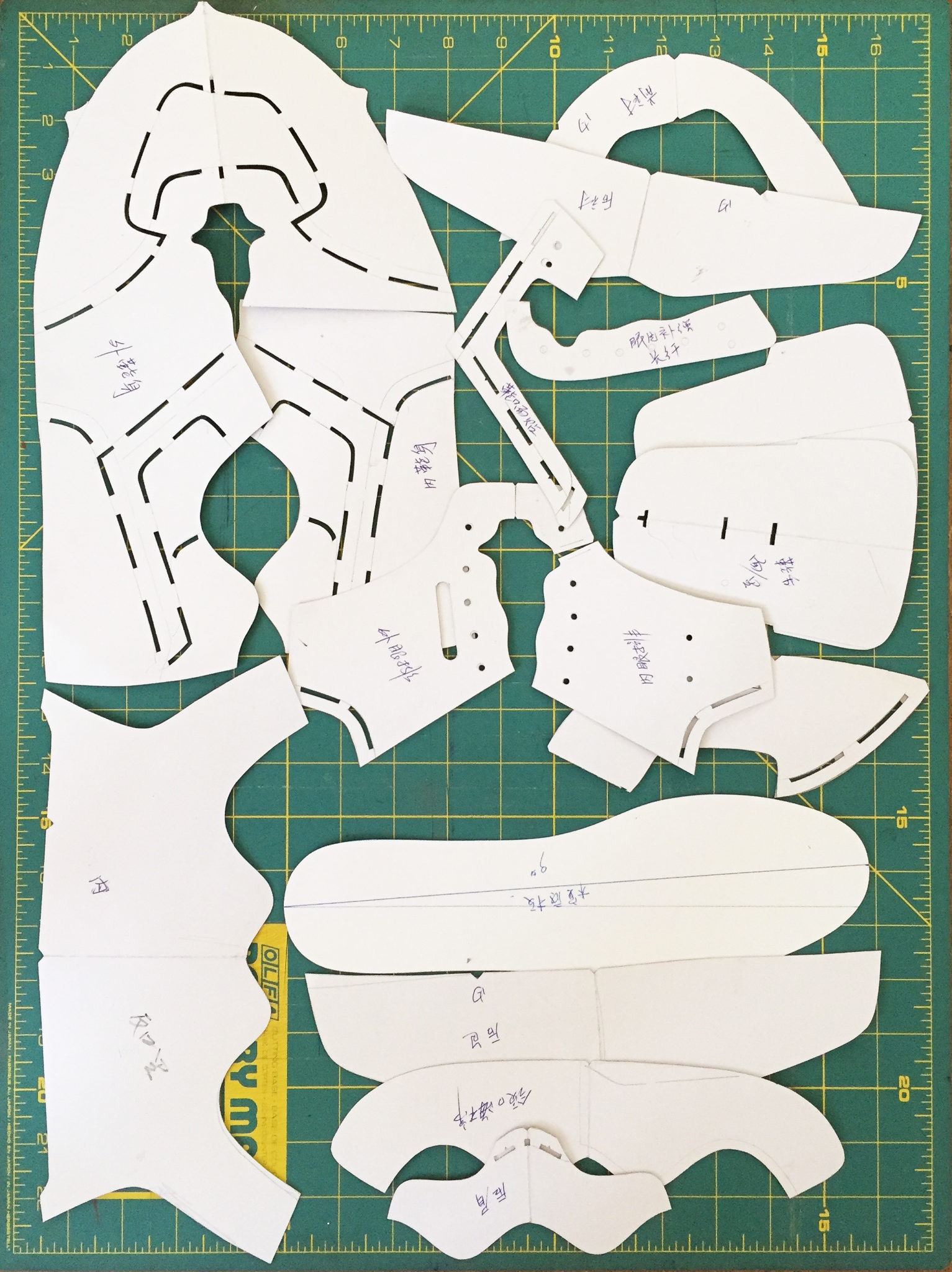
Once you have completed drawing your shoe design, you will need to make a flat pattern. The pattern will be used to cut and sew the materials for your initial sample. The pattern records the actual shape of the shoe. The pattern and the shoe last together determine the profile, fit, collar height, vamp length, tongue length, throat width and all the other dimensions of the shoe.


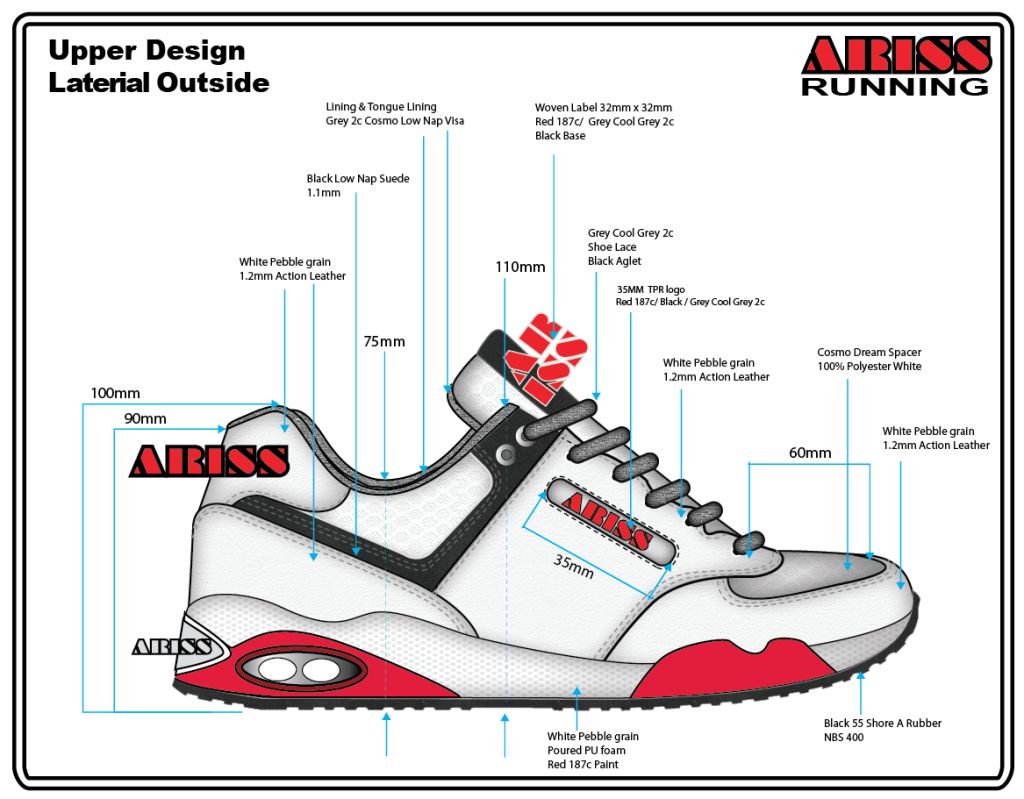
Aris pattern

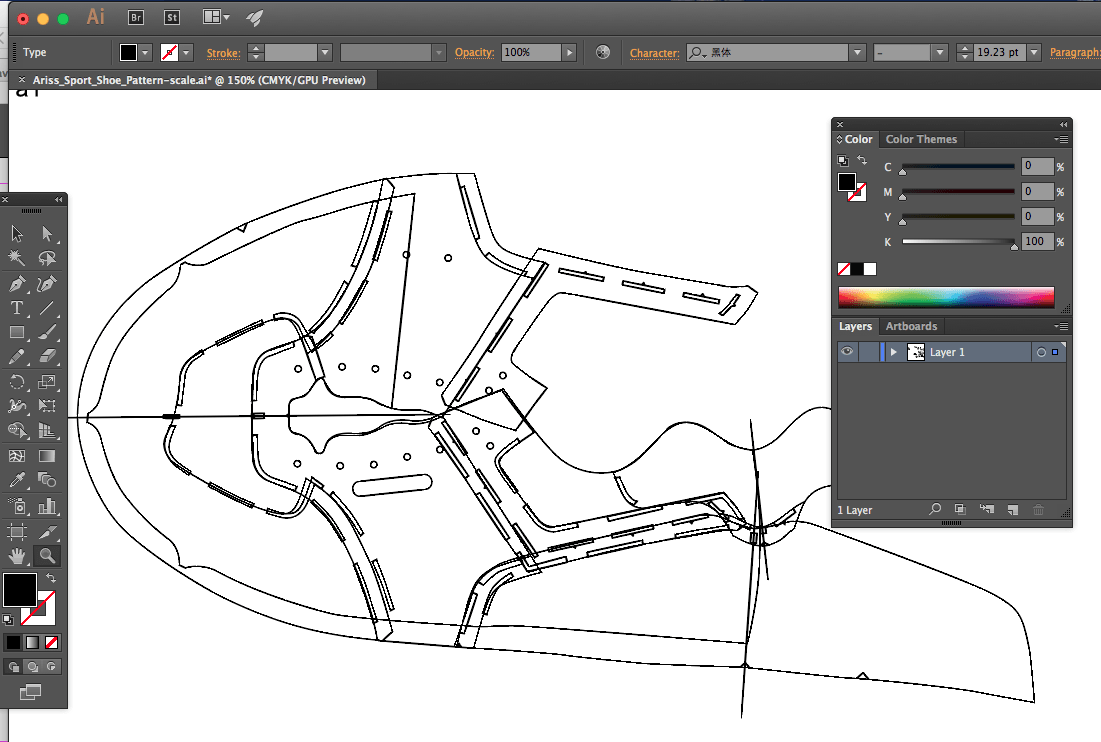
This classic jogger shoe pattern looks simple but it has many pattern parts. Shoemaking patterns can be very complicated.


Shoemaking Material Kit

All the hard to find parts for your DIY shoemaking projects are here in one place. Lasting board, Strobel material, lining mesh, collar foam and all the reinforcing parts you need to make shoes.
Buy Now
On sale $39.99

Display Your Shoe Pattern

There are a few ways to display the shoe pattern.

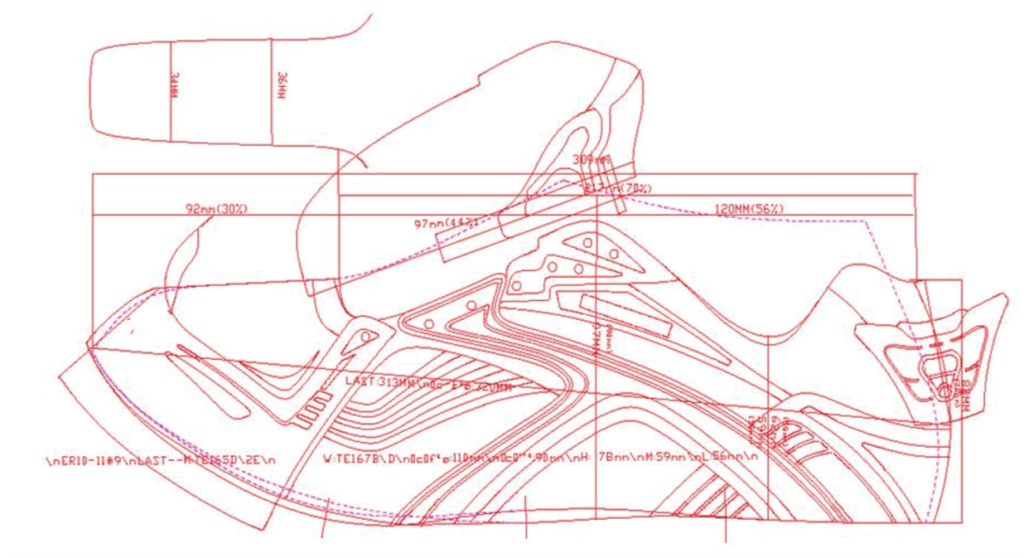
Flat pattern for Shoe

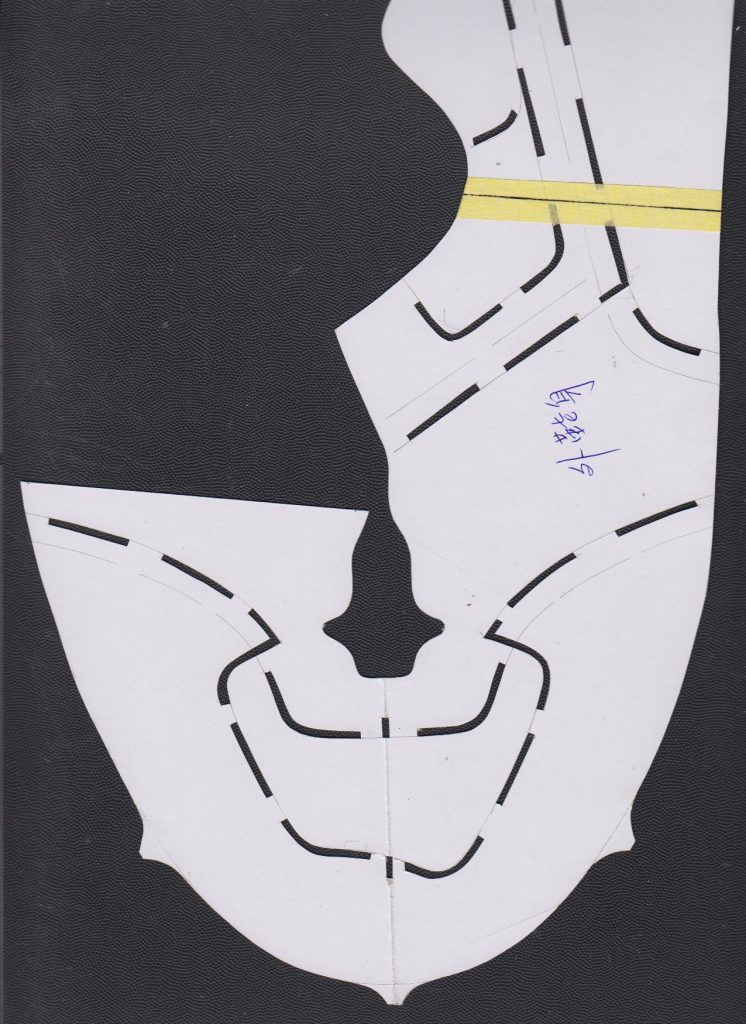
The complete shoe shell pattern, as shown above, may not show the material overlaps but is an easy way to communicate the design. Often, the factory will include the shell pattern with any new pull-over samples. This allows the designer to scan the pattern back into the computer and make corrections.

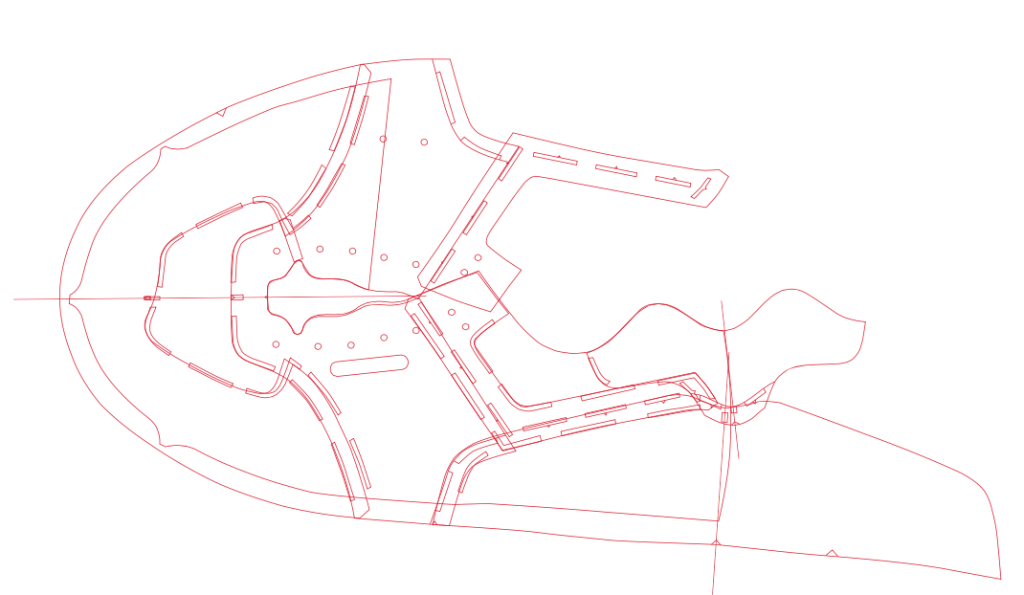
Flat Pattern for running shoe


Shoe design pattern PDF downloadable File

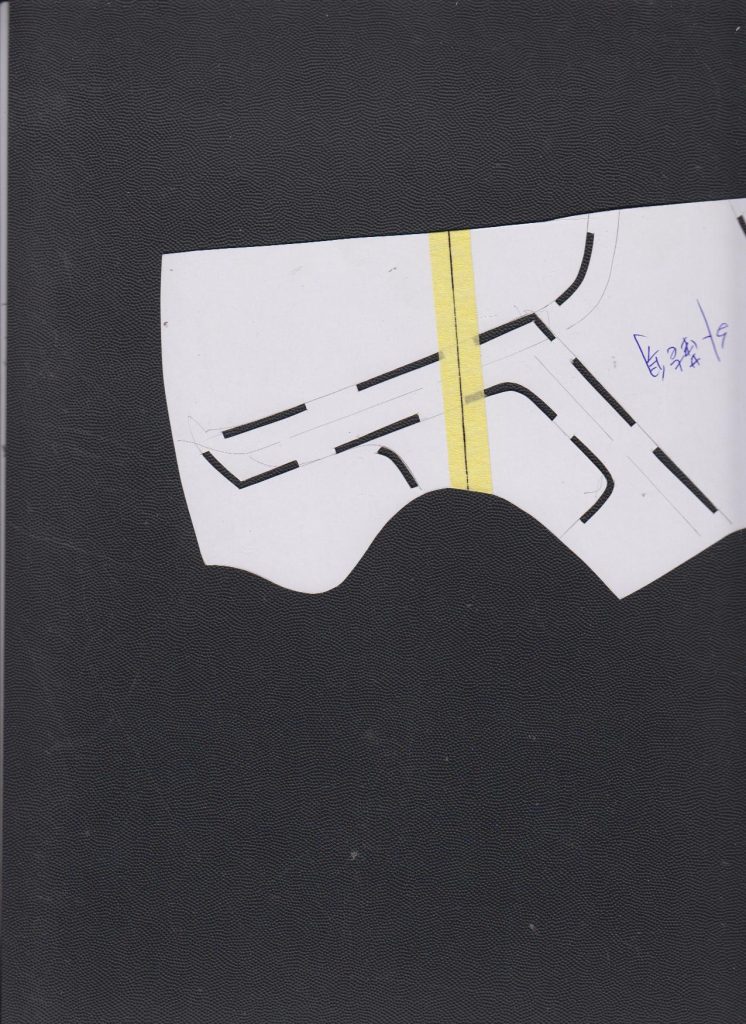
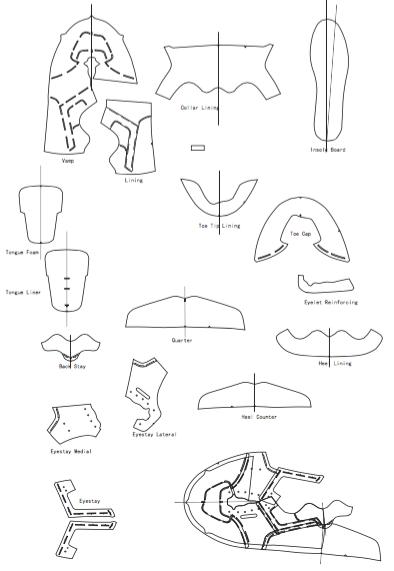
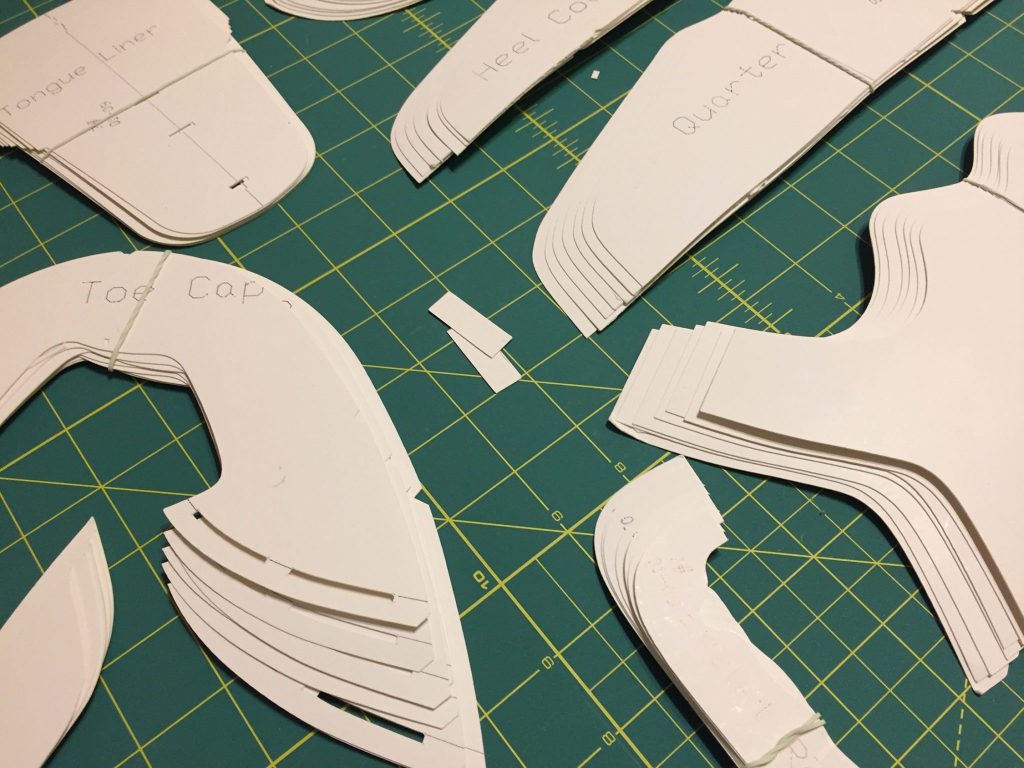
Another method (shown above) is to display all the pattern parts; including the overlap and the alignment marks. This drawing helps the pattern maker see how the parts fit together and where the overlaps occur.


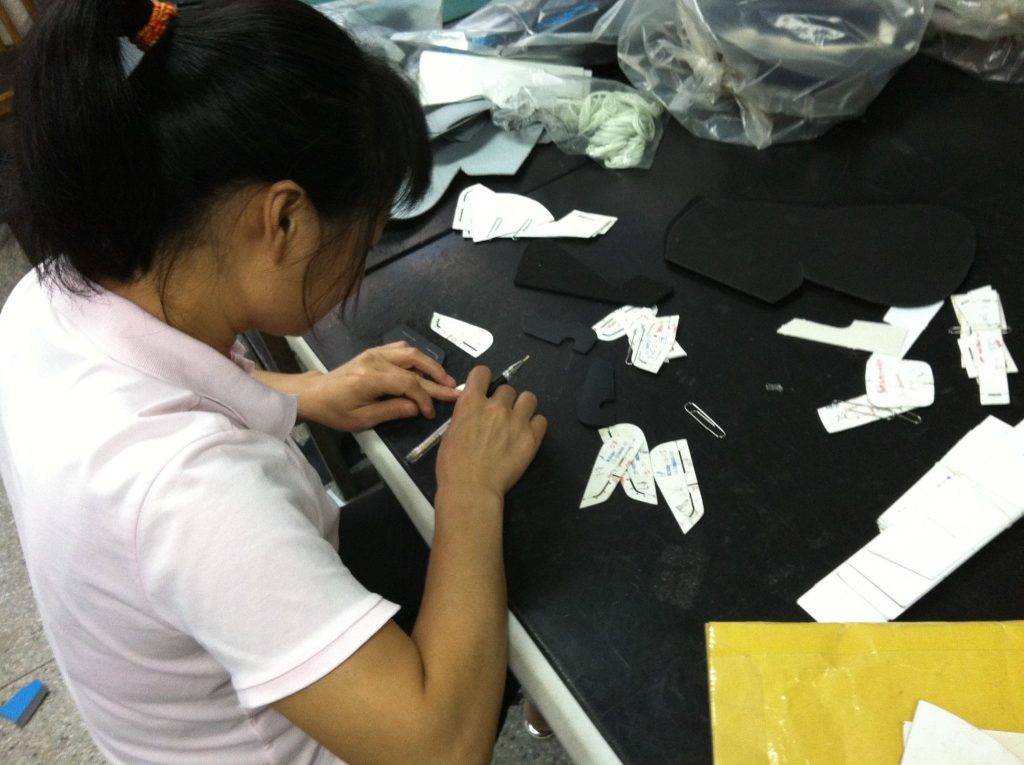
Cutting a custom shoe pattern

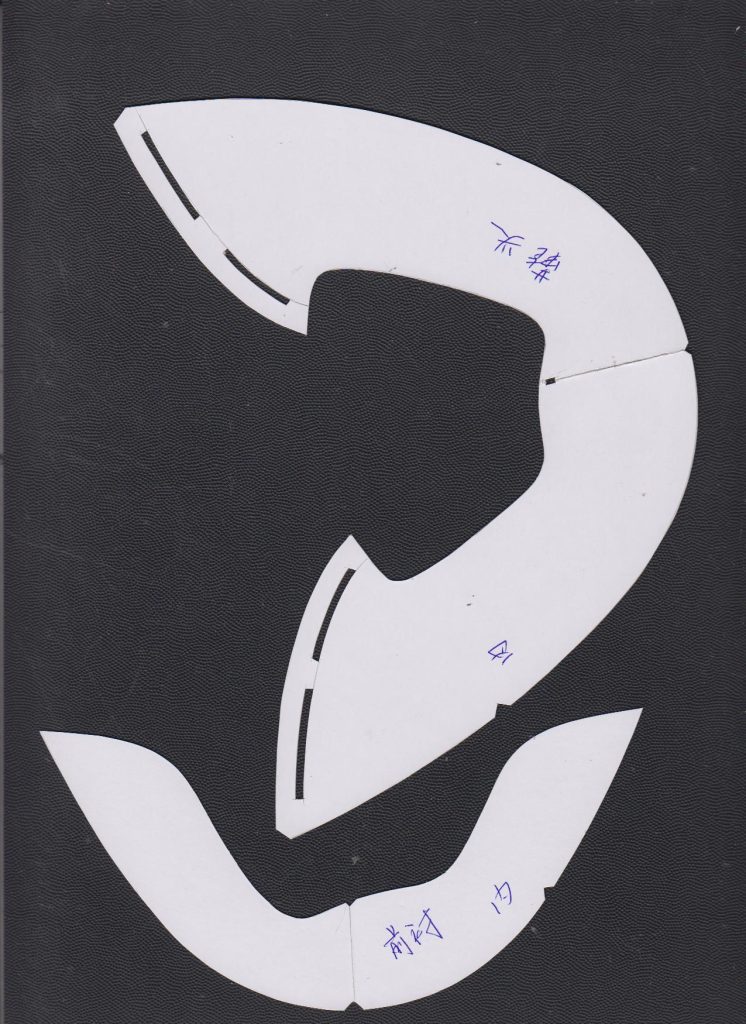
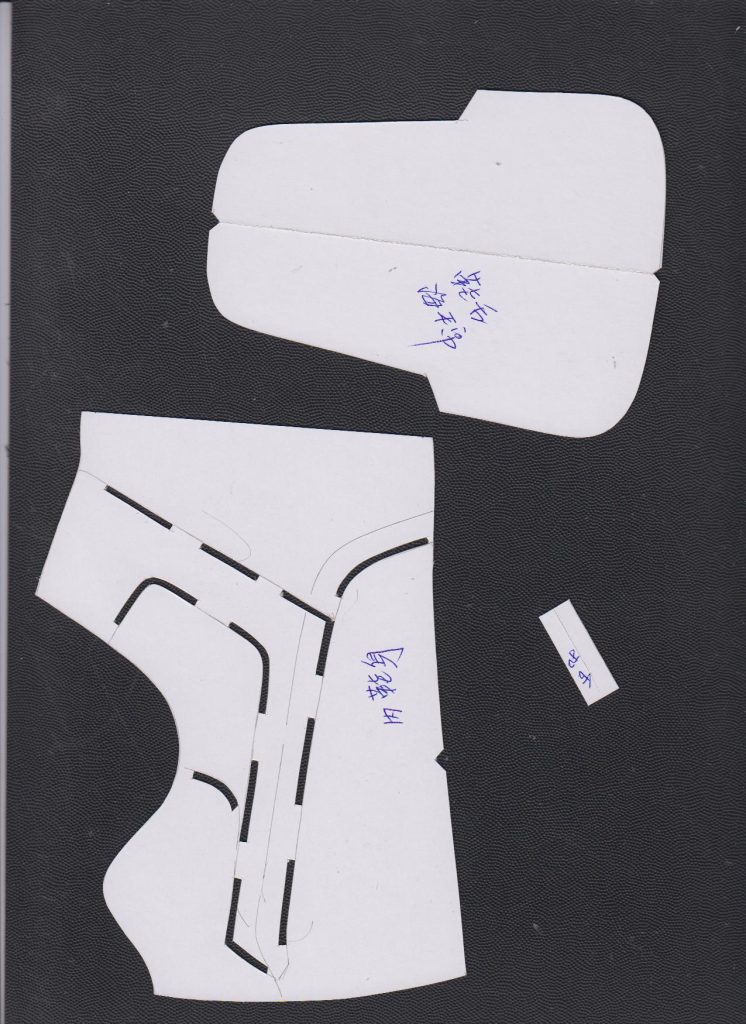
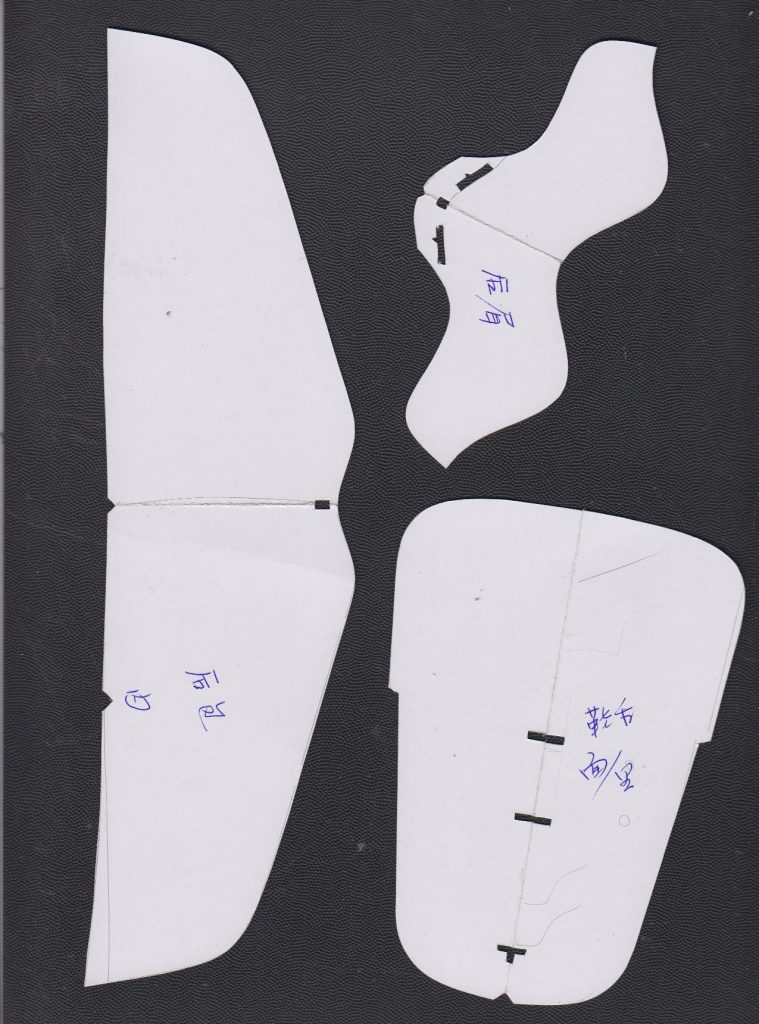
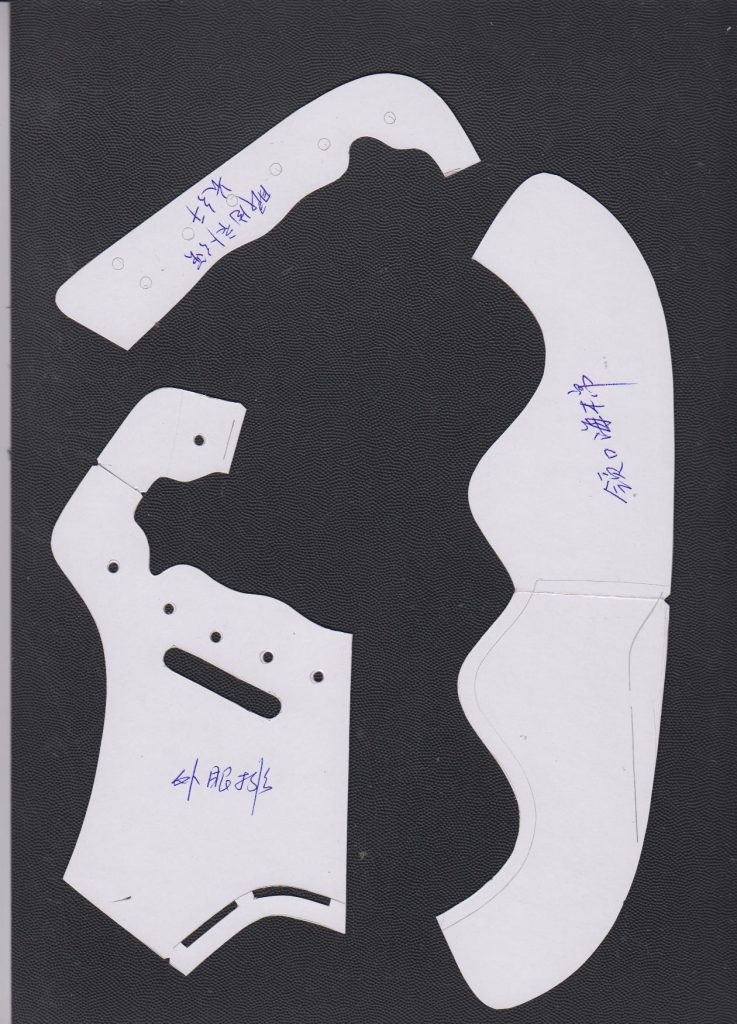
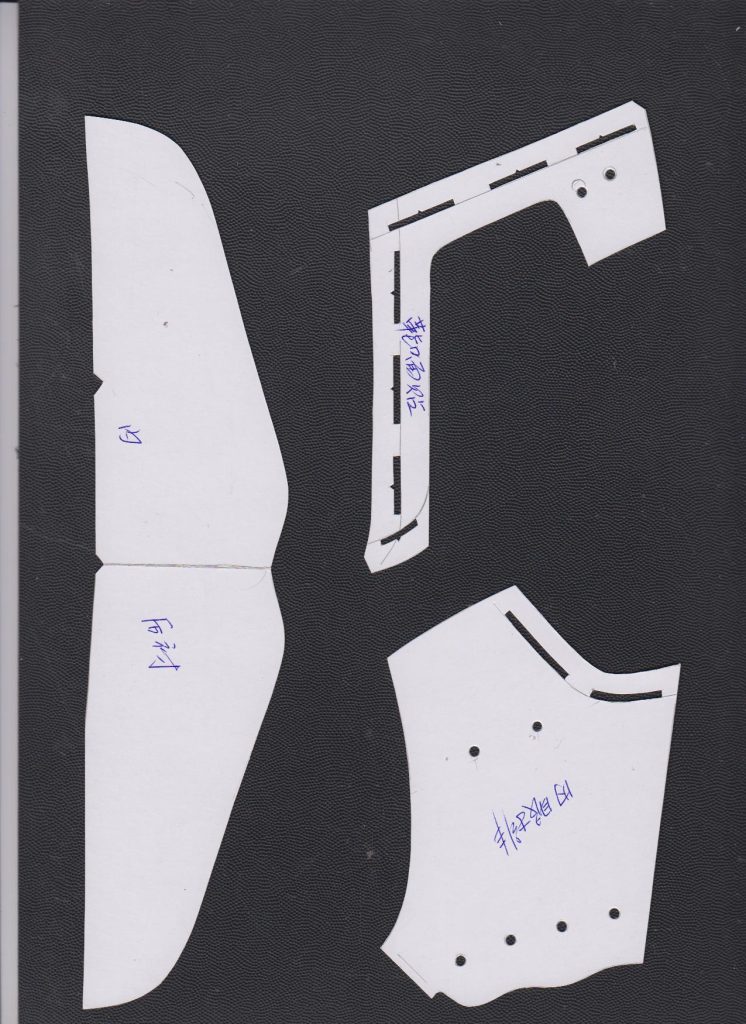
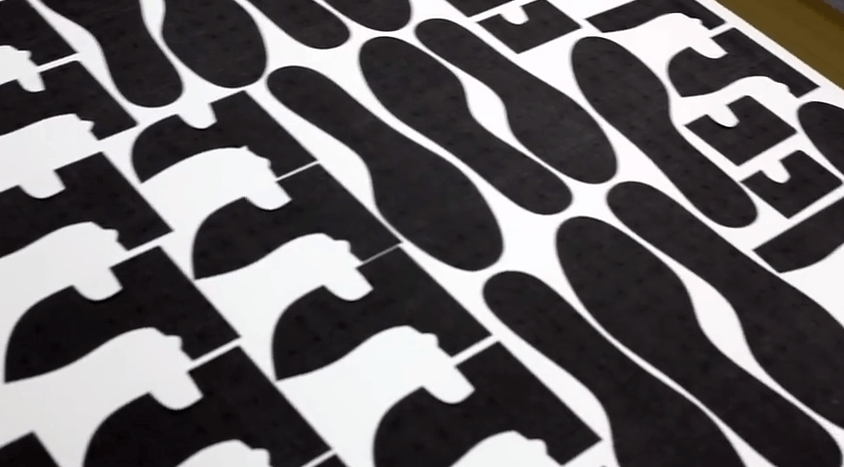
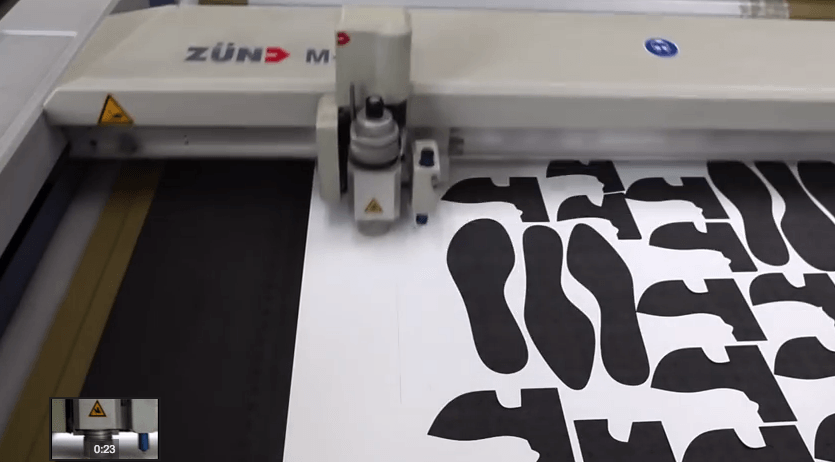
Here you can see the cut paper pattern parts. These are what the sample pattern cutter will use to make the first sample shoe. Many factories will use a machine to cut sample parts but cutting the paper by hand saves the time involved in computerizing the pattern.

The Classic Sneaker Last is Here

Stop searching! The classic Sneaker last is in stock. Ready for your DIY shoe making projects. We have your size and outsole bottoms that fit. Buy Now On sale $79.99


Factory shoe flat pattern

This pattern for the Ariss running shoe is available for download here.
The vamp and lining pattern parts make up the base layer for assembly
these will be mesh.
The tongue pattern is both the lining and face.
The face is made of mesh and the lining is made from Visa terry.
The tongue foam pattern for 10mm Kff foam.
The quarter panel is the made of leather.

The heel counter is a smaller part which will be made from a reinforcing material. The backstay is a leather panel, great for logos.

The medial eyestay and lateral eyestay are leather parts. The break line is on the medial inside of the shoe. If this were one part, it would wrap around onto itself and waste material. The break line can be in the middle at the base of the tongue. The lateral side has a die cut for the logo.

The eyestay underlay parts are the same pattern, mirrored.
The toe tip will be leather, you can see it’s not symmetrical. The extra panel is called a toe burst panel. This prevents the big toenail from wearing through the vamp mesh.
The heel lining is the pattern for collar foam.
The collar lining is made from Visa terry fabric.
The shoe has a perforated eyestay, to prevent “tear out” reinforcement material is added.
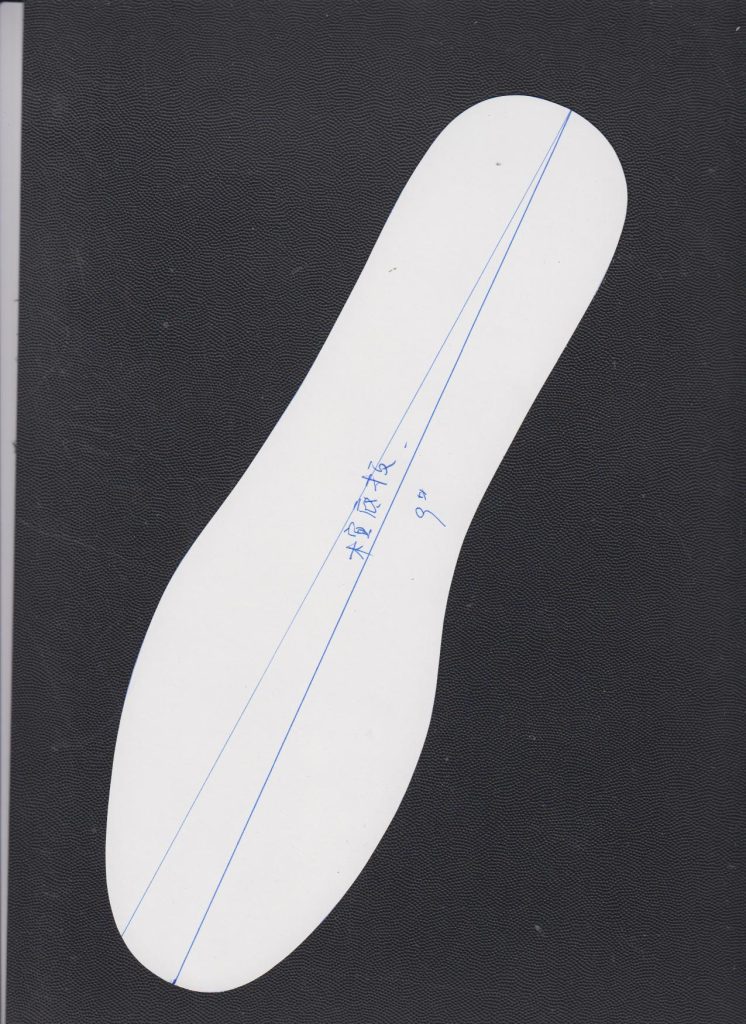
The insole pattern is the strobal sock, this is made from a tough non-stretch material.

Shoemaking Material
DIY Super Kit

All the hard to find parts for your DIY shoemaking projects are here in one place. Kit includes lasts, soles, materials, tools, and pattern making textbook. Your shoe size is in stock.
Buy Now
On sale $200

Posted on

Shoe Pattern Grading : How to make sizes

How to grade shoe pattern parts

How to Grade Shoe Patterns

Shoe pattern Grade
Graded Shoe pattern

In the footwear manufacturing process, the sample size shoe pattern is always confirmed first. Afterward, the pattern master will make the pattern pieces for all the remaining shoe sizes. This process of adjusting the pattern for each shoe size is called shoe pattern grading. A complete, graded, production pattern for a typical sports shoe will require over 200 individual shoe pattern parts. Each pattern part will require its own cutting die.


/*! elementor – v3.7.8 – 02-10-2022 */ .elementor-widget-divider{–divider-border-style:none;–divider-border-width:1px;–divider-color:#2c2c2c;–divider-icon-size:20px;–divider-element-spacing:10px;–divider-pattern-height:24px;–divider-pattern-size:20px;–divider-pattern-url:none;–divider-pattern-repeat:repeat-x}.elementor-widget-divider .elementor-divider{display:-webkit-box;display:-ms-flexbox;display:flex}.elementor-widget-divider .elementor-divider__text{font-size:15px;line-height:1;max-width:95%}.elementor-widget-divider .elementor-divider__element{margin:0 var(–divider-element-spacing);-ms-flex-negative:0;flex-shrink:0}.elementor-widget-divider .elementor-icon{font-size:var(–divider-icon-size)}.elementor-widget-divider .elementor-divider-separator{display:-webkit-box;display:-ms-flexbox;display:flex;margin:0;direction:ltr}.elementor-widget-divider–view-line_icon .elementor-divider-separator,.elementor-widget-divider–view-line_text .elementor-divider-separator{-webkit-box-align:center;-ms-flex-align:center;align-items:center}.elementor-widget-divider–view-line_icon .elementor-divider-separator:after,.elementor-widget-divider–view-line_icon .elementor-divider-separator:before,.elementor-widget-divider–view-line_text .elementor-divider-separator:after,.elementor-widget-divider–view-line_text .elementor-divider-separator:before{display:block;content:””;border-bottom:0;-webkit-box-flex:1;-ms-flex-positive:1;flex-grow:1;border-top:var(–divider-border-width) var(–divider-border-style) var(–divider-color)}.elementor-widget-divider–element-align-left .elementor-divider .elementor-divider-separator>.elementor-divider__svg:first-of-type{-webkit-box-flex:0;-ms-flex-positive:0;flex-grow:0;-ms-flex-negative:100;flex-shrink:100}.elementor-widget-divider–element-align-left .elementor-divider-separator:before{content:none}.elementor-widget-divider–element-align-left .elementor-divider__element{margin-left:0}.elementor-widget-divider–element-align-right .elementor-divider .elementor-divider-separator>.elementor-divider__svg:last-of-type{-webkit-box-flex:0;-ms-flex-positive:0;flex-grow:0;-ms-flex-negative:100;flex-shrink:100}.elementor-widget-divider–element-align-right .elementor-divider-separator:after{content:none}.elementor-widget-divider–element-align-right .elementor-divider__element{margin-right:0}.elementor-widget-divider:not(.elementor-widget-divider–view-line_text):not(.elementor-widget-divider–view-line_icon) .elementor-divider-separator{border-top:var(–divider-border-width) var(–divider-border-style) var(–divider-color)}.elementor-widget-divider–separator-type-pattern{–divider-border-style:none}.elementor-widget-divider–separator-type-pattern.elementor-widget-divider–view-line .elementor-divider-separator,.elementor-widget-divider–separator-type-pattern:not(.elementor-widget-divider–view-line) .elementor-divider-separator:after,.elementor-widget-divider–separator-type-pattern:not(.elementor-widget-divider–view-line) .elementor-divider-separator:before,.elementor-widget-divider–separator-type-pattern:not([class*=elementor-widget-divider–view]) .elementor-divider-separator{width:100%;min-height:var(–divider-pattern-height);-webkit-mask-size:var(–divider-pattern-size) 100%;mask-size:var(–divider-pattern-size) 100%;-webkit-mask-repeat:var(–divider-pattern-repeat);mask-repeat:var(–divider-pattern-repeat);background-color:var(–divider-color);-webkit-mask-image:var(–divider-pattern-url);mask-image:var(–divider-pattern-url)}.elementor-widget-divider–no-spacing{–divider-pattern-size:auto}.elementor-widget-divider–bg-round{–divider-pattern-repeat:round}.rtl .elementor-widget-divider .elementor-divider__text{direction:rtl}.e-container>.elementor-widget-divider{width:var(–container-widget-width,100%);–flex-grow:var(–container-widget-flex-grow,0)}

Shoemaking Material Kit

All the hard find parts for your DIY shoemaking project are here in one place. Lasting board, strobel material, lining mesh B&W, collar foam and all the reinforcing parts you need for one pair. Learn more On sale $39.99

Shoe Pattern Grading

Shoe pattern grading is done according to the last sizes. While each shoe last will have its own specific contours and unique outline shape, the size grading increments are standardized. For men’s shoes, the length of the last changes 4mm per USA half size and 4mm per European size (full sizes only). The US standard size 9 last is 276mm long, and the size 9.5 is 280mm long.

Last sizes gradedThe shoe lasts’ other critical dimensions also change per size, but at different rates. For example, the ball girth is graded at 3mm per size, and the ball width (measured across the bottom of the last) measures 66% of the total ball girth. For men’s size 9, the ball girth is 234mm and the ball width is 156mm.  Also, while the shoe length increases 4mm per half size, the collar height and back height increase only 1mm per size.
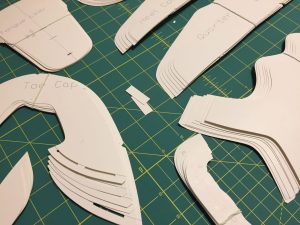
how to make your own shoe patternThe shape of each shoe component will change per size depending on its location. The tongue length will increase quickly according to the last length, while the width grades slowly according to the girth.
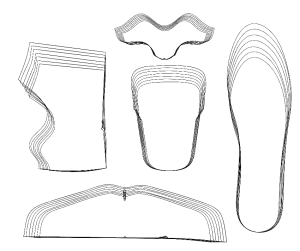
The heel mustache’s width will increase more than its height as the sizes get bigger. The back counter parts also increase quickly in width according to the last length while the height grade is small.


The Classic Sneaker Last

Stop searching! The classic Sneaker last is instock. Ready for your DIY shoe making projects. We have your size and bottoms that fit. Learn more On sale $79.99

Which shoe parts don’t grade?

Shoe pattern gradeNot all the features of a shoe pattern are graded. For example, the pattern overlaps and lasting margins are not graded.
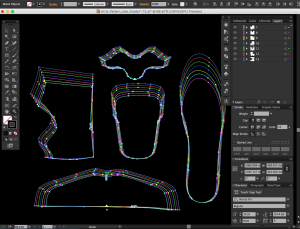
Pattern grading in a modern shoe factory is done by a computer. The middle size, or sample pattern, is digitized by the pattern assistant. Next, the computer takes over grading the pattern according to the last dimensions already stored in the program. In the old days, a pantograph machine was used to trace the pattern. The geometry required for the arms to adjust according to the length and width of the pattern parts was done by hand.

Computer Pattern Grade how to make a shoe patternOnce the pattern is graded, the pattern master will check it by hand. The pattern master then instructs the sample room to make the trial patterns. The trial patterns are checked for visual proportions and outsole fitting. Once the patterns are approved, the cutting dies will be made.
Shoemaking Material
DIY Super Kit

All the hard find parts for your DIY shoemaking project are here in one place. Lasts, soles, materials, tools and pattern making text book included. Your shoe size is in stock. Learn more On sale $200
Posted on

What is a Shoe Pattern?

What is a Shoe Pattern

What is a Shoe Pattern?

pattern for making shoes, shoe design patternsA shoe pattern consists of all the component parts needed to make a shoe. The pattern pieces are cut in 2D and once the pattern parts are assembled the shoe upper is lasted to set the 3D shape. You can learn more about lasts and lasting in the articles about shoe lasts and shoe lasting.

Pattern = Parts

The pattern is the template for all the shoe parts. To make a shoe you will need many pattern parts cut from many different materials. Even a simple shoe design may require more than 30 cut pattern parts. More parts are required inside the shoe than outside the shoe to make the inner lining and reinforcing parts. Once on the shoe assembly line, the workers follow the sewing pattern for the shoes to create the uppers.
Cutting a shoe pattern making process

When a new shoe is being developed, the pattern maker, or pattern cutter, will create a forme from the last. The forme is simply the 3D surface of the last laid flat to paper. Once the forme is created, the 2D pattern can be drawn. See more on how to make your own shoe pattern.

Taped Last Method

A shoe pattern maker may use the taped last method to cut the shoe pattern. In this technique, the pattern maker will layer masking tape onto the last, then draw the design directly onto the surface.  Once the design is finished, the entire taped panel can be removed or the design can be cut off the last piece-by-piece.  There is no right or wrong way, for the pattern master it is a matter of preference.

shoe pattern template shoe design patterns
Shoe flat pattern Complete Shell pattern

Computer Created Patterns

Today, we have CAD CAM software that a designer can use to “draw” the pattern onto the computer model of the last. This is a more advanced way to create patterns but there is still an art to holding the last in your hand and marking the design by eye.

Shoe pattern cutting is a special skill. While it is not hard to cut your own patterns step-by-step, it takes years to truly master the craft of pattern making. There are many books on the subject of pattern cutting.

You can download a real factory pattern for a classic trainer here.

If you want to learn more about footwear patterns and pattern making check out the book Footwear Pattern Making and Last Design from our How Shoes Are Made series. Also, here is a good one by Frank Jones.  


Shoemaking
TextbooksBuy Now
Shoemaking
SuppliesBuy Now
Shoemaking
CoursesCourse Details

Previous
Next

Posted on

How to Make a Shoe Last

Use the same pattern to make a pair of shoe lasts

Can you make a shoe last at home?
Yes, you can make a shoe last at home! In this article, we will review the basic techniques you can use to make a shoe last. If you have a custom shoe project in mind for yourself, or need a shoe last for a DIY or school project, you can use these techniques.

There are several ways that you can make a last for your shoe projects.
1.  Carve the shoe last from wood or foam.
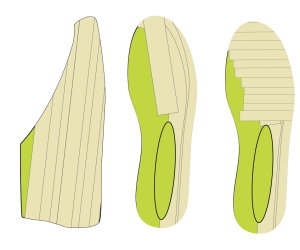
2.  Build the last from stacked wood or cardboard.
3.  Make an Alginate™ foot casting in a box mold.
4.  Make a shoe last inside a foot form with plaster gauze.
5.  Use a 3D printer to make a shoe last.

Carve the shoe last from wood

How to make shoe last If you have some woodworking skills, patience, and access to equipment, you can carve a custom last from wood. The wood-carved last is the most traditional way to make a shoe last. Starting with a block of wood that is free of any knots or split grain, draw the side profile and bottom shape. Wood-SHoe_lastThen, using a band saw or hand tools, cut the general shape of the footwear last. From this point, use chisels, sanding machines, and files to refine the shape.
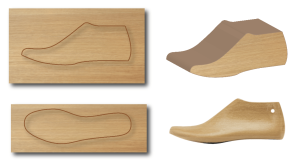
This process is very time-consuming. If you have access to CNC equipment at a MakerSpace or a school woodshop you may choose to do the rough cutting using the machinery and then finish by hand.

Last Design Textbook

Learn how lasts are made, the shoe last design process, the hidden geometry, special features, functions, and size grading principles.
Buy Now
On Sale $39.99


Build a shoe last with stacked wood or cardboard

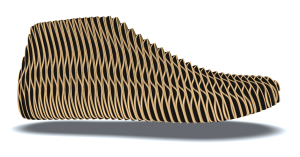
Build a shoe last with stacked cardboard Using stacked cardboard is an easy way to make a shoe last with only a hobby knife and cardboard scraps. This will take some time, but if you have a printer it is easy. Download the stacked file PDF here. It is simple to do. First print the pages, then glue them to cardboard and cut them out.

If you have access to a laser cutting machine you can use this machine to save time and make a very clean last. Once you have the cardboard stacked and glued together, a few coats of varnish or resin can harden the surface and make the cardboard last easier to handle.

Here is a link the slicer software: Fusion 360 – Slicer


The Classic Sneaker Last is Here

Stop searching! The classic Sneaker last is in stock. Ready for your DIY shoe making projects. We have your size and outsole bottoms that fit.
Buy Now
On sale $79.99

Build a shoe last with Alginate™ cast in a box mold.

Alginate™ is a flexible casting material used in the dental and biomedical field. It is easy to use and non-toxic. To make an Alginate™ casting you will need about two pounds of the material. It’s easy to get Alginate for your shoe lasting project from Amazon. To make the last casting you will need a box, wood is best but you can also use cardboard. Alginate is water-based so you need to be careful that your mold box does not turn into a soggy mess. Preparation is easy but you are going to need a helper. A pair of rubber gloves are not required but will help you reduce the mess.
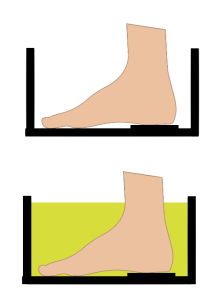
Build a shoe last with Alginate™ Cast in a box mold. Build your foot casting box. Make the box fit close to your foot but make sure to leave an inch or 30mm around your foot, your helper will need this space to apply the Alginate.

To prepare you should apply Vaseline or another petroleum jelly all over your foot, this will make it easier for you to slide your foot out at the end.  For men – you must shave the hair off your foot! Removing your foot will be painful if you skip this step. A plastic bag can also be wrapped around your foot but I would not recommend this as it will make your casting wrinkled.
To apply the Alginate, first, pour some into the bottom of your box, then cover your foot. Alginate sets very quickly. In just a few minutes the Alginate will be firm. You can now gently start flexing your foot to remove it from the mold. Go slow and be careful not to tear the mold.
The top edge may tear but don’t worry.
Build a shoe last with Alginate™ Cast in a box mold.
Once you have the mold you can pour plaster or resin into the mold.  To remove the last you will need to cut away the Alginate.
After some hand finishing, you can use your foot casting to make your DIY shoe project.

Cast a shoe last in a mold made from plaster gauze.

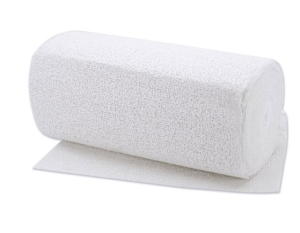
Plaster_GauzePlaster gauze is another great way to make a casting of your foot. You will need a helper for this project as it can get a bit messy. The process is simple. First, prepare your foot by shaving off the hair and then apply Vaseline petroleum jelly to stop the plaster from sticking.
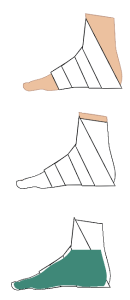
Wet the plaster and apply it to the foot,  you should be seated with only a little weight on your foot. Don’t wrap the plaster too high as getting the casting off can be a bit tricky.
Once the plaster is on, it will take a while to set up. You will feel some Plaster_gauze_last_castingheat but it’s not dangerous. When you feel the plaster getting firm it is time to remove the casting. You will need to carefully trim down the side of the plaster casting. A small pair of scissors with tape on the point can be used.
Go slow and trim just a little at a time until you can slip your foot out. It is a good idea to save a patch or two of the plaster gauze to make any repairs.
Once you have the mold you can pour resin into the mold. To remove the last you will need to cut away the plaster casting.
After some hand finishing, you can use your foot casting to make your DIY shoe project.

Build a shoe last with a 3D printer

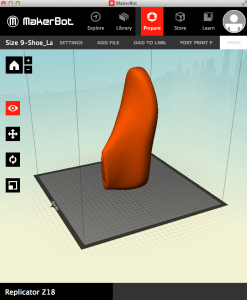
Build a shoe last with a 3D printerIf you have access to a decent-sized 3D printer you can print this last full size in about 5 hours. We have a really slick MakerBot Model Z18 on hand so we tested the file. We printed the sneaker last with 0% fill, 2 shells, and scaled to 275mm long for USA men’s size 9. With 0% fill the last is fragile but perfect for filling with expandable foam, casting resin, or plaster for a more durable last.
Shoemaking Material
DIY Super Kit

All the hard to find parts for your DIY shoemaking projects are here in one place. Kit includes lasts, soles, materials, tools, and pattern making textbook. Your shoe size is in stock.
Buy Now
On sale $200

Posted on

Tour a Shoe Last Factory

inside a shoe last factory

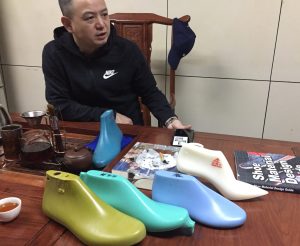
Today we are visiting a shoe last factory operated by a good friend of mine, Jackie Huang. The Dongguan Lian Xiang shoe last factory is located on a busy side street in the South China shoemaking town of Houjie. Jackie operates the business and meets with customers while his brother, an accomplished last master, works to shape new lasts.
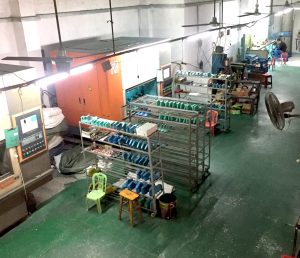
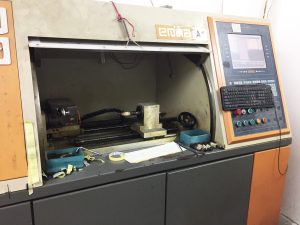
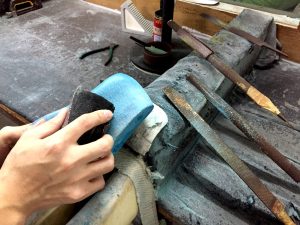
This small factory makes sample development and production shoe lasts for many top international shoe brands. They have over 25 years of experience making all types of lasts for athletic, fashion, and casual shoes. The factory can make over 50,000 plastic lasts a month and is equipped to make development and custom model lasts one by one. Jackie and his skilled craftsmen can make you a new custom last in just a few hours. Let’s see how they make a new shoe last.

how shoes lasts are made

Inside a shoe last factory:

Inside the last factory you will find a small office, a 3D last scanning machine, a shaping bench, computer controlled high speed last cutting lathes, a finishing area, and a last marking station. You will also find cutting saws, drill presses, hydraulic presses, and plastic extrusion machines.

Getting started on a new shoe last project:

shoe last scanning machineThe last scanner:

The last scanner is a critical piece of equipment in any shoe last factory. The scanner is used to duplicate and record any new lasts that arrive at the shop for adjustments. The scanner is also used to record any handmade modifications.

making a shoe last the last masterThe last shaping bench:

In the last master’s workroom, there will be a workbench specifically designed to hold the last in place while its shape is being refined. While all plastic lasts are cut by the automatic machine, subtle adjustments like adding and removing material are still done by hand.

shoe last cutting machine

Last cutting lathes:

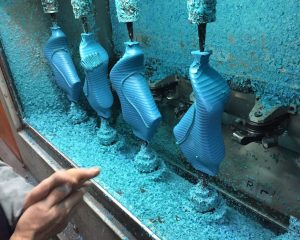
The last cutting lathe machines are the workhorses of the last factory. Able to cut 6 lasts at once, the last cutting lathe can transform “blanks” into lasts in just a few minutes.

Making a new shoe last:

To make a new shoe last, Jackie and his team need a few details. If you know the function of the new shoe, such as running or soccer, Jackie can search his extensive computer files for a suitable last. If you have a photo of a similar style, Jackie can find or create a new last similar to the product shown in your photo. Maybe you have a sample shoe to follow? The factory team can “reverse engineer” a last to duplicate the fitting. Of course, if you a have a last that needs modifications, they can scan and reshape a last per your requirements. Once the last file is found or created, it is simply sent to the cutting machine.

If you require the services of Jackie Huang and his team at The Dongguan Lian Xiang shoe last factory in China, we can put you in touch with an English speaking contact. Send inquiries to Wade@SneakerFactory.net

Posted on

How Shoe Lasts are Made

How shoes lasts are Made

How Shoe Lasts are Made shutterstock_111577298The shoe last is the starting point for any shoe design project and is critical to the shape and function of all types of footwear. The last is used by the shoe factory to determine the shape of the shoe. The last also determines the fit, performance, ergonomics, and style of a shoe. Round toes, pointed toes, low heels, or high heels, these attributes are all determined by the shoe last. These attributes are what make different shoes suitable for running, basketball, hiking, or high fashion.
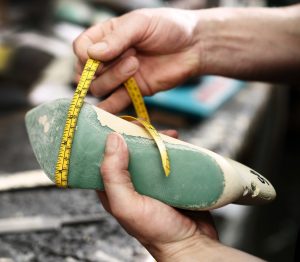
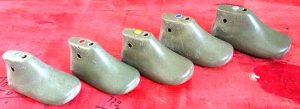
With the shoe last in hand, the pattern master creates the shoe pattern to fit the last tightly. Once the design is confirmed, the patterns are graded following the last to make each shoe size.  Shoe lasts can be made from injection molded plastic, carved wood, or cast aluminum.

last making school How shoes lasts are Made When discussing the attributes of a last, you will need to know the common terms. The majority of measurements are volume rather than the traditional length and width associated with shoe fit.
Click here to see How Shoe Lasts are Measured 

Last making is an art form. A skilled last-maker will have many years of experience and may have gone to last-making school. When making a last, the anatomy of the foot must be considered, especially how the foot shape changes when flexing.  When a last is designed for custom shoes, every dimension of the customer’s foot and the desired style must be considered.

Shoe Last Types:

Depending on the style of shoe that is being made the last will need some special features to allow the shoe to release the last.  The standard athletic shoe with a floating lace-up tongue can use a solid last. Loafers, Oxfords, and boots will require a last that can articulate so the shoes are not damaged during the de-lasting processes.

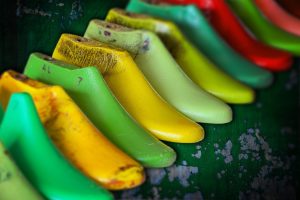
Solid Shoe lasts:  The most common type of shoe lasts, the solid last can be made of plastic, aluminum, or wood.

Hinged Shoe Last:  The hinged last is often used for making fine leather shoes. The last can adjust, allowing easy removal.

Scoop Last: In the scoop last, the instep is removable, allowing a cone of the shoe to be shaped.

Telescoping Last:  Used for high boots, the telescope last separates into parts allowing easy removal.


The Classic Sneaker Last

Stop searching! The classic Sneaker last is instock. Ready for your DIY shoe making projects. We have your size and bottoms that fit.
Learn more
On sale $79.99

The Wood Shoe Last

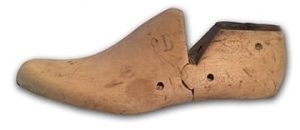
The wood shoe last can be made by copy lathe turning, CNC milling, and even hand carving

Pros: Great for handmade, custom one-off, or bespoke shoemaking.  Easy to customize with hand tools and can be made for a specific customer. Wood surface accepts nails and tacks required for custom-made shoe construction.  Perfect for the handmade high-dollar shoe or the handmade fit testing last. The wood last can be made of solid, hinged, scoop, and telescope last styles.

Cons:  Wood lasts are expensive, fragile, and susceptible to warping and rot if damp. They do not agree with heat tunnels or vulcanizing ovens. Wood lasts are not acceptable for modern mass production.

The Plastic  Last:

The modern plastic shoe last is made of high-density polyethylene plastic (HMW-HDPE), which allows for many tack holes before needing repair. 

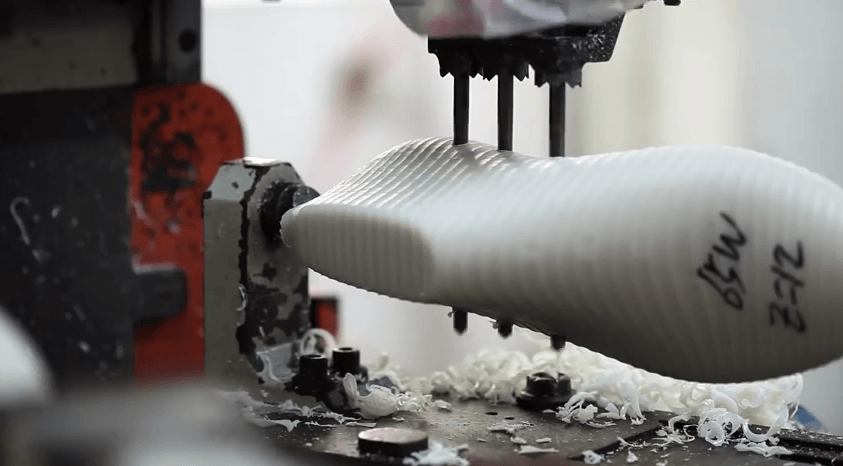
The plastic last is made by first injecting a plastic “blank” that is roughly shaped by each size. These plastic blanks are then turned (or cut) by a computer-controlled cutting machine (or lathe). In the turning process, the lasts are rough cut at high speed, then moved to another machine for the final shaping cuts.  After turning, the toe and heel are trimmed with a saw and then sanded into the final shape.

Pros:  The plastic shoe last is the state of the art for modern shoemaking.  Easy to reshape for fitting tests, the lasts can be machined, sanded, and filed.  Computer-turned plastic lasts can be highly accurate for precision fitting.  Easy to mass produce, impervious to heat and moisture. The plastic shoe last is the workhorse of the modern, high-quality sneaker factory.  The plastic last can be made of solid, hinged, scoop, and telescoping styles.

Cons:  Plastic shoe lasts can be expensive.  They are very durable but they can be chipped, dented, and scratched if subjected to rough handling. Large sizes of plastic lasts for boots can be heavy and difficult for workers to handle. Plastic lasts cannot be used in vulcanizing ovens. They can be more expensive to recycle as they must be chipped and remelted.


The Aluminum Last

Very common for shoe production, the cast aluminum last is easy to handle in large sizes. Often used for snow boots and for making wellington style rubber boots. Mass-produced in rather primitive casting factories, the cast aluminum lasts are made hollow in sand casting molds.

Pros:  The cast aluminum shoe last is cheap, easy to mass produce, and impervious to heat and moisture.  The metal last is required for vulcanized shoe production.  It is perfect for short production runs, easy to recycle, and made of lightweight aluminum.  Cast aluminum is also very durable.

Cons:  Shape is not as accurate as wood or plastic. It is not so easy to keep clean. Quality can be suspect.  Variations between sizes must be watched. Rough surfaces can damage linings.


Learn to Design Lasts

Learn how lasts are made, the shoe last design process, the hidden geometry, special features, functions, and size grading principles.
Learn more
On Sale $39.99

Posted on

Shoe Pattern Parts

How to make a flat pattern parts of a shoe names

The Basic Shoe Pattern Parts

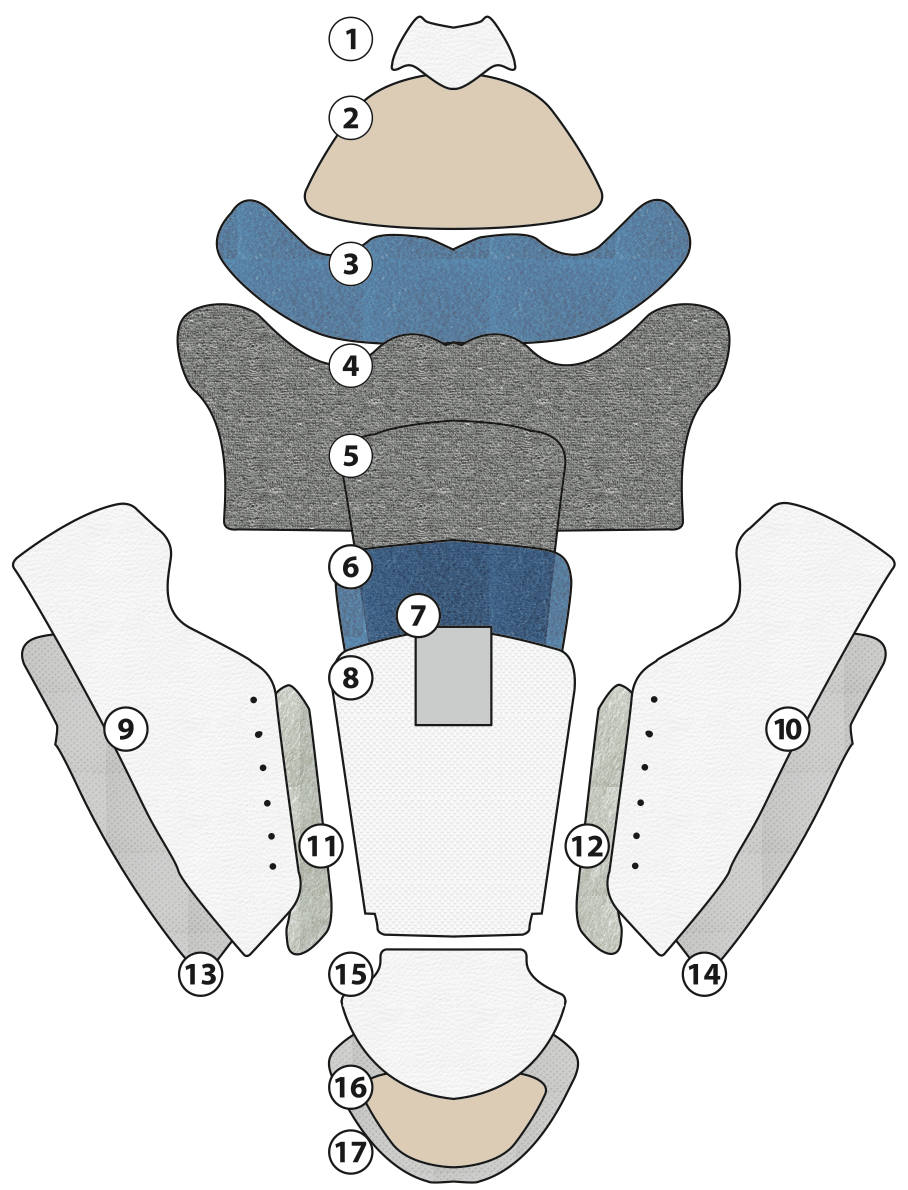
If you want to learn more about shoe pattern making or shoe pattern cutting you will need to know the correct names for the anatomy of the shoe.  You will also need to understand how many parts are in a complete shoe pattern. Here you can see that this simple shoe has 17 pattern parts, not including any quarter logo designs. Now, imagine the pair will have 32 pattern parts and the entire size run could have 14 sizes! You can see the number of shoe pattern parts and cutting dies grows quickly into the hundreds. Another point to consider is the popular shoe sizes 9-10-11 may need more than one set of cuttings dies to quickly make big orders.

Shoe Pattern Parts

Shoe pattern shoe design parts of a shoe diagram
The anatomy of the shoe

Parts of a sneaker

1.  Heel Patch or Mustache:  Leather
2.  Heel counter reinforcement:  heat moldable plastic
3.  Collar padding: KF Soft PU sponge foam
4.  Heel lining: nylex, visa terry or jersey fabric
5.  Tongue lining: nylex, visa terry or jersey fabric
6.  Tongue padding: KF Soft PU sponge foam
7.  Tongue logo panel: Woven label logo or leather patch
8.  Tongue face:  Textile mesh fabric
9.  Quarter panel medial side:  Leather
10.  Quarter panel lateral side:  Leather
11.  Eyestay reinforcement medial side: Non woven super tuff reinforcement
12.  Eyestay reinforcement lateral side: Non woven super tuff reinforcement
13.  Quarter panel lining medial side: Non woven textile
14.  Quarter panel lining lateral side: Non woven textile
15.  Toe Cap:  Leather with Vamp vent holes
16.  Toe Puff reinforcement: heat moldable plastic
17.  Vamp / Toe cap lining: Non-woven textile

New Online Course!
Shoemaking for Designers & Brand Builders

Created for footwear newcomers and professionals alike, this course delivers the basic shoemaking knowledge you need to get your career and brand started.
Course Details
Enroll Now $99

Shoemaking
TextbooksBuy Now
Shoemaking
SuppliesBuy Now
Shoemaking
CoursesCourse Details

Previous
Next
Shoemaking
TextbooksLearn More
Shoemaking
SuppliesClick Here
Shoemaking
CoursesLearn More

Previous
Next

Posted on

About Shoe Lasts

Parts of a shoe last

The Footwear Last

shoe lasts on sale

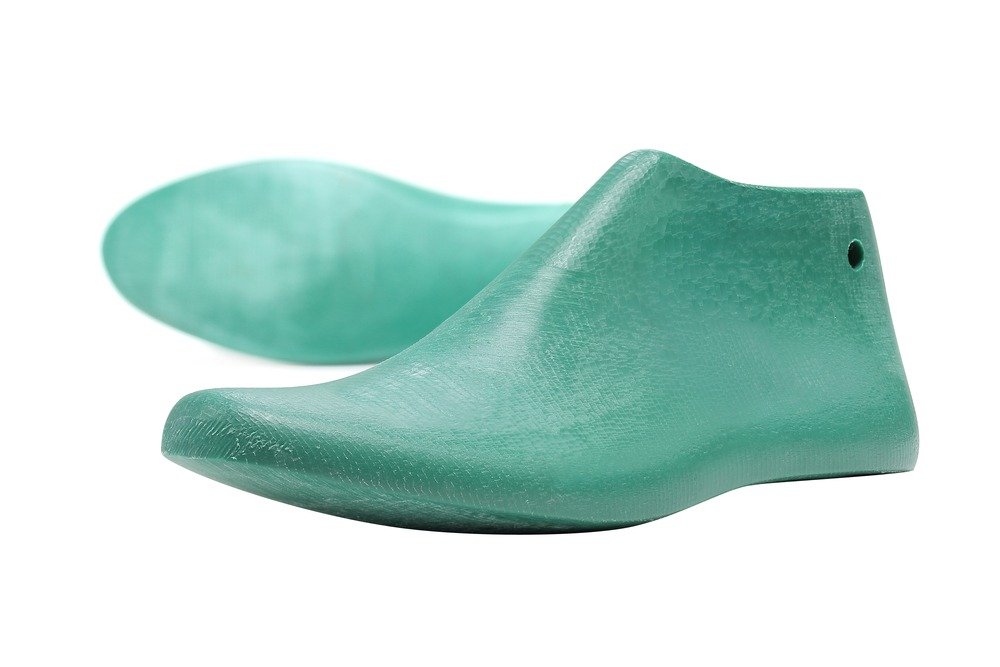
What is a shoe last?  The last is the form used to define the shape of the shoe. The last is critical to the shape and function of your shoe. The footwear last used by the factory will decide the look, fit, and shape of the shoe. The right last can make your shoe a high fashion hit! The wrong last can make your design look like an ill-fitting brick.  The Pattern Master creates the shoe pattern to fit the last tightly. Each different type of shoe will need its own specific shape of last. The last for a running shoe has a very different shape than a last used for a hiking boot or basketball shoe.

Learn to Design Lasts

Learn how lasts are made, the shoe last design process, the hidden geometry, special features, functions, and size grading principles. Learn more On Sale $39.99

Last Shape, Fit, Performance, and Style

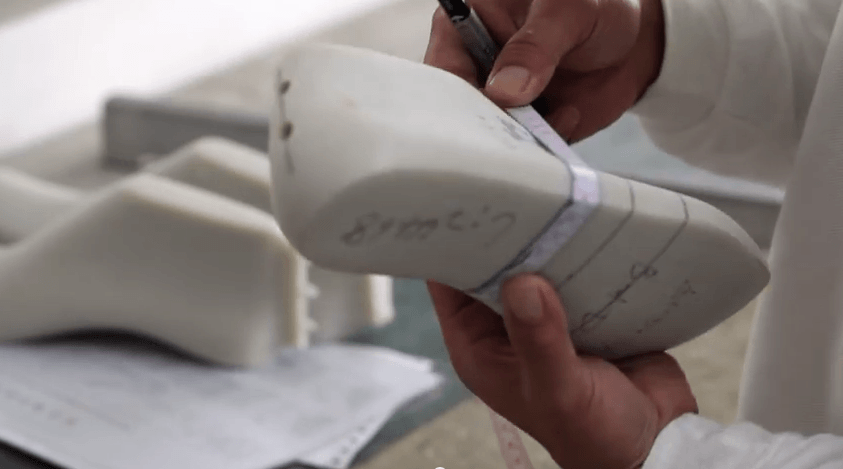
The last technician is marking and measuring

The last determines the shape, fit, performance, ergonomics, and style of a shoe. There are many different types of lasts. Lasts can be injection molded plastic, carved wood, or cast from aluminum. The last is the starting point of making any shoe design. The last is what makes a shoe suitable for playing basketball, climbing mountains, or strutting down the runway.

When discussing the many attributes of a last you will need to know the common terms.  The majority of footwear last measurements are measured by volume around the last, rather than the traditional length and width associated with shoe fit. A flexible measuring tape is a key tool for checking lasts.

Parts of a Last – Shoe Last Diagram
The parts of a shoe last all about shoe designs

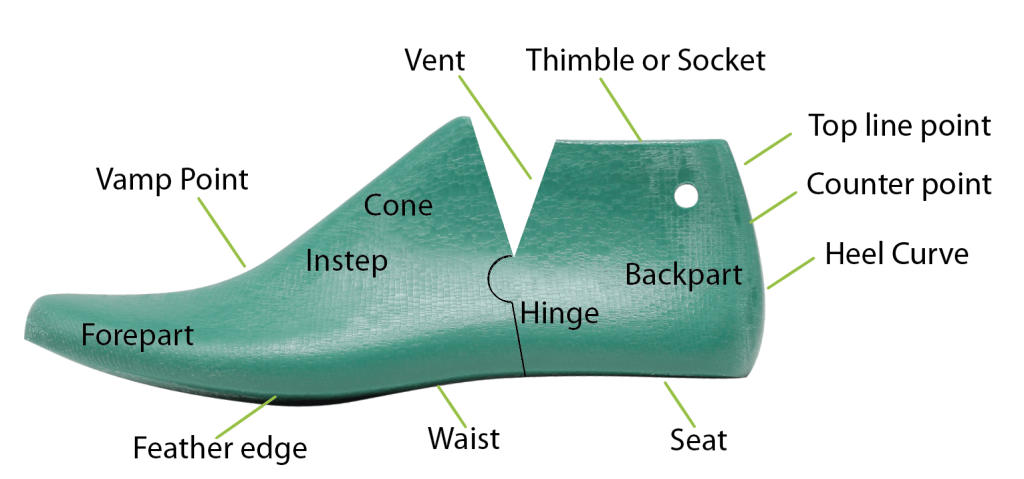
The parts of the last include the forepart, instep, cone, back part, waist, and seat. If the last is hinged it will have a vent above the hinge point. A hinge is needed to prevent damaging a shoe when it is being removed from the last. Shoe lasts may have tiny bumps marking the vamp point, toppling point, and counterpoints.  The last terms are the same for men’s sports shoes or women’s fashion shoes.

The Classic Sneaker Last

Stop searching! The classic Sneaker last is instock. Ready for your DIY shoe making projects. We have your size and bottoms that fit. Learn more On sale $79.99

Footwear Last Measurements

 shoe last drawings about shoe lasts What is a shoe last


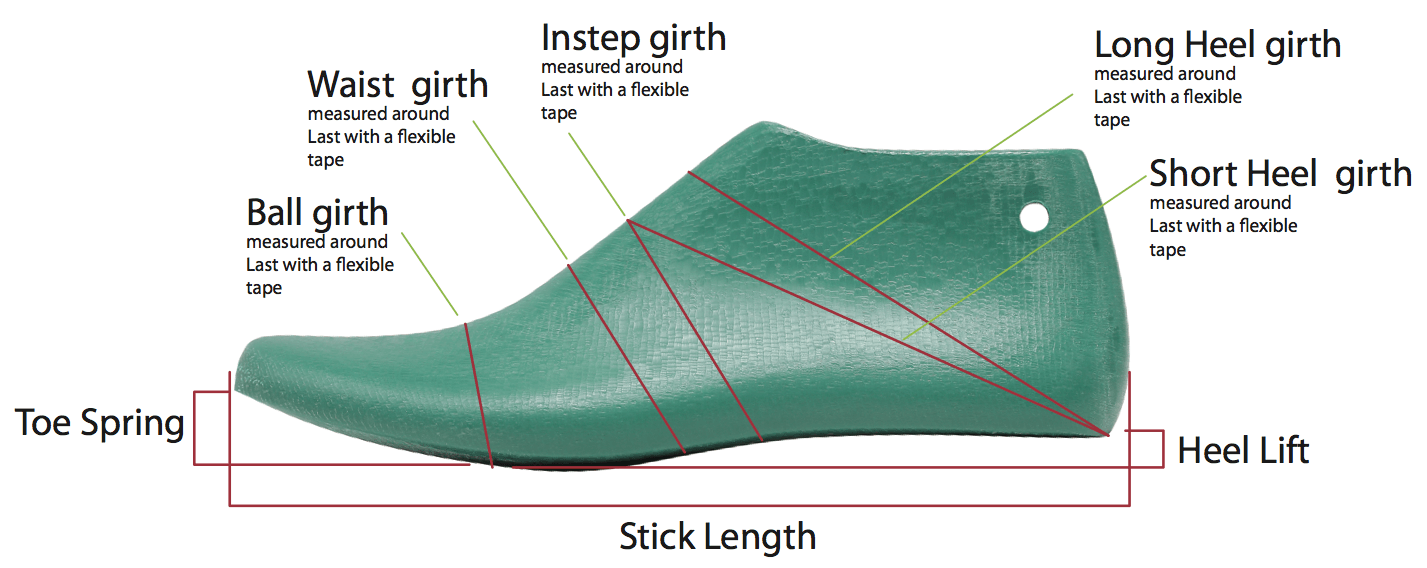
Last Stick Length: Measured from the longest points at the toe and heel.
Last Ball Girth: Measured with a flexible tape around the ball of the last.
Last Instep Girth: Measured with a flexible tape over the instep of the last.
Last Waist Girth: Measured with a flexible tape around the waist of the last.
Last Toe Spring and Heel Lift:  Are measured with the back of last held parallel to the ground.

Last Stick Length: Measured from the longest points at the toe and heel. Last Ball Girth: Measured with a flexible tape around the ball of the last. Last Instep Girth: Measured with a flexible tape over the shoe instep of the last. Last Waist Girth: Measured with a flexible tape around the waist of the last. Last Toe Spring and Heel Lift: Are are measured with the back of last held parallel to the ground.

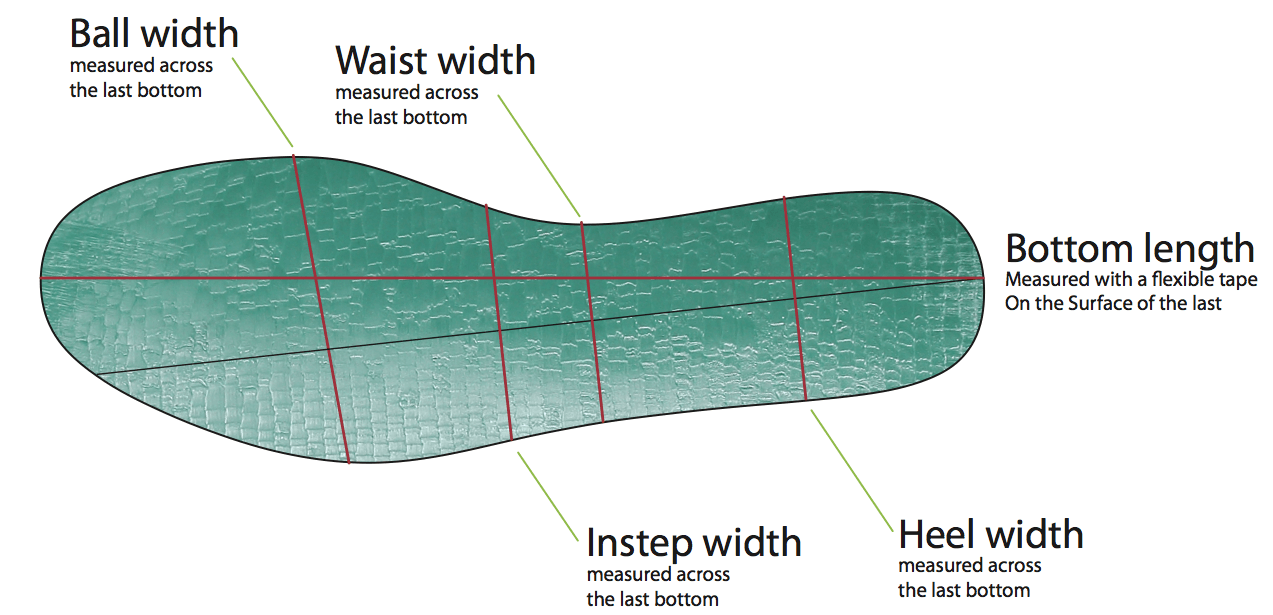
Last Bottom Length: Measured with a flexible tape pressed to the surface on the bottom of the last.
Last Ball Width: Measured with a flexible tape across the ball of the last.
Last Instep Width: Measured with a flexible across over the instep of the last.
Last Waist Width: Measured with a flexible tape across the waist of the last.

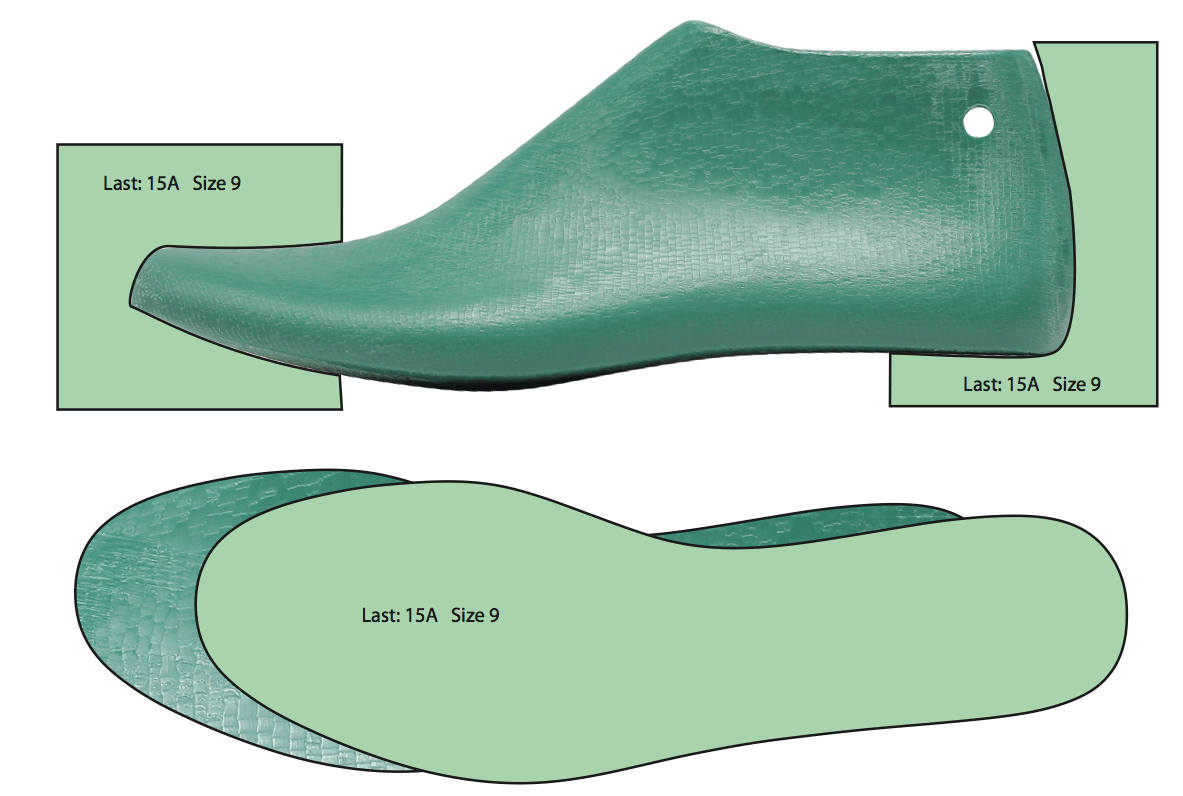
Heavy paper templates or last gauges are cut by computers. The gauges are marked with critical dimensions, the last size, and code number. The paper gauges are used to check every size of the sample lasts.  Once the last fitting has been confirmed, the same paper gauges are used to confirm the production lasts.

Last Stick Length: Measured from the longest points at the toe and heel. Last Ball Girth: Measured with a flexible tape around the ball of the last. Last Instep Girth: Measured with a flexible tape over the shoe instep of the last. Last Waist Girth: Measured with a flexible tape around the waist of the last. Last Toe Spring and Heel Lift: Are are measured with the back of last held parallel to the ground.

You can see how lasts are made: How Lasts  are Made
You can download a last for 3D printing: 3D printing Last File

Shoemaking Material
DIY Super Kit

All the hard find parts for your DIY shoemaking project are here in one place. Lasts, soles, materials, tools and pattern making text book included. Your shoe size is in stock. Learn more On sale $200
Posted on

How Shoe Lasts are Made By Tsubo

The last technician is marking and measuring

Here is another great shoe making video from the Tsubo shoe company. This shows how shoe lasts are made.  They show in a nice step by step video what it takes to make a set of production shoe lasts.  You can see the care they take in this process.  It’s very important as these lasts will be the foundation of the finished shoes.

A machine to measure a hand shaped shoe last
A machine to measure a hand shaped last

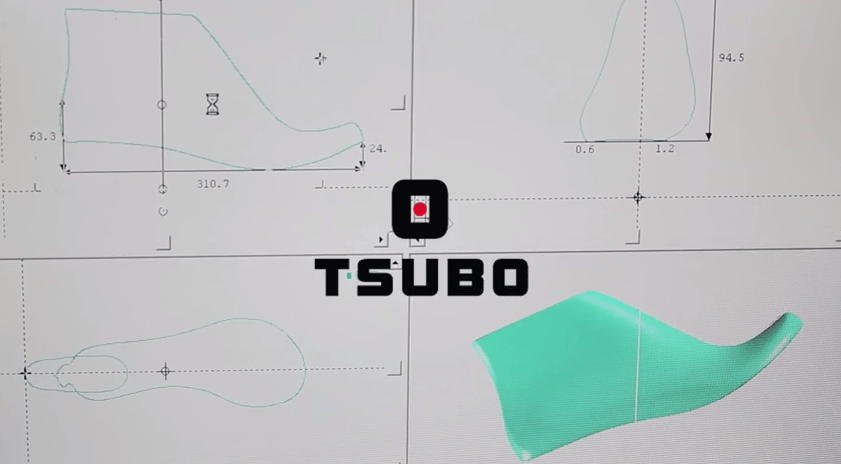
A CAD model of the shoe last is made.

Starting with a machine to measure a hand shaped last, they make a CAD file of the lasts.  This computer model of the last is then used to scale or grade the last.  Grade means to make each size of the shoe last. This is an important art as the last length and width do not scale equally.  For example a size 12 is not twice the size of a 6.
The shoe last has a template for the toe and heel

The shoe last has a template for the toe and heel
The patterns are computer cut

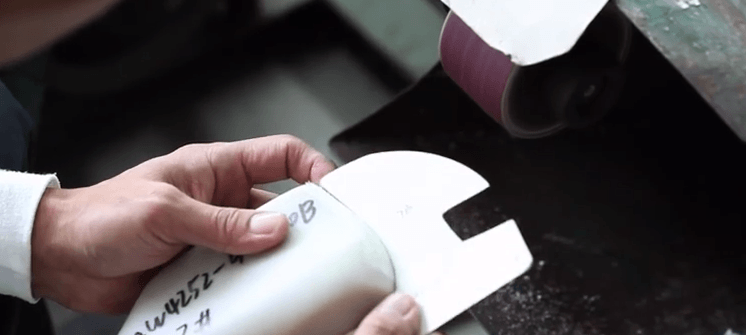
Here you can see they are cutting the pattern templates used to fine tune the shape of each production shoe last.  The templates are used to make sure the heel back curve and toe shape are correct.  The foot shaped template is called the bottom gauge.    You need this to confirm the length and width of the last.

The shoe last starts as an injection molded "blank"
The shoe last starts as an injection molded “blank”

The injection molded "blank" shoe last is then turned or cut down to the right shape
The injection molded “blank” is then turned or cut down to the right shape

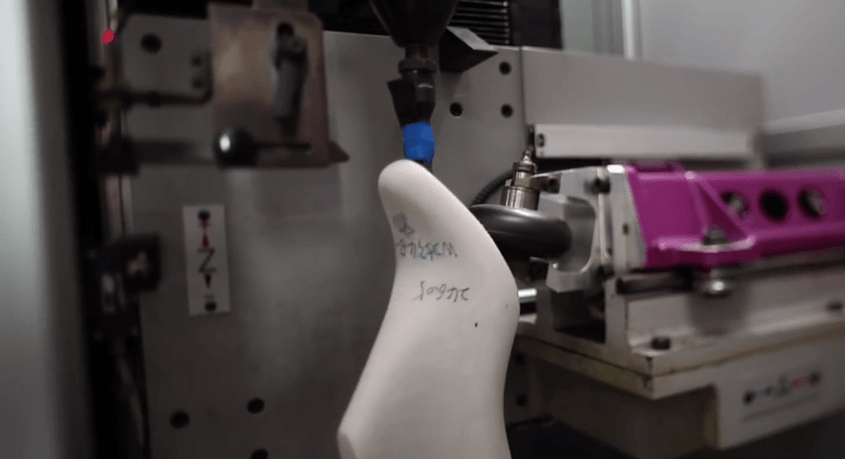
This is really how shoe lasts are made. They shape the last they start with a injection molded blank roughly the right shape.  This blank saves the factory time and money as the shape the last.  The left over cuttings can also be recycled.   The lasts are quickly rough cut then finely finished using a second machine. This takes just a few minutes

Cuts are made for a hinged last Shoe last factory
Cuts are made for a hinged last

Pins for hinged shoe last

In this video they are making plastic hinged lasts,  the hinge allows the shoe last to be slid into and removed for the upper without over stretching or damaging the shoe material.

The worker uses the template to check the shoe last
The worker uses the template to check the last

The last technician is marking and measuring

A machine to measure a hand shaped last
A machine to measure the  shaped last

You can see here the last technician is making and measuring the last to insure the width is correct and the girth measurement around the last is correct.  Any mistake can change the fit and shape of the finished shoe. Here the worker is using the heel curve template to shape the shoe last. Each last is carefully buffed to make shoe it’s smooth and can’t damage a delicate leather lining.  This final sequence is measuring the shoe last to make sure it’s 100% perfect!


Learn to Design Lasts

Learn how lasts are made, the shoe last design process, the hidden geometry, special features, functions, and size grading principles.
Learn more
On Sale $39.99