Do I need to run a fitting trial for my new shoes?
A shoe fitting trial or fit trial is a footwear brand’s process to confirm a new shoe fits correctly and feels good on the user’s feet. The goal of a fitting trial is to evaluate the entire size run and determine if a shoe fits correctly and is true to its size.
A fit trial is complementary to a wear test. In wear testing, the shoe brand will focus on the function and durability of a shoe. (Learn more about fit testing, wear testing, and other pre-production procedures in our books How to Start Your Own Shoe Company How Shoes Are Made books and ebooks.)
Big brands like Nike, Adidas, and Jordan have entire departments responsible for running fitting trials. For example, every new Nike shoe must pass a fit trial before being approved for mass production.
Proper fitting shoes will keep your return rate down and your profit margin up.
The average return rate for mail-order shoes with poor fitting is 30%!
Yes! You need a fit trial.
A shoe fit trial must be part of your production quality assurance program. A great-looking shoe that does not fit the size mark or does not fit proportionally is not high-quality. A new last, a new outsole, or a new upper design will require a fitting trial. A proper fitting trial during the pre-production process allows the brand time to adjust the size and fit of the shoe before wear testing, size grading, marketing, and selling.
When developing your shoe, the first size made is called the “model” size. The model size is usually USA 9 for men’s and USA 7 for women’s shoes. The shoe brand or the shoe manufacturing factory will have someone on staff who is the fit model. The fit model’s feet measure close to the ideal standards for an M9 or W7. You need to complete the fitting work on the sample size before the size grading and the full-size run fitting trial can begin.
Before the fitting trial: Inspect your samples.
Do you see any loose spots or wrinkles on the upper? First, remove any shoe stuffing and check that your samples are not crushed or twisted from shipping. Next, run your hand inside the shoe to feel for any rough stitching or wrinkles in the footbed. Finally, properly lace each shoe and then take the time to loosen the laces, so it’s easy for your test subjects to get their foot in the shoe and adjust it.
Running a proper fitting trial? Needs:
1. A full-size run of the test shoes.
2. A measuring tape.
3. A Brannock™ device for measuring feet.
(Learn more about the Brannock™ device and other shoe tools in How Shoes Are Made.)
4. A questionnaire to record the stated foot size, measured foot size,
sample shoe size preference, and any footwear fitting comments.
5. As many people as you can get to try on your shoes!
6. It is a good idea to have socks available in a standard thickness for your test subjects.
How to run a fitting trial
Find a place and time to gather your shoes and test subjects together. Ideally, you will test one person at a time without the other test subjects listening in on the test. When your test subject arrives, record the size of the shoes they are wearing. It’s a good idea also to record the brand of shoe they are wearing as some brands are known to fit larger or smaller.
Next, measure your test subject’s feet yourself with a Brannock™ device. Make sure to note the length and width. Also, try to record the ball girth of their feet. You will need this information to help you qualify the subjective feedback when fitting the shoe. You will also need to screen your test subjects for abnormal foot shape or physical issues affecting the fitting.
Finally, select a shoe for your subject to try. Once the tester has the shoe on, ask them to stand up and give their first reaction before flexing or walking in the shoe.
If you have a soft shoe, you can press on the toe box to feel if the subject’s toes are touching the end of the shoe. When standing, the toe tips should not be touching the inside end of the shoe.
If the shoe feels good, instruct the subject to walk and get a feel for the shoes as they flex in motion. Your test subjects may run if you are fitting a sports shoe.
You can ask the test subject to record their feedback on a questionnaire or interview the subject. Your goal is to understand if the length, width, and volume feel right. During a fitting trial, you should be studying the shoe as the test subject flexes. Look for the following:
1. Does the shoe gap open or pinch?
2. Do you see loose spots or wrinkles?
3. Does the test subject’s heel lift out of the shoe?
4. Does the subject feel the pressure points or stitching inside the shoe.
5. Make any comments on the length, width, and height.
6. Does the top line feel comfortable around the ankle bones and Achilles tendon?
The result of your fitting trail
If the shoes fit great and look great for every test subject, fantastic! If you see any issues, now is the time to record the faults and work with the factory technicians and pattern makers to correct them. In the end, a properly run fitting trial will give you the confidence to move ahead in your shoe production or give you the information needed to make adjustments.
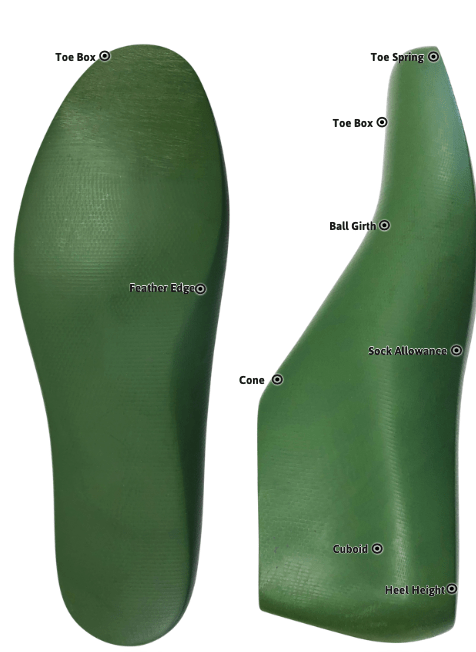
The running shoe last is designed to create a lightweight, close-fitting, flexible shoe with enough heel lift for impact-absorbing cushioning. This last has a low medial sidewall that flares up to create extra toe space. This gives the shoe extra flexibility and helps hold the foot back into the shoe for a snug fit without pinching the runner’s toes.
The running shoe last is designed to create a lightweight, close-fitting, flexible shoe.
Feather Edge
The feather edge of this running shoe last is relatively hard. This last can be used for both Strobel and board lasting constructions. Most running shoes are Strobel lasted to be lightweight and flexible. However, some running shoes designed for heavy runners and extra stability may be combination lasted with a 3⁄4 length lasting board under the heel.
Toe Spring
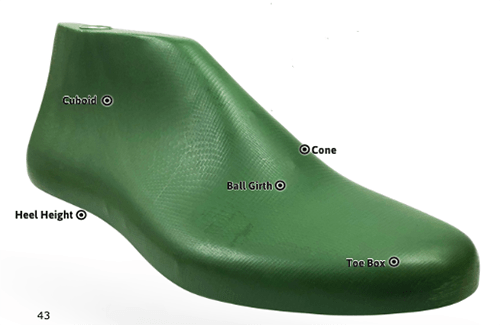
The toe spring of this running shoe last is a standard 15mm. The midsole tapers forward of the ball girth line creating more rise in the front of the shoe. The running shoe is flexible, so the minimal toe spring is just enough to stop the upper from wrinkling.
Toe Box
The toe box is the full height at the tip and stays flat above the toes. The last contour rises smoothly into the cone to create a gradual slope.
Ball Girth
The ball girth of this shoe is standard for a 9D, 241mm. This creates a close-fitting upper that holds the foot securely. The girth dimension is critical to hold the foot back while allowing it to flex naturally.
Cone
The cone of a running shoe last must fit close, holding the foot back into the heel pocket of the shoe.
Sock Allowance
Running shoes will have a sock allowance. About 4mm to 5mm is enough for a fully padded EVA footbed with fabric top sheet.
Cuboid
The cuboid of a running shoe last is wide at the feather edge but tapers to be dramatically thinner above the ankle. This creates a snug-fitting collar to hold the foot down into the shoe.
Heel Height
The typical running shoe last heel lift is 15mm, the standard for an athletic shoe. This provides space under the heel for cushioning. The heel contour of the last is fully formed to create a secure pocket for the foot
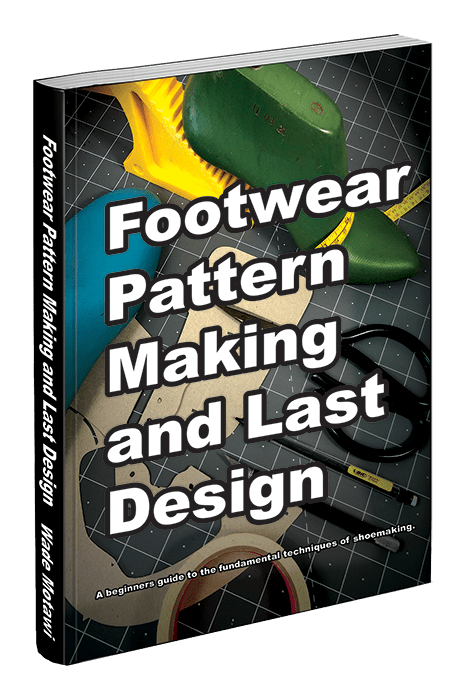
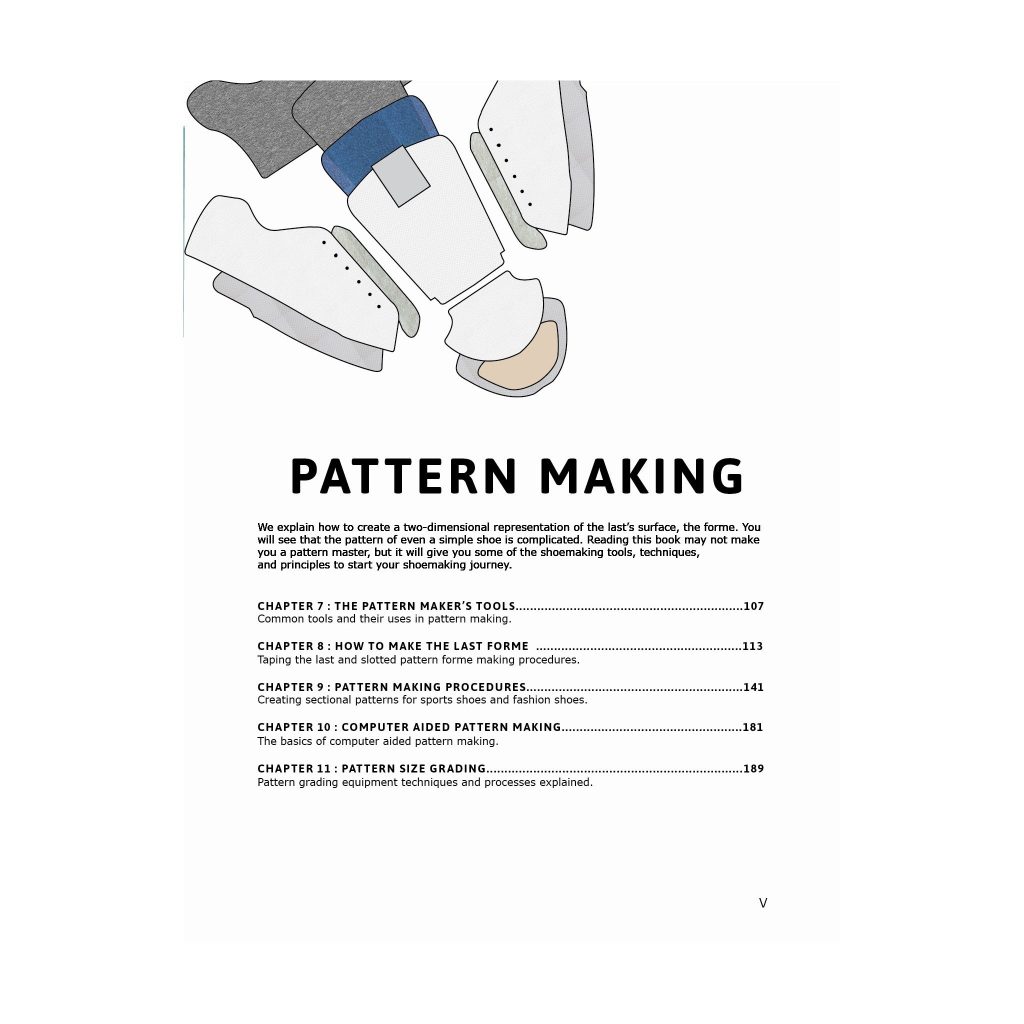
Do you want to learn how to make shoe patterns? Do you know how to design a last for a high heeled fashion shoe versus a sneaker or dress shoe? In Footwear Pattern Making and Last Design, we will teach you the shoe last design process and detail the basic techniques of footwear pattern making.
The shoe last is the starting point of every footwear design and has been called “the heart of the shoe.” The last is the center of the entire shoemaking process. The shoemaker starts with the last and builds the shoe outward.
The shape of the last determines the fit, performance, ergonomics, and styling of a shoe. It is also what makes a shoe suitable for playing basketball, climbing mountains, or running a marathon. A great footwear design is nothing if the last is not appropriate to the shoe’s function.
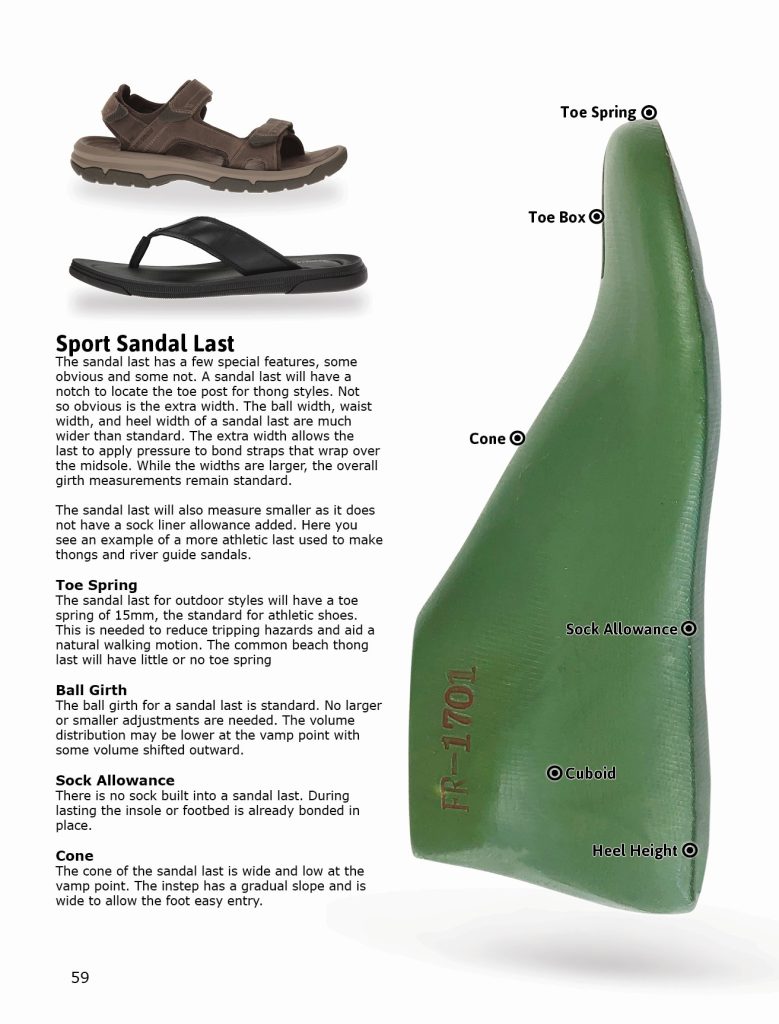
Plastic sandal Last
The shoe last
The last is a roughly foot-shaped form made of molded plastic, carved wood, cast aluminum, or 3D printed plastic. Why is the last called the last? The word ‘last’ comes from the old English word ‘laest,’ which means ‘footprint.’ The first shoe lasts were used by the Greeks and Romans. We know from ancient writings that lasts were used to make shoes around 400 BCE!
Then as now, the last is critical to the shape and the fit of a shoe. The last is used in all phases of the shoemaking process. The last sets the size, silhouette, and outline of the shoe. The last plays a central role from the design phase through the development process and on the production assembly line.
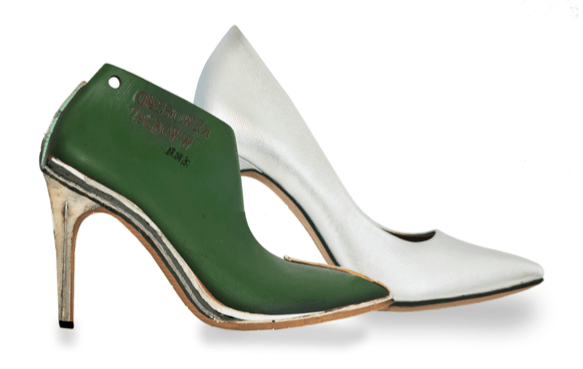
High heel last
Footwear design with the last
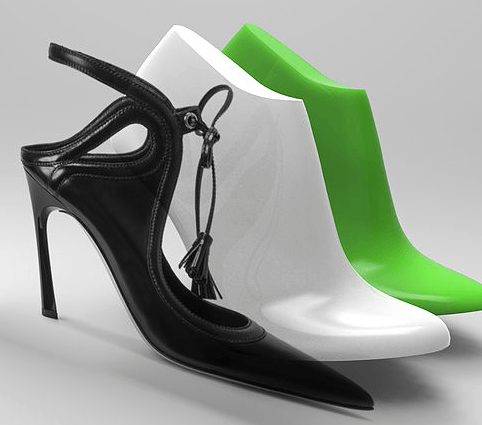
The footwear designer will often draw a new design directly onto the surface of a last or draw the design on paper using the 2D last silhouette as a guide. The shoe designer must follow the outline shape of the last bottom to draw an accurate outsole design.
Footwear development and the shoe last
When a shoe design is passed to the development team, the pattern maker will need the last to transform the design drawings into the 2D shapes that will fit the 3D last. The pattern maker can use the physical last or a CAD model of the last to create the shoe pattern. The last is used to test fit all the cut parts and any molded parts required for the design.
The last is used during shoe production.
The shoe last in footwear production
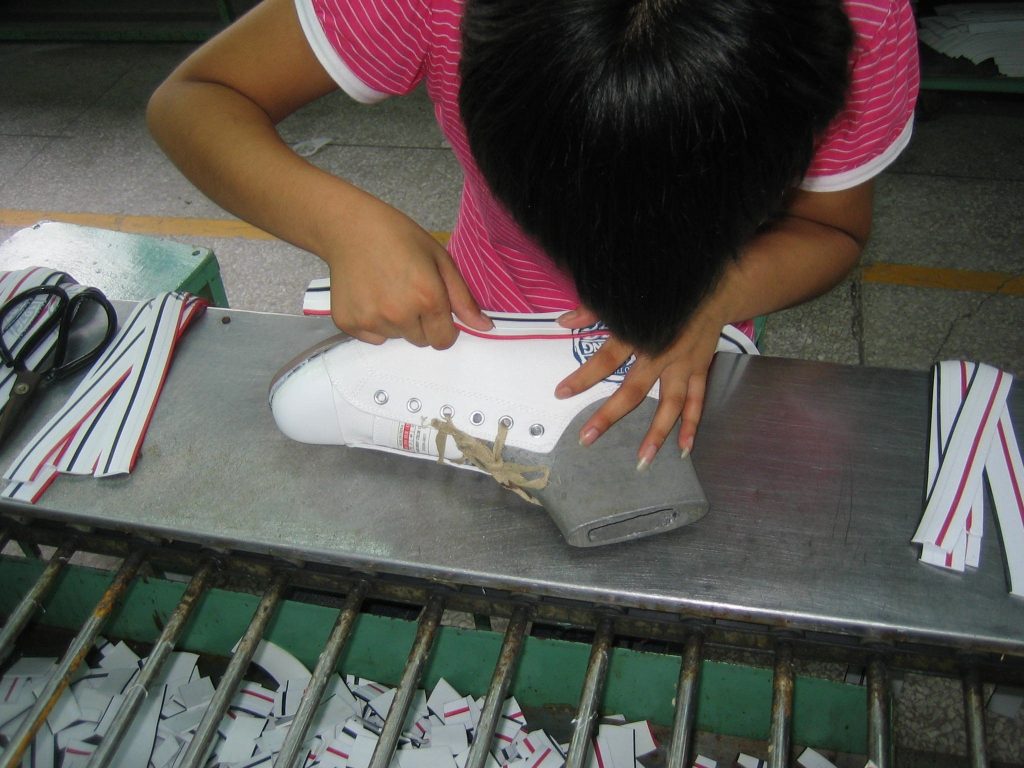
When a shoe is in production, the stitched pattern will be stretched over the last to create the final shape. This operation is called “lasting.” There are several different lasting techniques used to pull the patterns into shape. These include force lasting, board lasting, string lasting, toe lasting, heel lasting, hand lasting, and machine lasting. Once the pattern is tight to the last, the outsole can be attached. The last holds the soft upper in place, whether the sole is sewn on or cement-bonded.
Footwear function and fashion
The modern shoe last is not a replica of the human foot. The shoe last is a generalization of the human foot with care taken to account for natural articulation and volumetric changes as the foot moves and flexes. A high quality running or walking shoe will have a thoughtfully developed last. A large shoe brand will have the help of shoemakers, podiatrists, and kinesiologists to develop biomechanically ideal shapes.
Shoe last vs Human foot
How the shoe last differs from the human foot?
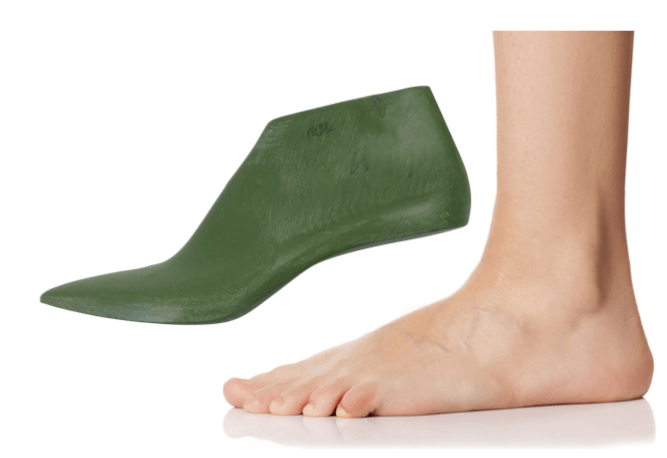
The last surface is smooth and firm with graceful transitions. The human foot has an irregular shape with a variety of soft and wrinkled surfaces.
Most shoe lasts do not have individual toes. The sandal last will have a slot for the toe-post location. The new toe shoe trend requires lasts with toes, but these are rare. The vast majority of shoe lasts do not have toes.
The heel pitch that lifts your heel off the floor does not exist in the human foot. The toe spring of the last also does not exist in human anatomy but aids in walking and helps the shoe flex with the foot without wrinkling. The girth measurements around the foot are larger in a shoe last than the foot to account for the volumetric changes as the foot flexes when walking under load.
Shoe lasts are also slightly longer than the foot. This extra length allows the foot to move inside the shoe when walking or running. The general outline shape of the last and its extended length allow it to address the great variety of human feet. The last length ahead of the toe tip gives the designer a chance to sculpt the shoe according to fashion trends.
Shoe last sizes and dimensions change or “grade” in a systematic arithmetic way. Lasts are also symmetrical, the right side being a mirror image of the left. The human anatomy obeys no such rules for size and symmetry.
In about 80% of the population, the foot of your dominant hand can be 1/8 to 1/3 of an inch shorter than the foot of your non-dominant hand. Thus, right-handed people will have a slightly larger left foot.
Finally, lasts are designed by human minds to follow the whims of fashion and human- made functional parameters. The foot itself has evolved over millions of years to provide walking propulsion and weight-bearing functions in natural environments. Evolution has not prepared the biology of the human foot for hot asphalt, factory floors, or modern office floors.
A last’s shape is also critical to the fashion or style of the shoe. The skillful work of the best Italian prima donna designer is wasted if the pattern is made on a last designed for a mountaineering boot.
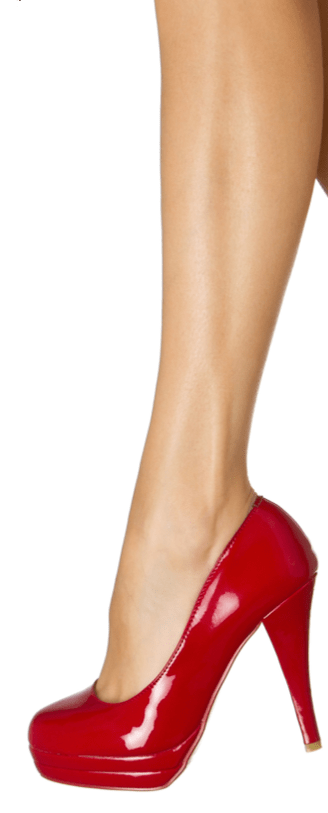
The last is the unseen structure for the sculptural art of today’s high fashion footwear designers. When “style is king,” the consideration for human anatomy is sometimes set aside.
Shoes, patterns, and lasts have been created to transform the human foot into an instrument for sports, a tool for work, a mode of transportation, and even an object of desire.
A last’s shape is also critical to the fashion or style of the shoe. The skillful work of the best Italian prima donna shoe designer is wasted if the pattern is made on a shoe last designed for a mountaineering boot.
The shoe last is the unseen structure for the sculptural art of today’s high fashion footwear designers. When “style is king,” the consideration for human anatomy is sometimes set aside.
Shoes, shoe patterns, and shoe lasts have been created to transform the human foot into an instrument for sports, a tool for work, a mode of transportation, and even an object of desire.
Do you want to learn how to make shoe patterns? Do you know how to design a last for a high-heeled fashion shoe, sneaker, or dress shoe? In Footwear Pattern Making and Last Design, we will teach you the shoe last design process and detail the basic techniques of footwear pattern making.
Footwear Pattern Making and Last Design
Part 1 Last Design
Part 2 Pattern Making
Footwear Pattern Making and Last Design will show you how lasts are made, the shoe last design process, the hidden geometry, special features, functions, and size grading principles of lasts. You will see many different last designs and shapes for sneakers, trainers, high-heels, boots, and more.
This book covers the craft of footwear pattern making, including a step-by-step guide to patternmaking for beginners, and hundreds of color photos illustrating the patternmaking process. See and compare sample patterns for joggers, hi-top sneakers, high-heels, and many other shoes. Learn how to make a sneaker forme, patternmaking procedures, computer-aided design software for pattern making, and shoe pattern grading.
Why is a shoe last shaped that way? How can you make a shoe pattern with simple tools? You will find these answers inside!
What will you learn?
This books covers the basics, you will learn how to make a simple shoe pattern for both men’s and women’s shoes. This book really covers shoemaking for beginners.
Shoemaking Inspirations
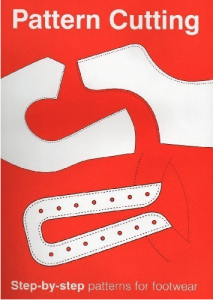
Pattern Cutting: Step by Step Patterns for Footwear. Edited by Frank Jones. ISBN-10: 0955408601 ISBN-13: 978-0955408601
Pattern Cutting: Step by Step Patterns for Footwear can be hard to find but it’s out there. You may need to order from the UK. Both books, Footwear Pattern Making and Last Design and Pattern Cutting: Step by Step Patterns for Footwear, belong on your bookshelf!
I also like the books by the late George-Koleff. His book, Lastmaking, is worth owning. Again, these can be hard to find. There is another secret shoemaking treasure, All About Shoes and Techniques by Hans van der Elzen. These are great resources for shoemakers.
Everything You Ever Wanted To Know About Footwear Lasts
Shoe Last Function and Fashion
The shoe last is the starting point of every shoe design and has been called “the heart of the shoe.” The last is the center of the entire shoemaking process, in which the shoemaker starts with the last and then builds the shoe out from there.
The shape of the last determines the fit, performance, ergonomics, and style of a shoe, and is also what makes a shoe suitable for playing basketball, climbing mountains, or running a marathon. Great looking shoe design is nothing if the last is not appropriate for the shoe’s function.
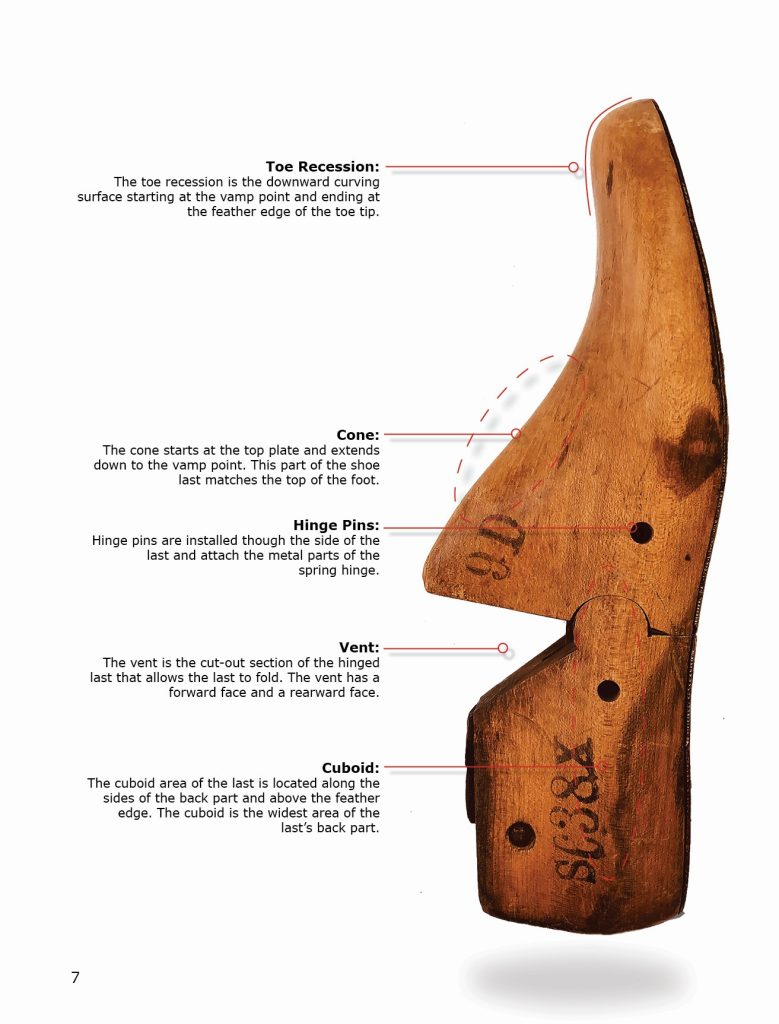
Parts of the Shoe Last
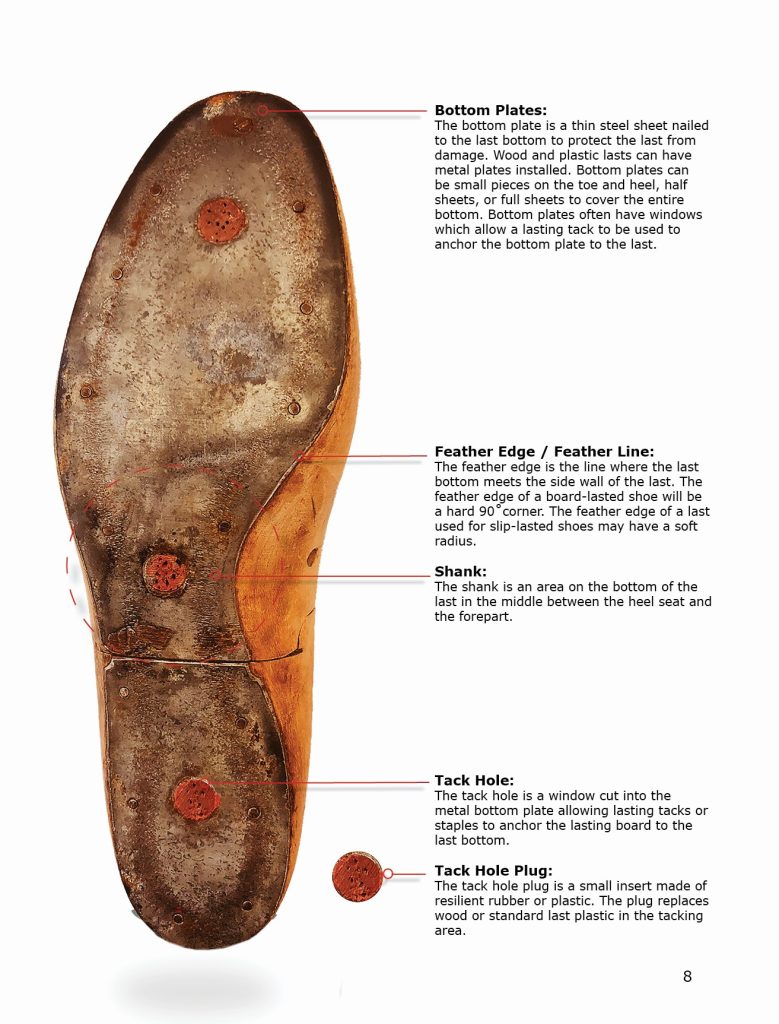
The Shoe Last Bottom Plate
The Shoe Last
The last is a roughly foot-shaped form made of molded plastic, carved wood, cast aluminum, or 3D printed plastic. Why is the last called the last? The word ‘last’ comes from the old English word ‘laest,’ which means ‘footprint.’ The first shoe lasts were used by the Greeks and Romans all the way back to 400 BCE!
Throughout all of this time, the last has been critical to the shape and fit of a shoe. The last is used in all phases of the shoemaking process and sets the size, silhouette, and outline of the shoe. The last plays a central role for the entire production of the shoe all the way from the design phase, through the development process, and onto the production assembly line.
How the Shoe Last is Used in the Design Phase
The shoe designer will often draw a new design directly onto the surface of a last or draw the design on paper using the 2D last silhouette as a guide. The shoe designer must follow the outline shape of the last bottom to draw an accurate outsole design.
The modern shoe last is not a replica of the human foot. The shoe last is a generalization of the human foot with care taken to account for natural articulation and volumetric changes as the foot moves and flexes. A high quality running or walking shoe will have a thoughtfully developed last. A large shoe brand will have the help of shoemakers, podiatrists, and kinesiologists to develop biomechanically ideal shapes.
Everything You Ever Wanted To Know About Footwear Lasts
Shoe Last Function and Fashion
The shoe last is the starting point of every shoe design and has been called “the heart of the shoe.” The last is the center of the entire shoemaking process, in which the shoemaker starts with the last and then builds the shoe out from there.
The shape of the last determines the fit, performance, ergonomics, and style of a shoe, and is also what makes a shoe suitable for playing basketball, climbing mountains, or running a marathon. Great looking shoe design is nothing if the last is not appropriate for the shoe’s function.
Parts of the Shoe Last
The Shoe Last Bottom Plate
The Shoe Last
The last is a roughly foot-shaped form made of molded plastic, carved wood, cast aluminum, or 3D printed plastic. Why is the last called the last? The word ‘last’ comes from the old English word ‘laest,’ which means ‘footprint.’ The first shoe lasts were used by the Greeks and Romans all the way back to 400 BCE!
Throughout all of this time, the last has been critical to the shape and fit of a shoe. The last is used in all phases of the shoemaking process and sets the size, silhouette, and outline of the shoe. The last plays a central role for the entire production of the shoe all the way from the design phase, through the development process, and onto the production assembly line.
How the Shoe Last is Used in the Design Phase
The shoe designer will often draw a new design directly onto the surface of a last or draw the design on paper using the 2D last silhouette as a guide. The shoe designer must follow the outline shape of the last bottom to draw an accurate outsole design.
The modern shoe last is not a replica of the human foot. The shoe last is a generalization of the human foot with care taken to account for natural articulation and volumetric changes as the foot moves and flexes. A high quality running or walking shoe will have a thoughtfully developed last. A large shoe brand will have the help of shoemakers, podiatrists, and kinesiologists to develop biomechanically ideal shapes.
Footwear Pattern Making and Last Design will show you how lasts are made, the shoe last design process, the hidden geometry, special features, functions, and size grading principles of lasts.
You will see many different last designs and shapes for sneakers, trainers, high-heels, boots, and more. 200 pages, 11 Chapters, over 500 color photos. Download Now!
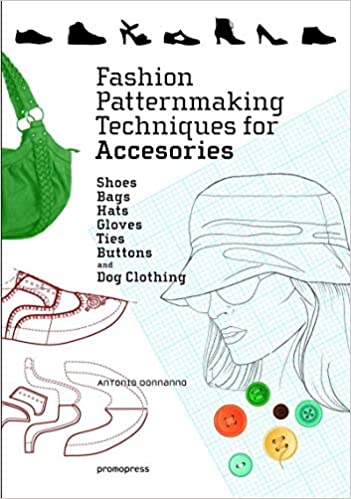
Shoes, Bags, Hats, Gloves, Ties, Buttons, and Dog Clothing
By Antonio Donnanno Softcover: $29.99
What Amazon says: “This book is an essential and practical tool for designing and creating fashion accessories for men and women. Intended for fashion students and professionals, the book includes different pattern techniques for each accessory and explains production processes so that readers can incorporate them into their professional practice, in addition to identifying and providing the information needed to recreate a wide range of accessory models. ”
“It includes descriptions of materials, examples of patterns and designs and different possible finishes through illustrations, photographs, technical drawings and texts that clearly explain the production process of each artisanal and industrial piece. As items that provide personality and originality to one’s personal style, fashion accessories have become essential to completing the “look” for each occasion. With the help of this manual, having in-depth knowledge about the creation of different pieces, from a bag to a pair of shoes to hats, gloves, ties and buttons –even clothing for dogs–, is a great way to get started in this branch of the fashion field.”
What I have to say: I really like Fashion Patternmaking Techniques for Accessories. Chapter 1 is about leather, and Chapter 2 is about footwear. This book has just over 40 pages dedicated to footwear, densely packed with lots of great information. While the book does not detail pattern-making procedures, it does a great job explaining the more traditional European style of shoemaking. I only wish the photos were in color! For a fashion school student, I say “yes,” buy it. Well done, Antonio Donnanno.
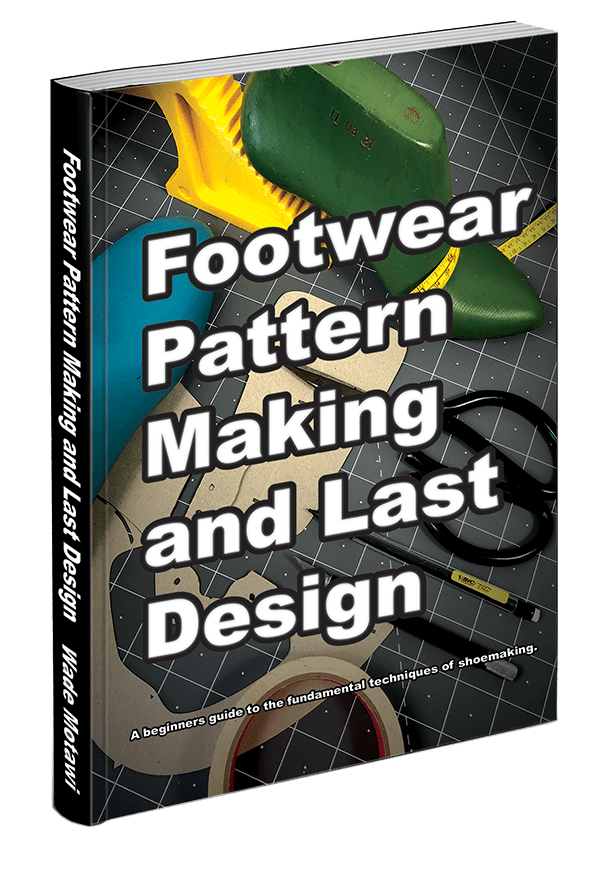
What Amazon says:“A beginner’s guide to the fundamental techniques of shoemaking. Do you want to learn how to make shoe patterns? Do you know how to design a last for a high heeled fashion shoe versus a sneaker or dress shoe? In Footwear Pattern Making and Last Design, we will teach you the shoe last design process and detail the basic techniques of footwear pattern making.Footwear Pattern Making and Last Design will show you how lasts are made, the shoe last design process, to the hidden geometry, special features, functions, and size grading principles. You will see many different last designs and shapes for sneakers, trainers, high heels, boots, and more.
This book covers the craft of footwear pattern making, including a step-by-step guide to pattern making for beginners. Hundreds of color photos illustrate the pattern making process. See and compare sample patterns for joggers, hi-top sneakers, high-heels, and many other shoes. Learn how to make a sneaker forme, pattern making procedures, computer-aided design software for pattern making, and shoe pattern grading.”
What I have to say: I really like Footwear Pattern Making and Last Design. This is book four of the Series How Shoes are Made, it’s a great book for beginners. The section on last design is very unique. I have not seen any book that describes why shoe lasts are shaped the way they are. For rookie pattern makers, I think this is a great place to start. Technical but not too technical. Anyone can pick this up and start learning the shoe trades. Tons of color photos that show the patternmaking process.
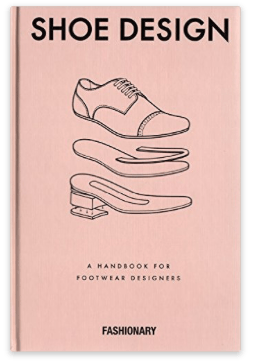
What Amazon says:“Differing from ordinary shoe design books, this is a complete handbook geared towards practical usage by footwear designers. It includes three main sections: Shoe Style Library, Shoe Encyclopaedia, and Shoe Templates for Tracing. The first section features more than 300 styles of shoes, ranging from historical archetypes to the most signature styles in todays footwear industry.
The second focuses on essential and practical information on shoe design, from materials and construction to labels and international fairs. The templates section includes both basic templates and templates for 60 styles of common footwear, from flats and boots to high heels.”
What I have to say:I think you will like this Shoe Design book. Plenty of cool stuff to keep you busy. Great templates for tracing and sketching. A good warm-up for basic shoe design but light on technical shoemaking information. Is it really useful for a shoe designer or patternmaker? …I would say not.
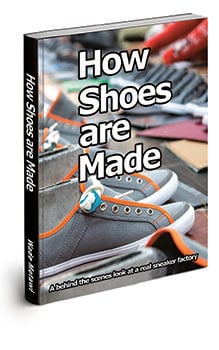
By Wade Motawi $39.99 softcover Newly updated 3rd edition What Amazon says:“Do you want to learn about how modern athletic shoes are really made? This is the shoe design book for you. Now you can really see how the big shoe brands design and produce shoes.
More than just a guided tour through a sneaker factory, How Shoes are Made, will show you how modern sports shoes come to life from drawing designs to sample development and manufacturing. Footwear design and manufacturing are simply explained for sneakerheads, students, young professionals, or anyone interested in the shoe trades.
Written by a veteran shoe professional, How Shoes are Made will give you a look inside the real world of shoe production. 28 Chapters explain Shoe Design, Development, Materials, Stitching, Outsoles and Tooling, EVA Forming, Final Assembly, Shoe lasts, Shoe prices, Quality control, and much more! 250 Pages with over 400 color photos.
If you are a sneaker collector, design student, or just interested in shoes, read on. “
What I have to say:Overall, How Shoes Are Made is a great shoe book for beginners to get started. It explains the shoemaking process in detail. Not so much the handmade craft but the industrial mass production of sneakers. This book has one chapter on patternmaking and lots of other good stuff. Yes! This book belongs on your bookshelf!
What Amazon says: “Footwear design has become the new dream career, and this book is the first guide to show the key skills and tips behind the trade, for both budding designers and anyone interested in shoes. Illustrated throughout with inspirational sketchbooks detailing the design process and specially commissioned images of cutting-edge shoe design, the book also contains case studies featuring an array of international shoe designers.”
What I have to say: Footwear Design (Portfolio Skills: Fashion & Textiles) is a well-written book that focuses on women’s fashion shoes and contains some very nice exploded views and shoe pattern part layouts. The book has just a few pages on patternmaking and is not technically oriented. I like the views of shoe patterns on lasts, but I’m not much of a fan of fashion designer interviews. I say it’s worth a look, and if fashion shoes are your interest, I recommend it.
I have to admit, I consider Aki Choklat a friend, and this was the book that inspired me to start working on my shoemaking books!
What Amazon says: “Pattern Cutting replaces the Pattern Cutter’s Handbook which since 1991 has become the standard textbook on many college and university courses covering footwear, all over the English speaking world. The new book covers everything in the earlier book plus much more. Not only are there whole new chapters covering further styles of footwear, there is a chapter on Bottom Patterns, an extended chapter on Grading, and a chapter on dealing with more advanced pattern problems such as a bellows-tongue.
In the past, books on pattern cutting have often reflected the mystique which tends to surround the subject. Pattern Cutting takes a completely different approach. The whole book is written as an easy to use, step-by-step guide to producing patterns for shoemaking.
Each major type of footwear has a complete chapter devoted to it. The twelve basic types covered include trainers, basketball boots and an aerobic shoe. Most pages have two or three diagrams, illustrating each step in the process.
With each footwear type there is a detailed description of the process with measurements given wherever appropriate. Points to watch for and pitfalls to avoid are spelled out, so as to ensure the reader will stand the best possible chance of producing a workable pattern first time.”
What I have to say: I own Pattern Cutting: Step by Step Patterns for Footwear, andI have found it very useful. It has 17 chapters covering the many types of footwear patterns. This edition is from 2008. The content is presented in clear, crisp, black and white line art—a little old fashioned but also very technical and detailed.
If you are going to cut your own patterns, I recommend Pattern Cutting: Step by Step Patterns for Footwear. The book can be hard to find online. It’s on Amazon.com, but the price is crazy high. I ordered directly from the UK, www.noblefootwear.com.
(Woodhead Publishing Series in Textiles) By A Luximon (Editor) $237.00 Hard Cover
What Amazon says: “Understanding footwear design and manufacture is vital for improving the functionality, aesthetics and marketability of a product. The Handbook of footwear design and manufacture provides a comprehensive review of footwear production and design and explores how these processes are used across a variety of application areas.
Part one, an introductory section, reviews the fundamentals of footwear anatomy; chapters discuss the anatomy of the human foot, biomechanics and gait, foot models and measurements, the development of the foot in childhood and adolescence, and foot problems and their implications for footwear design. Part two examines footwear design including the development of shoe design, foot sketch templates, and footwear drawing templates. Aspects of footwear manufacture are highlighted in part three including the design, manufacture, and sizing and grading of shoe lasts. Further chapters focus on the footwear business, advertising, and the environmental impact of footwear manufacture. Part four explores the design and manufacture of footwear for specific applications and includes chapters on footwear for cold weather, textiles and other materials used in the production of protective military and orthopaedic footwear, and design issues in geriatric footwear.
The Handbook of footwear design and manufacture is a wide-ranging and technical resource for footwear designers, materials scientists and researchers involved in the production of footwear, and professionals in the footwear industry looking to expand their knowledge of design and manufacture processes. Discusses foot anatomy in detail and considers its implications for footwear design.”
What I have to say: The Handbook of footwear design and manufacture is very dense. It may belong in your bookcase, but it’s not a page-turner. Its massive price tag is a bummer and puts it well out of reach for anyone not in the trades. For a shoe designer or aspiring footwear patternmaker, I do not recommend this book.
By Ravindra S. Goonetilleke (Editor) $150.00 Hardcover
What Amazon says: “Although we now have sophisticated algorithms and techniques for determining the shapes and sizes and for matching the fit between shoes and feet, few, if any, of the books currently available cover these new technologies until now. Bringing together high-quality and state-of-the-art contributions from designers, biomechanists, ergonomists, engineers, podiatrists, and scientists from industry and academia, The Science of Footwear provides an in-depth understanding of the technology and techniques involved in the design and development of a popular and demanding consumer product.
This book introduces the design, development, manufacturing, and marketing of footwear. The chapters contain data from past research and the state-of-the art methodologies. They not only cover every aspect of the product design, but also how the footwear industry caters to the wide-ranging needs of sophisticated and demanding customers.
The footwear industry has rapidly changed over the last 10 years. Mass production has changed to personalization and mass customization, areas that are not well-understood. This book explores these different concepts in a coherent way, drawing on differing views that give a holistic view of the science behind footwear. Collating information from different disciplines, the book provides the tools to develop the next generation of footwear.”
What I have to say: When the softcover version finally came out on Amazon, I ordered this footwear book. The book is over 700 pages! It is a very dense collection of scientific articles. I suggest you review the table of contents before you buy it. Is this useful for shoe designers? I would say, you have better choices.
What is the difference between a Shoe Designer and Shoe Pattern Maker? A shoe designer is responsible for all aspects of the shoe’s design. The designer must consider the styling, materials, colors, customers, price, trends, and product performance. The footwear pattern maker, while critical to the entire operation, is only responsible for creating a beautifully proportioned pattern that fits tight to the last.
To be a great footwear designer, do you need to make your own patterns? In my experience, the answer is “No.” A shoe designer does not need to know how to make or cut footwear patterns. It’s important that a shoe designer can read, work with, and adjust the patterns, but the creation of a new pattern is best left to the “Master.” I have been lucky and have been able to work with the same pattern master for years. He knows what I’m looking for, and although he does not speak any English we can still get the job done.
The Pattern Maker’s Challenge:
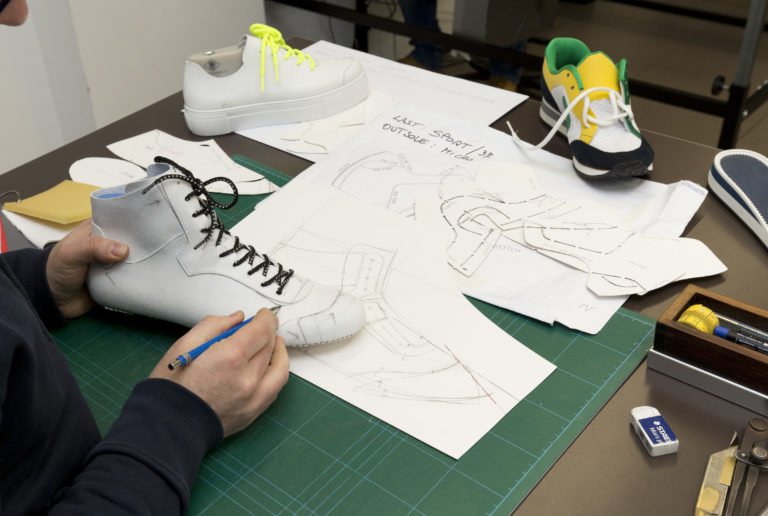
The shoe factory’s pattern maker has a lot of work to do when a new design lands on his desk. The pattern master’s first job is to get the last that has been selected by the designer and examine its shape. If it is a familiar last, it’s a simple task to mark the throat opening and the shoe collar height. He may already have the “shell pattern” on file. The shell pattern is what a one-piece seamless upper would look like.
If the last is new, the pattern maker may “tape” the last so he can pull off the shell pattern. He will cover the last with layers of tape, then carefully cut the tape along the centerline of the last and along the bottom edge. At this stage, he can draw the shoe design on the tape.
Lateral View (outside of the Shoe)
shoe making patterns
shoe making patterns
shoe making process steps
shoe making process
shoe making patterns
shoe making patterns
shoe making patterns
shoe making patterns
Shoe Patterns Chapter 3
Once the tape is peeled from the last and flattened, we have a pattern! Now the pattern can be redrawn in a computer, printed, and cut out of heavy paper. As a designer, you should always ask for the flat pattern of a new design.
When you make corrections, it’s easy to draw on the sample shoe and mark the shell pattern for the pattern maker. It is much faster to scan the corrections and email them back to the factory than FedEx the shoe back to China.
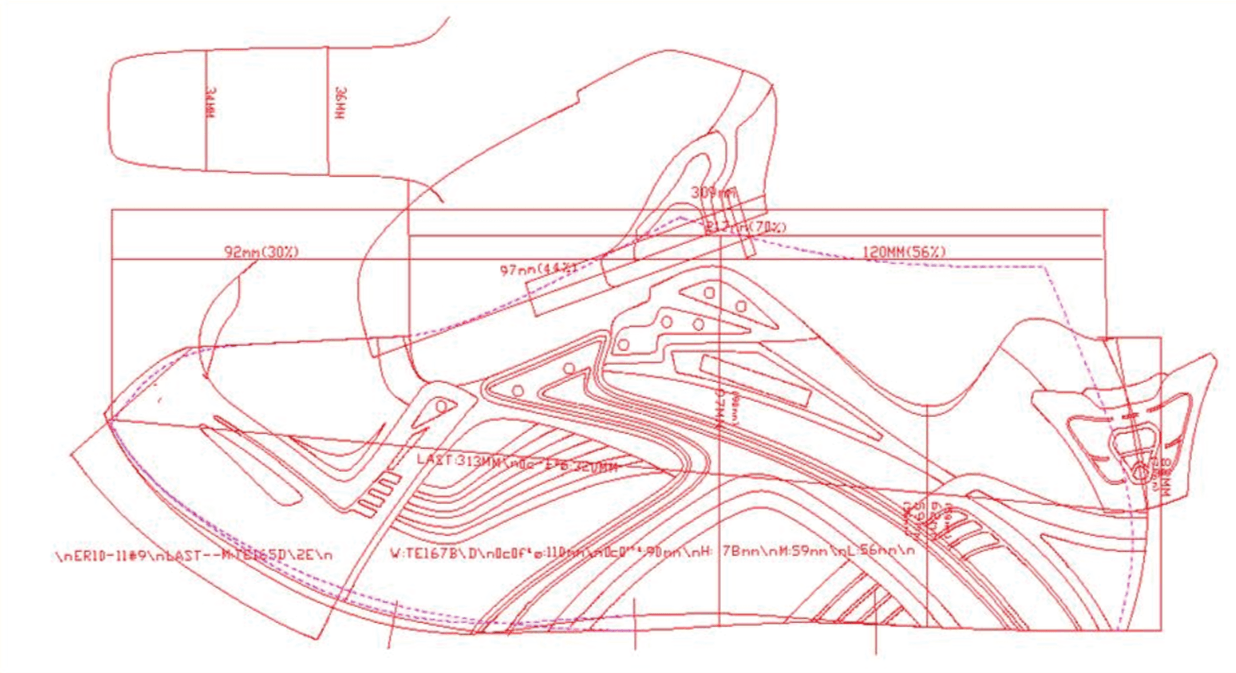
Here is a shoe designer’s drawing with the pattern maker’s actual pattern.
Here is a great video showing a master pattern maker at work!
Once you have designed your shoe, you need to decide which shoe lasting type or construction technique is right for your shoe. Shoe “lasting” is the shoemaking operation that sets the final shape of a shoe and holds it in place so the outsole can be permanently attached. The ideal shoe pattern fits the last tightly. The lasting operation will stretch the upper a bit, but not so much as to damage the shoe materials.
Shoe Lasting Types
The shoe lasting type you select will depend on a few factors: the shoe upper material, the required stiffness of the finished shoe, and price. I’m going to review the most common shoe lasting constructions used to make athletic, casual, and dress shoes. These are slip lasting, Strobel lasting, California lasting, combination lasting, and board lasting.
Slip Lasting
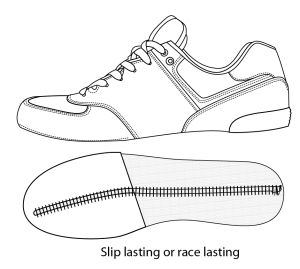
Slip lasting is used to make the most flexible shoes. It is often used to make lightweight running or racing shoes. Slip lasting can also be called moccasin type shoe construction. The shoe’s upper materials, usually mesh and polyester, are left long and patterned to meet in the middle of the shoe. Once the sides are joined, the upper will be steam-heated and the last slipped in with the shoe being laced up tight. The upper is then cooled so it will tighten before the bottom is attached.
Strobel construction
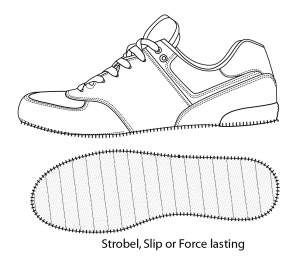
Strobel, slip, force, or California lasting is the most common shoe construction for casual and athletic shoes. Once the upper is complete, a “sock” or bottom material is added to “close” the upper. This material is non-stretch and is marked so the assembler can keep the upper straight on the last. As before, once the upper is heated and slipped on, it will be cooled to make the material fit tight. A machine assist may be used to make sure the heel is down tight. This shoe construction is used in almost every sports shoe.
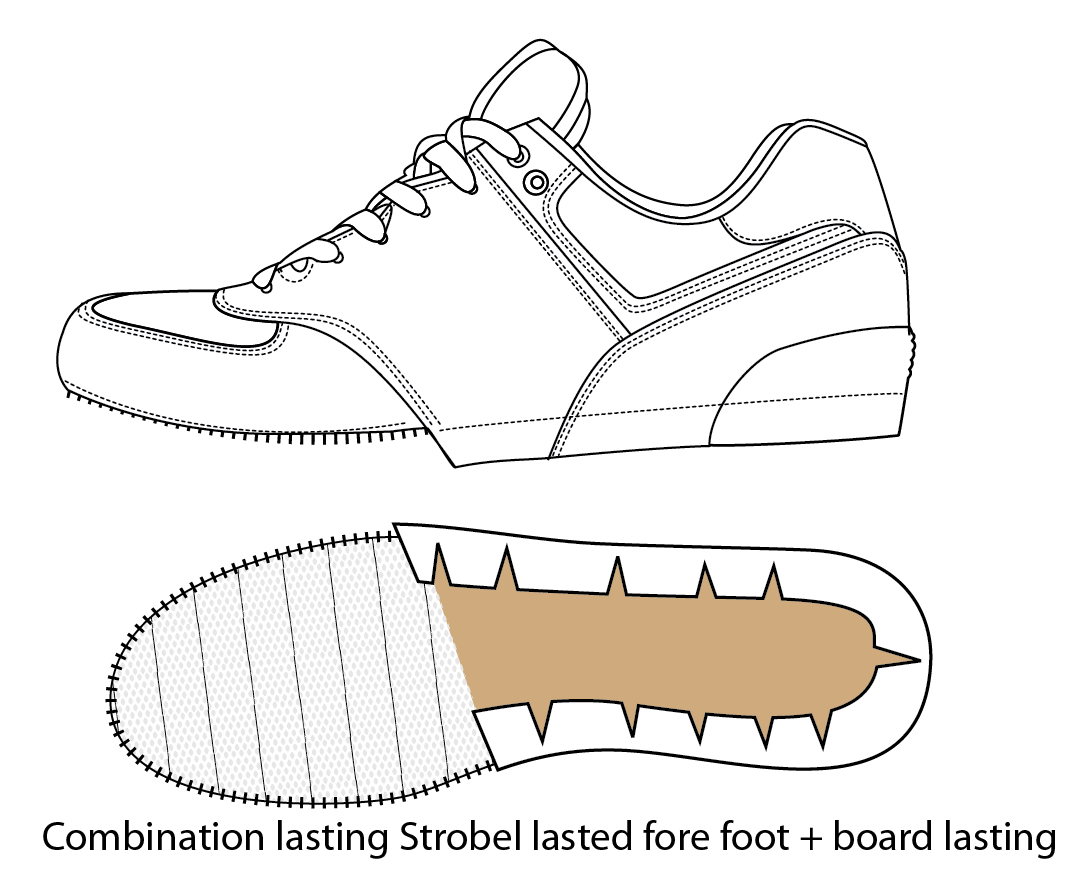
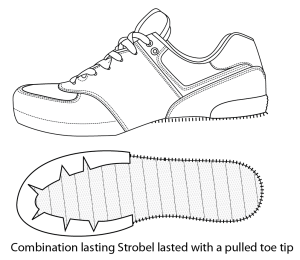
The combination last is used to ensure the toe of a shoe is correctly formed to the last. For a shoe with a smooth, solid toe cap, the Strobel sock may be attached to the inner lining, and a lasting “skirt” may be left on the toe cap pattern part. Once the upper is lasted, a second machine operation is used to pull the toe pattern part down tight. This shoe construction is often used on light hiking boots and basketball shoes with smooth leather toe tips. Toe lasting allows the leather to be shaped with a lasting machine. Another reason to use the combination last is to make a lightweight shoe stiffer. In this case, the forefoot is formed by Strobel, while the rear of the shoe is board lasted. This allows the shoe to have a shank or stiffer board in the rear of the shoes. For this type, a machine is used to “heel last” the upper, while the waist area may be pulled by hand with a pair of lasting pliers. You will find this shoe construction on “support” shoes and light hikers.
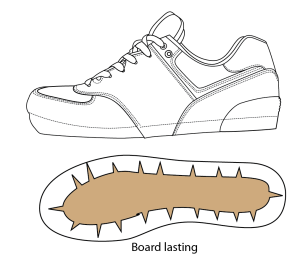
Board Lasting
Board lasting is a very common process used to make military, hunting, hiking boots, or any shoe requiring a stiffer bottom and a steel toe. The open upper is placed into a lasting machine that grips the upper and pulls it down onto the last. The last has been prepared with a paperboard or plastic lasting board (could have a metal shank inside). In one operation, the lasting machine pulls the upper tight around the last and injects glue between the upper and lasting board. A heel lasting machine and some hand pulling will complete the operation before the outsole is attached.
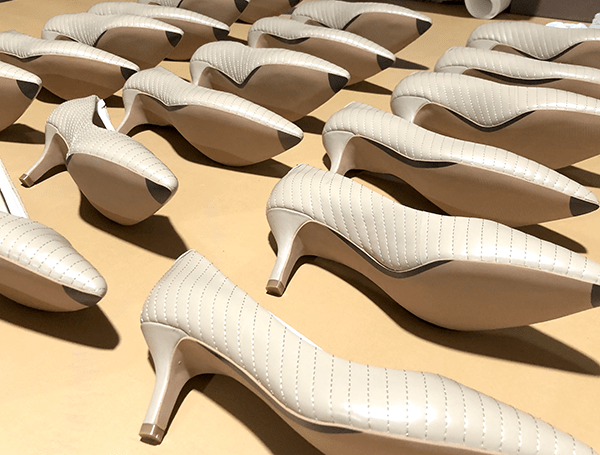
Women’s fashion shoes are made by board lasting. A delicate touch is required by the lasting machine operator to avoid damaging the uppers in the lasting process. Handmade shoes are almost always board lasted by hand. Board lasting shoe construction is also used to make the classic running shoe.
New Course! Shoemaking for Designers & Brand Builders
Created for footwear beginners and career changers alike, this course delivers the basic shoemaking knowledge you need to get you career in the shoe trades started.
Learn more
On sale $99
Additional Shoe Constructions and Information
There are many other shoe construction styles for fashion shoes and heavy boots. These include Blake Construction, Blake/Rapid Construction, Goodyear Welt Construction, Norwegian Storm Construction, Stitch Down Construction, and Bologna Construction. You can learn how to make shoes with these constructions here. Shoe Construction Techniques
You can learn more about lasting and other shoemaking procedures in our book How Shoes Are Made. Learn more about shoemaking materials in our book Shoe Material Design Guide. Learn more about lasting in our new book, Last Design and Pattern Making.
Start Building Your Shoe Business
A must-have for anyone serious about launching a footwear company. 4 text books, shoe business documents and downloadable content not available anywhere else! The Shoe Company Start-Up Pro Pack is all you need to get your shoe business off the ground.
Learn more
Download Today
The sneaker course: design, pattern making, and prototyping
Starting in the summer of 2019, Arsutoria Shoemaking School is launching a new month-long course in sneaker design.
The sneaker course: design, pattern making, and prototyping. This 4-week course is offered in Milan, Italy. You will also learn the history of the sneaker, production in the Far East, sneaker marketing and branding, patternmaking for fashion and athletic products, hand drawing and rendering with markers, making of sneaker prototypes in the laboratory, and the new trend of knitting.
You can buy a real shoe pattern! This pack contains the computer cut shoemaking pattern for the Arris classic jogger. This footwear pattern is cut from heavy paper stock and is just what you will find in a shoe factory. Every shoe pattern part is marked with its name. If you want to learn shoe pattern making this is a must have! We have included the files for digital download in editable PDF and AI file formats. This kit will help you learn the shoe pattern making process. Also included is the printed outsole drawing and digital files for the outsole design.
1. Factory shoe flat pattern in Downloadable PDF and live vector .ai formats.
2. Printed factory blueprint for an EVA/Rubber running shoe outsole unit. Includes PDF and live vector files.
3. Complete line item shoe specification. In Microsoft .xls format.
4. Sample shoe specification drawing – 8 pages. Includes PDF and live vector .ai formats.
Footwear Pattern Parts
Shoe design pattern PDF downloadable File
Footwear pattern download .ai vector file, how to draw shoe patterns
















 Strobel construction
 Combination Last
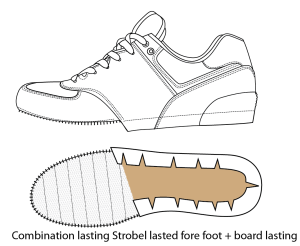 Another reason to use the combination last is to make a lightweight shoe stiffer. In this case, the forefoot is formed by Strobel, while the rear of the shoe is board lasted. This allows the shoe to have a shank or stiffer board in the rear of the shoes. For this type, a machine is used to “heel last” the upper, while the waist area may be pulled by hand with a pair of lasting pliers. You will find this shoe construction on “support” shoes and light hikers.
 Board Lasting