Posted on

Equipamiento para una fábrica de calzado: ¿Qué necesito para hacer zapatos?

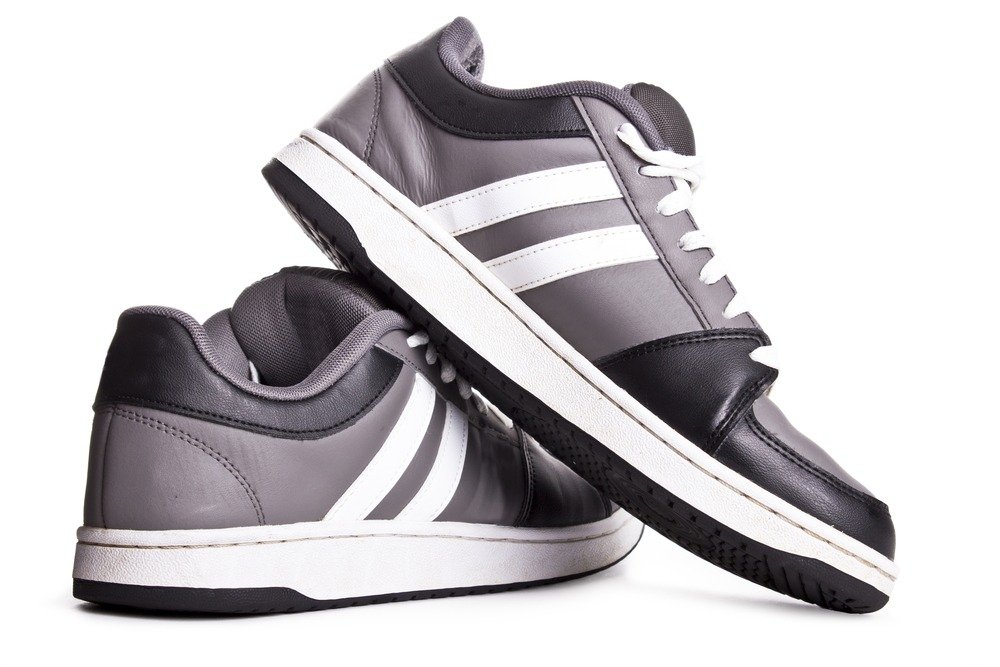
shoe factory equipment to make a sample shoe

¿Qué equipos de fabricación de calzado necesito para abrir una verdadera fábrica de calzado? Te guiaré a través de una fábrica de calzado de producción a gran escala, y te detallaré todo el equipo de fabricación de calzado que necesitarás para hacerlo bien. Si estás en busca de herramientas para la fabricación de calzado, haz clic aquí. 

Te mostraré lo que necesitas para hacer una sneaker estándar montada.
Es un modelo sencillo compuesto solamente de piezas troqueladas. La suela es una suela cóncava o casco, en inglés cupsole, de goma de una sola pieza con una entresuela troquelada en el interior y cosido en el hendido de la pared.
Antes de nada, la fabricación del calzado que se hace hoy en día depende en gran medida de fábricas subcontratadas para muchas de las operaciones especializadas. Por ejemplo, la suela lo diseñan los técnicos de la fábrica de calzado, pero se producen en otro lugar por la maquinaria para producirlas; y las piezas de goma se compran a una empresa que se especialice en el prensado de goma. La fábrica de calzado controla los componentes para garantizar que el corte y la suela se ajusten correctamente.

Corte y marcado

Dentro de una fábrica de calzado, las primeras operaciones en el proceso de fabricación son las operaciones de corte y de figurado o marcado. La fábrica necesitará prensas de corte hidráulicas; en inglés, también se llama clicker a la prensa hidráulica. La prensa es una de las máquinas más habituales que verás en las fábricas de calzado.
Estas prensas de corte requieren troqueles de corte para cada pieza del patrón de cada zapato. Una nueva tecnología para cortar es la cortadora automática CNC controlada por software. Estas máquinas utilizan una mesa con bomba de vacío para mantener los materiales en su lugar mientras la chuchilla corta todos los patrones. Esta tecnología es vital para la producción personalizada a gran escala.
Una vez cortadas las partes del modelo, estas necesitan ser procesadas. Posteriormente, se dibujan las marcas o entres en las piezas, y se añaden los logotipos. Estos logotipos pueden ser serigrafiados, marcados por radio frecuencia, o bordados en las piezas ya cortadas.

Cómo se fabrican
los zapatos

¿Quieres aprender cómo se fabrican los zapatos deportivos modernos?Una mirada detrás de escena de una
verdadera fábrica de calzado deportivo
Contiene 222 páginas con más de 400 fotos en color
aprende más
Oferta especial

Aparado
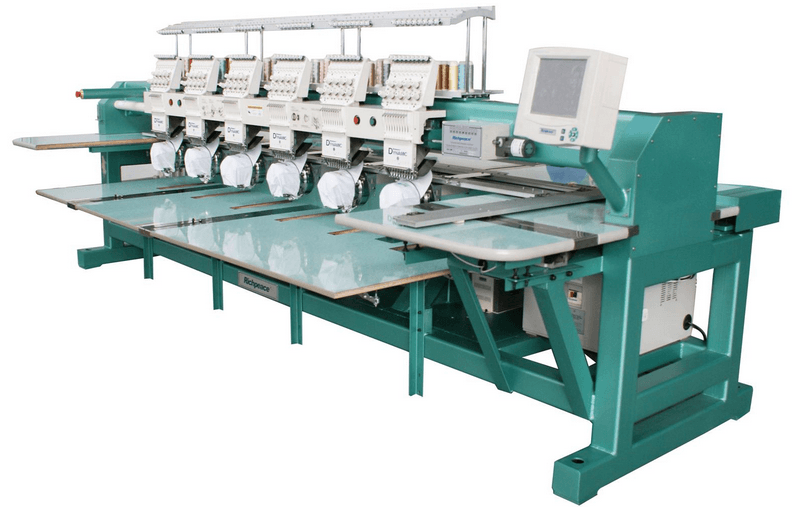
Shoe_Logo_embroidery_machineshoe logo radio frequency machine

Una vez que las piezas están listas y clasificadas en kits de montaje, es el momento de montarlos. La máquina de coser plana, básica, hace la mayor parte del trabajo pesado.

Con los procesos de aparado divididos en operaciones más pequeñas, los trabajadores dominan rápidamente sus tareas específicas. Operado por un aparador con experiencia, estas máquinas pueden hacer maravillas.
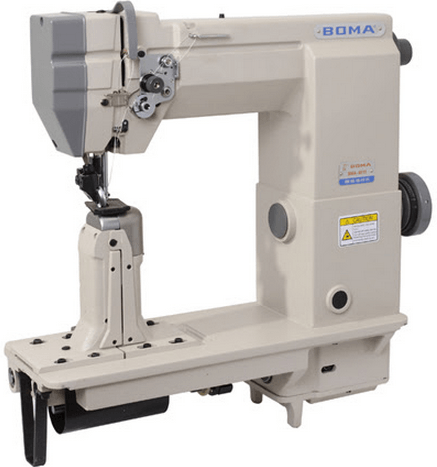
shoe factory sewing machine PostType

Sin embargo, si es operado por un principiante, la misma máquina de coser puede ocasionar un desastre. Las máquinas de coser pueden ser de muchos tipos: tipo poste o de columna, de brazo largo, de brazo corto, etc. La línea montaje tiene cientos de estas máquinas, dependiendo de la complejidad del diseño del modelo de calzado. El tipo de máquina también dependerá de las operaciones específicas requeridas para hacer cada diseño de zapatilla.

Una vez terminada la costura, es el momento de trabajar la forma de los topes y contrafuertes. Estas máquinas calientan los contrafuertes termoplásticos dentro de la puntera y del talón; y posteriormente, establecen la forma de esta zona de la zapatilla.
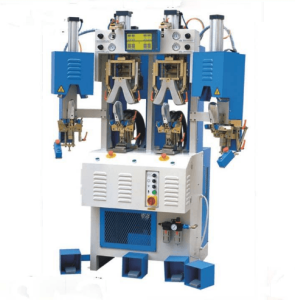
Shoe factory equipment heel forming machine

Con el corte casi completado, necesitaremos una máquina de coser especial para poder terminar. La máquina de coser strobel fue inventada por una persona llamada Strobel. Esta máquina se utiliza para coser en la base una plantilla de tejido y terminar el corte. Este proceso cierra el corte del modelo. La planta o plantilla, está marcada con unas líneas de alineación para garantizar que el corte esté recto y sin retorcerse. Ahora, el corte está listo para ser montado y ensamblada.

Patronaje de calzado y diseño de hormas

una guía para principiantes sobre las técnicas fundamentales de la fabricación del calzado. 200 páginas con más de 500 fotos en color
aprende más
Oferta especial

MontadoToe lasting machine
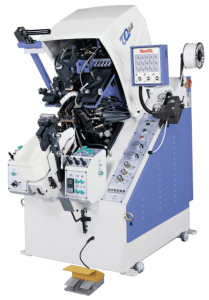
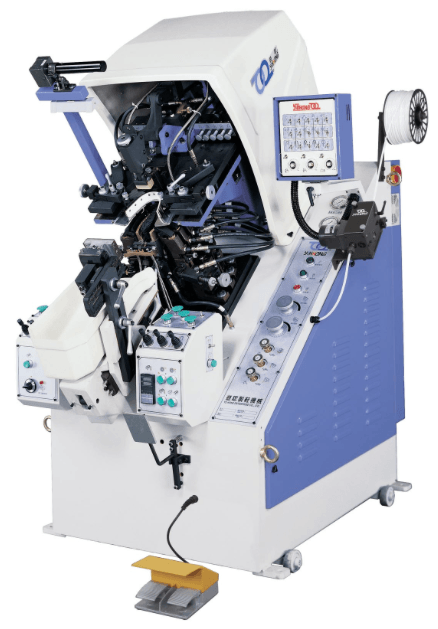
Con la zapatilla lista para el montado, es el momento de sacar el equipo pesado. La línea de montaje básica tiene, aproximadamente, 100 metros de largo. En la parte delantera de la línea, encontrarás un vaporizador que se usa para suavizar el corte de la zapatilla para poder montarlos. Las máquinas de montar se usan para hacer que el corte quede bien ajustado a la horma del modelo.

La máquina de montar la puntera es la pieza vital del equipo de montado. Esta máquina agarra el corte de la zapatilla, y lo extiende alrededor de la horma. La máquina extiende simultáneamente el corte en su lugar a la vez que suministra pegamento caliente para fijar el corte con la forma de la horma.

Una vez que el montado de la puntera está hecho, se puede seguir, a mano o mediante máquina, con el enfranque y con el talón. Después de las operaciones de montado, la pieza que se acaba de montar sobre la horma se coloca en el primero de los túneles de la línea de montaje. En este caso, se trata de un túnel para enfriar, que encoge y ajusta, aun más, el corte a la horma.

Halogenado y pegado

Ahora que el corte y las suelas están juntas en la línea de transporte, estas reciben dos capas de halogenado y cemento. Después de cada aplicación, las piezas se vuelven a colocar en la línea de transporte para dirigirse a un túnel de calor para secar las piezas.
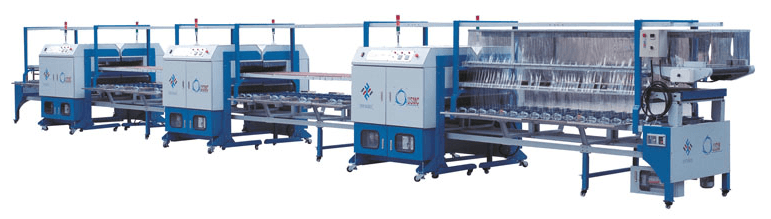
Shoe factory assemby Line

Una vez que las piezas están completamente halogenadas y cubiertas con el cemento, es el momento de unir las partes. Un trabajador toma el corte superior y una suela con la mano y los une. Unidas ambas partes, una operación de prensando asegura que las superficies de unión estén completamente en contacto.
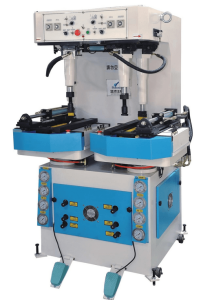
Shoe sole pressing unit Prensado

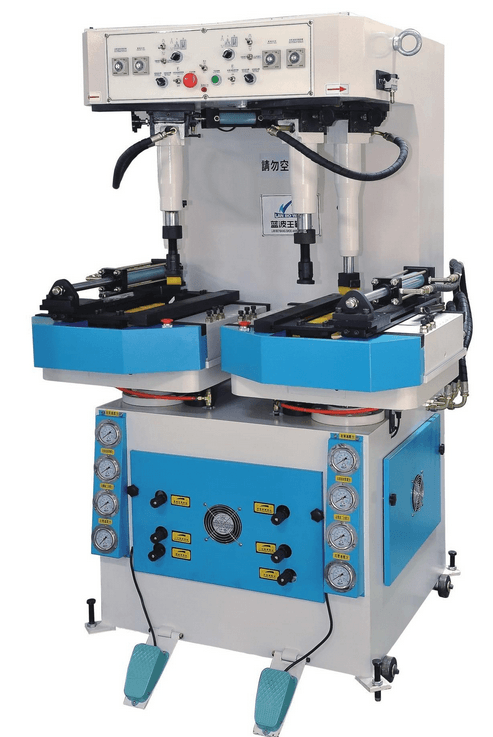
La operación de prensado comprime hasta unir la parte inferior, los laterales, y el talón con el corte. Para asegurar la unión del montado del corte con la parte inferior, se vuelven a colocar en un túnel de frío. Una vez fuera de la unidad de refrigeración, la zapatilla se saca de la horma a mano, o a máquina.

Dependiendo del diseño del modelo, puede que solo falten unas pocas operaciones. La zapatilla puede recibir un cosido en el hendido lateral de la suela con una máquina de coser especial, de gran tamaño, que es capaz de coser a través de la suela de goma, junto con el grosor del corte.

Finalmente, la zapatilla debe pasar a través de un horno secador, y un túnel de luz ultravioleta para garantizar que no aparezca moho mientras el modelo esté en tránsito.
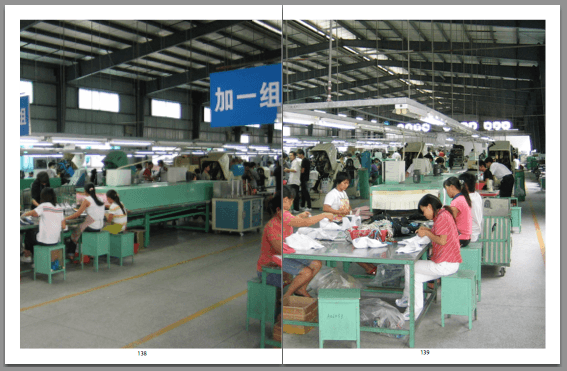
Shoe factory equipment in action

Para ver este equipo de fabricación de calzado en acción, lee los capítulos 8, 9 y 10 de Cómo se hacen los zapatos. Si estás en busca de comprar equipos de fabricación de calzado, el equipo de The Sneaker Factory tiene contactos en China que pueden ayudarte a encontrar lo que necesitas. Haznos saber lo que buscas.


descargar cuatro libros de zapatería

“Cómo se hacen los zapatos”

“Guía para el diseño de materiales de calzado“

“Cómo empezar tu propia empresa de calzado“

“Patronaje de calzado y diseño de hormas”

aprende más
Oferta especial

Posted on

How to Build a Shoe Factory

Sneaker Factory Design

What machines are needed to manufacture shoes?

Build A Shoe Factory

Today I want to introduce you to a company that makes shoemaking equipment. Elitech Footwear Technology Co., Ltd. is located in Taiwan with representative offices in Taiwan, China, Bangladesh, Pakistan, South Africa, Ethiopia, and Turkey. Elitech Footwear Technology can help you design and build a complete shoe factory. They have delivered complete factories to Bangladesh, Ethiopia, Haiti, and Kenya.

How do I build a shoe factory?

Elitech Footwear Technology can help you select the correct equipment to make leather shoes, sports shoes, boots, or sandals. You will need to specify how many pairs of shoes you plan to make per day. Elitech Footwear Technology has many shoe factory designs detailing the equipment you will need to build cutting, sewing, and assembly departments.

How much space do I need for a shoe factory?

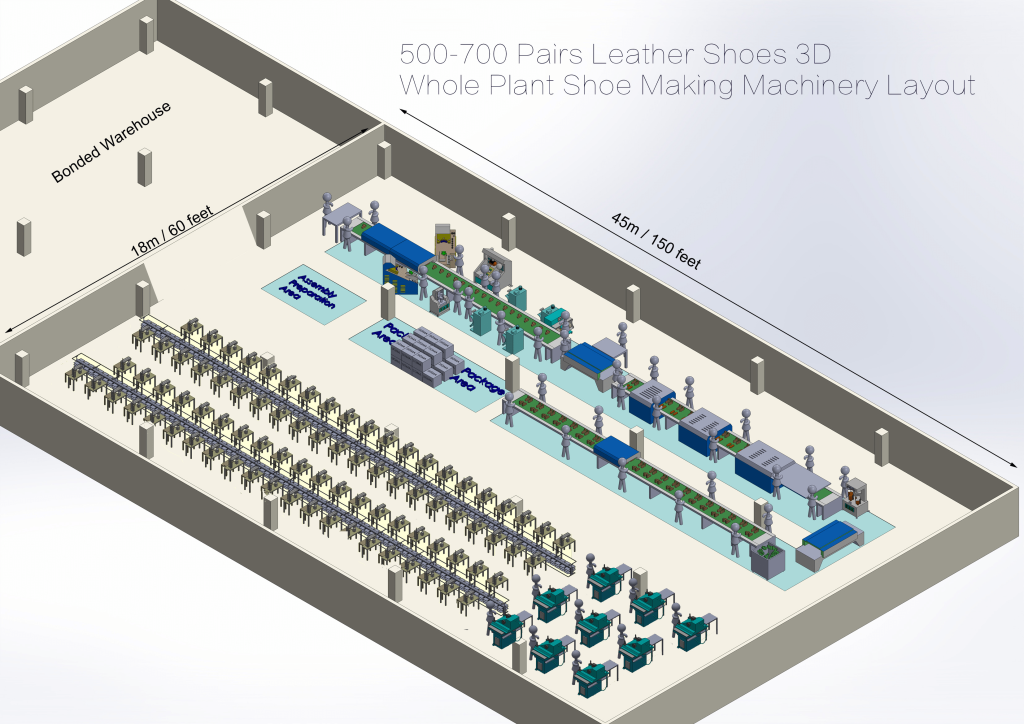
The size of your factory will depend on the planned capacity. Roughly speaking, a complete footwear assembly line with lasting stations, buffing, cementing, and sole pressing will require a space 330 feet or 100 meters long. If the assembly line is split in the middle to create a U line, you will need 165 feet or 50 meters for all the belts, ovens, and shoemaking stations. With space added for cutting and stitching, you can fit a 700 pair per day factory into a space 150 feet/45 meters long by 65 feet/20 meters wide. Extra space will be required for raw material and finished product storage.

Elitech Footwear Technology
Elitech Footwear Technology Shoe Factory Design

How many workers will I need for a shoe factory?

To run a footwear assembly line capable of making 500 pairs of shoes per day, you will need 50 workers. Of the 50 workers, approximately 10 need to be skilled equipment operators. Also, you need a Manager and Quality Control staff to monitor the daily operations.

To support the assembly process for your 500 pairs, you will need cutting and stitching staff. Depending on the complexity of the shoe you will need 50 to 80 stitchers and 10 cutters.

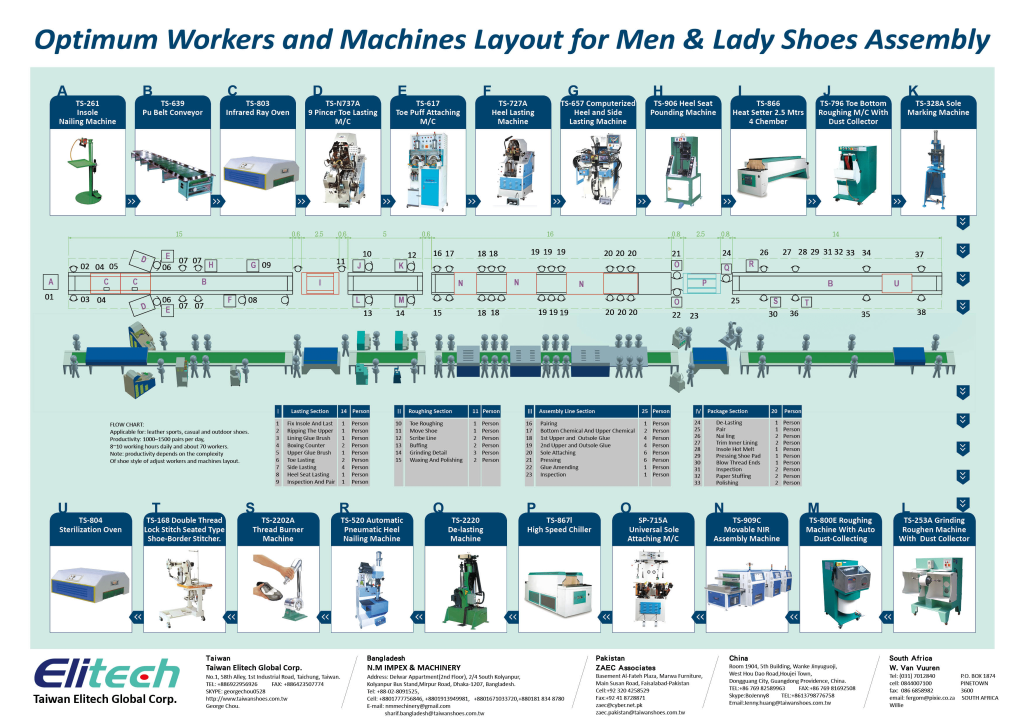
Elitech Footwear Technology has a factory design for 1000 pairs of shoes. This assembly factory requires 80 people. You can see this factory below. Elitech Footwear Technology has listed the 25 shoemaking machines required.

What shoemaking equipment will I need?

Elitech Footwear Technology has a complete listing of all the equipment you will need to make leather shoes, safety shoes, or sport shoes at a capacity of about 500-700 pairs per 8-10 hours/day.
Elitech Footwear Technology offers machines from shoe cutting machines, shoe sewing machines, shoe upper machines, shoe lasting machines, shoe lasting lines, to shoe finishing machines.

Footwear cutting section

ts-525 swing beam hydraulic cutting m/c 20 ton 
ts-501 plane type cutting m/c 25t
ts-747 leather skiving machine 
ts-757 heavy skiving machine (thermoplastic, chemical sheet)
ts-819 pneumatic hot stamping machine

Footwear sewing machines

ts-5100 single needle lockstitch flat-bed stitching machine
ts-8810 single needle post sewing machine (complete set) with servo motor
ts-8820 double needle post bed sewing machine (complete set) with servo motor/led light
ts-652 zigzag sewing machine with servo motor/led light
cs-335a single needle cylinder bed with unison feed lockstitch sewing machine (complete set) with servo motor/led light
ts-225 level pressing & thermo flattening machine
ts-202 upper lining trimming machine
ts-316 automatic rotary vamp-lining pressing machine
ts-727r eyeleting machine
ts-747b hot melt edge folding machine
ts-690a 30cm hot melt roll coater 

Shoe lasting line section

Lasting conveyor, belt type, 10m with 1.5m nir heating oven
2 hot 2 cold back part molding machine
Toe cap/toe puff steaming machine
Hot air steaming machine 
Hydraulic toe lasting machine, 9-pincers with cementing
Automatic heel lasting machine
Heel steaming machine
High speed heat setter 2.5m
Guide line marking machine
Edge roughing machine with auto dust-collector.
Bottom roughing machine with dust collector
13.6m infrared ray light heat activator
Glue dyer with 1.5m/2.0m/2.5m heating chamber
Heavy duty walled sole pressing machine
2.5m auto high speed refrigerator 
Finishing lines about 10 meters

Shoe finishing line section

ts-639 finishing conveyor pvc belt type, 10 meters
ts-2220 hydraulic de-lasting machine
ts-2202a thread burnner
ts-518 advanced polishing machine, adjustable speed and dust collector.

How do I get started building a shoe factory?

To get started building your dream shoe factory you can contact Elitech Footwear Technology directly. Their team will help design a factory to fit your production requirements, shoe requirements, and budget requirements.

Elitech Footwear Technology has many turnkey designs ready for your study. You can see their many shoe factory designs here. Shoe Factory Designs.

What machines are needed to manufacture shoes?

Build A Shoe Factory

Today I want to introduce you to a company that makes shoemaking equipment. Elitech Footwear Technology Co., Ltd. is located in Taiwan with representative offices in Taiwan, China, Bangladesh, Pakistan, South Africa, Ethiopia, and Turkey. Elitech Footwear Technology can help you design and build a complete shoe factory. They have delivered complete factories to Bangladesh, Ethiopia, Haiti, and Kenya.

How do I build a shoe factory?

Elitech Footwear Technology can help you select the correct equipment to make leather shoes, sports shoes, boots, or sandals. You will need to specify how many pairs of shoes you plan to make per day. Elitech Footwear Technology has many shoe factory designs detailing the equipment you will need to build cutting, sewing, and assembly departments.

How much space do I need for a shoe factory?

The size of your factory will depend on the planned capacity. Roughly speaking, a complete footwear assembly line with lasting stations, buffing, cementing, and sole pressing will require a space 330 feet or 100 meters long. If the assembly line is split in the middle to create a U line, you will need 165 feet or 50 meters for all the belts, ovens, and shoemaking stations. With space added for cutting and stitching, you can fit a 700 pair per day factory into a space 150 feet/45 meters long by 65 feet/20 meters wide. Extra space will be required for raw material and finished product storage.

Elitech Footwear Technology
Elitech Footwear Technology Shoe Factory Design

Learn about the Shoe Business

Aspiring shoemakers start here! How Shoes are Made is your entry into the world of modern shoe making. Tour a real shoe factory and learn the process from design to manufacturing. Learn more Download $19.99

How many workers will I need for a shoe factory?

To run a footwear assembly line capable of making 500 pairs of shoes per day, you will need 50 workers. Of the 50 workers, approximately 10 need to be skilled equipment operators. Also, you need a Manager and Quality Control staff to monitor the daily operations.

To support the assembly process for your 500 pairs, you will need cutting and stitching staff. Depending on the complexity of the shoe you will need 50 to 80 stitchers and 10 cutters.

Elitech Footwear Technology has a factory design for 1000 pairs of shoes. This assembly factory requires 80 people. You can see this factory below. Elitech Footwear Technology has listed the 25 shoemaking machines required.

What shoemaking equipment will I need?

Elitech Footwear Technology has a complete listing of all the equipment you will need to make leather shoes, safety shoes, or sport shoes at a capacity of about 500-700 pairs per 8-10 hours/day.
Elitech Footwear Technology offers machines from shoe cutting machines, shoe sewing machines, shoe upper machines, shoe lasting machines, shoe lasting lines, to shoe finishing machines.

Footwear cutting section

ts-525 swing beam hydraulic cutting m/c 20 ton 
ts-501 plane type cutting m/c 25t
ts-747 leather skiving machine 
ts-757 heavy skiving machine (thermoplastic, chemical sheet)
ts-819 pneumatic hot stamping machine

Footwear sewing machines

ts-5100 single needle lockstitch flat-bed stitching machine
ts-8810 single needle post sewing machine (complete set) with servo motor
ts-8820 double needle post bed sewing machine (complete set) with servo motor/led light
ts-652 zigzag sewing machine with servo motor/led light
cs-335a single needle cylinder bed with unison feed lockstitch sewing machine (complete set) with servo motor/led light
ts-225 level pressing & thermo flattening machine
ts-202 upper lining trimming machine
ts-316 automatic rotary vamp-lining pressing machine
ts-727r eyeleting machine
ts-747b hot melt edge folding machine
ts-690a 30cm hot melt roll coater 

Shoe lasting line section

Lasting conveyor, belt type, 10m with 1.5m nir heating oven
2 hot 2 cold back part molding machine
Toe cap/toe puff steaming machine
Hot air steaming machine 
Hydraulic toe lasting machine, 9-pincers with cementing
Automatic heel lasting machine
Heel steaming machine
High speed heat setter 2.5m
Guide line marking machine
Edge roughing machine with auto dust-collector.
Bottom roughing machine with dust collector
13.6m infrared ray light heat activator
Glue dyer with 1.5m/2.0m/2.5m heating chamber
Heavy duty walled sole pressing machine
2.5m auto high speed refrigerator 
Finishing lines about 10 meters

Shoe finishing line section

ts-639 finishing conveyor pvc belt type, 10 meters
ts-2220 hydraulic de-lasting machine
ts-2202a thread burnner
ts-518 advanced polishing machine, adjustable speed and dust collector.

New Course!
Shoemaking for Designers & Brand Builders

Created for footwear beginners and career changers alike, this course delivers the basic shoemaking knowledge you need to get you career in the shoe trades started. Learn more On sale $99

How do I get started building a shoe factory?

To get started building your dream shoe factory you can contact Elitech Footwear Technology directly. Their team will help design a factory to fit your production requirements, shoe requirements, and budget requirements.

Elitech Footwear Technology has many turnkey designs ready for your study. You can see their many shoe factory designs here. Shoe Factory Designs.

Start Building Your Shoe Business

A must-have for anyone serious about launching a footwear company. 4 text books, shoe business documents and downloadable content not available anywhere else! The Shoe Company Start-Up Pro Pack is all you need to get your shoe business off the ground. Learn more Download Today
Posted on

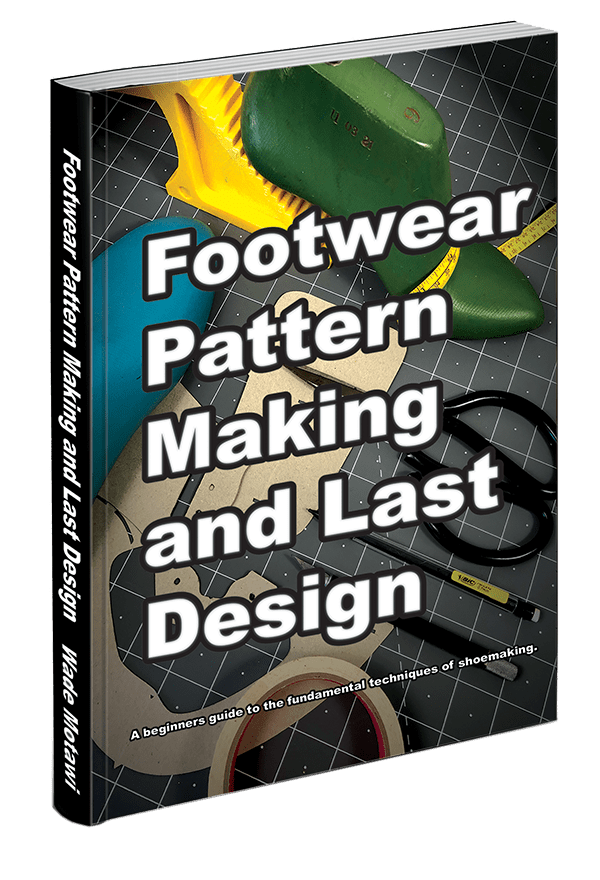
Footwear Pattern Making and Last Design

Footwear Pattern Pattern Cutting: Step by Step Patterns for Footwear

Available Now!
Footwear Pattern Making and Last Design

Footwear Pattern Pattern Cutting: Step by Step Patterns for Footwear

Hey Shoemakers!

So many of you have been asking for information on shoe lasts and pattern making. This book is for you, enjoy!

Footwear Pattern Making and Last Design is now available in softcover and PDF download.


Footwear Pattern Making and Last Design

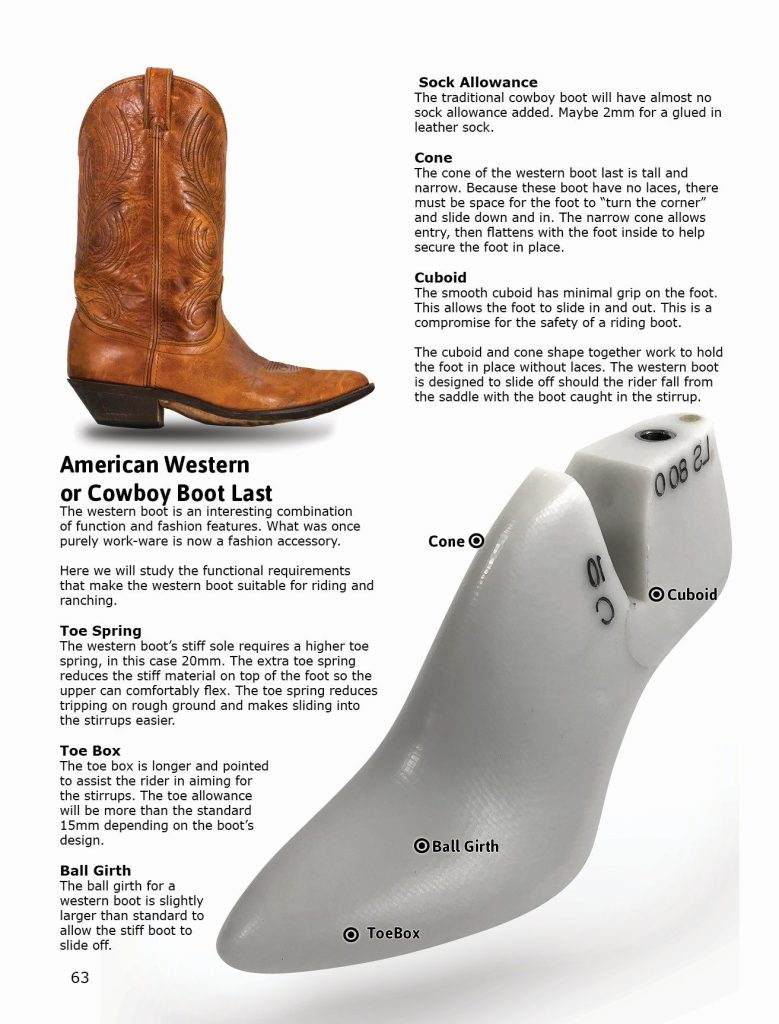
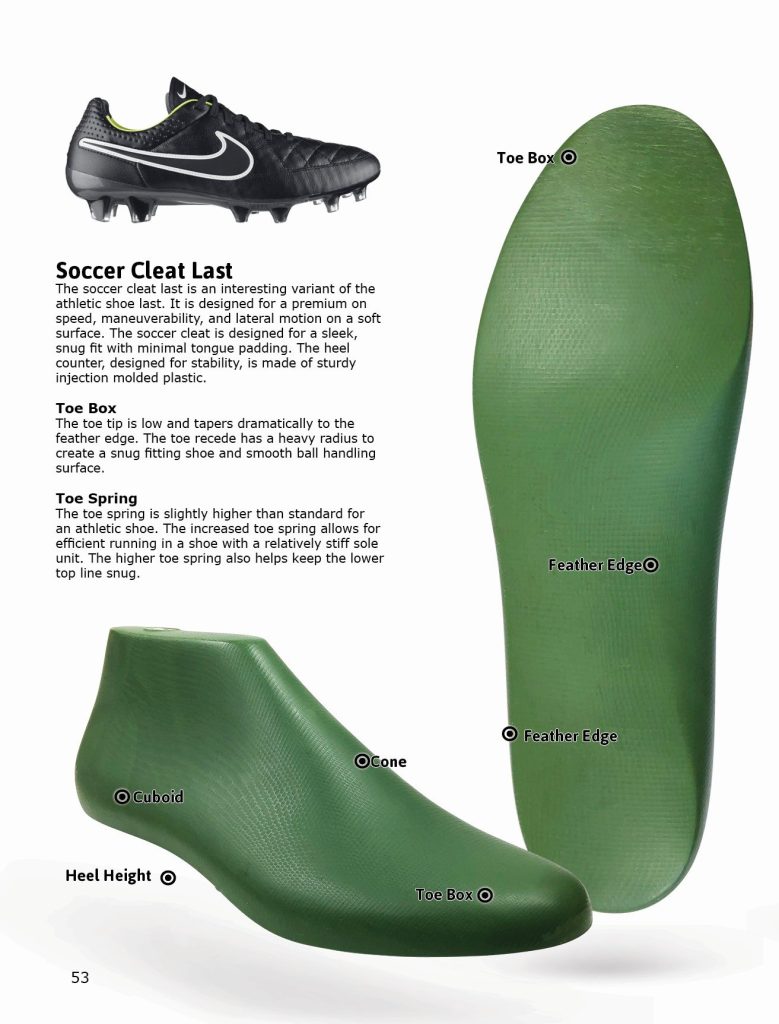
Do you want to learn how to make shoe patterns? Do you know how to design a last for a high-heeled fashion shoe, sneaker, or dress shoe? In Footwear Pattern Making and Last Design, we will teach you the shoe last design process and detail the basic techniques of footwear pattern making.

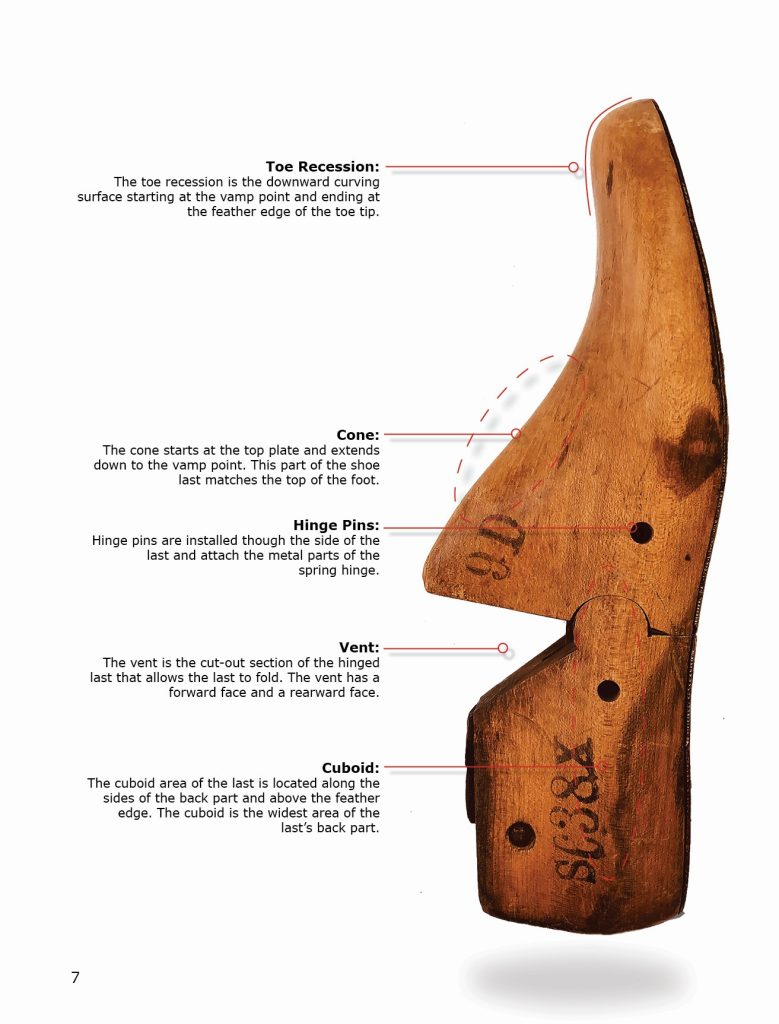
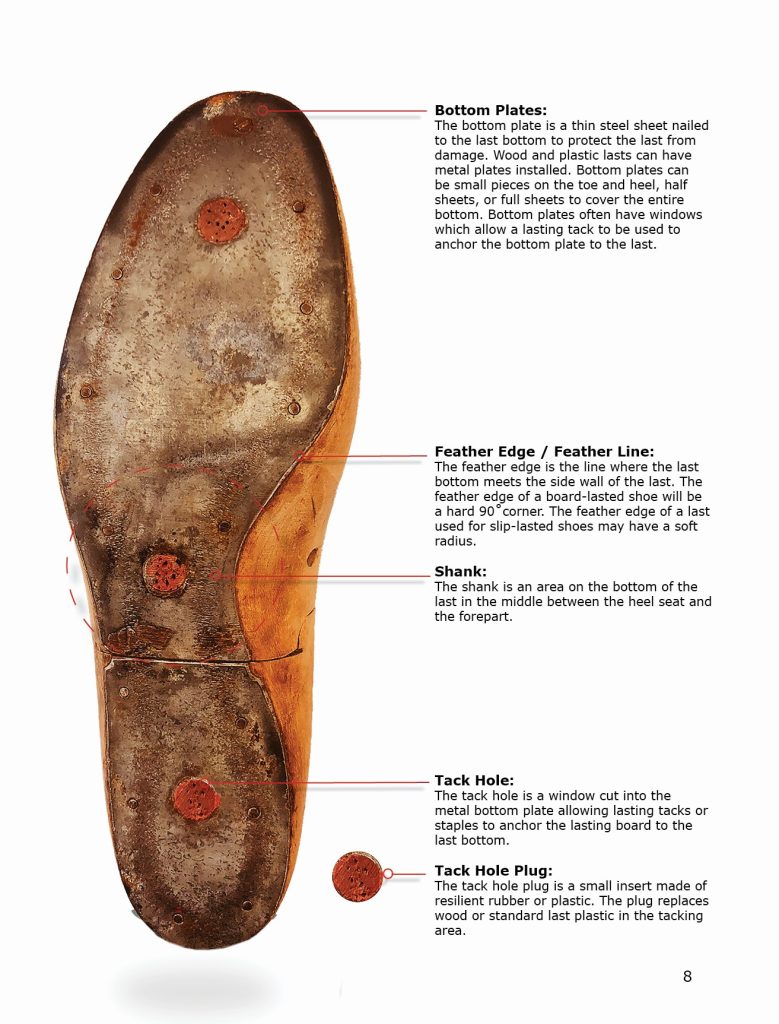
Footwear Pattern Making and Last Design will show you how lasts are made, the shoe last design process, the hidden geometry, special features, functions, and size grading principles of lasts. You will see many different last designs and shapes for sneakers, trainers, high-heels, boots, and more.

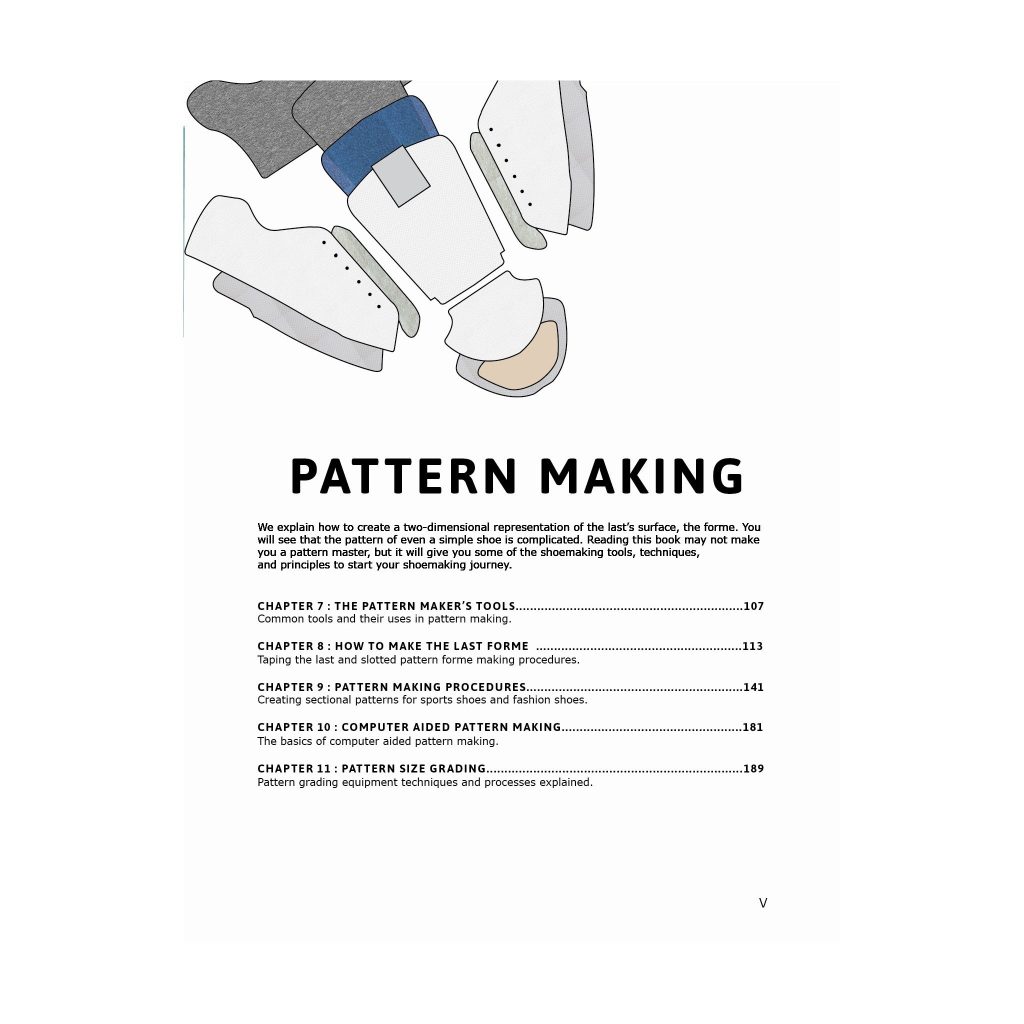
This book covers the craft of footwear pattern making, including a step-by-step guide to patternmaking for beginners, and hundreds of color photos illustrating the patternmaking process. See and compare sample patterns for joggers, hi-top sneakers, high-heels, and many other shoes. Learn how to make a sneaker forme, patternmaking procedures, computer-aided design software for pattern making, and shoe pattern grading.    

Why is a shoe last shaped that way? How can you make a shoe pattern with simple tools? You will find these answers inside! 

What will you learn?

This books covers the basics, you will learn how to make a simple shoe pattern for both men’s and women’s shoes. This book really covers shoemaking for beginners.

Shoemaking Inspirations

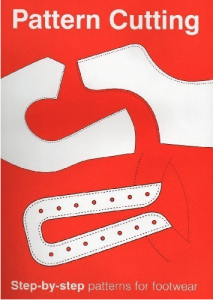
Pattern Cutting: Step by Step Patterns for Footwear.  Edited by Frank Jones. ISBN-10: 0955408601 ISBN-13: 978-0955408601

Pattern Cutting: Step by Step Patterns for Footwear can be hard to find but it’s out there. You may need to order from the UK. Both books, Footwear Pattern Making and Last Design and Pattern Cutting: Step by Step Patterns for Footwear, belong on your bookshelf!

I also like the books by the late George-Koleff. His book, Lastmaking, is worth owning. Again, these can be hard to find. There is another secret shoemaking treasure, All About Shoes and Techniques by Hans van der Elzen. These are great resources for shoemakers.

Shoemaking
TextbooksBuy Now
Shoemaking
SuppliesBuy Now
Shoemaking
CoursesCourse Details
Previous Next
Posted on

What is a Shoe Last?

What is shoe last type shoe last chart

Everything You Ever Wanted To Know About Footwear Lasts

Shoe Last Function and Fashion

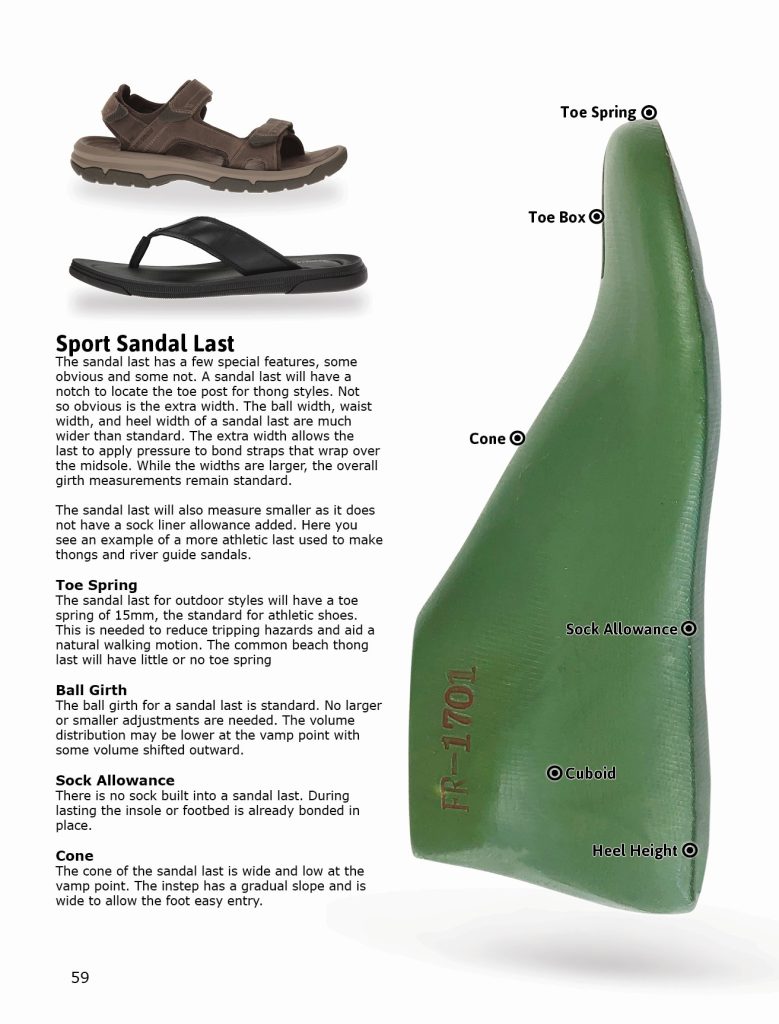
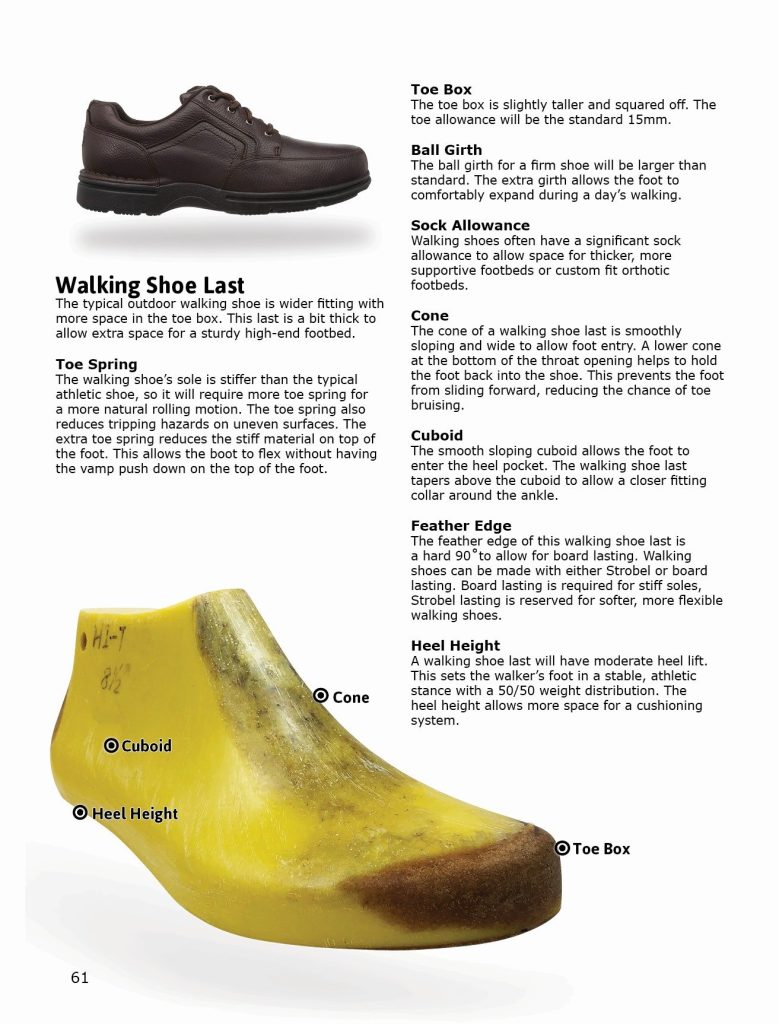
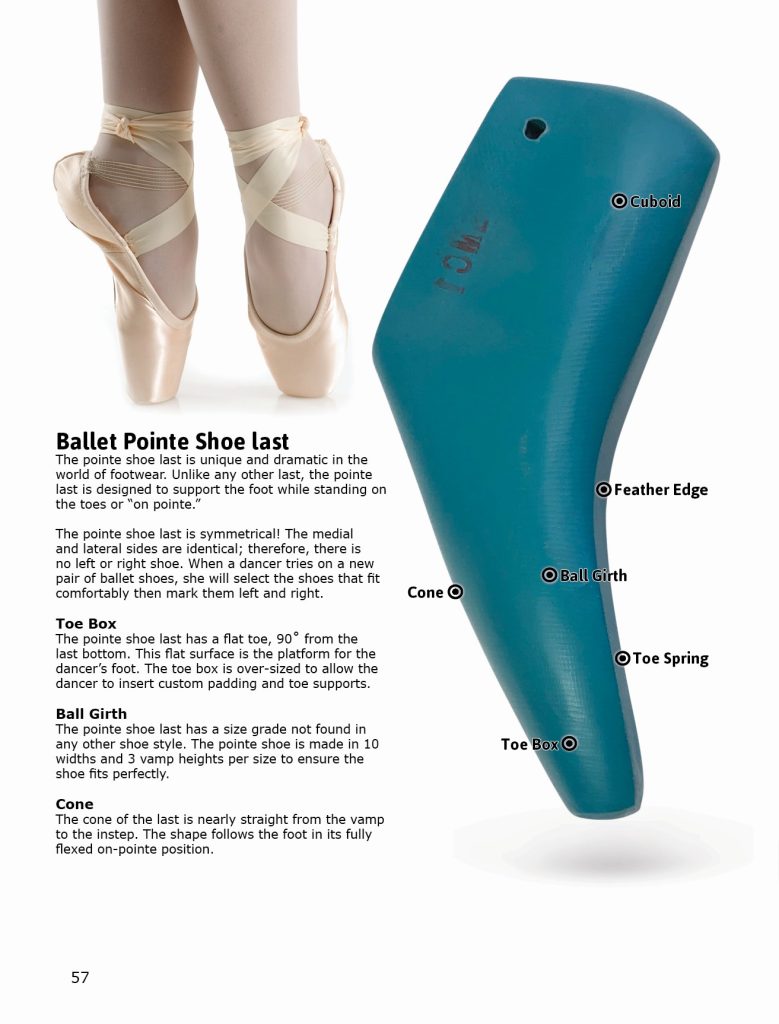
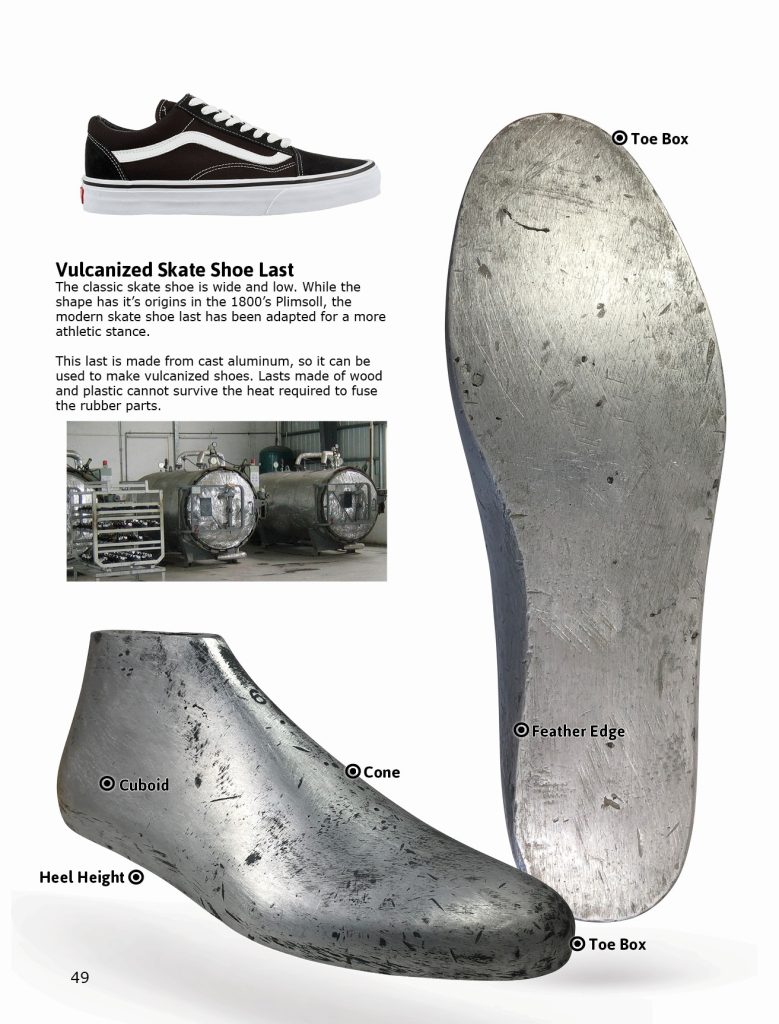
The shoe last is the starting point of every shoe design and has been called “the heart of the shoe.” The last is the center of the entire shoemaking process, in which the shoemaker starts with the last and then builds the shoe out from there.

The shape of the last determines the fit, performance, ergonomics, and style of a shoe, and is also what makes a shoe suitable for playing basketball, climbing mountains, or running a marathon. Great looking shoe design is nothing if the last is not appropriate for the shoe’s function.

The Shoe Last

The last is a roughly foot-shaped form made of molded plastic, carved wood, cast aluminum, or 3D printed plastic. Why is the last called the last? The word ‘last’ comes from the old English word ‘laest,’ which means ‘footprint.’ The first shoe lasts were used by the Greeks and Romans all the way back to 400 BCE!

Throughout all of this time, the last has been critical to the shape and fit of a shoe. The last is used in all phases of the shoemaking process and sets the size, silhouette, and outline of the shoe. The last plays a central role for the entire production of the shoe all the way from the design phase, through the development process, and onto the production assembly line.


How the Shoe Last is Used in the Design Phase

The shoe designer will often draw a new design directly onto the surface of a last or draw the design on paper using the 2D last silhouette as a guide. The shoe designer must follow the outline shape of the last bottom to draw an accurate outsole design.

The modern shoe last is not a replica of the human foot. The shoe last is a generalization of the human foot with care taken to account for natural articulation and volumetric changes as the foot moves and flexes. A high quality running or walking shoe will have a thoughtfully developed last. A large shoe brand will have the help of shoemakers, podiatrists, and kinesiologists to develop biomechanically ideal shapes.

Everything You Ever Wanted To Know About Footwear Lasts

Shoe Last Function and Fashion

The shoe last is the starting point of every shoe design and has been called “the heart of the shoe.” The last is the center of the entire shoemaking process, in which the shoemaker starts with the last and then builds the shoe out from there.

The shape of the last determines the fit, performance, ergonomics, and style of a shoe, and is also what makes a shoe suitable for playing basketball, climbing mountains, or running a marathon. Great looking shoe design is nothing if the last is not appropriate for the shoe’s function.

The Shoe Last

The last is a roughly foot-shaped form made of molded plastic, carved wood, cast aluminum, or 3D printed plastic. Why is the last called the last? The word ‘last’ comes from the old English word ‘laest,’ which means ‘footprint.’ The first shoe lasts were used by the Greeks and Romans all the way back to 400 BCE!

Throughout all of this time, the last has been critical to the shape and fit of a shoe. The last is used in all phases of the shoemaking process and sets the size, silhouette, and outline of the shoe. The last plays a central role for the entire production of the shoe all the way from the design phase, through the development process, and onto the production assembly line.


How the Shoe Last is Used in the Design Phase

The shoe designer will often draw a new design directly onto the surface of a last or draw the design on paper using the 2D last silhouette as a guide. The shoe designer must follow the outline shape of the last bottom to draw an accurate outsole design.

The modern shoe last is not a replica of the human foot. The shoe last is a generalization of the human foot with care taken to account for natural articulation and volumetric changes as the foot moves and flexes. A high quality running or walking shoe will have a thoughtfully developed last. A large shoe brand will have the help of shoemakers, podiatrists, and kinesiologists to develop biomechanically ideal shapes.

Last Design Textbook

Learn how lasts are made, the shoe last design process, the hidden geometry, special features, functions, and size grading principles. Buy Now On Sale $39.99

Build Your Dreams!Air Jordan DIY Kit:
Last & Outsole

Stop searching! We have the Classic Air Jordan style last and outsole in stock. Ready for your Air Jordan 1 restoration and DIY shoe projects. We have your size in stock! Buy Now On sale $119

Learn More About Shoe Lasts 

Footwear Pattern Pattern Cutting: Step by Step Patterns for Footwear

Footwear Pattern Making and Last Design will show you how lasts are made, the shoe last design process, the hidden geometry, special features, functions, and size grading principles of lasts.

You will see many different last designs and shapes for sneakers, trainers, high-heels, boots, and more.
200 pages, 11 Chapters, over 500 color photos.
Download Now!

The Classic Sneaker Last is Here

Stop searching! The classic Sneaker last is in stock. Ready for your DIY shoe making projects. We have your size and outsole bottoms that fit. Buy Now On sale $79.99
Posted on

Footwear Pattern Making Books on Amazon

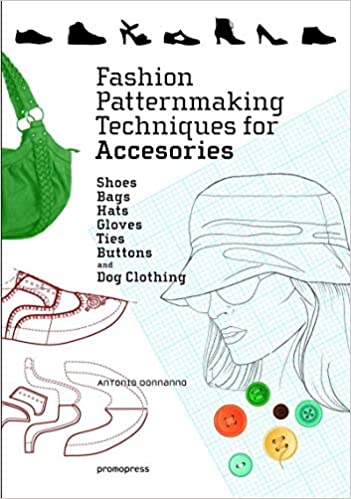
Fashion Patternmaking Techniques for Accessories Antonio Donnanno

Shoe Patternmaking Book Reviews:

I’ve read many books on shoe design and patternmaking, and I’d like to share my reviews of some currently available.

Here is a selection of shoe trade books on patternmaking that you can find on Amazon.com.

Fashion Patternmaking Techniques for Accessories:

Shoes, Bags, Hats, Gloves, Ties, Buttons, and Dog Clothing

Fashion Patternmaking Techniques for Accessories Antonio Donnanno

By Antonio Donnanno
Softcover: $29.99

What Amazon says: “This book is an essential and practical tool for designing and creating fashion accessories for men and women. Intended for fashion students and professionals, the book includes different pattern techniques for each accessory and explains production processes so that readers can incorporate them into their professional practice, in addition to identifying and providing the information needed to recreate a wide range of accessory models. ”    

“It includes descriptions of materials, examples of patterns and designs and different possible finishes through illustrations, photographs, technical drawings and texts that clearly explain the production process of each artisanal and industrial piece. As items that provide personality and originality to one’s personal style, fashion accessories have become essential to completing the “look” for each occasion. With the help of this manual, having in-depth knowledge about the creation of different pieces, from a bag to a pair of shoes to hats, gloves, ties and buttons –even clothing for dogs–, is a great way to get started in this branch of the fashion field.”

What I have to say: I really like Fashion Patternmaking Techniques for Accessories. Chapter 1 is about leather, and Chapter 2 is about footwear. This book has just over 40 pages dedicated to footwear, densely packed with lots of great information. While the book does not detail pattern-making procedures, it does a great job explaining the more traditional European style of shoemaking. I only wish the photos were in color! For a fashion school student, I say “yes,” buy it. Well done, Antonio Donnanno.

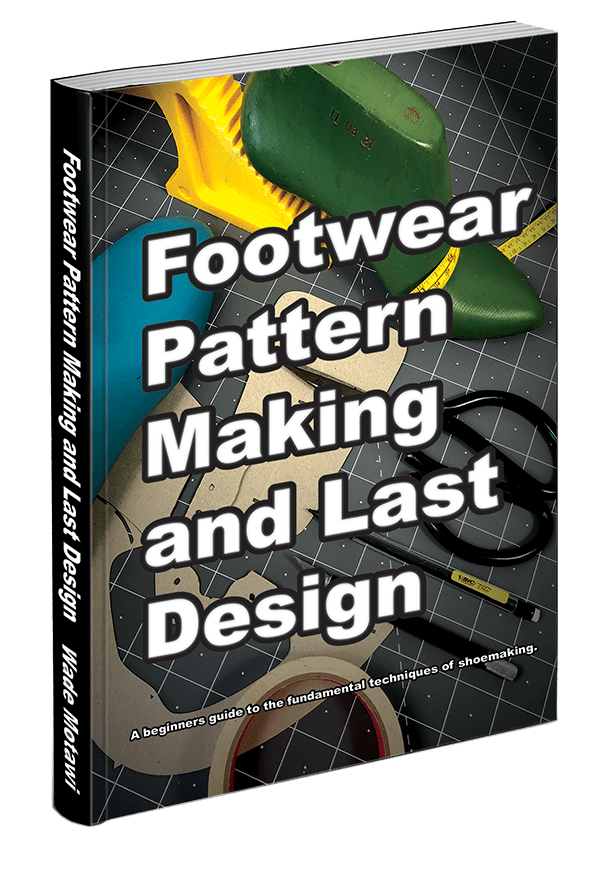
Footwear Pattern Making and Last Design

Footwear Pattern Making

By Wade Motawi   $39.99 softcover

What Amazon says:  “A beginner’s guide to the fundamental techniques of shoemaking. Do you want to learn how to make shoe patterns? Do you know how to design a last for a high heeled fashion shoe versus a sneaker or dress shoe? In Footwear Pattern Making and Last Design, we will teach you the shoe last design process and detail the basic techniques of footwear pattern making. Footwear Pattern Making and Last Design will show you how lasts are made, the shoe last design process, to the hidden geometry, special features, functions, and size grading principles. You will see many different last designs and shapes for sneakers, trainers, high heels, boots, and more.

This book covers the craft of footwear pattern making, including a step-by-step guide to pattern making for beginners. Hundreds of color photos illustrate the pattern making process. See and compare sample patterns for joggers, hi-top sneakers, high-heels, and many other shoes. Learn how to make a sneaker forme, pattern making procedures, computer-aided design software for pattern making, and shoe pattern grading.”

What I have to say: I really like Footwear Pattern Making and Last Design. This is book four of the Series How Shoes are Made, it’s a great book for beginners. The section on last design is very unique. I have not seen any book that describes why shoe lasts are shaped the way they are. For rookie pattern makers, I think this is a great place to start. Technical but not too technical. Anyone can pick this up and start learning the shoe trades. Tons of color photos that show the patternmaking process.

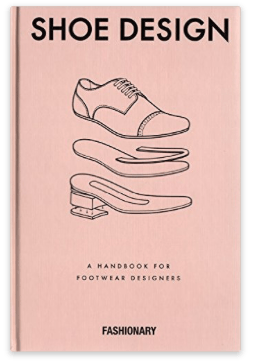
Fashionary Shoe Design

Fashionary Shoe Design Book

By Fashionary   $44.00 hardcover

What Amazon says:  “Differing from ordinary shoe design books, this is a complete handbook geared towards practical usage by footwear designers. It includes three main sections: Shoe Style Library, Shoe Encyclopaedia, and Shoe Templates for Tracing. The first section features more than 300 styles of shoes, ranging from historical archetypes to the most signature styles in todays footwear industry.

The second focuses on essential and practical information on shoe design, from materials and construction to labels and international fairs. The templates section includes both basic templates and templates for 60 styles of common footwear, from flats and boots to high heels.”

What I have to say: I think you will like this Shoe Design book. Plenty of cool stuff to keep you busy. Great templates for tracing and sketching. A good warm-up for basic shoe design but light on technical shoemaking information. Is it really useful for a shoe designer or patternmaker? …I would say not.  

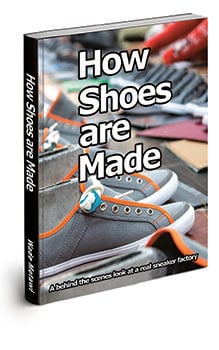
How Shoes Are Made

A behind the scenes look at a real shoe factory.

How Shoes Are Made Download

By Wade Motawi  $39.99 softcover Newly updated 3rd edition

What Amazon says:
  “Do you want to learn about how modern athletic shoes are really made? This is the shoe design book for you.  Now you can really see how the big shoe brands design and produce shoes.


More than just a guided tour through a sneaker factory, How Shoes are Made, will show you how modern sports shoes come to life from drawing designs to sample development and manufacturing. Footwear design and manufacturing are simply explained for sneakerheads, students, young professionals, or anyone interested in the shoe trades. 

Written by a veteran shoe professional, How Shoes are Made will give you a look inside the real world of shoe production. 28 Chapters explain Shoe Design, Development, Materials, Stitching, Outsoles and Tooling, EVA Forming, Final Assembly, Shoe lasts, Shoe prices, Quality control, and much more! 250 Pages with over 400 color photos.

If you are a sneaker collector, design student, or just interested in shoes, read on. “

What I have to say: Overall, How Shoes Are Made is a great shoe book for beginners to get started. It explains the shoemaking process in detail. Not so much the handmade craft but the industrial mass production of sneakers. This book has one chapter on patternmaking and lots of other good stuff. Yes! This book belongs on your bookshelf! 

Footwear Design (Portfolio Skills: Fashion & Textiles)

Footwear Design (Portfolio Skills: Fashion & Textiles) Paperback by Aki Choklat
Click here to see on Amazon

By Aki Choklat   $28.00 softcover

What Amazon says:  “Footwear design has become the new dream career, and this book is the first guide to show the key skills and tips behind the trade, for both budding designers and anyone interested in shoes. Illustrated throughout with inspirational sketchbooks detailing the design process and specially commissioned images of cutting-edge shoe design, the book also contains case studies featuring an array of international shoe designers.”

What I have to say: Footwear Design (Portfolio Skills: Fashion & Textiles) is a well-written book that focuses on women’s fashion shoes and contains some very nice exploded views and shoe pattern part layouts. The book has just a few pages on patternmaking and is not technically oriented. I like the views of shoe patterns on lasts, but I’m not much of a fan of fashion designer interviews. I say it’s worth a look, and if fashion shoes are your interest, I recommend it. 

I have to admit, I consider Aki Choklat a friend, and this was the book that inspired me to start working on my shoemaking books!


Pattern Cutting: Step by Step Patterns for Footwear 

Pattern_Cutting_Step_by_Step By Frank Jones, softcover price varies    

What Amazon says:  “Pattern Cutting replaces the Pattern Cutter’s Handbook which since 1991 has become the standard textbook on many college and university courses covering footwear, all over the English speaking world. The new book covers everything in the earlier book plus much more. Not only are there whole new chapters covering further styles of footwear, there is a chapter on Bottom Patterns, an extended chapter on Grading, and a chapter on dealing with more advanced pattern problems such as a bellows-tongue.

In the past, books on pattern cutting have often reflected the mystique which tends to surround the subject. Pattern Cutting takes a completely different approach. The whole book is written as an easy to use, step-by-step guide to producing patterns for shoemaking. 

Each major type of footwear has a complete chapter devoted to it. The twelve basic types covered include trainers, basketball boots and an aerobic shoe. Most pages have two or three diagrams, illustrating each step in the process.

With each footwear type there is a detailed description of the process with measurements given wherever appropriate. Points to watch for and pitfalls to avoid are spelled out, so as to ensure the reader will stand the best possible chance of producing a workable pattern first time.”

What I have to say: I own Pattern Cutting: Step by Step Patterns for Footwear, and I have found it very useful. It has 17 chapters covering the many types of footwear patterns. This edition is from 2008. The content is presented in clear, crisp, black and white line art—a little old fashioned but also very technical and detailed.

If you are going to cut your own patterns, I recommend Pattern Cutting: Step by Step Patterns for Footwear. The book can be hard to find online. It’s on Amazon.com, but the price is crazy high. I ordered directly from the UK, www.noblefootwear.com. 

Handbook of Footwear Design and Manufacture

Handbook of Footwear Design and Manufacture (Woodhead Publishing Series in Textiles) Hardcover by A Luximon (Editor)
Click here to see on Amazon

(Woodhead Publishing Series in Textiles)
By A Luximon (Editor)   $237.00 Hard Cover

What Amazon says:  “Understanding footwear design and manufacture is vital for improving the functionality, aesthetics and marketability of a product. The Handbook of footwear design and manufacture provides a comprehensive review of footwear production and design and explores how these processes are used across a variety of application areas.

Part one, an introductory section, reviews the fundamentals of footwear anatomy; chapters discuss the anatomy of the human foot, biomechanics and gait, foot models and measurements, the development of the foot in childhood and adolescence, and foot problems and their implications for footwear design. Part two examines footwear design including the development of shoe design, foot sketch templates, and footwear drawing templates. Aspects of footwear manufacture are highlighted in part three including the design, manufacture, and sizing and grading of shoe lasts. Further chapters focus on the footwear business, advertising, and the environmental impact of footwear manufacture. Part four explores the design and manufacture of footwear for specific applications and includes chapters on footwear for cold weather, textiles and other materials used in the production of protective military and orthopaedic footwear, and design issues in geriatric footwear.

The Handbook of footwear design and manufacture is a wide-ranging and technical resource for footwear designers, materials scientists and researchers involved in the production of footwear, and professionals in the footwear industry looking to expand their knowledge of design and manufacture processes. Discusses foot anatomy in detail and considers its implications for footwear design.”

What I have to say: The Handbook of footwear design and manufacture is very dense. It may belong in your bookcase, but it’s not a page-turner. Its massive price tag is a bummer and puts it well out of reach for anyone not in the trades. For a shoe designer or aspiring footwear patternmaker, I do not recommend this book. 

The Science of Footwear (Human Factors and Ergonomics)

The Science of Footwear (Human Factors and Ergonomics) Hardcover – November 6, 2012 by Ravindra S. Goonetilleke (Editor)
Click here to see on Amazon

By Ravindra S. Goonetilleke (Editor)
$150.00 Hardcover

What Amazon says: “Although we now have sophisticated algorithms and techniques for determining the shapes and sizes and for matching the fit between shoes and feet, few, if any, of the books currently available cover these new technologies until now. Bringing together high-quality and state-of-the-art contributions from designers, biomechanists, ergonomists, engineers, podiatrists, and scientists from industry and academia, The Science of Footwear provides an in-depth understanding of the technology and techniques involved in the design and development of a popular and demanding consumer product.

This book introduces the design, development, manufacturing, and marketing of footwear. The chapters contain data from past research and the state-of-the art methodologies. They not only cover every aspect of the product design, but also how the footwear industry caters to the wide-ranging needs of sophisticated and demanding customers.

The footwear industry has rapidly changed over the last 10 years. Mass production has changed to personalization and mass customization, areas that are not well-understood. This book explores these different concepts in a coherent way, drawing on differing views that give a holistic view of the science behind footwear. Collating information from different disciplines, the book provides the tools to develop the next generation of footwear.”

What I have to say:  When the softcover version finally came out on Amazon, I ordered this footwear book. The book is over 700 pages! It is a very dense collection of scientific articles. I suggest you review the table of contents before you buy it. Is this useful for shoe designers? I would say, you have better choices.

Shoemaking
TextbooksBuy Now
Shoemaking
SuppliesBuy Now
Shoemaking
CoursesCourse Details
Previous Next
Posted on

Footwear Design and Development Certificate

Footwear Certificate program at Lasell University in Boston

Lasell University

Footwear Design and Development Certificate is a 12-week professional certificate comprised of 4 courses that provide students with a comprehensive overview of the footwear industry while developing the necessary skills that lead to successful product

Footwear Design and Development Certificate is a 12-week professional certificate comprised of 4 courses that provide students with a comprehensive overview of the footwear industry while developing the necessary skills that lead to successful product design. Industry partners and instructors with extensive experience in design, materials, and production of footwear will provide key elements from concept through marketing in creating functional and fashionable shoes for contemporary consumers.  

Who should earn this certificate?

Footwear Certificate program at Lasell University in Boston
  • Clothing designers, merchandisers, shoe designers, and accessory designers who want to expand their understanding of shoe design, marketing and production
  • Students and job seekers who want to update their portfolio to include provocative design boards using cutting-edge tools, materials and color development.

Register Here!

Skill-based approach

Learn about all phases of footwear design and production from introduction to design processes, to biomechanics, best practices, and trends and market analytics all lead to a holistic understanding of how the industry works. Upon completion of the certificate, students with design experience will have adapted their skillset to include a unique area of product design. Students without design experience will acquire an important foundation of the major components of shoe design, production and marketing.

What you will learn

  • Understand the anatomy & physiology fundamentals and biometrics of feet and ankles in the context of shoe design to produce stylish yet comfortable products. 
  • Shoe exploration covering everything from high fashion to everyday shoes, through performance
  • Create multiple footwear collection briefs using research, innovative thinking, critical analysis and personal style development while addressing the needs of a contemporary, diverse market.
  • Design product that reflects an understanding of the basics of human anatomy, contemporary materials, manufacturing processes and marketing strategies.
  • Research and articulate rising trends, customer identification and cultural shifts within the footwear industry.
  • Assessment of best business practices regarding ethical, moral and ecological impact on society through acknowledging maltreatment, waste and pollution issues found in manufacturing.

Available Courses

FASH910 – Shoe Design Basics (4-week course) Starts July 6
PreReq: 2-week Adobe Illustrator and Photoshop course titled: Beginner Adobe Illustrator & Photoshop 

FASH911 -Materials & Color (4-week course) Starts June 15

FASH912 – Production Management (2-week course) Starts September 21

FASH913 –  Trend Analysis & Marketing (2-week course) Starts August 3

Register Now!

Shoemaking
TextbooksBuy Now
Shoemaking
SuppliesBuy Now
Shoemaking
CoursesCourse Details

Previous
Next

Posted on

Manufacturing and Importing Your Shoes

How to get shoes made for your new shoe brand?

With your designs in hand, it is now time to find a factory…right? Wrong. With your new shoe designs in hand, take some time to show them around. Let your friends and family have a look, show them to your neighbors. This can give you some new insight and confidence to move forward. Most of all, when you show your designs, you will be practicing your sales pitch. This is a great time to have some people in the industry take a look. Try a local shoe store manager. If you have any contacts in the shoe business, go ahead, talk to them, and collect feedback.

Once you have your sales pitch polished, you are going to need working capital to get started. Shoe factories, agents, tooling shops, airlines, material suppliers, and shipping companies will require payment, in some cases, in advance of services. Make sure you have capital available. We will review capital requirements a bit later, but you need to be prepared to raise some. You will need to pull together a detailed business plan to show that you are ready to build and operate a business.

Are you ready to look for a shoe factory?

The shoe factory salespeople will be working hard to “qualify” you. They want to make sure you are serious and that there is potential in your project and potential in YOU! Make sure your sales pitch and business plans are complete before you start meeting with the factories.

Factory meeting checklist

Going into a meeting with confidence in yourself and a polished business plan will help you to present the professional image you want to project for your company. Make sure to have the following information:

1. Project Brief: A list of exactly what you want to accomplish. How many styles and colors, etc. 
2. Designs: Complete detailed drawings with all colors, materials, and constructions.
3. Outsole designs: Must be complete in 2D drawing form.
4. Pricing: Target FOB, wholesale, and retail prices must be calculated.
5. Schedule: Dates for your retail release schedule.
6. Capital: Estimated capital requirements and a plan for raising it.

Finding a factory to make your shoes?

The real truth is that finding a factory for a new shoe project may be very difficult. If you are new to the shoe trade and don’t have any personal connections, it will be hard to find a factory that will accept your project. But don’t worry, there are a few strategies you can follow to get your project placed in the right factory.

Learn more about footwear sourcing:

How to Start A Shoe Line: A Step-by-Step Guide

Start reading today! How to Start Your Own Shoe Company
Learn more about:
Shoe designer contacts,
internet searches for shoe factories,
footwear agents, and
footwear trading companies.
Working with a footwear agent and
The “right” shoe factory for your project.
Shopping for a quality factory.
What factory size is best for your shoes?
Do factories help start-up brands?


Shoemaking
TextbooksBuy Now
Shoemaking
SuppliesBuy Now
Shoemaking
CoursesCourse Details
Previous Next
Posted on

Procedimientos de la inspección del calzado

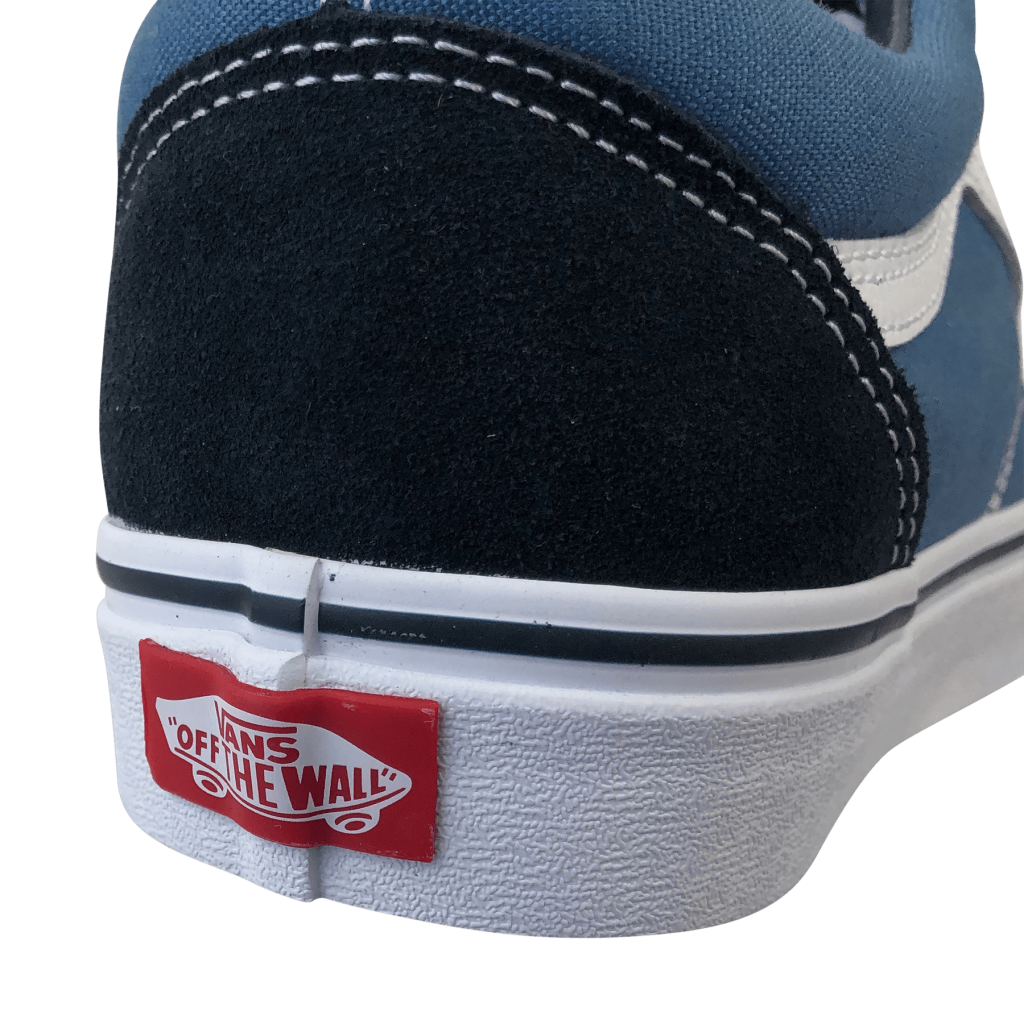
Authentic Vans Era quality inspection

CONTROL DE CALIDAD

shoe quality Inspections

Todo el esfuerzo para elaborar calzado se pierde si no se fabrican con la calidad para cumplir los estánda­ res. Se requiere un ojo crítico en cada paso: cortado, aparado y montado.

Todas las grandes marcas imponen programas de calidad muy estrictos con muchos inspectores en la fábrica.


Inspección de la calidad del calzado: cómo inspeccionar un modelo

Una vez que se aprenda a inspeccionar de manera profesional un par de zapatos, o zapatillas, nunca se volverán a ver de la misma manera. La calidad es una característica muy importante para cualquier par de zapatos que se fabrique, compre, o venda.

Saber cómo realizar una inspección de la calidad es una habilidad crítica para diseñadores, desarrollado­ res, y directores de producto. Cuando llega una nueva muestra, es fundamental inspeccionar el material, los detalles del aparado, y la mano de obra. Inspeccionar un zapato es una buena habilidad para tener como cliente al llegar a una tienda. En este capítulo se enseña cómo clasificar e inspeccionar un zapato de manera profesional.

Definición de calidad en la inspección de calzado.
Clasificaciones “A”, “B”, “C”:

Calzado con clasificación A:

Calzado sin defectos funcionales o estéticos que perjudiquen la venta del calzado. Modelos de alta calidad que estéticamente se ven bien, y calzan correctamente. Una clasificación A debe seguir las especificacio­ nes de producción, y coincidir con la muestra de confirmación aprobada.

Calzado con clasificación B:

Calzado sin grandes defectos funcionales que puedan causar lesiones al usuario. Estos zapatos pueden tener defectos estéticos, errores de producción, o problemas en la mano de obra que no se pueden arre­ glar adecuadamente. Estos modelos cuentan con descuento, o se mandan a mercados con mayor tole­ rancia a los defectos superficiales.

Cómo se fabrican
los zapatos

¿Quieres aprender cómo se fabrican los zapatos deportivos modernos?Una mirada detrás de escena de una verdadera fábrica de calzado deportivo. Contiene 222 páginas con más de 400 fotos en color. ¡Comprar ahora! Oferta especial

Calzado con clasificación C:

Calzado con defectos funcionales importantes que pueden causar lesiones al usuario, o defectos super­ ficiales importantes que no se pueden reparar. Así mismo, también se incluyen en esta clasificación si tienen una mano de obra deficiente, materiales defectuosos que puedan acortar la esperanza de vida normal del zapato, o dañar la reputación de la empresa. Los zapatos con clasificación C deben ser des­ truidos.

Cómo inspeccionar un zapato

Los principales puntos en una inspección son los siguientes:
1. ¿Es este el modelo correcto?, ¿hacen par?
2. ¿Está limpio?
3. ¿El modelo sigue la ficha técnica?
4. ¿El aparado es de buena calidad?
5. ¿Está dañado en alguna zona?

Procedimientos de la inspección del calzado

Procedimientos de la inspección del calzado

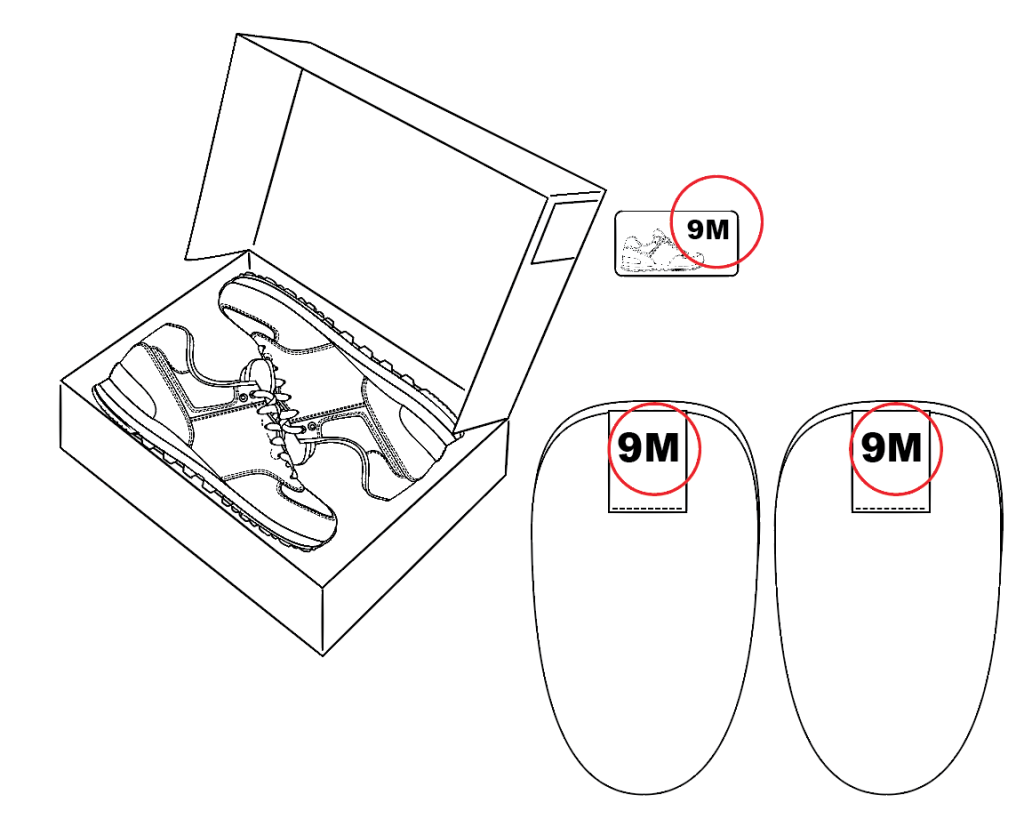
El primer paso en cualquier inspección, es revisar el embalaje.
Según el modelo, ¿está la zapatilla en su caja correcta?
¿La caja está en buenas condiciones? Hay que asegurarse que la caja no esté dañada, o sucia.
¿La caja es del tamaño correcto? Los zapatos no deben colocarse apretados dentro de una caja pequeña. Hay que comprobar que la información de la etiqueta de la caja coincide con el color, el modelo y el ta­ maño del modelo.
Hay que verificar todas las etiquetas que cuelgan para asegurarte que corresponden con el modelo. Saca las zapatillas de la caja.

Patronaje de calzado y diseño de hormas

Una guía para principiantes sobre las técnicas fundamentales de la fabricación del calzado. 200 páginas con más de 500 fotos en color. ¡Comprar ahora! Oferta especial
¿Hay un pie izquierdo, y un pie derecho?

¿Los zapatos son de la misma talla y color? Verifica la información de la etiqueta que está en la lengüeta.
En la fábrica no resulta difícil mezclar una talla 7 del pie izquierdo, junto con una talla 7,5 del pie derecho en la misma caja.

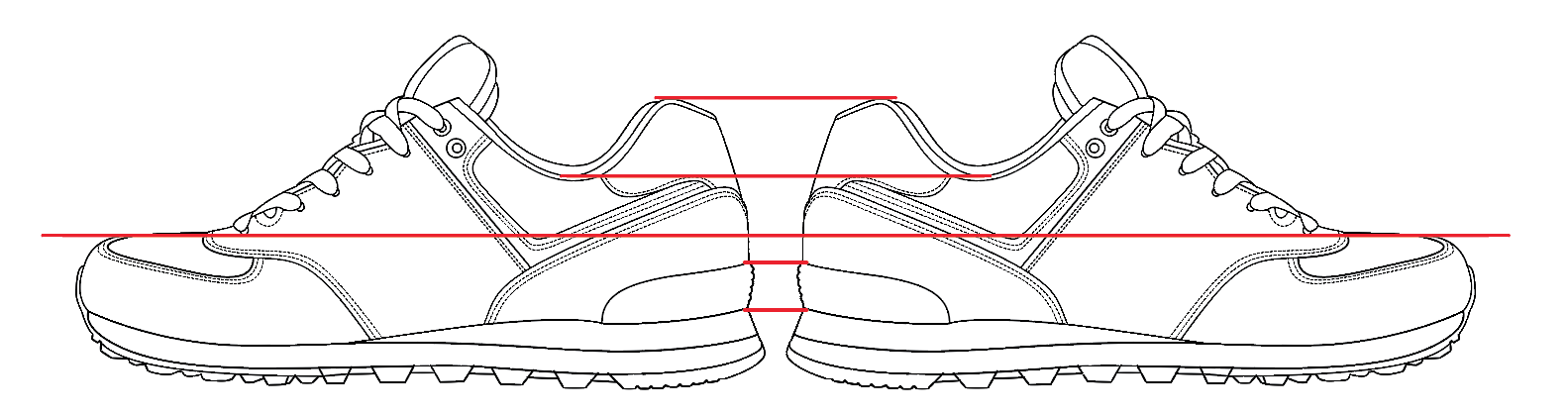
Con las dos zapatillas en la mano, colócalos suela con suela.
Examínalos para ver si son simétricos. ¿Coincide la longitud? La talla puede coincidir, pero hay que mirar que realmente tengan el mismo largo.

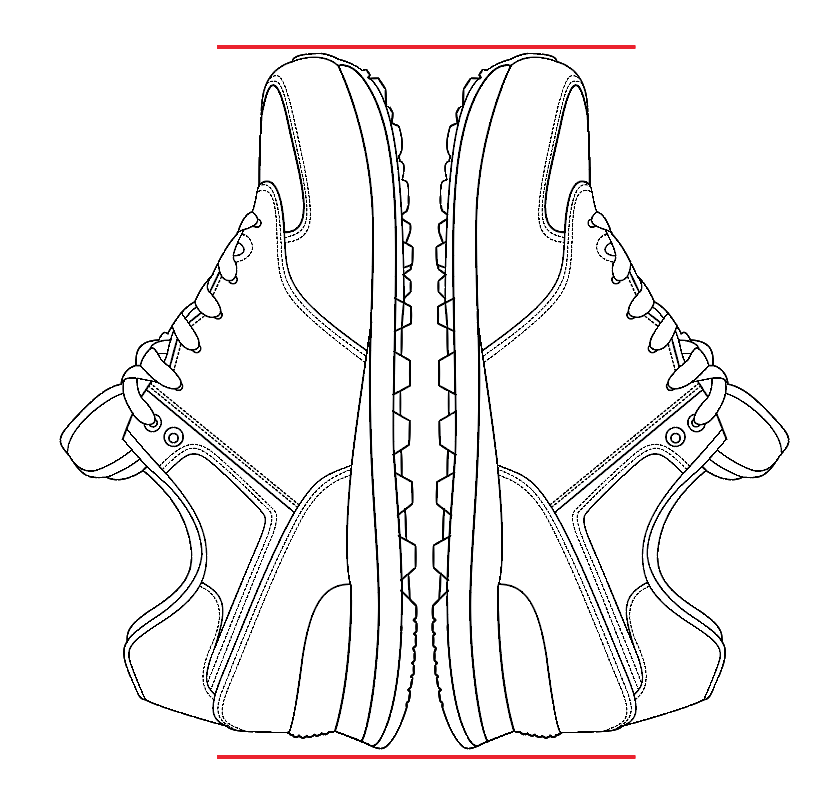
Ahora, sosteniendo las zapatillas por la suela, coloca el corte cara a cara, y gíralos. En este punto, se revisa que las piezas estén alineadas. Comenzando por la parte delantera, gira las zapa­ tillas para alinear: punteras, palas, piezas super­ puestas, carrilleras, ojetes, etc.

Aprovecha que tienes las dos zapatillas en la mano, y mira que los colores y el acabado coinci­ da para ambas zapatillas.

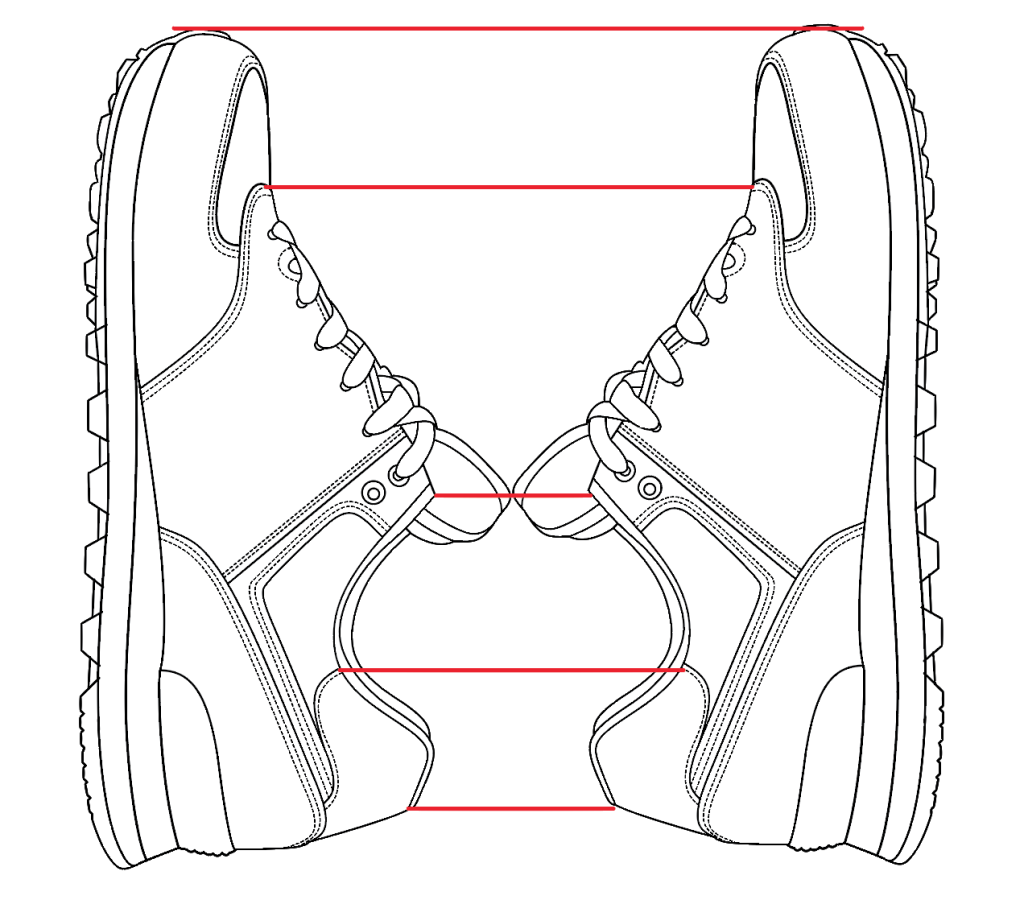
A continuación, sujeta las zapatillas por los talon­ es.
Mira que el corte asiente en recto sobre la suela. Verifica que el eje central del corte no esté girado.

Después, juntando los talones, mira que la altura de las piezas y el hueco coincidan.

Una inspección completa incluye que el modelo se revise por dentro, y por fuera.

Después de analizar el exterior, es el momento de empezar con el interior. Mira por dentro del hueco de la zapatilla. ¿Está el forro limpio y sin arrugas? Pasa la mano sobre el escote, trata de detectar cualquier bulto, o traza de pegamento. Para zapatos de piel, mira si hay algún clavo o grapa. En calzado deportivo, asegúrate que la plantilla esté recta, nivelada y correctamente ajustada. Si es demasiado pequeña, la plantilla bailará; si es demasiado grande, la plantilla se arrugará o se ondulará.

A continuación, inspecciona el forro de la lengüeta para detectar cualquier arruga o bulto. Coloca tu mano dentro para inspeccionar la pala y el tope de la puntera. Toca desde la punta por la plantilla para detectar posibles arrugas. Mira si hay alguna costura dura en el interior.

Por último, inspecciona los cordones; que sean demasiado largos no es ningún problema, pero si son demasiado cortos, menos de 15cm sobre el ojete superior, hay que arreglarlos.

obtenga más información

Descargar cuatro libros de zapatería

“Cómo se hacen los zapatos”

“Guía para el diseño de materiales de calzado“

“Cómo empezar tu propia empresa de calzado“

“Patronaje de calzado y diseño de hormas”

¡Comprar ahora!
Oferta especial

Posted on

Cómo empezar tu propia empresa de calzado

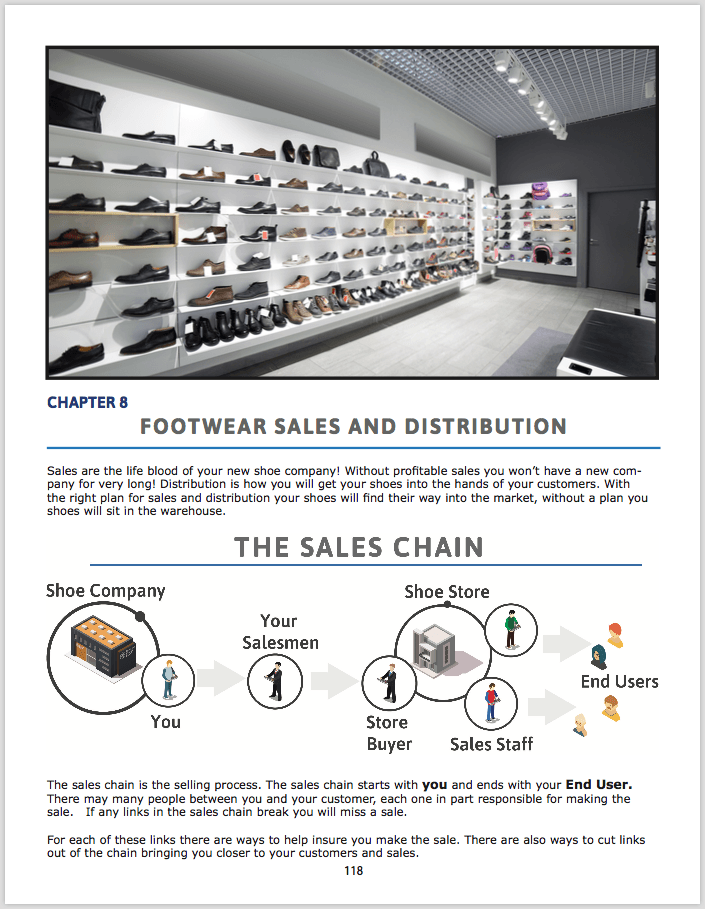
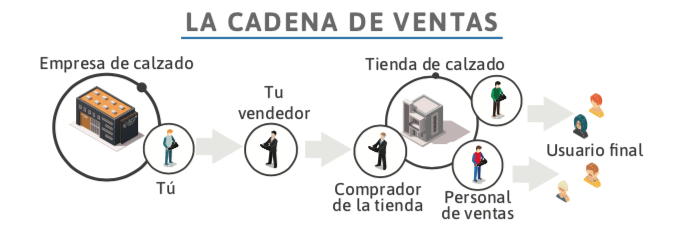
VENTA Y DISTRIBUCIÓN DE CALZADO

TUS ZAPATOS Y TU MARCA

¿Necesita el mundo otra marca de calzado?

Hay cientos, incluso miles, de marcas de calzado actualmente. ¿Para qué crear otra? ¿Realmente deberías seguir tu sueño y comenzar tu propia compañía de calzado? La respuesta es: ¡sí, claro que deberías!.

Si tienes una nueva perspectiva y una forma de resolver un problema de un modo original, sigue leyendo. El mundo necesita nuevas firmas, ideas frescas, y nuevos estilos para enfrentarse a los desafíos actuales.

Siempre hay un lugar para que una nueva empresa empiece. Las marcas de calzado de miles de millones de dólares buscan grandes oportunidades, dejando a las marcas pequeñas vía libre para servir en algu- nos nichos de mercado. Puedes satisfacer una necesidad concreta, o arriesgarte en el mundo de la moda. ¡Anímate y haz algo nuevo!

¿Qué necesita una nueva firma para sobrevivir?

For your new shoe company to survive and thrive in the competitive world Para que la nueva compañía de calzado sobreviva y prospere en el competitivo mundo del calzado, se necesita algo especial. La originalidad y el carácter único son un comienzo, y se deben trabajar de manera que las personas puedan comprenderlo y apreciarlo.

¿Qué aporta tu nueva empresa?

Do you have an idea to improve the function of a shoe for a particular activity? Is there a better way to make a running, driving, logging, dancing, bowling or fencing shoe? If you have a fresh twist, go for it! Do you see an untapped market in a foreign country or in your own country? Or maybe

¿Tienes una idea para mejorar la funcionalidad de un zapato para una actividad concreta? ¿Hay alguna manera mejor de hacer calzado para running, baile, jugar a bolos, o hacer esgrima? Si tienes una nueva visión, adelante. ¿Ves un mercado sin explotar en un país extranjero? ¿O en tu propio país? Tal vez conoz- cas a un comprador de calzado, o al dueño de una tienda que tiene una necesidad especial.

¿Quizá viste algo mientras viajabas que podría ser un éxito? Si ya tienes un negocio, a lo mejor estás bus- cando expandirse. Un canal de distribución abierto es una razón suficiente para hacer su propia línea de calzado. ¡Empecemos!

Tener una gran idea

Tener una gran idea para un nuevo zapato es una pequeña parte de lo que se necesita para hacer que una empresa de calzado sobreviva.

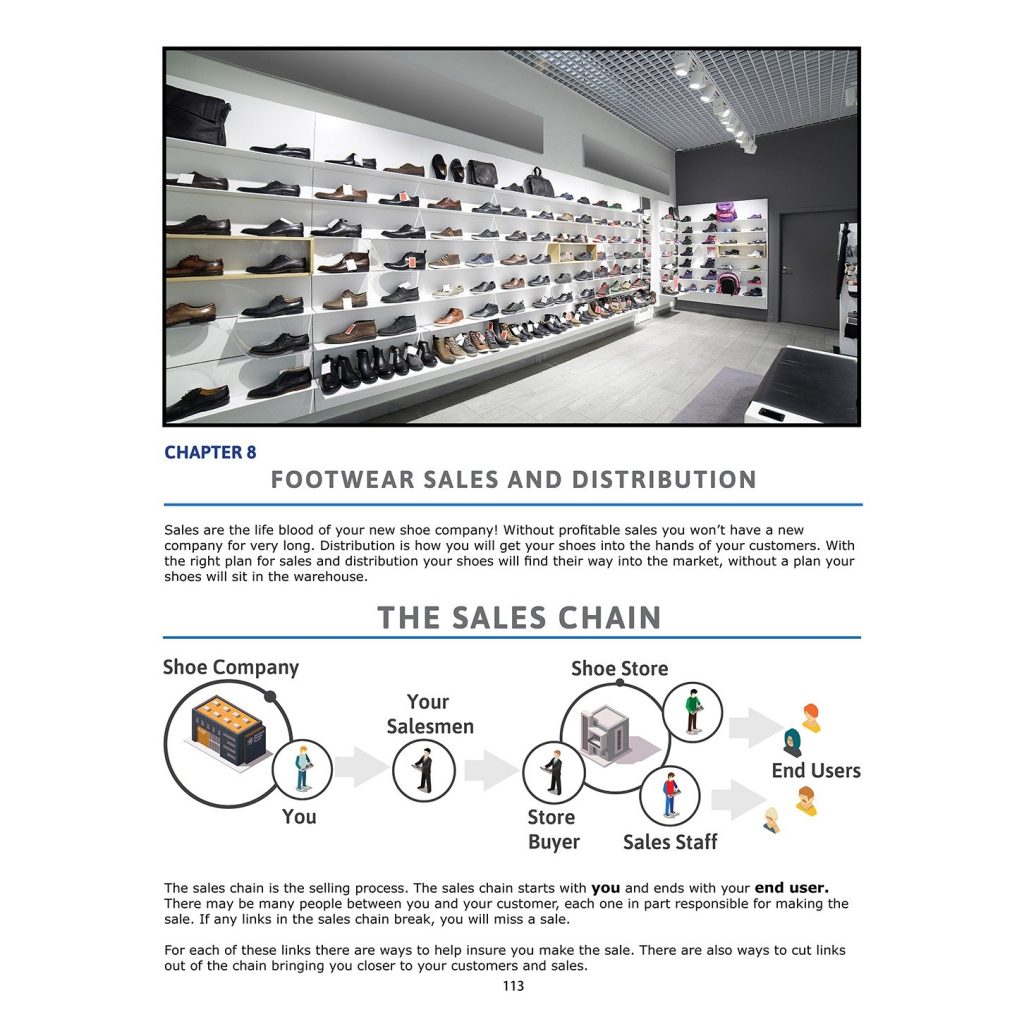
Es posible que queramos centrarnos en diseñar cada detalle de los modelos, pero se debe dedi- car más tiempo a determinar la cadena de sumi- nistro, las ventas, el marketing, la distribución, y los planes financieros que convertirán la idea en un negocio que realmente funcione.

Este libro te guiará a través de estos desafíos. Cómo empezar tu propia empresa de calzado se organiza de manera ordenada, siguiendo el pro- ceso de fabricación del calzado desde el diseño, desarrollo, producción, y ventas; pasando por el marketing y la distribución.

A medida que vayas leyendo, aprenderás sobre diseño, abastecimiento, comercialización, y a vender tus zapatos

Hacer los diferentes planes

Comenzar una nueva empresa de calzado es muy complejo. Habrá que trabajar muchas horas, hasta bien entrada la noche; y habrá que enfren- tarse a desafíos, y tomar decisiones difíciles.

Hemos hecho todo lo posible para explicar las ne- cesidades empresariales, detallando los desafíos y describiendo las posibilidades. Esperamos que puedas hacer este viaje con la menor cantidad

de sorpresas posibles. Si tienes un buen plan de negocio, tienes la oportunidad de tener éxito. Sin un plan real, tu compañía de calzado puede estar condenada al fracaso.

Crear un plan de negocio

Creating a business plan for your new footwear company may seem like a Crear un plan de negocio para su nueva empresa puede parecer una tarea desalentadora, pero se puede dividir el plan en partes más manejables. Si tienes socios, es posible dividirlo según la ex- periencia de cada participante.

El plan de negocio perfecto debe cubrir:

Identidad de marca
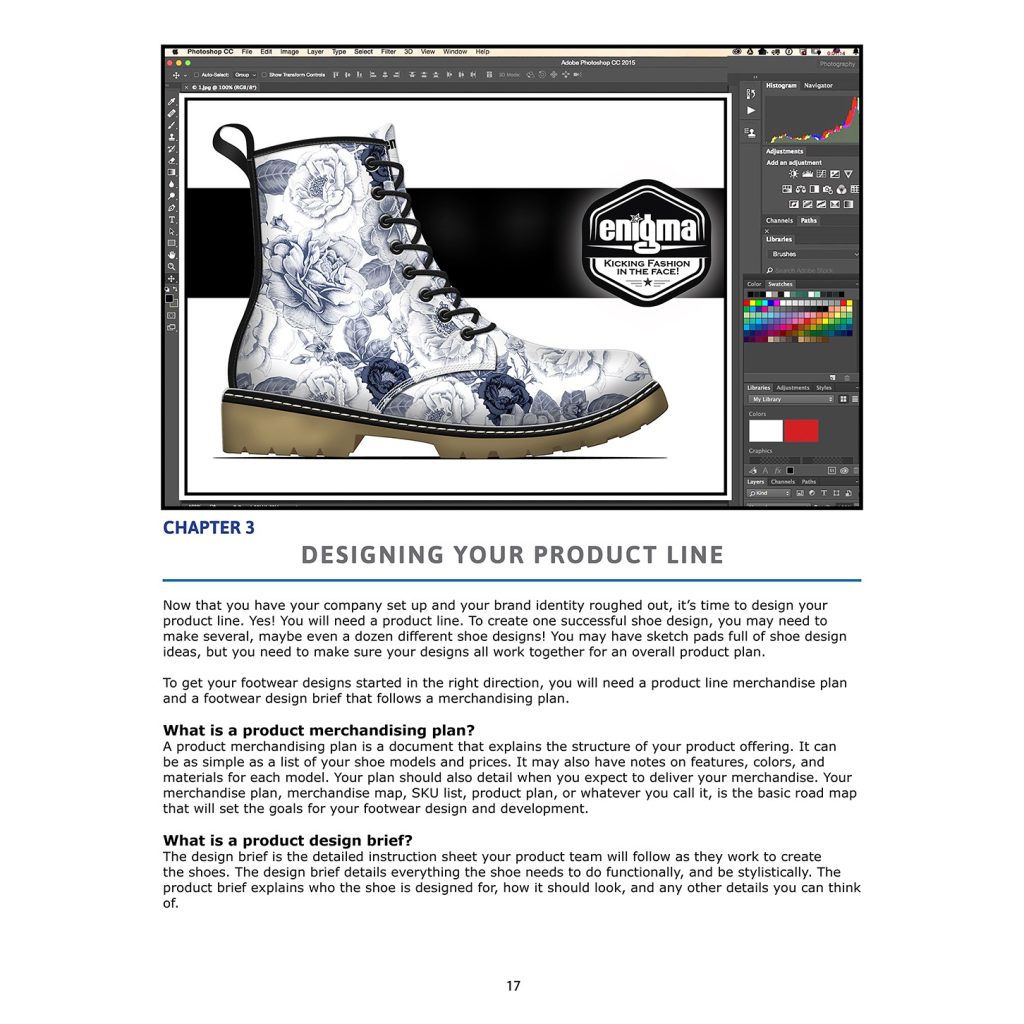
Plan de producto 
Cálculos financieros 
Plan de ventas
Plan de distribución
Plan de marketing

Cómo empezar tu propia empresa de calzado

Cómo empezar tu propia empresa de calzado Una guía de iniciación al diseño, la fabricaciõn y la comercialización de calzado.

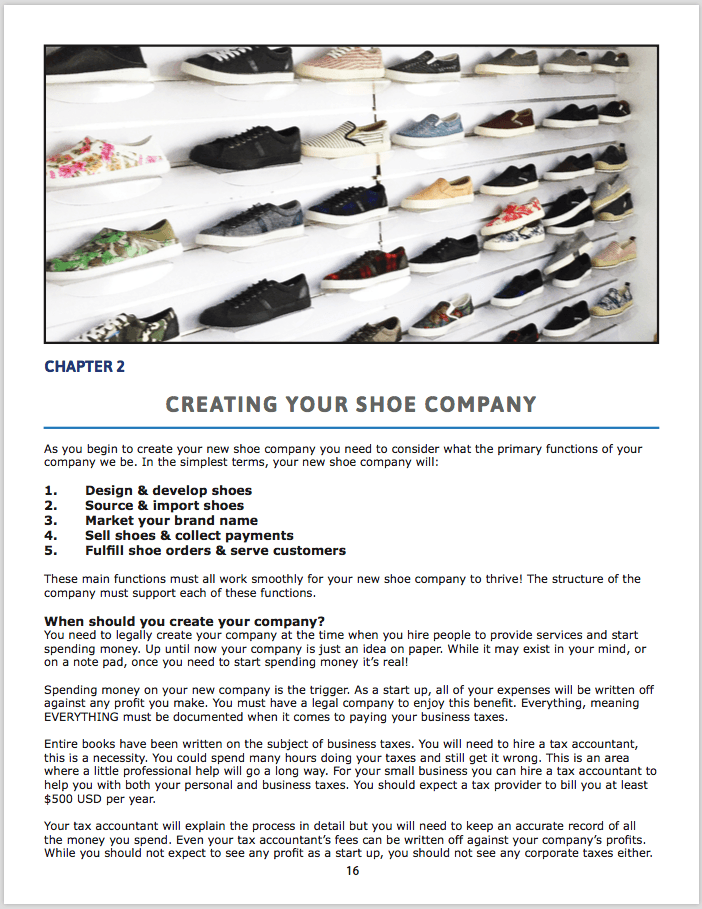
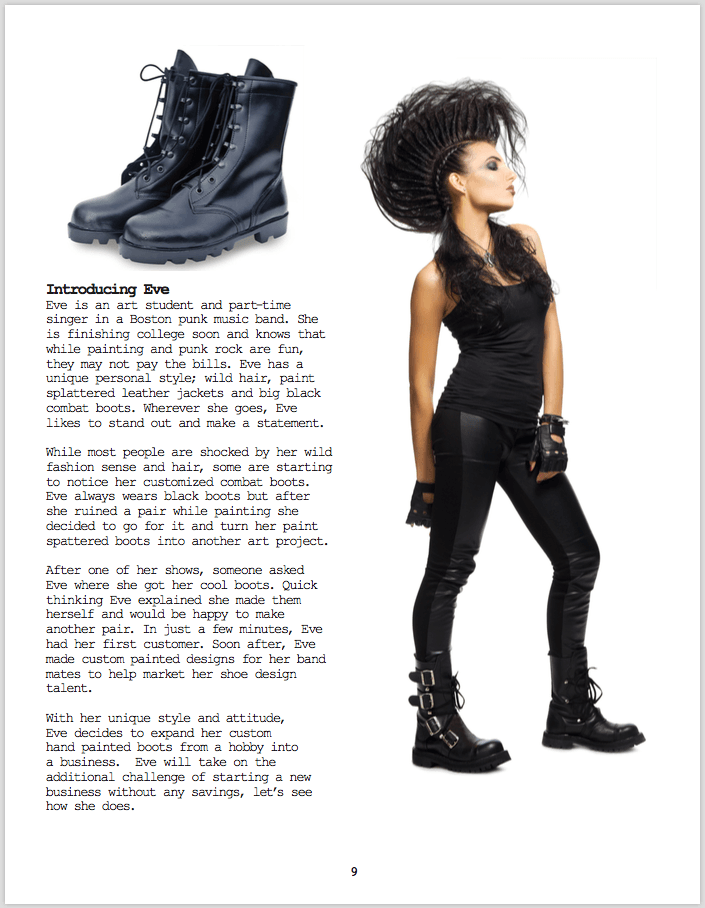
¿Sueñas con crear una marca de calzado y empezar una empresa? En el libro Cómo empezar tu propia empresa de calzado seguirás a dos nuevas empresas desde el inicio del lanzamiento hasta la venta minorista y la comercialización. Las dos compañías tienen un estilo, un presupuesto, y un plan de negocio diferente. En cada uno de los 14 capítulos se describe de manera clara todos los requisitos y el proceso; aprenderás cómo cada una de las nuevas empresas aborda mejor su desafío. Cómo empezar tu propia empresa de calzado te guiará a través de la creación de la identidad de marca, la creación legal de una empresa de calzado, y el registro de marca comercial. También aprenderás sobre el diseño y la manufactura de tus modelos, a encontrar la mejor fábrica de calzado, y cómo vender tus zapatos.
obtenga más información!

Descargar cuatro libros de zapatería

“Cómo se hacen los zapatos”

“Guía para el diseño de materiales de calzado“

“Cómo empezar tu propia empresa de calzado“

“Patronaje de calzado y diseño de hormas”

¡Comprar ahora!
Oferta especial

Posted on

How to start a shoe brand

The Ultimate step by step guide to 'how to start a shoe line'

How do you really start a new shoe line?

Does the world need another shoe company?

There are hundreds, even thousands, of shoe brands in operation. Why start a shoe brand? Should you really follow your dream to start your own shoe company? The answer is…YES, you should!

If you have a fresh outlook and a way to solve a problem in an original way, read on! The world needs new companies, new ideas, and new personalities to face new challenges in unique and creative ways.

There is always a place for a new shoe company to get started. The billion dollar shoe brands must look for huge opportunities, leaving small brands free to serve niche markets. You can fill a special need or take a fashion risk. Go ahead and make something fresh!

What does a new shoe brand need to survive?

For your new shoe company to survive and thrive in the competitive world of shoes, you will need something special! Originality and uniqueness are a start. You will also need to package your uniqueness in a way that people can understand and appreciate.

What does your new shoe company bring?

Do you have an idea to improve the function of a shoe for a particular activity? Is there a better way to make a running, driving, logging, dancing, bowling or fencing shoe? If you have a fresh twist, go for it! Do you see an untapped market in a foreign country or in your own country? Or maybe you know a footwear buyer or a fashion store owner that has a special need?
Maybe you saw something while traveling that could be a hit at home? If you already own a business, maybe you are looking to expand? An open distribution channel is a good enough reason to make your own shoes. Let’s get started!

A new shoe idea

Having a great idea for a new shoe is a small part of what you will need to make a shoe company that will survive.

While you may want to focus on designing every detail of the shoes, you will need to spend more of your time on figuring out the supply chain, sales, marketing, distribution and financial arrangements that will turn your idea into a real functioning business.
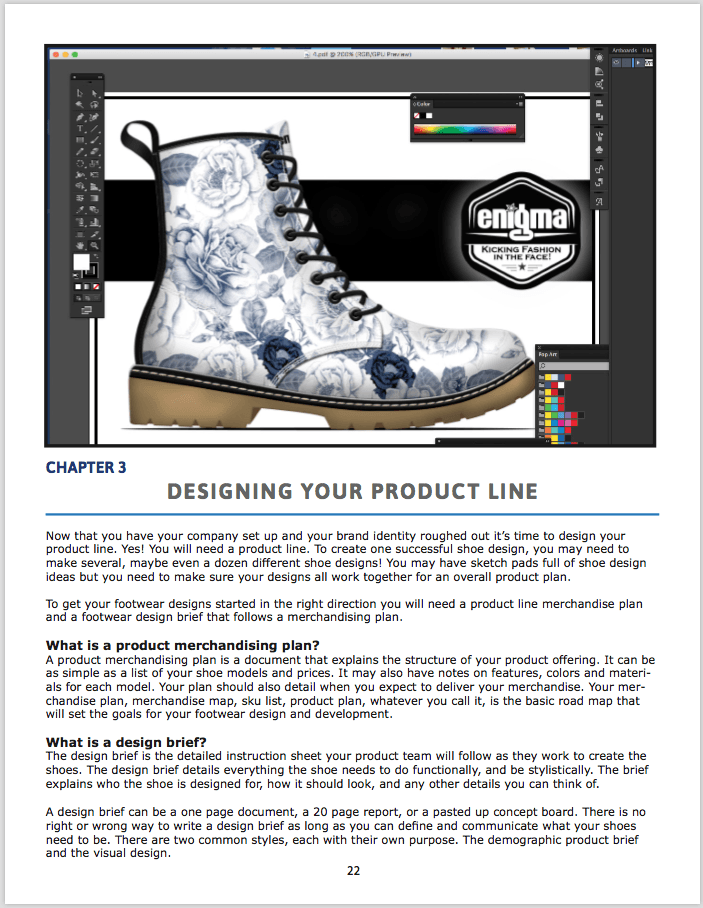
This book will walk you through these challenges! How To Start Your Own Shoe Company is arranged in chronological order, following the shoemaking process from design, development, production and sales, on through marketing and distribution.

As you read you will learn how to design, source, market and sell your shoes.

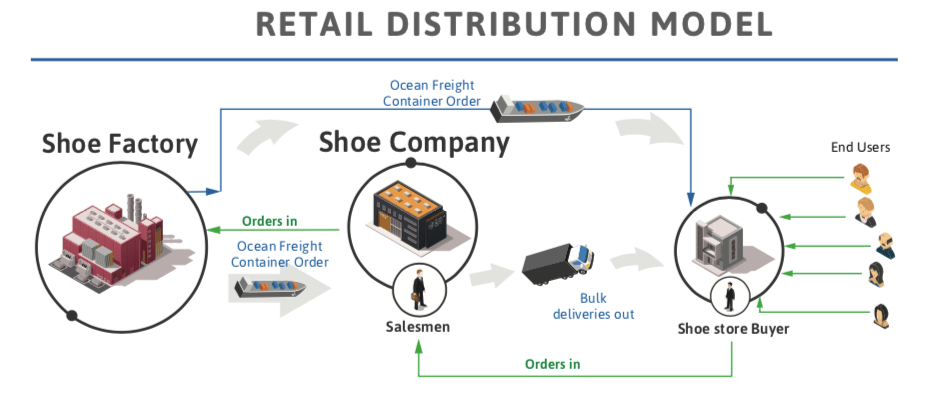
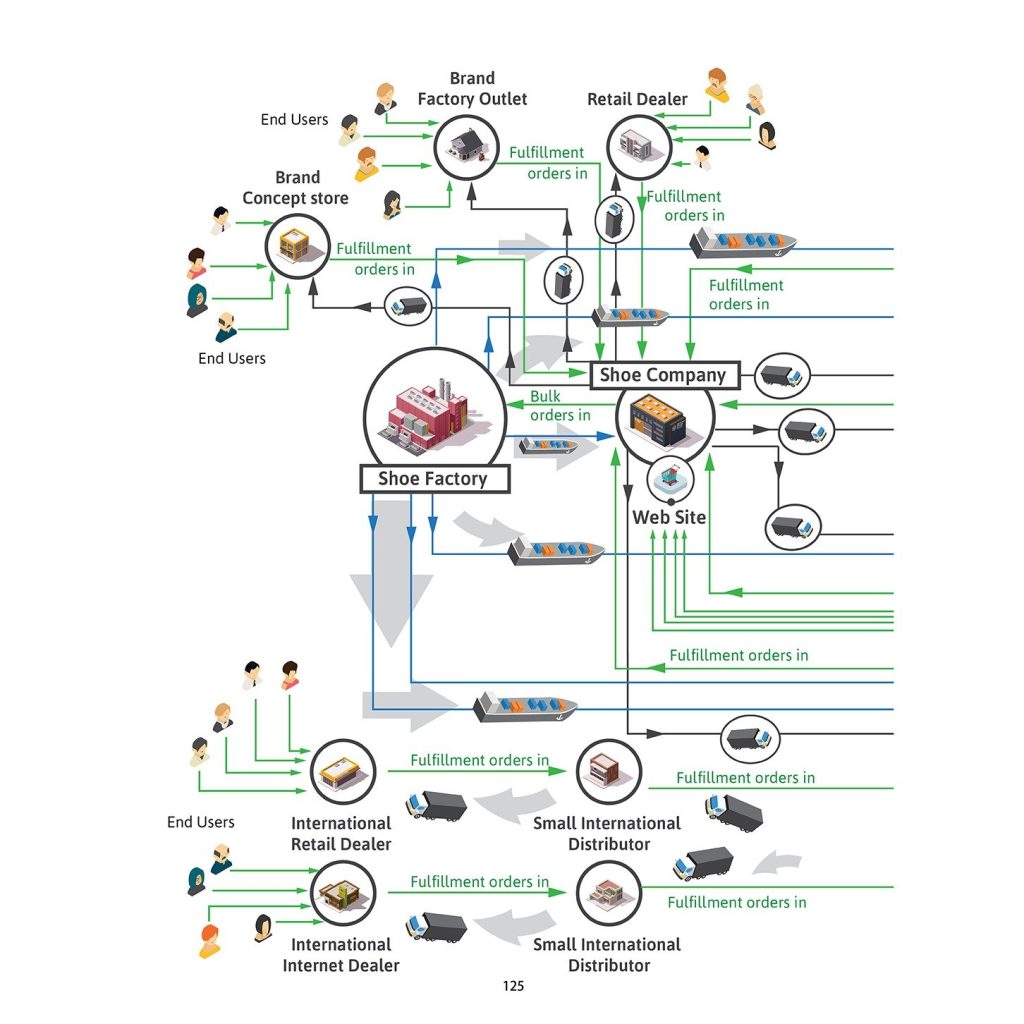
shoe retail model

Making your plans

Starting a new shoe company will be hard. You can expect to work long hours and late nights. You will meet challenges and you will need to make tough decisions.

We have done our best to explain the business requirements, detail the challenges, and describe your options. We hope you can make this journey with as few surprises as possible. If you have a good plan, you have a chance to succeed! Without a real plan, your shoe company may be doomed to fail.

Creating a shoe business plan

Creating a business plan for your new footwear company may seem like a daunting task. It will be hard to start a shoe brand but you can break your plan down into manageable parts. If you have partners, you may want to divide up the plan according to the expertise of each participant.

The master plan needs to cover:

Your brand identity
Product plan
Financial calculations
Sales plan
Distribution plan
Marketing plan

How to Start A Shoe Brand: A Step-by-Step Guide

How to Start A Shoe Line: A Step-by-Step Guide

This book is for anyone with the dream of starting their own shoe company. You will follow the launch of two start-up shoe companies. Each has its own style of shoes and a business plan. In each chapter we will describe a requirement or process, then explain how each of our two new shoe brands will tackle this challenge.
Learn More!

Shoemaking
TextbooksBuy Now
Shoemaking
SuppliesBuy Now
Shoemaking
CoursesCourse Details

Previous
Next