Posted on

A Shoe Designer’s Tools

Tools every shoe designer will need

As a shoe designer or developer, you’re going to need some shoemaking tools to help you do your job. I have created a list of the common shoe designer tools that we use every day in our busy shoe design and development office.  Some of these tools are specific to shoemaking, others are commonly found. In fact, almost all of these shoemaking tools can be found on Amazon.com.
Of course, you will need computers and drawing equipment but here is a list of the shoe designer tools that you might not commonly have but that you certainly need.
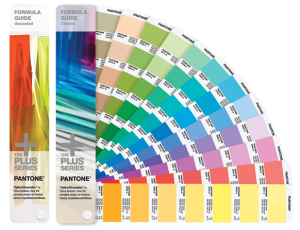
Pantone color specification book The Pantone color specification book is required for every shoe designer and developer. You will need to have a Pantone color book to communicate with the shoe factory and your customers exactly what color you want. The Pantone corporation color books are the industry standard for color matching.  You will find that every shoe factory will have a Pantone book so it’s easy for you to reference a color.  Without the Pantone book, it’s almost impossible to match colors correctly with your overseas factories.  They are expensive, you can share one in your office.  This is a must-have shoe designer’s tool.  You can get these from Amazon.
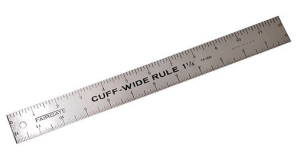
Tools every shoe designer will need Steel RullerA small steel ruler is very useful for measuring all the shoe parts.  Make sure that the end of the ruler is cut off so it starts at zero so you can measure the inside of the shoe collar height by pushing the ruler into the bottom of the shoe.
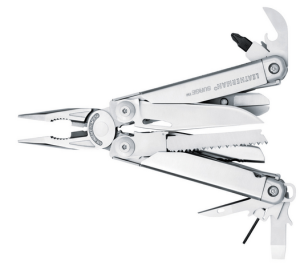
A Leatherman multi-tool is a very useful piece of equipment with its blades for slicing open seams and its pliers for taking parts off. The serrated blade and saw blade are very useful for cutting sections out of sample shoes.
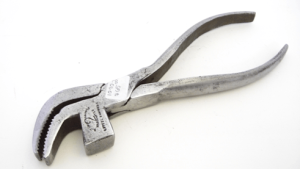
Lasting_Pliers_Shoe_Making_toolsShoemaking lasting pliers are also a very useful tool to have around.  In the shoe factory, they are used to pull the edges of the material down on the last and then tack it down with a hammer part.  As a developer, you will often use this tool to pull a shoe apart and see what’s inside.
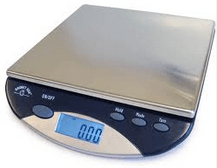
Gram-Scale_To_measure_shoe_parts_Shoe_Making_tools

A gram scale is a very useful tool in the creation of high-tech performance footwear. We quite often will have issues with subcomponents and measure each piece, part by part, to make sure that we’re making the lightest piece of footwear we can make.
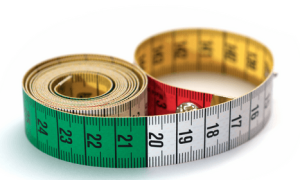
Flexible_measure_tape_Shoe_Making_tools
We always have a flexible measuring tape on hand for measuring around shoe lasts and for measuring different shoe components. A flexible measuring tape is very useful for measuring feet and ankles.
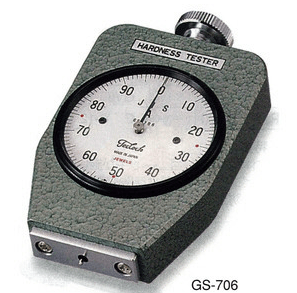
Durometer_SHore_A_Tester_Shoe_Making_tools

A Durometer tester is used to test the hardness of any rubber or plastic shoe component.  For testing shoe rubber and plastic you need a Shore scale “A” tester. The Durometer tester’s bottom measuring pin is simply pressed against the material. The Durometer tester will give you a reading of the density of the material. Try to test in flat spots and take several readings for each shoe part you are checking.
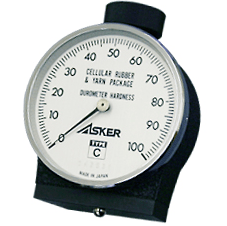
Durometer_Asker_C_foam_Hardess_Tester_Shoe_Making_tools

An Asker “C” scale  Durometer tester is used to test the hardness of any foam shoe components. The Durometer tester will give you a reading of the density of the material. Try to test in flat spots, take several readings for each shoe part you are checking. For foam, try to cut the parts so you can test the center of the foam. EVA foam skin may give you a harder reading. A standard EVA midsole may be  55˚,   a soft footbed 35˚.
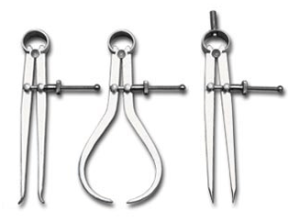
Dividers_Shoe_Making_tools


A set of adjustable dividers is very useful in designing and developing footwear. We use the dividers to check critical measurements of lasts and different components that may be hard to reach. A pair of dividers is a very useful tool when comparing dimensions from one sample to another. For working on oversize boot lasts you will need a set.
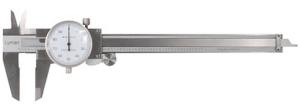
Claipers_SHoe_Making_toolsA pair of dial calipers or digital calipers is also very useful in making shoes. We use calipers every day to measure the width of small shoe components.
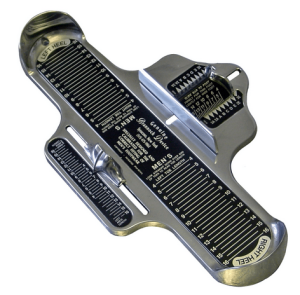
Brannock_device_foot_measureing_tool_Shoe_Making_tools

A Brannock device.  You’ve seen this tool in every shoe store. This is the standard for measuring feet. If you’re developing footwear, you must have a Brannok device in your office.  When a tester says a shoe fits loose or tight, the first thing you need to do is measure their feet against the machine.  Also, use your flexible measuring tape to measure feet.
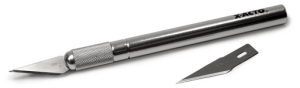
 

A_very_sharp_knife_Shoe_Making_toolsAn X-Acto knife is also an indispensable tool for cutting material swatches, for opening up shoes and cutting open seams. A very sharp hobby knife is a useful tool.

3D-Printer_Shoe_Making_tools


A 3-D printer can also be a very useful tool in the shoe development office. The 3-D printer can quickly create small plastic pieces that you might use for lace pulls or hardware. We have found the small 3-D printer is very practical and saves time and money.  The new 3-D printers can also print with flexible plastic materials. With the larger machine, you can also print outsole components.
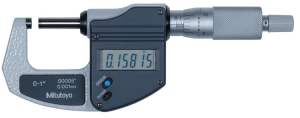
Measure_shoe_material_thickness_Micrometer_Shoe_Making_toolsA micrometer is a very helpful tool to have in your shoe development office.   We use this for checking the thickness of leather products or any synthetic material.  We use a micrometer almost every day to confirm that the materials in the sample shoe match the product specification.
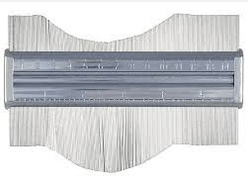
Screen Shot 2015-02-09 at 6.59.19 AMA profile gauge is nice to have around when you are checking lasts. It’s useful for checking complex curves quickly.  While not a common tool,  we use this when we are working up a new last or checking that a midsole is following the last bottom curve correctly.

You can buy most of these tools here: Amazon.

Posted on

Vulcanized Shoe Construction vs. Cold Cement Process

Cold Cement vs Vulcanized Shoe Construction

In this article, we will discuss the difference between vulcanized shoe construction and cold cement shoe construction. Vulcanized shoe construction is a much older technology. In the 1980s, modern cold cement construction replaced vulcanized construction. However, fashions change and the vulcanized shoe made a huge comeback in 2010.

Cold cement construction allows the use of modern lightweight plastic, foam, and mesh materials due to the lower temperatures required for bonding. Every modern high-performance athletic shoe for running, basketball, etc… is made by the cold cement process. This is how Nike makes shoes.
The vulcanized shoe construction process is the classic way to make a sneaker. This is how Converse All-Stars and Vans skate shoes are made. Due to the high temperature required to vulcanize, or cook the rubber outsole, the material options are limited. Canvas and suede leather are common.

https://www.youtube.com/watch?v=lZwW86sYnlQ

The Shoe Dog would like to tell you about how vulcanized shoes are made.
Have a look!  

The Shoe Dog would like to tell you about the difference between vulcanized construction and cold cement process. 

https://www.youtube.com/watch?v=XpGKmKqcjPg

Cold Cement Shoe Assembly Process:

In the cold cement process, the shoe upper can be paired with a Strobel bottom. For this classic jogger style, the outsole covers the edge of the upper so a Strobel bottom will make the shoe lighter and more flexible.
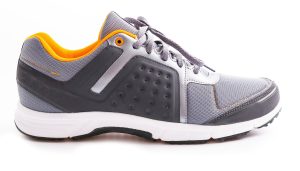
The upper is steamed to soften the materials and the last is inserted and pulled tight. Once the last is tight inside the upper, a second lasting machine pulls the heel edge. With the last secured inside the upper, temporary shoelaces are pulled tight and the upper is cooled so it shrinks to the last.

The shoe may have a plastic or fabric part installed on top of the tongue to protect the surface from damage and drift during the lasting operations.

While the upper is being lasted, the sole unit is being prepared. In this case,  a rubber sheet sole is combined with an EVA foam cushioning component and cemented inside. This is done in a separate process that’s called stock fitting.

In this article, we will discuss the difference between vulcanized shoe construction and cold cement shoe construction. Vulcanized shoe construction is a much older technology. In the 1980s, modern cold cement construction replaced vulcanized construction. However, fashions change and the vulcanized shoe made a huge comeback in 2010.

Cold cement construction allows the use of modern lightweight plastic, foam, and mesh materials due to the lower temperatures required for bonding. Every modern high-performance athletic shoe for running, basketball, etc… is made by the cold cement process. This is how Nike makes shoes.
The vulcanized shoe construction process is the classic way to make a sneaker. This is how Converse All-Stars and Vans skate shoes are made. Due to the high temperature required to vulcanize, or cook the rubber outsole, the material options are limited. Canvas and suede leather are common.

Learn about the Shoe Business

Aspiring shoemakers start here! How Shoes are Made is your entry into the world of modern shoe making. Tour a real shoe factory and learn the process from design to manufacturing.
Learn more
Download $19.99

Shoe Sole Cementing

Now that the upper is tightly lasted and the outside unit is complete, the two pieces can come together. The rubber sole unit will receive a coating of primer and cement. The outsole will get its own special primer designed for EVA and rubber. The shoe upper is also prepared with its own special primer and cement.
After the contact cement and primer have dried in the heating tunnels, the two pieces are joined together by hand. A skilled worker aligns the upper and outsole together, then places the shoe in a hydraulic press.
The shoe will go through three pressing operations, usually, they are all done with one machine. A vertical press, toe and heel press, and side press. This ensures there is full contact between the upper and outsole. Once the shoe is pressed together it’s often put in the cooling tunnel to set the glue.
After the cooling tunnel a shoe de-lasting machine is used to push the last out of the shoe without wrinkling the upper.
Now the sneaker is complete and the worker can insert the footbed. The footbed may be molded EVA with a fabric cover or flat, sheet-cut foam. The flat, die-cut footbed is usually cemented inside the shoe, while molded footbeds are most often removable.
The new sneaker is ready for the final QC inspection, a quick check for any loose threads, cleaning, packing, and shipping.
shutterstock_206615206

Vulcanized Shoe Construction:

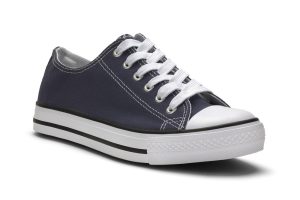
Do you want to know how Converse All Stars are made? The Converse All Star and Jack Purcell and other Converse classics are made with the vulcanized shoe making process.
The classic Converse Double Wrap Sneaker

For vulcanized footwear construction we’ll look at the board lasting procedure. If a shoe is to be vulcanized then you need to use a metal last. A plastic last cannot survive the heating required to cure the rubber.
Before assembly can start, all of the outsole components must be prepared. The uncured rubber foxing tape must be made just before assembly. If the rubber parts age, they will not bond correctly to the other shoe parts. To apply the foxing tape we will need the actual bottom of the shoe. This part has already been molded, it’s about 90% vulcanized so it’s still a little bit soft and can be bonded in the assembly process.
This part will also have the midsole filler added. The filler material is gray rubber with some air bubbles blown inside, it’s made from recycled uncured foxing tape. With vulcanized construction, you cannot use EVA foam because the heat of the vulcanizing process will destroy the foam.

New Course!
Shoemaking for Designers & Brand Builders

Created for footwear beginners and career changers alike, this course delivers the basic shoemaking knowledge you need to get you career in the shoe trades started.
Learn more
On sale $99

Board Lasting Operations

In vulcanized construction, the last must be aluminum to survive the oven temperature. Metal lasts also heat up and cool down quickly. The first step is to lightly cement the lasting board to the bottom of the last, just enough to hold it in place during the lasting operation. The lasting board is a paper fiberboard that provides stiffness to the finished shoe.

Lasting boards are made from different materials and can be stiff or flexible, thin, or thick. Now, the last and upper are taken to the lasting machine. The toe lasting machine pulls the upper down onto the last and securely bonds the two parts together in one operation. Once the shoe heel and waist of the shoe are lasted, the upper is ready for the outsole.
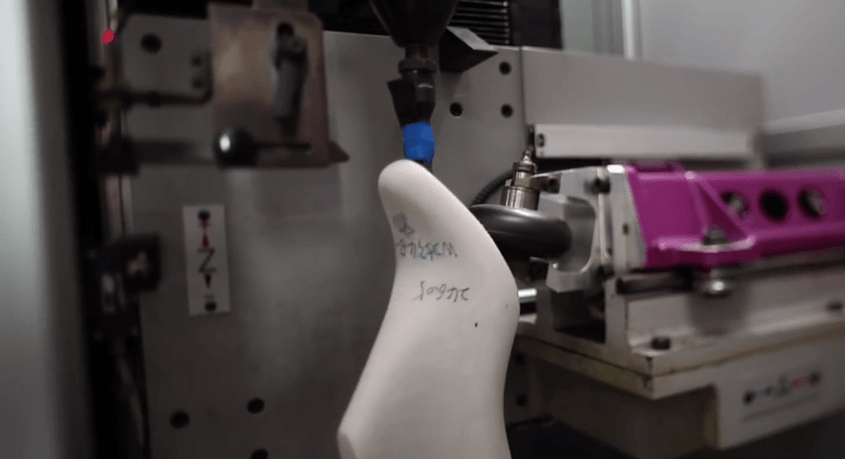
The first step of the vulcanized outsole assembly process is similar to the cold cement process. The upper and the rubber sole parts all receive their coating of primer and cement. Now, the rubber bottom with the cushioning wedge is bonded together with the upper.

The foxing tape covers the rubber outsole part and overlaps up onto the upper. The foxing tape must cover 5mm of the upper to have a solid bond. The shoe can now have the extra toe tape added, then a rear logo will be applied to cover the joining seam.

With the tape applied, it is time to rip off any extra rubber using a hot knife and to make sure there are not any gaps. The sole will get a quick pressing to make sure the parts are fitting correctly.

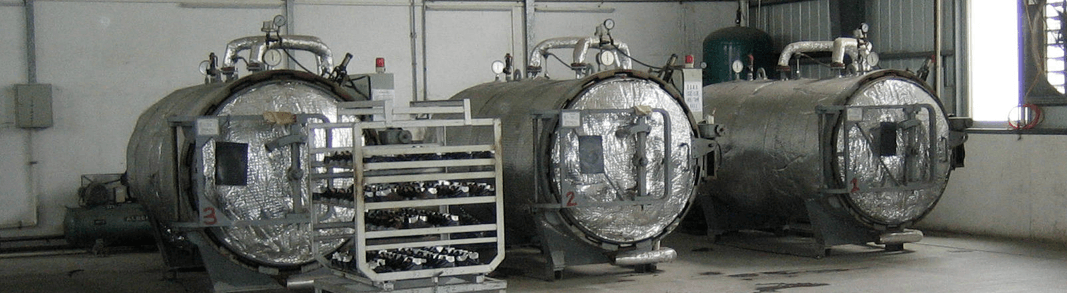
The Vulcanizing Oven

With the last still inside, the shoe is placed on a steel rack so it can be wheeled onto the oven.
The shoe will be “cooked” in the vulcanizing oven for several hours. The shoe is heated long enough for the uncured foxing tape and the sole unit to fuse together.

After cooling, the shoe last is removed, the footbed is inserted, and the laces are attached.

The shoes are now ready for final inspection, cleaning, and packing.

Ovens_ready_for _Vans_Shoes

Shoe Business Builder Pro Pack Bundle

A must-have for anyone serious about launching a footwear company. 4 text books, shoe business documents and downloadable content not available anywhere else! The Shoe Company Start-Up Pro Pack bundle is all you need to get your shoe business off the ground.
Learn more
Download Today

Posted on

Can I get custom made shoes? Yes!

custom made shoes

In the very recent past, custom-made shoes were only available to the very wealthy, and custom-made shoes were limited to handmade leather dress shoes. Frankly..boring!  Now, you can have almost any type of shoe custom-made.  What started 10 years ago as an experiment with a small shoe factory and a tiny start-up brand has become a real opportunity for all of us to get one-of-a-kind shoes. All the major shoe brands now offer custom shoes: Reebok, Converse, Nike, Puma, Adidas, Vans, New Balance, Keen, and Boombah etc. 
How can Nike, Puma, Adidas, Vans, and New Balance make custom shoes? Well, you are not getting a fully customized shoe, you are getting a custom color up of a shoe.  These “production” custom programs offered by big brands like Nike and Adidas have removed the “development” required for shoe production. The choices they offer on the website only require the shoe factory to pull the material from stock and cut the correct shapes for assembly. So, while not being a new pattern made just for you, you can get a wide range of colors to suit your personal taste, and can still be (almost) one of a kind.

Here are my reviews of the major custom-made shoe programs:

New Balance Custom Made Shoes
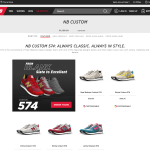
New_Balence_NB_CustomNew Balance offers 7 models of their classic suede running shoes for men and women. While this seems like a limited selection, it’s actually not very limited because you really only need a few offerings of this sort from New Balance – sweet, high-fashion trainers. The midsole options are limited and prices high, but I still like the New Balance custom shoe offerings.

Reebok Custom Made Shoes
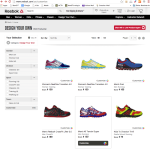
Reebok_design_your_ownReebok has a nice offering of CrossFit, running, training, and classics ready for custom designs. Being a fan of the classics, I went straight to the Freestyle, with lots of options.  Overall it’s not the best. Plenty of models and options, but the overall presentation of the interface is just so-so.   Come to get your classics but ignore Reeboks’ otherwise weak custom offerings.

Nike Custom Made Shoes
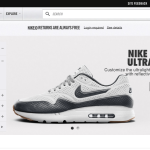
NIke_IDWhat can you say? Nike does not mess around. A huge selection of models in every category and gender. Tons of color and material options and a slick interface. The whole program is very nice. Prices are not too crazy, and you are getting both new and classic models. I like what Nike has done here. I think they hit the sweet spot with the NFL team color dunks.

Van Custom Made Shoes
Vans_CustomVans Custom shoe program delivers the classics. That is all we need or want from them.  And I’ll say, they do it well.  All the classic models, tons of options, and great prices. I like how they post creations of other customers. My only nitpick is they don’t offer gum rubber foxing tape…hmmm. But overall, I like the Vans custom shoe program.

Keen Custom Made Shoes 
Build_Your_KeenI like that Keen is in the game offering custom-made outdoor shoes. I do wish there was a second option for men, but then again the Newport is really the model that drives the business. I guess every river guide will have a custom-made pair. Great custom interface, lots of upper choices. I do wish they had more choices for the outsole rubber color options. Overall I like Keen’s custom-made program, I just wish there was even more….so I could like more.

Posted on

About Shoe Lasts

Parts of a shoe last

The Footwear Last

shoe lasts on sale

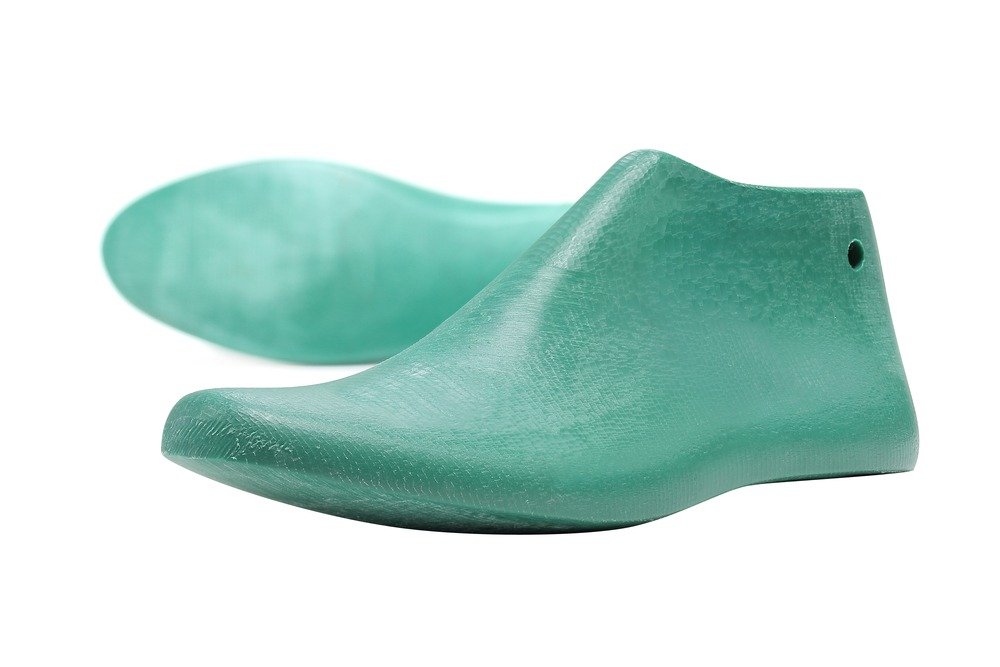
What is a shoe last?  The last is the form used to define the shape of the shoe. The last is critical to the shape and function of your shoe. The footwear last used by the factory will decide the look, fit, and shape of the shoe. The right last can make your shoe a high fashion hit! The wrong last can make your design look like an ill-fitting brick.  The Pattern Master creates the shoe pattern to fit the last tightly. Each different type of shoe will need its own specific shape of last. The last for a running shoe has a very different shape than a last used for a hiking boot or basketball shoe.

Learn to Design Lasts

Learn how lasts are made, the shoe last design process, the hidden geometry, special features, functions, and size grading principles. Learn more On Sale $39.99

Last Shape, Fit, Performance, and Style

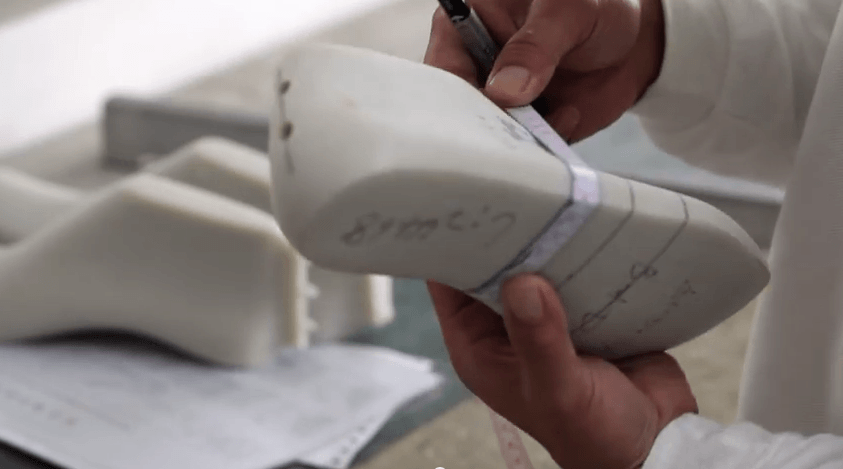
The last technician is marking and measuring

The last determines the shape, fit, performance, ergonomics, and style of a shoe. There are many different types of lasts. Lasts can be injection molded plastic, carved wood, or cast from aluminum. The last is the starting point of making any shoe design. The last is what makes a shoe suitable for playing basketball, climbing mountains, or strutting down the runway.

When discussing the many attributes of a last you will need to know the common terms.  The majority of footwear last measurements are measured by volume around the last, rather than the traditional length and width associated with shoe fit. A flexible measuring tape is a key tool for checking lasts.

Parts of a Last – Shoe Last Diagram
The parts of a shoe last all about shoe designs

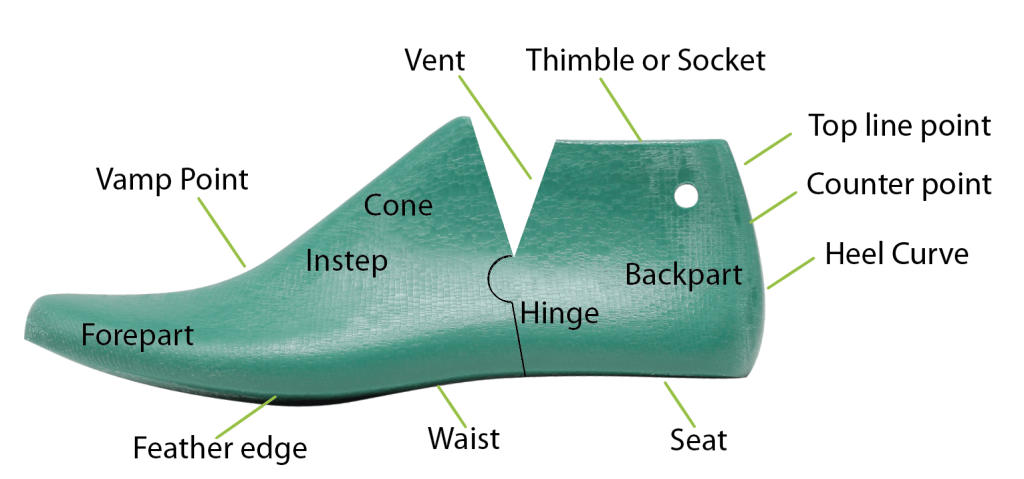
The parts of the last include the forepart, instep, cone, back part, waist, and seat. If the last is hinged it will have a vent above the hinge point. A hinge is needed to prevent damaging a shoe when it is being removed from the last. Shoe lasts may have tiny bumps marking the vamp point, toppling point, and counterpoints.  The last terms are the same for men’s sports shoes or women’s fashion shoes.

The Classic Sneaker Last

Stop searching! The classic Sneaker last is instock. Ready for your DIY shoe making projects. We have your size and bottoms that fit. Learn more On sale $79.99

Footwear Last Measurements

 shoe last drawings about shoe lasts What is a shoe last


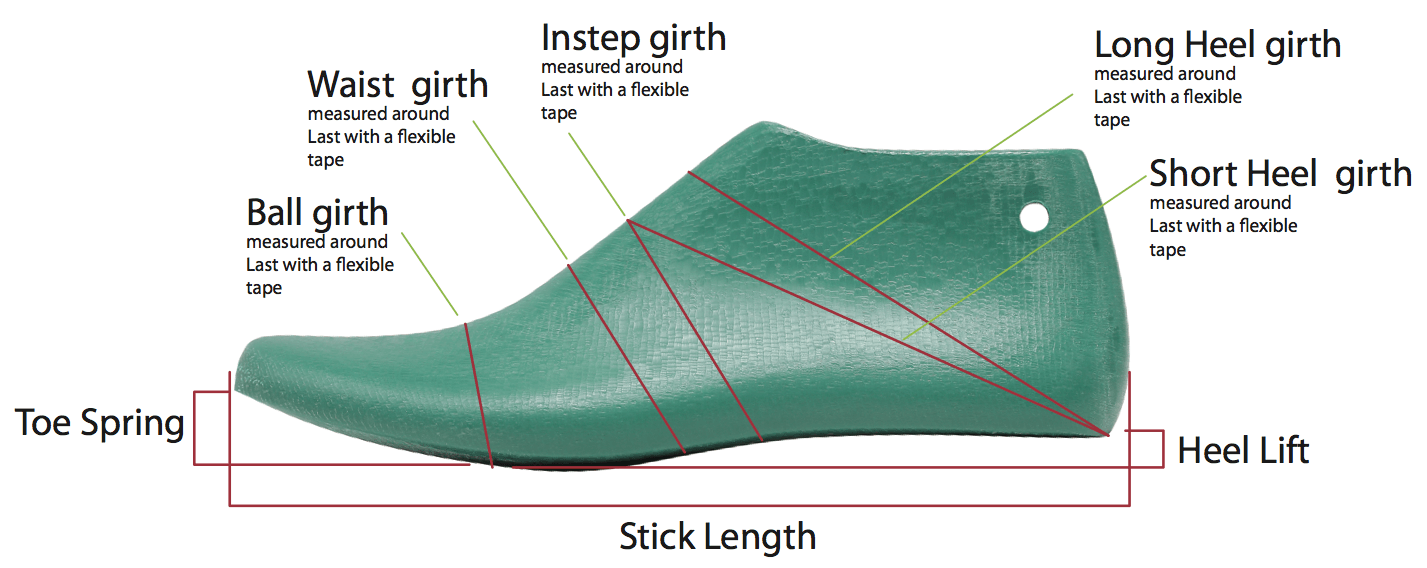
Last Stick Length: Measured from the longest points at the toe and heel.
Last Ball Girth: Measured with a flexible tape around the ball of the last.
Last Instep Girth: Measured with a flexible tape over the instep of the last.
Last Waist Girth: Measured with a flexible tape around the waist of the last.
Last Toe Spring and Heel Lift:  Are measured with the back of last held parallel to the ground.

Last Stick Length: Measured from the longest points at the toe and heel. Last Ball Girth: Measured with a flexible tape around the ball of the last. Last Instep Girth: Measured with a flexible tape over the shoe instep of the last. Last Waist Girth: Measured with a flexible tape around the waist of the last. Last Toe Spring and Heel Lift: Are are measured with the back of last held parallel to the ground.

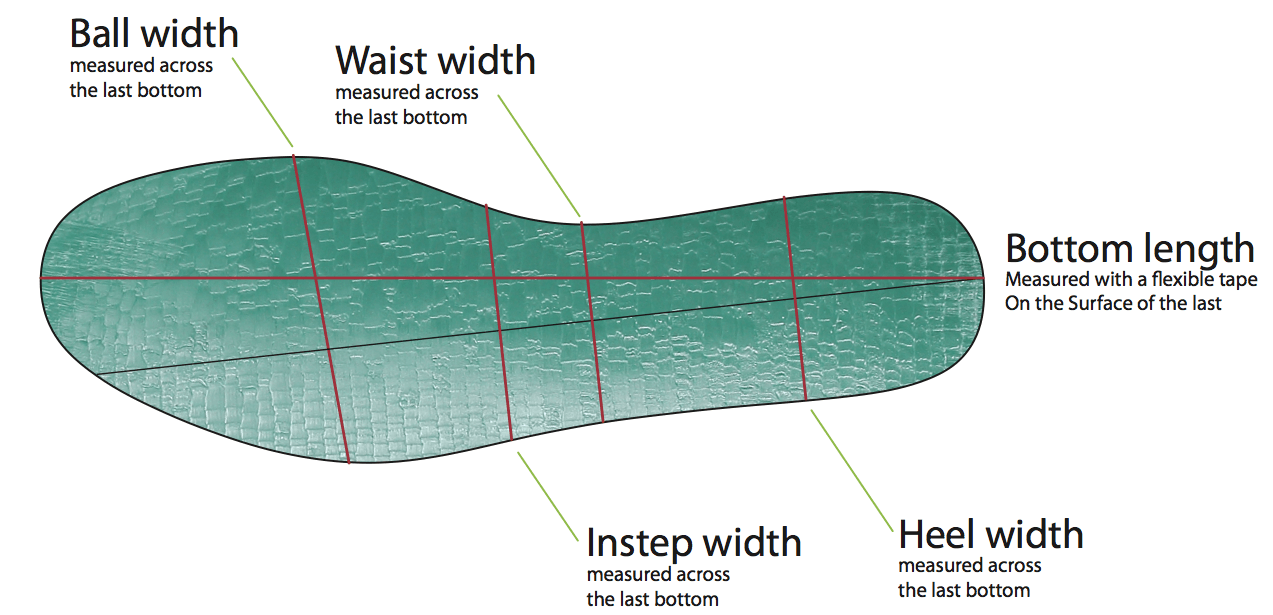
Last Bottom Length: Measured with a flexible tape pressed to the surface on the bottom of the last.
Last Ball Width: Measured with a flexible tape across the ball of the last.
Last Instep Width: Measured with a flexible across over the instep of the last.
Last Waist Width: Measured with a flexible tape across the waist of the last.

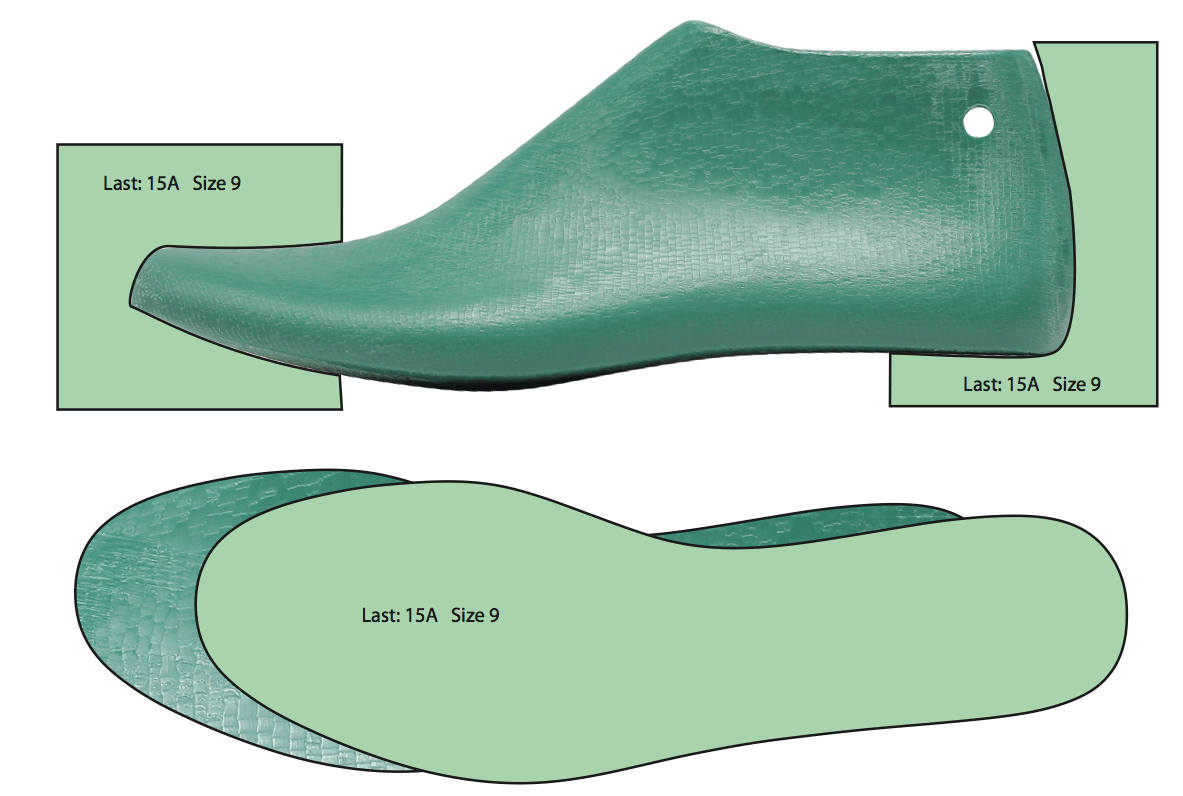
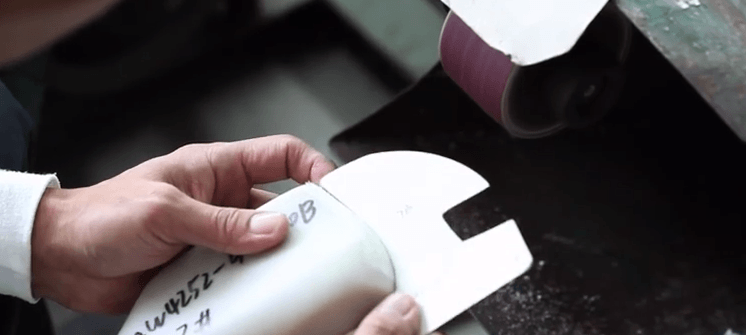
Heavy paper templates or last gauges are cut by computers. The gauges are marked with critical dimensions, the last size, and code number. The paper gauges are used to check every size of the sample lasts.  Once the last fitting has been confirmed, the same paper gauges are used to confirm the production lasts.

Last Stick Length: Measured from the longest points at the toe and heel. Last Ball Girth: Measured with a flexible tape around the ball of the last. Last Instep Girth: Measured with a flexible tape over the shoe instep of the last. Last Waist Girth: Measured with a flexible tape around the waist of the last. Last Toe Spring and Heel Lift: Are are measured with the back of last held parallel to the ground.

You can see how lasts are made: How Lasts  are Made
You can download a last for 3D printing: 3D printing Last File

Shoemaking Material
DIY Super Kit

All the hard find parts for your DIY shoemaking project are here in one place. Lasts, soles, materials, tools and pattern making text book included. Your shoe size is in stock. Learn more On sale $200
Posted on

What’s Inside Your Shoes? Shoe Reinforcements

So what is inside your shoes?

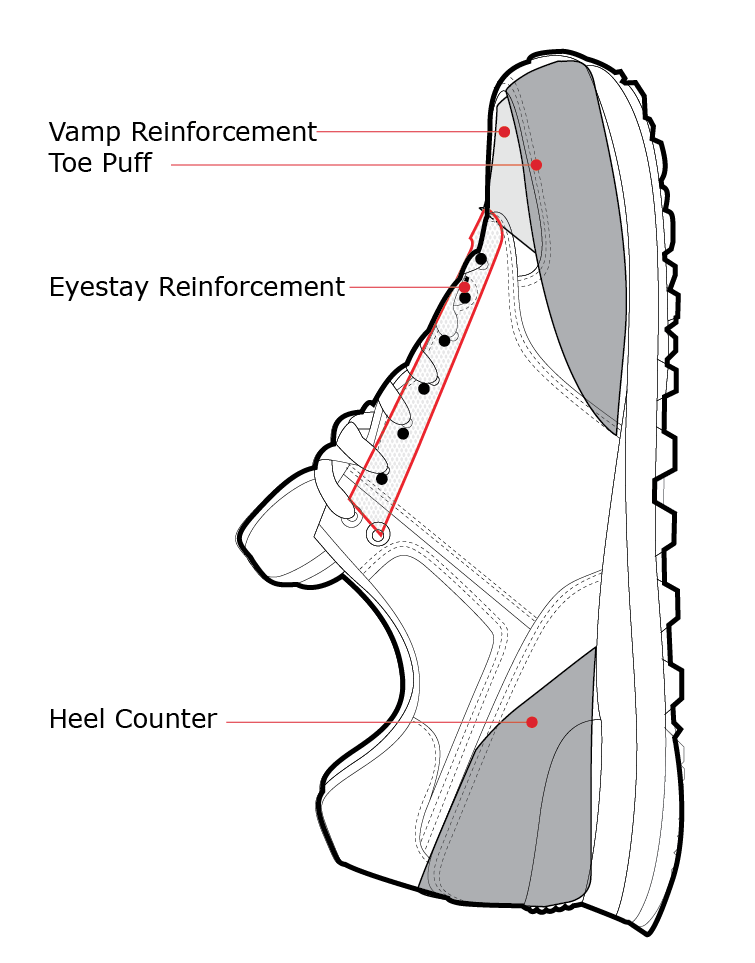
Shoe_Parts_reinforcementsWhat is inside your shoes? A quick lesson on shoe reinforcements

All the hidden parts inside your shoes that you cannot see are critically important to the look and function of the shoe. The most common shoe reinforcements are the toe counter (or puff), vamp reinforcement, heel counter, and eyestay reinforcement.
The stiffness or softness of these shoe reinforcement parts will determine if your shoe is a pliable, comfortable dress shoe or a trail-ready hiking boot.

Toe Puff

The toe counter or toe puff can be made of a non-woven polyester fabric saturated with a heat formable plastic. The material is die-cut from flat sheets to fit the shoe pattern and layered inside the shoe between the lining and the outer material. This material often has a heat activated cement on the surface.
When the shoe upper is processed, during stitching and before the Strobel bottom is sewn on, the toe counter is heat formed. The front of the shoe is placed in a heater for a few minutes then the upper is clamped into a cooling fixture with a shaped metal form to set the toe shape.

Heel Counter

The heel counter can be made by the same process and with similar but thicker materials that come in many different grades. The materials made by Texon and TecnoGi contain heat-moldable Surlyn plastic. For a better fit, a shoe factory may use a 3D injected plastic part instead of the sheet cut goods. For less expensive shoes, a material called chemi-sheet can be used.  Chemi-sheet is a solvent activated material, it is functional but can crack. It is cheaper but not as good as the Surlyn plastic heel counters.
The eyestay reinforcing material is called Super-Tuff.  Super-Tuff is often found reinforcing punched hole eyelets or riveted eyelets on shoes. This material is a thin, non-woven laminated fabric that can be cut but is very difficult to tear. The name says it all!

Vamp Reinforcement

The vamp reinforcement is often a thin layer of polyester fabric with adhesive backing. Placed on the vamp area, this material will stop the wearer’s toe from stretching the material or even stop a toenail from wearing through.
For more information check out  http://www.Texon.com and www.Tecnogi.com. Both make a wide range of reinforcement products for athletic and fashion shoes.  Learn more about shoemaking and materials in our books How Shoes Are Made and the  Shoe Materials Design Guide available in softcover or download editions so you can start reading today.

Shoe_Parts_reinforcementsWhat is inside your shoes? A quick lesson on shoe reinforcements

All the hidden parts inside your shoes that you cannot see are critically important to the look and function of the shoe. The most common shoe reinforcements are the toe counter (or puff), vamp reinforcement, heel counter, and eyestay reinforcement.
The stiffness or softness of these shoe reinforcement parts will determine if your shoe is a pliable, comfortable dress shoe or a trail-ready hiking boot.

Toe Puff

The toe counter or toe puff can be made of a non-woven polyester fabric saturated with a heat formable plastic. The material is die-cut from flat sheets to fit the shoe pattern and layered inside the shoe between the lining and the outer material. This material often has a heat activated cement on the surface.
When the shoe upper is processed, during stitching and before the Strobel bottom is sewn on, the toe counter is heat formed. The front of the shoe is placed in a heater for a few minutes then the upper is clamped into a cooling fixture with a shaped metal form to set the toe shape.

The Ultimate Shoe Material Textbook

Start with an in-depth study of material types available for modern shoemaking. Learn the technical details of material specifications. 195 pages and 300 color photos.

Buy Now

on sale $39.99

Heel Counter

The heel counter can be made by the same process and with similar but thicker materials that come in many different grades. The materials made by Texon and TecnoGi contain heat-moldable Surlyn plastic. For a better fit, a shoe factory may use a 3D injected plastic part instead of the sheet cut goods. For less expensive shoes, a material called chemi-sheet can be used.  Chemi-sheet is a solvent activated material, it is functional but can crack. It is cheaper but not as good as the Surlyn plastic heel counters.
The eyestay reinforcing material is called Super-Tuff.  Super-Tuff is often found reinforcing punched hole eyelets or riveted eyelets on shoes. This material is a thin, non-woven laminated fabric that can be cut but is very difficult to tear. The name says it all!

Vamp Reinforcement

The vamp reinforcement is often a thin layer of polyester fabric with adhesive backing. Placed on the vamp area, this material will stop the wearer’s toe from stretching the material or even stop a toenail from wearing through.
For more information check out  http://www.Texon.com and www.Tecnogi.com. Both make a wide range of reinforcement products for athletic and fashion shoes.  Learn more about shoemaking and materials in our books How Shoes Are Made and the  Shoe Materials Design Guide available in softcover or download editions so you can start reading today.

Shoemaking Material Kit

All the hard find parts for your DIY shoemaking project are here in one place. Lasting board, strobel material, lining mesh B&W, collar foam and all the reinforcing parts you need for one pair.
Learn more
On sale $39.99

New Online Course
How to Select Shoe Materials

14 Shoe Material lessons. Over 4 hours of video instruction. In-depth study of leather, textiles, synthetics, and plastics for footwear. Material Design Guide Textbook included.
Course Details
enroll now $399

Posted on

How Shoes are Made: Reviews and Comments

Reviews and Comments

At SneakerFactory.net we work hard to bring you this website and blog. We encourage and appreciate your feedback and comments to help us make How Shoes are Made, How to Start Your Own Shoe Company, Shoe Material Design Guide, and our other products even better!

We hope to hear from you soon.

Kind regards,
The SneakerFactory.net team

[RICH_REVIEWS_FORM]
[RICH_REVIEWS_SHOW num=”all”]

Posted on

Drawing a Shoe Outsole Blue Print

produce a pair of air Jordans

Drawing a Shoe Outsole Blue Print:

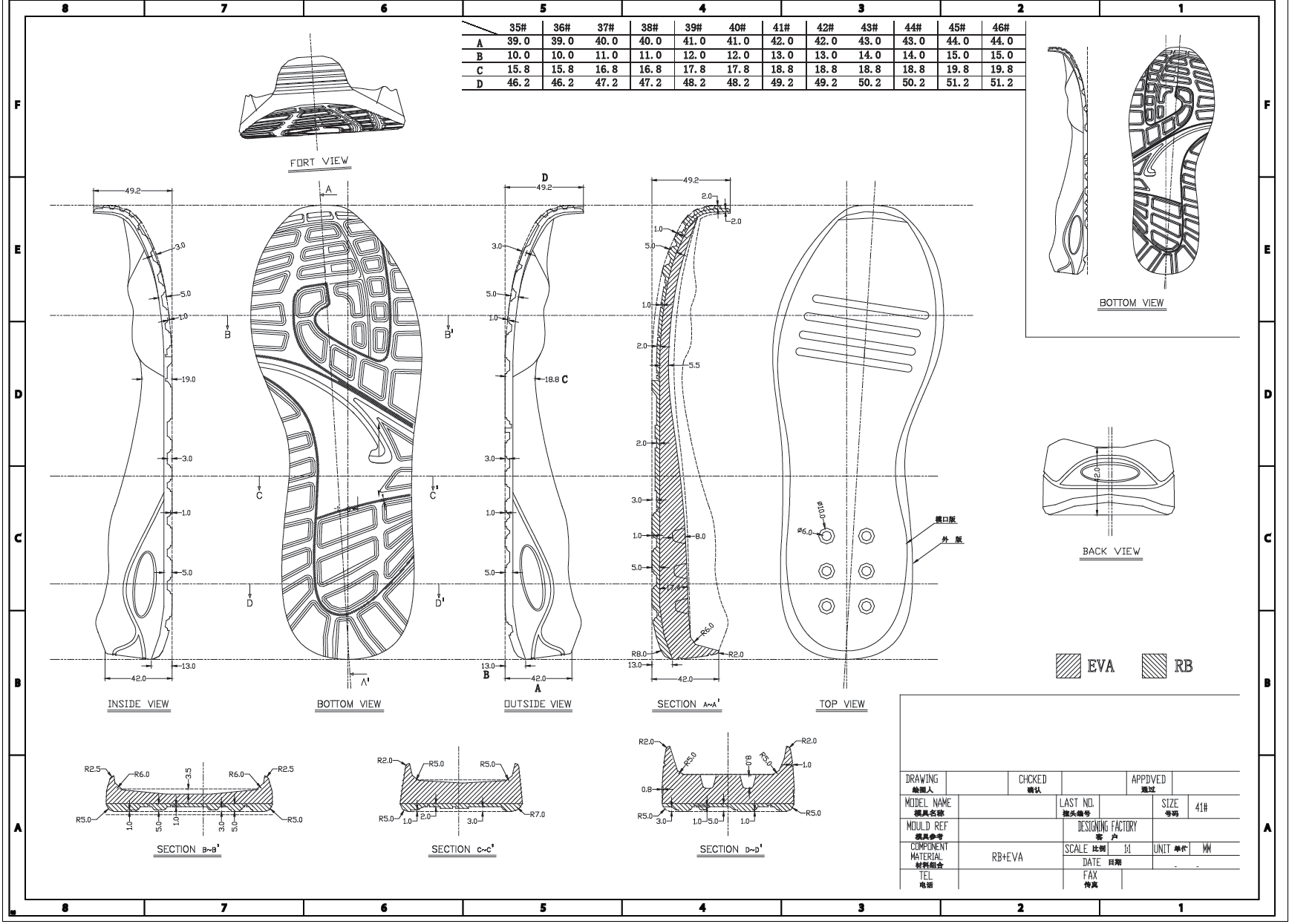
The shoe outsole blue print can be the most challenging element of the shoe to design.  A complicated outsole design can take weeks to design and months to model and  tool up.  The shoe outsole must fit the shoe upper correctly to insure the shoe fits and can be assembled neatly,   And of course all the outsole parts must fit together correctly.  Not so simple.  Many shoe technitions help bring your shoe sole to life.
The shoes Rubber sole, EVA midsole and uppers are each made by a different process and can even be made in a different factory across town.  And this must be done right.  A complete size run of 14 sizes of outsole/Midsole tools could be over  $100,000.00 to construct.
The outsole blue print shows every detail of the construction.    You can see the design details and the material notes.
Drawing-a-Shoe-Outsole-Blue-Print-4

Required Blue Print Views:

1. Shoe Medial side view
2. Sole Bottom view
3. Shoe Lateral side view
4. Outsole Cross section down the length
5. Sole unit Top view of the midsole
6. View of left side shoe  (to confirm logos)
7. Toe view of sole
8. Heel view of outsole
9. Cross section at critical points to see shoe details
10. Texture notes or detailed cross sections
11. Shoe Sole Material specs
12. Revision block to show who made drawing changes

New Online Course
How to Create Shoe Specifications

9 Shoe Spec building lessons.
2 hours of video instruction.
Create a spec step by step .
Material Design Guide textbook included.

Course Details
enroll now $199

Posted on

Are Nike sneakers the best?

Fake Nike How To Spot Fake Nike Shoes: 10 Ways To Tell Real Nikes, How to Spot Fake Nikes, how to spot fake Jordan's, sneaker legit check

The question:
Does Nike Make the Best Sneakers?

This question is not so simple as the Nike Corporation makes thousands of different models, so they must be the best?  I did see a report that stated Nike makes over 10 million different products, This does sound crazy but they do have sales of over 39 Billion with a “B”.   Yes! They make a lot of sneakers but are they the best?

Fake Nike

Nike dominates Sneaker markets

There is no denying that Nike dominates some product footwear categories.  Any visit to your local sporting good store will show you that. But in the case of shoes best really means the best for you! In basketball and running there is no question that Nike is dominating! The sneakers collectors market is NIKE and then a distant second Yeezy branded shoes.

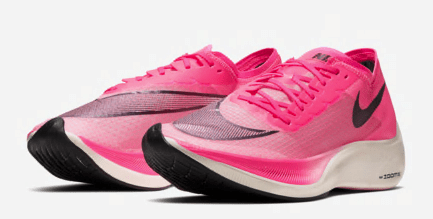
Nike Zoom Vaporfly Next% The best running shoe

Nike dominates running Technology

At this moment Nike has ignited an arms race in performance running shoes. The record-breaking marathon times of breaking times of with elite Kenyan runner Eliud Kipchoge are proof that Nike is doing something special. The discussion of banning the Nike Zoom Vaporfly Next% shows that Nike is back into the business of disrupting “the business”.

Are Nike shoes top quality?

Yes.  Both the expensive shoes and the cheap Nike shoes are made to high technical standards.   When you buy Nike you are buying a well made shoe.  This is not so special, the other big brands Adidas for example offer the same build quality.  The difference comes in the materials used. A more expensive shoes will have materials that are stronger, lighter , possibly more flexible depending on the model of the shoe.

What shoe is best for you?

But what makes are shoe really the “Best” is how it works for you!  The shoe that is best for your foot shape, flexibility, sporting activity  and personal style may not be a Nike.  Me personally, I don’t own any and I’m a shoe hound for sure, but the Nike running shoes lasts just don’t feel comfortable to my foot.

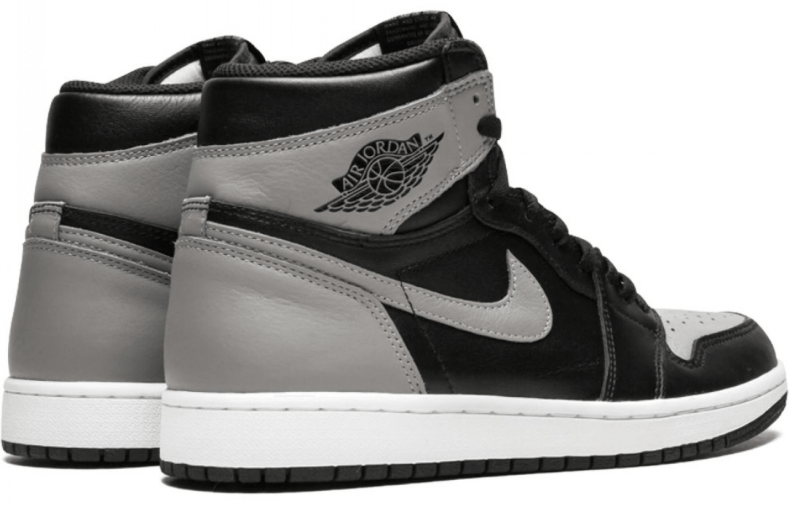
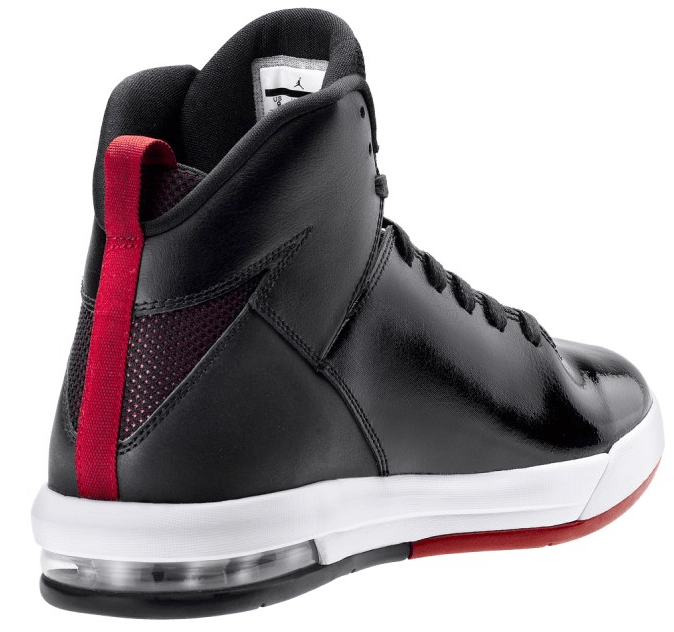
Air Jordan Imminent Back View

So you can go with confidence and get a pair of Nikes- Buy them and Love them, If they work for you!  But if you are not 100% in love, don’t be afraid to shop around.  You may just find a smaller company that makes the “Best” shoe for you!

Posted on

How Shoe Lasts are Made By Tsubo

The last technician is marking and measuring

Here is another great shoe making video from the Tsubo shoe company. This shows how shoe lasts are made.  They show in a nice step by step video what it takes to make a set of production shoe lasts.  You can see the care they take in this process.  It’s very important as these lasts will be the foundation of the finished shoes.

A machine to measure a hand shaped shoe last
A machine to measure a hand shaped last

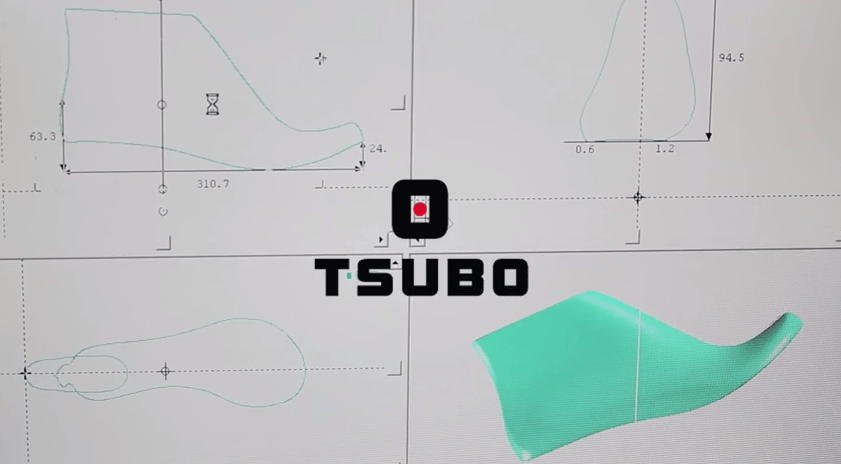
A CAD model of the shoe last is made.

Starting with a machine to measure a hand shaped last, they make a CAD file of the lasts.  This computer model of the last is then used to scale or grade the last.  Grade means to make each size of the shoe last. This is an important art as the last length and width do not scale equally.  For example a size 12 is not twice the size of a 6.
The shoe last has a template for the toe and heel

The shoe last has a template for the toe and heel
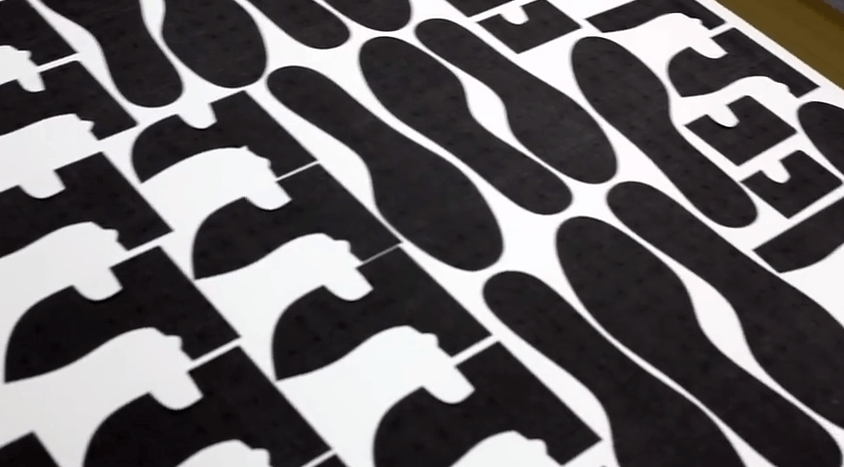
The patterns are computer cut

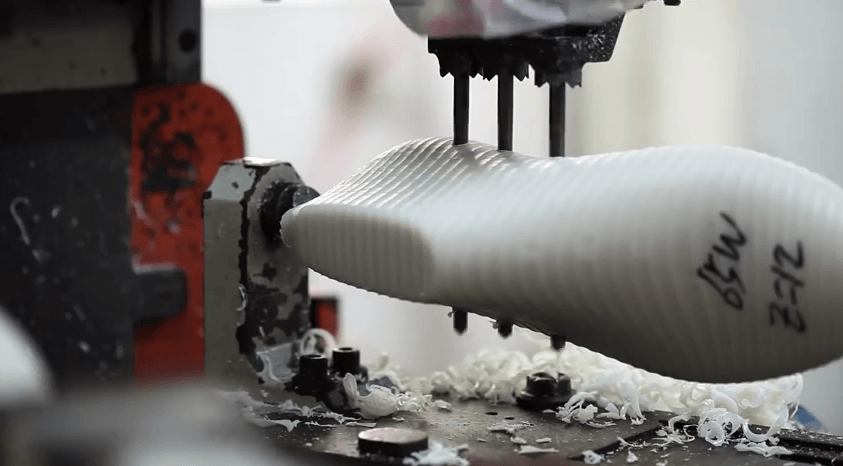
Here you can see they are cutting the pattern templates used to fine tune the shape of each production shoe last.  The templates are used to make sure the heel back curve and toe shape are correct.  The foot shaped template is called the bottom gauge.    You need this to confirm the length and width of the last.

The shoe last starts as an injection molded "blank"
The shoe last starts as an injection molded “blank”

The injection molded "blank" shoe last is then turned or cut down to the right shape
The injection molded “blank” is then turned or cut down to the right shape

This is really how shoe lasts are made. They shape the last they start with a injection molded blank roughly the right shape.  This blank saves the factory time and money as the shape the last.  The left over cuttings can also be recycled.   The lasts are quickly rough cut then finely finished using a second machine. This takes just a few minutes

Cuts are made for a hinged last Shoe last factory
Cuts are made for a hinged last

Pins for hinged shoe last

In this video they are making plastic hinged lasts,  the hinge allows the shoe last to be slid into and removed for the upper without over stretching or damaging the shoe material.

The worker uses the template to check the shoe last
The worker uses the template to check the last

The last technician is marking and measuring

A machine to measure a hand shaped last
A machine to measure the  shaped last

You can see here the last technician is making and measuring the last to insure the width is correct and the girth measurement around the last is correct.  Any mistake can change the fit and shape of the finished shoe. Here the worker is using the heel curve template to shape the shoe last. Each last is carefully buffed to make shoe it’s smooth and can’t damage a delicate leather lining.  This final sequence is measuring the shoe last to make sure it’s 100% perfect!


Learn to Design Lasts

Learn how lasts are made, the shoe last design process, the hidden geometry, special features, functions, and size grading principles.
Learn more
On Sale $39.99

Posted on

The Making of a PU Foam Footbed by Tsubo

PU being poured into the footbed mold

Making a PU Footbed

Check out this video which shows how a soft PU foam footbed for shoes is made.  This footbed is relatively expensive and heavier when compared to the standard EVA footbed, but it’s much more comfortable. Tsubo is a very high-quality shoe brand, I have a pair myself and they are great shoes!

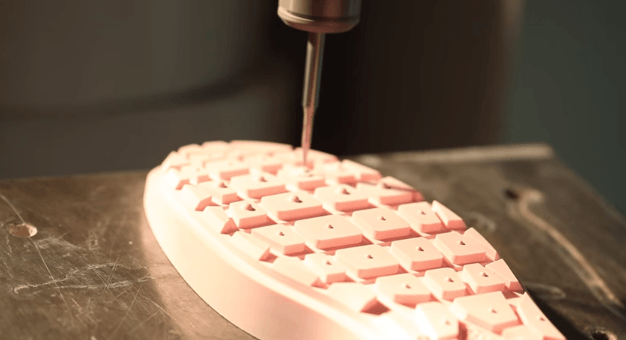
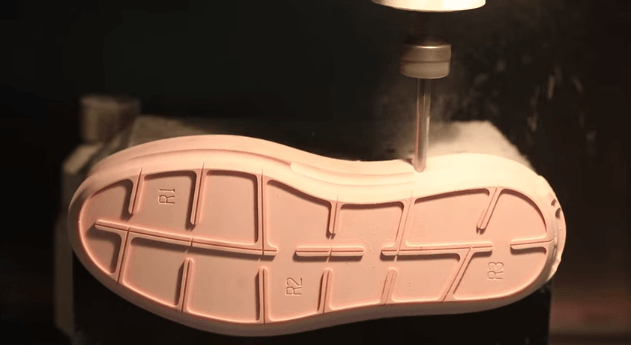
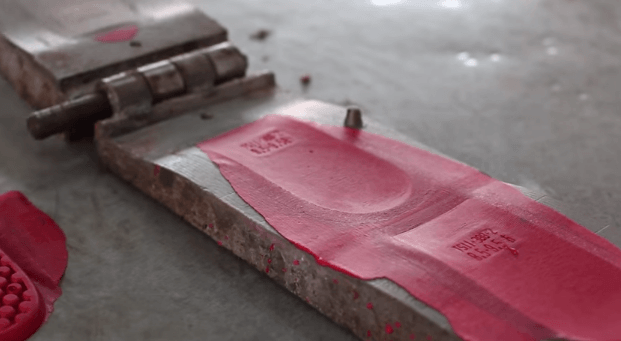
The video starts off in the CNC (Computer Numerical Control) tooling shop.  We see what looks like a shoe outsole bottom being cut. This pinkish material is called REN. REN is a medium density polyurethane plastic modeling compound that can be cut to a very high precision. It does not shrink or chip and does not have any air bubbles inside.


PU midsole being cut

PU midsole being cut

Next Step: Steel Casting Shop

Once the REN shape has been cut and finished it heads to a steel casting shop. This part they don’t show in the video, most casting shops keep this process hidden!


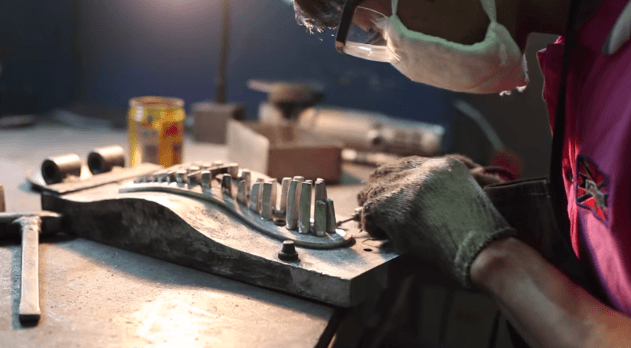
Hand finishing the PU midsole tooling

The steel PU midsole mold is ready


Hand Finishing

After the casting operation, the mold parts are hand finished to make sure they are smooth and most importantly they shut tightly without leaks. This happens to be a three part mold. This allows the parts to come free after molding without damaging them.


Onto the Pouring Line

The video does not really tell the whole story here at the pouring line. With the soft music playing, you miss the shocking noise of the molds slamming shut, the mold release being sprayed, the compressed air blast to clean the tools, and the rumbling of the molds as they run down the conveyor belt into the ovens and around again for another fill.

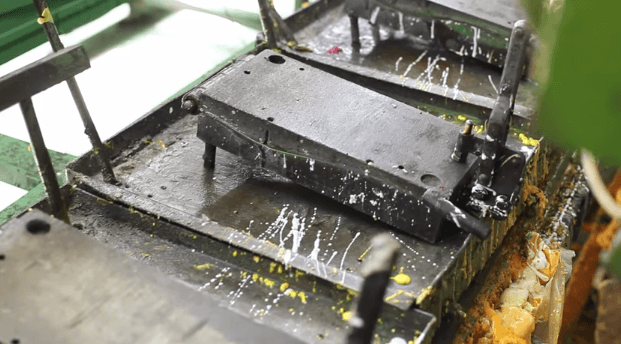
PU mold on the conveyor line

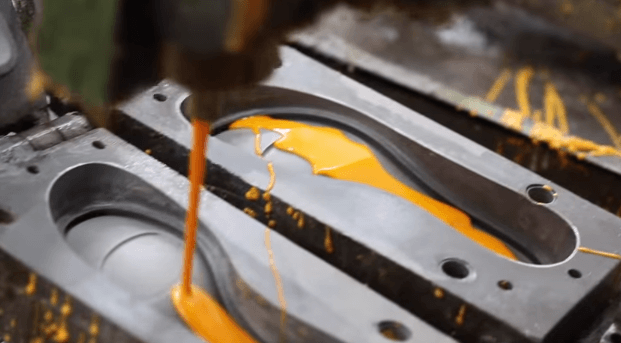
PU being poured into the footbed mold

Here you can see the mixing head shooting the liquid foam into the mold.  It’s a heavy liquid that spreads slowly into the mold.  In the video, you can see the worker rubbing some of the compound into the sidewall of the mold to make sure the logo is filled without any air bubbles.


PU molds in the line, you can see the mixing head

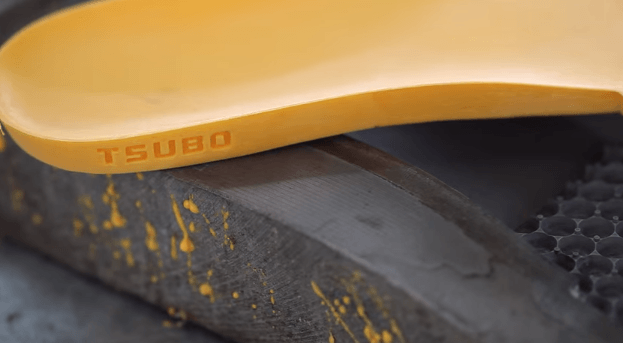
PU part after molding

Once again, some compound in the mold clamps is used to hold the mold closed. Behind you can see a green wall – that is the conveyor oven.  The molds travel in a large oval around and around. Inside the heater, the foam “blows” or expands filling the mold’s cavity with the PU.


Opening The Mold

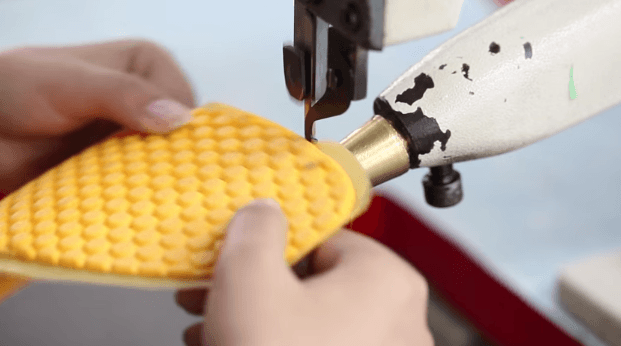
Once outside of the oven the mold is opened. You can see there is some extra material around the edge. This is okay, this ensures the part is 100% filled and lets any air bubbles escape.  This extra material is called mold flash.  In the final step, the mold flash is trimmed off.

PU footed part with some mold flash

PU footbed being trimmed