Posted on

Ask a Shoe Dog

Shoemaking questions answered

Answers to all of your shoemaking questions!

Thank you for visiting our shoemaking blog! ShoemakersAcademy.com started more than ten years ago with the mission to inform and educate shoemakers around the world. We strive to provide both basic and advanced shoemaking knowledge. Every day we receive shoemaking questions from our followers around the world. Here are our best answers to your most frequently asked shoemaking questions!

Please submit your questions to:
TheShoeDog@ShoemakersAcademy.com

How can I get a job as a shoe designer?

Great Question!  I can tell you how I landed my first job in the shoe business. After I graduated from Design school I made a portfolio and a small booklet of my product designs. I applied for every design job in San Francisco. I was turned down 20 times before I got a job designing sports bags and golf bags.

Was this my dream job, NO! But it was a start. Working 60 hours a week, I didn’t have much free time but I was gaining experience.  I learned how to handle customers and refined my drawing skills. Working nights and weekends I made shoe drawings, I put together a portfolio of just shoes. After a year making money designing sports bags and golf bags…I quit. I then set to work drawing on my own from 9 am to 5 pm every day. 

As each new job listing opened, I assembled portfolio pages specific to the job on offer. After several more months of job rejections, I landed a small contract for a single shoe design project. That one shoe project grew into two projects, those two projects grew into 5 projects. When these projects ended I was offered a full-time job. Awesome! It took me 3 years to finally land a shoe design job. 
That is how I got my start!  
I hope the books and online courses here can help you build your skills so you can land your first job!
Good luck!

Wade The Shoe Dog

Which part of a shoe is the last?

The last is NOT part of a shoe. The last is a metal or plastic form used in shoe development to make the pattern and in production to set the final shape of the shoe.
Read more here: About Shoe Lasts

How does Nike create their shoes?

This a great question and a complicated one. Nike has teams of shoe designers and footwear developers. Nike does not own any shoe factories. The shoe designers and developers work with the shoe factory teams to transform the designs into shoes.
Read more here: How Nike Shoes are Made

What leather are most shoes made of?

Most leather shoes are made with cowhide leather. Calf and pig hides are also commonly used to make thinner leathers for uppers and linings. Kangaroo leather is very elastic and is used to make soccer boots. White leather sports shoes are often made with “Action” leather, Pu coated cowhide.
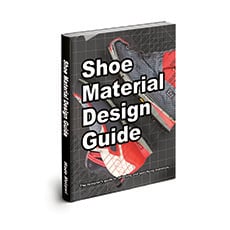
Read more here: The Designer’s Guide to Shoe Leather Shoe Material Design Guide

What is Vans shoe construction?

Vans shoes are made by the vulcanized construction process. In the Vans vulcanized shoemaking process, the rubber shoe outsole parts are assembled onto the lasted upper before the rubber is completely cured. With the sole attached, the entire shoe must be heated in a vulcanizing oven. The shoe must be heated to around 110˚C for 80 minutes.
Read more here: How Vans Shoes are Made: Vulcanized Construction

Where is shoe mesh manufactured?

Another great shoe material question! Shoe mesh is made in many countries in Asia. The most mesh is made in China, followed by Taiwan, Korea Japan, Vietnam, and Thailand. High-end technical mesh is made the USA, Japan, and Europe.
Read more here: Textiles for shoe design / How to pick shoe materials

Can I make shoe specification drawings with Adobe Illustrator?

Yes! Adobe Illustrator is a great tool to make shoe specification drawings and shoe renderings. Adobe Illustrator can also be used to create, grade, and modify shoe patterns. Check out the online video course Adobe Photoshop for Shoemakers. Great for beginners and intermediate users.
Learn more here: How to draw shoes. How Shoes are Made. Download Illustrator shoe specifications.

What is the best shoe material for running shoes?

Another great question about materials for running shoes. For running shoes, the best materials for uppers are mesh, PU leather, and TPU. For the running shoe outsole, EVA foam is ideal. It’s lightweight, flexible, and durable. Materials NOT good for running shoes include leather and suede. For running shoe outsoles avoid TPR.
Read more here: Running Shoe Parts and How Running Shoes Are Made

What is shoe hand lasting?

Hand lasting is the traditional way to make shoes. With a wood last, lasting pliers, and lasting nails, the shoe upper is pulled into place and secured with tacks. In the article listed here, you can see lasting pliers in action. Read more here: Lasting pliers

How to make rubber shoe soles?

Rubber outsoles for shoes and sneakers are made by the vulcanizing process. The rubber components, both natural and synthetic, are mixed together in an uncured form. This gummy paste is then pressed into a heated mold to cure the rubber, transforming the paste into the tough elastic material suitable for outsoles.
Read more here: How rubber outsoles are made

Rubber outsole hardness standard for shoes?

Outsole rubber is measured in the “A” scale of hardness. The standard for athletic shoes is 60˚ to 65˚.
Read More here: Durometer Testing Rubber soles Shoe Material Design Guide

What raw materials does Vans use to make shoes?

Another great question about shoe materials. The classic Vans shoes like the Vans Era, Vans Old Skool, and Vans Slip-Ons are all made of the same basic materials. Vans shoes’ raw materials include suede, cotton, canvas, vinyl, and rubber for the foxing tape, midsolepadding, and outsole bottoms. Vans uses the vulcanizing process to make their shoes so the materials must be heat resistant.
You can learn more about Vans raw materials here: Vans Shoes

Did a slave make your sneakers?

Was slave labor used to make your shoes? It depends…
If your shoe carries the logos of Nike, Adidas, Puma, Van, or Under Armour, then most likely not. If you have discount shoes from a discount brand in a discount store then all bets are off!
You can learn more labor conditions in Shoe factories here: Nike Labor

What are the steps for manufacturing shoes?

The basic manufacturing steps can be broken down into cutting, stitching, and assembly. Of course, manufacturing a shoe is quite complicated, but these are the three departments you will find in every shoe factory.
Read more here: How a Shoe is Made

How much does it cost to produce a $200 Nike shoe?

Another great question about the cost of making shoes! Let’s work backward on this calculation. For a Nike shoe that retails for $200, the shoe store buys the shoe from Nike at 50% of the selling price, or approximately $100. Nike buys the shoe from the factory and must also pay the shipping costs, import duty fees, athlete royalties, and account for their own profit margin of approximately 50%. So, the cost to make a pair of $200 Nike shoes is around $40 to $45.
Read more here: How Much Does it Cost to Make a Shoe.

Is polyethylene used for shoe soles?

No! Polyethylene is not used to make shoe soles. Polyethylene, usually called PE plastic, is used to make stiffening boards. Called “PE board,” this PE board can be used inside soles but is not common. PE board is found in fabric sided luggage. Shoe soles are made of poly-URETHANE.
Read more about sole materials here: Shoe Material Design Guide

What kind of rubber does Converse use to make shoe soles?

Converse makes shoe soles out of vulcanized rubber. All rubber found in shoe soles is vulcanized. Vulcanizing is a process that uses heat and sulfur to “cure” the rubber. Curing is when the rubber molecules cross-link to transform sticky, gummy rubber into the tough, elastic material suitable for outsoles.
Read more about Converse shoes here: How the Converse All-Star is Made


What is the reflective material on shoes called?

The most common reflective material to use on shoes is Scotchlite™ Reflective made by 3M.
Read more about 3M: Here

How much does it cost to make a shoebox?

The basic shoebox costs about 65 cents. Die-cut and folded corrugated cardboard is the standard. 4-color processing and printing inside the box costs extra. A fancy box made of hand wrapped fiberboard can cost $5 or more!
Read More Here: Shoe Material Design Guide

Do you offer footwear development classes?

Yes! We offer a full curriculum of online shoemaking classes for all levels of shoemakers. On demand training for footwear designers, developers, brand managers, brand builders, and sneaker freaks alike. See the course offerings here or purchase the All Access Pass to get the full curriculum at the best price. Advance your skills today!

What is the best shoe drawing program?

I really like using Adobe Illustrator for designing shoes. Illustrator is a great tool for making 2D footwear renderings and making shoe specification drawings. There are also many other vector-based drawing programs less expensive than Adobe Illustrator.
Learn more here: How to draw shoes How Shoes are Made Download Illustrator shoe specification

What machines does Nike use in their factories?

First of all, Nike does not own any shoe factories. The factories that make Nike shoes will have a huge variety of equipment from many different places.
You can see the machines needed to make Nike shoes here: Shoe Factory Equipment

What technology is used to make Vans shoes?

Vans manufactures shoes using a process called vulcanizing. Raw, uncured rubber is glued to the finished uppers. Afterward, they cook the entire shoe in an oven. The vulcanizing process transforms the soft rubber into tough, flexible soles.
You can learn more about Vans here: Vans Shoes

How to become a shoe designer?

Here are 10 steps to become a shoe designer:

Learn to draw…. shoes and everything else.
Go to design school.
Find a shoemaking or shoe design mentor.
Learn computer software: start with Adobe Illustrator.
Build a great shoe design portfolio to get a foot in the door.
Study the classics of shoe design.
Fill your mind with great designs! Shoes, cars, clothing, bags, anything.
Books! Books! Books! Read your way to expertise.
Cut up old shoes. You will learn what is inside.
Fortune favors the bold.
Take chances! Your shoe designs should pursue perfection, no matter what kind of shoe it is. Do something new and different. Work hard to understand shoe design challenges, then attack from a new direction. Find a new material for your shoe design, use an old material in a new way. Visit the shoe factory, and see what they can do, see what they can’t do. Don’t take no for an answer.
Read more here! How to become a shoe designer

What materials does Nike use to make their shoes?

So what materials does Nike use inside their running and basketball shoes? The short answer is plastic, rubber, and leather. Plastic is the most common material in Nike shoes, as it can take many forms. Man-made foam, fabric, and synthetic are all made from different forms of plastic. Uppers, Midsoles, and laces are all plastic. The outsole bottoms are made of rubber, and can even be a mixture of both natural rubber and synthetic rubber. The famous Nike airbag is made of blow-molded TPU plastic.
Read more here: Shoe Materials

How to reinforce shoe eyelets?

Another great shoemaking question! For metal eyelets, there are many ways to reinforce eyelets depending on the style of the shoe and the eyestay material.
#1. Use a metal washer to reinforce the back of the eyelet. Very common on the top eyelets of army boots.
#2. For leather dress shoes, a double layer of leather and/or Canvas fabric.
#3. For sports shoes, Non-woven reinforcement fabric known as supper tuff is the standard.
Read more here: Shoe Material Design Guide Super tuff Reinforcements for Shoes

What is the medial side of a shoe?

The medial side of the shoe is the inside face of the shoe. When you are standing the medial sides of the shoe face each other, with the arch side of your foot being the medial side. The lateral side is the “outside” of the shoe.
Read more here: Medial Side

How is a shoe lasted?

How is a shoe lasted? Depending on the style, material, and price of the shoe, there are many different ways to last a shoe. Lasting is the operation of pulling the upper of a shoe tight.
Read more here: How to last a shoe. Footwear lasting operations

What materials does Adidas use in their shoes?

So what materials does Adidas use in their shoes? The short answer is plastic, rubber, and leather. Plastic is the most common material in shoes, as it can take many forms. Man-made foam, fabric, and synthetic are all made from different forms of plastic. Uppers, Midsoles, and laces are all plastic. The outsole bottoms are made of rubber, and often are a mixture of both natural and synthetic rubber. The synthetic rubber is made of the same compounds that are also transformed into plastic.
Read more here: Shoe Materials

What is a sockliner in a shoe?

The sockliner (also called insole or footbed) is the first layer of soft foam in which your foot rests on inside of a shoe. Sockliners are made of a soft foam, which offers cushioning along with making sure your foot fits comfortably inside the shoe. The sockliner will have a layer of fabric on the surface to absorb moisture and provide some friction to hold your foot in place.
Read more here: Learn more about Sockliners

Shoemaking
TextbooksBuy Now
Shoemaking
SuppliesBuy Now
Shoemaking
CoursesCourse Details

Previous
Next

Posted on

鞋子是怎样制成的 : How Shoes Are Made

你想学习现代运动鞋是如何制作的吗?

How Shoes Are Made Mandarin Translation

by: 謝鎌光 David Hsieh

感谢我在美国、中国、香港、韩国、台湾和欧洲的所有工
作伙伴。

謝鎌光 David Hsieh 旅英台灣設計師,本科畢業於英國倫敦Cordesiners 鞋類 設計研發糸。

曾受訓於Jimmy Choo倫敦工作室,Adidas 德國設計部 門,也曾在義大利的班尼頓運動部門及英國的MURTOSA 任職了各三年半,百年品牌Clarks CEO 也特別邀請為資 深設計師。2008年至今在東莞的公司提供鞋類品牌孵化 顧問,培訓及設計服務。

鞋子是怎样制成的 : How Shoes Are Made

你想学习现代运动鞋是如何制作的吗? 在這本"鞋子是如何制作"的一書中,你会看到大品牌是如何進行鞋子的设计。這書決不是一个运动鞋工厂的导游参观而已,這本"鞋子是如何制作"的書将向您展示如何从最初的设计图纸,通过样品开发和现代运动鞋的制造來創造一双富有生命力的球鞋。
Do you want to learn how modern athletic shoes are made? In How Shoes are Made you will see how the big brands design shoes. More than just a guided tour through a sneaker factory, How Shoes are Made will show you how modern sports shoes come to life from initial design drawings through sample development and manufacturing.

鞋履设计、制鞋、鞋样開版和大貨生產都是为运动鞋爱好者、学生、年轻的制鞋专业人士或任何感兴趣的制鞋行业用淺顯易懂方式來詳細解释。
Footwear design, shoemaking, shoe pattern making, and manufacturing are explained simply and thoroughly for sneakerheads, students, young footwear professionals or anyone interested in the shoemaking trades

由资深制鞋专家撰写的《鞋子是如何制作的》一书,将让你了解鞋子设计和生产的真实世界。这本鞋的设计手册包含26章解释鞋的设计,鞋的发展,材料,缝合,外底,模具,EVA成型,最终组装,鞋的持久力,鞋的价格,质量控制和更多!

Written by veteran shoe professionals, How Shoes are Made will give you a look at the real world of shoe design and production. This shoe design handbook contains 26 chapters explain shoe design, shoe development, materials, stitching, outsoles, tooling, EVA forming, final assembly, shoe lasts, shoe prices, quality control and much more! 200 pages with over 400 color photos, graphs, and charts.

鞋子是怎样制成的

Available Now! 現在有空!
Softcover Book: 平裝書
Amazon Kindle E-Book: 亞馬遜Kindle電子書
學校課程折扣 : Info@sneakerfactory.net

Shoemaking
TextbooksBuy Now
Shoemaking
SuppliesBuy Now
Shoemaking
CoursesCourse Details
Previous Next
Posted on

Outsole Design For Footwear

Outsoles for Running shoes Shoe Material Types

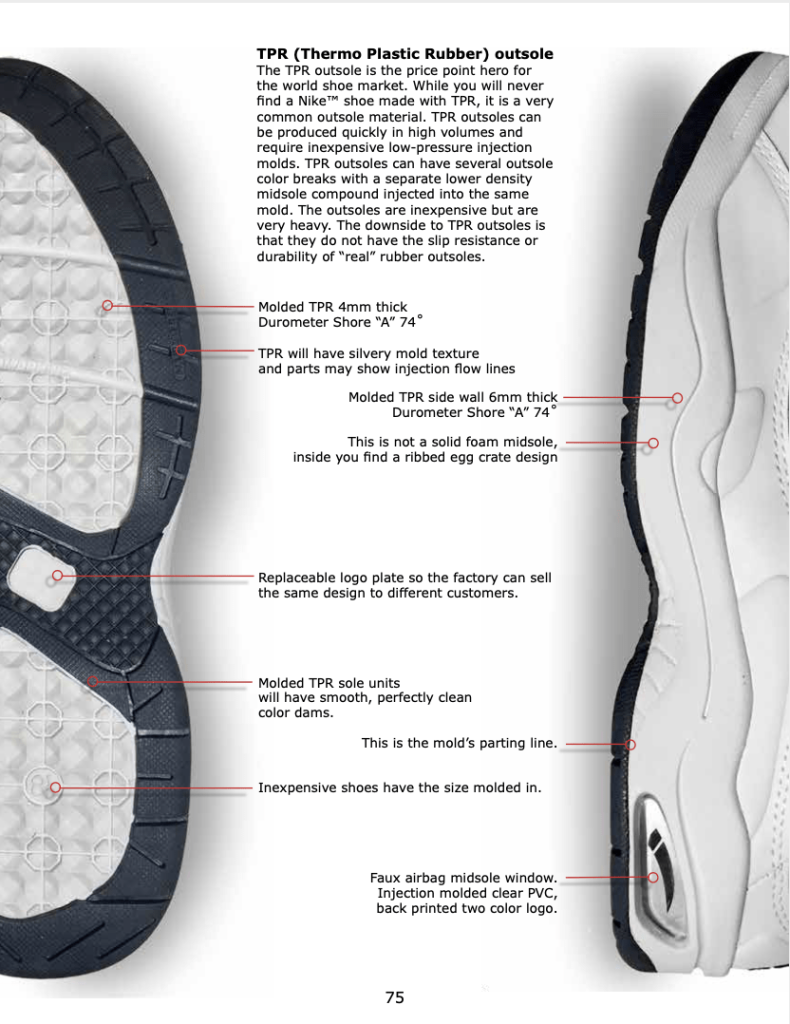
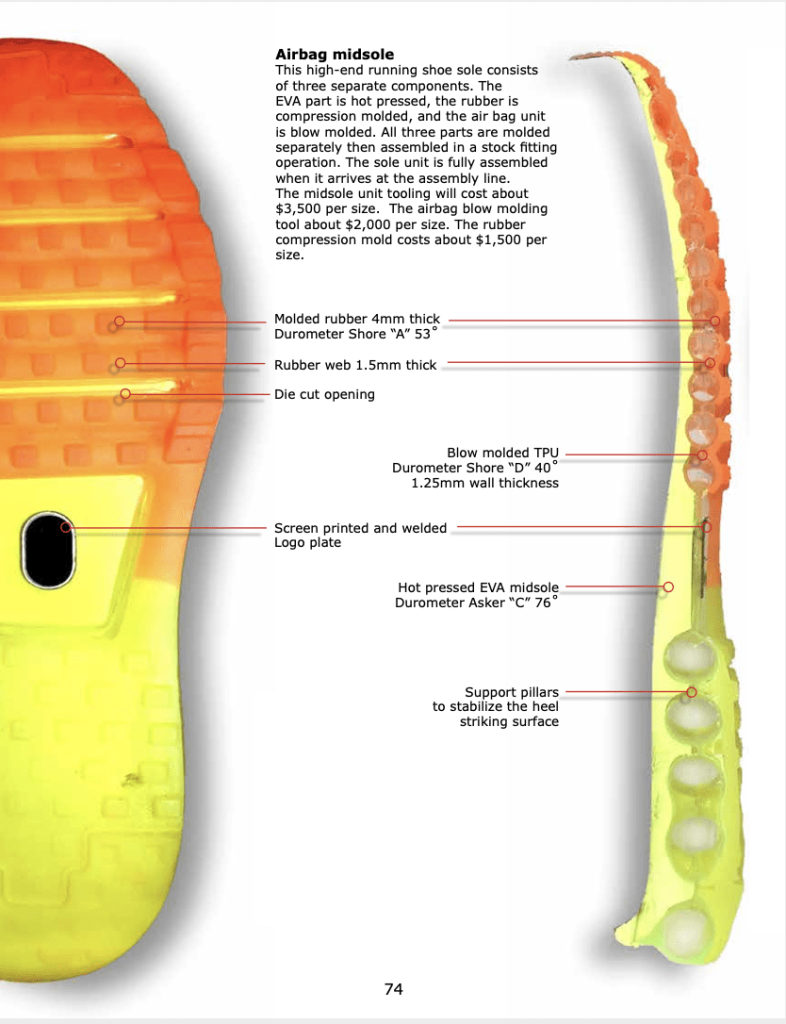
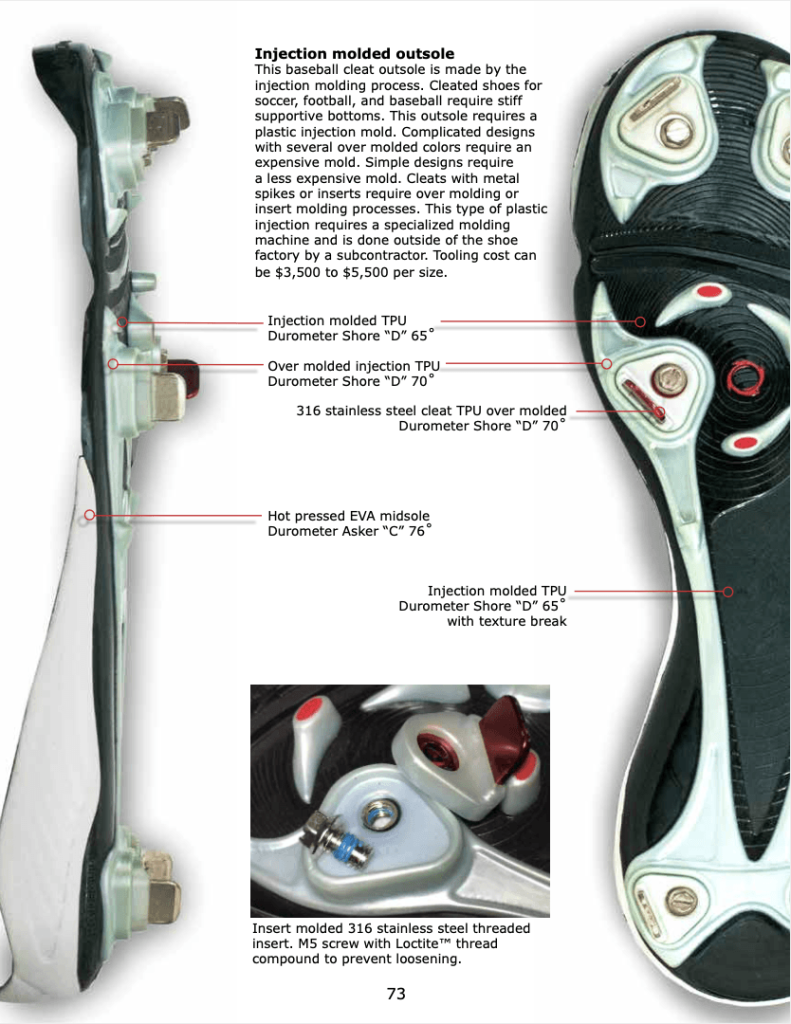
The outsole design for a shoe plays a major factor in shoe performances. The outsoles for running shoes, biker boots, and football cleats all have very different performance requirements and manufacturing methods. The shoe outsole is also one of the most expensive parts of the shoe. For low-cost shoes, the outsole can be 10% of the shoe cost, second only to the leather cost.

For high-end basketball, running, or soccer shoes the outsole can be 25% to 35% of the shoe’s factory price. A simple cupsole may cost $2.00, while a multi-part running sole with carbon shank could cost $8.00 to $10.00.

how much does a shoe mold cost

A set of outsole tooling is by far the most expensive equipment needed to produce a shoe. While the cutting dies required to produce a shoe upper may cost $1,000 for a complete size run, a single size of outsole tooling is a minimum of $1,400. Now, multiply that by 14 sizes, and you get $19,600! This is the cost for a simple rubber cupsole.


The cost for a complicated multi-part outsole with a rubber bottom, EVA midsole, and plastic shank plate may cost $100,000! Shoe companies must take great care in designing and developing new outsole tooling. Many shoe companies will only make one size for testing and sales samples. Only after their salesmen collect orders for the new model will the balance of the tooling be made.
I have seen designers and developers work for months to create a new design only to see production canceled before it even begins. When a weak sales report arrives, product managers have difficult choices to make.

Can you risk $100,000 in tooling for a model with just a hope that it will “catch on”? Small shoe companies may be forced to use old tooling on new models until they can afford the cost of new equipment.

The #1 Textbook For Shoe Designers

Aspiring shoe designers start here! How Shoes are Made is your entry into the world of modern shoe making. Tour a real shoe factory and learn the process from design to manufacturing. Buy Now Download $19.99

Performance factors for Outsoles

Performance factors for footwear outsoles include traction, support, flexibility, weight, slip resistance, and durability. These features are a function of the design geometry and materials.

Outsole Traction
Traction is an important feature of any shoe outsole design. The design of the outsole pattern and selection of materials controls the amount
of traction. The traction requirements for hiking boots, office shoes, boat, and bowling shoes are all radically different.

When designing an outsole, it is important to understand the environment and surfaces the outsole will encounter. Traction is also directional. A mountaineering boot will require lateral traction on rough terrain, while a basketball sole needs to support quick stops on a smooth wood surface and allow spins with the foot planted.

Supportive Outsole
An outsole design must have some supportive features to ensure users can walk or run safely. Support can come from wider bases or added components such as molded plastic counters or rubber cut soles. A fast, lightweight running shoe designed for speed may have little support, while a mountaineering boot will have a metal shank to carry the weight of a heavy pack in rough terrain.

Outsole Flexibility
Depending on the intended purpose of the shoe, the midsole will require more or less flexibility. A tennis shoe or running shoe must be flexible, while a cowboy boot will have a steel shank to spread the load of the stirrups without bending at all. While more flexibility is usually a good thing, too much flexibility can cause instability and lead to foot fatigue. The general rule is, the heavier the load and the rougher the terrain, the stiffer the outsole.

Outsole Weight
Again, depending on the intended purpose of the shoe, the weight of the outsole may be a key feature. For a long-distance racing shoe or track spike, every gram is critical. For a driving shoe or biker boot, a heavy outsole is not a problem.

Outsole Durability
The durability requirements of an outsole design will depend on the environment and tasks selected for the particular shoe. The fine leather soles of women’s dress shoes and men’s office shoes are perfect for smooth stone hallways and carpeted offices, but would last only a few steps on a rainy construction site or mountain trail. Durability can be a selling feature for a shoe but may come at the expense of added weight or reduced flexibility.

Slip-resistant outsole design
Slip resistance is a key feature for service shoe outsole design. Restaurant, hospital, maintenance, and warehouse staff members are required to wear shoes with certified slip-resistant rubber compounds and tread patterns. Oil resistant rubber compounds may also be a requirement for industrial footwear.

How to make shoe sole

Rubber cupsole design

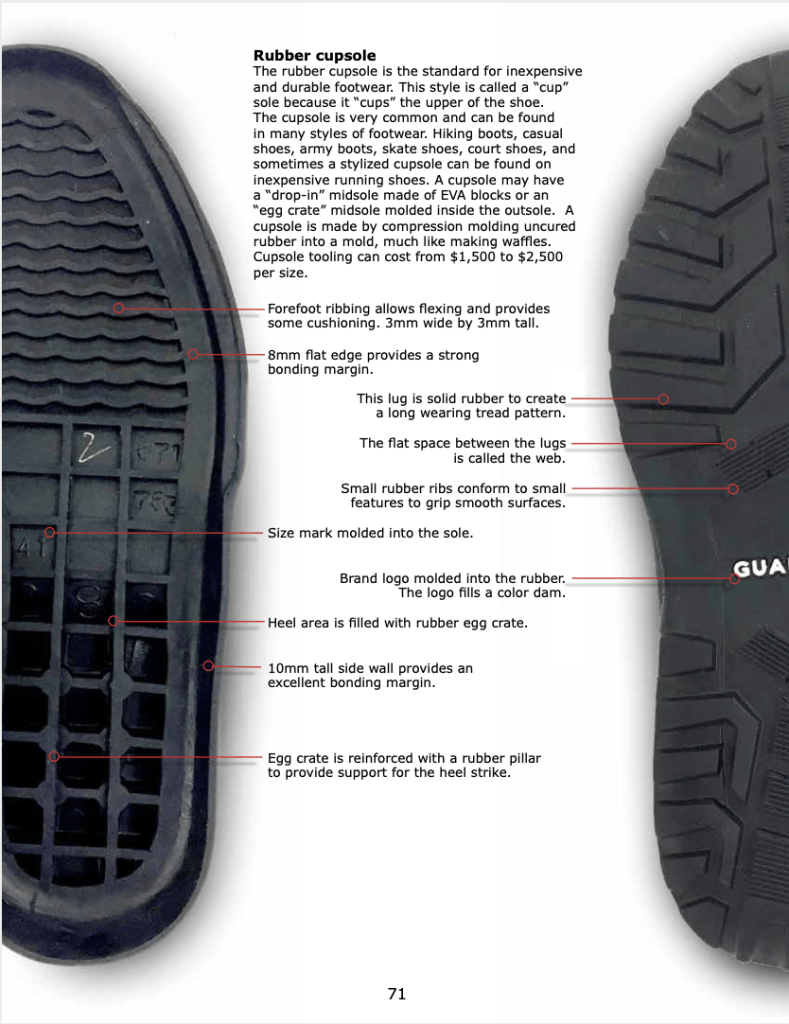
The rubber cupsole is the standard for inexpensive and durable footwear.

The rubber cupsole is the standard for inexpensive and durable footwear. This style is called a “cup” sole because it “cups” the upper of the shoe. The cupsole is very common outsole design and can be found in many styles of footwear. Hiking boots, casual shoes, army boots, skate shoes, court shoes, and sometimes a stylized cupsole can be found on inexpensive running shoes. A cupsole may have a “drop-in” midsole made of EVA blocks or an “egg crate” midsole molded inside the outsole. A cupsole is made by compression molding uncured rubber into a mold, much like making waffles. Cupsole tooling can cost from $1,500 to $2,500 per size.

Start Building Your Brand. Get the Start-Up Pro Pack.

A must-have for anyone serious about launching a footwear company. 4 textbooks, shoe business documents, and downloadable content not available anywhere else! The Shoe Company Start-Up Pro Pack is all you need to get your shoe business off the ground. Buy Now Download Today


Compression molded EVA outsole design

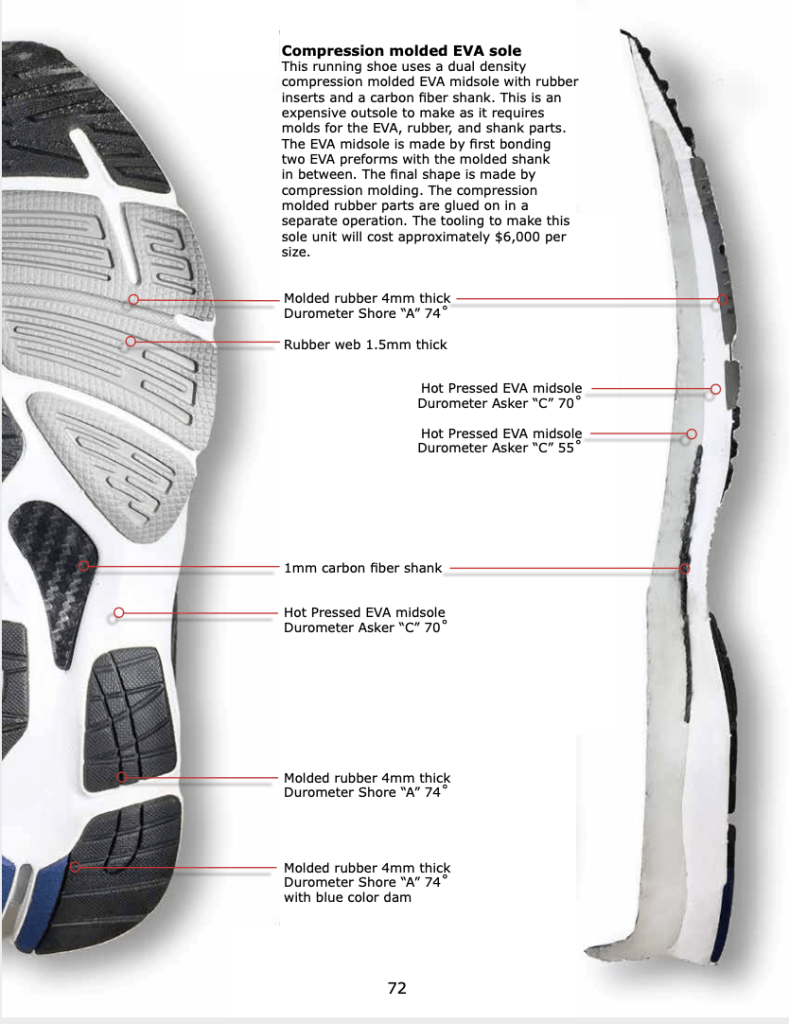
This running shoe uses a dual density compression molded EVA midsole with rubber inserts and a carbon fiber shank.

This running shoe outsole design uses a dual-density compression-molded EVA midsole with rubber inserts and a carbon fiber shank. This is an expensive outsole to make as it requires molds for the EVA, rubber, and shank parts. The EVA midsole is made by first bonding two EVA preforms with the molded shank in between. The final shape is made by compression molding. The compression-molded rubber parts are glued on in a separate operation.


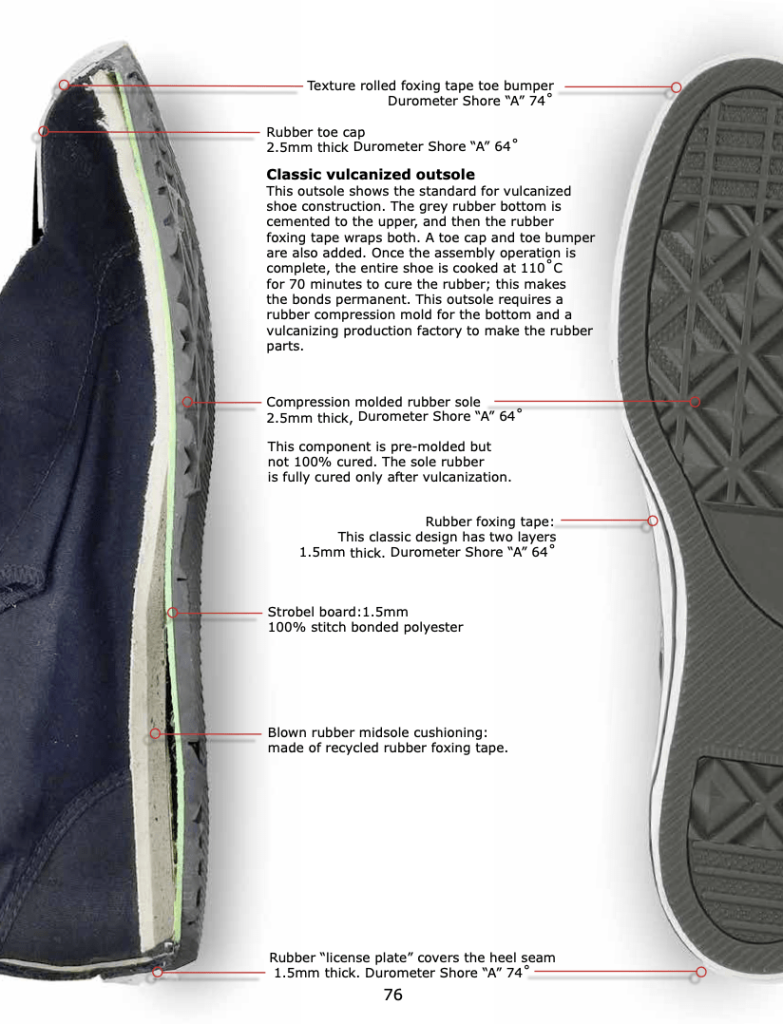
Classic vulcanized outsole design

This outsole shows the standard for vulcanized shoe construction.

This outsole design shows the standard for vulcanized shoe construction. The grey rubber bottom is cemented to the upper, and then the rubber foxing tape wraps both. A toe cap and toe bumper are also added. Once the assembly operation is complete, the entire shoe is cooked at 110 ̊C for 70 minutes to cure the rubber; this makes the bonds permanent. This outsole requires a rubber compression mold for the bottom and a vulcanizing production factory to make the rubber parts.


Learn More about Outsole Design!

Shoe material design Guide shoemaking book

Chapter 12 of the Shoe Material Design guide details the 8 most common outsole types. Learn how to make shoe sole!
Check it out!

New Online Course!
Shoemaking for Designers & Brand Builders

Created for footwear newcomers and professionals alike, this course delivers the basic shoemaking knowledge you need to get your career and brand started. Course Details Enroll Now $99
Posted on

How to Inspect a Shoe : Vans Old Skool

Quality inspection of authentic Vans Old Skool

Vans Old Skool Inspection


Quality inspection of authentic Vans Old Skool

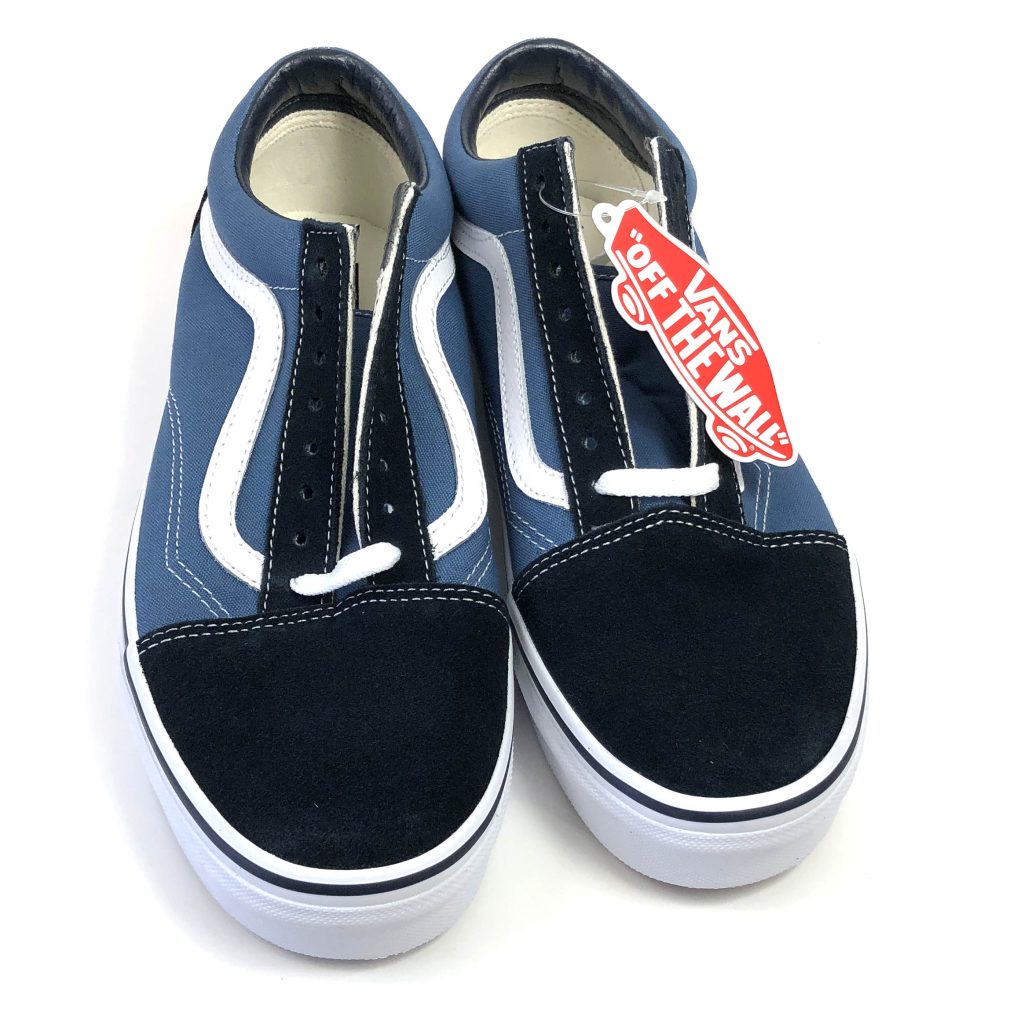
Today we are going to test our shoe inspection skills with a pair of classic Vans Old Skool vulcanized shoes. Here at the SneakerFactory.net we really like Vans! They offer great shoes and we know the guys that make them. However, shoes are made by people and people can make mistakes. So let us get started with our Vans Old Skool inspection.

We mail-ordered these shoes directly from Vans to ensure they are authentic Old Skool sneakers and not fake Vans. Knowing how to run a shoe quality inspection is a critical skill for shoe designers, developers, and product line managers. When a new shoe arrives it is critical to inspect the materials, assembly technique, and workmanship. You must know the correct footwear inspection procedure. As a buyer of shoes for personal use, it’s nice to run your own inspection before you buy it!

How to check quality Vans in shop?

Vans shoes are popular and comfortable for hanging out it, but are Vans quality shoes? When you shop for a new pair of Vans it’s nice to know if you are getting grade “A” shoes. You don’t need any special tools or much time.  In just a few seconds you can quality check a new pair of Vans sneakers in a store without damaging the shoe or hassling the store employees. Vans generally make high-quality shoes but if you see a problem pick a different pair.  Here is how to grade and inspect the Vans old skool like a professional!


Shoe inspection quality “A”, “B”, “C” – Grades

A grade shoes:
Shoes without any functional defects or cosmetic defects that will impair the marketability of the shoe are A grade. These are high-quality shoes, they look good and fit correctly. An A grade must follow the production specifications and match the approved confirmation sample.

B grade shoes:
Shoes without any major functional defects and which will not cause injury to the person wearing the shoes are B grade. B grade shoes may have cosmetic defects, production mistakes, or workmanship issues that cannot be properly repaired. These b grade shoes will be discounted and/or diverted to markets more tolerant of cosmetic defects.

C grade shoes:
C grade shoes have major functional defects that could cause injury to the wearer or major cosmetic defects that cannot be repaired. Shoes are also considered C-grade if they have poor workmanship or materials defects that could shorten the normal life expectancy of the shoe, or damage the companies reputation. These shoes should be destroyed.


Shoe quality checklist

The main points Vans Old Skool Inspection are as follows:
1. Is this the correct shoe, a matched pair?
2. Is the shoe clean?
3. Is the workmanship of high quality?
4. Is the shoe damaged in any way?

How to check the quality of a Vans sneaker!

Remove the Vans shoes from the packing box.
Do you have a left and right?
Are the shoes the same size and color?
Check the shoe tongue label information?
I know this sounds crazy but in the factory, it’s not hard to put a right size 7 and a left size 7.5 into the same box.

Holding the shoe, place the pair of shoes bottom to bottom.
Check them for symmetry. Does the pair really match in length? The size marks match but are they the same length?

Vans Old Skool Inspection
key issue : Symmetry

Now, holding the Vans from the bottom, roll the uppers together side by side. You are now checking the alignment of the shoe parts. Starting from the front, roll the shoes to align the parts, toe caps, vamps, overlays, eye stays, and eyelets. While you have the uppers side by side compare the finish and colors of each part.


Next, hold the Ols skool up looking at the heels. Make sure the shoes sit on the outsole straight. A shoe inspector checks to confirm the upper is not rotated off-center. Now, rolling the heels together, check that the back height and collar lines match.


Outsole quality is okay for authentic vans

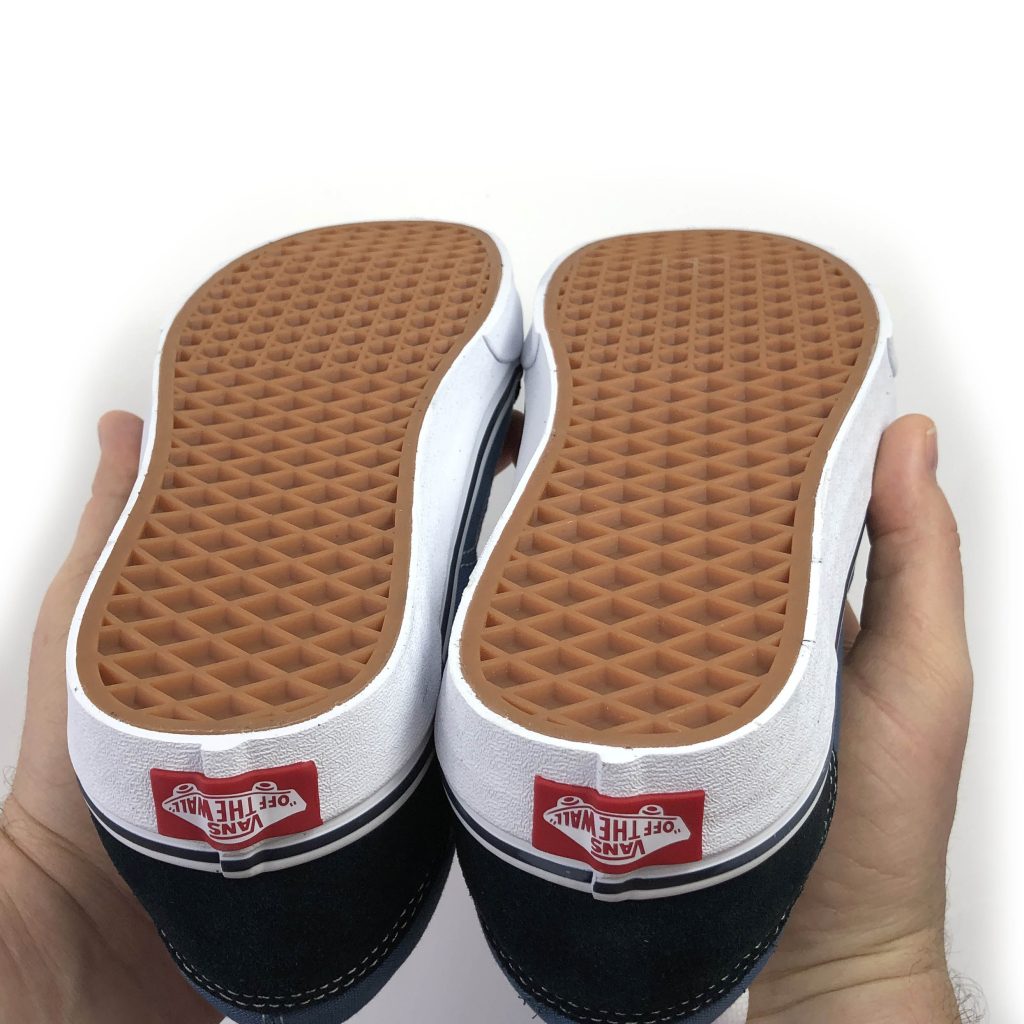
At this point, study the Vans classic waffle bottoms. Do they match? Are the color blocks in the same location? Look over the foxing tape sidewall for wrinkles. Check the seam joining the foxing tape together. Look out for any extra glue on the upper. 2mm is the limit for “over gluing.” Also look for over buffing of the upper that can damage the leather.


Vans Footwear Inspection : Look inside!

To complete our Vans Old Skool Inspection check each shoe inside and out. Now that we looked over the outside it’s time to dive inside because a great looking shoe with defects inside is not salable. Look inside the shoe opening, Is the lining clean and free of wrinkles? For Vans Skate shoes, make sure the footbed is straight, level, and fitting correctly. If the footbed is too small it may slide around, too big and the footbed may wrinkle or curl.

Vans Old sckool quality inside top collar is good! Eyestay lining

Look inside the Old Skool opening, Is the lining clean and without wrinkles?


Vans Old sckool quality inside top collar is good!

Run your hand around the collar, feel for any lump, bumps or glue. For leather shoes, be on the lookout for any lasting nails or staples.


Final Words on Vans Old Skool Inspection

When inspecting, it’s critical to decide if the problems you see are a “one-off” mistake or a systematic problem that will affect every shoe? It’s very important to understand that Inside the factory the same worker completes one operation. If the vamp stitcher is having a bad day you may see lots of crooked stitching on a vamp.

Vans Old Skool quality - Some rough Suede

Some hairy suede and rough cutting, Not great but this is still and A-Grade Vans Old Skool.


Vans Old Skool quality - Heel bump

Yes, This looks horrible But this is a Vans trademark feature. The foxing tape overlap with heel bump is correct!


The pressing tool head may have been a little dirty, or not well padded. This is a typical flaw for any suede shoe, not just Vans sneakers. This flaw could also be from rubbing inside the shoebox during shipping.


The trimmed edge of the rubber is difficult to make 100% clean. This is the charm of vulcanized construction. Again a typical “flaw” or “feature” of this construction technique of an authentic Vans Old Skool sneaker.

Are Vans good shoes?

Yes! Vans shoes are well made and Vans uses high-quality materials. Vans is one division of the huge 14 billion dollar VF corporation. Van is just one of the many footwear brands controlled by VF. These brands include North Face, Timberland, Smartwool, Icebreaker, Altra, Vans Napapijri, Kipling, Eastpak, JanSport, Reef, Eagle Creek, Dickies, Red Kap, Bulwark, Timberland, Kodiak, Horace Small.

The point here is that Vans has all the people, expertise and capital to make great shoes.

See how Vans shoes are made

How Vans are Made

How Vans Shoes are Made:
Vulcanized Construction Do you want to know how Vans shoes are made? The Vans classic slip on and skate shoes are made by the vulcanized shoemaking process. The brothers, Paul Van Doren and James Van Doren, started The Van Doren Rubber Company in 1966. 
Check it Out.

Are these Vans Real?

Learn how to authenticate shoes. We give the Vans Old Skool a complete shake down. Piece by piece we will study every part. Don’t get burned! Learn more On Sale $199
Posted on

The Designer’s Guide to Shoe Leather

Shoe Designers Guide to Stitching Thread

What is the best shoe leather?

There are many different types of shoe leather. Entire books have been written on the subject of leather and how it’s made but we are just going to cover the basics you should know for sports and casual footwear design and manufacturing.
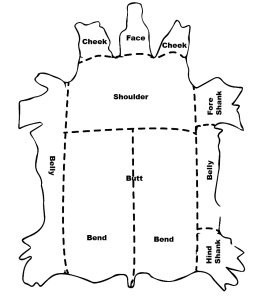
Parts of a leather hideWe are going to talk about real leather from animals!  The most common are cow and calf leather, followed by pig, goat, sheep, kangaroo (for soccer cleats – if you believe that) alligator, ostrich etc. etc.  We are going to focus on cow as it is by far the most common leather found in footwear and cow leather comes in many different styles, grades and prices.
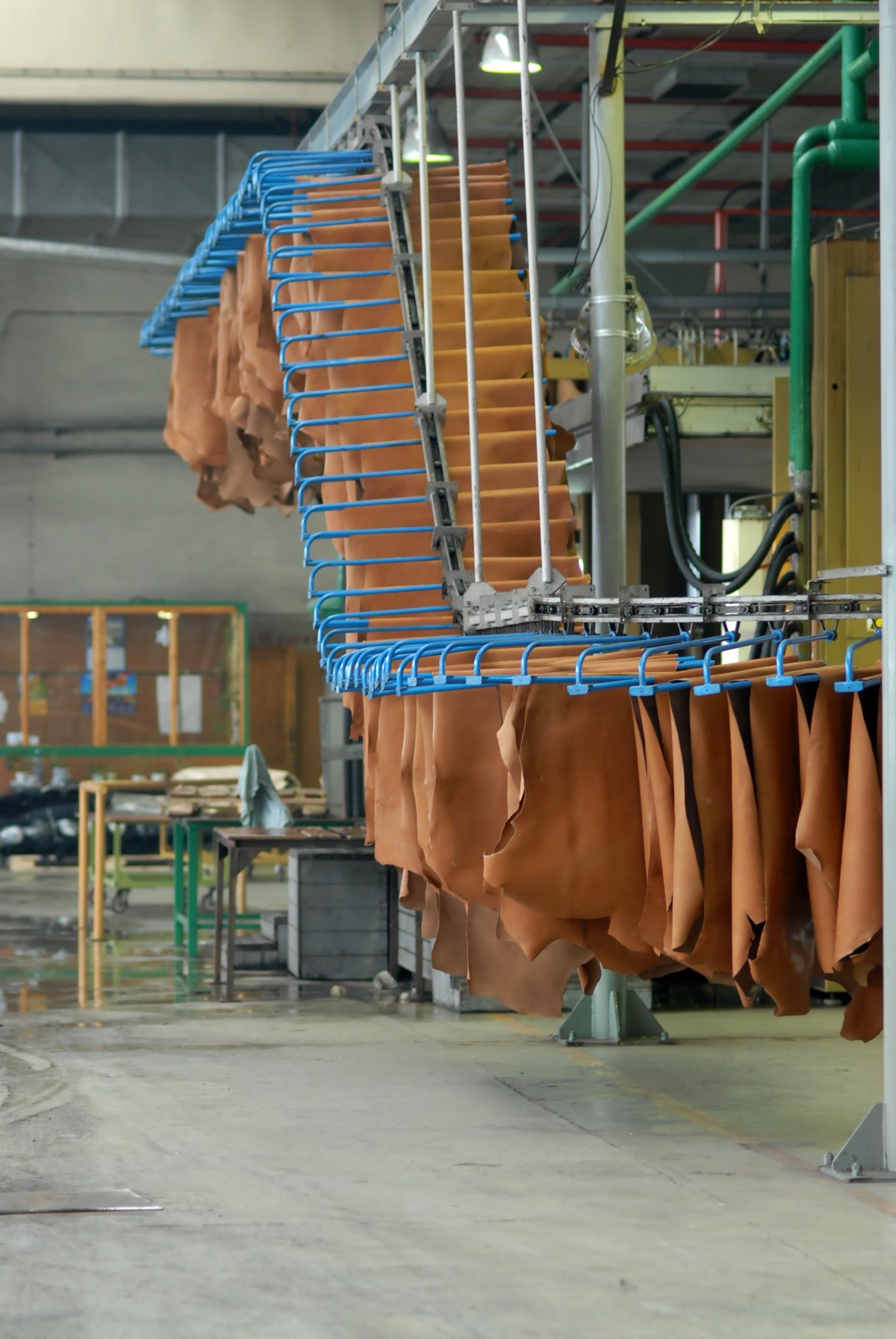
Shoe leather starts as Leather tanneryanimal hide. During processing the hair is removed from the top or outer surface, and any remaining flesh and fat is removed from the inside of the hide. Following this operation, the hide is “tanned”  (or you could say “pickled”) to preserve the fibers. New oils, preservatives and coloring are added. There are many ways to tan shoe leather. Tanning a hide into shoe leather involves a process which permanently alters the protein structure of skin making it stronger and resistant to decomposition. This can be a very wet and messy operation as the hides are tumbled in giant drums full of water, dyes and chemicals. This operation can take 10 or more hours. Tanning can be performed with either vegetable or mineral methods. We will not go into that here, but you should know you will have options. Other processes introduce fat to the leather to make it soft and pliable.
What is important to know is that the cow hide is thick and has two parts.  First comes the top surface or “grain” part of the leather. This is the outside skin of the animal. The grain is the most valuable part of the hide. The leather fibers are dense, tight, and firm. The grain surface is also smooth. Second, as the depth increases into the animal hide, the leather fibers are looser and softer. These layers are called the “split,” “split leather,” “suede,”  or “split suede.”  It’s called split because a huge metal blade is used to “split” off the top grain, leaving behind the suede surface.
Grain leather or full grain is the most expensive. There are many ways to process this type of leather depending on its quality. Full grain leather can be processed to flatten the natural grain, treated to raise the grain, or embossed to have a completely different grain pattern. The grain surface can also be waxed, oiled, sprayed, painted, dyed, and polished to create different looks.

The Ultimate Shoe Material Textbook

Start with an in-depth study of material types available for modern shoemaking. Learn the technical details of material specifications. 195 pages and 300 color photos.

Buy Now

on sale $39.99
Common Types of Grain leather or Full Grain Leather:
shutterstock_197004425Full Grain Aniline:  A leather which has kept its full grain, has a naturally textured full pored surface. The deep aniline coloring is achieved with dyes. It may or may not have a thin transparent finishing coat. This leather is of the highest quality and is the most expensive. Only flawless skins undergo such a treatment. Not well protected, these leathers darken well with age.
shutterstock_98859974
Full Grain Pigmented (also called Top Grain): This shoe leather has also retained intact its full grain but has received a penetrating dye: a colored opaque finishing which gives a unified appearance, hides small defects, and protects the leather. Only high quality raw-hides are used. This treatment makes leather pleasing to look at and to touch, and makes it resistant. It’s the best compromise between esthetics and resistance.
shutterstock_230987284Corrected and Pigmented Grain:  To smooth out the leather surface and to hide its imperfections, wrinkles, scratches… the skin is slightly embossed and a tinted grain film is applied to its surface.  These leathers are not of the highest quality and they have a slightly artificial appearance. The surface coating however, is quite resistant to heavy wear. This type of shoe leather is often used in service style boots. The leather will be water proofed or even blood proofed depending on the requirements. You will find this leather used to make steel toe boots for soldiers, police, and medics.
shutterstock_94238905Nubuck:  The velvety appearance of this leather is obtained by a light pouncing (or buffing) of the skin, thus highlighting the grain and the pores of the leather. To obtain a good looking nubuck, a quality skin is generally used. It’s a pleasant material, soft to the touch with velvety colors. However, nubuck is fragile and requires careful maintenance. A waterproofing treatment is mandatory. It remains a costly material. Nubuck and be oiled or post treated.  Thickness ranges from 1.8 to 2.2mm. Price ranges from $2.00 to 3.00 depending on color and quality.  Lighter colors require higher quality raw materials.
shutterstock_232410652
Crazy Horse:  To make this style of leather, a lower quality full grain hide may be brushed to remove just the top surface. The leather is then treated with a heavy, waxy, and oily compound that will darken the leather. This is the rough and rugged style of leather – you may see scratches, bug bites, scars and fat wrinkles in the surface but that’s okay, it’s crazy horse. This leather will show color changes when flexed.
shutterstock_109910243Split or Suede:  The leather surface remaining after the top grain is removed. Suede is a very common shoe material. High quality short nap suede can almost have the appearance of nubuck leather.  Lower quality suede may be a hairy, cardboard like, dusty off-color mess.  Available in a rainbow of colors, quality suede is a stable material for casual, skate, and vulcanized shoes.  Available in thicknesses between 1.2mm  and 1.8mm.  The most common suede is 1.4 to 1.6mm. Prices range from $1.05 to $1.45 USD per foot.
shutterstock_124520731
Pressed Suede:  Starting with split leather the surface is treated with an oily plastic based resin. The leather hide is then pressed flat with an embossing plate. The surface will have a fine texture and may have a slightly glossy appearance. This is an inexpensive material, starting with lower quality hides. After some use the surface will crack and the suede fibers may show. This is not for fine shoes.

Shoemaking Material Kit

All the hard find parts for your DIY shoemaking project are here in one place. Lasting board, strobel material, lining mesh B&W, collar foam and all the reinforcing parts you need for one pair.
Learn more
On sale $39.99

shutterstock_111108827Action or Coated Leather:  This leather product starts out as medium to low quality split leather. The surface may be pressed or rolled smooth. The hide is then laminated to a thin film of flexible stretchable PU or PVC. This synthetic surface is made by colored resin, white and black are the most common colors. The surface will be embossed which is done by pouring the plastic compound onto a sheet of textured paper. Once the fIlm and leather are bonded, the split has a very smooth full grain like surface. In fact, all the smooth white leather you see on sport shoes is this style of “action leather.”
This material is durable, the skin is waterproof, cuts clean and behaves just like full grain leather in shoe making operations. Action leather is less expensive than suede. Around $1.00 USD or a little less. This material is also easy for the factory to cut, there are typically very few scratches or scars showing that must be avoided. A very popular material for shoes, action leather is cheap, durable, looks good and comes in many colors and finishes. Action leather can look like full grain, nubuck and glossy patent leather. Finally, despite its plastic coating, action leather is still considered leather for duty classifications.
You can see there are a variety of leather types, prices, and features available. From fashion shoes made with white nubuck, to black blood-proof combat boots, leather is an amazing material for shoes.

New Online Course
How to Select Shoe Materials

14 Shoe Material lessons. Over 4 hours of video instruction. In-depth study of leather, textiles, synthetics, and plastics for footwear. Material Design Guide Textbook included.
Course Details
enroll now $399

Posted on

Join us at Sneaker Con L.A. Dec 8th, 2019

LA Sneaker con!

Hello Sneaker Friends!
Please visit us at Sneaker Con Los Angeles, December 8th from Noon to 7:00pm @ the Anaheim Convention Center. The SneakerFactory team will be on hand to talk about shoes, sign books, and just have a good time.  

We will have books and plenty of shoemaking stuff on sale. 
I hope you can find time to join us!

Sneaker con LA! @ the Anaheim Convention Center!

The Greatest Sneaker Show On Earth

Sneaker Con is the world’s premier sneaker show, providing a huge space for vendors and attendees to buy, sell, and trade some of the most sought-after footwear in the game.

Founded in 2009 by New York-based sneaker enthusiasts, Sneaker Con is the premier event for sneakerheads to buy, sell, and trade their shoe collections. Since its inception, Sneaker Con has held 100+ events, in 30+ cities worldwide, attended by 100,000+ sneakerheads. After years of cultivating a community of sneaker fans through the Sneaker Con events, the team has brought their passion and expertise for kicks to the Sneaker Con digital platform.

Sneaker Con’s digital platform offers shoppers the safest and easiest way to buy and sell sneakers online. Whether you’re copping a rare pair or trying to find a steal, Sneaker Con has a wide selection that will meet the needs of any sneaker shopper. Additionally, every shoe purchased on the Sneaker Con marketplace is reviewed by their in-house team of experts to ensure authenticity of your purchase.

Shoemaking
TextbooksBuy Now
Shoemaking
SuppliesBuy Now
Shoemaking
CoursesCourse Details

Previous
Next

Posted on

Does Nike ethically produce shoes?

shutterstock_94700911The short answer is “yes,” they do. The long answer is, it’s not easy. There is some irony to Nike’s ethical production issue, being that Nike takes all the heat from larger companies while they have one of the best records. In my personal experience making shoes in China (not for Nike), we purposely look for shoe factories that have ongoing Nike production.

Nike certified factories have better quality, better worker safety, Nike labor audits, etc. I worry more about the quality of the non-branded or off-brand shoe factories. Non-branded shoes are usually made by middlemen or agents who just don’t care. Now, I’m not saying the shoes you buy at Walmart are guaranteed to have come from a factory with ethical production problems, but I do know the Nike shoe will be from a better factory.

Shoe factory wages are based on local laws

Can we blame Nike for the wages paid to workers in their subcontracted factories in foreign countries? No. Blame yourself. As customers, we demand maximum value for our money, and Nike would soon be out of business if they were not competitive in the market. The wages paid in shoe factories are based on local laws. Nike is more likely to demand better working conditions over higher wages, and the best shoes are made by well paid, skilled workers, not minimum wage slaves!

How are Nike shoes Made? Cold Cement ConstructionIs slave labor used to make Nike shoes? No. You can’t make high-quality goods in substandard, abusive factories. It’s just not possible.

Is Nike making a huge profit from cheap labor?

Is Nike profiting off the backs of local workers? No. I’ve seen some blog postings that claim Nike makes $164.00 in profit from a $220.00 shoe. I’m sure they wish they did, but in reality, the profit is closer to $60 before marketing, etc.

Estimating Nike’s profit calculation

If we work the profit calculation backward from the $220.00 Nike MSRP sale price to the end-user this is what we get:
The store buys the sneaker from Nike at around $110-$120. Expect Nike’s margin from the $110 sale price to the store to be 55%. That’s approximately $64 in margin dollars or profit from the sale.
The shoe has cost Nike approximately $2 to ship, 20% import duty, another 8% or so for R&D expenses. In the end, Nike paid roughly $35.00 to the factory to buy each pair of shoes.

Of the $35.00 Nike paid to the factory, the factory profit is less than 10%. You can learn more about the profit margins, costing, duty calculations, etc. in our books How Shoes Are Made and How to Start Your Own Shoe Company.

Nike is a public company, so we can look up their Net Margin and see it is about 14%. Nice, but not stunning.
http://www.stock-analysis-on.net/NYSE/Company/Nike-Inc/Ratios/Profitability

Did a slave make your Nike sneakers?

Probably not.

Nike has strict requirements in its Code of Conduct prohibiting any type of forced, bonded, or indentured labor at supplier facilities. They know that such prohibitions by themselves are not enough; They also address key risks that collectively can contribute to a situation of forced labor.

At Nike, they believe they have a responsibility to conduct business in an ethical way. Nike expects the same from its suppliers, and focus on working with long-term, strategic suppliers that demonstrate a commitment to engaging their workers, providing safe working conditions and advancing environmental responsibility. This includes working to combat risks of forced labor, modern slavery, and human trafficking.

Shoemaking
TextbooksBuy Now
Shoemaking
SuppliesBuy Now
Shoemaking
CoursesCourse Details
Previous Next
Posted on

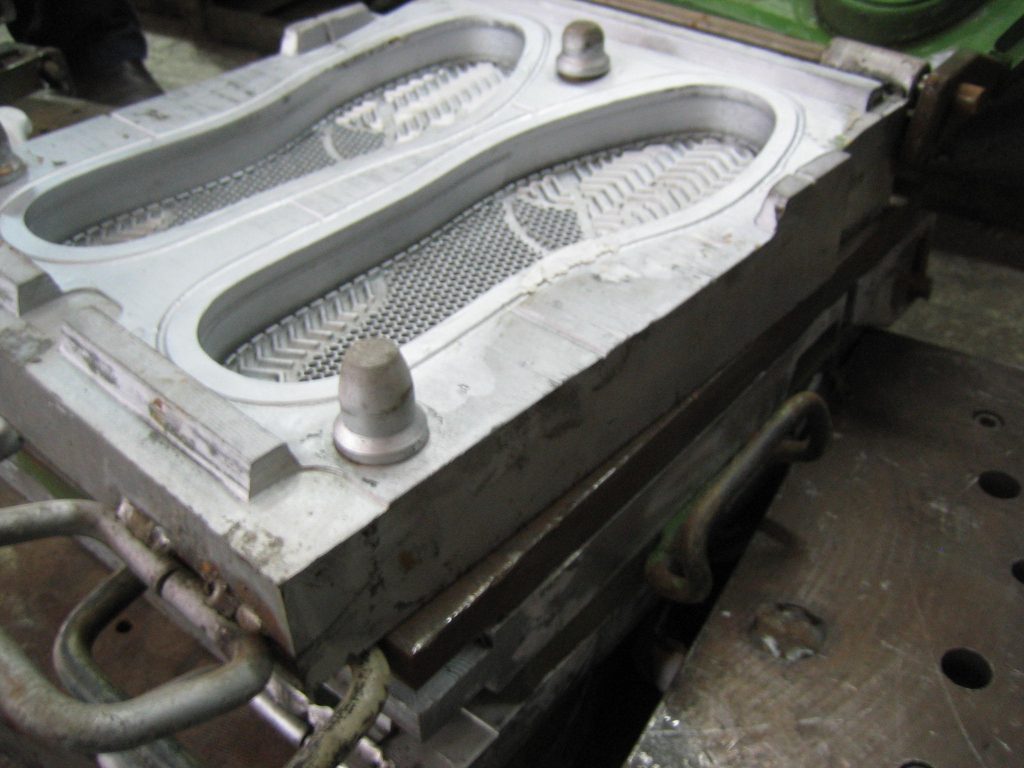
Footwear Outsole Mold Production- Tour a Mold Factory

Today we toured the Yuan Shen Metal Mold Company. My friend David Collins, a 30 year + shoemaking veteran, is the Vice President of Sales and handles the English speaking customer relations. David has worked in Korea, Taiwan, China, and Vietnam, making shoes for many top brands.

Located in South China

Yuan Shen Metal Mold Company is located in the South China city of Chang An. Yuan Shen is in the heart of the China shoe trade; you can get to the factory by car from Hong Kong in 2 hours or from the Shenzhen Airport in 45 minutes.

CNC cutting Outsole Tooling in ChIna

Yuan Shen is a full-service footwear outsole mold design and fabrication factory. The factory has 2D and 3D design capabilities for outsole, midsole, and injection parts. You provide the lasted upper and 2D design, the team here will make your outsole design to fit. Yuan Shen works directly with your choice of shoe factory as a subcontractor. When you work with a contractor like Yuan Shen, you own and control the outsole molds.

David has worked with Yuan Shen to make sure they have the right equipment to make all types of footwear molds. With 6 high-speed CNC machines, Yuan Shen can make a size run of wood cuts in 3 days and a full set of metal molds in 40 days.

In house SLA 3D printing

They have rapid prototype development service. David showed us the in-house SLA 3D printing equipment. They can also create PU pouring silicone molds. These molds cost around $350 and can be used to make up to 15 flexible, wearable test parts for prototype shoes.

Their mold prices are very competitive for the South China tooling market.
$1,400 rubber outsole molds CNC cut steel with Teflon coating

$1,800 to $2,000 for cast aluminum EVA midsole pressing molds.

Vietnam production

The Yuan Shen Metal Mold Company has built a sister factory outside of Ho Chi Minh to serve customers with Vietnam production. Many of their customers take advantage of their China development service and then have the production molds produced in Vietnam.

If you would like to arrange a tour or discuss your mold requirements,
contact David Collins directly. Datoe1961@Gmail.com

Shoemaking
TextbooksBuy Now
Shoemaking
SuppliesBuy Now
Shoemaking
CoursesCourse Details

Previous
Next

Posted on

What’s Inside the Nike Air VaporMax?

What’s inside the Nike Air Vapormax?

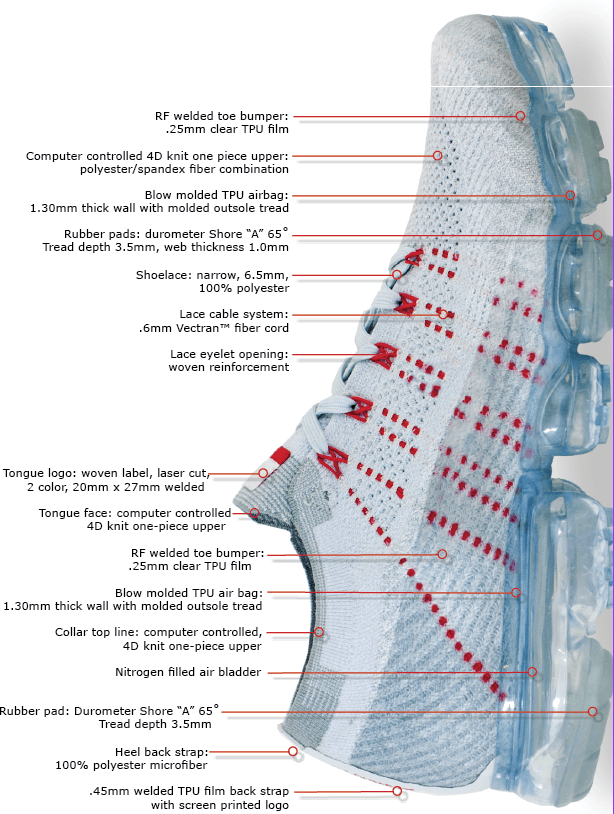
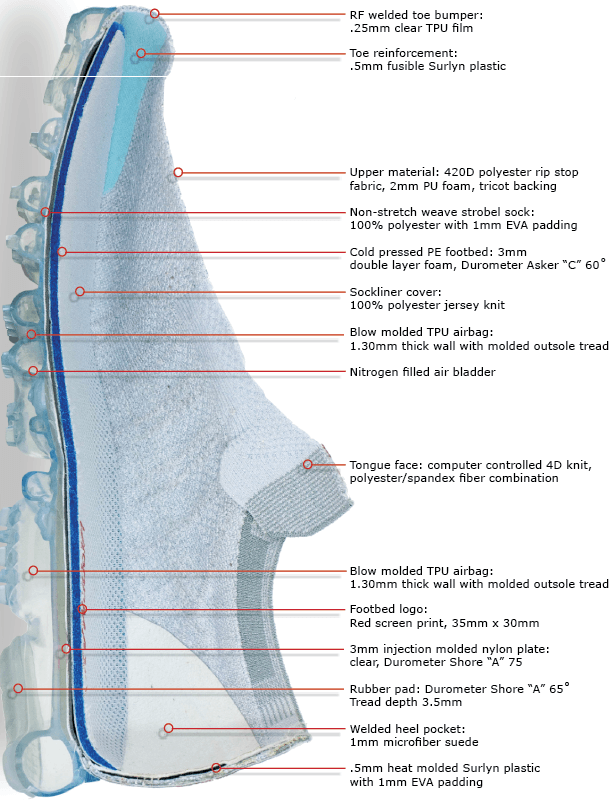
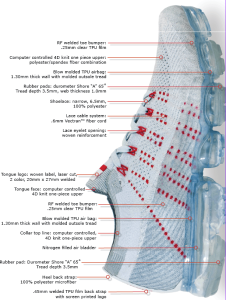
Do you want to know what’s inside the Nike Air Vapormax? So do we! Here at the Sneaker Factory workshop we love to see what’s inside the newest Nike shoes. Rather than murder our fresh pair of Nike VaporMax with a table saw, we took the time to carefully cut a sectional view so you can see inside. But before we get to the sneaker chop, let’s have a look at the outside.

The Nike Air VaporMax Shoe Specification

Before we cut into our Nike Air VaporMax we detailed the shoe material specifications:What’s inside the Nike Air Vapormax?

Inside the Nike Air VaporMax

Yes! we are doing the sneaker chop on the Nike Air VaporMax.  Now we can truly see the minimalist design first hand.

What’s inside the Nike Air Vapormax?


RF welded toe bumper: .25mm clear TPU film
Toe reinforcement: .5mm fusible Surlyn plastic
Upper material: 420D polyester ripstop fabric, 2mm PU foam, tricot backing
Non-stretch weave Strobel sock: 100% polyester with 1mm EVA padding
Cold pressed PE footbed: 3mm double layer foam, Durometer Asker “C” 60˚
Sockliner cover: 100% polyester jersey knit
Blow molded TPU airbag: 1.30mm thick wall with molded outsole tread nitrogen filled air bladder
Tongue face: computer controlled 4D knit, polyester/spandex fiber combination
Blow molded TPU airbag: 1.30mm thick wall with molded outsole tread
Footbed logo: Red screen print, 35mm x 30mm
3mm injection molded nylon plate: clear, Durometer Shore “A” 75
Rubber pad: Durometer Shore “A” 65˚ Tread depth 3.5mm
Welded heel pocket: 1mm microfiber suede .5mm heat molded Surlyn plastic with 1mm EVA padding
RF welded toe bumper: .25mm clear TPU film
Computer controlled 4D knit one-piece upper: polyester/spandex fiber combination
Blow molded TPU airbag: 1.30mm thick wall with molded outsole tread
Rubber pads: durometer Shore “A” 65˚ Tread depth 3.5mm, web thickness 1.0mm
Shoelace: narrow, 6.5mm, 100% polyester
Lace cable system: .6mm Vectran™ fiber cord Lace eyelet opening: woven reinforcement
Tongue logo: woven label, laser cut, 2 colors, 20mm x 27mm welded
Tongue face: computer controlled 4D knit one-piece upper
RF welded toe bumper: 25mm clear TPU film
Blow molded TPU airbag: 1.30mm thick wall with molded outsole tread
Collar top line: computer controlled, 4D knit one-piece upper
Nitrogen filled air bladder rubber pad: Durometer Shore “A” 65˚Tread depth 3.5mm
Heel back strap: 100% polyester microfiber .45mm welded TPU film back strap with screen printed logo.

Do you want to see inside more Nike shoes?

What’s inside the Nike Air Vapormax?Our book, the Shoe Material Design Guide, details all the shoe materials you will need to make modern athletic, classic casual, and high fashion footwear.
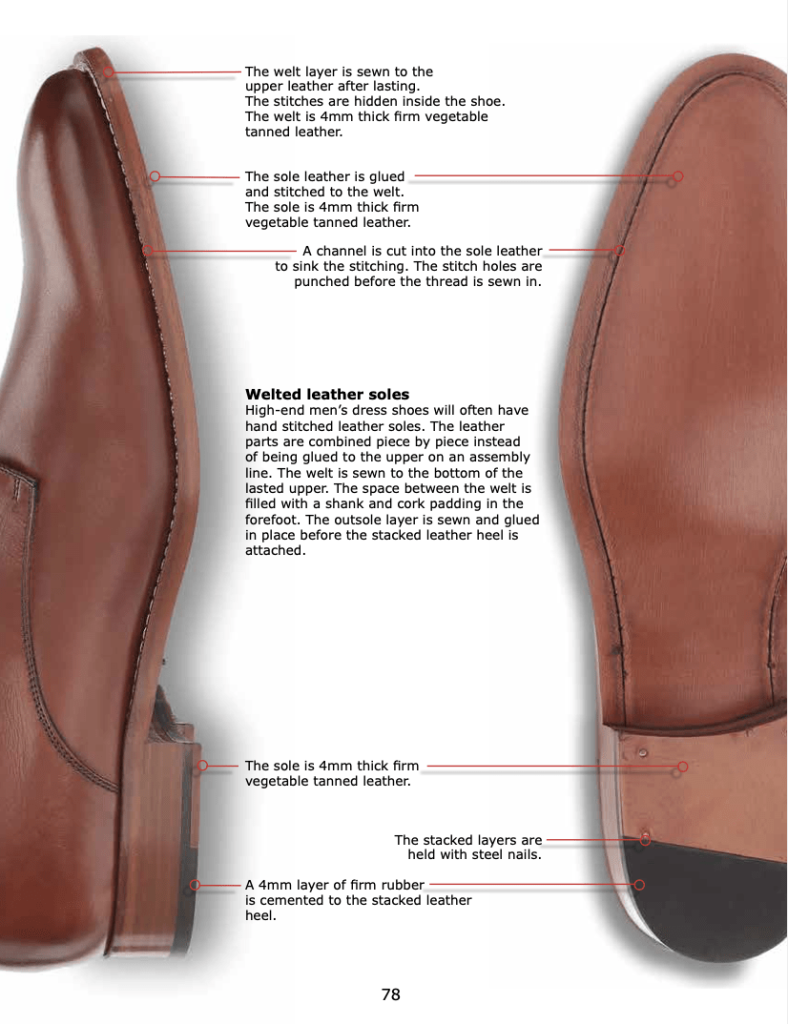
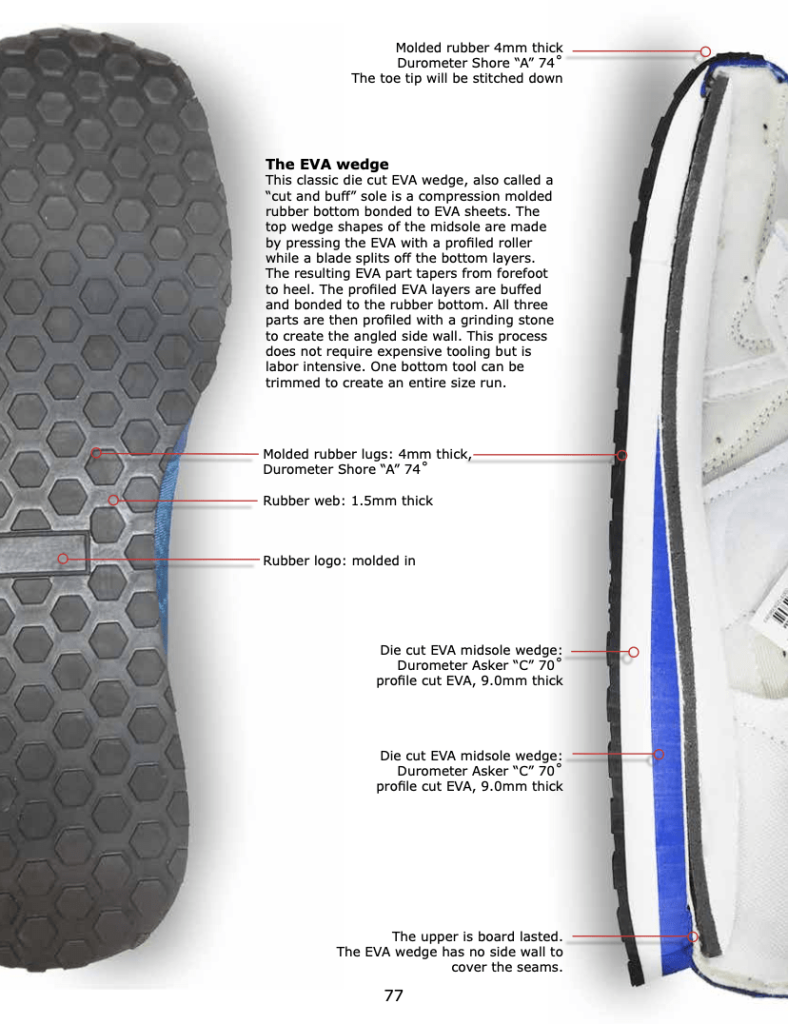
Each chapter covers a specific shoe material type. You will learn how each material is made, the options available, and how to specify the material correctly. We have chapters on shoe leather, textiles, synthetics, shoelaces, glue, reinforcements, hardware, logos, midsoles, outsoles, and more! We have included annotated cross sections of over 30 different shoe types.
You can see exactly how each material is used inside real production shoes. See inside basketball shoes, running shoes, track spikes, hiking boots, work boots, high heels, cowboy boots, and many more!


You will also find information on topics such as material testing, sustainable production, exotic materials, and more. Written as a companion to our best selling How Shoes Are Made, the Shoe Material Design Guide digs deeper into the world of footwear materials and design. Softcover, 330 color photos,  28 chapters, 195 pages.

Available as an instant download or softcover. Order from us here at ShoemakersAcademy.com or around the world on Amazon. Start reading today!


New Online Course
How to Select Shoe Materials

14 Shoe Material lessons. Over 4 hours of video instruction. In-depth study of leather, textiles, synthetics, and plastics for footwear. Material Design Guide Textbook included.
Course Details
enroll now $399

Posted on

Shoe Lasting Constructions

Shoe Construction Techniques

Once you have designed your shoe, you need to decide which shoe lasting type or construction technique is right for your shoe. Shoe “lasting” is the shoemaking operation that sets the final shape of a shoe and holds it in place so the outsole can be permanently attached. The ideal shoe pattern fits the last tightly. The lasting operation will stretch the upper a bit, but not so much as to damage the shoe materials.

Shoe Lasting Types

The shoe lasting type you select will depend on a few factors: the shoe upper material, the required stiffness of the finished shoe, and price. I’m going to review the most common shoe lasting constructions used to make athletic, casual, and dress shoes. These are slip lasting, Strobel lasting, California lasting, combination lasting, and board lasting.

Slip-Last sneaker construction learn how to make shoes

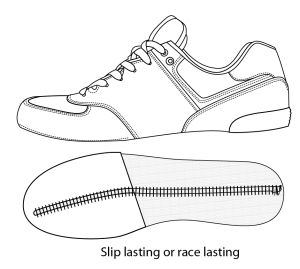
Slip Lasting

Slip lasting is used to make the most flexible shoes. It is often used to make lightweight running or racing shoes. Slip lasting can also be called moccasin type shoe construction. The shoe’s upper materials, usually mesh and polyester, are left long and patterned to meet in the middle of the shoe. Once the sides are joined, the upper will be steam-heated and the last slipped in with the shoe being laced up tight. The upper is then cooled so it will tighten before the bottom is attached.

Strobel lasting Strobel shoe constructionStrobel construction

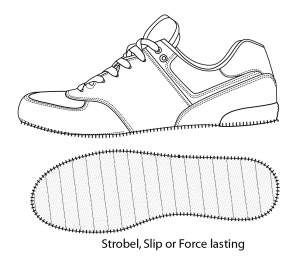
Strobel, slip, force, or California lasting is the most common shoe construction for casual and athletic shoes. Once the upper is complete, a “sock” or bottom material is added to “close” the upper. This material is non-stretch and is marked so the assembler can keep the upper straight on the last.  As before, once the upper is heated and slipped on, it will be cooled to make the material fit tight. A machine assist may be used to make sure the heel is down tight.  This shoe construction is used in almost every sports shoe.

Learn about the Shoe Business

Aspiring shoemakers start here! How Shoes are Made is your entry into the world of modern shoe making. Tour a real shoe factory and learn the process from design to manufacturing.
Learn more
Download $19.99

Toe_combination-Last shoe construction Combination Last

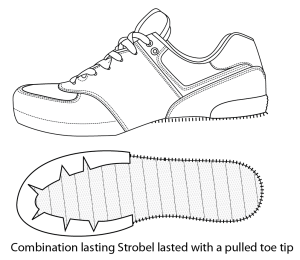
The combination last is used to ensure the toe of a shoe is correctly formed to the last. For a shoe with a smooth, solid toe cap, the Strobel sock may be attached to the inner lining, and a lasting “skirt” may be left on the toe cap pattern part. Once the upper is lasted, a second machine operation is used to pull the toe pattern part down tight. This shoe construction is often used on light hiking boots and basketball shoes with smooth leather toe tips. Toe lasting allows the leather to be shaped with a lasting machine.
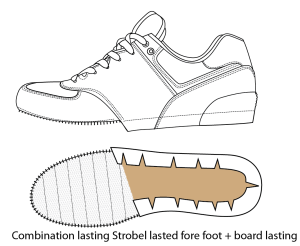
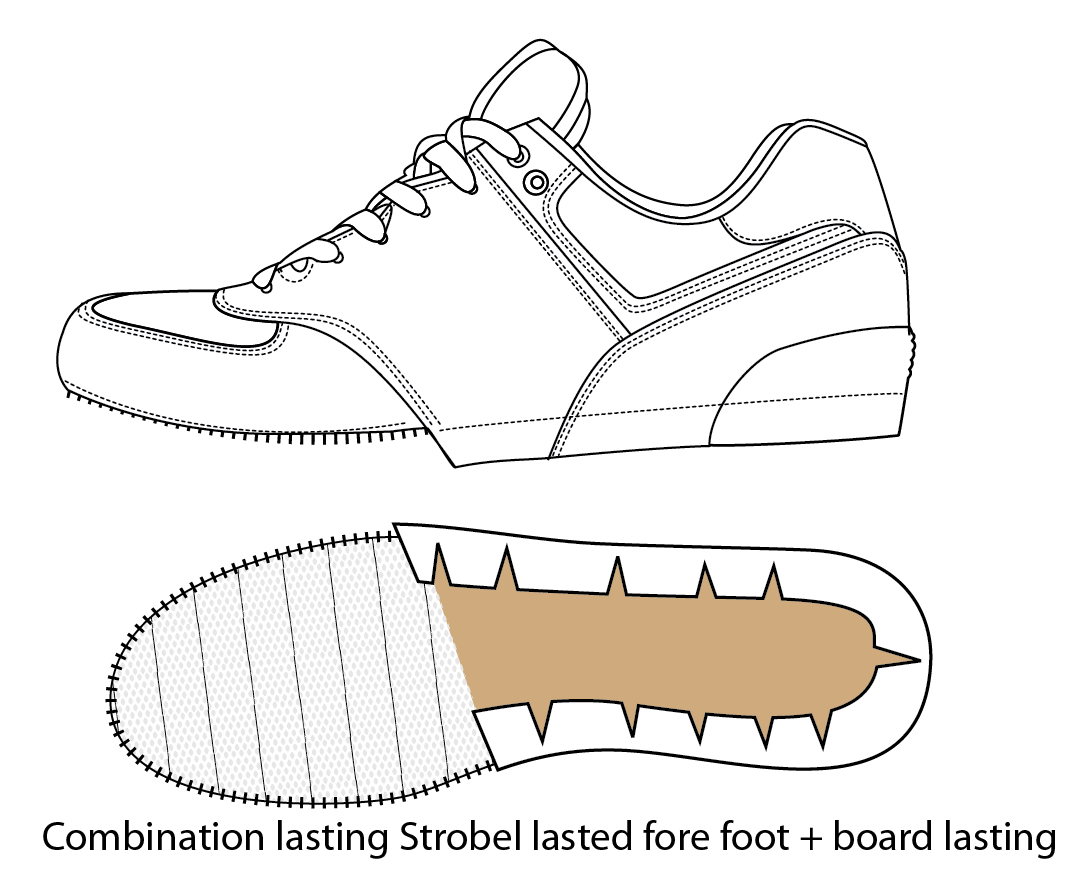
Combination Lasting shoe construction Another reason to use the combination last is to make a lightweight shoe stiffer. In this case, the forefoot is formed by Strobel, while the rear of the shoe is board lasted. This allows the shoe to have a shank or stiffer board in the rear of the shoes. For this type, a machine is used to “heel last” the upper, while the waist area may be pulled by hand with a pair of lasting pliers. You will find this shoe construction on “support” shoes and light hikers.

Board_Lasting_Shoe_construction Board Lasting

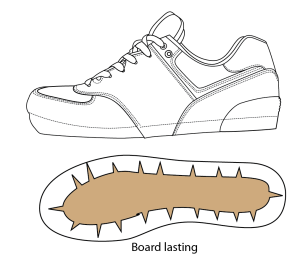
Board lasting is a very common process used to make military, hunting, hiking boots, or any shoe requiring a stiffer bottom and a steel toe. The open upper is placed into a lasting machine that grips the upper and pulls it down onto the last. The last has been prepared with a paperboard or plastic lasting board (could have a metal shank inside). In one operation, the lasting machine pulls the upper tight around the last and injects glue between the upper and lasting board. A heel lasting machine and some hand pulling will complete the operation before the outsole is attached.
Women’s fashion shoes are made by board lasting. A delicate touch is required by the lasting machine operator to avoid damaging the uppers in the lasting process. Handmade shoes are almost always board lasted by hand. Board lasting shoe construction is also used to make the classic running shoe.

New Course!
Shoemaking for Designers & Brand Builders

Created for footwear beginners and career changers alike, this course delivers the basic shoemaking knowledge you need to get you career in the shoe trades started.
Learn more
On sale $99

Additional Shoe Constructions and Information

There are many other shoe construction styles for fashion shoes and heavy boots. These include Blake Construction, Blake/Rapid Construction, Goodyear Welt Construction, Norwegian Storm Construction, Stitch Down Construction, and Bologna Construction. You can learn how to make shoes with these constructions here.  Shoe Construction Techniques
You can learn more about lasting and other shoemaking procedures in our book How Shoes Are Made. Learn more about shoemaking materials in our book Shoe Material Design Guide. Learn more about lasting in our new book, Last Design and Pattern Making.

Start Building Your Shoe Business

A must-have for anyone serious about launching a footwear company. 4 text books, shoe business documents and downloadable content not available anywhere else! The Shoe Company Start-Up Pro Pack is all you need to get your shoe business off the ground.
Learn more
Download Today