Posted on

Channel stitching a sneaker sole

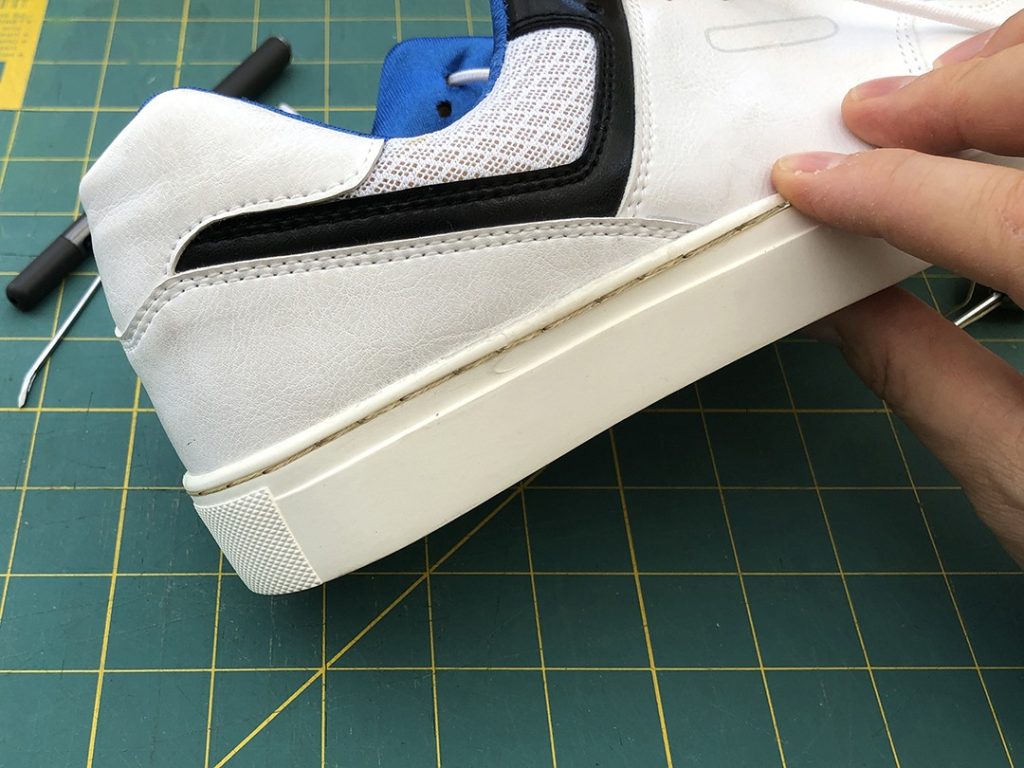
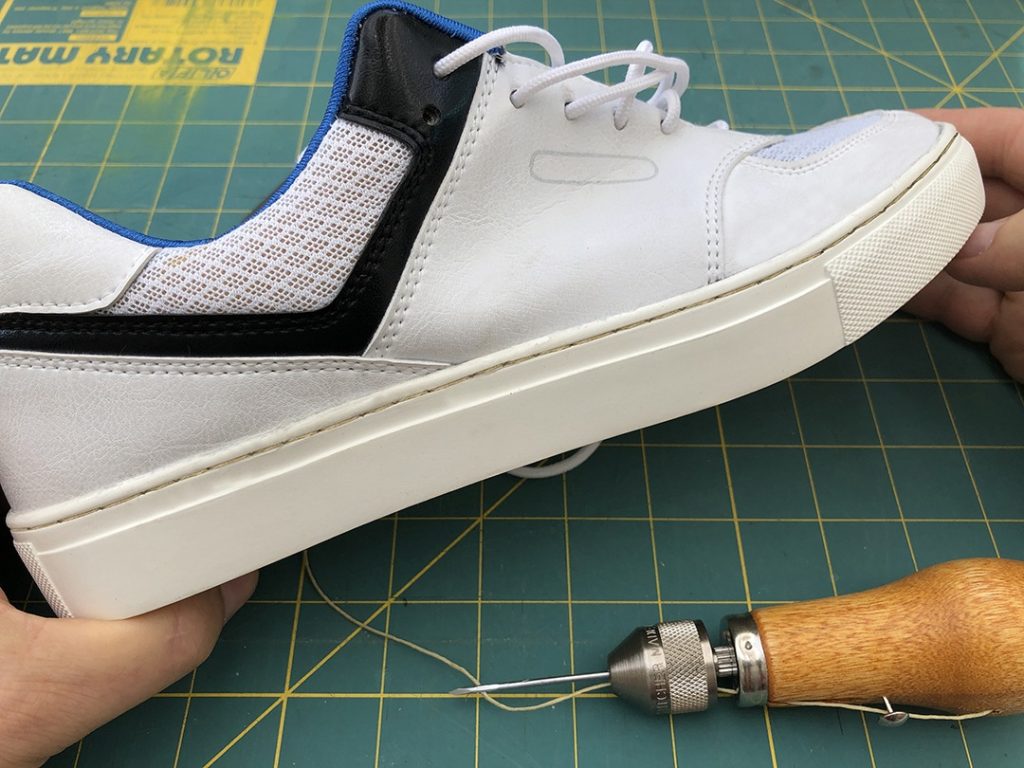
For a DIY sneaker project, it’s a good idea to reinforce the cement bonding with outsole channel stitching. You can stitch the toe, heel, or the entire perimeter. In the shoe factory, the workers will use a purpose-built channel stitching machine. The skilled worker can stitch a pair of shoes in less than a minute. Unfortunately, we don’t have this special equipment in our DIY workshop so we will use the Speedy Stitcher. You can find the Speedy Stitcher on Amazon.

Using the Speedy Stitcher

The Speedy Stitcher is a heavy-duty sewing awl with a built-in supply of thread. Follow the instructions on the package to assemble the stitcher with the straight needle and the thread running from inside.
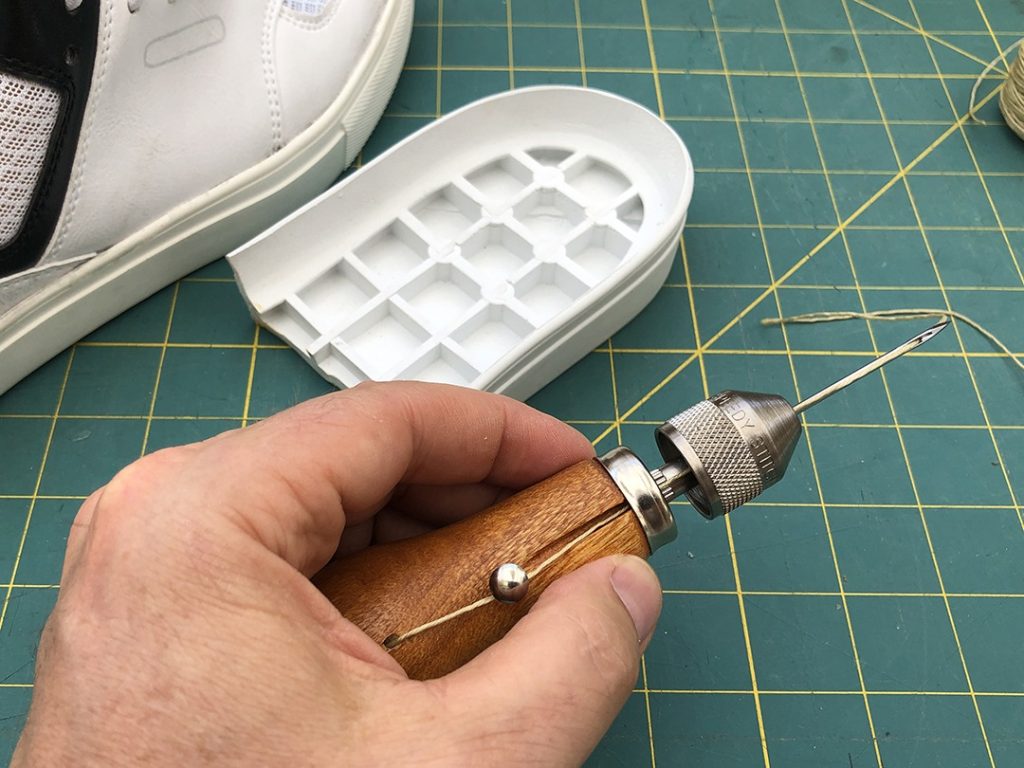
Getting started with the Speedy Stitcher

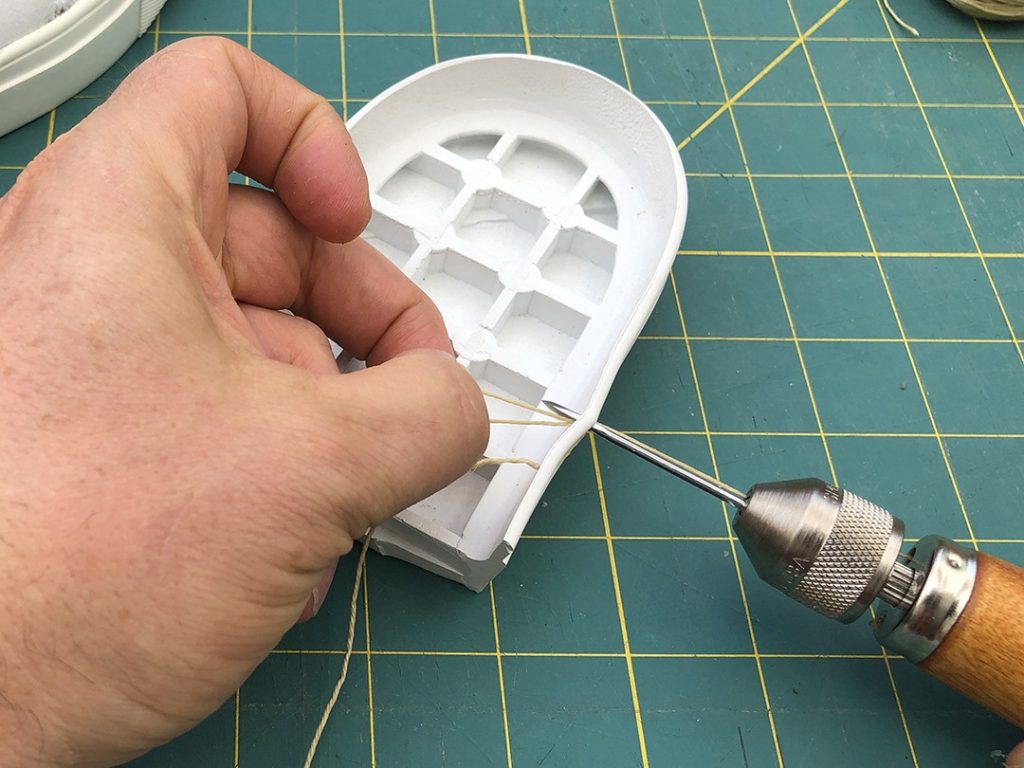
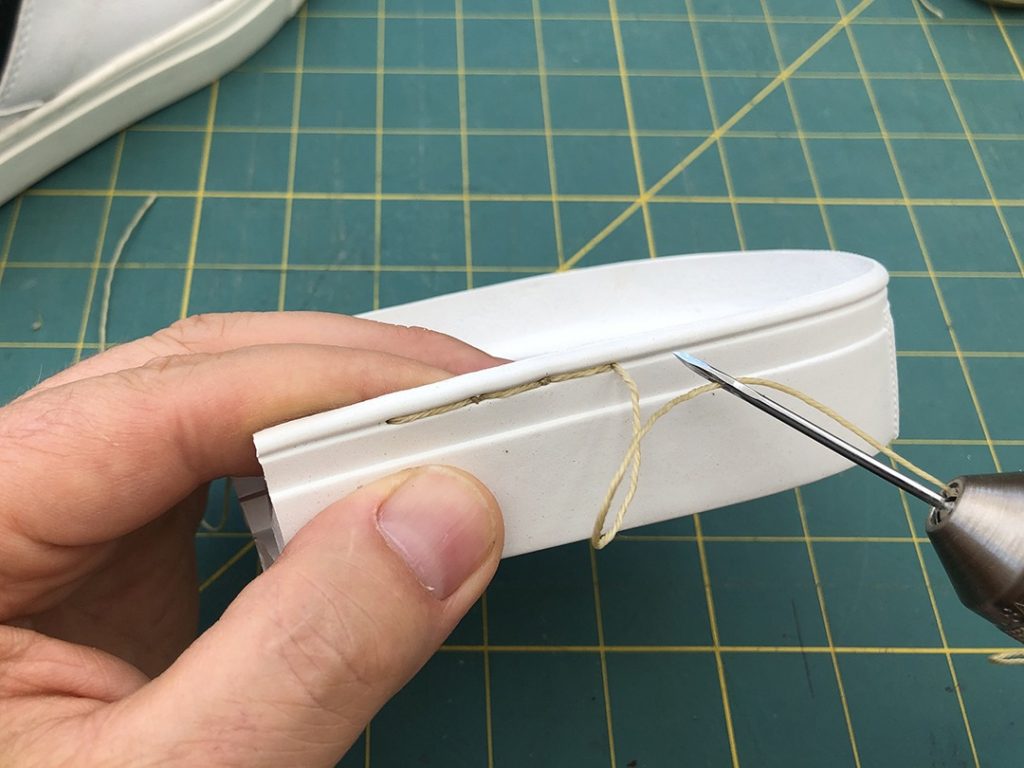
Here, you can see step-by-step stitching operations with the Speedy Stitcher. I am using a rubber sole without the upper attached for teaching purposes.

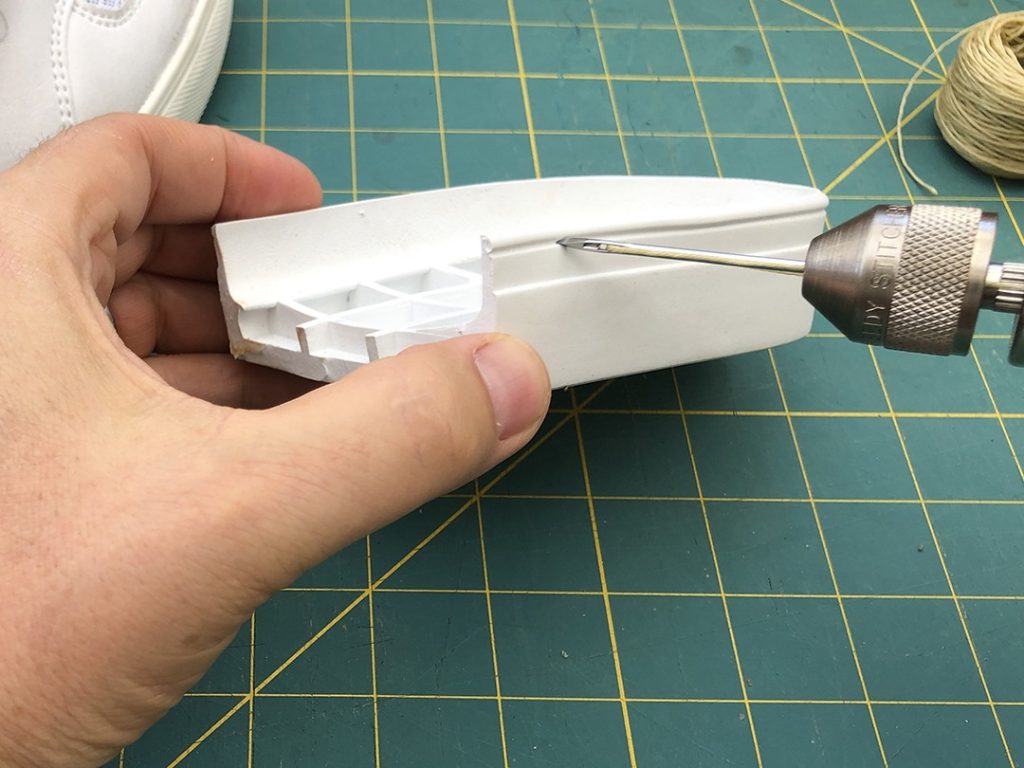
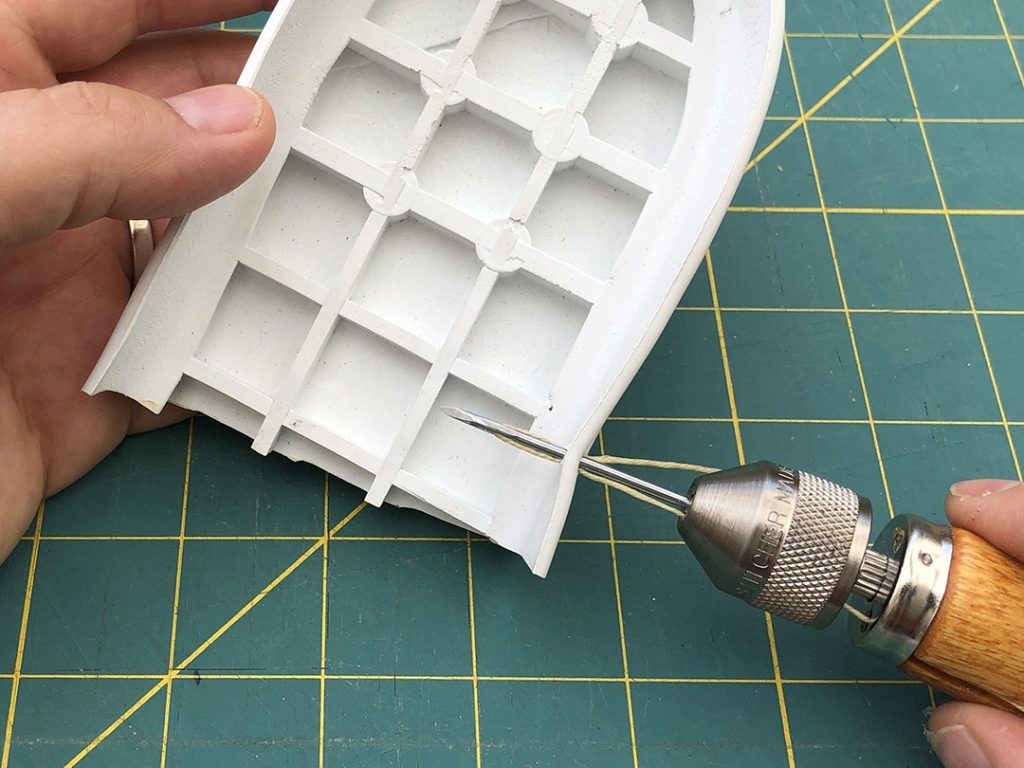
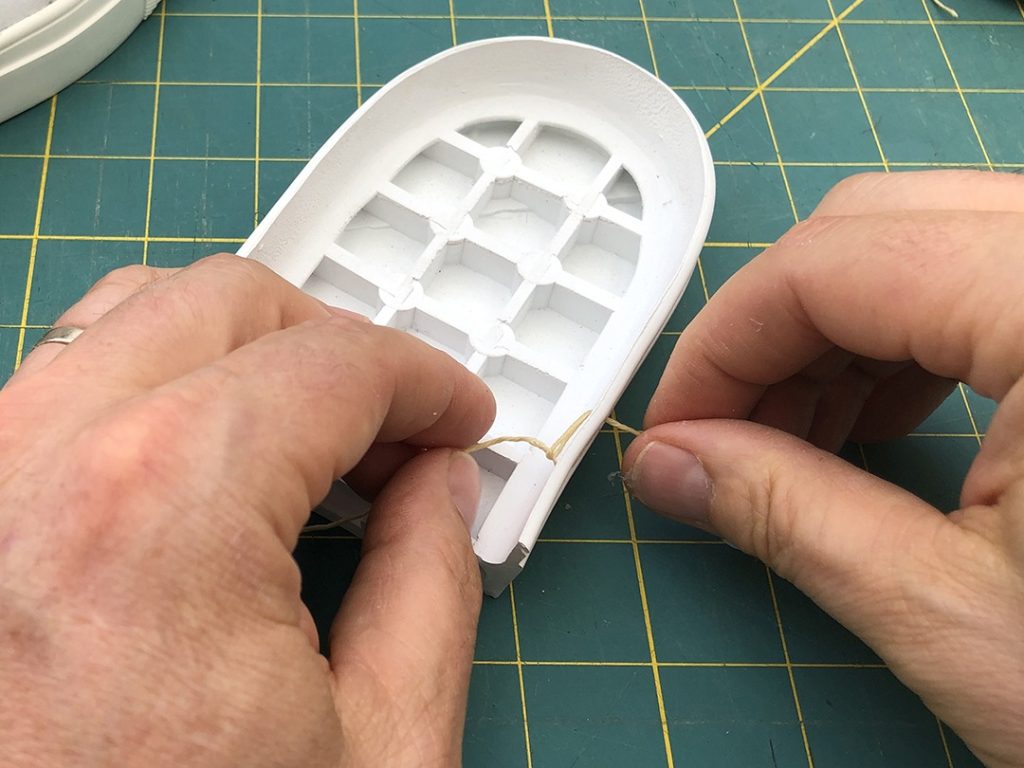
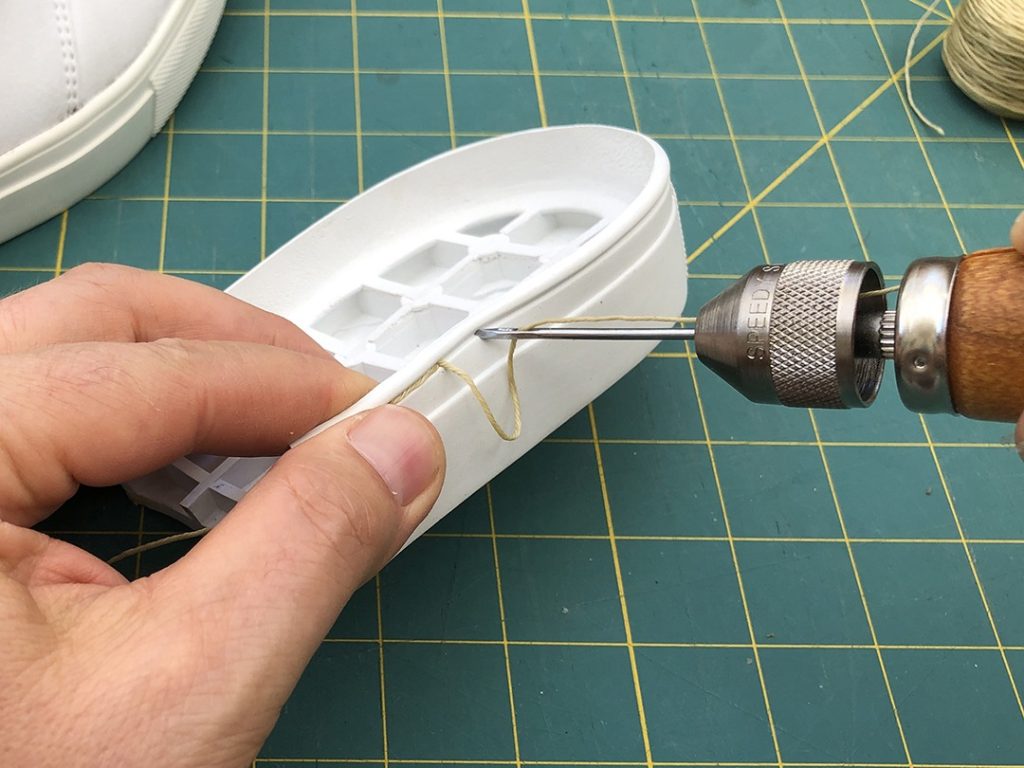
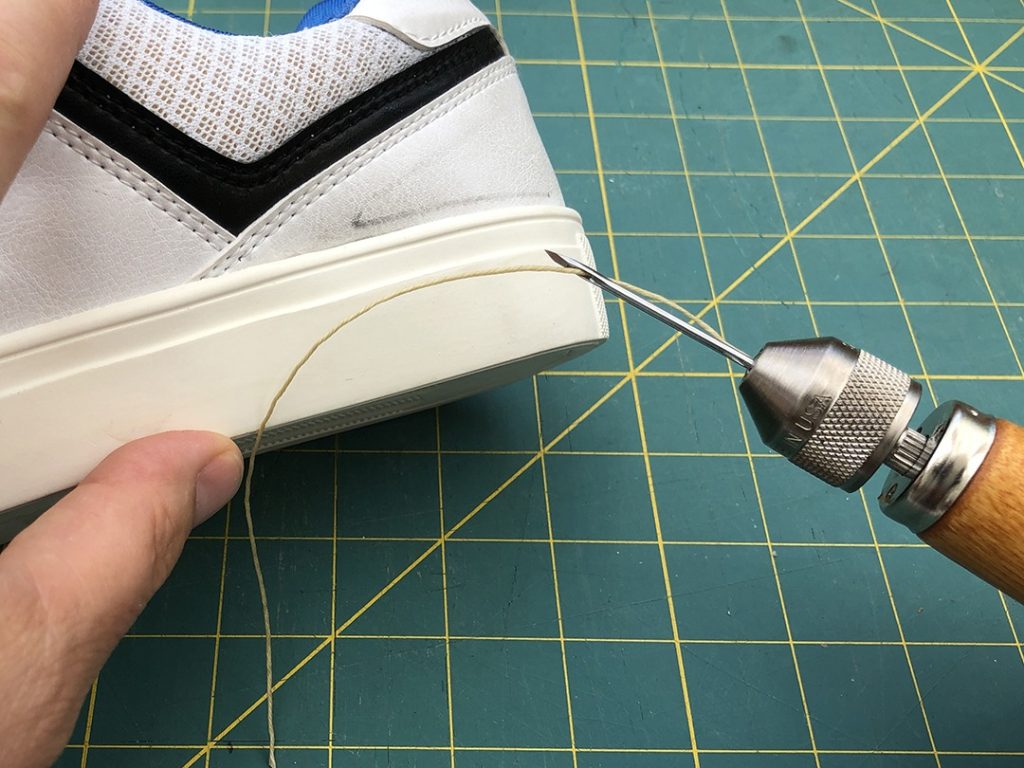
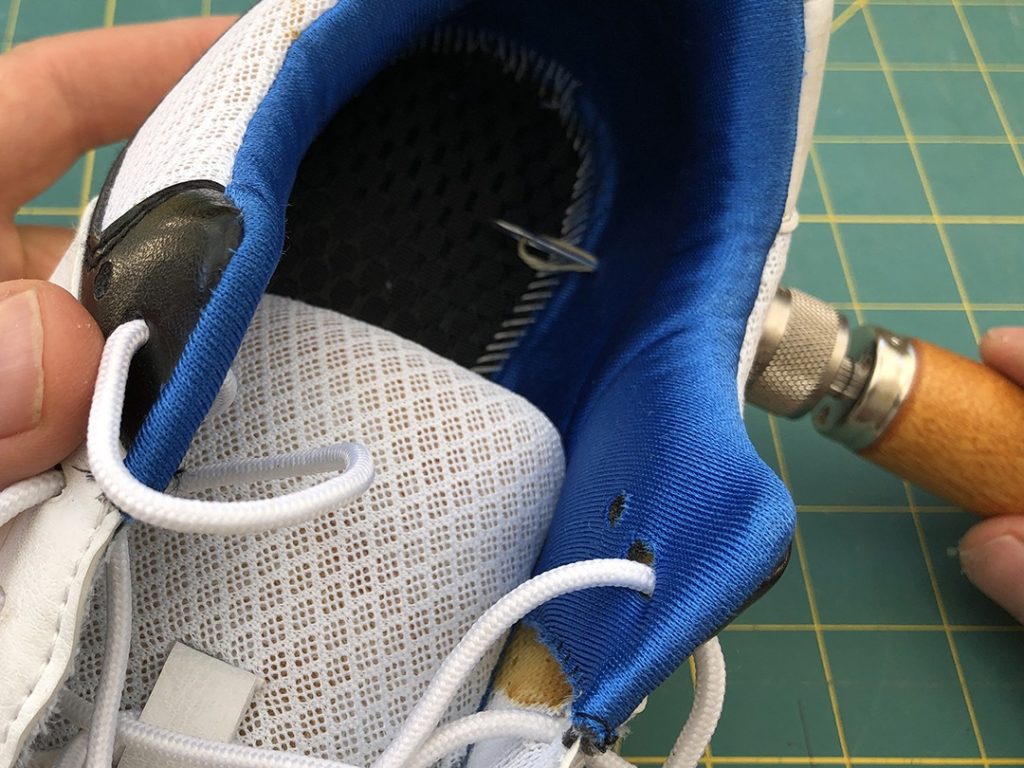
First, push the threaded need into the groove. Next, with the needle inside the shoe, pull the loose end of the thread through the hole. While holding the loose end of the thread inside the shoe, withdraw the needle. You will need the loose end to hold the stitches inside the shoe, so pull enough thread into the shoe to wrap the entire perimeter of the sole. This will be 80 cm to sew a size 11 or 44 shoe! This thread will be your bobbin thread as you sew.

You will use the entire length as you work around the inside perimeter of the shoe. Don’t worry if you run short, you can knot off the end and start a new thread line.

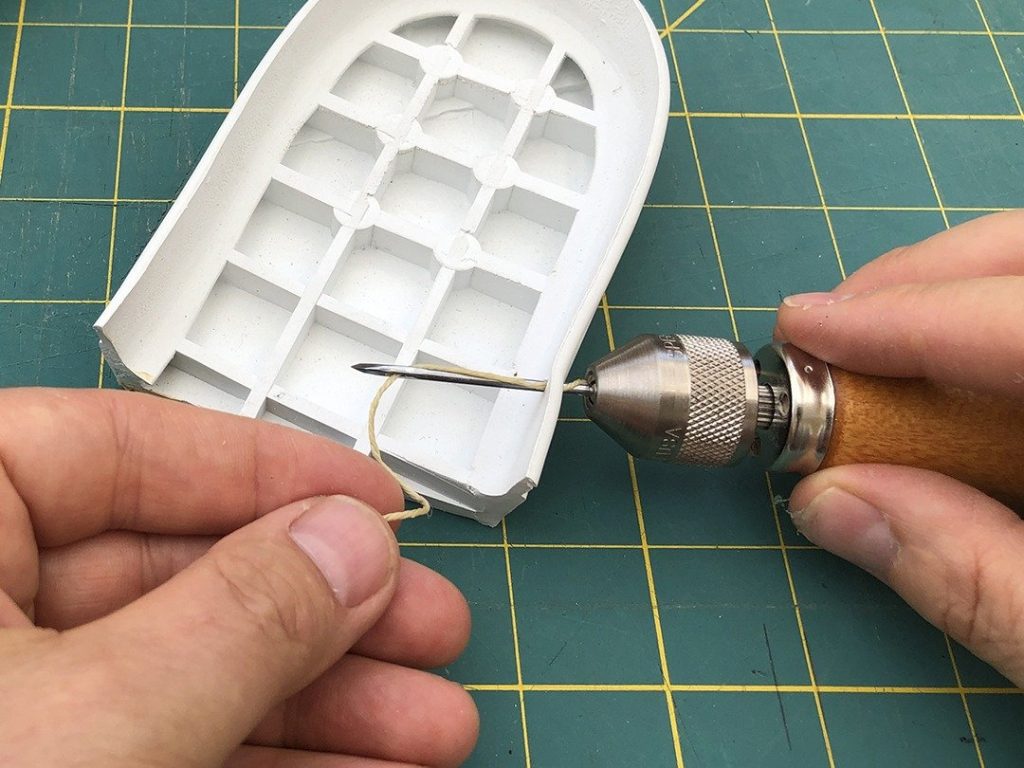
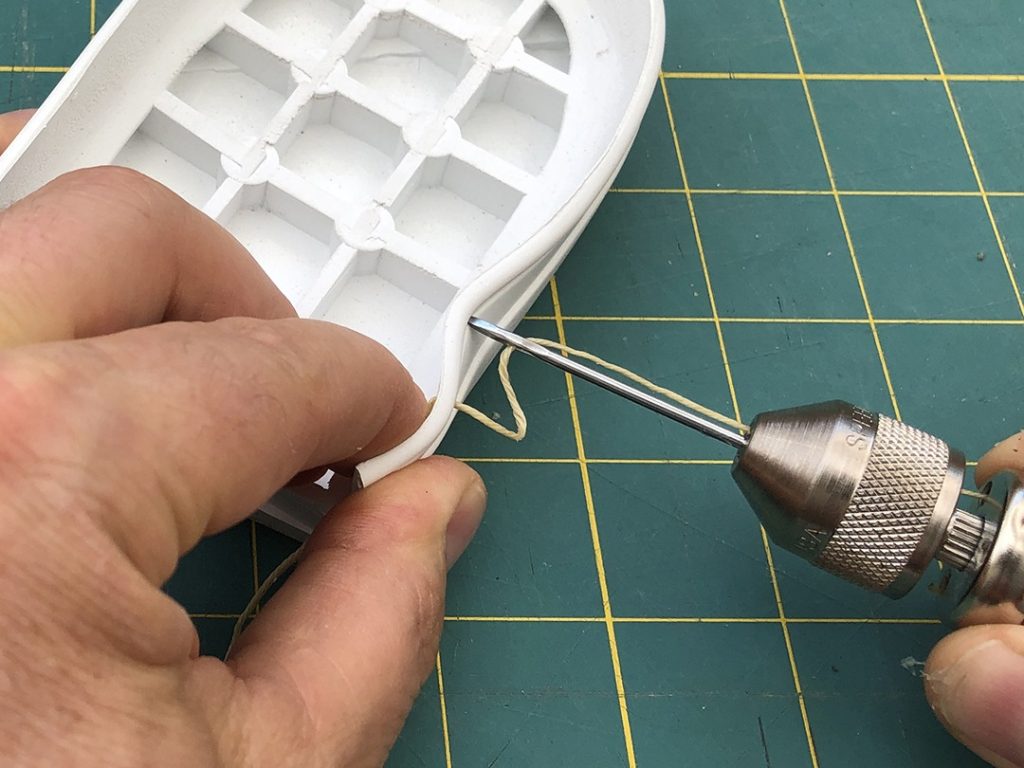
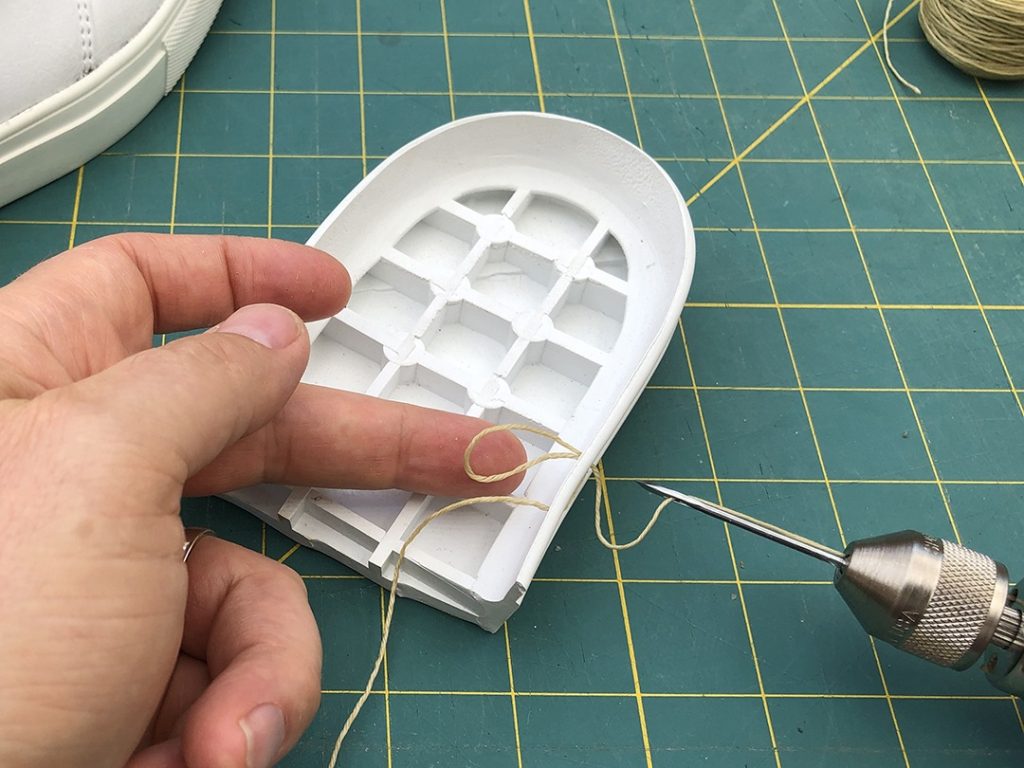
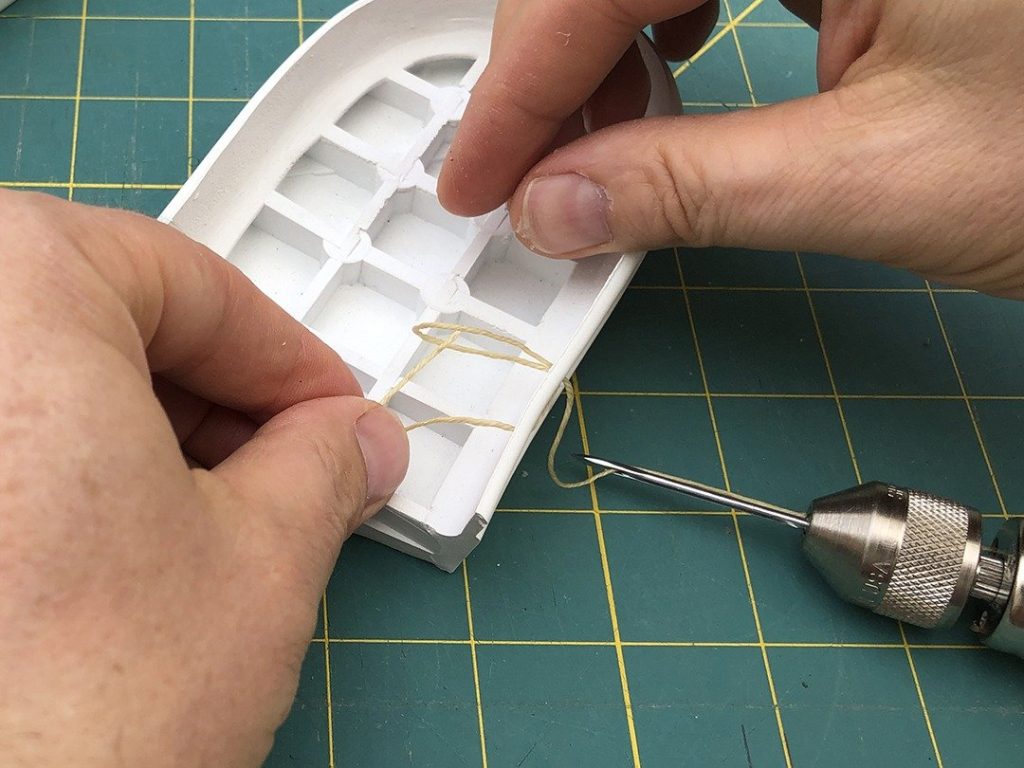
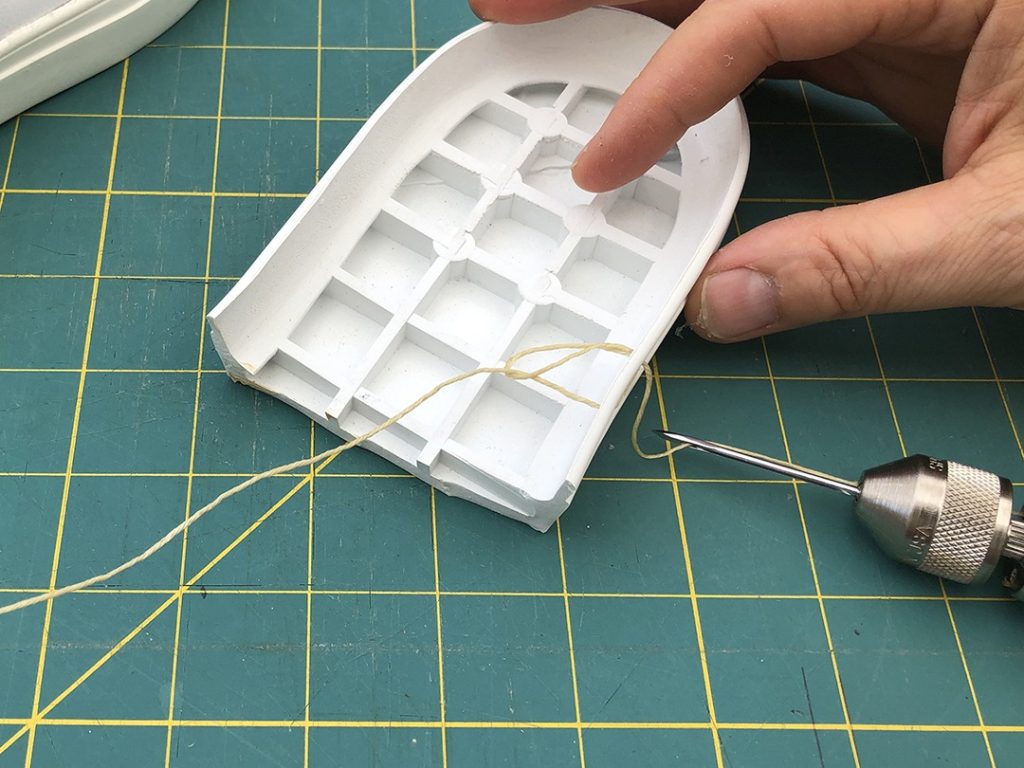
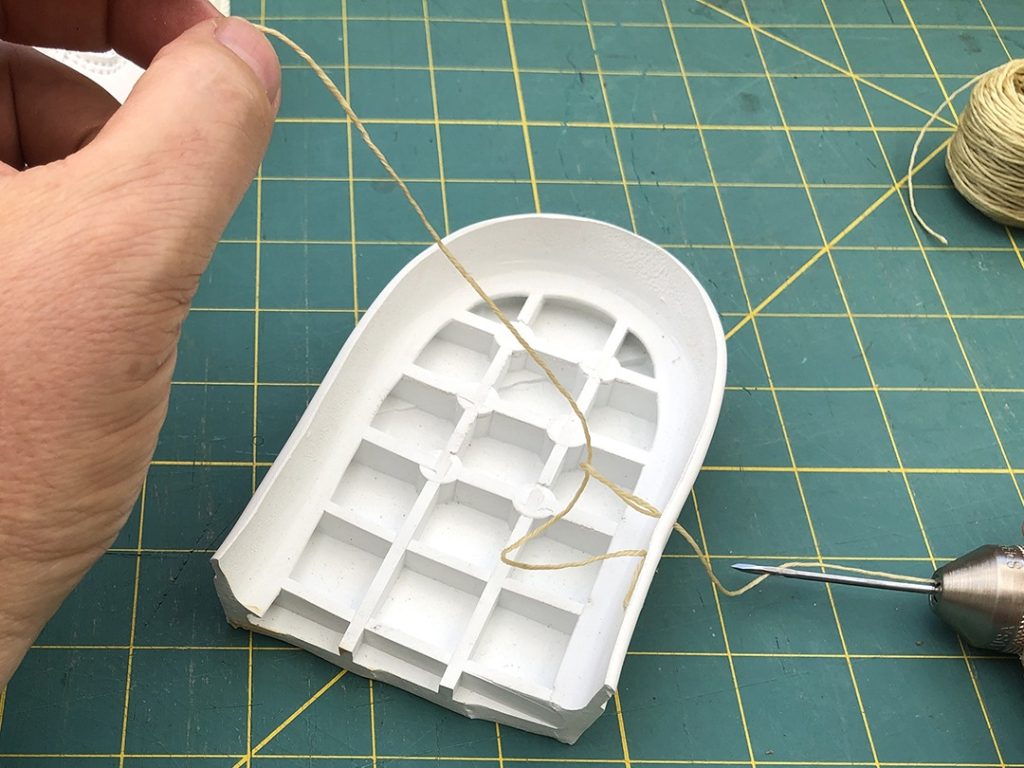
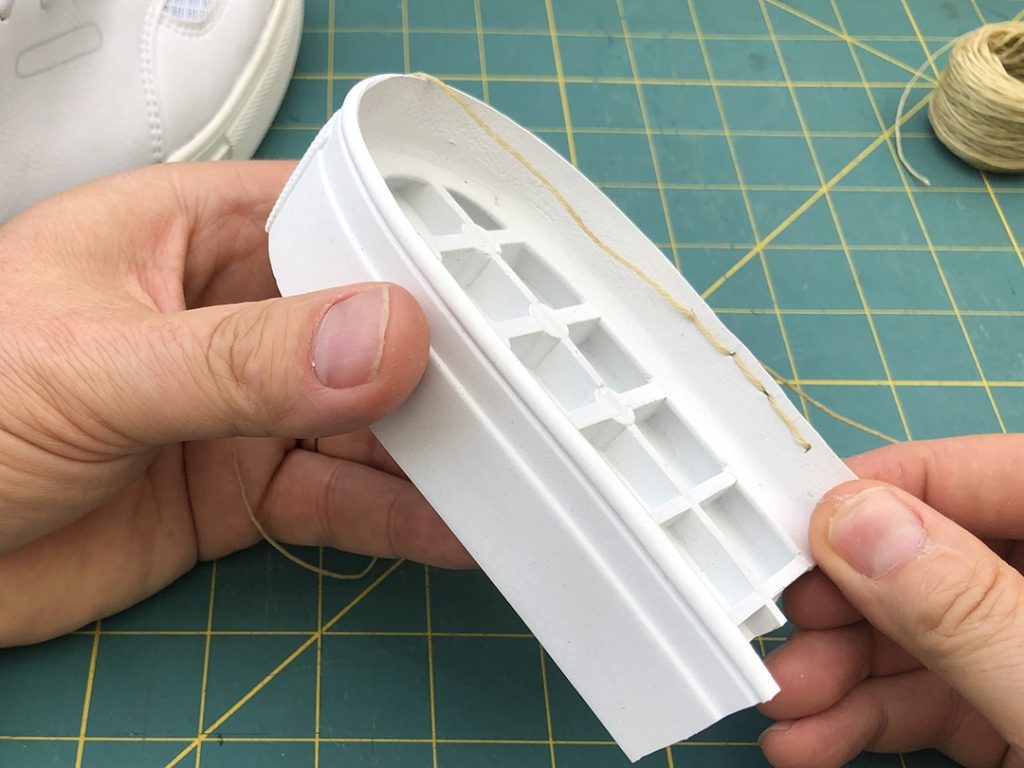
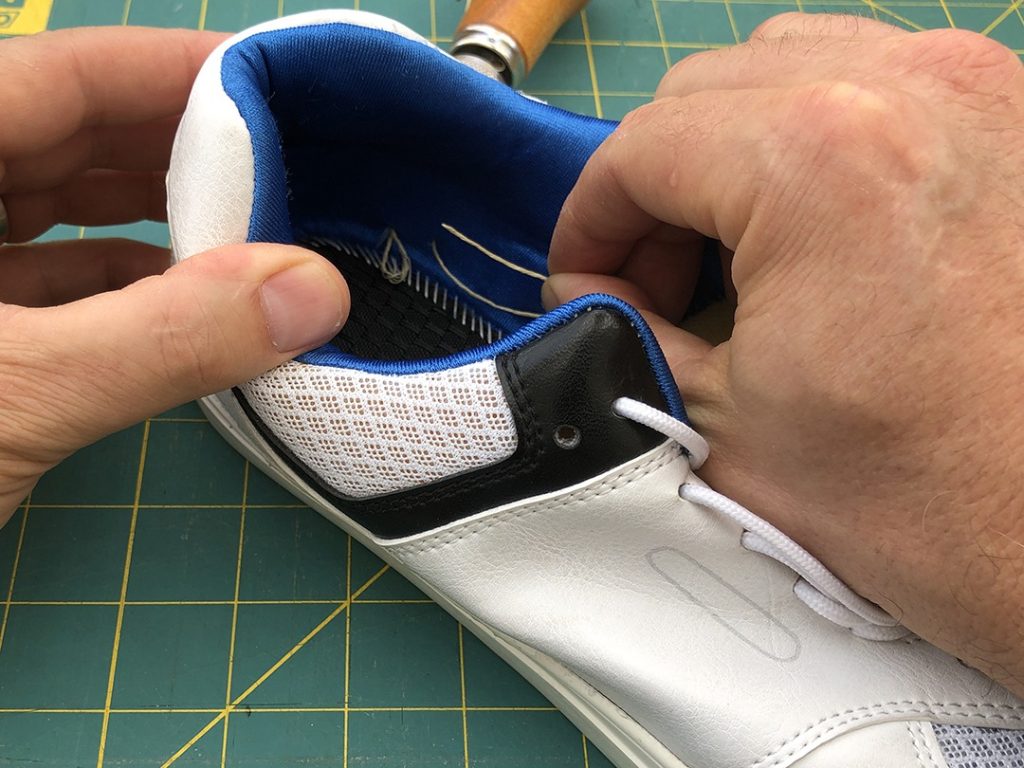
To complete your first stitch, push the needle back into the sole 10mm beyond your first hole. With the needle inside, pull the thread away from the needle, making a loop. While holding the loop in place inside the shoe, withdraw the needle. Next, feed the inside bobbin thread through the loop. You can add a hooked needle to the inner thread to make this operation easier. Now, tension the outside thread and the inside thread to secure the stitch. You have made your first stitch!

When you are working inside the toe of your shoe, pull the inner loop 2 or 3 inches long so you can see the loop and easily feed in the bobbin thread.

Here is the step-by-step sole stitching process

Stitching your shoe sole

Your first stitch may take a few minutes to get right. Be patient. With a little practice, you will move faster. Hand stitching your outsole may take you an hour or more. Relax, play some music. You will build muscle memory and a rhythm. Inside the toe of the shoe can be a challenge; make sure you have a well-lit workspace, and it’s okay to pull the inner loop out long enough so you can see when to feed the bobbin thread.

When you get to the end, knot the threads together and trim them off. Now, run your hand along the inside to check for any loose threads or rough spots. Jobe done!

Shoemaking Material
DIY Super Kit

All the hard find parts for your DIY shoemaking project are here in one place. Lasts, soles, materials, tools and pattern making text book included. Your shoe size is in stock. Learn more On sale $200
Posted on

Outsole Cementing Process

DIY Outsole assembly

DIY outsole cementing: step-by-step process

Today in the workshop, we are finishing the assembly of our sneaker test pattern. Here, we will cover the step-by-step process of preparing the outsole units and uppers for cold cementing and sole stitching. We don’t have a shoe factory with presses and heat tunnels so we are going to adapt the cold cement process for the home workshop and DIY shoemaker.

Sneaker sole cementing tools

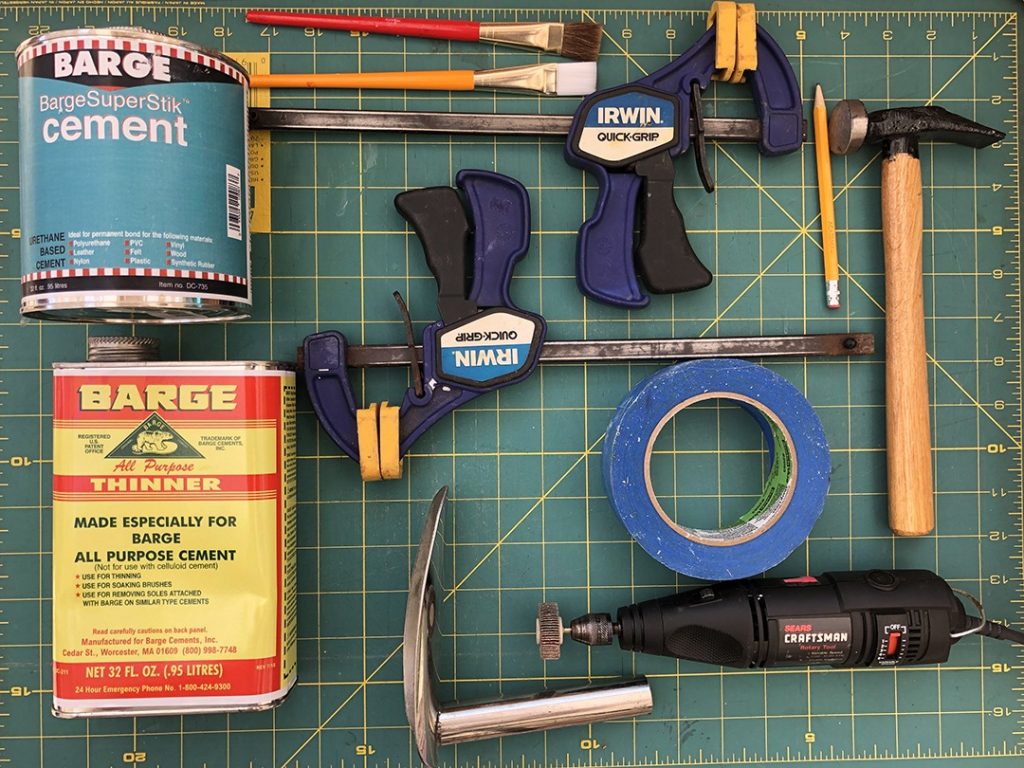
Before we cement together our sneaker, we will need to collect some tools. For this process, we are going to use as many common household tools as possible.

Sneaker sole cementing tools

Sneaker Sole Cementing Tools
  1. Cement (I like Barge)
  2. Cement thinner (Make sure you have the correct thinner for your cement!)
  3. Brushes
  4. Shoehorn (if you are making a Strobel shoe)
  5. Sandpaper or rotary buffing tool
  6. Pencil
  7. Flat-faced hammer
  8. Clamps
  9. Non-staining tape

Sneaker parts

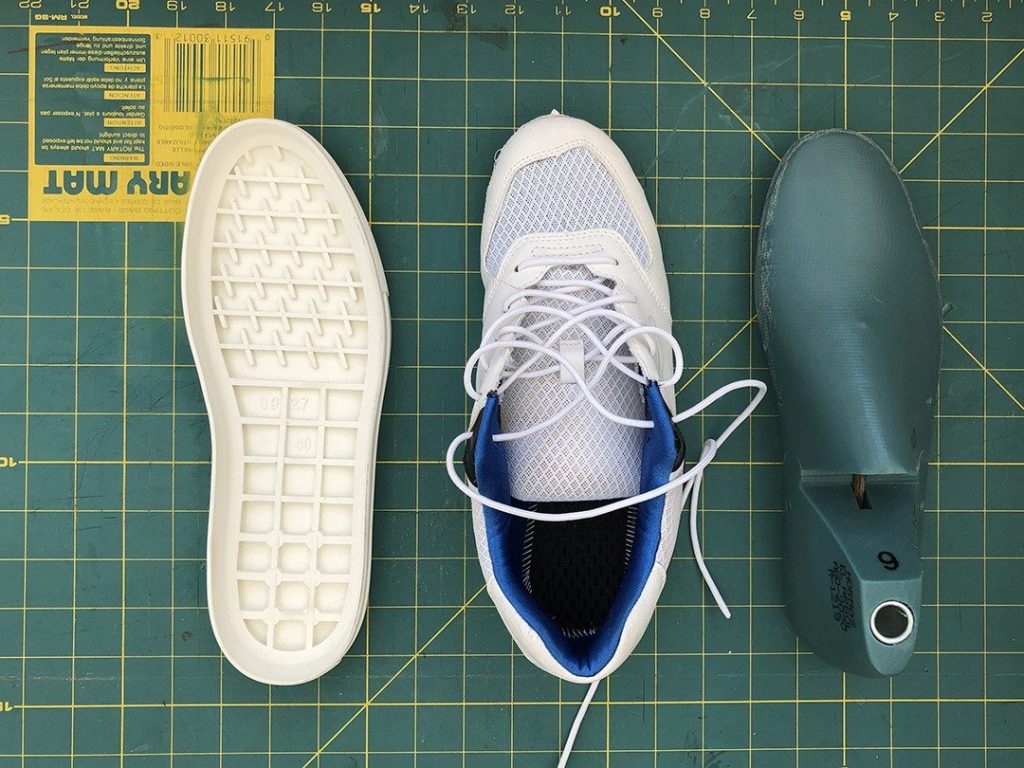
You need your upper, your last, and your outsole unit. If your upper has laces, make sure you have threaded the shoelaces or have some temporary laces installed.

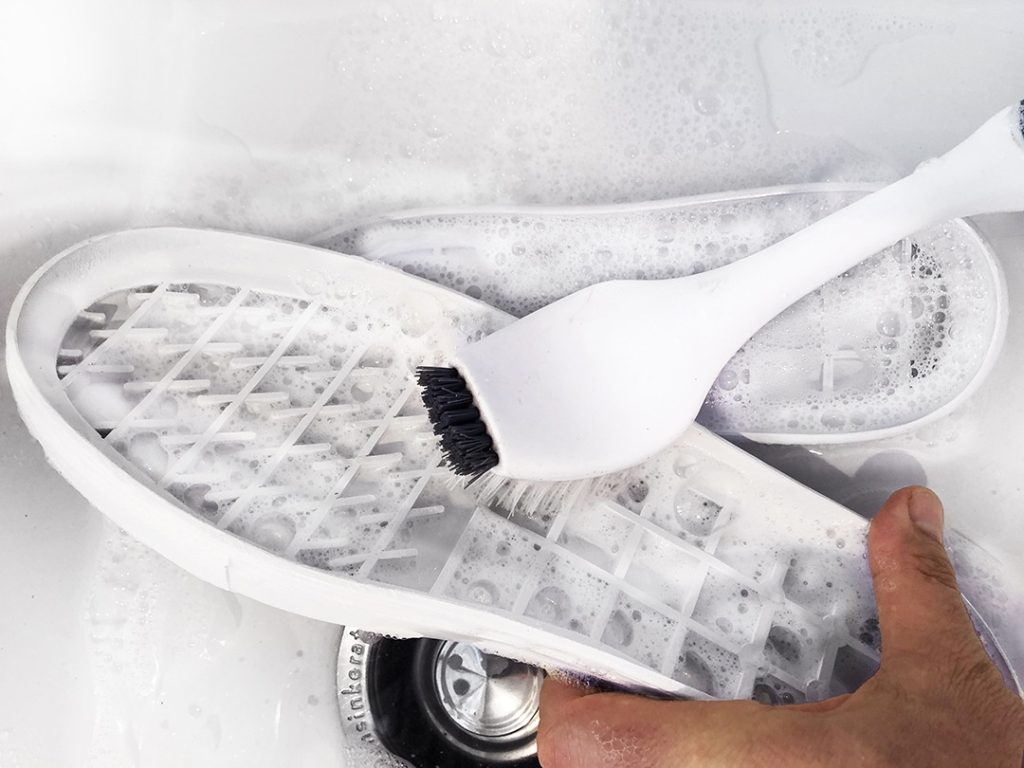
Washing your sneaker outsoles

Washing your sneaker outsoles Yes! You should wash your outsole parts.

Yes! You should wash your outsole parts. During the manufacturing process, the production mold is sprayed with a lubricant. The lubricant spray helps the rubber flow in the mold and allows the hot metal and rubber to be separated once the molding is complete. Before you can bond your parts, give them a hot soapy bath.

Lasting your uppers

Lasting your upper

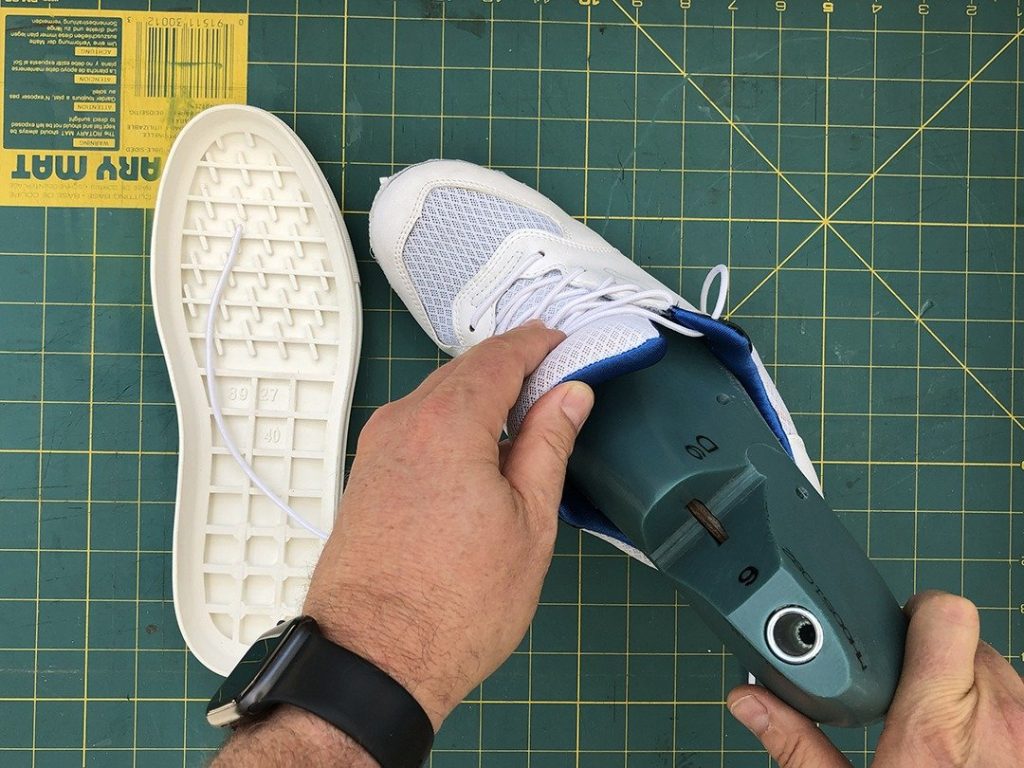
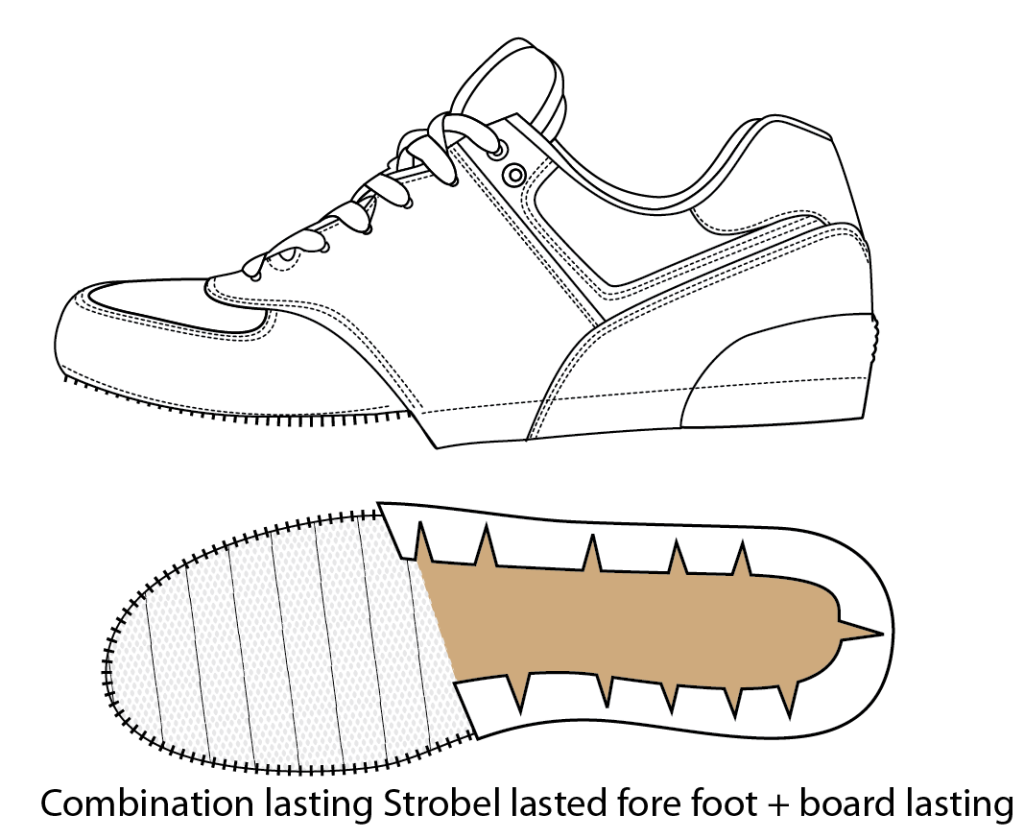
If you are building a board-lasted shoe, you may already have your uppers lasted and ready. In this case, I will show you how to prepare a Strobel upper. Carefully slip or force the last into the upper. If the upper is very tight, you may use a damp towel and a little heat to soften the upper. I have a proper industrial shoehorn to help. Work slowly so that you stretch the upper without damaging the material or stressing the seams. Make sure the shoelaces are loose. If you have a hinged last you can “break” the last to get it inserted, then carefully close the last to tighten the upper.

 
Lasting your upper

With the last completely inside, tension the laces bottom to top. Pull tight! Now, check the upper fitting to make sure you don’t have any loose spots. You can use a hammer to seat the heel and toe down to the last. You may need to tighten the laces again afterward. Make a final check that the pattern is straight and not crooked or rotated on the last. If you steamed the upper or used a damp towel, now is a good time to dry the upper with a hairdryer. Let the upper cool off and dry out; this will help pull the upper tight to the last. Now, recheck your shoelace tension.

Lasting your upper

Shoemaking Material Kit

All the hard to find parts for your DIY shoemaking projects are here in one place. Lasting board, Strobel material, lining mesh, collar foam and all the reinforcing parts you need to make shoes. Buy Now On sale $39.99

Test fitting the upper to the outsole unit

With the upper tight to the last, it’s time to double-check the fit of the sole unit. Most rubber outsole parts have some stretch, and we are looking for a tight fit. If the rubber is loose, you will need to downsize. It’s better to stretch a small unit than try to bond an oversized part.

Check the fitting around the length, toe perimeter, across the bottom, and sidewalls.

Marking the upper

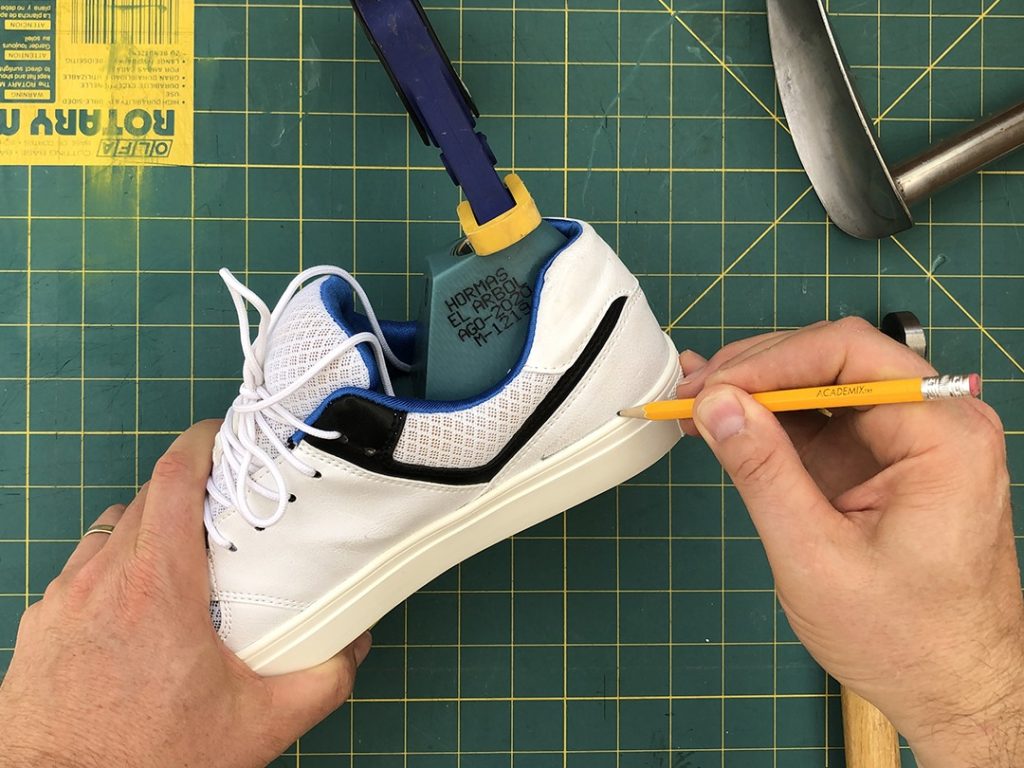
To prepare the upper, mark the bonding surface that will be in contact with the rubber sidewall. In the factory, a worker uses a press to hold the parts together. You can use a clamp, rubber bands, or a tabletop. Firmly press the sole and upper together and, using a pencil, lightly mark the edge. This is the cement line.

How to use the cement line

The cement line shows you where to rough your upper and apply shoe cement. Depending on the upper material for your shoe, you may need to rough (or buff) the bonding surface. Suede and mesh materials don’t require buffing. Smooth leather and PU leather materials will require some roughing to ensure the primer and cement penetrate the materials. Following the cement line, use sandpaper or a rotary tool to lightly buff the material’s surface. Be careful not to grind too much or damage the stitching. You must never rough above the pencil line, as this will show after the sole is attached.

Roughing the outsole

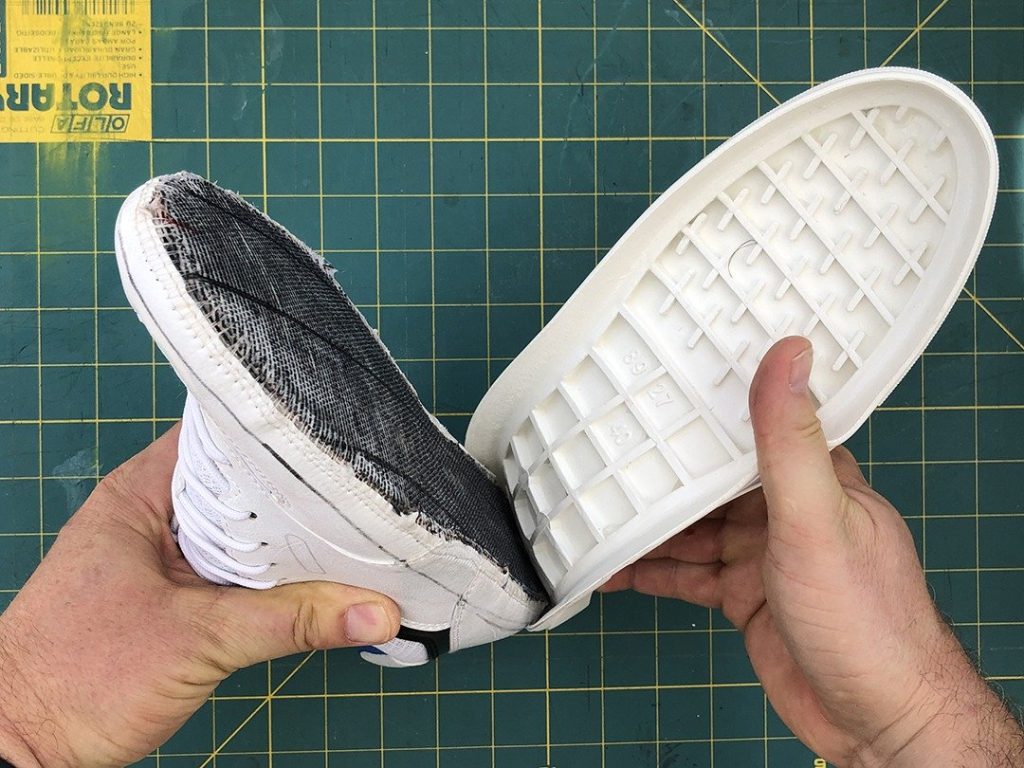
While you have your roughing tools in hand, it’s a good idea to rough the inside surface of the outsole unit. After you have roughed the upper and outsole, you must clean away any dust. Use a vacuum, high-pressure air, or dry towel to clean all the parts. You must remove any dust for the bondings surfaces.

Priming your shoe parts 

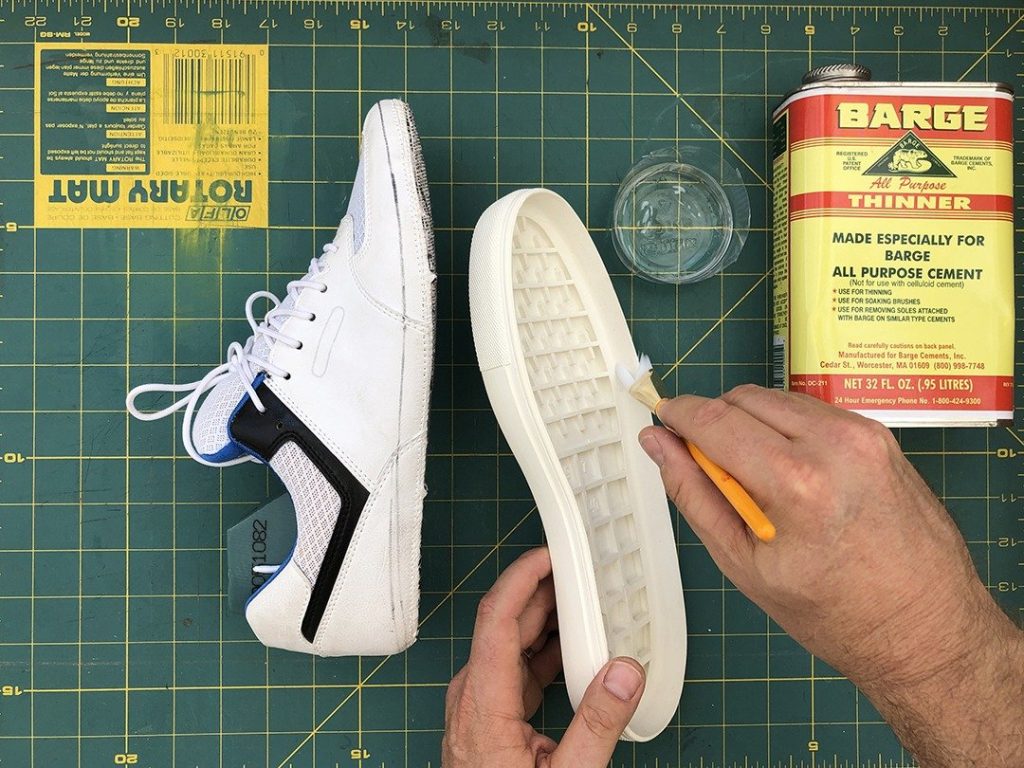
Primer is a mixture of shoe cement and cement thinner. You must test it first to make sure you have the correct thinner for your cement. The idea is to thin the cement into a liquid that can penetrate the upper materials and the surface of the rubber parts. Try a mix of 50% or even 75% thinner. 

Coat the bonding surfaces of the upper and outsole with the primer, let it dry for a few minutes, and prime again.

The shoe factory will use a different primer for the rubber and upper parts but for our DIY shoe project we can use the same primer mix for both.  

The Classic Sneaker Last is Here

Stop searching! The classic Sneaker last is in stock. Ready for your DIY shoe making projects. We have your size and outsole bottoms that fit. Buy Now On sale $79.99

Cementing

Once the primer coats on your outsole and upper are completely dry, you can apply the cement. Follow the same procedure and apply multiple light coats of cement to both the upper and the outsole. Again, be careful not to cement above your line.

Now, wait! On a hot, dry day in California, the cement will dry to the touch in just a few minutes. If you are working in a cool, damp London studio, you may need to add a little heat to dry the cement. Be patient! DO NOT put wet parts together.


A word about shoemaking contact cement

The cement we are using is not like Elmer’s glue, epoxy, Superglue, or other types of glue you may have used. We are using CONTACT cement. What does that mean?

Contact cement must be dry when the parts are brought together. The cement has already bonded to the parts and when we bring the parts together we are bonding the cement to itself “on contact.” If the cement is wet and the parts can slide against each other the bond will not be strong.

Assembly

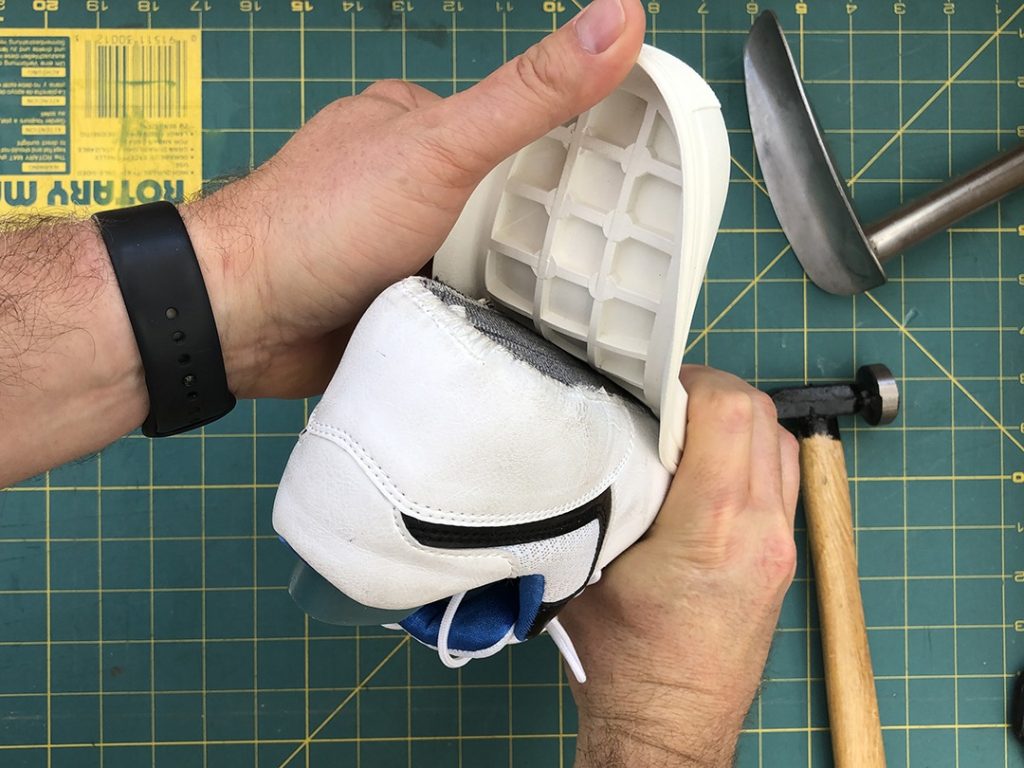
When the parts look dry, test the surface with your fingertip. The cement should be tacky but not wet. Now, the tricky part. Starting at the heel of the shoe, bring the parts together. We are using CONTACT cement, so the goal is to press the parts together and not slide them against each other. Getting the heel lined up straight is critical to getting the sole application right.


Start by touching the heel down into the sole. To do this, bend the rubber sole backward and try to keep the side walls “open” as you apply the sole to the upper. It is a good idea to practice this assembly procedure with dry parts, so you feel how to do it. Next, work your way from the heel to the toe. Don’t press the sidewalls yet.

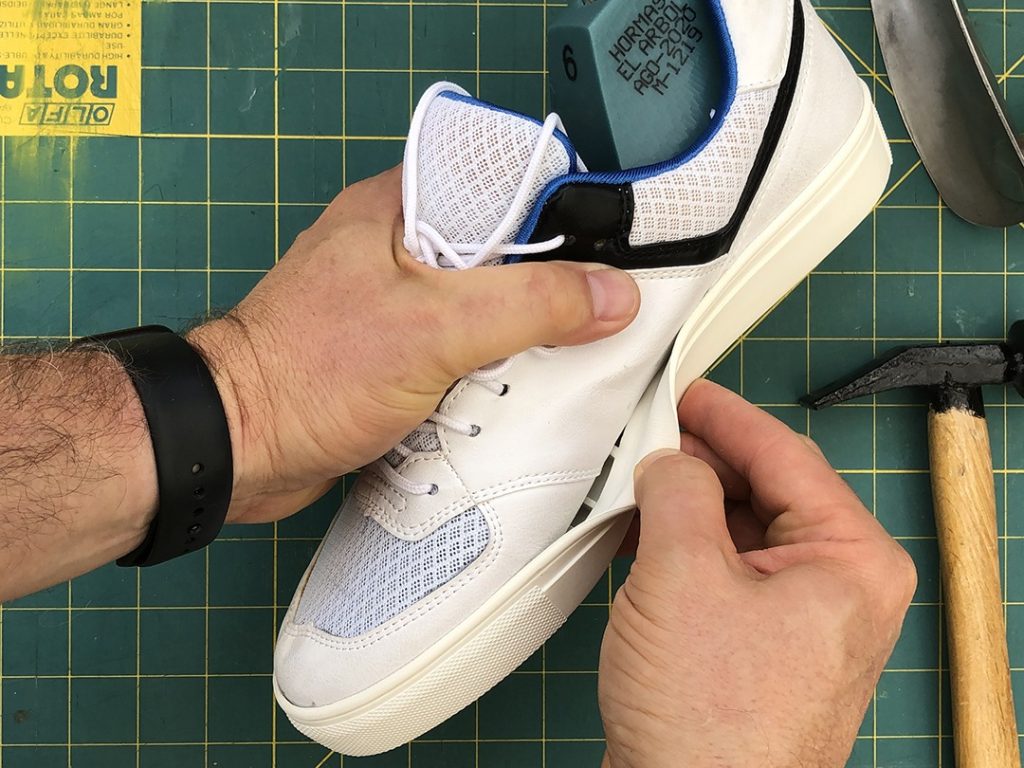
Before you press the sidewalls, it is a good idea to press the bottom down hard onto your work surface to ensure the upper is fully seated in the sole. If you see the sidewall is below the marked line,
carefully peel back the sidewall and push it into place once the bottom edge is seated.

Fitting and pressing the parts together

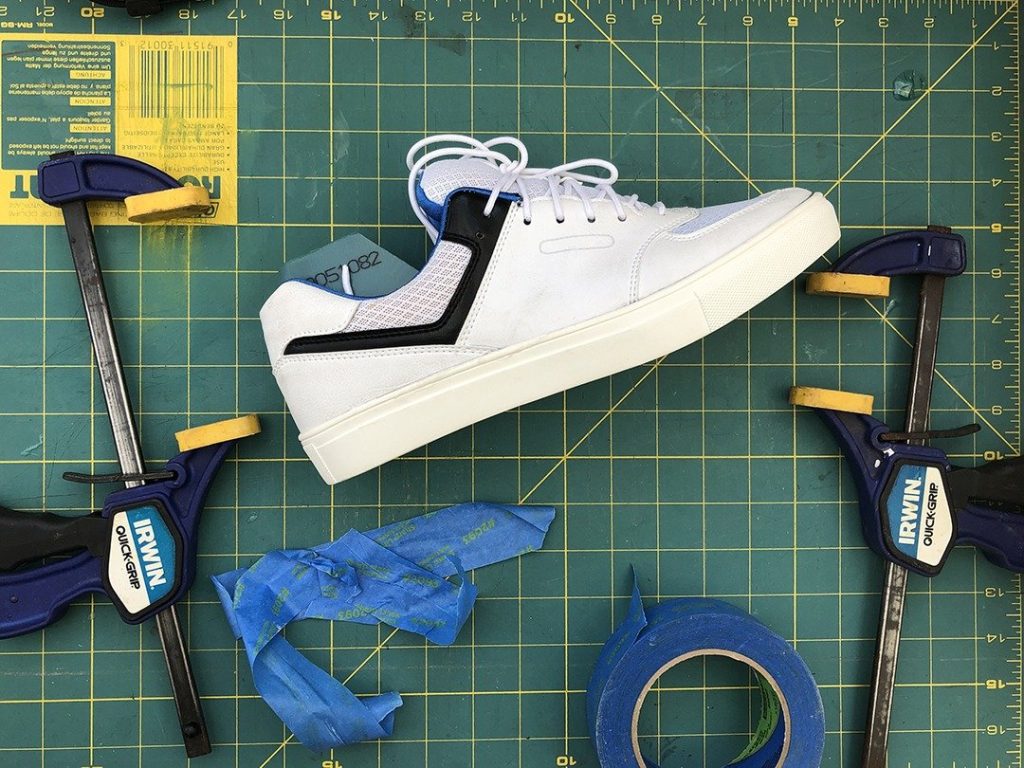
In the factory, they use a press; we can use clamps, a hammer, our thumbs, and tape to make sure the sidewall is in full contact with the upper. If you see any gaps you can peel back the upper and apply more cement. Make sure to hold the sidewall back for a few minutes to let the glue dry. Press firmly. Now relax and let the glue cure.

Removing the last from the upper

With the upper cooled and the glue cured, it’s time to remove the last. For sports shoes with open eye stays, simply loosen or remove the laces and push the last out from the bottom. For leather shoes with solid vamps, “break” the last on the hinge and remove it. Many shoemakers drill a hole and thread a cord thru the last to create a handle. Then, they use the cord to pull the last out of the shoe. For leather shoes, be very careful not to crease the shoe when removing the last.

Outsole Stitching Process

Stitching the sole
For a DIY sneaker project, it’s a good idea to reinforce the cement bonding with outsole channel stitching. You can stitch the toe, heel, or the entire perimeter to keep your sole fixed in place.
See the step-by-step channel stitching process here.

Shoemaking Material
DIY Super Kit

All the hard to find parts for your DIY shoemaking projects are here in one place. Kit includes lasts, soles, materials, tools, and pattern making textbook. Your shoe size is in stock. Buy Now On sale $200
Posted on

Sneaker Lasts for DIY Shoemakers

CLASSIC VAS STYLE SHOE LAST SHOE MAKING KIT MATCHING SNEAKER SOLE

Side view Vans sneaker last Side view hinged sneaker last
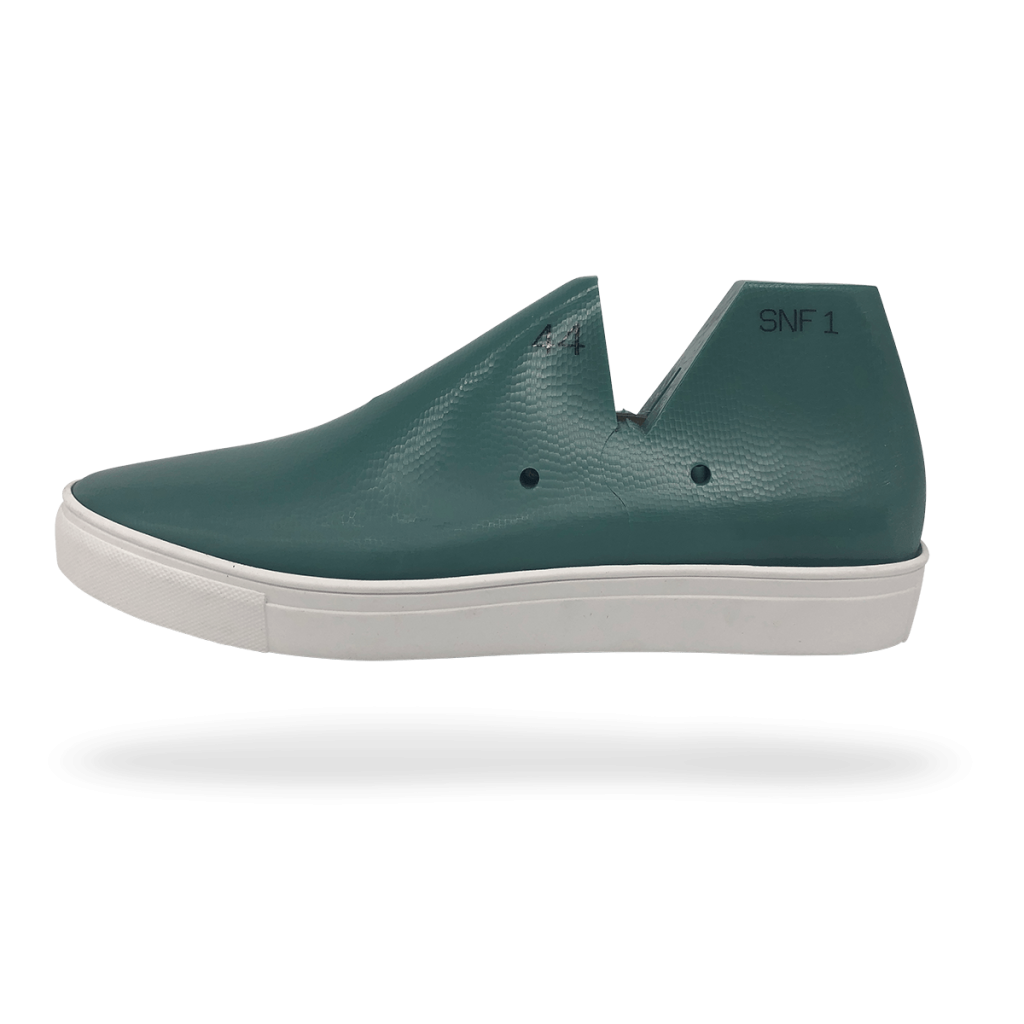
SNF-1 Hinged shoe least

Hormas El Arbol in León, Mexico

Today is a big day at the sneaker factory workshop! The lasts arrived from León, Mexico. Our sneaker last, SNF-1, is made by Hormas El Arbol. Hormas El Arbol is one of the top last makers in Mexico. The SNF-1 is made of high-density polyethylene plastic and has a spring hinge. These lasts are made by injection molding the rough shape then turning (machining) it down to the exact shape and size. The team at Hormas El Arbol has done an incredible job with our SNF-1 last, it’s perfect and easy to use! You can see the SNF-1 lasts here.

How the sneaker last is made

SNF-1 Last : Pure sneaker styling!
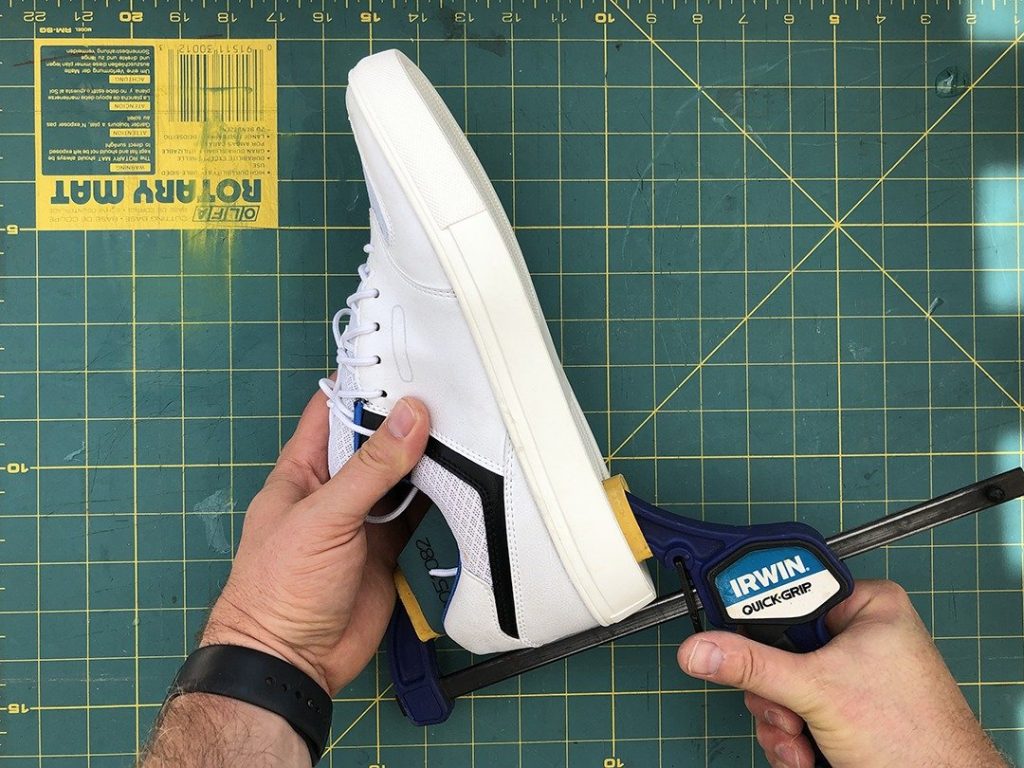
Side view Vans sneaker last
Classic sneaker styling

The SNF-1 shoe last allows for a sleek vamp and toe box yet it’s accommodatingly wide in the midfoot. The SNF-1 shoe last features a defined feather edge (suitable for both hand-lasting and Strobel-lasting footwear constructions). The spring hinge allows for easy removal without damaging your shoes. You can buy the SNF-1 lasts here.

Sneaker Last DIY shoemaking

Based on the classic “Vans” styling, the SNF-1 last instep is suitable for low-cut, mid-cut, and high-top patterns. This casual shoe last also works for slip-on and lace-up style shoes.

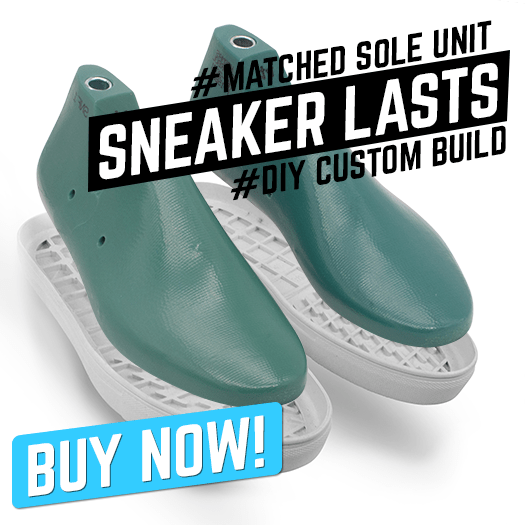
Last and matching outsole – Now Available!
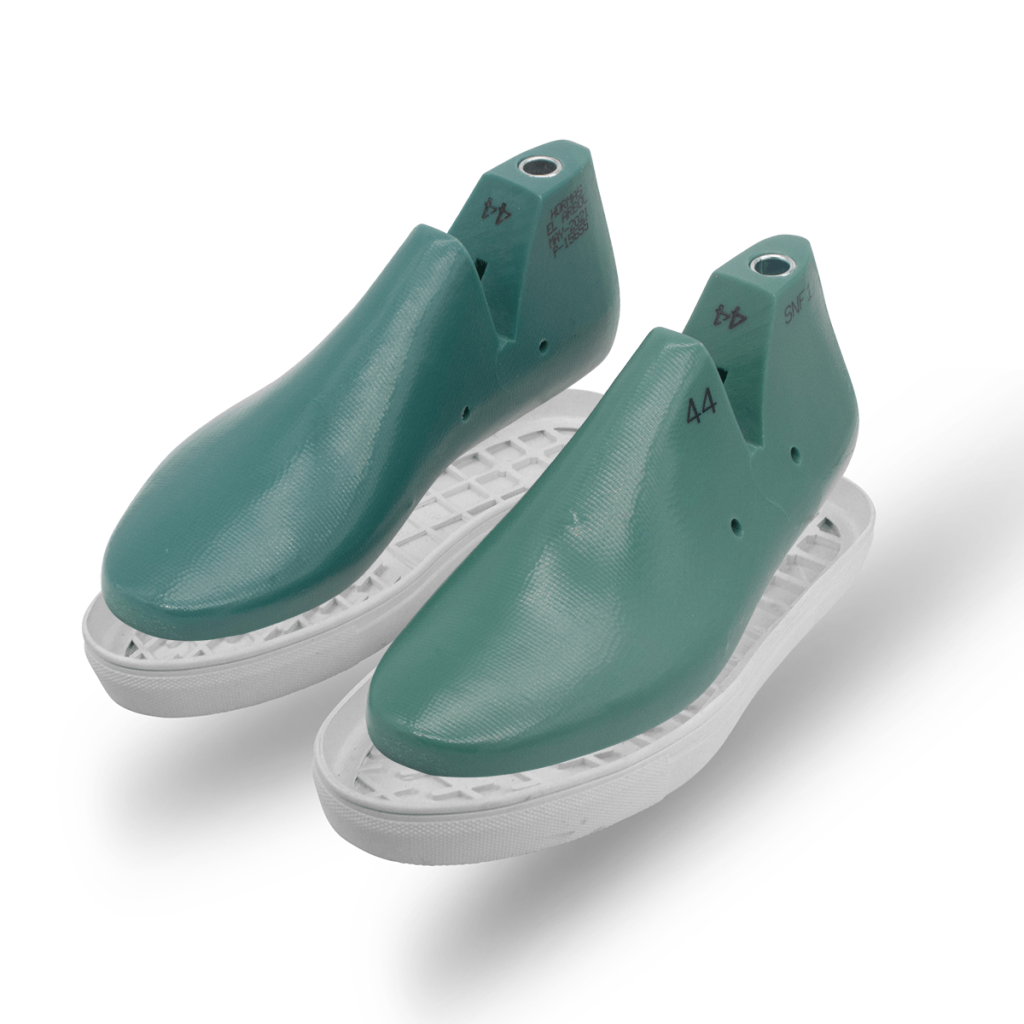
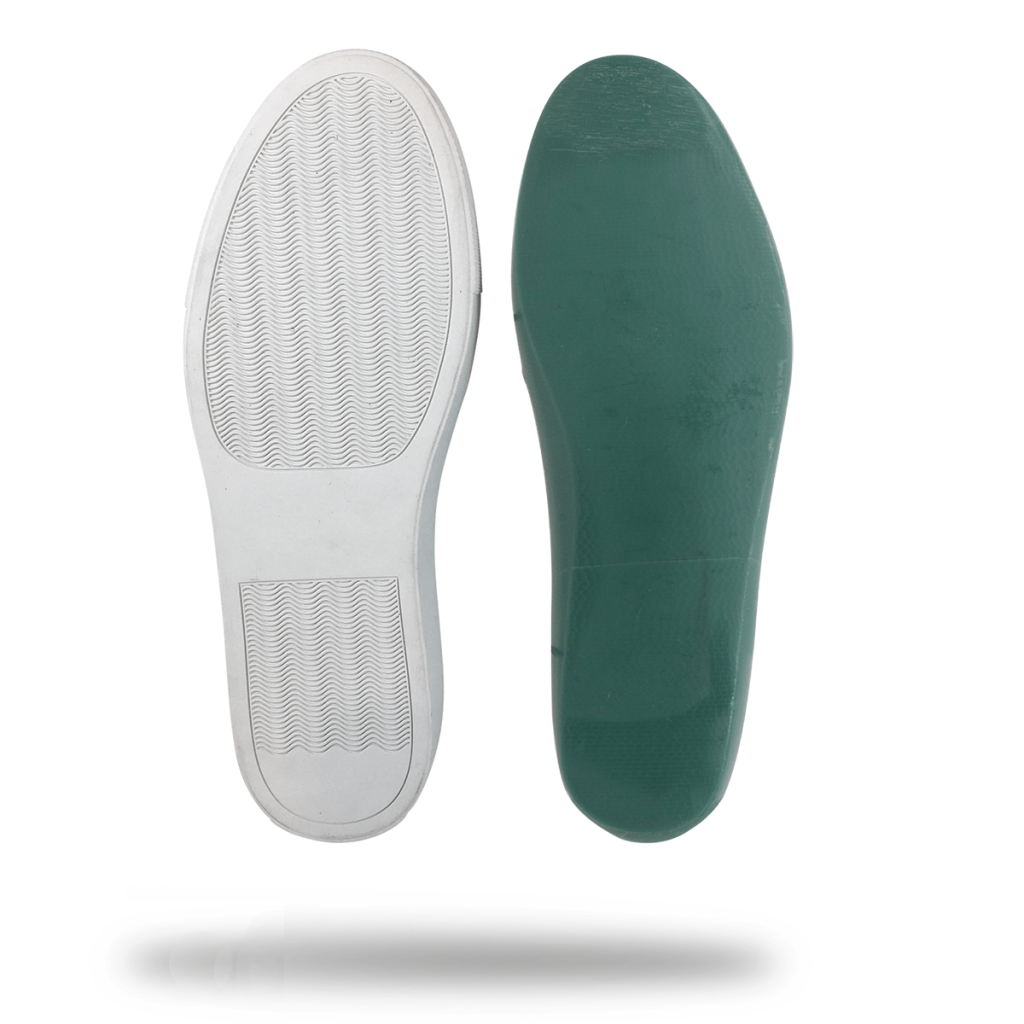
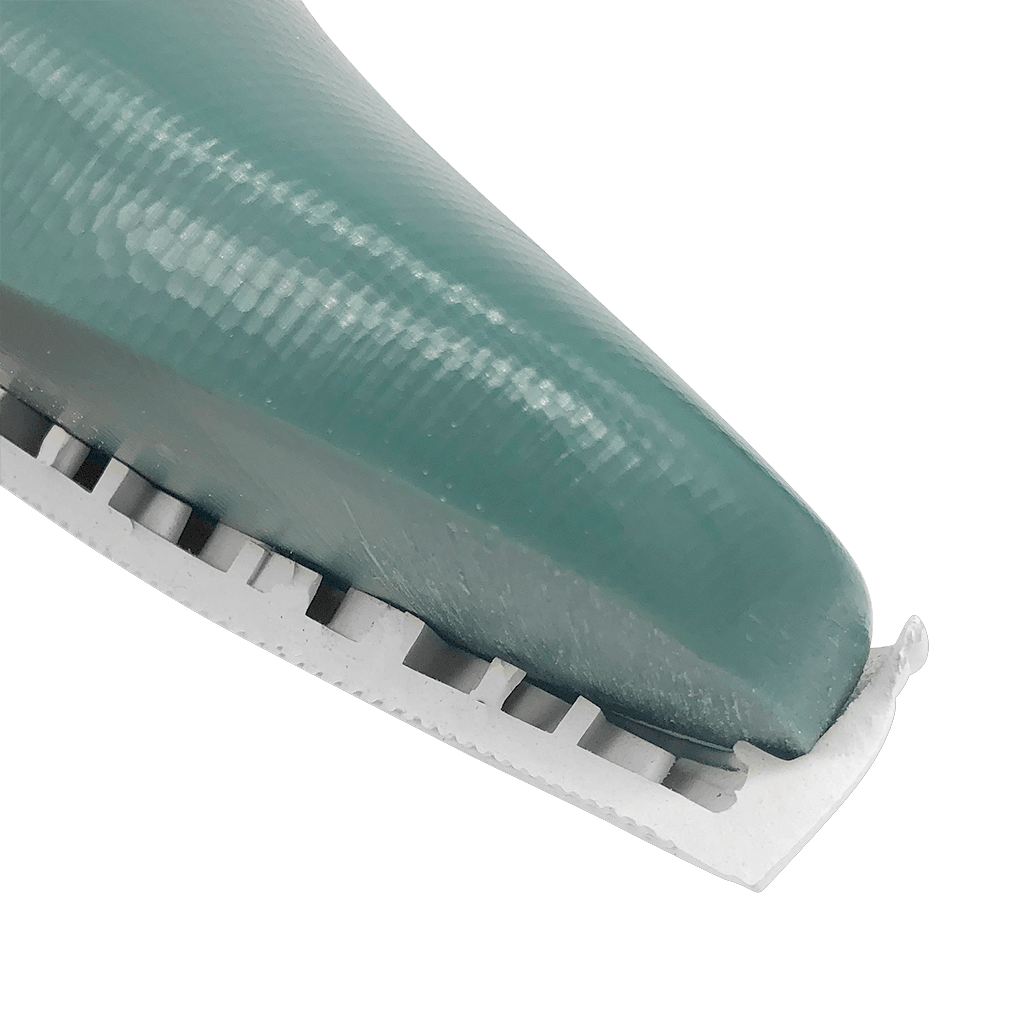
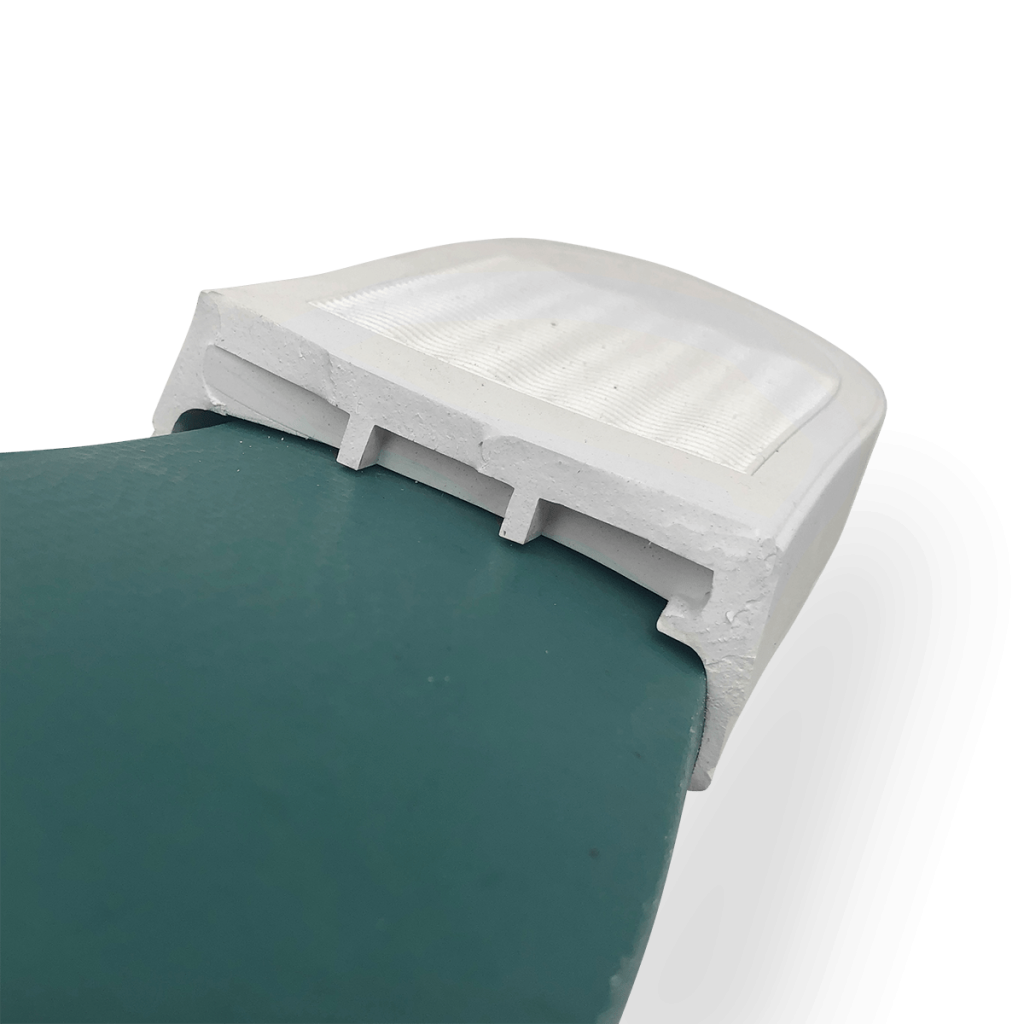
This matched set is perfect for your DIY pattern-making and home shoemaking projects. Together, the proven SNF-1 sneaker last and our classic rubber cupsole unit are a great choice for making casual-style shoes. The classic cupsole unit has a high sidewall for bonding. The rubber egg-crate midsole provides cushioning and reduces weight. The modeled sidewall groove allows for a secure stitch-down attachment.

CLASSIC VAS STYLE SHOE LAST SHOE MAKING KIT MATCHING SNEAKER SOLE

The SNF-1 last and classic cupsole are ready for your custom shoe build. You can buy the SNF-1 lasts and outsoles here.

Shoemaking
TextbooksBuy Now
Shoemaking
SuppliesBuy Now
Shoemaking
CoursesCourse Details
Previous Next
Posted on

Make Your Shoe Design Factory Ready: Shoe Maker’s Pre-Flight Checklist

Make Your Shoe Design Factory Ready: Shoe Maker's 10 Point Pre-Flight Checklist

Making a beautiful design drawing of your new shoe idea is a great first step; now, it’s time to finish your design. The design drawing is just one piece of information you need to communicate your design to the shoe factory. To ensure your sample shoe looks and functions just as you imagined, you’ll need to detail every aspect of your design. 

Shoe Designers Pre-Flight Checklist. 

Shoe Design Check list You need a shoe Last.

Before the factory can create the initial samples for your shoe design, you will need to supply a last. Your factory may have a suitable last in their stock, or the factory can have a matching last made to order from a sample shoe. It’s best to make your design drawings with the last in hand, but you can duplicate the silhouette before you have the physical last in your hands if you are following a competitor’s sample. If you are designing for an established shoe brand, the brand may be able to give you the correct last before you start your project. 

Shoe Design Check list Shoe design drawings

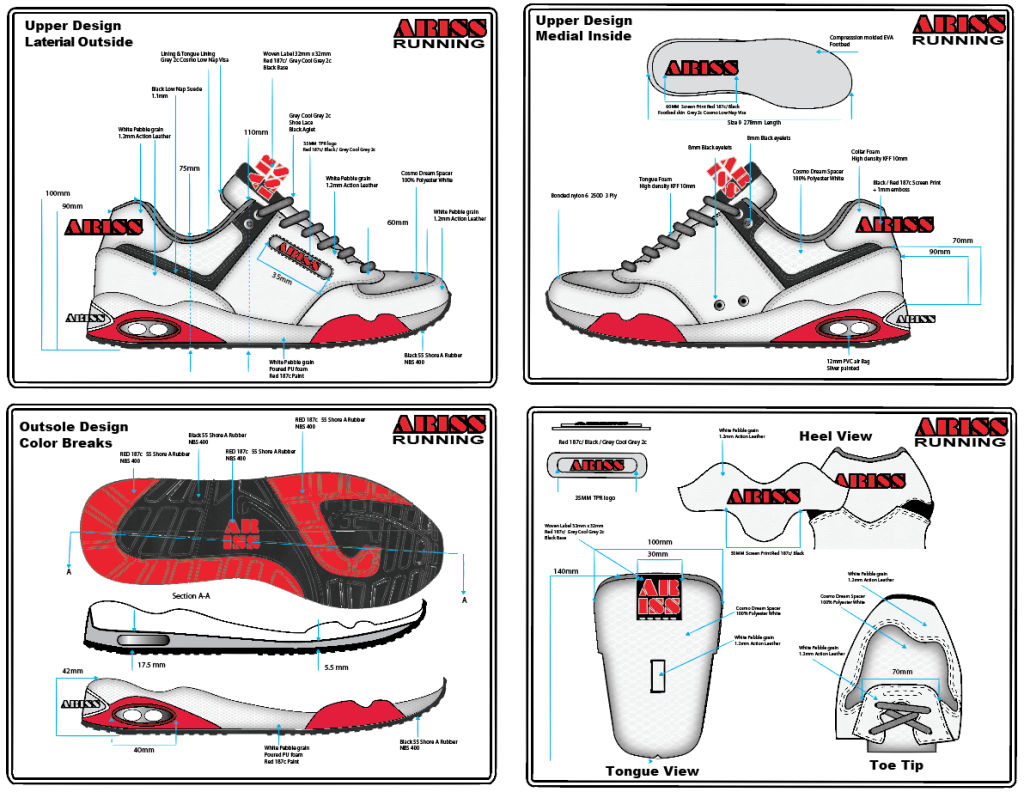
You will need a complete set of shoe design drawings. With your design idea and last silhouette, you can create a complete set of drawings for your footwear specifications. The factory needs drawings with every design line clearly detailed. Your set of drawings should include:

shoe design tech pack

Lateral View (outside of the shoe) 
Medial View (inside of the shoe)
Heel View (view from the back) 
Tongue View (showing any logo art) 
Vamp View (looking down on the toe) 
Detailed views of any small plastic parts

The Ultimate Shoe Material Textbook

Start with an in-depth study of material types available for modern shoemaking. Learn the technical details of material specifications. 195 pages and 300 color photos. Buy Now on sale $39.99
Shoe Design Check list Outsole design drawings

You will need a complete set of outsole design drawings. Outsole blueprints are difficult and time-consuming to make. As a designer, your responsibility is to detail the outsole unit’s style lines and character details. The exact shape and size of the outsole is the responsibility of the outsole design engineer. The design engineer will take your shoe sole design and measurements from the lasted upper and create detailed technical drawings. You will need to supply the design engineer with the following drawings:

how to draw shoe outsoles

Outsole side profile
OutsoleTop view to show technical details
Outsole bottom view to show the tread pattern
Detail views of injection parts
Cross-section views of length and width

Shoe Design Check list Stitching design and seam details

If your shoe is sewn together, you need to add the stitching details to your drawings. The stitching detail lines will show which pattern parts are overlays and underlays. You should also communicate if the stitches are single line, double line, zig-zag, thin thread, or heavy thread. If your design entails rolled edges, binding edges, Frenched edges, butt seams, or overlays, you need to communicate these details in your drawings.

Shoe Design Check list Shoe upper material map

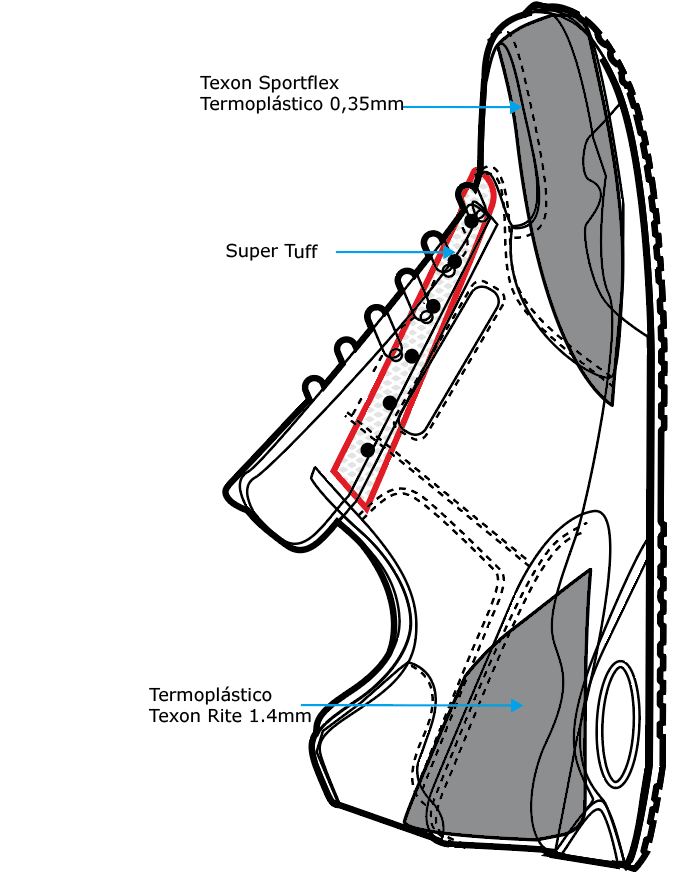
The material map is a drawing that clearly shows the materials you have in mind for each part. The factory uses this information to make the appropriate pattern for the parts. A die-cut leather part will have a different pattern from a fabric part of the same shape made with rolled edges.

What materials are Nike shoes made of?
Shoe Design Check list Color map


Color map of the first sample colorway. A color map diagram of upper and outsole parts shows the factory where to add color dams or pattern breaks.    

Color map showing future plans for color breaks
Shoe Design Check list Texture map

Texture map showing the surface details of every part. The surface texture is an important part of your shoe design. Texture specifications will add an extra dimension to your shoe designs. 

Shoe Design Check list Logo Designs

Logo designs: Take extra care to draw your logos in the exact scale they will appear on your shoe design. This step will ensure the logos are legible and will help you decide how to execute your color. For example, a 3D mold or laser can create tiny letters 2mm tall, while an embroidery machine requires lettering to be a minimum of 5mm tall to be readable.    

Shoemaking Material Kit

All the hard find parts for your DIY shoemaking project are here in one place. Lasting board, strobel material, lining mesh B&W, collar foam and all the reinforcing parts you need for one pair. Learn more On sale $39.99

Shoe Design Check list Foam padding specs

Foam padding specs: The foam padding specifications for the shoe tongue, collar, and upper padding are critical when defining your shoe’s silhouette. Is your shoe designed as sleek or puffy? Detail these parts carefully to get the look you desire.   

Shoe Design Check list Reinforcement & construction notes

Reinforcement specs and construction notes: Tell the factory exactly how you want your shoe made. Is your shoe a soft Stobel bottomed casual shoe or a sturdy board-lasted walking shoe? It’s best if you can detail the construction you require. If you are unsure how to make the shoe, do your best to explain the functionality necessary and ask your factory developer to help you specify the best construction process.  

New Online Course
How to Select Shoe Materials

14 Shoe Material lessons. Over 4 hours of video instruction. In-depth study of leather, textiles, synthetics, and plastics for footwear. Material Design Guide Textbook included. Course Details enroll now $399
Posted on

Diagrama de piezas de calzado

Diagrama de piezas de calzado

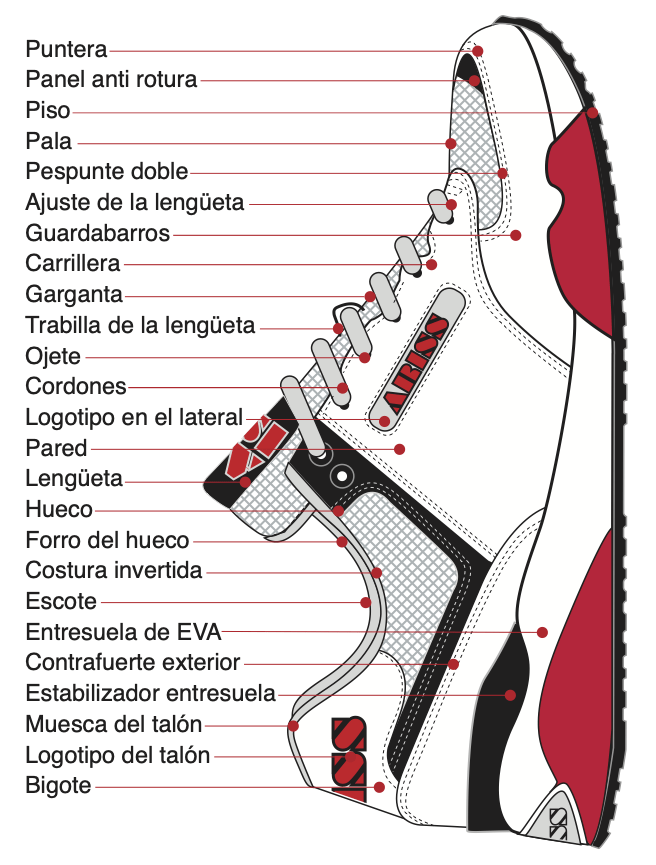
La anatomía de un zapato:

Todos los estudiantes de diseño de calzado deben saber los nombres correctos de las piezas de calzado.

Aquí se muestra un diagrama de las piezas de calzado que muestran los nombres estándar para cada pieza de calzado. ¿Qué es un refuerzo de ojetessuela, o puntera? Si te encuentras diseñando un zapato, deberás conocer los nombres correctos para las piezas del patrón del zapato. ¡Ahora podrás ver la anatomía del zapato por dentro y por fuera!  Aquí podrás ver un listado completo de los componentes del patrón de calzado.
Nombres de las partes externas del patrón de zapato:

Nombres de las partes externas del patrón de zapato:


Nombres de las partes externas del patrón de zapato:

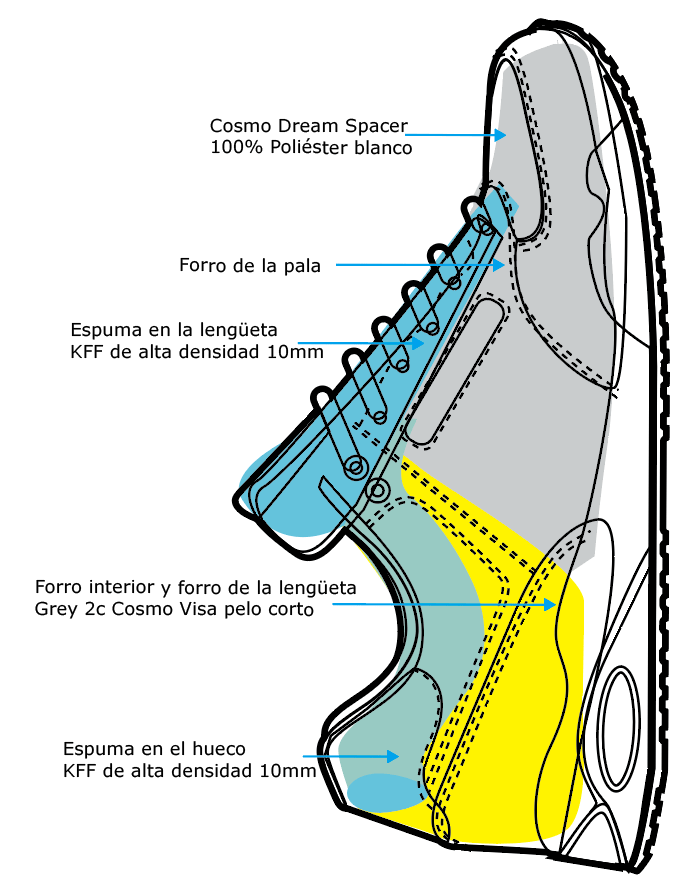
Nombres para las partes interior de un patrón de calzado:

Refuerzos internos de un zapato:

Aprende más sobre las piezas de un calzado deportivo: Revisa el Diccionario de términos de calzado.

Lista de piezas de zapatos que se encuentran en el dibujo del diagrama de piezas de zapatos.

Puntera ,Panel anti rotura ,Piso, Pala, Pespunte doble, Ajuste de la lengüeta, Guardabarros, Carrillera , Garganta, Trabilla de la lengüeta, Ojete , Cordones, Logotipo en el lateral, Pared, Lengüeta, Hueco, Forro del hueco, Costura invertida, Escote, Entresuela de EVA, Contrafuerte exterior, Estabilizador entresuela, Muesca del talón , logotipo del talón, Bigote.

Cómo se fabrican
los zapatos

¿Quieres aprender cómo se fabrican los zapatos deportivos modernos?Una mirada detrás de escena de una verdadera fábrica de calzado deportivo. Contiene 222 páginas con más de 400 fotos en color. ¡Comprar ahora! Oferta especial

Patronaje de calzado y diseño de hormas

Una guía para principiantes sobre las técnicas fundamentales de la fabricación del calzado. 200 páginas con más de 500 fotos en color. ¡Comprar ahora! Oferta especial

Descargar cuatro libros de zapatería

“Cómo se hacen los zapatos”
“Guía para el diseño de materiales de calzado“
“Cómo empezar tu propia empresa de calzado“
“Patronaje de calzado y diseño de hormas”
¡Comprar ahora! Oferta especial
Posted on

How to Start a Shoe Brand

Start a Shoe Brand

What do I need to know to start a shoe business?

Do you want to start a shoe business or learn how how to start a shoe line? You are in the right place. Starting a shoe brand will not be easy; you will need lots of help, patience, perseverance, and passion. Building a shoe brand is complicated, but you can do it!  Here is a quick 7-step guide to help you break down the shoe brand building process step-by-step.

The Shoe Brand Building Business Plan – 7 Steps 

Building a business plan can seem like a daunting task. It helps to divide your shoe brand business plan into smaller parts. Here are seven parts your shoe brand business plan must include.

1. The Footwear Product plan
2. The Shoe Manufacturing plan
3. The Sales plan
4. The Marketing plan
5. The Distribution plan
6. The Staffing plan 
7. The Money plan 

1. The Footwear Product Plan

Your shoe brand will need products to sell! Your product plan should explain in detail exactly what kind of shoe you are making, and you should be making more than one. You will need to make a shoe line. Offering different models and prices gives you more chances to succeed. Dreaming, designing, and merchandising your shoes and the brand image you will use to propel sales is the fun part! Are you doing the design work yourself? Don’t worry; you can launch a shoe brand even if you can’t design shoes. You will need to hire a designer, But first, you will need to clearly describe what you what them to make. 

2. The Shoe Manufacturing Plan

How are your shoes going to be made? Will you make them yourself, or buy them from Asia or Europe? Will you need special materials or tooling? Your manufacturing plan will need to include development phases and manufacturing requirements for your new shoe design. You will need a schedule. Summer sandals delivering in the fall will not succeed.

3. A Sales Plan for Shoes

As you develop your shoes and your brand, you need to consider the sales plan. Who is your target market? What stores will carry your shoes? When will your shoes be sold? Will you sell to retail locations and online? How much will they cost? Who will sell your shoes to the stores, and what is their commission rate?

Learn about the Shoe Business

Aspiring shoemakers start here! How Shoes are Made is your entry into the world of modern shoe making. Tour a real shoe factory and learn the process from design to manufacturing. Learn more Download $19.99

4. The Marketing Plan

Every new shoe brand must have a marketing plan! Without marketing, your brand will be invisible. Customers need to see your brand.  You must find a way to reach your targeted customers and create a branding message to draw them to your brand and shoes. Do your customers shop on the web or browse boutiques? Should you advertise in magazines or hire a skywriter? You need to identify your customers and your competitors. 

5. The Distribution Plan

How will your shoes get from the factory to your customers? The distribution plan links to your sales and marketing plan. You need to plan for exactly how your shoes will move from start to finish. Will the shoes land in your garage and ship to individual website customers? Maybe your container of shoes will ship directly to a rented warehouse? 

6. The Staffing Plan

You will need a team. Don’t expect to build your new shoe brand by yourself. You will be the mastermind, the driving force, and the visionary for your new shoe brand, but you will need footwear experts to help. You may have an amazing new shoe design, but you will need development, production, sales, and marketing help.  Don’t worry; you won’t need to hire an army full time, just be ready to pull in help when you need it. You can hire freelance and gig workers for almost any task.

New Course!
Shoemaking for Designers & Brand Builders

Created for footwear beginners and career changers alike, this course delivers the basic shoemaking knowledge you need to get you career in the shoe trades started. Learn more On sale $99

7. The Money Plan

Building your brand is going to cost money. The financing of a new brand is complicated. You will need to know the startup costs for design, development, production, shipping, sales, and marketing in advance. You will need to know how much money to allocate for each and when you need it. Where will you get the startup capital? Do you plan to have a Kickstarter campaign, or will you need to make a compelling pitch for an investor? Your money plan needs to include the cost to buy your shoes and your profit when you sell them.

You can do it. Get this book and get started today.

How To start your own shoe company Build your business and brand.

How to Start Your Own Shoe Company, follows two startup companies from initial launch to retail sales and marketing. Both companies have a unique style, budget, and business plan. In each of the 14 chapters, a requirement or process is clearly described, and you will learn how each of the two new shoe brands will best tackle this challenge. How to Start Your Own Shoe Company will guide you through how to start a shoe brand, creating your brand identity, legally setting up your shoe company, and registering your trademarks. You will also learn how to design and manufacture your shoes, how to find the best shoe factory, and how to go about selling your shoes. 

Many other topics such as importing shoes, working with international distributors, calculating profit margins, paying overseas vendors, and necessary capital requirements will also be covered so you can get your startup moving forward right away. How to Start Your Own Shoe Company is arranged in chronological order, following the shoe company startup process from initial design, through development, production, sales, marketing, and distribution. 
More than 100 full-color drawings, photos, charts, infographics, spreadsheets, and sample forms clearly illustrate the complete step-by-step process. This book will help you meet many challenges and be your comprehensive guide to making your own shoe company come to life! 

Shoe Business Builder Pro Pack Bundle

A must-have for anyone serious about launching a footwear company. 4 text books, shoe business documents and downloadable content not available anywhere else! The Shoe Company Start-Up Pro Pack bundle is all you need to get your shoe business off the ground. Learn more Download Today
Posted on

Business Plans for Start-Up Shoe Brands

The Start-Up Shoe Brand Business Plan

12 Tips for Footwear Brand Building

Build_Your_shoe_brand


There is ALWAYS a place for a new shoe company. Billion-dollar shoe brands must look for huge opportunities, leaving small brands free to serve niche markets. Find your special feature or take a fashion risk. Go ahead, make something fresh!

Are you ready to start your own brand-building journey? Do your shoe business dreams seem unattainable? You need a business plan to transform your dreams into reality and successfully launch your shoe brand. So, what is a business plan for a start-up shoe company?

Most business plans start out strong. “I have a GREAT idea for a new shoe!” A great idea is a perfect reason to start your shoe brand. But, you need to have thought through many other planning stages to form a successful business plan. “Who will sell my shoes? Who will buy my shoes? How will I market my shoes? How can I afford this?”

Starting a new shoe brand may feel impossible! Don’t worry, you can handle this step-by-step and we can help you to dive deeper into the details along the way.

12 key points to consider for brand building from How to Start Your Own Shoe Company:

Step by Step Guide
Footwear Brand Building

Learn in-depth about the costs to make a shoe and the rules for importing footwear. Checkout How To Start Your Own Shoe Company. 195 pages, 330 color photos. Buy Now On Sale $39.99

12 criteria for a seamless business plan:

1: YOUR SHOES AND YOUR BRAND
Does the world need another shoe band?
What is special about your shoe brand?
Making your plans, are you making the right shoes?
Footwear brand identity development
What is your target market and how do you target it?

2: CREATING YOUR SHOE COMPANY
When do you need to legally create your company?
What type of company?
Creating and protecting your new brand’s trademarks
Branding and web domains.

3: DESIGNING YOUR PRODUCT LINE
Two kinds of design briefs
Footwear merchandise plans
How to hire a shoe designer
Do you need a patent? Design vs. utility patents

4: PLANNING YOUR SHOE BUSINESS
When and how to launch your shoes into the market: delivery seasons
Financial modeling for your shoe business
Calculating profit margins

5 : MANUFACTURING AND IMPORTING YOUR SHOES
Finding a factory to make your shoes: Footwear agents and trading companies
The shoe development process
Import duty and shipping rates for your shoes

6: START-UP COSTS AND RAISING CAPITAL
Footwear development expenses: the capital calendar
Raising money to build your shoe brand
Letter of credit and wire transfers

New Online Courses
for Brand Builders

#1 Shoemaking Basics for Designers and Brand Builders
#2 How to Select Shoe Materials
#3 Creating Footwear Specifications Course Details Enroll now

7: BRAND PROMOTION AND FOOTWEAR MARKETING
What is marketing? Traditional, guerrilla, and social: Footwear marketing strategies
Print and digital media
Trade shows and alternatives for footwear brand marketing

8: FOOTWEAR SALES AND DISTRIBUTION
The sales chain
The language of footwear sales: Footwear buyers
Sales and distribution models for shoe companies

9: SHOE COMPANY OPERATIONS
Serving consumers: Operational models
E-commerce platforms
Third-party logistics for shoes

10: WHAT’S NEXT FOR YOUR BRAND?
Strategies for growth
Selling your shoes into new markets
Diversify your product offering
Vertical integration?

11: GOING INTERNATIONAL
Defending your trademarks overseas: Distribution models
Finding the right distributor: Purchase terms for distributors

12: WHAT CAN GO WRONG?
Dealing with shoe production delays
Footwear quality issues
Lost trademarks
Damaged equipment

New Online Course
Shoemaking for Designers
& Brand Builders

Created for footwear beginners and career changers alike, this course delivers the basic shoemaking knowledge you need to get your career in the shoe trades started. Course Details enroll now $99
Posted on

Sustainability in Footwear: 5 ways one start-up brand nails it

Sustainable Footwear Material Choices

Is it possible to design sustainable footwear that is comfortable, fashionable, and helps to reduce global warming? Soléi Sea has found a way! Here are 5 eco-friendly ways they nailed it and 5 more footwear sustainability tips coming next week.

With initial sales soaring, hot, new, sandal brand Soléi Sea gives the simple flip-flop a sustainable makeover and proves that sustainability is indeed in style. Their production and design teams looked at every component in their new Indie flip-flop design and developed a strategy to improve the global footprint of their brand.

5 easy ways Soléi Sea nailed it…we give them a 5/5 in our sustainability update ♻️♻️♻️♻️♻️.

Sustainable Footwear Material Choices

Silk Screen vs. Sublimation Printing

The first thing we notice on the Soléi Sea sandal is the vivid camouflage color scheme. The sublimation process makes this colorful pattern possible. A computer printer deposits ink onto transfer paper; a heat press then transfers this special ink to the shoe material surface. Unlike traditional screen printing processes, there is no messy liquid ink or toxic solvents. Additionally, the sublimation process prints every color at once, reducing the handling required. The sublimation process requires a white base fabric and thus water-intensive chemical dyeing processes can be avoided.

Sustainable footwear lasting boards

The Soléi Sea sandals are made with a recycled paper lasting board. Now common in footwear, sustainable lasting board products are manufactured using recycled post-consumer raw materials and post-production scrap. In some cases, the sustainable, recycled product option can also be less expensive.

Natural vs. Human-made Latex Foam

This sandal is made with a cushioned latex foam. Latex foam for footwear can be made from 100% natural latex rubber sap or human-made synthetic latex. Care must be taken to ensure the natural latex sap is sustainably collected and the many native workers are fairly compensated. For latex, a middle ground is sought that combines both naturally sourced and human-made latex.

Vegan leather in footwear

Vegan leather is a human-made material. In the case of Soléi Sea, recycled polyester is used to make the microfiber backing fabric. The skin surface is a thin machine made film designed to accept the vivid colors of the sublimation printing. By choosing not to use animal leather, Soléi Sea is doing its part to reduce the intensive and negative environmental impacts of bovine leather production.

Organic fibers in shoes

Every single part of this classic sandal can have a sustainable makeover. Even the hidden reinforcements can be made with recycled polyester webbing or organic fiber cordage. In this case, the straps are reinforced with recycled fiber webbing.

ECO TR outsole rubber

Soléi Sea makes their sandal bottom with a recycled ECO TR rubber outsole. Because the factory makes the sole using an injection process, there is almost no manufacturing waste scraps. The Soléi Sea bottom supplier has a unique compound that reprocesses post-consumer and post-production materials into high-quality parts that do not look recycled.

Water-based cement for shoes

The sole unit and foam parts of the sandal are bonded together with water-based cement. Water-based cement is the more sustainable choice because it has no toxic solvents or volatile chemicals. Water-based shoe cement improves the worker’s health and the world’s environment. New advances in water-based bonding technology have improved its strength and reduced the energy required to cure the cement.

Sustainable shoemaking

To learn more about sustainable shoe making check out the Shoe Material Design Guide.
This book covers all types of shoe materials including leathers, rubbers, fabrics, and sustainable options.

Shoemaking
TextbooksBuy Now
Shoemaking
SuppliesBuy Now
Shoemaking
CoursesCourse Details
Previous Next
Posted on

How To Make Your Shoe Design a SLAM Dunk.

Shoe Design : How to make your shoe design a SLAM dunk.

Sneaker Design – 4 elements of great shoe design: S.L.A.M.
#1 Silhouettes
#2 Logos
#3 Accessories
#4 Materials

Shoe Design : How to make your shoe design a SLAM dunk.

Silhouette [ sil-oo-et ]:
The outline or general shape of something:

Sneakers come in all shapes, from super sleek to ultra puffy, it is the designer’s choice.The silhouette of a sneaker is determined by the shoe last, the shape of the pattern parts, and the padding. Fashion trends, manufacturing techniques, and footwear technology are all at work. With your mind and eyes open, you can see classic shoes with iconic silhouettes and new shoes with dynamic unmistakable shapes.

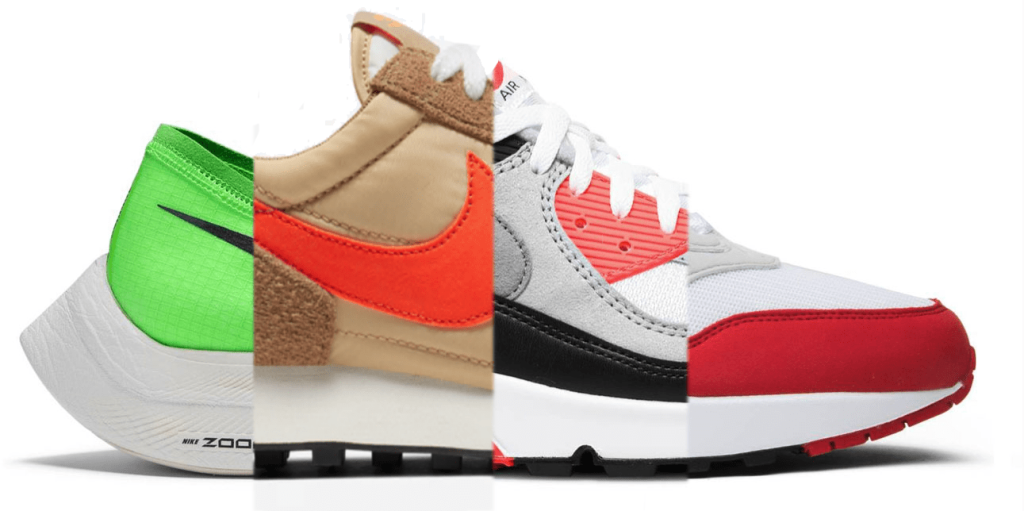
Shoes built for the same function can have radically different silhouettes.
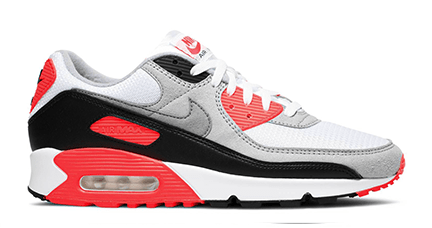
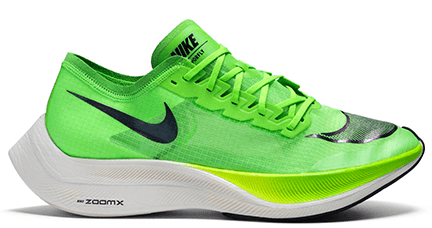
Let us take, for example, three running shoes produced by Nike in 1980, 1990, and 2020. Of course, we see vastly different manufacturing techniques and material combinations, yet we also see that all three have unique silhouettes. The shoe silhouette is delivered by the shoe last, outsole geometry, and most importantly, the pattern.

The shoe pattern is how you deliver the silhouette. What is the pattern? The pattern of a shoe is the shape of all the shoe’s individual upper parts. The shoe factory will use the pattern information to cut the parts and build the shoe.

A simple pattern makes a clean silhouette, a complicated pattern makes a wild silhouette.

Logos:
Design a logo strategy

The logo may be the most important part of your shoe. It may be the only reason a customer looks at your shoe design. Sometimes, the only reason a shoe exists is to carry the logo. If a new shoe design is uniquely radical or special in some way, the logo may just be along for the ride. In some cases, the logo may barely present itself, think of Yeezy or Prada.

Logos on shoes will have specific functions. The logo lets the customer know the brand that made the shoe and the athlete that endorses the shoe. Logos are used to communicate a technology, a special feature, or a partnership with another company, brand, or personality. The design of your logos may help you communicate a theme or principle, like sustainability, for example.

Every shoe design needs a logo design strategy. The design brief may give specific instructions, or the shoe brand may have a specific policy established as part of the overall corporate design strategy.

Accessories:
Transform your design into a shoe

The accessories of your design are key elements that make your shoe design into a real working shoe. The main accessory of your shoe design is the outsole componentry. The outsole of your shoe is usually the single most expensive part to design, develop and manufacture.

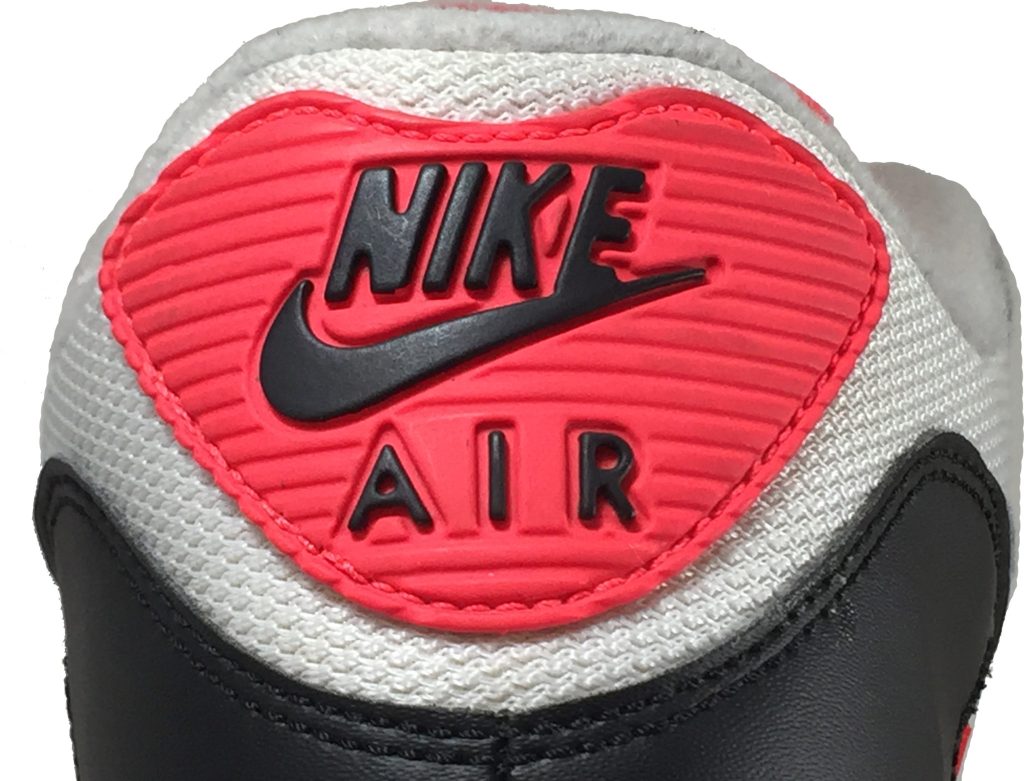
The outsole determines the price and performance of your shoe. The casual solid rubber cup sole unit may cost only $2.00, while the 4-part running sole with airbag may cost Nike $15.

Accessories can also be lacing systems, running computers, or injection molded upper components. Anything that delivers your technology or the theme of your shoe design.

Materials:
What is your shoe made of?

The material selections for your sneaker design will determine the construction, price, performance, weight, and import duty. There are thousands, if not millions, of material options for a shoe designer. Your shoes’ functional requirements and design theme will help you make your selections. The performance requirements and price targets of your shoe design will help you narrow the selection.

Some important points to detail in specifying materials are the color, texture, thickness, backing type, backing color, price, and MOQ. (Minimum Order Quantity). We have written an entire book on the subject of footwear materials.
See the Shoe Material Design Guide

Next time you design a new shoe…
Make sure to S.L.A.M. it!

Shoemaking
TextbooksBuy Now
Shoemaking
SuppliesBuy Now
Shoemaking
CoursesCourse Details
Previous Next
Posted on

How to Spot a Fake Yeezy

How To Tell If Your adidas Yeezys are Real or Fake
How to spot a Fake Yeezy


Legit Check The Adidas Yeezy 500

You will find fake Adidas shoes in stores all around the world. Our goal is to help you spot these fake counterfeit shoes and teach you some shoemaking tips.

How can I tell if my Yeezys are fake?

Today we have two pairs of the Yeezy 500, and we will have a good look at the small details that tell the big story of counterfeit sneakers. We will study the Yeezy 500 purchased directly from Stock X and the counterfeit shoe imported from South China. You will learn how to tell if an Adidas shoe is real or fake. The secret to making a ‘sneaker legit check’ is understanding the signs of quality shoemaking.

The price is right?

When shopping for real Yeezy sneakers you should expect to pay real Yeezy prices. If you find a rare Yeezy 350 Boost or a unique color at a price that is too good to be true… then it IS too good to be true. Low prices and beat-up boxes are your first clue that you have a fake, counterfeit or illegally smuggled-in B-grade shoe.

You should make any mail-order or E-Bay purchases with only trusted retailers. Remember, slightly used does not mean the shoes were real Yeezys to start with.

Inspecting the Yeezy 500

The first thing I look at when comparing the fake and the real Yeezy 500s is the materials and workmanship. When reviewing the materials of the Yeezy 500, you don’t need to have an authentic shoe in your hands. If you know what to look for, a few high-quality photos of the real shoe is all you will need to check the materials.

While looking at the Yeezy materials, also study the build. Adidas’s real Yeezy does not have perfect build quality, but the counterfeit Yeezy is clearly not made to the same quality standards.

What is a ‘real’ Yeezy 500 made of?

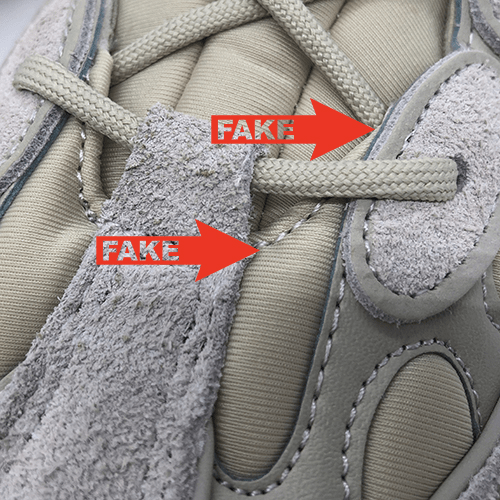
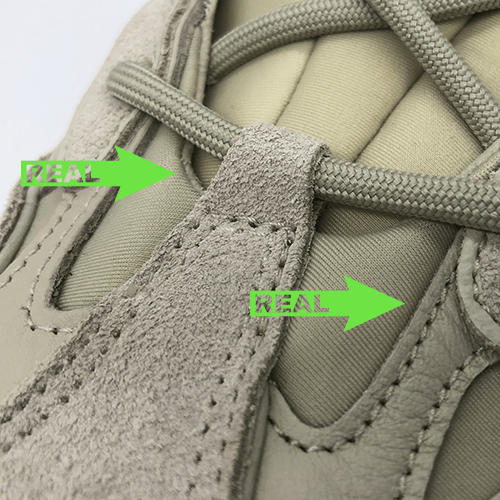
The real Kanye West designed Yeezy 500 is made with a mix of genuine suede, Nu-buck, and pigmented full-grain leather. The suede is medium nap so it is a bit hairy. To clean up the hairy edges, Adidas has color embossed the edges. You can see this on the eye stay parts and the ankle strap. The eye-stay underlay is a pigmented full-grain leather. The surface is uniform in color with a slight texture emboss. You can see it’s genuine leather by the texture of the cut edge.

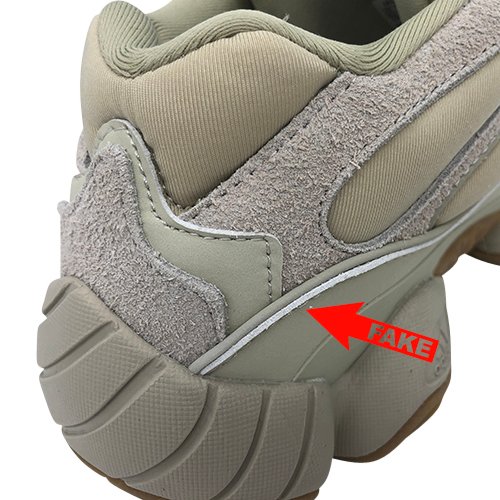
The rubber foxing overlays a panel of bushed nu-buck leather. This high-quality nubuck leather has a smooth, uniform, and velvety surface.

Our fake Yeezy 500 is constructed with low-quality, high-nap, belly suede. The surface is rough and hairy. You can also feel the leather’s substance is soft and spongy, not the firm high-quality suede of the real Adidas-made Yeezy. The eyestay underlay is synthetic PU with a leather-like embossed surface.

If you look at the edges, you see the synthetic backing fiber is grey-blue. This is not leather as the original Yeezy 500. The fake Yeezy has swapped PU Nu-buck for the genuine Nu-buck leather on the real rubber underlay panel. The plastic-looking surface and white backing edge is a dead giveaway that this shoe is fake!

The Yeezy 500 Tongue

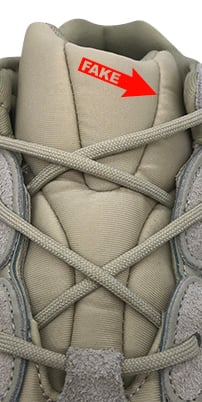
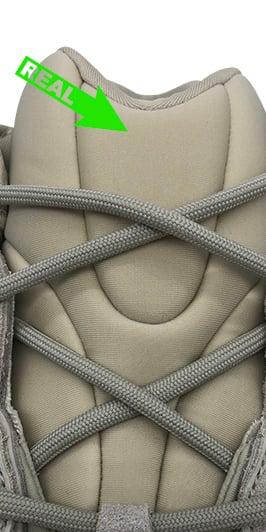
Looking at the tongue face of our two Yeezys, you can see dramatic differences in material quality and workmanship. The real Yeezy 500 tongue has smooth contours made with a firm foam wrinkle-free fabric—the fake tongue shows open seams, wrinkled fabric, and soft creased-foam backing.

Also, look at the base of the tongue. The real Yeezy 500 has a smooth rolled edge with a reversed seam. The fake has a rolled edge but with extra stitching to hold the material flat.    

The Yeezy 500 sidewall foxing

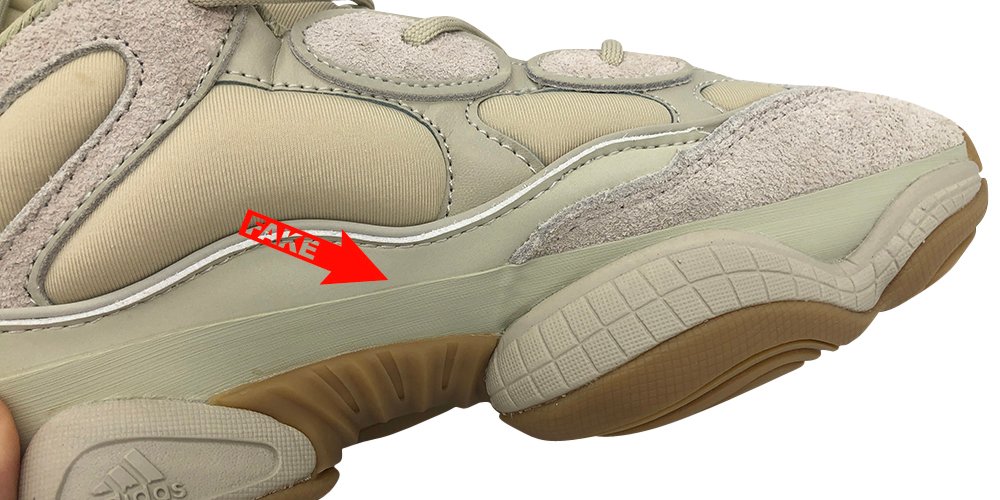
The cemented rubber foxing or rand is a distinctive feature of the Yeezy 500. The real Yeezy shoe has a uniform texture with verticle striation lines.

The rubber foxing on the fake shoe has horizontal grooves and about half the thickness of the foxing on the real shoe. The fake Yeezy 500 clearly shows the x-ray of the underlying seams. 

The Yeezy pattern and silhouette 

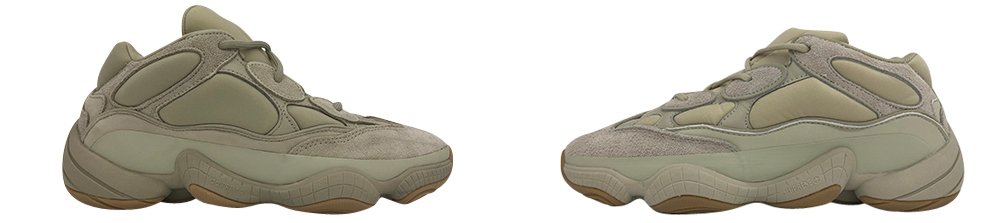
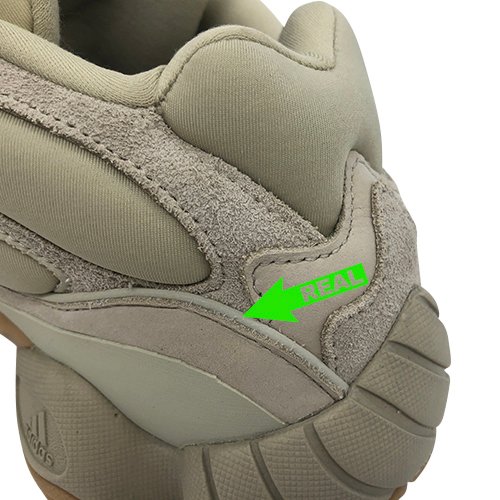
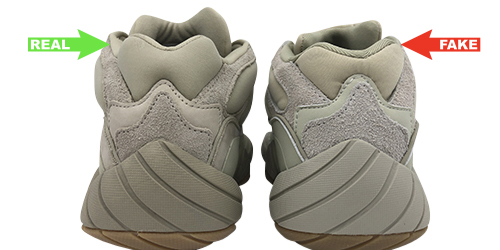
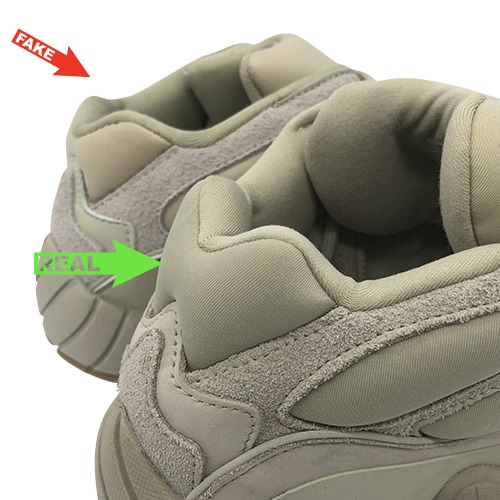
Kanye West’s Yeezy 500 pattern is a complicated collection of curves, overlays, and contrasting material underlays. It is a challenging shoe to make and very difficult to copy. Side-by-side, you can see the crisp silhouette lines on the real shoe vs. the copy. Notice how the instep contour and collar top line of the original are well defined.

On the heel view, you can clearly see the fake pattern has missed the mark. 

Adidas Yeezy 500 top line

Authentication Guide
Legit Check Like a Pro

Learn how to inspect and authenticate shoes like a professional. We give the Nike Air Jordan 1, Vans old SKool and Yeezy a complete quality control shake down. Piece by piece we will study every part. Don’t get burned!
Learn more
On Sale $39.99

The Yeezy 500 outsole unit

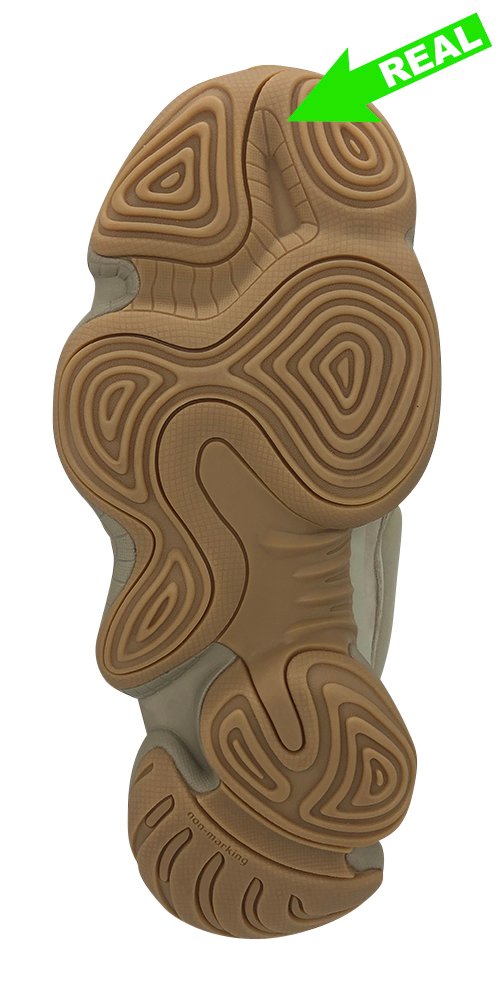
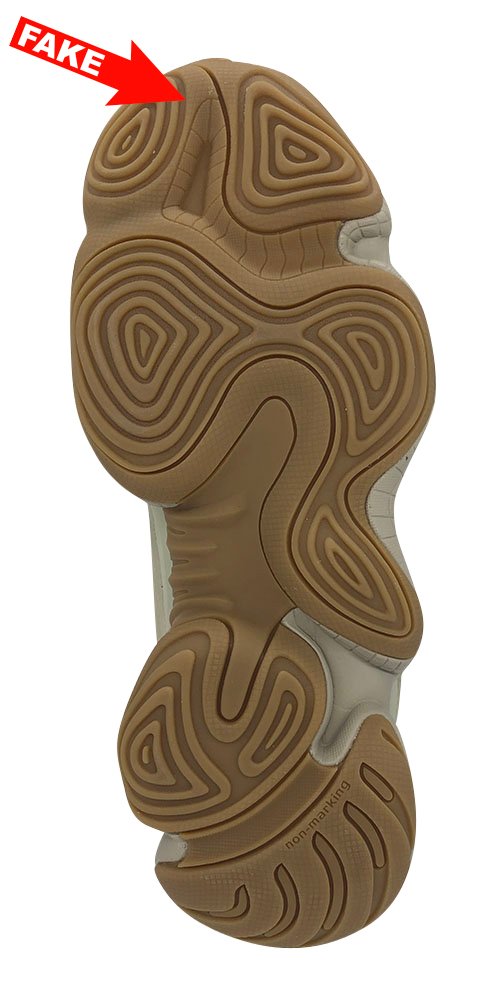
Adidas has dusted off the 90’s vintage “feet you wear” technology for the Yeezy 500 outsole design. The 500 is a unique and patented pattern of foot pods and midsole structures. The fake outsole unit is nearly identical. The tooling design for the rubber compression outsole is well duplicated. The color of the rubber is not correct, and the compound is slightly softer than the authentic.

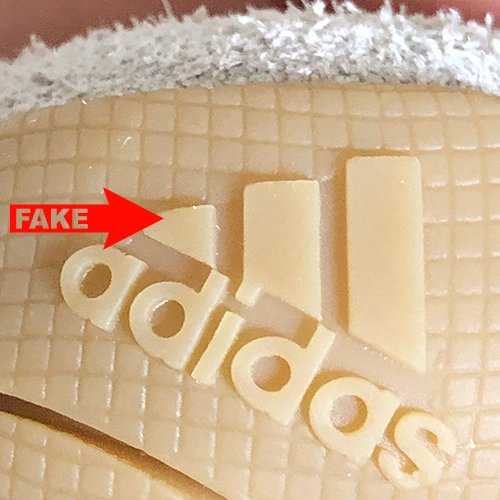
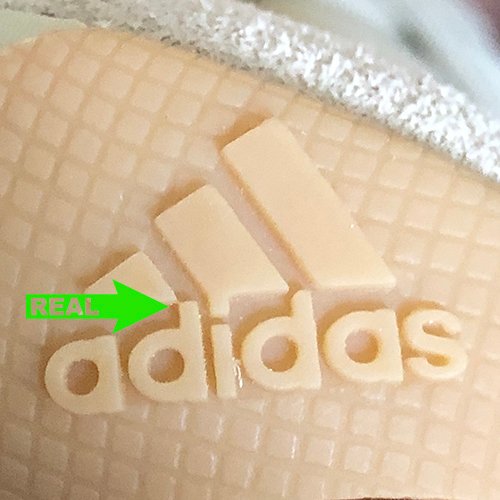
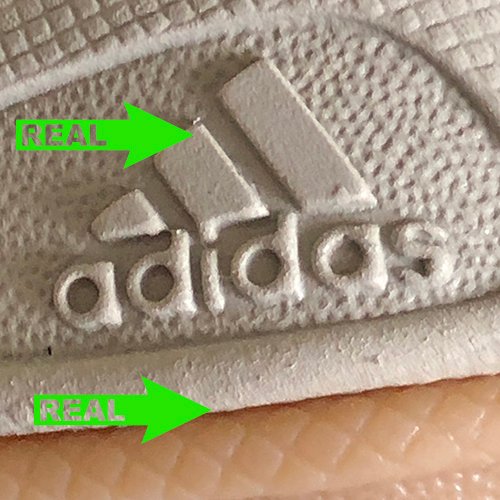
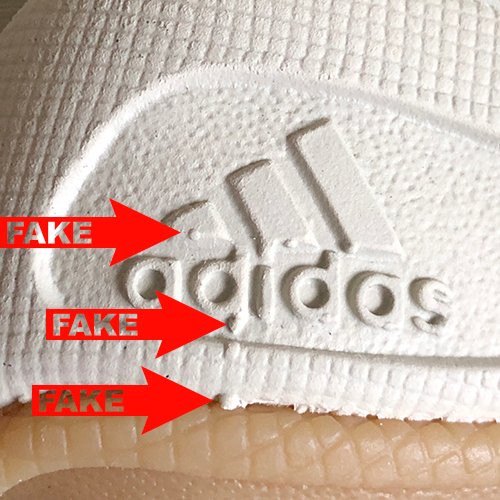
We zoomed in on the toe tip to get a good look at the Adidas “mountain” logo. The fake Adidas logo is well made in this case.

The EVA midsole of the counterfeit Yeezy 500 is close but just not made to the same quality standard. The fake midsole has some pigment issues and some extra air vents you don’t see on the authentic Adidas sneaker. We zoomed in on the side logo here, and you can see extra air vents on the logo and venting on the midsole edge.

Inside the chopped Yeezy 500

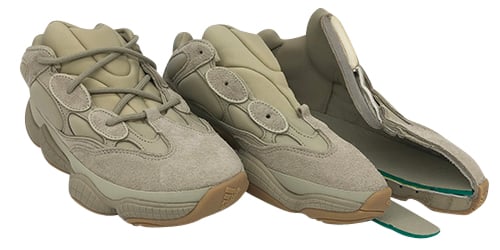
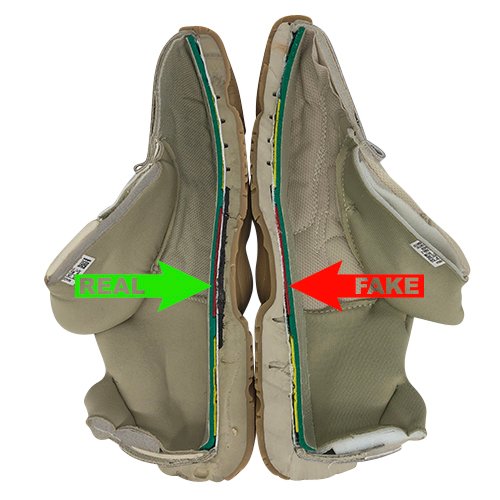
Yes! We cut-up a pair of Yeezy 500s so you can see inside a real pair and a fake pair. 

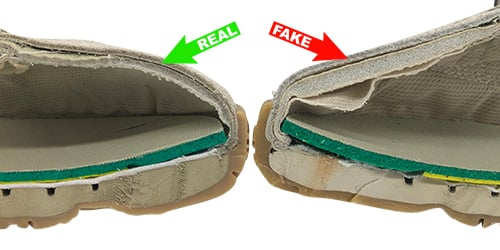
First off, you can see the fake Yeezy 500 is missing the injection-molded shank. You don’t have to cut your shoes to check this feature; you can remove the footbed and press on the Strobel bottom with your fingers- you can feel the end of the shank.

The Yeezy 500 internal construction

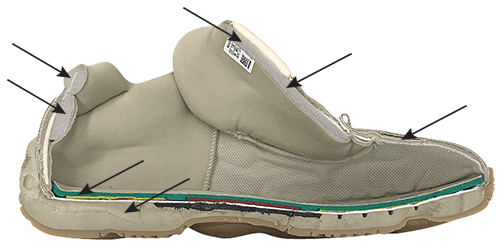
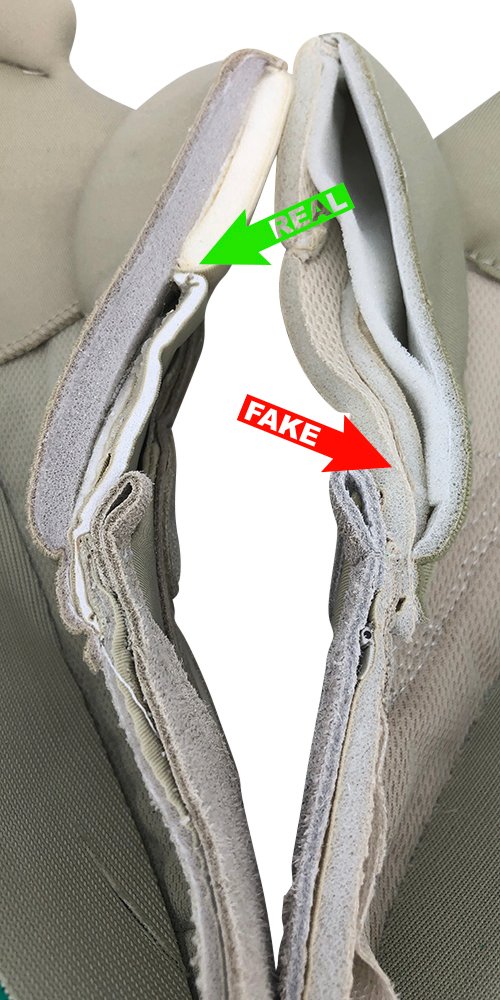
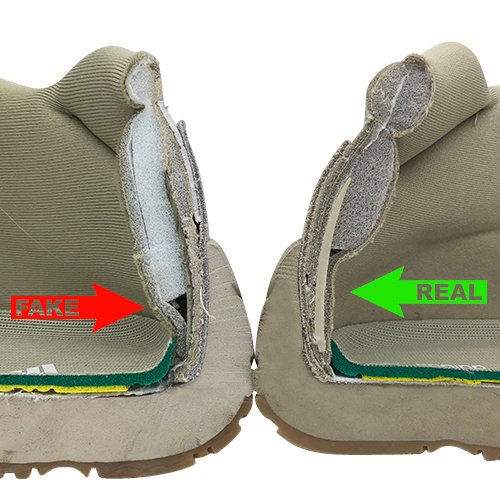
The cross-section of the heel shows you just how poorly the fake shoe was made. You can see the heel counter of the fake is paper-thin, and the foam parts are misshapen. 

The toe section of the real Yeezy has a nice smooth curve. The fake Yeezy is missing the toe counter and has a flat contour that is too soft and already collapsing. Also, notice the fake shoe has a much thicker foam lining. 

The tongue section clearly shows how the real Yeezy internals are neatly assembled. The fake Yeezy tongue is a mess of layers and bunched-up foam parts.  

New Online Course
Sneaker Authentication

13 Authentication lessons.
3 hours of video instruction.
In-depth study of footwear inspection techniques.
Authentication textbook included.
Course Details
enroll now $199

The Yeezy footbed

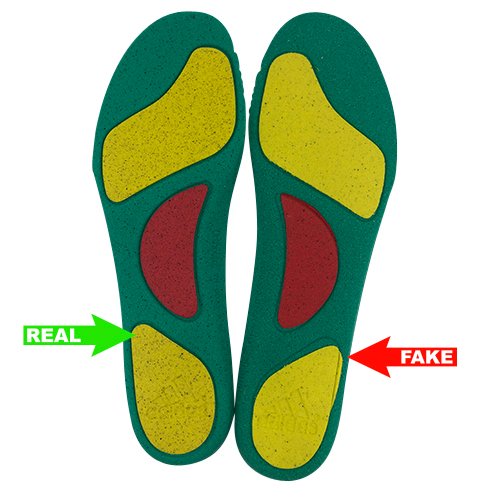
Interestingly the counterfeit Yeezy has a softer footbed; you would normally expect the fake to be very stiff with cardboard-like foam. Both the authentic and counterfeit are marked with the Orotholite trademark, but you can see the color inserts are not correctly placed on the fake Yeezy footbed.

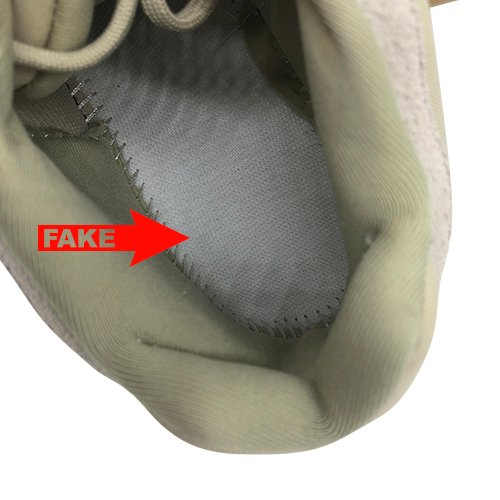
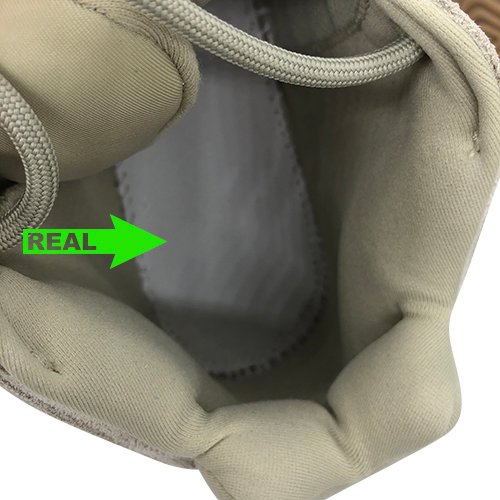
Inside, the real Yeezy has a solid, smooth, white Strobal board with a thin foam layer. The fake Yeezy Strobel sock has a glossy textile surface.

The Verdict:
Not a convincing Yeezy 500 fake.

After looking at the upper materials, outsole parts, and internal construction, we can see this is an obviously counterfeit Adidas Yeezy 500. This fake shoe suffers from the common faults: poor shoemaking and low spec material substitutions. Does the fake look like a Yeezy 500? Mostly. Will the fake Yeezy be comfortable to wear and long-lasting? No. This fake is a poorly made pile of junk.

New Online Course Sneaker Authentication

Learn how to authenticate shoes. We give the Vans Old Skool a complete shake down. Piece by piece we will study every part. Don’t get burned buying fakes ever again!
Course Details
Enroll now $199