Posted on

Financial Modeling for Your New Shoe Company

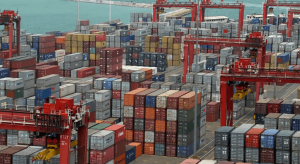
Shoe are imported from China in huge Container ships

Financial Modeling and Cost Accounting for ShoesFinancial Modeling For your Shoe Company:

Before you send any orders to the shoe factory you need to build your financial models. Financial modeling and cost accounting are important calculations to show if you will make any money! This may sound complicated, but once you have a basic understanding it’s easy. First, you will need to calculate how much it will cost to buy your shoes and import them into your selling market. This is called landing.

FOB or Ex-works Purchase Terms for Shoes :

To build your shoe companies complete financial model, you are going to need to figure out your real product costs. When you negotiate your shoe purchase price, you need to set the purchase terms with the factory. Usually, your price will be quoted as FOB. The FOB price includes the cost to build, package, deliver the shoes by container truck to the container harbor and load the merchandise on the vessel. FOB means you will work with the international shipping lines to move your container and not with a local trucking company. Leave the local trucking price negotiations to the factory.
Another common shoe purchase term is “ex-works.”  This means that either you or your freight forwarder are responsible for picking up the shoes from the factory. You may choose to buy your shoes ex-works if you are loading a container with other products.

Landing Costs For Shoes:

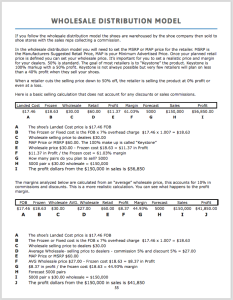
Landing includes all the costs related to moving your shoes from the factory to your warehouse. You need to add in the cost of ocean freight, inland trucking, harbor fees, insurance fees, import duties, document fees, taxes etc. It’s critical to understand these costs, as this will help you work backward from your shoes’ selling price to your factory target price. A shoe which costs $15 FOB will cost closer to $17.46 to buy, ship and import into the USA. The additional inland freight inside your home country could be $.10 to $.50 per pair. This cost will depend on your distribution center’s proximity to the landing port.

If you are using an agent, you may be required to pay duty on the agent’s fees. It’s best to consult your home country’s import regulations. USA regulations require import duty to be paid on any molds or equipment used to make the shoes.

This is a basic calculation of the landed cost. Once you get started, your freight forwarder can help detail other small fees. Some of the costs of the components are under your control, and some are not.
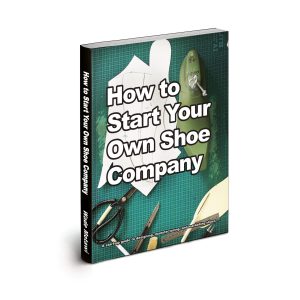
Once you determine the cost to land your shoes, select your sales and distribution business model. You will find footwear sales and distribution models detailed in chapter 8 of How to Start Your Own Shoe CompanyImport duty for shoes is reviewed in chapter 5.

Posted on

How are Nike Shoes Made? Cold Cement Construction

How to design running shoe

The Process of Making Nike Shoes

Most Nike shoes are made by cold cement construction process. Shoe cement is simply PU glue! The PU glue or shoe cement is solvent or water-based. Almost all sports footwear types are cemented shoes.<em> </em>If you want to learn how to design shoes, you need to know this basic shoemaking process. Cold cement is the modern updated style of shoe construction.

Vans and Converse shoes use an old fashion high heat vulcanized shoe construction, while Nike’s cold cement shoe construction allows the use of modern lightweight plastic, foam, and mesh materials due to the low temperatures required for bonding the upper to the shoe sole. Every modern high-performance athletic shoe manufactured by Nike for running, basketball, etc… is made by this cold cement process. Every Air Jordan basketball shoe for the Jordan 1 to the Jordan 30+  is made by the cold cement process. This is how Nike makes all of its performance athletic shoes.

Learn about the Shoe Business

Aspiring shoemakers start here! How Shoes are Made is your entry into the world of modern shoe making. Tour a real shoe factory and learn the process from design to manufacturing.
Learn more
Download $19.99

Cold Cement Shoe Assembly Process:

 How To Make Shoes 如何鞋是由 shoe making process pdfIn the cold cement process, the shoe upper can be prepared with the strobel bottom. For this classic jogger style, the outsole covers the edge upper so a strobel bottom can be used to make the shoe lighter and more flexible.
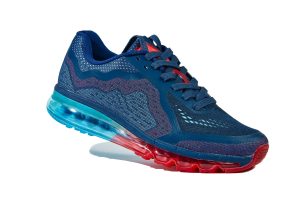
First, the upper is steamed to soften the materials and the last is inserted and pulled tight. Once the last is tight inside the upper a second lasting machine pulls the heel edge. Once the last is secured inside the upper and temporary shoelaces are pulled tight, the upper is cooled to shrink the upper tight to the last.

The shoe may have a plastic or fabric part installed on top of the tongue to protect the surface from damage and drift during the lasting operations.

While the upper is being lasted the sole unit is being prepared. In this case, the rubber sheet sole is combined with the EVA foam cushioning component cemented inside. This is done in a separate process that’s called stock fitting.

Primer and Cement:

Now that the upper is lasted tightly and the outside unit is complete, the two pieces come together. The rubber sole unit will receive coatings of primer and cement. The outsole will get its own special primer designed for EVA and rubber. The shoe upper is also prepared with its own special primer and cement.

After the contact cement and primer have been completely dried in the heating tunnels, the two pieces are joined together by hand. The skilled worker aligns the upper and outsole together, then places the shoe in a hydraulic press.

New Course!
Shoemaking for Designers & Brand Builders

Created for footwear beginners and career changers alike, this course delivers the basic shoemaking knowledge you need to get you career in the shoe trades started.
Learn more
On sale $99

Pressing, cooling, and de-lasting

The shoe will have 3 pressing operations usually all done with one machine. A vertical press, toe and heel press, and side presses. This ensures there is full contact between the upper and outsole. Once the shoe is pressed together it’s often put in the cooling tunnel to set the glue.

After the cooling tunnel, a shoe de-lasting machine is used to push the last out of the shoe without wrinkling the upper.

Now the sneaker is complete. At this point, you can insert the footbed. The footbed may be molded EVA with a fabric cover or flat sheet cut foam. The flat die-cut footbed is usually cemented inside the shoe, while molded footbeds are most often removable.

How to make a nike shoe 如何鞋是由The new sneaker is ready for a final QC inspection, a quick check for any loose threads, cleaning, and packing.
Start Building Your Shoe Business

A must-have for anyone serious about launching a footwear company. 4 text books, shoe business documents and downloadable content not available anywhere else! The Shoe Company Start-Up Pro Pack is all you need to get your shoe business off the ground.
Learn more
Download Today

Posted on

Planning Your Shoe Manufacturing Business

Business plan for selling shoes
The container yard
A massive container yard of product awaiting shipment or delivery.

When to launch your shoes into the market

All your work getting your shoes designed and built is at risk if your market timing is wrong. You need to make sure your winter boots arrive in time for the winter selling season. Make sure to carefully calculate your margins to ensure you can deliver your shoes profitably.

Planning your shoe manufacturing business

The shoe market has buying and selling cycles or seasons. To ensure your shoes are available in stores for these delivery windows you will need to work the schedule backward many months.

Footwear Delivery seasons:

Fall

Can also be called “back to school.” This is a large delivery window for many different types of shoes. The fall delivery is critical for football cleats, cross country running shoes, basketball shoes and any other shoe needed by students going back to school or college.
Fall product must be available to your stores starting in late June so they will be fully stocked for the shopping rush. Your shoe dealers will be switching off the summer product set-up in mid to late July. Fall orders must be placed to the shoe factory February 1st, in order to exit the factory May 1st and be available for retailers to order in late June.

Holiday

The Christmas shopping season can account for 25% to 45% of yearly sales of a shoe store. It is important to have fresh product for your footwear dealers.
Holiday orders must be placed to the shoe factory June 1st. You can expect to pay extra for ocean shipping during the holiday run-up as merchandise floods in from around the world.

Spring

Spring is also a major delivery window for summer sports shoes and items needed for winter vacation travel.  The shoes arrive in the stores in January as the merchandise is reset after the Christmas selling season.

Summer or April

This delivery is usually the smallest. Retailers will use this April product offering to top up their inventory for the summer selling season. Summer is a chance for shoe companies to offer new colors of top selling models.

In Chapter 4 of How to Start Your Own Shoe Company, we will review all the steps of the footwear development process and explain the required timelines in further detail.

Posted on

Creating Your Shoe Company

Creating Your Footwear Company

Creating Your Footwear Company

When should you legally create your company?

You need to be legally creating your shoe company at the time when you hire people to provide services and start spending money. Up until this point your shoe brand is just an idea on paper. While it may exist in your mind, or on a note pad, once you need to start spending money, it’s real!

Your shoe company needs a name

Your shoe company name does not need to be the same as the brand name you put on your shoes. It can be, but it’s not required. If you think you may have more brands in the future, then pick something different. People often confuse the “company” name with the “brand” name. They are not the same. Think of a huge company like Proctor & Gamble TM. This company owns hundreds of different brand names, like Tide™, Pampers™, Cascade™, Braun™, Dawn™ and dozens of others. You can call your company almost anything you want, except a name that has already been taken. Often, a company with several brands will change its name to be the name of its most popular product.

What type of company?

Your new shoe company will need to be a legal business and be registered with the government. In the USA there are several options. The sole proprietorship and the limited liability company (LLC) are the most common for start-ups.

Sole Proprietorship for footwear

The sole proprietorship is the easiest company to set up. YOU are a sole proprietorship. You don’t need to file any tax paperwork. Although you still need to get local permits and licenses to legally do business. The sole proprietorship is simple as it is just YOU. Your personal finances are the company’s finances. Should something bad happen to your footwear company, it’s actually happening to YOU.

Learn more about starting a footwear Sole Proprietorship and the following topics in the book, How to Start Your Own Shoe Company.

Limited Liability Company (LLC) advantages for your shoe business

Product liability insurance for Footwear Manufacturers

Local government permits for shoe companies

Doing Business As (DBA) – Fictitious Names for your footwear brand

Seller’s permits for shoe businesses

Creating and protecting footwear trademarks

Web domains for your shoe brand

New Online Course
Shoemaking for Designers
& Brand Builders

Created for footwear beginners and career changers alike, this course delivers the basic shoemaking knowledge you need to get your career in the shoe trades started.
Course Details
enroll now $99

Posted on

How Shoes are Made: 2020 Update

How Shoes are Made Books

How Shoes Are Made Download

Originally published in June of 2014, How Shoes are Made, has been continuously corrected, updated, and modified.  With feedback from our readers, reviewers, editors, and friends, we have worked to make this newly updated edition more useful, interesting, and concise.


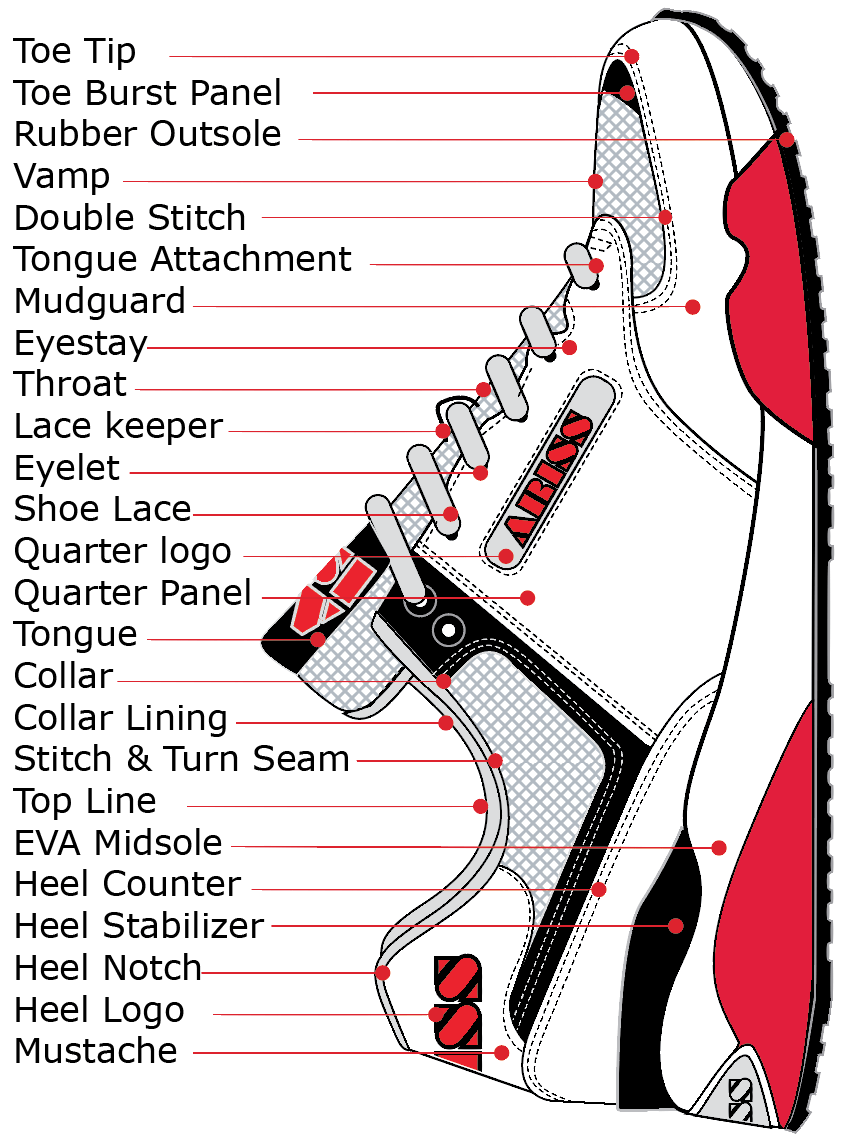
We have made some major updates in formatting and contents. You will find dozens of new footwear photos and new shoe diagrams.  Chapter 3: Making Footwear Patterns, has been completely reworked. I think you will find it much more useful. You will find more information about shoe construction methods, how shoes are designed, how to manufacture shoes, sports shoe construction, parts of a shoe, and parts of a shoe last.

If you have a copy of the original or second edition you will notice that the chapters on importing shoes and starting a new shoe company have been removed. These chapters have been expanded into a completely new book, How to Start a New Shoe Company, which is now available on the SneakerFactory.com website and Amazon.com.  We have put many hours into these improvements and we hope you will enjoy them!

How Shoes are Made book:
Table of Contents


Chapter 1 : The shoe Design Process Two types of design briefs Get started drawing shoes

Chapter 1: The Shoe Design Process
Two types of design briefs
Get started drawing shoes
How are shoes designed


Chapter 2 : footwear Specification drawings How to make a factory ready specification drawing What to include in a specification

Chapter 2 : Footwear Specification Drawings
How to make a factory-ready specification drawing
What to include in a specification


Chapter 3 : Making Footwear Patterns Shoe designer vs pattern maker The pattern maker’s challenge

Chapter 3 : Making Footwear Patterns
Shoe designer vs. pattern maker
The pattern maker’s challenge
How to make a shoe pattern


Chapter 4 : Shoe Specification documents Parts of a shoe spec How to detail a spec sheet

Chapter 4 : Shoe Specification Documents
Parts of a shoe spec
How to detail a spec sheet
Sports shoe construction


Chapter 5 : Outsole Tooling Design Footwear outsole types Outsole blue prints and tooling development

Chapter 5 : Outsole Tooling Design
Footwear outsole types
Outsole blueprints and tooling development


Chapter 6 : Footwear Development Process Footwear sample making Development samples phases

Chapter 6 : Footwear Development Process
Footwear sample making
Development samples phases


Chapter 7 : Footwear Pre-Production Production size grade Production cutting equipment

Chapter 7 : Footwear Pre-Production
Production size grade
Production cutting equipment
Lasting methods of footwear


Chapter 8 : SHOE Material Preparation Material cutting Logo printing and preparations

Chapter 8 : Shoe Material Preparation
Material cutting
Logo printing and preparations


Chapter 9 : Upper Stitching Operations The stitching room Stitching order of operations

Chapter 9 : Upper Stitching Operations
The stitching room
Stitching order of operations
How shoes are made in a factory


Chapter 10 : outSOle Rubber Pressing Mixing rubber materials Rubber molds and pressing

Chapter 10 : Outsole Rubber Pressing
Mixing rubber materials
Rubber molds and pressing
How Rubber outsoles are made


Chapter 11 : EVA midsole Forming1 What is EVA made of? EVA pressing operations

Chapter 11 : EVA midsole Forming
What is EVA made of? 
EVA pressing operations


Chapter 12 : The shoe Assembly Line Cold cement shoe construction Vulcanized shoe construction

Chapter 12 : The Shoe Assembly Line
Cold cement shoe construction
Vulcanized shoe construction
Cementing shoes
Shoemaking equipment


Chapter 13 : The Shoe Last Shoe last shapes How lasts are made

Chapter 13 : The Shoe Last
Parts of a shoe last
Shoe last shapes
How lasts are made


Chapter 14 : Footwear Costing Where does the money go? Reading a factory cost sheet

Chapter 14 : Footwear Costing
Where does the money go?
Reading a factory cost sheet


Chapter 15 : Logo Design for Shoes What is the right logo for your shoe? Shoe logo constructions

Chapter 15 : Logo Design for Shoes
What is the right logo for your shoe?
Shoe logo constructions


Chapter 16 :Leather for Shoes Leather basics Common leather for shoes

Chapter 16 : Leather for Shoes
Leather basics
Common leather for shoes


Chapter 17 : Textiles for Shoes Fabric weaves Backing and surface treatments

Chapter 17 : Textiles for Shoes
Fabric weaves
Backing and surface treatments


Chapter 18 : Synthetics for Shoes Synthetic types Application on shoes

Chapter 18 : Synthetics for Shoes
Synthetic types
Application on shoes


Chapter 19 : Foam for Shoes Foam types, open vs closed Foam compounds, densities and use in shoes

Chapter 19 : Foam for Shoes
Foam types, open vs closed
Foam compounds, densities and use in shoes


Chapter 20 : Know Your Footbeds Footbed parts Material types for shoes

Chapter 20 : Know Your Footbeds

Footbed parts
Material types for shoes


Chapter 21 : Footwear Material Suppliers Working with material suppliers List of top shoe material suppliers

Chapter 21 : Footwear Material Suppliers
Working with material suppliers
List of top shoe material suppliers


Chapter 22 : Shoe Designers Tools The Pantone™ color system Common tools of the trade

Chapter 22 : Shoe Designers Tools
The Pantone™ color system
Common tools of the trade


Chapter 23 : Jobs in the Shoe Trades Getting started in the trades There is a job for you

Chapter 23 : Jobs in the Shoe Trades
Getting started in the trades
There is a job for you


Chapter 24 : Footwear Quality Control How to grade shoe quality? Standard shoe inspection procedure

Chapter 24 : Footwear Quality Control
How to grade shoe quality?
Standard shoe inspection procedure


Chapter 25 : Life at a Shoe Factory Look inside a real factory Working conditions

Chapter 25 : Life at a Shoe Factory
Look inside a real factory
Working conditions


Chapter 26 : Shoe Making Dictionary Shoe making terms you should know Shoe parts diagram

Chapter 26 : Shoe Making Dictionary
Shoe making terms you should know
Shoe parts diagram


Shoemaking
TextbooksBuy Now
Shoemaking
SuppliesBuy Now
Shoemaking
CoursesCourse Details
Previous Next
Posted on

Tour a Factory Producing Handmade Shoes

Tour a custom shoe factory

Posted on

Italian Quality Handmade Shoes in China

Custom Shoe Show Room

Custom Made shoes in China Italian High Quality Shoes
Handmade in China

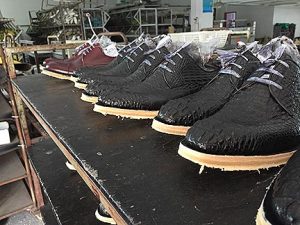
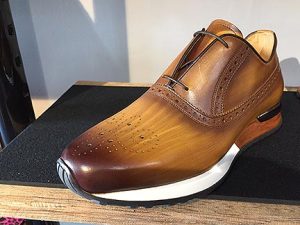
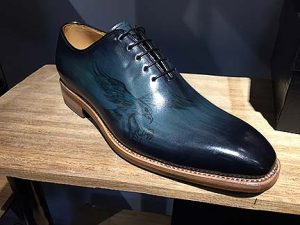
Can high quality handcrafted shoes be made in China? Yes! The modern shoemaking trades have been thriving in China for more than 30 years. Shoemaking  is a mature industry in China and there are thousands of skilled shoemakers with many years of experience.  While China is known for the mass production of millions of glittering sport shoes, the manufacturing of handcrafted fine leather shoes is also well developed.
Handmade custom shoes The typical shoe factory in China will have hundreds, even thousands of workers, but there is a new class of small factories now producing the highest quality custom and semi-custom shoes. On a recent visit to China, I toured the show room of the custom shoe maker Top Owen. Owen, the founder of the brand, learned his trade in mass production of athletic footwear, but then changed course.
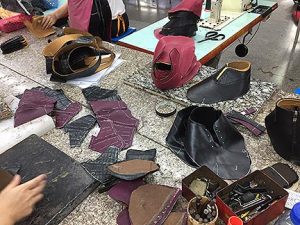
Custom Shoe Factory With a desire to create european craftsmanship in China, Owen left his job at a huge shoe factory to build his own micro factory.  Owen hired on a staff of 25 expert shoe makers to operate his new custom shoe factory. After careful study of the highest quality European hand crafted shoes, Owen and his team now offer custom hand crafted footwear for shoe connoisseurs lucky enough to find him.
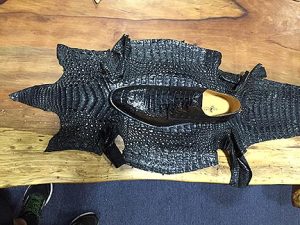
Owen now has many exotic leathers available for custom “one off” creations including ostrich, crocodile, alligator, snake, lizard and others.
Without any advertising or a website, Owen has created a loyal following for his exquisitely made custom shoes. Beyond shoes, Owen offers his customers other leather goods complementary to the footwear. If you would like a wallet, handbag, briefcase, belt or even a leather golf bag custom made to complement your shoes, Top Owen can deliver!
Top Owen offers a wide range of offshore making services and shoe styles.

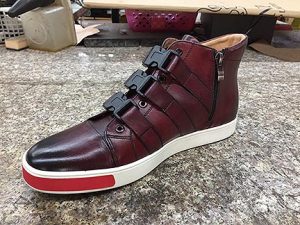
Designer Series Custom Athletic Shoes:

Custom Made athletic shoes Are you looking for some custom made kicks?  Owen has a section of mock vulc stitch down soles, classic trainer wedge, and classic basketball sole units available.  For around $400 USD you can get your own pattern custom made in full grain leather. For an extra $125 USD you can have a test pattern sent to you for fitting.
Other options include a custom wooden box.

Designer Series Fashion Shoes:

Send Owen a design for dress shoes and his team will create exactly what you want.  You pick the design, last shape, leathers and any extra styling work you desire. Prices start around $400 USD – depending on your material and design requirements. For an extra $125 USD you can have a test pattern sent to you for fitting.
Other options include a custom wooden box.

Full Custom Shoe Service:

Are you looking for a full custom fit? For a 100% hand made last fit just for you?  The full custom program brings the high end European custom made service to you at a fraction of the European price.  Send Owen and his team photographs of your foot and record the critical measurements.  Then, send Owen your design for the dress shoes and his team will create them to your specifications. Once again, you pick the design, last shape, leathers and any extra styling work you desire.
This Full Custom Service includes a lifetime service, warranty, repair and refresh service.
Prices start around $1000 USD – depending on your material and design requirements.

Shoemaking
TextbooksBuy Now
Shoemaking
SuppliesBuy Now
Shoemaking
CoursesCourse Details

Previous
Next

Posted on

See inside a Designer Handbag Factory

Workers in a hand bag factory

Leather bags in a handbag factory

Handbag Factory Tour

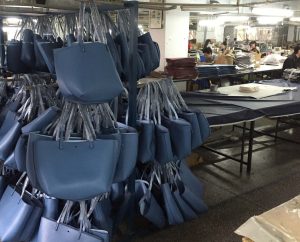
On a recent factory tour in China I was invited to visit a friend’s designer handbag factory.  Since I was formerly bag designer, I was  especially excited to have a look inside to see what was going on. The purse factory we toured was making medium priced leather and fabric bags for export to the USA and Europe.

Purses and bags follow many of the same techniques found in shoemaking.  Material selection, cutting, processing and assembly processes are similar to footwear. One thing you will commonly see in a handbag factory is particular attention being paid to the edges of the material.  Every edge gets some type of finishing treatment.  A large portion of the factory was filled with racks of painted parts hanging to dry. You will not see this in a shoe factory.

This particular factory has a huge selection of available models. The store house has hundreds of different cutting dies and a massive collection of stock materials.


Shoemaking
TextbooksBuy Now
Shoemaking
SuppliesBuy Now
Shoemaking
CoursesCourse Details

Previous
Next

Posted on

How Designer Handbags are Made

handbag designs 2015 simple purse pattern

How Designer Handbags are Made

As a shoe designer you may be called upon to work on many different soft goods projects.  My design career started with bag design, moved on to footwear design, and now I work in both fields every day.

You will find that footwear and fashion handbags have a lot  in common. Many of the design and manufacturing aspects are the same. Footwear and designer handbag materials and constructions are very similar. While shoe patterns and handbag patterns are very different they do have many of the same processing requirements.

When I saw the crew over at FASHIONARY had put together new book on bag design, I could not resist adding it to my own design library. The book is titled BAG DESIGN, and that says it all. Inside you will find style notes, detail drawings, pattern designs, spec sheets and material guides. The book is very complete. More than just designs for handbags, the book contains over 60 design templates for all types of bags from wallets, to golf bags, to backpacks and more.

You can pick up this book from Amazon.com

Posted on

Handmade Shoes for Men

Handmade Shoes for Men

Handmade Shoes for Men Book Review

Handmade Shoes for Men
Available on Amazon

Handmade Shoes for Men
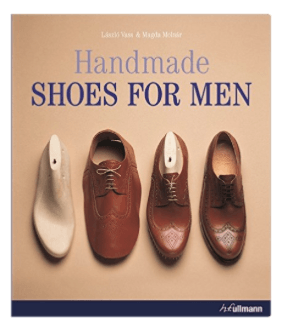
by Laszlo Vass & Magda Molnar

Hard Cover: 216 Pages Published 2015
What Amazon says: Handmade Shoes for Men elucidates the entire process of creating classic men’s shoes, while the detailed color photographs document every stage of production. It is a worthy introduction, for both the professional and the layman, to the wealth of tradition that is waiting to be discovered in the shoemaker’s workshop.
What The Sneaker Factory Crew has to say:  We really like this book. Handmade shoes for Men is a great read.  The book is well written and we found it very interesting.  Laszlo Vass and Magda Molnar have done a nice job detailing the process for making hand made shoes.  This is the classical ART of shoe making not the heartless mass production of china.  Laszlo Vass is a real shoe maker practicing the highest form of our art.
From measuring feet, to lasts making, to leather tanning, shoe design, cutting, stitching, lasting and finishings this book has it all.  If you are interested the art of Handmade shoes for Men then this is the book for you.
We give this book 5 Stars.   Now Available on Amazon

About the Author

László Vass, born in Budapest in 1946, worked in the Hungarian fashion house of Magyar Divatintezet as a clicker, closer, shoemaker, and designer from 1964 until 1969. In 1970, having gained his professional shoemaking qualification, he joined a private workshop specializing in handmade shoes and ladies’ boots as assistant chief designer and shoemaker. In 1978, Vass founded his own workshop and opened a business in the centrt of Budapest. Since 1988, he and his 20 staff have concentrated on traditional shoemaking. Today, the exquisite quality of the shoes made by the firm of Vass has earned the workshop enormous respect throughout Europe.

  • Hardcover: 216 pages
  • Publisher: h.f.ullmann publishing (February 1, 2013)
  • Language: English
  • ISBN-10: 3848003686
  • ISBN-13: 978-3848003686
  • Product Dimensions: 8.7 x 0.8 x 10.2 inches


Shoemaking
TextbooksBuy Now
Shoemaking
SuppliesBuy Now
Shoemaking
CoursesCourse Details

Previous
Next