As a New Midsole Material Launches has Adidas Boost Foam met its match?
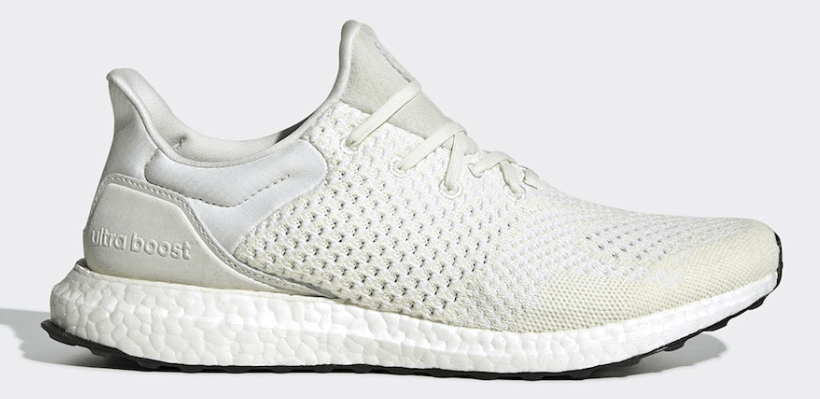
Adidas and BASF turned heads with the introduction of the futuristic Boost Foam technology. The unique midsole material has performance advantages and a distinctive look. Boost foam is actually a new formulation of a common plastic, TPU. TPU or Thermoplastic poly-Urethane Boost is “blown” meaning the chemical engineers at Adidas and BASF have figured out a way to introduce air bubbles into the plastic making a new TPU foam.
The challenge of making Boost TPU foam midsoles
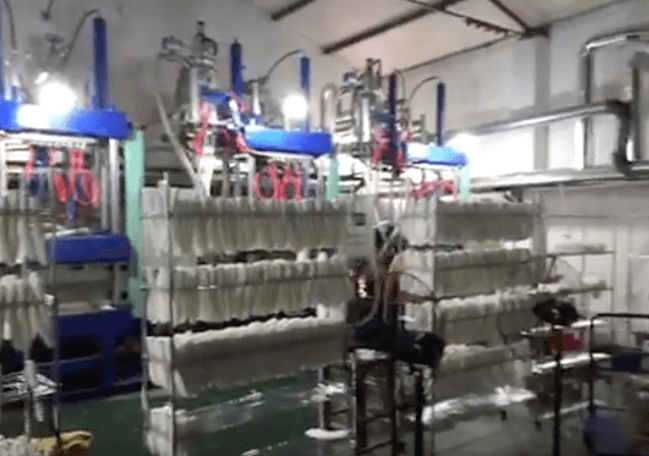
Steam Expansion Equipment to make Adidas Boost.
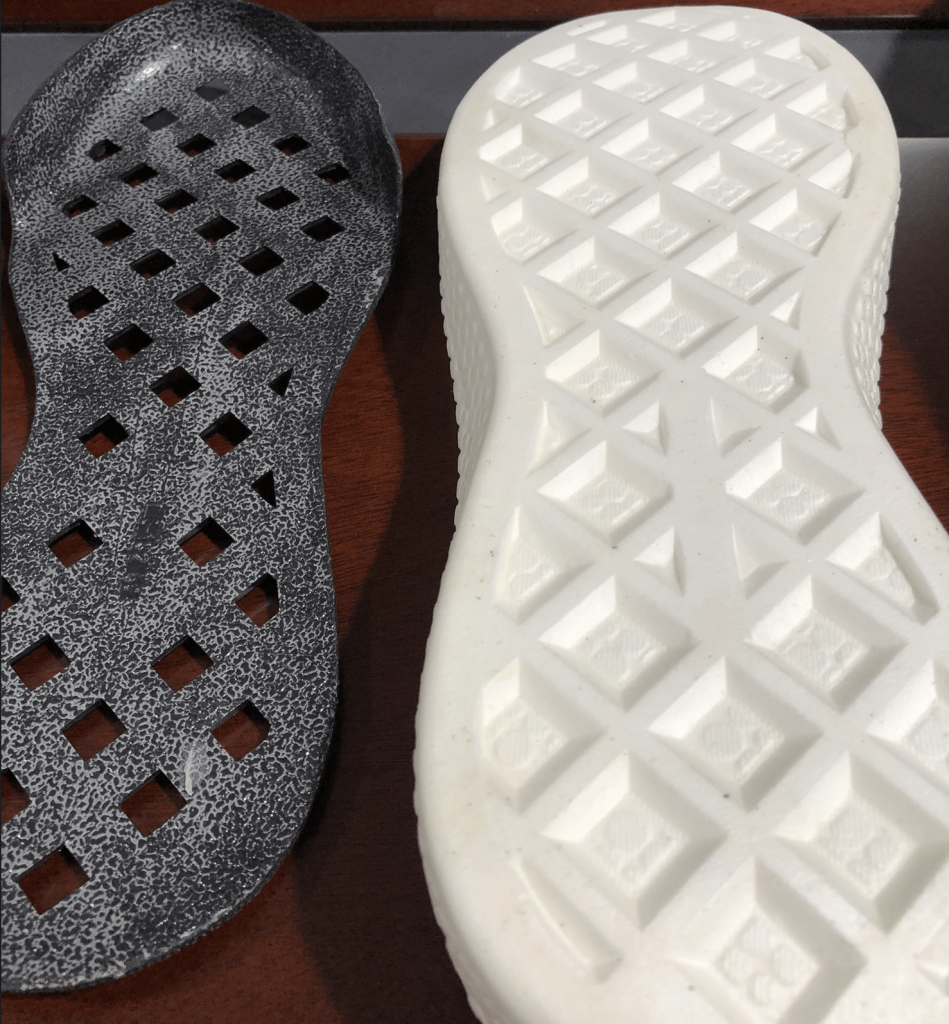
The texture, while distinctive, makes all Boost midsoles look alike. This distinctive look is great for marketing launches but designers need the ability to make shoes look different year to year.
Boost foam also has a color issue. The TPU foam cannot be molded in color so the midsoles must be painted. Painting midsoles adds cost to the product and even flexible paint can be scratched off or chipped off the foam surface.
The Boost midsole also requires special steam expansion equipment not found in the standard shoe factory.
A new midsole foam better than Boost?
New foam uses standard equipment
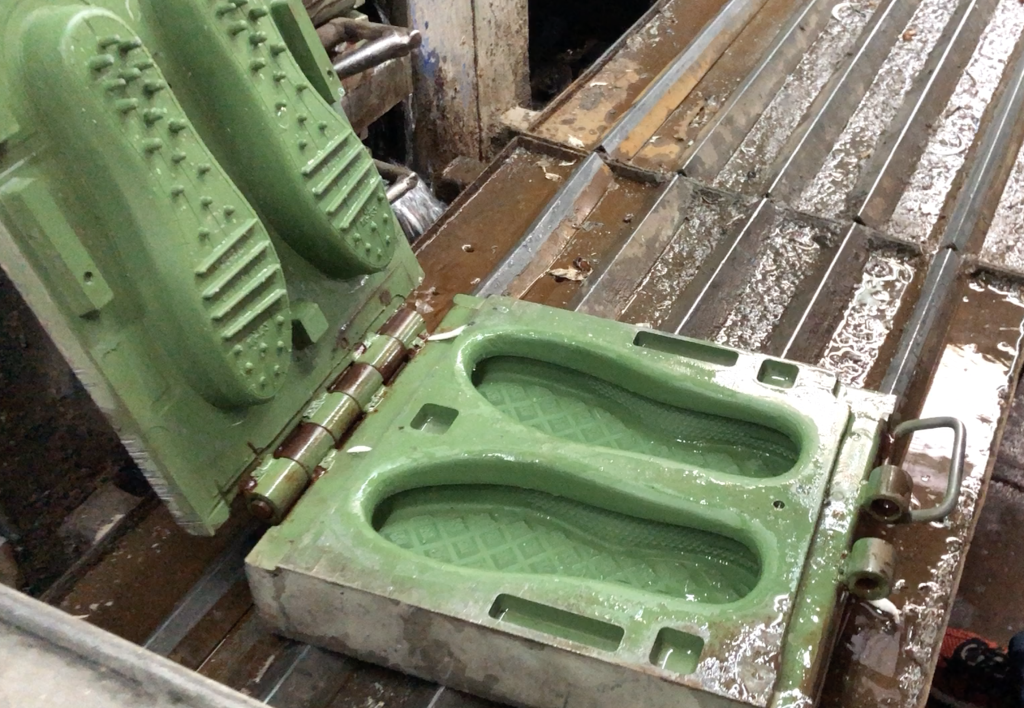
Today we visited an EVA pressing factory with a new compound in development. This new midsole foam is a mixture of EVA and TPU. This new foam has the resilient, wrinkle-free feeling of Boost foam but it can be made with standard EVA forming machines. The foam maker is hush hush about the exact compound but he tells us the new foam is about 30% TPU and 70% EVA.
This new midsole compound is lighter than standard EVA and can be molded in any color like standard EVA midsole foam. This new EVA TPU foam is a little more expensive than standard EVA but costs much less than Adidas TPU Boost foam.
If you are interested in the battles between Nike and Adidas you will love the podcast Business Wars: Nike vs Adidas. This 7 part podcast series produced by Wondery is an awesome look into the birth of Adidas and its decades-long clash with the brash upstart from America, Nike.
Adi Dassler Founder of Adidas Nike Founder Phil Knight
The podcast covers the humble beginnings of both Nike and Adidas. While Adi Dassler and Phil Knight started their companies on different continents some 40 years apart, their brands would battle for hearts, minds, athletes, singers, teams, and even entire sports leagues.
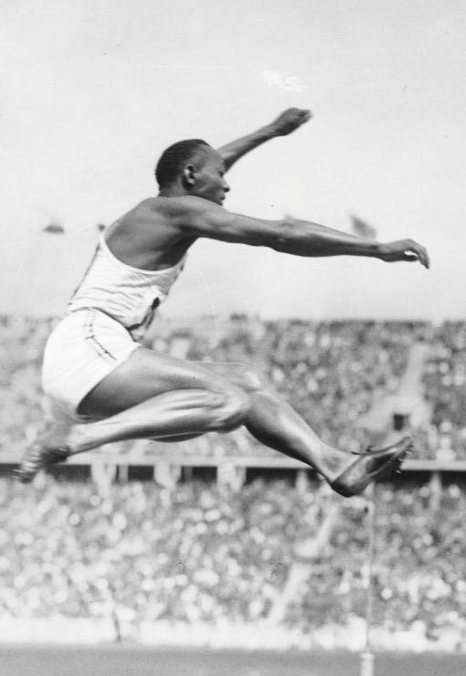
Jessie Owens in his Adidas
It’s an amazing saga! From the triumphs of Adidas and Jessie Owens to the battle for Kanye West and Kobe Bryant, you will get the whole Nike vs Adidas story!
Check out the podcast series Business Wars: Nike vs Adidas.
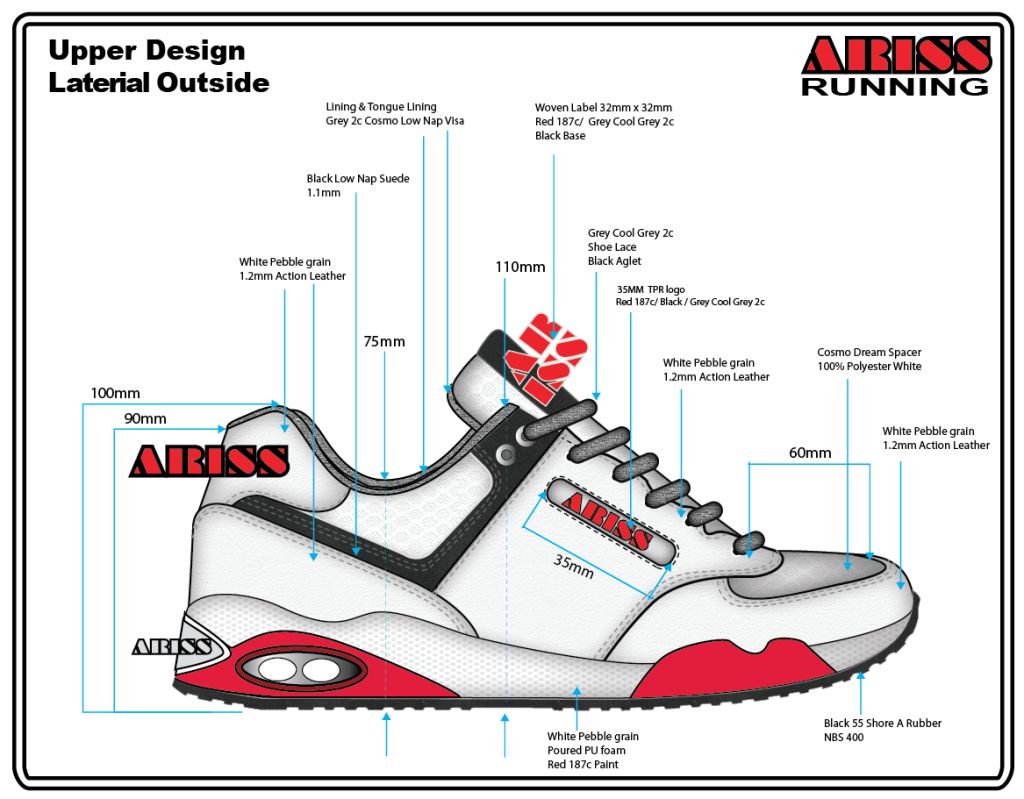
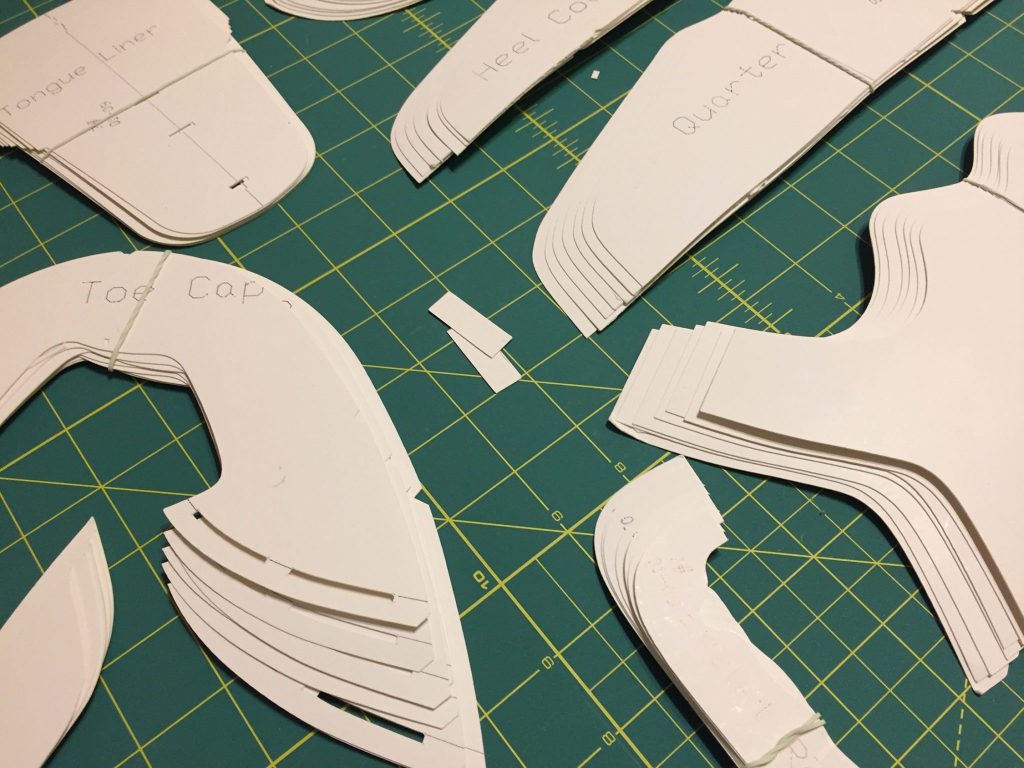
You can buy a real shoe pattern! This pack contains the computer cut shoemaking pattern for the Arris classic jogger. This footwear pattern is cut from heavy paper stock and is just what you will find in a shoe factory. Every shoe pattern part is marked with its name. If you want to learn shoe pattern making this is a must have! We have included the files for digital download in editable PDF and AI file formats. This kit will help you learn the shoe pattern making process. Also included is the printed outsole drawing and digital files for the outsole design.
1. Factory shoe flat pattern in Downloadable PDF and live vector .ai formats.
2. Printed factory blueprint for an EVA/Rubber running shoe outsole unit. Includes PDF and live vector files.
3. Complete line item shoe specification. In Microsoft .xls format.
4. Sample shoe specification drawing – 8 pages. Includes PDF and live vector .ai formats.
Footwear Pattern Parts
Shoe design pattern PDF downloadable File
Footwear pattern download .ai vector file, how to draw shoe patterns
Making a shoe pattern or cutting a shoe pattern is not a difficult shoemaking skill. If you have the time and patience, you can produce shoemaking patterns with just a few common tools. The shoe pattern making process is not complicated. The basic techniques for drawing on a shoe last are simple, and the process is easy, but the skills required to make a beautiful, well proportioned, mechanically sound, shoe pattern may take years for a shoemaker to perfect! This is the true art of the shoemaker that a computer cannot replace. A skilled pattern cutter is the heart of a shoe factory’s development group. Here we will show you how you can cut your own pattern.
Here is a list of the shoemaking tools you will need to make a shoe pattern:
1. A shoe last. If you don’t have a shoe last you can tape over a shoe or 3D print a last. 2. A roll of 1/2 inch wide masking tape. This will be used to cover the shoe last. (3/4 inch will do too.) 3. A sharp X-Acto knife or other hobby knives. 4. Pens and pencils. 5. A small flexible steel ruler. 6. Bristol paper (any stiff paper will do, like a manila folder) Here is a list of some other shoemaking tools you may need,
How to make your own shoe pattern
First step: tape up the shoe last
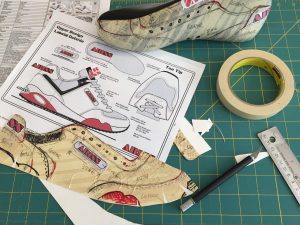
To make a new shoe pattern step-by-step you will first need to “tape” the last so you can “pull the shell” off the shoe pattern. The tape should be layered in two different directions so the pattern stays together when you are ready to peel it off the last. You will start on the lateral or outside of the shoe last. First, starting at the top, lay the tape lengthwise down the lateral side of the last. Next, run a strip of tape down the center of the last from the top of the instep down to the toe. Do the same on the heel of the last. Finally, run layers across the last from the bottom edge up the side of the last. Make this extra smooth, this will be your drawing surface when you start marking your shoe pattern.
Make sure the tape wraps around the bottom edge of the last. You will need this edge, as it will become the bottom edge of your shoe pattern. If your shoe design is symmetrical then half the last is okay. If the medial and lateral side of your shoe design is different you will need to tape the entire last. The process is the same for both sides.
Once the shoe last is covered with tape, it is time to start marking the shoe pattern. With the steel ruler, mark the centerline of the last from the instep to the toe tip and down the heel. For a list of last terms you can read this post about shoe lasts and how lasts are made. With the centerlines marked it is time to start drawing the pattern on the last.
Drawing the shoe pattern:
It’s fun to add a little color or paste on a logo. You can start to get a feel for what the design will look like in 3D. Go ahead and iterate upon your design, this is your time to be creative. If you don’t like your line, grab some tape, cover it up, and try again.
Make a quick check of the top line, collar, and heel notch heights. For a size 9 shoe, (measure from inside to the Strobel sock,) the collar line is 55mm, the heel notch is 80-85mm to top eyelet, 90mm measured from the Strobel’s bottom.
The design does not have to be perfect now but keep an eye out for any major flaws. This is a good time to show it to your developer. Are the pattern parts wasting material? Are there any overlapping issues? Too many layers overlapping in the flex zone will cause problems.
After you have your shoe design down on the tape it is time to peel off the tape. Using a sharp blade, cut the tape down the center lines of the toe and heel. Next, cut the tape along the bottom edge of the last. Now, start peeling off the tape. If the tape was laid down correctly in overlapping layers the pattern will pull off.
Here is the pattern free of the last. You may find that it does not lay flat, don’t worry.
Now, carefully lay the tape on a sheet of stiff paperboard and press your new shoe pattern flat. Starting at the top eyelet position and collar line, work your way down the middle then out to each end. As you move to the heel and toe, the 3D pattern will need some relief cuts to “spring” the pattern. Add a few cuts and the pattern will flatten.
Cut the shoe pattern:
Once the tape is peeled from the last and flattened you have the shoe pattern! The pattern with all the parts together is called the “shell” pattern. With the pattern attached to some paper, it’s time to “trim out” the pattern. Now the shoe pattern can be redrawn in a computer and cut out of heavy paper. The Pattern Cutter will add the overlaps and alignment marks.
As a shoe designer, you should always ask for the flat pattern of a new shoe design. When you make corrections for the pattern maker, it’s easier to draw on the flat pattern than to draw on the sample. It is also much faster to scan the corrections and email them to the factory rather than Fed-Ex the shoe back to China.
Here is the finished flat pattern. Scanned and with overlaps added, this pattern is ready for the sample room. Buy the pattern here.
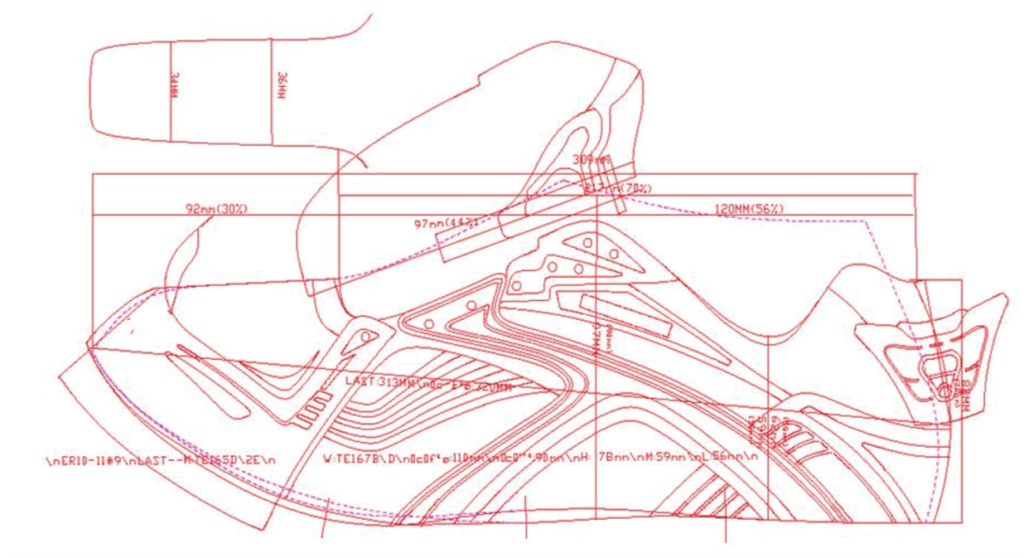
Once you have completed drawing your shoe design, you will need to make a flat pattern. The pattern will be used to cut and sew the materials for your initial sample. The pattern records the actual shape of the shoe. The pattern and the shoe last together determine the profile, fit, collar height, vamp length, tongue length, throat width and all the other dimensions of the shoe.
This classic jogger shoe pattern looks simple but it has many pattern parts. Shoemaking patterns can be very complicated.
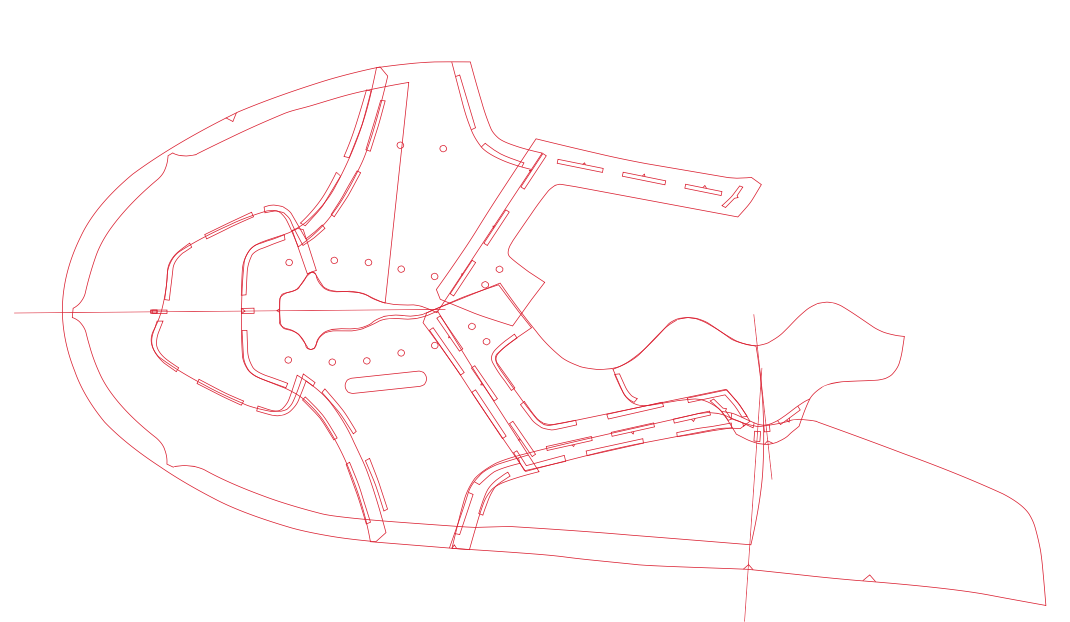
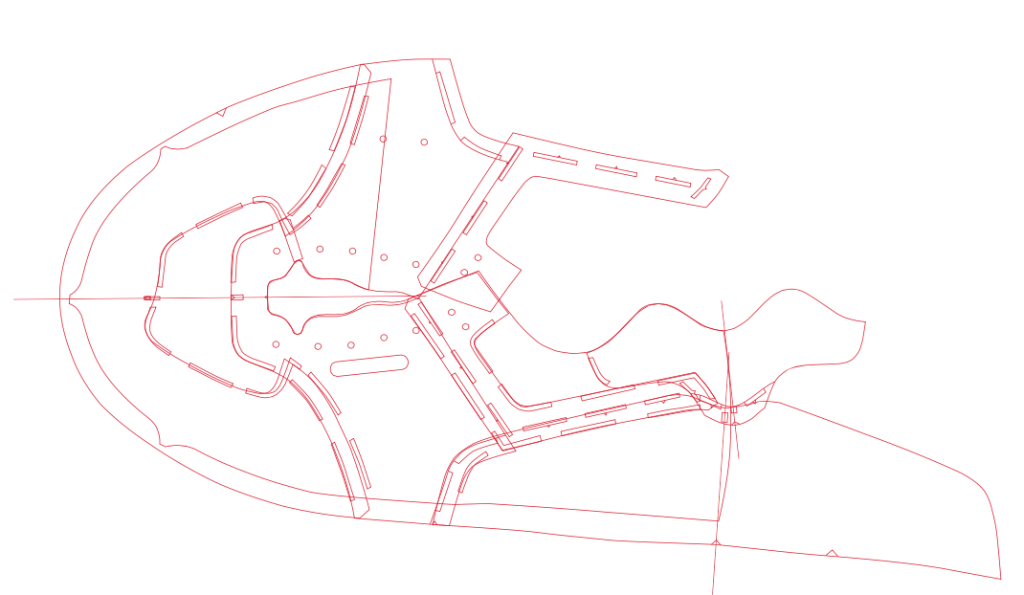
The complete shoe shell pattern, as shown above, may not show the material overlaps but is an easy way to communicate the design. Often, the factory will include the shell pattern with any new pull-over samples. This allows the designer to scan the pattern back into the computer and make corrections.
Shoe design pattern PDF downloadable File
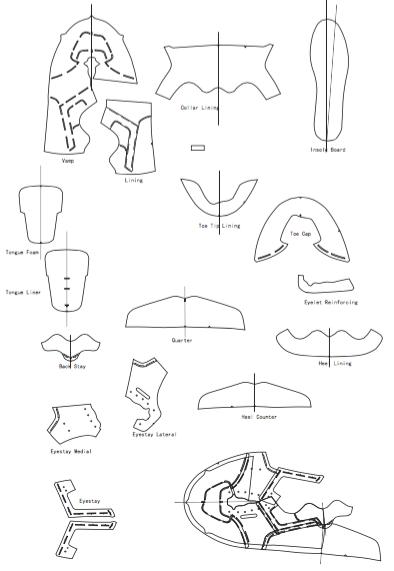
Another method (shown above) is to display all the pattern parts; including the overlap and the alignment marks. This drawing helps the pattern maker see how the parts fit together and where the overlaps occur.
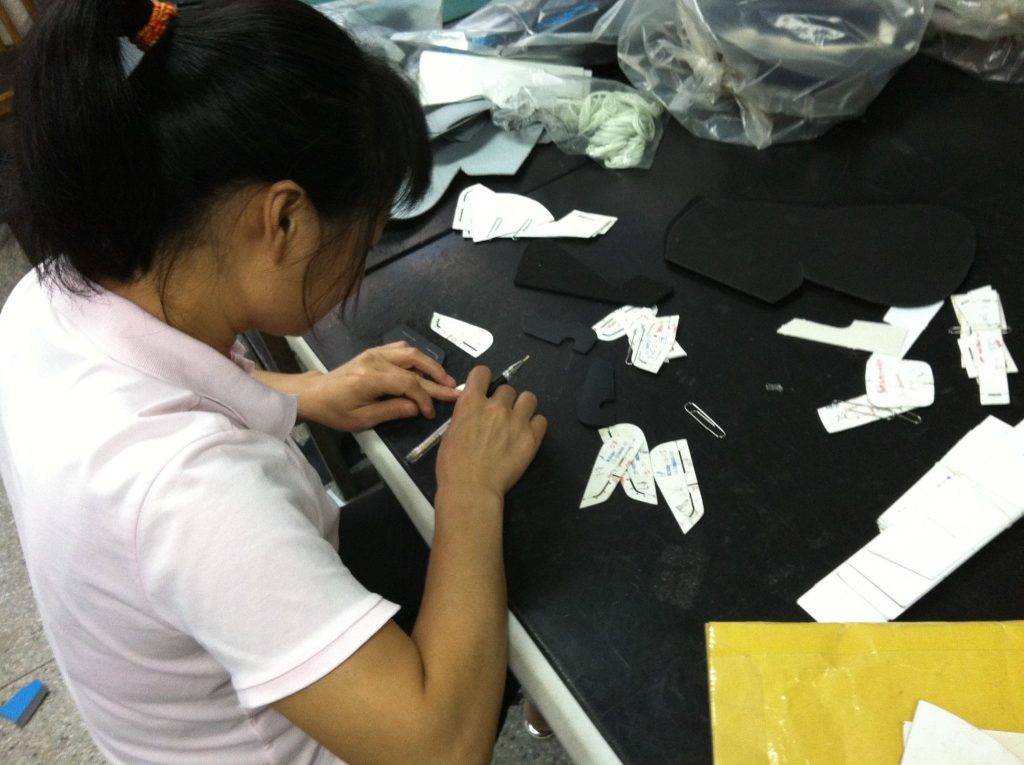
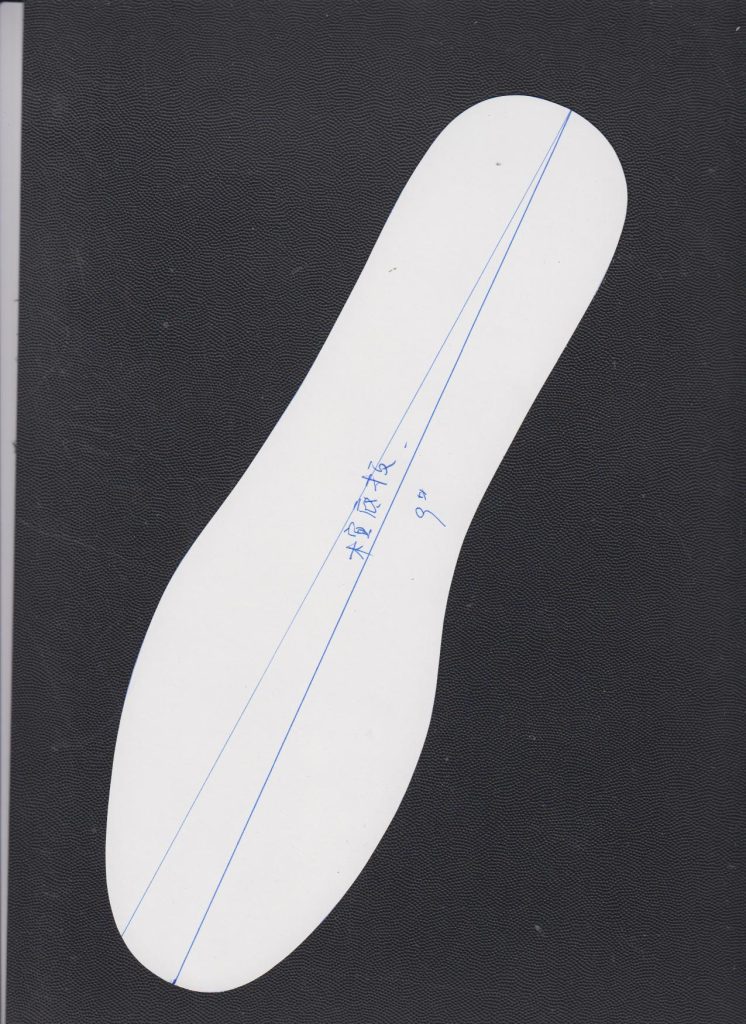
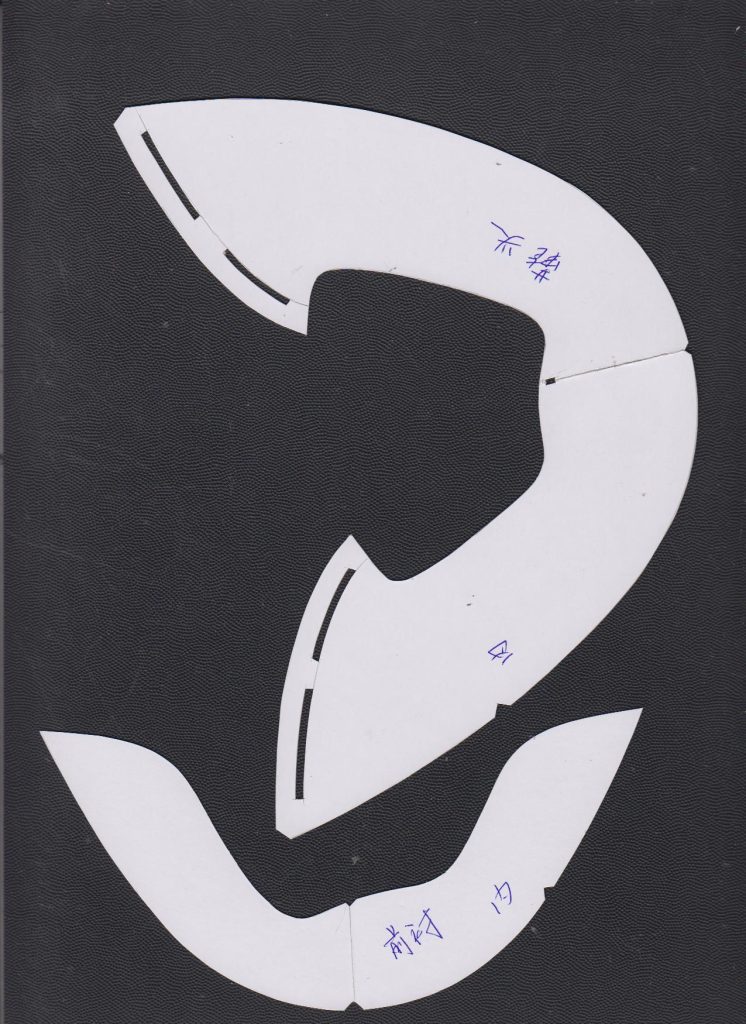
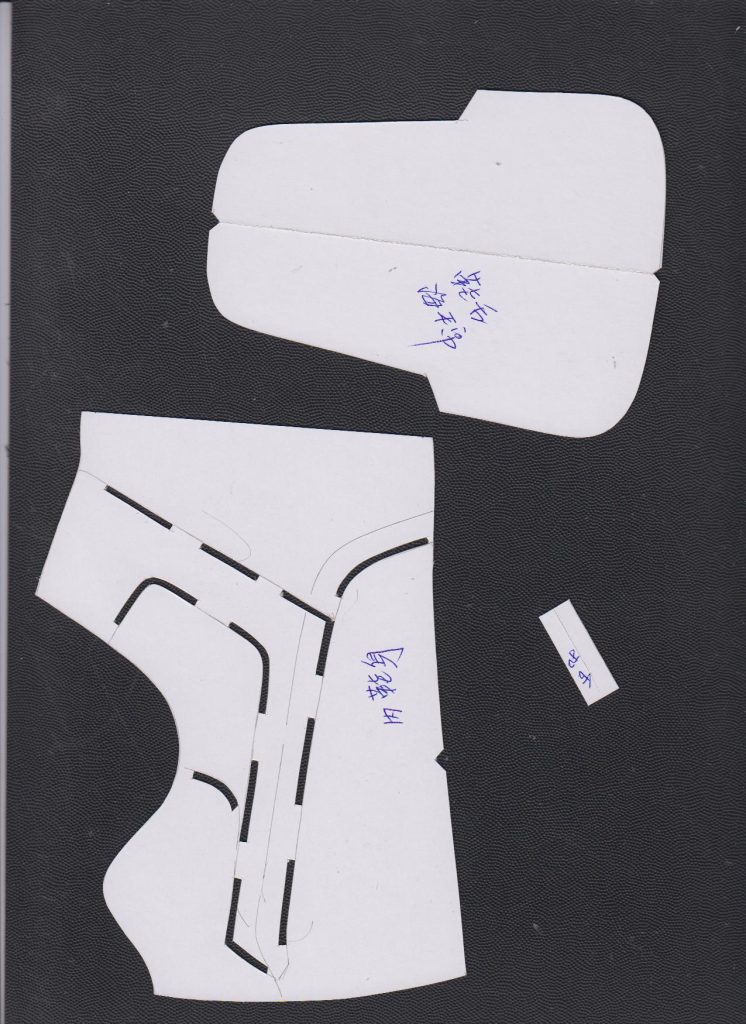
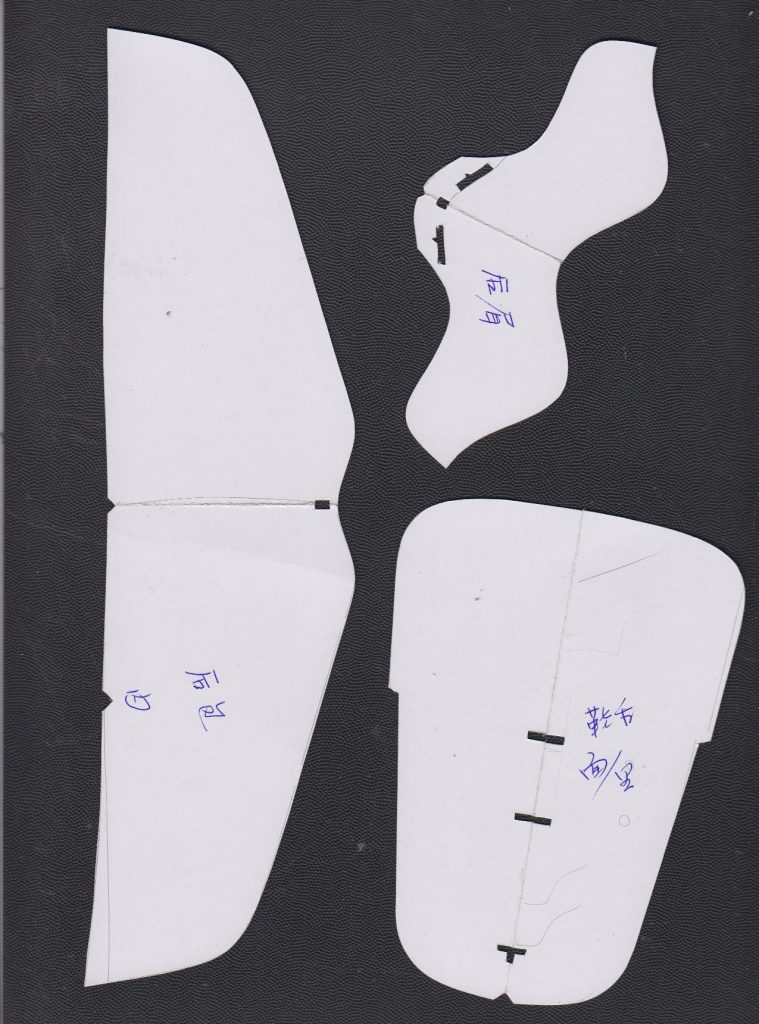
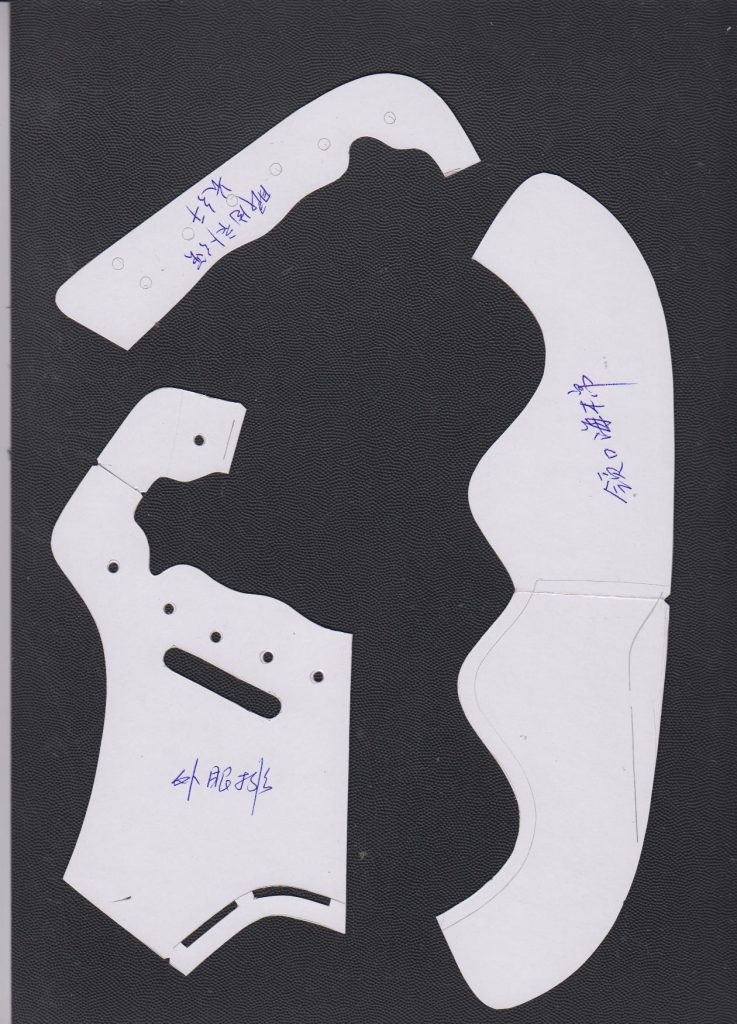
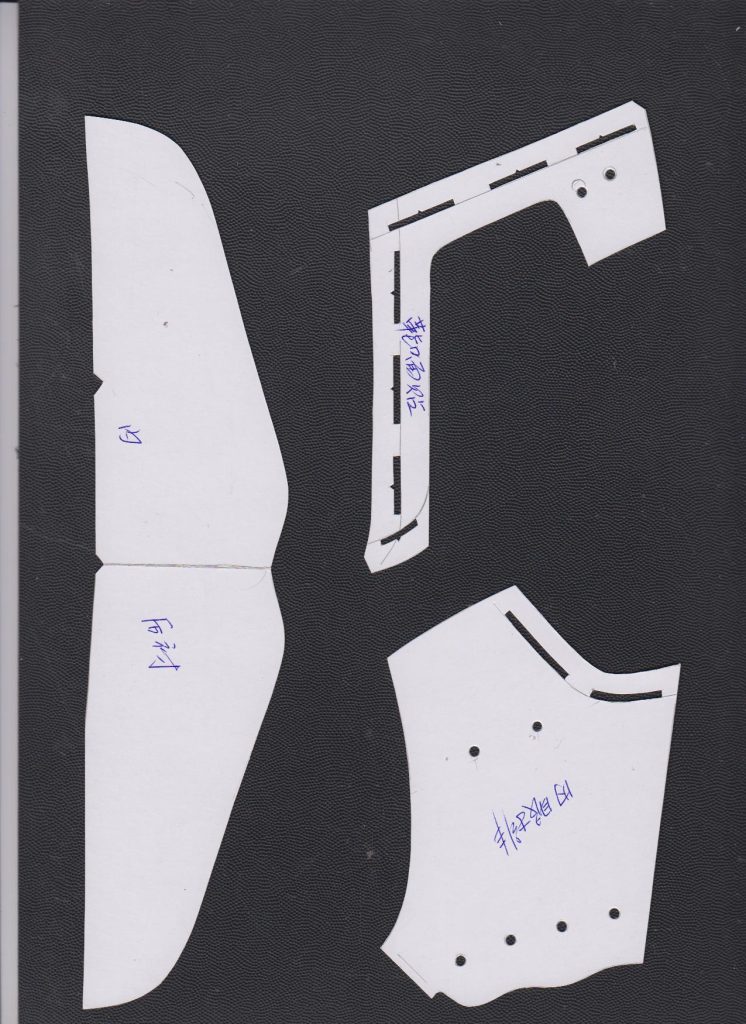
Here you can see the cut paper pattern parts. These are what the sample pattern cutter will use to make the first sample shoe. Many factories will use a machine to cut sample parts but cutting the paper by hand saves the time involved in computerizing the pattern.
The vamp and lining pattern parts make up the base layer for assembly.
The vamp and lining pattern parts make up the base layer for assembly.
The insole pattern is the strobal sock, this is made from a tough non-stretch material.
Sneaker patterns: The Toe piece will be leather. You can see it’s not symmetrical. The extra panel is called a toe burst panel. This prevents the big toe nail from wearing through the vamp mesh. The heel lining is the pattern for collar foam.
Running shoe pattern: The tongue foam pattern for 10mm Kff Foam.
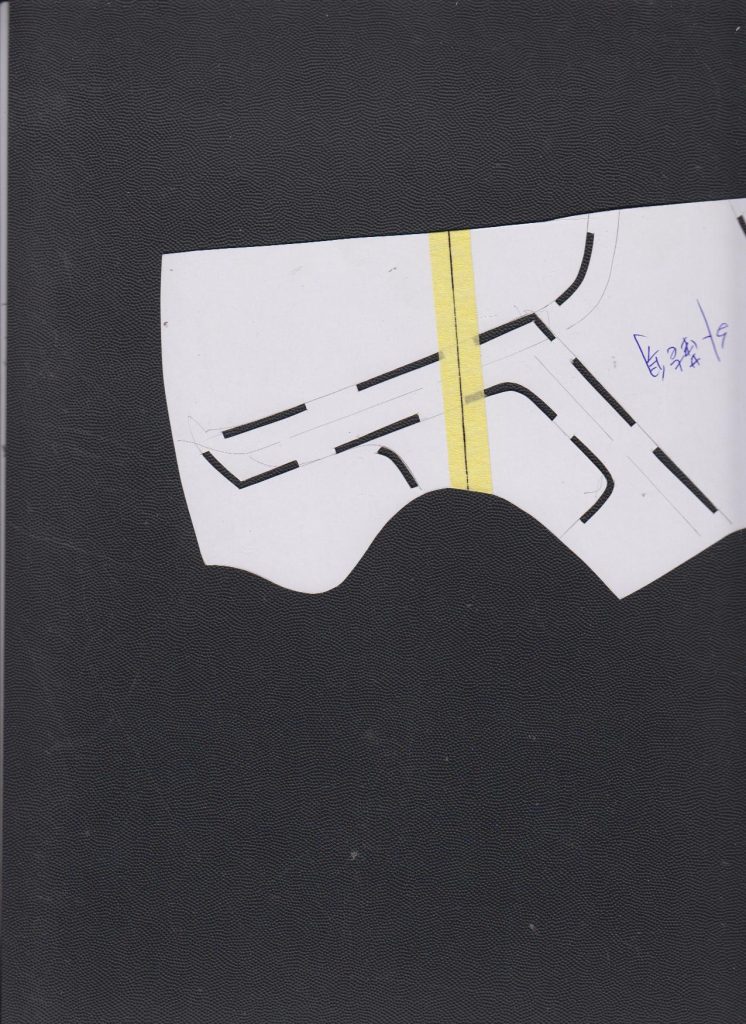
Shoe pattern: The heel counter is a small part. It will be made from a reinforcing material. The back stay is a leather panel, great for logos.
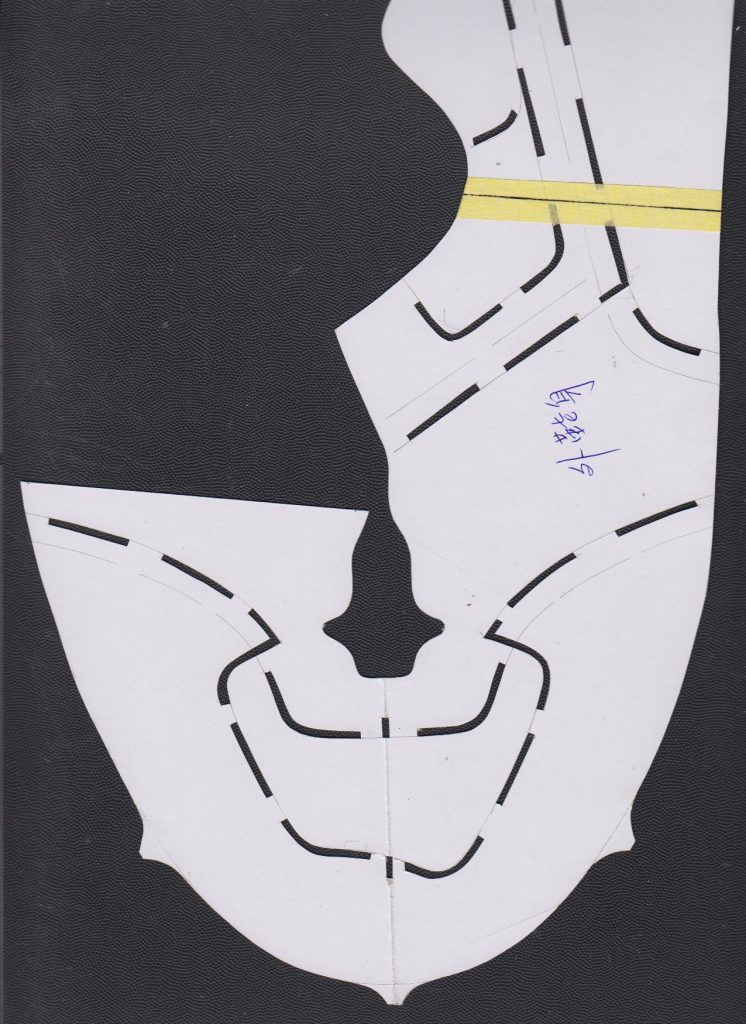
Sneaker patterns: The medial eyestay and lateral eyestay are leather parts. The break line is on the medial inside of the shoe. If this was one part it would wrap around onto itself and waste material. The break line could be in the middle, at the base of the tongue. The lateral side has a die cut for the logo.
The eyestay underlay parts are the same pattern, mirrored.
This pattern for the Ariss running shoe is available for download here. The vamp and lining pattern parts make up the base layer for assembly these will be mesh. The tongue pattern is both the lining and face. The face is made of mesh and the lining is made from Visa terry. The tongue foam pattern for 10mm Kff foam. The quarter panel is the made of leather.
The heel counter is a smaller part which will be made from a reinforcing material. The backstay is a leather panel, great for logos.
The medial eyestay and lateral eyestay are leather parts. The break line is on the medial inside of the shoe. If this were one part, it would wrap around onto itself and waste material. The break line can be in the middle at the base of the tongue. The lateral side has a die cut for the logo.
The eyestay underlay parts are the same pattern, mirrored. The toe tip will be leather, you can see it’s not symmetrical. The extra panel is called a toe burst panel. This prevents the big toenail from wearing through the vamp mesh. The heel lining is the pattern for collar foam. The collar lining is made from Visa terry fabric. The shoe has a perforated eyestay, to prevent “tear out” reinforcement material is added. The insole pattern is the strobal sock, this is made from a tough non-stretch material.






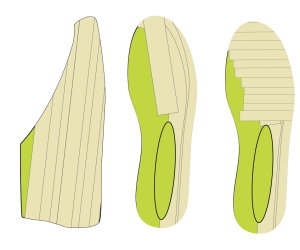 To make a new shoe pattern step-by-step you will first need to “tape” the last so you can “pull the shell” off the shoe pattern. The tape should be layered in two different directions so the pattern stays together when you are ready to peel it off the last. You will start on the lateral or outside of the shoe last. First, starting at the top, lay the tape lengthwise down the lateral side of the last. Next, run a strip of tape down the center of the last from the top of the instep down to the toe. Do the same on the heel of the last. Finally, run layers across the last from the bottom edge up the side of the last. Make this extra smooth, this will be your drawing surface when you start marking your shoe pattern.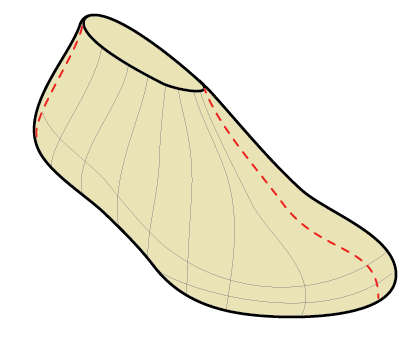
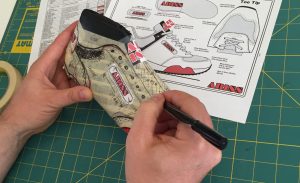 It’s fun to add a little color or paste on a logo. You can start to get a feel for what the design will look like in 3D. Go ahead and iterate upon your design, this is your time to be creative. If you don’t like your line, grab some tape, cover it up, and try again.
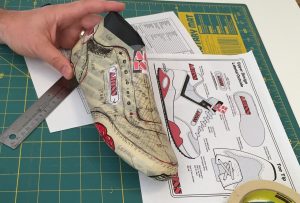
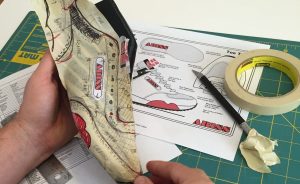
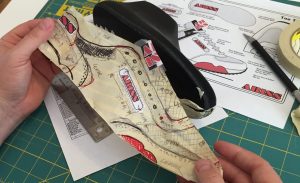 Here is the pattern free of the last. You may find that it does not lay flat, don’t worry.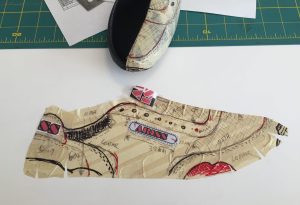
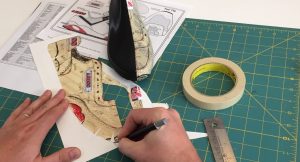 Once the tape is peeled from the last and flattened you have the shoe pattern! The pattern with all the parts together is called the “shell” pattern. With the pattern attached to some paper, it’s time to “trim out” the pattern. Now the shoe pattern can be redrawn in a computer and cut out of heavy paper. The Pattern Cutter will add the overlaps and alignment marks.